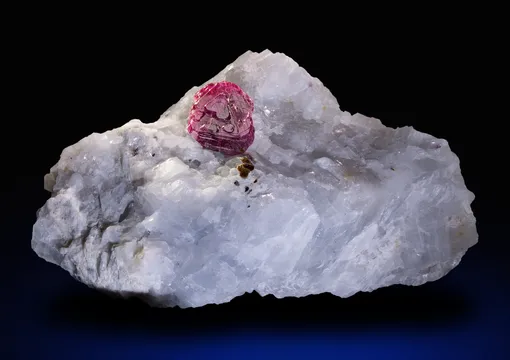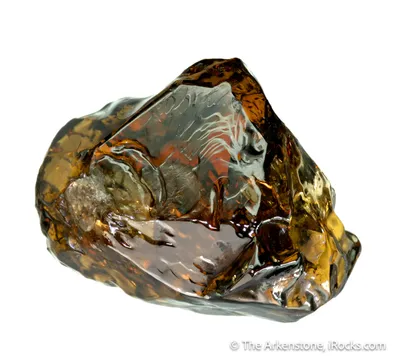
Mogok Valley, Myanmar — locality famed for ruby, sapphire, spinel and topaz; metamorphic rocks and strong collector appeal through varied minerals.
Key facts
Mogok Valley is one of the few mineral localities whose name carries equal weight with gem merchants, museum curators, field geologists, and thumbnail-specimen collectors. In the old literature it is the Mogok Stone Tract; in the gem trade it is Ruby Land; on mineral labels it is often simply “Mogok, Burma.” The reason is not just ruby. Mogok is a compact but extraordinarily fertile high-grade metamorphic province where coarse calcite marbles, gneisses, skarns, syenite-charnockite intrusions, leucogranites, pegmatites, weathered karst pockets, and ancient gem gravels have all contributed different specimen styles. Its best pieces have an unmistakable look: red corundum glowing out of sugary white marble, octahedral spinel sharp enough to seem cut by hand, blue sapphire from syenitic and skarn-related ground, and pegmatite minerals—topaz, beryl, danburite, phenakite, petalite, quartz, feldspar, and tourmaline—whose labels quietly remind collectors that Mogok is far more than a ruby camp.
Geologically, the district sits in the Mogok Metamorphic Belt, a north-south high-grade belt through central and northern Myanmar. Around Mogok, the critical rocks are coarse, white to grey calcite marbles rich in phlogopite, graphite, spinel, diopside, forsterite, scapolite, wollastonite, and related calc-silicate minerals. These marbles were intruded and overprinted by syenitic, charnockitic, granitic, and pegmatitic bodies during a long and complex tectonic history tied to the collision of India with Southeast Asia. Modern geochronology places important episodes of ruby, sapphire, spinel, skarn, and related metamorphism broadly in Late Cretaceous to early Miocene time, with particularly important Eocene-Oligocene to earliest Miocene events around the valley.
Regional View
Country View
For collectors, Mogok matters because the locality repeatedly rewards close looking. A gem dealer may prize a clean, unheated stone; the mineral collector often wants the opposite sort of evidence—the marble rind, the graphite specks, a halo of calcite, a spinel neighbor, a phlogopite flake, a scapolite-rich skarn fragment, or a battered alluvial surface showing that the crystal passed through the byon gravels. The finest cabinet specimens keep that geological context visible. A ruby crystal locked in marble from Mogok is not simply red Al2O3; it is a document of marble-hosted corundum genesis, tropical weathering, artisanal mining, imperial history, and modern collecting taste.
The valley’s pegmatite suite gives Mogok a second collector identity. The Sakangyi area west of Mogok is especially important for topaz, aquamarine, danburite, quartz, feldspar, and related miarolitic pegmatite minerals, including famous pockets lined with quartz, feldspar, mica, and pale topaz. In the same broader district, rare boron- and beryllium-bearing species such as phenakite, petalite, hambergite, johachidolite, painite, and kyawthuite show why Mogok has become a hunting ground for advanced systematic collectors as well as gem connoisseurs.
Search for specimens: View all specimens from Mogok Valley, Myanmar
Mogok Valley lies in Mogok Township, Pyin-Oo-Lwin District, Mandalay Region, northern Myanmar. The name “Mogok” is used in several overlapping ways: the town, the valley, the township, and the broader Mogok Stone Tract, which includes many named mines and villages around Mogok and Kyatpyin. Old labels may read Burma, Upper Burma, Mandalay Division, Sagaing District, Mogok Township, Kyatpyin, Katha, Sakangyi, Dattaw, Baw Mar, Bernardmyo, Pyant Gyi, Ohngaing, Wet Loo, Kyauk-Pyat-That, or simply “Mogok.” For a serious collection, the sublocality is often as important as the species name.
The main ruby-spinel deposit type is marble-hosted and skarn-influenced corundum and spinel mineralization in high-grade calcite marble. In the valley and hills, gem-bearing marbles form part of a central belt several kilometers wide, with coarse calcite, graphite, phlogopite, spinel, diopside, forsterite, scapolite, wollastonite, apatite, and related calc-silicate minerals. Ruby occurs in marble and in marble-derived residual and alluvial gravels; spinel is abundant in marble and gravels; sapphire has an important relationship to syenite, charnockite, skarn, and altered feldspathic rocks as well as secondary gravels. The deposit is not a single vein or mine, but a district-scale system of marble bands, skarn zones, karst residuum, stream concentrations, hillside gravels, and pegmatite bodies.
The gem-bearing gravel layer is known locally as byon. It is the residue of weathered marble and associated rocks, enriched by density and durability: ruby, sapphire, spinel, zircon, garnet, quartz, feldspar, tourmaline, iron oxides, and other resistant minerals. In the broad valley floors, especially around Mogok and Kyatpyin, older miners followed relatively concentrated gravel horizons beneath overburden. On hillsides and in narrower valleys, the gems tend to be less neatly concentrated, so miners wash larger volumes of ground. In karstic marble, pockets and crevices can preserve residual gem concentrations, while hard-rock workings follow ruby- and spinel-bearing marble bands underground.
Mining methods have changed but still reflect the shape of the deposits. Traditional twin-lon shaft mining used narrow, round or small-diameter pits sunk to the byon. Hmyaw-dwin hillside and open-pit workings removed overburden and washed gem ground. Lu-dwin cave and crevice mining followed gem-bearing marble cavities and karst pockets. Modern operations have added excavators, dump trucks, water cannons, crushing plants, washing jigs, and deeper underground access, but the district still includes artisanal hand sorting and small claims beside much larger mechanized workings.
Mogok’s mining history is centuries old, and its ruby reputation predates modern gemology. Burmese royal control, local taxation, and gem tribute gave way to British interest after the annexation of Upper Burma. In 1889 the Burma Ruby Mines Ltd. concession brought European capital and mechanized methods, including water cannons, washing plants, drainage efforts, and attempts to mine the valley floor at scale. The company also helped broadcast the desirability of Burmese ruby to European markets, but it struggled with flooding, theft, operating costs, variable geology, and later the market shock caused by synthetic ruby. It abandoned the mines in 1931, after which production returned largely to smaller local methods until later state, joint-venture, and private arrangements reshaped the district again.
Important named areas each have their own collecting personality. Dattaw is a classic ruby area in coarse calcite marble and is associated in the literature with ruby-bearing marble, scapolite, sodalite, nepheline-related assemblages, phlogopite, spinel, pargasite, and tourmaline. Bawpadan and Kodoke-tat follow parts of the ruby-bearing “Marble Arc,” a mineralized marble belt extending east of Mogok; field reports describe ruby-bearing layers underground at depths greater than 200 m at Bawpadan and galleries exceeding 400 m at Kodoke-tat. Pyant Gyi is noted for red spinel and gem-bearing residual ground. Baw Mar near Kyatpyin is central to modern work on blue sapphire from syenite- and skarn-related settings. Sakangyi is the pegmatite locality that supplies much of the collector-grade topaz, beryl, aquamarine, danburite, quartz, feldspar, and related material attributed to the Mogok area.
Access today is highly restricted and unstable. Mogok was reopened to some foreign visitors in 2013 after a long closure, but even then special permission was required and many mines were not freely accessible. The situation became much more difficult after Myanmar’s 2021 coup and the subsequent civil war. Mogok was captured by TNLA-led forces in July 2024, later returned to junta control under a China-mediated ceasefire arrangement reported in late 2025, and the wider mining region remains politically sensitive, militarized, and commercially opaque. Collectors should treat recent mine-run material with serious provenance, legal, sanctions, and ethical caution.
For specimen collecting, most pieces reach the market through miners, local buyers, Mandalay and Yangon channels, Bangkok and Chanthaburi networks, old European and American collections, and later dispersals of important Asian suites. The best modern labels include a named sublocality and collection history. “Mogok” alone is acceptable for older material when backed by a credible dealer or collection label, but it is too broad to carry the same geological value as Dattaw ruby in marble, Baw Mar sapphire, Sakangyi topaz, Pyant Gyi spinel, Wet Loo painite association, or Chaung-gyi kyawthuite.
Ruby is the axis of Mogok collecting: crystals range from small, bright, waterworn byon grains to stout hexagonal prisms, barrel-shaped crystals, tabular forms, and rare sculptural crystals in white calcite marble; the best pieces show saturated red to slightly purplish red color, translucency, strong luster, and the daylight fluorescence that gives fine low-iron marble-hosted Burmese ruby its inner glow. Classic associations include calcite, graphite, phlogopite, spinel, scapolite, apatite, feldspar, zircon, and skarn silicates; Dattaw, Bawpadan, Kodoke-tat, Ohngaing, Wet Loo, Thurein Taung, and other named zones have all contributed to the district’s ruby story. Ordinary Mogok ruby specimens are opaque, abraded, over-dark, or simply fragments; fine collector pieces keep recognizable crystal form, red body color rather than merely surface color, attractive marble contrast, minimal edge bruising, and, ideally, an old or precise sublocality label.
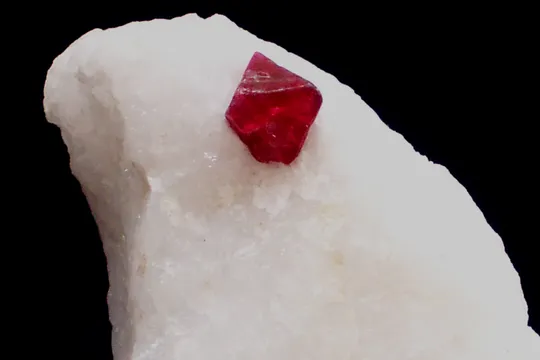
Mogok spinel is the great companion to Mogok ruby and, for crystal collectors, often the more perfect mineral: it commonly forms sharp octahedra in marble, from delicate pink and rose-red to saturated ruby-red, purplish red, violet, orange-red, grey, and dark tones, with gemmy interiors and a glassy luster that can make a centimeter crystal feel monumental. Spinel occurs both in marble and in secondary gem gravels, and important material is associated with Pyant Gyi, Baw Lone Gyi, Dattaw, Ohngaing, and many corundum workings where spinel accompanies ruby. The best Mogok spinels are undamaged octahedra or twins with bright color, translucency, strong face definition, and clean attachment; mediocre examples are chipped, heavily rounded, iron-stained, or so dark that the famous Mogok fluorescence and color are lost.
As a species, Mogok corundum covers ruby, sapphire, pink sapphire, colorless to pale corundum, star material, and mixed-color crystals from both marble and syenite-skarn environments; habits include hexagonal prisms, barrel-shaped crystals, tabular plates, rounded alluvial crystals, and embedded crystals in calcite marble. The locality’s collector appeal lies in seeing Al2O3 expressed across different geological settings: chromium-rich ruby in marble, blue sapphire linked to syenitic and skarn-related systems, and corundum grains concentrated in byon with spinel, zircon, quartz, tourmaline, and feldspar. Good corundum specimens from Mogok are valued for color, form, matrix, and locality specificity; an opaque, loose, alluvial pebble may be historically interesting, but a crisp ruby or sapphire crystal in recognizable Mogok matrix has far stronger mineralogical character.
Topaz from Mogok is chiefly a pegmatite mineral, with Sakangyi the name serious collectors watch for: colorless, pale blue, pale yellow, champagne, and light golden crystals occur in miarolitic pegmatite with quartz, feldspar, mica, beryl, aquamarine, danburite, and tourmaline. The famous Sakangyi pockets produced sharp prismatic crystals, some several centimeters across, associated with quartz, feldspar, graphic intergrowths, cleavelandite-like albite, muscovite blades, and smoky quartz; late-2006 pocket material is especially noted in collector literature. Fine Mogok topaz should be complete, lustrous, transparent, and sharply terminated, with natural faces rather than polished tips; etching and contacts are acceptable when they tell a pocket story, but broken or re-cut crystals lose much of the locality’s mineral appeal.
Quartz at Mogok is not merely gangue; it is a structural part of the Sakangyi-style pegmatites and also occurs as smoky quartz, rock crystal, and quartz associated with feldspar, topaz, beryl, phenakite, petalite, and danburite. In the pegmatites west of Mogok, quartz appears in coarse cores, graphic intergrowths with perthitic feldspar, pocket linings, and matrix plates that can make topaz or aquamarine specimens far more displayable. Good Mogok quartz is judged less by size alone than by context: lustrous clear or smoky crystals on feldspar, quartz supporting topaz or phenakite, and matrix that preserves the miarolitic pegmatite architecture are preferable to anonymous loose crystals with only a broad Myanmar label.
Tourmaline from the Mogok region spans black schorl, pink to red elbaite and rubellite, multicolored pegmatite crystals, and calcium-magnesium tourmaline species such as uvite in marble and skarn settings. In the pegmatite suite, tourmaline accompanies quartz, feldspar, topaz, beryl, petalite, phenakite, and related minerals; in marble-skarn assemblages, tourmaline may appear with ruby, scapolite, phlogopite, margarite, spinel, or painite-associated material. Good Mogok tourmaline is highly provenance-dependent: sharp rubellite, unusual schorl-cored “mushroom” habits, crystals in pegmatite matrix, or tourmaline tied to rare-mineral associations deserve attention, while broken black rods with vague “Burma” labels are commoner and less diagnostic.
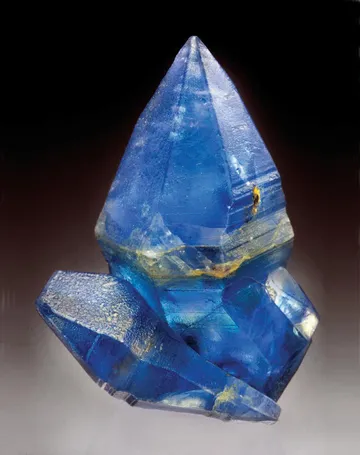
Mogok sapphire occurs as blue to violetish blue, greenish blue, grey-blue, and fancy-color corundum, both as rounded byon stones and as crystals from primary syenite-, skarn-, and altered feldspathic environments. Baw Mar near Kyatpyin is especially important for modern gemological work on primary blue sapphires in weathered syenitic and skarn-related zones, while other documented Mogok areas include northern, northeastern, eastern, western, northwestern, and far-western subdistricts. Collector-quality sapphire specimens are much scarcer than loose gem rough: the prize is a natural crystal with distinct hexagonal form, blue body color, minimal abrasion, and a named mine or old label, whereas dark opaque lumps or unverified “Burmese sapphire” parcels should be treated cautiously.
Calcite is the visual and genetic stage on which much of Mogok’s ruby and spinel drama occurs: coarse white calcite marble hosts ruby, spinel, graphite, phlogopite, diopside, forsterite, scapolite, apatite, and related skarn minerals, and calcite is also a common inclusion in Mogok ruby. For specimens, calcite matters most as matrix—white, sugary, contrasting, and locality-defining—rather than as isolated calcite crystals. Good calcite-bearing pieces show ruby or spinel naturally embedded in marble with clean contrast and stable matrix; poor pieces are over-trimmed, acid-cleaned to a chalky surface, heavily iron-stained, or so fractured that the corundum or spinel appears artificially placed.
Zircon is a small but important Mogok mineral, occurring as resistant crystals in gem gravels and as inclusions in corundum and spinel used in modern age studies of the ruby-spinel-sapphire system. Collector specimens are usually miniature-scale crystals or gemmy rough rather than large display pieces, with colors that can include brown, reddish brown, orange, yellow, and pale tones depending on source and alteration. The best Mogok zircon pieces combine sharp tetragonal form, transparency, bright luster, and association or label evidence from the Stone Tract; ordinary grains are easily confused with other heavy-mineral gravel material unless documented by form, optical properties, or analysis.
Phenakite from Mogok belongs to the beryllium-rich rare-mineral side of the district, especially in pegmatitic and related alluvial settings where it may occur with quartz, danburite, petalite, beryl, topaz, feldspar, and other light-colored pegmatite minerals. Crystals are typically colorless to pale, glassy, and modest in size, and they can be deceptively similar to quartz or beryl to the unaided eye; properly identified Mogok phenakite has much greater collector importance than its quiet appearance suggests. Fine pieces are transparent, sharply terminated, and ideally associated with danburite or quartz matrix, while loose, colorless crystals need reliable analytical confirmation because the Mogok pegmatite suite contains several similar-looking minerals.
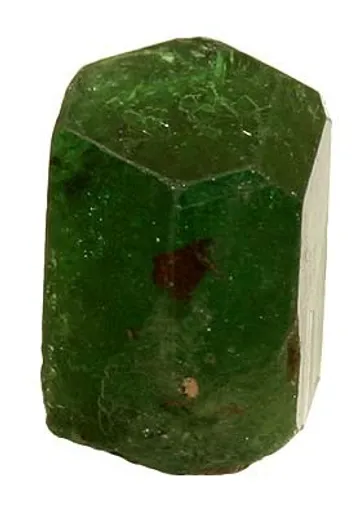
Forsterite is one of the key high-grade marble minerals at Mogok and also connects the valley to Myanmar’s celebrated peridot occurrences north of town, where gem-quality olivine has been mined from ultramafic rocks at places such as Pyaunggaung and Bernardmyo. In ruby-spinel marble, forsterite appears with calcite, phlogopite, graphite, spinel, diopside, and related granulite-facies assemblages, helping mark the dry, high-temperature conditions under which the marble suite formed. Attractive collector forsterite from the Mogok district is usually valued as green gem crystal or peridot rough rather than as a large matrix mineral; good pieces have clean olive to yellow-green color and provenance, while altered, talcose, or rounded grains are much less desirable.
Beryl from Mogok is part of the pegmatite suite, with Sakangyi especially important for aquamarine, goshenite, and associated topaz, quartz, feldspar, danburite, and tourmaline. Crystal habits are the expected hexagonal prisms, from colorless to pale blue and bluish green, often with etched surfaces, growth features, or contact faces reflecting pocket and pegmatite-wall conditions. Fine Mogok beryl should show recognizable prism form, attractive pale color or water-clear transparency, good luster, and ideally matrix or a named pegmatite label; anonymous pale beryl crystals are difficult to distinguish from material from neighboring Myanmar pegmatites and should be bought on provenance, not romance.
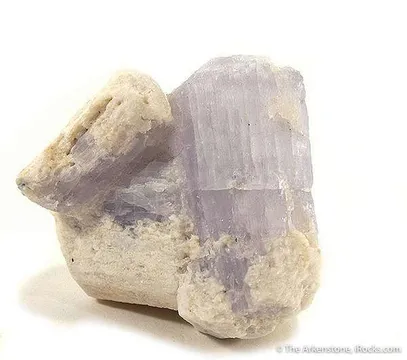
Petalite is one of Mogok’s quieter lithium-bearing pegmatite minerals, occurring as colorless, white, beige, pale pinkish, or translucent crystals and cleavages in the same broader rare-element environment that yields phenakite, beryl, tourmaline, danburite, quartz, feldspar, and topaz. Specimens can appear blocky, tabular, or cleavable rather than showy, and many are valued by systematic collectors because good, well-documented Myanmar petalite is much less common than the better-known ruby and spinel material. The best pieces have transparency, complete form, association with other pegmatite minerals, and a credible Mogok or sublocality label; dull cleavage fragments without analysis are easy to overvalue.
Rubellite, the pink to red elbaite variety, gives Mogok’s pegmatites a color accent that contrasts beautifully with the region’s marble-hosted ruby and spinel. Documented Mogok-region specimens include vivid pink to raspberry-red crystals, some with black schorl cores or stalks producing the unusual “mushroom” habit prized by collectors; matrix associations include quartz, feldspar, mica, and other pegmatite minerals. Fine rubellite from Mogok is judged by saturation, luster, termination, translucency, and the preservation of the red elbaite overgrowth or cap; dull, repaired, or black-dominated pieces are more common, and locality precision matters because Myanmar tourmaline from nearby districts is often commercially blurred into “Mogok.”
Aquamarine from Mogok is most closely tied to the Sakangyi pegmatite field, where pale blue beryl occurs with topaz, quartz, feldspar, mica, danburite, and multicolored tourmaline. The crystals are typically prismatic and pale rather than deeply saturated; their collector value lies in clarity, termination, matrix, and the locality’s rarity compared with the flood of aquamarine from Brazil, Pakistan, Afghanistan, and Africa. Good Mogok aquamarine is a clean, complete, pale blue crystal or crystal-on-matrix with a Sakangyi or reliable Mogok label; broken prisms, etched fragments, and overly blue stones with weak provenance should be approached conservatively.
Danburite from Mogok is a connoisseur’s pegmatite mineral: colorless to pale straw-yellow, champagne, golden, or amber crystals occur in the Sakangyi and wider Mogok pegmatite environment with topaz, quartz, feldspar, beryl, phenakite, and tourmaline. Crystals are generally prismatic, glassy, and modest in size, with sharp terminations and high transparency the main value factors; one famous paragenetic curiosity from Mogok is topaz over danburite after topaz, showing replacement and later overgrowth in the pegmatite system. Fine Mogok danburite should be bright, complete, and analytically or historically secure, because pale danburite can be confused visually with topaz, quartz, phenakite, or colorless beryl.
Feldspar at Mogok is both a pegmatite framework mineral and, in some cases, a gem material, with microcline, perthite, albite or cleavelandite-like feldspar, moonstone, and bright green feldspar reported from the broader Stone Tract. In Sakangyi pegmatites, feldspar occurs with quartz, mica, topaz, beryl, danburite, tourmaline, and graphic quartz-feldspar intergrowths, forming the architecture of the pockets that produce showier minerals. Good collector feldspar from Mogok is usually valued when it supports topaz, aquamarine, quartz, or rare pegmatite species, or when it shows attractive color or moonstone character; common massive feldspar without association is less compelling unless the sublocality is unusually well documented.
Elbaite from Mogok includes rubellite and other lithium tourmaline colors from pegmatite environments, typically associated with quartz, feldspar, mica, beryl, topaz, petalite, phenakite, and related rare-element minerals. The locality is especially admired for red to pink crystals and unusual schorl-cored growths, where the elbaite forms a bright cap or shell around darker tourmaline. Fine Mogok elbaite is vivid, lustrous, and structurally interesting, preferably with matrix or a documented sublocality; ordinary pieces are often damaged, dark, or locality-vague, and should not be confused with more abundant tourmaline from other Myanmar pegmatite districts.
Sillimanite appears in the high-grade metapelitic rocks and gneissic assemblages around Mogok, separate from but genetically related to the intense metamorphic environment that also produced the marble-hosted gem suite. It may occur as fibrous, prismatic, or massive material, and in the broader gem trade the fibrous variety can be cut or confused with other chatoyant or massive minerals. For mineral collectors, Mogok sillimanite is most meaningful as a metamorphic indicator or as an association in the gneiss-marble-pegmatite terrain; attractive, well-crystallized pieces are less common than ruby or spinel, so labels and matrix context carry much of the value.
Phlogopite is one of the characteristic mica species of Mogok’s ruby-spinel marbles and skarns, appearing with calcite, graphite, spinel, ruby, diopside, forsterite, scapolite, pargasite, and related high-grade calc-silicate minerals. It is usually not the showpiece mineral, but flakes and books of bronze to brown mica in marble are a strong locality clue and can make a ruby or spinel specimen more geologically convincing. Fine phlogopite-bearing Mogok specimens are those where mica complements a gem crystal and helps preserve the marble assemblage; isolated mica books are commoner and less valuable unless unusually sharp, large, or tied to a rare association.
Scapolite is a signature skarn and marble-associated mineral at Mogok, occurring as colorless, grey, white, yellowish, pinkish, or violet-toned material in calc-silicate assemblages and as a documented association with ruby at places including Dattaw, Kolan, Lay Oo, Ohngaing, Pyant Gyi, Sakan Gyi, Wet Loo, Kyauk-Pyat-That, and Thurein Taung. It may be massive, granular, prismatic, fluorescent, or present as less obvious pale material beside more spectacular ruby and spinel. Good Mogok scapolite specimens are locality-rich rather than merely pretty: ruby in scapolite-bearing marble or skarn, fluorescent scapolite with phlogopite, or scapolite associated with rare painite-group assemblages is far more important than an unverified loose scapolite crystal.
Smoky quartz from Mogok belongs chiefly to the pegmatitic core zones, especially Sakangyi-style miarolitic pegmatites with feldspar, mica, topaz, beryl, danburite, and quartz-feldspar graphic textures. Crystals range from pale smoke to darker brown, commonly in pocket or matrix settings where smoky quartz provides contrast for topaz, aquamarine, or feldspar. Good Mogok smoky quartz is sharp, lustrous, naturally terminated, and associated with other Sakangyi pegmatite minerals; ordinary loose smoky crystals are difficult to separate from global material unless they carry a trustworthy old Mogok label or remain attached to diagnostic pegmatite matrix.
Uvite represents the calcium-magnesium tourmaline side of Mogok’s tourmaline story, most logically tied to marble, skarn, and calc-silicate environments rather than the lithium-rich elbaite pegmatites. In collector material it may appear as dark to brownish or greenish tourmaline associated with calcite, phlogopite, spinel, ruby, scapolite, or other magnesium-rich marble minerals. Fine Mogok uvite is uncommon and should be judged by crystal form, luster, association, and analytical confidence; because tourmaline-group species cannot be reliably separated by eye in many cases, the best uvite specimens are those with a tested identity or a respected provenance chain.
Fluorite is a minor Mogok collector mineral, occurring within the district’s broad hydrothermal, pegmatitic, and skarn-influenced environment rather than as one of its defining gem species. Specimens attributed to Mogok are far less common than ruby, spinel, sapphire, topaz, or quartz, and the best pieces depend heavily on association—fluorite with pegmatite minerals or calc-silicate matrix is more meaningful than a loose cube with only a broad Myanmar label. Fine material should show natural crystal faces, clarity or attractive color, and believable locality history; otherwise, fluorite is too widespread globally for a vague “Mogok” attribution to add much value.
Schorl is the black tourmaline common to Mogok’s pegmatitic suite and is especially interesting when it participates in composite tourmaline specimens, including red elbaite or rubellite growth around a dark schorl core. It occurs with quartz, feldspar, mica, topaz, beryl, and other pegmatite minerals, and may also appear as part of mixed tourmaline assemblages in nearby Myanmar gem fields historically folded into Mogok trade labels. Good Mogok schorl is sharp, lustrous, and either matrix-associated or compositionally dramatic, such as schorl-cored rubellite; plain broken black prisms are abundant enough that only strong locality evidence makes them collectible as Mogok specimens.
Microcline is an important feldspar in Mogok’s pegmatite suite, especially in coarse Sakangyi material where feldspar, quartz, mica, topaz, beryl, danburite, and smoky quartz form pocket assemblages and graphic intergrowths. Crystals and cleavages may be white, cream, tan, or pale, with perthitic textures and quartz intergrowths giving geological interest even when the feldspar itself is not gemmy. The best Mogok microcline specimens are matrix pieces that carry or frame topaz, aquamarine, quartz, or rare pegmatite minerals; isolated feldspar pieces need particularly good labels because microcline is common worldwide and easy to over-attribute.
Mogok’s wider mineral list is astonishing for such a compact gem tract. In addition to the species above, collectors should know painite, kyawthuite, johachidolite, poudretteite, hibonite, serendibite, hambergite, sinhalite, chrysoberyl, garnet, apatite, diopside, pargasite, enstatite, sodalite, nepheline, cancrinite or davyne-group minerals, datolite, margarite, graphite, pyrite, pyrrhotite, titanite, magnetite, moonstone, and rare gem-quality oddities that appear in the Mogok market from time to time. Painite and kyawthuite are especially important to systematic collectors: painite was described from Mogok in the 1950s and later found in additional Wet Loo, Thurein Taung, and Kyauk-Pyat-That area material, while kyawthuite was described from a single waterworn crystal from Chaung-gyi-ah-le-ywa near Mogok. The lesson is simple: in Mogok, the ordinary-looking brown, orange, colorless, or pale fragment may be the specimen that needs a laboratory.
Provenance is the first collector problem. “Mogok” is one of the most prestigious locality names in the gem world, so it is frequently stretched. Older labels may use Burma, Upper Burma, Mogok Stone Tract, Mogok Township, Mandalay Division, or a sublocality name; modern sellers may apply Mogok broadly to material from nearby districts, Mandalay trading parcels, or Myanmar gem lots that lack a precise mine source. For ruby, spinel, sapphire, painite, johachidolite, danburite, topaz, and tourmaline, a sublocality and old collection chain are worth paying for.
The second problem is species identification. Mogok’s pegmatite and skarn minerals include many pale, glassy, high-hardness species that can resemble one another: topaz, danburite, phenakite, quartz, colorless beryl, petalite, hambergite, scapolite, and even pale corundum. Heavy-mineral gravel parcels add zircon, garnet, spinel, corundum, chrysoberyl, and rare borates or oxides. Advanced Mogok collectors should be comfortable asking for refractive index, specific gravity, Raman, XRD, or lab reports on expensive or unusual pieces.
Ruby and sapphire treatments require special care. Mogok ruby is prized when unheated, but Burmese corundum in the trade can be heated, flux-assisted, fracture healed, or glass filled. Mogok rubies commonly contain calcite, dolomite, apatite, mica, spinel, zircon, boehmite needles, rutile silk, and other inclusions; intact inclusions can help support natural origin and sometimes unheated status, while altered inclusions, chalky UV reactions, healed fissures, residues, or flash effects may indicate treatment. Do not assume “Mogok” means untreated. For gem crystals and cut stones of value, obtain a report from a major laboratory.
Specimen condition is often a compromise. Alluvial ruby, spinel, sapphire, and zircon may be rounded or frosted from transport. Marble-hosted pieces can be bruised during extraction or damaged by crushing and washing. Ruby and spinel crystals are hard, but their matrix is usually soft calcite marble, so trimming, cleaning, and mounting can destabilize a specimen. Pegmatite minerals such as topaz, beryl, danburite, petalite, phenakite, quartz, and feldspar commonly show contacts, etching, cleavages, or repaired terminations. Examine bases, tips, and matrix junctions carefully for glue, filled gaps, polished faces, or reattached crystals.
Fluorescence can be useful but should not be overinterpreted. Fine low-iron ruby and red spinel from Mogok may fluoresce strongly red under UV and daylight, one reason the best material seems to glow. Calcite, scapolite, and other marble-skarn minerals may also fluoresce, making Mogok matrix pieces visually rewarding under UV. Fluorescence is a supporting clue, not a proof of origin or treatment state.
Ethics and legality matter strongly for recent material. Myanma Gems Enterprise was sanctioned by the United States in 2021, and Myanmar’s gem sector remains connected to state revenue, armed groups, and conflict financing. The earlier U.S. statutory import ban on Burmese-origin rubies and jadeite was revoked in 2016, but current sanctions still affect dealings with designated entities and high-risk supply chains. Collectors should favor old collection pieces, documented pre-conflict provenance, transparent dealers, and written invoices. Recent “fresh from Mogok” offers should be approached with due diligence rather than romance.
Market availability is uneven. Small ruby-in-marble specimens, loose spinel crystals, modest sapphire crystals, Sakangyi topaz, danburite, beryl, quartz, and feldspar appear with some regularity, though good pieces are much scarcer than commercial gem material. Fine ruby crystals in marble, sharp red spinel octahedra, good Mogok sapphire crystals, top Sakangyi topaz, well-documented painite associations, and rare species such as kyawthuite or johachidolite are specialist material. The best Mogok specimens often surface through old collections, not new mine supply.
The most enduring Mogok story begins not underground but in a royal court. In the 1870s, during the reign of King Mindon, a French representative reportedly asked what price would secure mining rights in Mogok. The king showed him the Nga Mauk ruby and asked him to value the stone first. The Frenchman could not. The king’s reply has survived because it distills the locality’s myth into one sentence: “If you cannot give me an estimate for that stone, how do you expect me to give you an estimate for the mine that produced it?” In gem history, Mogok was never only a deposit; it was a treasury whose contents seemed beyond ordinary arithmetic.
The British understood that symbolism perfectly. After the annexation of Upper Burma, the ruby mines became a strategic commercial prize. By 1889 Burma Ruby Mines Ltd. had been formed, backed by London gem interests and granted leases to work the tract. The company brought in mechanized ambition—water cannons, washing plants, drainage schemes, and European mining methods—and even moved the town of Mogok to reach the alluvial ground beneath it. For a while, the enterprise helped make Burmese ruby the global standard. Then the valley fought back in the way old gem fields do: water, theft, fractured geology, operating costs, and uncertainty. Synthetic ruby added a new market terror, and by 1931 the company abandoned the mines.
In December 2013 and early 2014, when Mogok briefly opened enough for foreign gemologists to enter with permission, the valley again became a field destination. Vincent Pardieu and Andrew Lucas of GIA reached Mogok after years in which the area had been nearly inaccessible to foreign visitors. Their fieldwork had the tone of a pilgrimage and a working laboratory at once: mines by day, markets by morning and afternoon, cutters, gem painters, temples, and the constant discipline Pardieu described as “doing gemology with your eyes and not your ears.” They visited ruby, sapphire, spinel, and peridot mines, and all the gem markets in the Stone Tract area at least once.
One of the best moments from that expedition was not ruby at all. In the Mogok market, Pardieu noticed rough lapis lazuli. Dealers said the source was local and pointed the team toward it. The directions were close but not exact. A farmer, formerly a gem miner, tried to help; at first he misunderstood the stone they were seeking and sped off on a motorbike to bring back the wrong material. Once the confusion cleared, he led them on foot up a hill and through brush to an inactive tunnel. There, the team confirmed a primary hard-rock lapis lazuli occurrence in the Mogok Stone Tract—an almost comic reminder that in Mogok, even a wrong turn may lead to another mineral story.
Federico Pezzotta’s December 2013 trip reads like a mineral collector’s notebook opened in a place that had been hidden too long. The group traveled by four-wheel-drive from Mandalay through Thabeikkyin, taking about seven hours on a paved road. They stayed at the Golden Butterfly, perched on a hillside several kilometers from town with a view over the valley. At sunrise, mist shrouded Mogok. The party included gem dealer Federico Barlocher, videographer Bryan Swoboda of BlueCap Productions, former mineral dealer Dave Wilber, and mineral specimen miner and speleologist Marco Lorenzoni. They were there partly because Barlocher wanted film footage of ruby and gem mining that had rarely been seen by outsiders.
At Sakangyi, the party visited the topaz mine linked to the late-2006 discovery of a giant pegmatite cavity lined with quartz, feldspar, mica, and pale topaz. The description is the kind pegmatite collectors love: steep veins a few meters wide cutting weathered gneiss, border zones of fine aplite or medium pegmatite, intermediate zones of coarse quartz, feldspar, and biotite, and core zones with smoky quartz, graphic perthite-quartz intergrowths, cleavelandite-like feldspar, large muscovite blades, topaz, and beryl. The large pocket sat where the pegmatite changed orientation from steep to gentle dip. On entering the Sakangyi topaz mine, Pezzotta did so without shoes, as requested by the Buddhist operators of some mines.
Kodoke-tat supplied the scale that many outsiders do not expect from a colored-stone mine. The workings followed a near-vertical ruby-bearing marble band, with an enormous trench at the surface and subvertical interconnected galleries below. Pezzotta recorded galleries exceeding 400 m in depth, supported by rock pillars and thousands of timbers. Wooden ladders with small landings clung to the marble walls; ropes and winches hauled broken marble upward to crushing and washing machines. The rubies were hand-picked from the washed and crushed marble. Tailings were dumped where local people, mostly women and children, searched for small ruby fragments. A single mine could employ 200 to 300 miners in two groups working around the clock, and the total number of miners at Kodoke-tat was around 6,000 at the time of the visit, with at least as many people again working at the surface.
The same trip crossed into peridot country at Pyaunggaung. At the Panlin-Pyaunggaung F7/8 mine, fine-grained compact dunite locally contained coarse pods and veinlets filled with talc, probable enstatite, amphibole, phlogopite, and rounded gem-quality peridot crystals up to about 2 cm. Pezzotta noted pods up to about 30 cm across and reported that the mine had produced several kilograms of high-quality peridot rough during the previous year, including crystals approaching 100 g. In the same broad Mogok itinerary, the party saw alluvial and residual karst mines at Hta-Yan-Sho, Pyant Gyi, Htin-Shu-Myaing, Bernardmyo, and Panlin-Injauk, then gained a helicopter view when Barlocher arranged a flight after an eminent Burmese politician arrived in town.
The most recent dramatic story is also the most difficult to handle responsibly. In May 2026, state media and international reports described an 11,000-carat ruby, about 2.2 kg, found near Mogok in April 2026. It was said to be less massive than a 21,450-carat stone found in 1996 but more valuable because of superior color and quality. For collectors, the report is a reminder that Mogok can still produce geological headlines. It is also a reminder that current Mogok material exists inside a conflict economy: the same reports placed the find in a war-scarred gem heartland whose control had shifted between the junta and TNLA-linked forces under ceasefire arrangements. A giant ruby emerging from Mogok is never just a giant ruby.
Peter C. Keller, “The Rubies of Burma: A Review of the Mogok Stone Tract,” Gems & Gemology, Winter 1983, Vol. 19, No. 4 — Classic review of Mogok ruby history, geology, mining methods, inclusions, and famous stones.
Robert E. Kane and Robert C. Kammerling, “Status of Ruby and Sapphire Mining in the Mogok Stone Tract,” Gems & Gemology, Fall 1992, Vol. 28, No. 3 — Important early-1990s field report on mining methods, production, and active mine sites after decades of limited access.
M. P. Searle et al., “Timing of Syenite-Charnockite Magmatism and Ruby and Sapphire Metamorphism in the Mogok Valley Region, Myanmar,” Tectonics, 2020 — Major geological and geochronological paper linking Mogok ruby-sapphire-spinel mineralization to high-grade metamorphism, syenite-charnockite intrusions, and India-Sibumasu collision history.
George E. Harlow, Ayla Pamukcu, Saw Naung, and Kyaw Thu, “Mineral assemblages and the origin of ruby in the Mogok Stone Tract, Myanmar,” GIA Gemological Research Conference abstract, 2006 — Concise but valuable summary of AMNH and Myanmar collection-based work on ruby assemblages, skarn silicates, Dattaw, Wet Loo, Kyauk-Pyat-That, Thurein Taung, and painite-ruby textures.
Thu, Khin Zaw, Yui, and Meffre, “A preliminary stable isotope study on Mogok Ruby, Myanmar,” Ore Geology Reviews, 2008 — Stable-isotope study of marble-hosted ruby and associated spinel-forsterite and phlogopite-graphite marbles.
K. Phyo, P. Gnos, and coauthors, “U–Pb Dating of Zircon and Zirconolite Inclusions in Marble-Hosted Gem-Quality Ruby and Spinel from Mogok, Myanmar,” Minerals, 2020 — Age-dating study of inclusions in ruby and spinel, useful for collectors interested in the timing of Mogok gem growth.
G. F. Claringbull, M. H. Hey, and C. J. Payne, “Painite, a new mineral from Mogok, Burma,” Mineralogical Magazine, 1957 — Original description of painite, one of the most famous rare minerals tied to the Mogok district.
Caltech Mineral Spectroscopy, “History of Painite” — Useful history of the first recognized painite specimens and later Mogok discoveries.
Anthony R. Kampf, George R. Rossman, and Chi Ma, “Kyawthuite, Bi3+Sb5+O4, a new gem mineral from Mogok, Burma (Myanmar),” CaltechAUTHORS — Formal record for kyawthuite, described from a waterworn alluvial crystal at Chaung-gyi-ah-le-ywa near Mogok.
U. H. Kyi, T. Themelis, and U. K. Thu, “The pegmatitic gem deposits of Molo (Momeik) and Sakhan-gyi (Mogok),” Australian Gemmologist, 2005, abstracted in Journal of Gemmology — Important reference for Sakhan-gyi/Sakangyi as a long-lived Myanmar source of aquamarine, goshenite, topaz, quartz, and danburite.
Federico Pezzotta, “A Journey to the Legendary Mogok Mines in Myanmar,” Journal of Gemmology, 2014 — Field narrative with valuable mine observations at Sakangyi, Bawpadan, Kodoke-tat, Dattaw, Pyaunggaung, Pyant Gyi, and other Mogok localities.
Emmanuel Fritsch and coauthors, “Blue Sapphires from Mogok, Myanmar: A Gemological Review,” Gems & Gemology, Winter 2021 — Modern review based on 248 Mogok sapphire samples grouped by geographic mining area.
Stavros Karampelas et al., “Blue Sapphires from the Baw Mar Mine in Mogok,” Gems & Gemology, Winter 2013 — Focused study of Baw Mar sapphire, syenitic setting, altered zones, and gemological separation.
Xin Chen et al., “Gemological and Chemical Characterization of Varicolored Gem-Grade Spinel from Mogok, Myanmar,” Crystals, 2023 — Analytical work on Mogok spinel color range, inclusions, and chemistry.
Rui Wang et al., “Inclusions, Chemical Composition, and Spectral Characteristics of Pinkish-Purple to Purple Spinels from Mogok, Myanmar,” Crystals, 2025 — Recent study focused on purple spinels from Mogok.
E. Fritsch, P. Pardieu, and coauthors, “A Canary in the Ruby Mine: Low-Temperature Heat Treatment Experiments on Burmese Ruby,” Gems & Gemology, Winter 2022 — Treatment-detection study using Burmese ruby samples from Mogok, including inclusion and UV-response observations.
“GIA Field Gemologists Seek Ruby in Mogok, Myanmar” — GIA — Field video page following Vincent Pardieu, Andy Lucas, and Didier Gruel into Mogok’s ruby mines and gem markets during the 2014 expedition.
“Romancing the Source: Myanmar” — GIA — Video-rich feature on Mogok as an active colored-stone mining and trading district.
“Mogok Expedition Series, Part 1: The Valley of Rubies” — GIA — Illustrated field article with historical narrative, royal ruby lore, and the 2013-2014 GIA return to Mogok.
“Mogok Series, Part 2: The Expedition, the Mines, and the People” — GIA — Field-media account of mines, byon gravels, hard-rock workings, markets, and the surprise lapis lazuli locality.
“Mogok Expedition Series, Part 3: The Market and the Stones” — GIA — Media-rich report on Mogok’s daily markets, kanase women, gem paintings, buying restrictions, and field impressions.
“Massive 11,000-carat ruby unearthed in Myanmar” — Associated Press / YouTube — Short news video on the 2026 reported giant Mogok ruby discovery and its conflict context.
“Chasing Color: A Gem Trader’s Journey” — Documentary listing — Documentary short opening in the mines of Mogok and following the colored-stone trade beyond the source.
Mogok Valley, Mogok Township, Pyin-Oo-Lwin District, Mandalay Region, Myanmar — Mindat — Broad locality page with mineral list, sublocalities, references, and specimen photos.
Category: Minerals of Mogok — Wikimedia Commons — Useful visual archive of Mogok specimen photographs, especially older iRocks/Mindat-derived images.
The Rubies of Burma: A Review of the Mogok Stone Tract — GIA — Essential historical and gemological introduction to Mogok ruby.
Status of Ruby and Sapphire Mining in the Mogok Stone Tract — GIA — Important field report on mining methods and early 1990s operations.
Timing of Syenite-Charnockite Magmatism and Ruby and Sapphire Metamorphism in the Mogok Valley Region, Myanmar — Tectonics — Best single technical paper for modern geological context.
Mineral assemblages and the origin of ruby in the Mogok Stone Tract, Myanmar — AMNH/GIA abstract — Compact reference on ruby assemblages, skarn minerals, and painite-ruby associations.
Blue Sapphires from Mogok, Myanmar: A Gemological Review — GIA — Detailed review of Mogok sapphire by mining area and gemological features.
Blue Sapphires from the Baw Mar Mine in Mogok — GIA — Focused reference for the Baw Mar sapphire deposit.
A Journey to the Legendary Mogok Mines in Myanmar — Journal of Gemmology — Field article with vivid mine and pegmatite observations by Federico Pezzotta.
The pegmatitic gem deposits of Molo and Sakhan-gyi — Journal of Gemmology abstract — Abstracted reference for Sakhan-gyi pegmatite production of aquamarine, goshenite, topaz, quartz, and danburite.
Kyawthuite, Bi3+Sb5+O4, a new gem mineral from Mogok, Burma (Myanmar) — CaltechAUTHORS — Formal reference for one of Mogok’s most extraordinary rare-mineral records.
History of Painite — Caltech Mineral Spectroscopy — Background on painite discovery and later Mogok material.
A Canary in the Ruby Mine: Low-Temperature Heat Treatment Experiments on Burmese Ruby — GIA — Treatment-detection study directly relevant to Mogok ruby.
Rubies — American Museum of Natural History — Strong reference on Mogok ruby inclusions, marble-hosted origin, and comparative Myanmar ruby sources.
Treasury Sanctions Key Gems Enterprise in Burma — U.S. Department of the Treasury — Official source for sanctions affecting Myanmar’s state gemstone enterprise.
Burma-Related Sanctions — OFAC — Current official sanctions program page for Burma/Myanmar-related compliance.
A massive 11,000-carat ruby has been unearthed in Myanmar’s war-scarred gemstone heartland — Associated Press — Recent news report on the 2026 giant Mogok ruby discovery and conflict context.