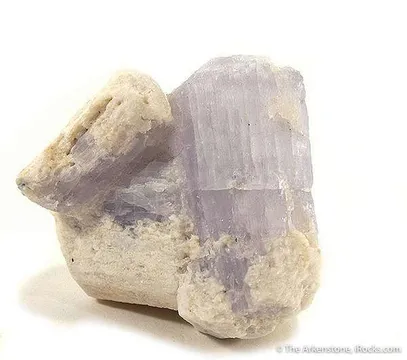
Uvite - emerald-green, stout, translucent tourmaline crystals from Mogok Valley, Myanmar; calcium-rich chemistry, strong provenance, and collector appeal.
Key facts
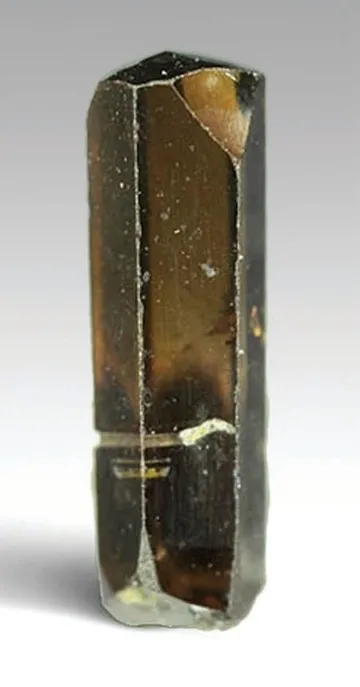
Mogok’s uvite is a small-volume, high-impact collector occurrence: compact crystals of unusually rich green tourmaline, commonly described in older collection and dealer records as uvite and in modern locality databases as the fluor-uvite–uvite series. The best pieces have the look of miniature emerald-green blocks—short, stout, glossy, and translucent rather than long-prismatic—and they stand apart from the better-known brown gem uvites reported from Mogok in the 1970s.

Photo: Wikimedia Commons
The appeal is not merely color. Mogok tourmaline sits in one of the world’s most complex gem terrains, where marbles, calc-silicate rocks, gneisses, syenitic intrusions, pegmatites, and skarns have produced a remarkable suite of boron- and calcium-bearing minerals. In that setting, calcium-rich tourmalines are geologically plausible and collector-significant: they are not just “green tourmaline,” but part of a calcium-magnesium tourmaline story tied to marble and skarn chemistry.
The classic green crystals from Mogok entered the specimen market in very limited numbers in the 1990s. Several important examples were associated with William “Bill” Larson, and dealer records note that analysis at GIA showed the green color in at least some crystals to be due to vanadium rather than chromium. That distinction matters to serious collectors because it gives the material a more specific identity than a trade-color label. A Mogok uvite label should ideally be backed by provenance, analysis, or a publication trail, especially because tourmaline nomenclature has shifted and many older “uvite” labels now belong more cautiously under fluor-uvite–uvite series unless the OH/F dominance has been confirmed.
Visually, collectors look for a saturated green body color, bright vitreous luster, undamaged terminations, stout equant form, and translucency at edges or in transmitted light. The finest examples are thumbnail-scale but memorable: dense little green crystals that carry the cachet of Mogok without being another ruby or spinel.
Search for specimens: View all uvite specimens from Mogok Valley, Myanmar
Mogok Valley lies within Mogok Township, Pyin-Oo-Lwin District, Mandalay Region, Myanmar. Mineralogically, it is part of the larger Mogok Stone Tract, the historic gem district famous for ruby, sapphire, spinel, painite, taaffeite-group minerals, and many skarn and pegmatite species. The town of Mogok sits at roughly 1,170 m elevation and is surrounded by gem-producing villages and mining areas that have been worked through alluvial, eluvial, open-pit, and underground methods.
The important geological framework is the Mogok Metamorphic Belt. Around Mogok, high-grade metamorphic marbles and calc-silicate rocks are interlayered with gneiss and cut by granitic, leucogranitic, syenitic, nepheline-syenitic, pegmatitic, and related intrusive bodies. Gem minerals occur both in primary hard-rock settings and in secondary “byon” gravels derived from erosion of the marble and associated rocks. For uvite, the most relevant environment is not the classic ruby-in-marble story alone, but the calcium- and magnesium-rich marble/skarn/pegmatite interface where boron-bearing fluids could generate calcium-rich tourmalines.
The most specific recorded sublocality for Mogok fluor-uvite–uvite series is Ohngaing, a mining area also written Ohn Gaing or Ohn Kai. Ohngaing is described as lying in the foothills of Let-nyo-taung, with principal rocks of syenite, marble, and gneiss. Its gem mining includes lebin workings and open pits for ruby and sapphire, while a small skarn between gneiss and marble at the edge of the village is noted for rare minerals including sinhalite, serendibite, amblygonite-montebrasite, and other uncommon species. That skarn language fits the collector sense of Mogok uvite: a small, unusual tourmaline occurrence emerging from a district where marble and intrusive contacts have repeatedly produced mineralogical surprises.
Historically, Mogok’s mining emphasis has been ruby and sapphire, with spinel close behind in collector importance. Uvite has never been a bulk commodity there. The brown gem uvites documented in the 1970s came from gem gravels, while the vivid green specimen crystals are a much later and much more restricted collector occurrence. Market and collection records point to a small 1990s pocket or small group of pockets, with some of the best examples passing through the hands of Bill Larson and later appearing through iRocks/Mineral Auctions and other specialist dealers.
Collecting access is not a casual field-collecting proposition. Mogok is an active gem-mining district with private, licensed, and politically sensitive workings. Permission, local guidance, safety precautions, and legal compliance are essential. In the modern period, access and trade have also been complicated by Myanmar’s civil conflict and sanctions affecting the state-linked gem sector. For collectors outside Myanmar, older-provenance material with a clear pre-sanctions or old-collection chain is especially desirable.
Mogok uvite is best known in two collector-relevant expressions. The older gemological literature documented brown gem tourmalines from Mogok gravels as uvite, with nine studied Mogok brown tourmalines all falling in the uvite field in that work. Those are principally gemological stones rather than display specimens.
The specimen material that excites mineral collectors is the vivid green, vanadium-bearing tourmaline from the 1990s. These crystals are generally thumbnail-scale, commonly around 1–2 cm. Documented examples include crystals measuring about 1.2 x 1.1 x 1.1 cm, 1.5 x 1.1 x 0.7 cm, 1.6 x 1.2 x 1.2 cm, 1.7 x 1.4 x 0.6 cm, 1.7 x 1.5 x 1.5 cm, and 2.0 x 2.0 x 2.0 cm. Those measurements are useful because they set expectations: a 2 cm Mogok green uvite is already a substantial specimen for the occurrence, not a small example of a larger-crystal locality.
The best crystals are short, thick, equant to blocky tourmalines rather than elongated prisms. Several are described as sharp, lustrous, translucent, and crystallized all around; one McDougall Minerals specimen is specifically described as equant and doubly terminated. Mineral Auctions described a 1.5 cm piece as a “flower” of green uvite tourmaline “petals,” with the reverse showing a glassy, lustrous, deep green single crystal. This flower-like, clustered habit is one of the charming features of the material, though not every specimen shows it.
Color ranges from saturated emerald green to deep green, with some crystals appearing darker where thickness increases. The most important color note is vanadium. Several reliable specimen records state that the green color was shown to be vanadium-induced rather than caused by the more usual tourmaline chromophores. Chromium is mentioned in some older or auction-style descriptions, but the best-supported collector story for the famous green Mogok material is vanadian green.
Associations are less consistently documented on individual uvite specimens than the crystal itself. Many collected examples are isolated crystals or crystal clusters without matrix. At the locality scale, the relevant associated mineral suite includes calcite/marble minerals, dravite, schorl, fluor-uvite–uvite series, fluorapatite, fluorite, forsterite, garnet-group minerals, spinel, corundum, diopside, dolomite, phlogopite, scapolite, serendibite, sinhalite, and other skarn or marble-related species. For specimen buying, association on matrix is much less important than confirmed identity, crystal completeness, and depth of color.
Quality is judged by five factors: saturated vanadian green color, sharp stout crystal form, luster, translucency, and freedom from damage. Because crystals are small and commonly handled as thumbnails, even a little abrasion on termination edges is visible under magnification. A small, bright, clean, undamaged crystal with provenance is preferable to a larger but dull or bruised one.
The first authenticity issue is nomenclature. “Uvite” has a complicated modern history, and many historical uvite specimens worldwide are now better treated as fluor-uvite or fluor-uvite–uvite series unless analyzed. Mogok specimens are often still sold as uvite because that is the entrenched collector name, but a rigorous label should read “uvite,” “fluor-uvite,” or “fluor-uvite–uvite series” according to analysis. If no OH/F-dominance data are available, “fluor-uvite–uvite series, traditionally labeled uvite” is the conservative curatorial approach.
The second issue is locality precision. Mogok is both a real locality and a broad market name. Mindat specifically warns that some specimens labeled “Mogok,” including some mushroom tourmalines, actually come from Momeik Township in adjacent Shan State. That warning is especially relevant for tourmalines because Momeik is famous for “mushroom” elbaite habits that can be confused in the marketplace with Mogok-region tourmaline. The green vanadian uvite described here is a different collector occurrence and should not be confused with Momeik mushroom tourmaline.
Documented treatments or manufactured fakes specific to Mogok uvite are not the main concern in the literature and dealer records. The larger risks are misidentification as a generic green tourmaline, inaccurate species assignment within the uvite/fluor-uvite/dravite field, overbroad “Mogok” labeling, and unsupported claims of chromium or vanadium coloration. Serious purchases should favor specimens with analytical notes, old collection provenance, or a trail to recognized dealers or published photo records.
Condition issues are typical for small, lustrous tourmaline crystals: chipped terminations, bruised ridges, contacted bases, and hidden underside damage. One well-documented 1.2 cm crystal from the Pete Richards collection was described as excellent except for a chipped termination on the underside, which is a reminder to inspect all sides rather than judging only the display face. Magnification is recommended, especially along the c-axis termination faces and around the edges of the blocky prism.
Rarity is high. The green Mogok material appears to have been a limited 1990s occurrence rather than an ongoing supply. Auction records and dealer descriptions repeatedly emphasize that few were available and that none were commonly seen on the market afterward. When examples do appear, they are usually thumbnails or small miniatures, often loose rather than matrix specimens.
Current market availability is sporadic. Older pieces in private collections, museum-style dealer archives, and sold inventory pages are more common than active offerings. Ethical and legal due diligence is important for any recently mined Myanmar material. In the United States, the Treasury Department designated Myanma Gems Enterprise in 2021, and the UK also sanctioned MGE; collectors should be especially cautious about new supply chains connected to state-controlled gem activity. Old-provenance material acquired before modern sanctions is often preferred by collectors who want the locality without supporting current conflict-linked trade.
The Mogok green uvite story is wonderfully compact: one pocket, a handful of memorable crystals, and a color cause that overturned the easy assumption. Around 1997, a small group of strange green uvites appeared from Mogok. They were not the elongated elbaites most collectors associate with tourmaline. They were squat, lustrous green crystals—some like little blocky barrels, some like clustered petals. The material was sufficiently unusual that examples became associated with Bill Larson’s Burma collection, and later notes record that GIA analysis showed vanadium, not the more expected chromium, as the coloring agent in at least some specimens. In a field where “green tourmaline” can be a generic label, these pieces became something much sharper: vanadian Mogok uvite, from a tiny 1990s occurrence.
One specimen later offered at auction measured only 1.5 x 1.1 x 0.7 cm, yet its description captures why the pocket is remembered. From one side it looked like a rare green flower, a cluster of uvite tourmaline “petals.” Turned over, the same thumbnail resolved into a glassy deep green single crystal. The seller recalled that when the pieces first appeared, such specimens sold for $500–1000, and years later he had seen none for sale recently. That is the market rhythm of Mogok uvite: not a steady supply, but a brief appearance followed by long silences.
A second documented crystal, 1.7 x 1.4 x 0.6 cm and weighing about 2 grams, also came through the Bill Larson provenance stream. It was described as saturated emerald green, lustrous, translucent, and unusually vanadian. The language is dealer language, but behind it is a real mineralogical point: a crystal can be small enough to disappear in a thumbnail box and still carry a highly specific chemical story.
Mogok itself is never just a mineral locality on a label. The valley has a habit of turning individual stones into chapters of history. In 2016, Adolf Peretti and Thierry Falise framed the district in human terms in Pigeon Blood Valley, after years of travel in Myanmar and Mogok. Their account included doctors, miners, brokers, stone-cutters, polishers, traffickers, and families living in the gem economy’s shadow. One of the most concrete stories concerned Thet Ko Ko Oo, a former Mogok gem dealer working with Yadanamon, a local non-governmental organization whose name means “gem” in Burmese. His nine-year-old daughter, Khan Pyae Shan, was HIV-positive; the family learned only when she was four. In 2015, Yadanamon was overseeing 500 HIV/AIDS cases in Mogok, including fifteen children aged from five months to twelve years. Adults could receive government treatment locally, but children needed a pediatrician in Mandalay, a five-to-seven-hour drive away. Doctor Maung Maung Aye began taking the children to Mandalay every month or so. Khan Pyae Shan’s own summary of life was spare and exact: careful diet, careful medicine, every eight hours, two times a day.
Even the mines have seasonal drama. A photograph from the same project shows miners in 2014 pulling extracting equipment out of a deep rock mine before the monsoon rains could flood the galleries. That single detail says more than any generic phrase about hard mining: the mine is not an abstract hole in marble, but a place with galleries, equipment, rain, timing, and men trying to beat the season.
The modern chapter has become darker. In mid-April 2026, state media reported an 11,000-carat rough ruby found near Mogok, weighing 2.2 kg, or 4.8 lb. It was compared with a much larger 21,450-carat stone found in 1996, but described as potentially more valuable because of superior color and quality. That report landed against a backdrop of war. Mogok had experienced intense fighting; control of the mining region shifted in 2024 and later became part of a China-mediated ceasefire arrangement. For mineral collectors, the lesson is uncomfortable but necessary: a beautiful Mogok specimen is also a piece of a living, contested place.