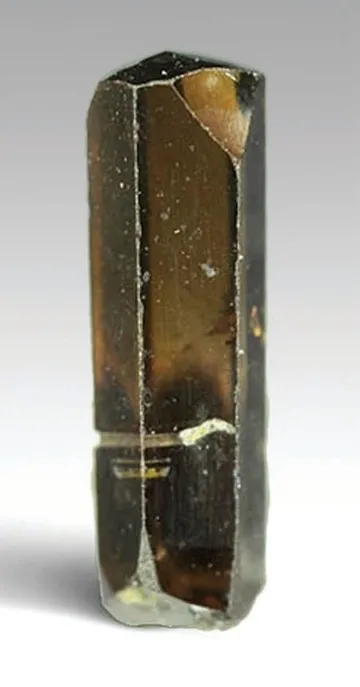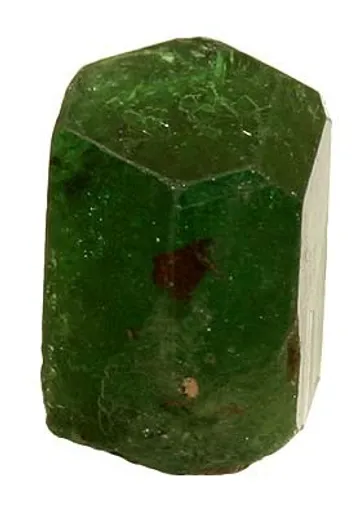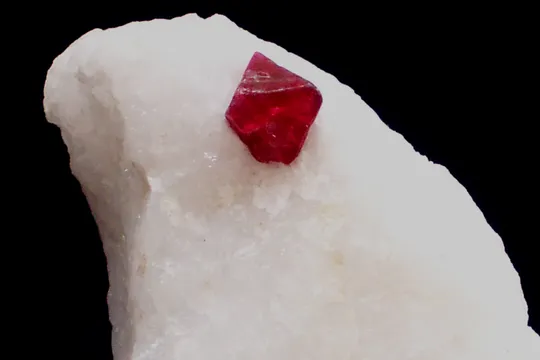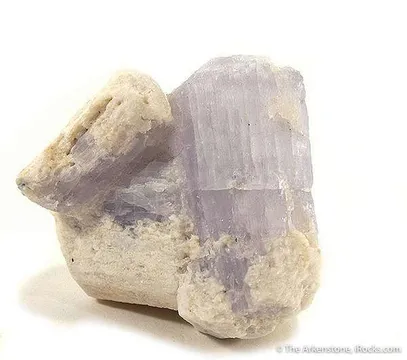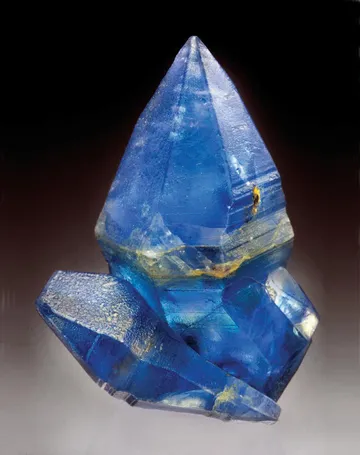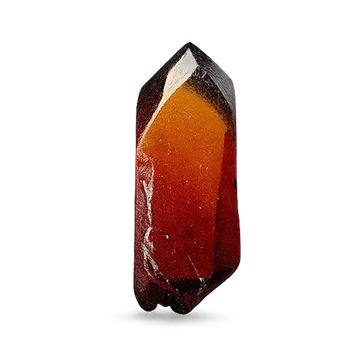
Zircon — Mogok Valley, Myanmar: dense luster, honey-brown to greenish tones, and prized provenance from a famed gem district; strong appeal for collectors.
Key facts
Zircon from Mogok Valley belongs to the quieter, more connoisseurial side of the world’s most storied gem district. Mogok is famous first for ruby, sapphire, spinel, peridot, moonstone, and rare boron-rich species, yet its zircon specimens are immediately attractive to collectors who like dense, lustrous accessory minerals with real gem character. The best pieces show honey-brown to reddish-brown, olive-brown, greenish, or dark resinous tones, often in compact tetragonal crystals with sharp pyramidal terminations or worn-but-brilliant placer surfaces. They are small minerals with a large presence: high luster, high specific gravity, and a saturated “old hyacinth” look that fits beautifully with Mogok’s broader suite of gem gravels.

Photo: Wikimedia Commons
Geologically, Mogok Valley sits within the Mogok Metamorphic Belt, a high-grade metamorphic and intrusive terrain where marbles, gneisses, schists, syenites, charnockites, skarns, and pegmatites are tightly interwoven. Zircon occurs here in more than one role. It is an accessory mineral in the metamorphic and igneous rocks, a resistant heavy mineral concentrated in eluvial and alluvial gem gravels, and a microscopic time capsule enclosed within ruby and spinel. Those inclusions have made Mogok zircon scientifically important: U-Pb studies of zircon and zirconolite inclusions in ruby and spinel have helped constrain the Oligocene to Early Miocene timing of Mogok’s marble-hosted gem formation.
For specimen collectors, the appeal is different from that of a cut gem. A fine Mogok zircon is not about size alone. It is about locality, crystal integrity, luster, natural color, and provenance from one of the mineralogically richest valleys on Earth. The most desirable loose crystals are gemmy to translucent, well-shaped, lustrous, and undamaged, with a credible old label or direct collecting history. Cabinet-size Mogok zircons are not the norm; thumbnails and small miniatures are much more typical, and even modest crystals carry locality interest when they are sharp and documented.
Search for specimens: View all zircon specimens from Mogok Valley, Myanmar
Mogok Valley lies in northern Mandalay Region, within the broader Mogok Stone Tract. The district is mountainous, deeply weathered, and vegetated, which has always made detailed mapping difficult. The gem-bearing rocks are part of a high-grade metamorphic belt dominated in the Mogok area by marbles, gneisses, schists, syenitic and charnockitic intrusions, skarns, and pegmatite-related bodies. In and around the valley, gem minerals are recovered both from primary host rocks and from secondary gravels produced by long weathering of those rocks.
The classic local mining term for gem-bearing gravel is byon. These gravels may be eluvial, lying close to the decomposed source rock, or alluvial, moved and concentrated by water. Zircon is well suited to survive that process. Its hardness, chemical durability, and density allow it to persist as a heavy mineral while softer and less resistant minerals are broken down or removed. In the collector market, Mogok zircon therefore appears most often as loose crystals or water-worn gemmy grains rather than as dramatic matrix specimens.
Within Mogok Valley itself, Ohngaing is one of the best-documented zircon-bearing mining areas. Ohngaing, also recorded historically as Ohn Gaing or Ohn Kai, is a gem mining area in the foothills of Let-nyo-taung. The principal rocks there are syenite, marble, and gneiss, and the alluvium is documented for sapphire, ruby, spinel, garnet, amethyst, schorl, and zircon. A small skarn between gneiss and marble at the edge of Ohngaing village is also noted for rare minerals, illustrating the kind of compact, chemically varied geological environment that makes Mogok so mineralogically productive.
Shwe-pyi-aye is another documented zircon occurrence in Mogok Valley, and Mindat records zircon from that mine with nearby occurrences at Yebu, Lin-yaung-chi, Ohngaing, Nga-yant-inn, Dattaw-pyant and Dattaw-chaung, and Ohn-bin-ywe-htwet. These clustered occurrences are important for collectors because many commercial labels simply say “Mogok” or “Mogok Valley,” while older or better-documented pieces may preserve a more precise village or mining-area name.
The wider Mogok Township also has significant zircon-related occurrences outside the strict valley label. The Myan Gyi mine at Thurein-taung, Kyauk-Pyat-That, is documented for hafnian zircon, and gallery specimens include crystal aggregates and small crystals of collector interest. Such material is often traded broadly as “Mogok,” so a careful collector should distinguish between Mogok Valley, Mogok Township, and the broader Mogok Stone Tract when preserving labels.
Mogok’s mining history is long and layered. The district’s gem reputation extends back many centuries, with modern accounts often noting more than 800 years of fame for fine stones. Under British rule the mines were reorganized, and after the British departure in 1931 much mining returned to older local methods. Legal mining was nationalized in 1963, and the Myanma Gems Enterprise later became the state body controlling legal gemstone activity. In 1990, government-authorized joint ventures expanded mining activity, while traditional work, unauthorized mining, small-scale washing, open pits, tunnels, shafts, and mechanized operations all continued in different parts of the tract.
Zircon was never the headline commodity in this history. It was a byproduct and accessory gem mineral found in the same complex system that produced ruby, sapphire, spinel, and rare species. That is precisely why good Mogok zircon is attractive to locality collectors: it is part of the same geological story, but far less commonly singled out in commerce.
Collecting access today should be regarded as highly restricted. Mogok is not a casual field-collecting destination for foreign visitors, and modern access is complicated by licensing, local controls, security conditions, and the continuing conflict in Myanmar. Since 2024, Mogok has also been directly affected by fighting and shifting control between armed groups and Myanmar’s military. For collectors outside Myanmar, most available zircon specimens are older stock, dealer-acquired material, or pieces that have moved through regional gem and mineral markets.
The best-known Mogok zircon specimens are small, dense, lustrous tetragonal crystals in brown, reddish-brown, honey-brown, greenish-brown, and occasionally green tones. They may be transparent to translucent, though many are included, internally strained, or partially metamict. Sharp crystals show the classic zircon architecture: short prisms capped by pyramids, bipyramidal forms, or combinations of prism and pyramid faces. Alluvial examples can be naturally abraded, with rounded edges and a glassy to greasy luster from long transport and wear.
Documented specimen sizes give a realistic scale for the locality. A photographed Mogok zircon on Wikimedia Commons measures 1.6 x 1.5 x 1.4 cm, a respectable small miniature for the district. Mindat gallery examples from Ohngaing include a zircon crystal measuring 8 x 4.7 mm and a group of gemmy crystals with the largest crystal listed at 6.8 mm. These dimensions are typical of the collector experience: fine Mogok zircon is usually thumbnail-scale, and a well-formed centimeter-class crystal is already noteworthy.
Collectors should expect most Mogok Valley zircon to be loose. Matrix specimens are much less common because the crystals are commonly recovered from gem gravels or decomposed rock. When matrix is present, it should make geological sense for Mogok: marble, gneissic or skarn-related material, mica-rich assemblages, or other rocks compatible with the district’s metamorphic-intrusive setting. Suspiciously perfect crystals perched on unrelated matrix deserve close scrutiny.
Associated minerals depend strongly on the specific sublocality and deposit type. In the Mogok Valley gravels and related mines, zircon may be encountered in the wider company of corundum, spinel, garnet, schorl, amethyst, mica, and other heavy or gem minerals. Ohngaing is particularly notable because it combines alluvial gems with nearby syenite, marble, gneiss, and skarn mineralization. At the broader township level, documented zircon photo associations include muscovite, corundum, and hibonite.
Mogok zircon’s scientific character is as interesting as its hand-specimen character. Zircon inclusions in gem-quality ruby and spinel, and accessory zircon in host rocks, commonly show growth zoning. Published U-Pb work found older cores and younger rims, with zircon recording a wide history from inherited older components to Oligocene–Early Miocene metamorphic growth. In ruby and spinel, the youngest zircon inclusion rims around 22–23 Ma are especially important because they align with the late high-grade metamorphic events tied to gem formation in the Mogok Stone Tract.
For quality, look first for natural color and luster. Rich reddish-brown or honey-brown crystals with strong adamantine to vitreous reflections are classic. A sharp, complete tetragonal crystal is more desirable than a larger but rounded or chipped grain. Transparency adds value, but locality documentation often matters just as much: a modest 6–8 mm crystal with an old Mogok or Ohngaing label can be more interesting than an anonymous “Burma zircon” of larger size.
The main authenticity issue with Mogok zircon is locality precision. “Mogok” is one of the most famous names in the gem world, and it is frequently used broadly. Some labels mean Mogok Valley; others mean Mogok Township; still others mean the wider Mogok Stone Tract or even nearby districts historically lumped into the trade. For a serious collection, preserve the exact wording of every old label and avoid silently upgrading a broad “Mogok” label to “Mogok Valley” unless the evidence supports it.
Be cautious with color. Zircon is widely heat treated in the gem trade, especially to produce blue or near-colorless stones from brown rough. Nearly all blue zircon in jewelry commerce should be presumed heated unless convincingly documented otherwise, and fine blue zircon is not the expected specimen style for Mogok Valley material. A bright blue “Mogok zircon crystal” should raise questions. Natural Mogok specimen crystals are better expected in brown, reddish-brown, honey-brown, greenish-brown, or greenish tones.
Condition matters because zircon is hard but brittle. Loose alluvial crystals may have edge wear, chipped pyramids, bruised terminations, or internal fractures. Some crystals also show metamict effects from natural radiation damage, which can reduce transparency and alter luster. A slight rounding on a placer crystal is acceptable if the locality and appearance are convincing; a broken termination on an otherwise sharp crystal is a more serious value issue.
Matrix pieces should be examined carefully. Because loose crystals dominate the market, any zircon dramatically mounted on matrix should be checked for glue, unnatural seating, mismatched lithology, or a contact that does not match the crystal habit. Repaired, reattached, or composite mineral specimens are not unique to Mogok, but the premium attached to the locality makes documentation important.
Hafnian zircon from the broader Mogok area deserves separate labeling. Material from Myan Gyi mine and other Kyauk-Pyat-That-area occurrences may be compositionally notable and has been documented as hafnian zircon. If a label says “hafnian zircon,” retain that wording and, if possible, keep any analytical documentation with the specimen. Do not apply the term to ordinary Mogok Valley zircon without analysis.
Current market availability is limited but not nonexistent. Small loose crystals from older parcels appear from time to time, often as thumbnails. Better pieces tend to come through specialist dealers, older collections, or collectors who acquired material in Myanmar before recent access and trade conditions became more difficult. Given the ethical and legal complexities surrounding Myanmar gemstones and minerals, buyers should ask for provenance, import history, and any available documentation, especially for recently sourced material.
Mogok has a way of turning geology into memory. When American Museum of Natural History curator George Harlow described his first trip to Myanmar in 1997–1998, he called it a “jaw-dropping experience” and added that he did not know any other place on the planet with such a diverse suite of minerals. That is not a casual compliment from a mineralogist. Mogok compresses gem marbles, syenites, pegmatites, skarns, alluvial gravels, rare borates, and weathered tropical mining landscapes into a district where almost every village name can sound like a specimen label.
In November 2013, Harlow returned with curator James Webster and senior scientific assistant Jamie Newman on an AMNH expedition. Their task was not to buy glamour stones but to understand why Ruby Land was so rich in minerals that are, by definition, rare. They collected more than 200 pounds of specimens, making notes at each stop. The scene around them was unmistakably Mogok: hills with villages and garden plots, Buddhist shrines and gold-leaf pagodas rising from rock outcrops, and working mines scattered through a landscape where geology and trade have been intertwined for centuries.
A GIA field expedition in June 2014 captured the harsher side of that beauty. Vincent Pardieu, Didier Gruel, Dr. Gaston Giuliani, and Dr. Aaron Palke descended into Mogok’s underground workings to document ruby, sapphire, and spinel deposits. In the Kadoke Tad area, the descent went down handmade ladders and by ropes and pulleys. At one point the gemologists were about 1,200 feet, or 365 meters, below the surface. In a district whose finest stones may later sit in velvet trays, the route to the source could be wet marble, handmade ladders, and a vertical darkness measured in hundreds of meters.
Another GIA expedition, led by Andrew Lucas and Vincent Pardieu, shows how field gemology in Mogok can begin with a rumor in a market. On December 29, after a long trip into Mogok the previous day, the team was visiting mines, markets, cutters, gem painters, temples, and pagodas, following Pardieu’s rule of “doing gemology with your eyes and not your ears.” In the gem market they found rough lapis lazuli. Dealers said the mine was local and gave approximate directions. The information got the team into the right area but not to the mine. A friendly farmer, formerly a gem miner, first misunderstood what they were seeking and rode off on his motorbike to bring back the wrong material. Once he understood, he led them on foot up a hill and through brush to a lapis lazuli tunnel mine. No one was working there, but the team confirmed a primary hard-rock lapis lazuli occurrence in the Mogok Stone Tract.
The same GIA account gives one of the most vivid portraits of daily mining life: the kanase women. At Mogok mines, even careful washing leaves gems behind in the discarded rock. In ruby workings, those tailings are white marble, and by local tradition people may search through them and keep what they find. During the British period this work was restricted to women as a way to limit theft. The tradition persisted. At Baw Lone Gyi, the women pushed white marble tailings with scrapers from a platform onto an open-bed truck, then crushed the marble into dust with hammers so no small ruby or spinel would escape. The scene was unforgettable: colorful clothing and painted or cone-shaped hats against white marble, blue sky, green vegetation, and traditional wooden houses. Some women brought children, who played nearby while their mothers worked the tailings. When they found small crystals, the women might hold them in their mouths for safekeeping while continuing to hammer and sort.
Those stories are about Mogok as a gem district rather than zircon alone, but they matter for zircon collectors. The small brown crystal in a thumbnail box comes from the same human and geological world: gravels washed for denser minerals, marble broken and sorted, markets where locality names are traded as carefully as stones, and a valley where an accessory mineral can sit beside ruby, spinel, sapphire, painite, and rare skarn species in the same collecting narrative.