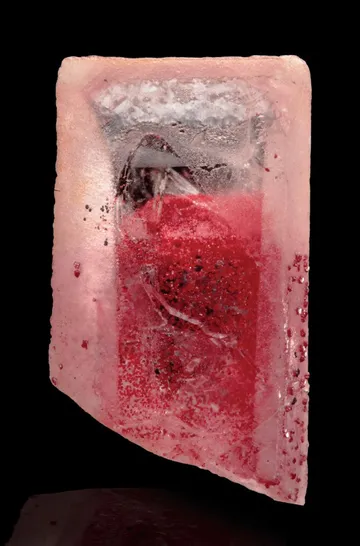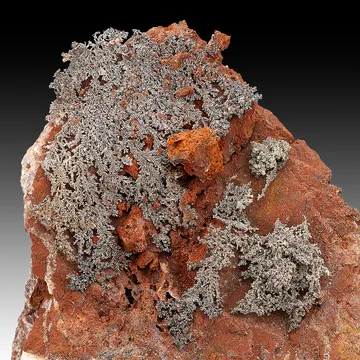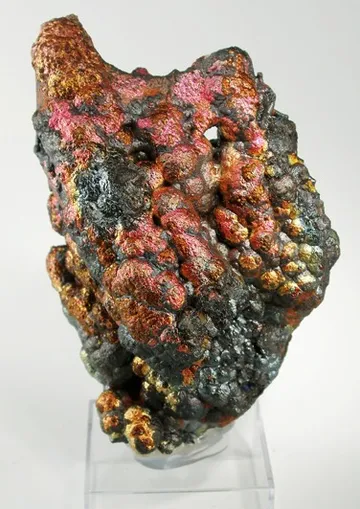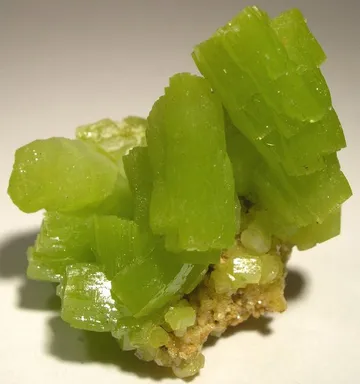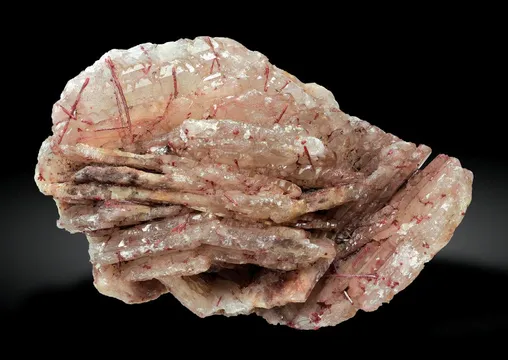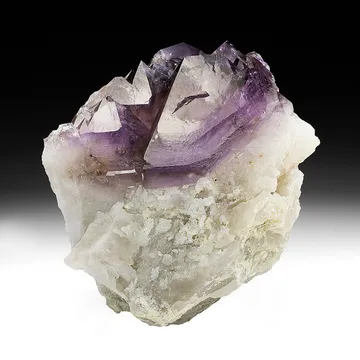
Mariquita Mine, Spain - premier mercury locality in the Ossa-Morena Zone, yielding calomel, eglestonite, cinnabar, and rare mercury minerals in cabinet pieces.
Key facts
The Mariquita Mine at Usagre, in southern Badajoz, is one of those localities that quietly overturns a collector’s expectations. On production alone it was a small mercury mine, easily overshadowed by the immense Almadén district to the east. Mineralogically, however, Mariquita is a first-rate supergene mercury locality: a carbonate-hosted, strongly silicified Hg-Ba-Pb-Au system in the Ossa-Morena Zone whose oxidized fractures and vugs yielded an unusually rich suite of secondary mercury halides, oxychlorides, silicates, oxides, and carbonates.
The mine is also important because it links two very different collecting worlds. Its primary ore was cinnabar, accompanied by mercury, baryte, calcite, galena, pyrite, chalcopyrite, tetrahedrite-(Hg), realgar, sphalerite, and traces of gold. Its best modern specimens, by contrast, are cabinet and miniature pieces that reward close looking: honey to greenish translucent eglestonite crystals in cavities, adamantine calomel crystals and coatings, brilliant droplets of native mercury, red cinnabar, black metacinnabar, and rarities such as corderoite, edgarbaileyite, terlinguaite, pinchite, mosesite, montroydite, and peterbaylissite.
The most desirable Mariquita pieces have a very distinctive look. They are usually small, dense, highly mineralized fragments of silicified limestone or siliceous gangue, with cavities or fracture seams lined by sugary to well-formed secondary mercury species. Good calomel shows bright, sharp, adamantine crystals or richly fluorescent coatings rather than dull crusts. Good mercury specimens show stable, lustrous silver droplets perched in association with calomel or eglestonite. The finest cinnabar pieces show strong red color in calcite-rich or baryte-bearing matrix and are most appealing when accompanied by the later alteration suite that makes Mariquita famous.
Regional View
Country View
For the serious collector, Mariquita’s appeal is not only species rarity but paragenetic completeness. In a single small specimen one may see primary cinnabar, late native mercury, and the supergene products that formed as oxidizing, saline waters moved through the fracture network. The locality is therefore a compact lesson in mercury geochemistry: sulfide ore, liquid metal, chloride-rich alteration, oxychloride crystallization, and late carbonate or silicate mercury phases all compressed into hand-sized and often microscopic pieces.
Search for specimens: View all specimens from Mariquita Mine, Spain
Mariquita, also recorded with Sultana as the Sultana-Mariquita or Mariquita mining group, lies west of the village of Usagre in Badajoz, Extremadura. The district is in the Ossa-Morena Zone of the Iberian Massif, a setting quite unlike Almadén: Mariquita is hosted by Lower Cambrian carbonate rocks of the Santo Domingo Formation, with interbedded shales, sandstones, calcarenites, and irregular flint or chert bodies. The mercury mineralization is tied to strong epigenetic silicification of these carbonates, producing hard silicified limestone and jasperoid-like rock cut by mineralized fractures.
The deposit has been interpreted as a carbonate-hosted epithermal Hg-Ba-Pb-Au system with Carlin-type affinities, but with exceptionally high mercury and baryte relative to the classic Nevada model. Published work describes mineralization formed by epithermal fluids at roughly 200–350 °C, followed by remobilization and supergene alteration. At the specimen scale, this translates into cinnabar-bearing lenses, veins, fracture fillings, and pockets in silicified carbonate, with baryte and calcite as principal gangue minerals.
The ore body is irregularly lenticular, with reported orientations around N110°E and variable dip from near-horizontal to steep, and with a maximum thickness of about 1 meter in some descriptions. In Extremadura’s mining-heritage inventory, the mineralization is described in three principal forms: associated with baryte, associated with baryte and clays in late fractures, and occupying fractures in silicified limestones. Another regional account notes that massive cinnabar zones could reach about 10 cm thick within broader irregular mineralized bodies.
Historically, the workings are old and discontinuous. The area is sometimes described as known from antiquity or at least from the sixteenth century, while documentary mining history is firmer from the seventeenth century onward, including references to royal licenses for mercury exploitation. Modern accounts agree that the mine was worked intermittently and closed definitively in 1971. In its final period, Astur Belga S.A. worked the Mariquita mine from the inclined adit, and the baryte gangue was exploited during the 1968–1971 period before closure.
The mining group included several named workings and shafts. Heritage documentation records the group as including the Sultana, San León, San José, and Santo Domingo shafts, while nineteenth-century reports mention as many as five shafts, with Sultana the only name that clearly persists across the records. The Sultana shaft was reported as 2.60 × 1.50 meters, timbered or supported, and reaching about 30 meters depth. The surface remains include three capped shafts, one open shaft, trenches, filled prospect pits, an inclined adit, and metallurgical remains.
The site is unusually important for mercury-mining heritage in Extremadura because of its surviving Bustamante or aludeles furnaces. Two groups of distillation furnaces were documented: an older group, possibly eighteenth century, with preserved furnace chambers, piqueras, the sloped patio or floor for aludeles, and associated stone-and-brick construction; and a later group, probably late nineteenth century and described in the 1911 mining statistics, with larger capacity, surviving chamber remains, patio, and two truncated-pyramidal chimneys about 2 × 2 meters at the base and 5 meters high. These remains, together with office, laboratory, forge, and lime-kiln traces, make Mariquita more than a specimen locality—it is also a coherent mercury-mining landscape.
Access today must be treated cautiously and legally. The mine is abandoned, but parts of the site are on land used for agriculture and livestock. Environmental studies have described the Sultana shaft as open and used by the landowner for irrigation, and the Mariquita descending gallery as easily accessible at the time of study. Those same studies measured very high total gaseous mercury concentrations inside the mine, far higher than outside, and concluded that human access to the underground workings should be regulated. Collectors should not enter adits, shafts, furnaces, or dumps without explicit permission and appropriate mercury-safety precautions.
The specimen-producing story is comparatively recent. While cinnabar and mercury were long known from Mariquita, the full secondary mercury assemblage was not appreciated until focused collecting and analytical work in the 2010s and early 2020s. Specimens sold and documented as Spanish mineralogical novelties include material collected around 2014–2017, especially from cavities and fractures in silicified, cinnabar-bearing rock. These finds produced honey-colored to greenish eglestonite, clear to white adamantine calomel, native mercury droplets, corderoite on altered cinnabar, edgarbaileyite, terlinguaite, pinchite, mosesite, montroydite, and peterbaylissite—small minerals, but of high scientific and collector significance.
Mariquita calomel is the collector’s signature mineral of the locality, occurring both as off-white to pale coatings and as discrete adamantine crystals in cavities and fractures of silicified cinnabar-bearing matrix. The best pieces show sharp, bright crystals associated with honey to greenish eglestonite and tiny native mercury droplets, sometimes with cinnabar or metacinnabar nearby; documented collector specimens range from thumbnail to cabinet-size matrix pieces, with calomel crystals reported from submillimetric size to visibly dominant crystals around 0.7 × 0.6 cm on exceptional specimens. Fluorescence is an important discriminator here: Mariquita calomel commonly gives an intense orange to red response under ultraviolet light, reported under shortwave and in some specimens under both shortwave and longwave, whereas associated eglestonite does not show the same glow. Ordinary pieces are chalky, dull, or indistinct; the desirable ones combine adamantine crystal definition, strong fluorescence, clear association with eglestonite or mercury, and intact cavities not darkened by light exposure.
Native mercury from Mariquita appears as bright, mobile-looking silver droplets in fractures, vugs, and on secondary mercury minerals, especially eglestonite and calomel, with additional associations including cinnabar, calcite, rosasite, brochantite, edgarbaileyite, and tetrahedrite-(Hg). In the finest specimens the droplets are not mere smears but rounded, lustrous beads held by surface tension on a pale, honey, greenish, or red mineralized surface, giving the piece an unmistakable “alive” quality. The scale varies from droplets visible only in close-up or SEM work—one documented SEM view shows mercury droplets on eglestonite across a field of view of about 70 µm—to hand specimens where many tiny beads are scattered across a siliceous matrix. Good Mariquita mercury pieces are judged by droplet abundance, stability, sparkle, and association; loose, smeared, or contaminated mercury is far less desirable than clean droplets perched naturally among calomel, eglestonite, and cinnabar.
Cinnabar is the primary ore mineral of Mariquita and occurs as red HgS in lenses, pockets, veins, and fracture fillings within silicified Lower Cambrian limestone, commonly with baryte and calcite as gangue. Collector pieces from the locality tend to show massive to granular bright red cinnabar rather than large freestanding crystals, and documented specimens include rich red cinnabar scattered through calcite-rich matrix, sometimes partly coated by black metallic-looking metacinnabar and later off-white fluorescent calomel. Associations are central to value: the most interesting Mariquita cinnabar specimens are those that place the red ore in context with calcite, baryte, metacinnabar, calomel, eglestonite, native mercury, corderoite, or tetrahedrite-(Hg). Ordinary ore fragments are mostly historic curiosities; better pieces have saturated red color, clean contrast with pale calcite or baryte, and evidence of the secondary mercury chemistry that followed the original cinnabar mineralization.
Calcite at Mariquita is primarily a gangue and matrix mineral rather than the main aesthetic prize, but it is essential to the best locality pieces because it records the carbonate-hosted character of the ore and provides the pale background against which cinnabar, metacinnabar, calomel, and mercury stand out. It occurs with baryte in the mineralized system and is repeatedly documented with cinnabar and metacinnabar in specimen material; on collector pieces it may form massive to crystalline calcite-rich matrix, pale fracture fillings, or vug linings rather than large display crystals. The best calcite-bearing specimens are those where calcite is not simply barren matrix but hosts rich red cinnabar, black metacinnabar, fluorescent calomel, or native mercury droplets. As a stand-alone species Mariquita calcite is modest, but as an association it is a key visual and paragenetic anchor for the locality.
Beyond these four species, Mariquita is now documented for a remarkable secondary mercury suite. Eglestonite is arguably the locality’s showiest rarity, forming honey to greenish translucent crystals, commonly octahedral to dodecahedral in habit, in cavities with calomel and mercury. Corderoite and kenhsuite occur with altered cinnabar; edgarbaileyite is present as a rare mercury silicate, including pink to yellow associations with eglestonite; terlinguaite and pinchite add further mercury oxychloride complexity; mosesite appears as vivid lemon-yellow microcrystalline aggregates and masses; and montroydite includes acicular to prismatic groups and curious replacements after mercury droplets. Peterbaylissite, first recognized in the Mariquita work as an “Unnamed Hg Carbonate,” is an especially rare mercury carbonate occurrence. The broader list also includes baryte, ankerite, dolomite, quartz, galena, sphalerite, pyrite, chalcopyrite, chalcocite, realgar, tetrahedrite-(Hg), native gold, goethite, hematite, malachite, azurite, cerussite, rosasite, brochantite, mimetite, oxyplumboroméite, and zálesíite.
Mariquita specimens should be treated as light-sensitive, toxic, and in many cases fragile. Calomel and associated mercury halides from this locality have been specifically described by dealers and collectors as photosensitive, blackening readily in sunlight and even under ordinary lamp light. The safest display practice is intermittent viewing only, with long-term storage in the dark, ideally in a closed thumbnail or perky box with an internal label noting light sensitivity.
Native mercury adds another layer of concern. The droplets are visually appealing but may shift, smear, coalesce, or detach if a specimen is shaken, warmed, inverted, or cleaned aggressively. Specimens with visible liquid mercury should be kept level and sealed in a stable container. Avoid heat, ultrasonic cleaning, solvents, and any attempt to “improve” the surface. Cinnabar and other mercury minerals should not be cut, ground, heated, or abraded; dust control and handwashing are basic precautions.
Condition is often subtle. A Mariquita specimen may look intact to the naked eye but carry delicate microcrystals in the cavities: eglestonite, calomel, terlinguaite, edgarbaileyite, mosesite, montroydite, or peterbaylissite can be damaged by brushing or careless handling. Surface blackening, rubbed mercury droplets, crushed cavities, chalky altered coatings, and dried or contaminated fracture surfaces all reduce desirability. The best pieces have undisturbed cavities, clean droplet morphology, convincing associations, strong calomel fluorescence, and preferably analytical confirmation for the rarer species.
Mislabelling is a real practical issue because the locality produces several pale, yellow, greenish, honey, and white mercury alteration species in close association. Calomel, eglestonite, edgarbaileyite, terlinguaite, pinchite, mosesite, montroydite, and peterbaylissite should not be casually assigned from color alone. Many of the better market specimens have been sold as analyzed, and that matters here. For high-value or rare-species pieces, insist on analytical documentation, old collection labels from recognized Spanish collectors, or a reputable dealer’s written species guarantee.
Market availability is unusual but limited. Mariquita material entered the collector market as a Spanish mineralogical novelty in the 2010s and early 2020s, with specimens appearing from specialist European dealers and private collections. Small cinnabar pieces are not especially rare, but fine calomel with mercury and eglestonite, analyzed eglestonite-calomel associations, and specimens carrying rarities such as corderoite, edgarbaileyite, pinchite, terlinguaite, mosesite, montroydite, or peterbaylissite are far more selective. The best examples are locality specimens first and species specimens second: the strongest pieces show the paragenesis clearly.
For most of its life as a collecting locality, Usagre lived in Almadén’s shadow. It was the minor mercury occurrence in Extremadura, the small mine west of a village, the place with old shafts, baryte, cinnabar, and a few weathered remains. Then the alteration minerals began to speak. What looked like a modest mercury mine proved to contain a hidden secondary suite of extraordinary richness: calomel glowing under ultraviolet light, eglestonite crystals filling tiny cavities, mercury droplets perched like metallic dew, and rare mercury compounds that required careful analytical work rather than casual field identification.
The most memorable field image from the modern story is not a single crystal but a scene at the site: the authors of the detailed study standing with the Sultana headframe in the background and the remains of mercury-distillation furnaces nearby. That image captures the odd double life of Mariquita. Behind the mineralogy is an industrial relic landscape—shafts, inclined adit, furnaces, chimneys, patios for aludeles, and buildings adapted into an agricultural setting. In front of that history are minerals measured in millimeters and microns, some of the most sophisticated mercury alteration products a collector is likely to encounter.
César Menor Salván’s 2022 field note framed the discovery in especially vivid terms: Mariquita and Sultana concealed “un tesoro que había sido pasado por alto,” a treasure that had been overlooked. The phrasing is apt. The treasure was not tonnage but paragenesis. The same rock that once mattered for cinnabar and mercury extraction became, under the binocular microscope, a record of saline supergene alteration: acidic and less oxidizing zones with corderoite on altered cinnabar, deeper or more oxidizing settings favoring eglestonite, and higher-pH conditions producing montroydite and mercury carbonates.
The old mine’s metallurgical remains tell their own story. Heritage surveys describe two groups of Bustamante furnaces: one older set, possibly eighteenth century, with furnace chambers, piqueras, sloped patio, and guides for aludeles; and a later, larger nineteenth-century group with two surviving chimneys rising about 5 meters. These were not incidental ruins. They are the physical machinery of mercury extraction, a local counterpart to the famous mercury road and furnace traditions of Spain, preserved well enough that heritage authors suggested examining whether Sultana-Mariquita could be connected to a broader “Ruta del mercurio del Camino Real” project.
There is also a modern cautionary episode. Environmental researchers entered the accessible Mariquita workings with mercury-vapor instrumentation during the 2011–2012 study period and found a sharp contrast between surface and underground air. Outside the mine, total gaseous mercury readings were comparatively low for such a contaminated mining area. Inside the mine, the readings were dramatically higher, with a reported maximum of 30,163 ng/m3. For collectors, that number turns a romantic abandoned adit into something more serious: a mineral locality where the most attractive specimens are best appreciated from legally collected, already stabilized material, not by casual underground exploration.
César Menor Salván, Borja Sainz de Baranda Graf, and Antonino Bueno, “Secondary Mercury Minerals from the Mariquita Mine, Usagre, Badajoz, Spain,” The Mineralogical Record, 55(4), 481–514, 2024 — The major modern publication on Mariquita’s secondary mercury mineralogy and the key reference for the locality’s current collector status.
Mindat reference entry for Salván, Sainz de Baranda Graf, and Bueno, 2024 — Useful bibliographic and occurrence index listing the minerals tied to the 2024 Mineralogical Record article.
César Menor Salván, “La extraordinaria paragénesis de minerales de mercurio de Usagre (Badajoz, España),” 2022 — A concise illustrated Spanish-language preview of the supergene mercury assemblage, including the Carlin-type interpretation, alteration sequence, and photographic examples.
F. Tornos and J. Locutura, “Mineralizaciones epitermales de Hg (Pb, Au) en Ossa Morena (Usagre, Badajoz),” Boletín de la Sociedad Española de Mineralogía, 11(2), 124–127, 1988 — Early scientific treatment of the Hg-Pb-Au epithermal mineralization and its carbonate-hosted, Carlin-type affinities.
P. Higueras, S. Lorenzo, J.M. Esbrí, E.M. García-Noguero, and L. Reyes-Bozo, “Soil pollution related to mercury-mining activities in the proximity of Usagre (Badajoz, SW Spain),” International Journal of Mining, Reclamation and Environment, 2014 — Environmental study with useful geological, historical, access, soil-geochemistry, and mercury-vapor data.
A. García-Sánchez, A. Murciego, E. Álvarez-Ayuso, I. Regina, and M.A. Rodríguez-González, “Mercury in soils and plants in an abandoned cinnabar mining area (SW Spain),” Journal of Hazardous Materials, 168, 1319–1324, 2009 — Includes mine-size, grade, activity-period, and environmental data for the Sultana-Mariquita mercury deposit.
“Estudio del Patrimonio Minero en Extremadura,” Junta de Extremadura / mining-heritage inventory — Detailed heritage description of the Sultana-Mariquita workings, ore morphology, shafts, inclined adit, Bustamante furnaces, and surviving installations.
Miguel Calvo Rebollar and Christian Rewitzer, Atlas de Minerales de España / Atlas of Spanish Minerals, Prames, 2022 — Frequently cited for Mariquita calomel, eglestonite, kenhsuite, edgarbaileyite, and related Spanish mercury minerals.
Mindat — Mariquita Mine (Sultana Mine), Usagre, Badajoz, Extremadura, Spain — Best single locality database page for coordinates, commodity list, mineral list, and key references.
Mindat — Calomel from Mariquita Mine — Focused occurrence page with associations, photo statistics, and references for Mariquita calomel.
Mindat — Eglestonite from Mariquita Mine — Useful for understanding the locality’s most important secondary mercury association with calomel and native mercury.
Mindat — Native Mercury from Mariquita Mine — Occurrence page documenting native mercury associations with eglestonite, calomel, edgarbaileyite, calcite, cinnabar, and other minerals.
Mindat — Cinnabar from Mariquita Mine — Occurrence page showing the primary ore mineral and its common collector associations.
Mindat — Calcite from Mariquita Mine — Useful for the calcite-cinnabar-metacinnabar association that anchors many matrix specimens.
Mindat — Peterbaylissite from Mariquita Mine — Documents the rare mercury carbonate occurrence at Mariquita.
César Menor Salván, “La extraordinaria paragénesis de minerales de mercurio de Usagre” — Illustrated Spanish field-and-lab note that explains why this small mine became important to mercury-mineral collectors.
FMF forum thread — Blogs de César Menor: Extraordinaria paragénesis de minerales de mercurio de Usagre — Forum source for the original presentation context and discussion.
The Mineralogical Record — Renéville! July–August 2024 issue — Issue listing for the definitive Mariquita article by Salván, Sainz de Baranda Graf, and Bueno.
Fabre Minerals — Eglestonite with Calomel and Mercury, Mariquita mining group — Dealer documentation illustrating analyzed Mariquita material, light sensitivity, fluorescence, and specimen sizes.
Fabre Minerals — Eglestonite with Calomel, Mercury and Cinnabar — Useful specimen description showing the classic cavity association of eglestonite, calomel, mercury, and cinnabar.
Terrium — Calomelano de Mina Mariquita — Spanish specimen page describing a calomel-mercury-eglestonite association from a Carlos González Bargueño collection piece.
MTI Blog — Mina de Hg Mariquita, Usagre, Badajoz — Short mining-history post with 1984 J.M. Sanchis photographs of the inclined adit and mine structures.
International Journal of Mining, Reclamation and Environment — Soil pollution related to mercury-mining activities in the proximity of Usagre — Open PDF with environmental, historical, access, and mercury-vapor measurements.