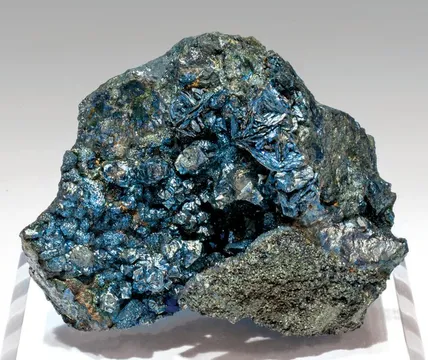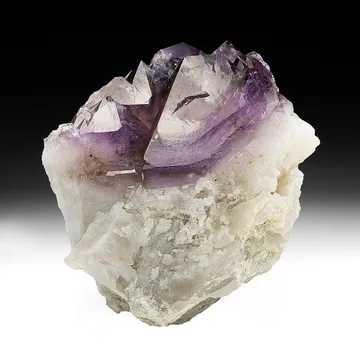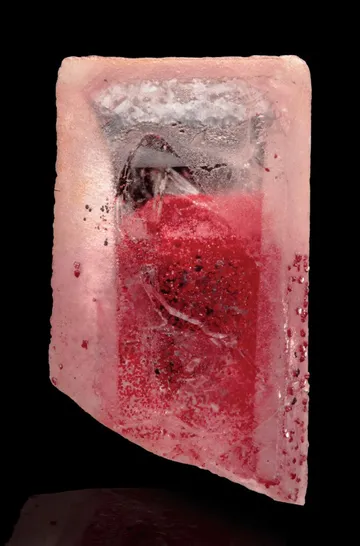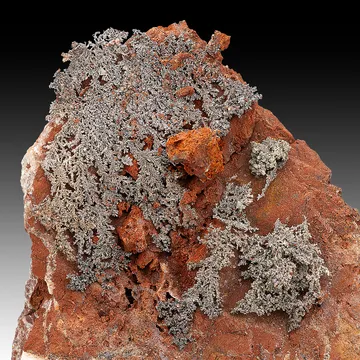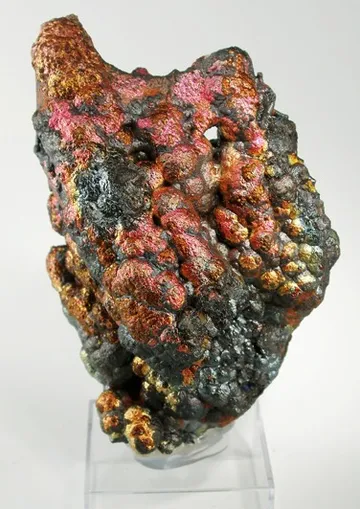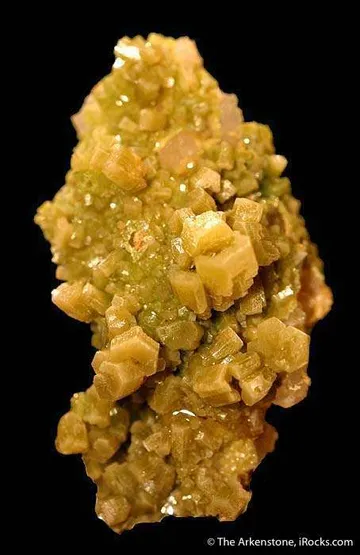
San Andrés Mine, Spain - a renowned pyromorphite locality in Sierra Morena, producing vivid green crystals and pocket specimens prized by collectors.
Key facts
San Andrés is one of those deceptively small European mines whose fame rests on a narrow interval of extraordinary specimen production. The mine lies in the Sierra Morena of Córdoba, in the Espiel municipality, not far from Villaviciosa de Córdoba and the Puente Nuevo reservoir. Industrially, it was a modest baryte operation; mineralogically, it became one of Spain’s great pyromorphite localities, a source of intensely colored green specimens that entered major Spanish and international collections and gave late-20th-century collectors a modern counterpart to the older Spanish “green lead” traditions of El Horcajo and the Sierra Morena lead districts.
The deposit is a baryte vein system with galena and iron oxides, hosted in older metamorphic and sedimentary rocks. The phosphate collector mineral here, pyromorphite, formed in the oxidized lead-bearing environment where galena, baryte, limonite, and open cavities intersected. The best specimens are not massive ore curiosities but sharply crystallized pocket pieces: apple-green to neon-green clusters of hexagonal prisms, globular and botryoidal aggregates, coralloid sprays, rice-grain-like crusts, and doubly terminated crystals perched on white to pinkish baryte or brown limonitic matrix. Their color can be startlingly artificial-looking, but on first-rate pieces it is entirely natural: a saturated, wet-luster green that makes San Andrés instantly recognizable on the table.
Regional View
Country View
San Andrés specimens have two intertwined histories. One is the mining history of a baryte vein exploited in the 1970s and 1980s, with underground levels, a ramp, transverse workings, and stopes. The other is the collecting history: early pyromorphites known by serious Spanish collectors before the mine became broadly famous, important 1980s finds, and then the celebrated 1997–1998 recovery of specimens from the Realces/Victoria and tunnel pockets after collapse had cut off access to the productive chamber. The mine’s reputation today rests especially on those later pockets, whose best pieces combine the miniature scale prized by connoisseurs with vivid color, strong luster, and distinct crystal architecture.

Photo: Wikimedia Commons
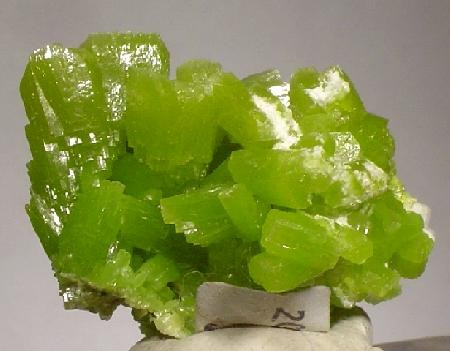
Photo: Wikimedia Commons
Search for specimens: View all specimens from San Andrés Mine, Spain
San Andrés is a baryte vein deposit in the northern Córdoba mining country of Sierra Morena. The mine is placed by Spanish and mineralogical sources in the Espiel municipality, with Villaviciosa de Córdoba often given as the nearest town or older collecting reference. An IGME industrial-minerals report locates the mine between kilometer points 104 and 105 on the local road toward Villaviciosa, reached by a track of about 500 meters, and notes that the workings were visible from the road. Mineralogical usage now generally favors “San Andrés Mine, Espiel, Córdoba, Andalusia, Spain,” while older labels and dealer descriptions may read “Villaviciosa de Córdoba.”
Geologically, the mine exploited a vein that divided into two branches roughly 30 meters apart, with intermediate offshoots. The host rocks include Precambrian schists, mica schists, and gneisses, together with Carboniferous slates. At surface, the mineralized structure was recognized for about 400 meters. The reported strike ranges from approximately N70E to east-west, with a very steep northerly dip, and an average thickness near 1.5 meters. The principal industrial mineral was baryte, accompanied by galena and iron oxides; the pinkish tone of part of the baryte reduced its usefulness for filler-grade applications, though richer pockets were suitable for drilling-mud baryte after concentration.
The mine had both open and underground workings. The underground layout included a crosscut to the veins, galleries driven along strike, winzes, and six levels separated by about 10 meters. During one documented phase, the operator UNISUR had driven a 179-meter ramp and 125 meters of strike gallery to reach older levels. Baryte was mined by stope methods and sublevel retreat in previously worked zones. The extracted material was treated gravimetrically and, in some cases, through dense-media methods at UNISUR’s Cerro Muriano fluorspar plant, about 20 kilometers away. A product analysis from the San Andrés operation showed a high-baryte concentrate for drilling muds, with BaSO4 near 94.54%, SrSO4 near 1.53%, silica near 2.12%, ferric oxide near 1.04%, and measurable lead.
Historically, the concession is recorded in the specialist literature as having been requested in 1909, while the earliest mining-work data cited in the Bocamina monograph go back to 1926. The mine first yielded galena concentrates; later, after the 1973 oil crisis increased demand for oilfield raw materials such as baryte, old lead-bearing baryte veins in Spain were reopened or re-evaluated for baryte. San Andrés fits that pattern precisely: an old lead-baryte occurrence whose specimen fame emerged during and after industrial baryte exploitation.
Collectors had become aware of San Andrés pyromorphite by at least the late 1970s and early 1980s. Botryoidal and globular pieces, some held in the Folch collection and other Spanish collections, circulated before the great modern pockets were broadly known. In the early 1980s, collectors recovered numerous quality specimens, and by the mid-1980s the mine had already produced prized green pyromorphites with globular, coralloid, and prismatic habits. A recurring theme in collector accounts is that significant pyromorphite was sometimes regarded in mining terms as troublesome “green lead” or potential ore rather than as world-class specimens; pieces were damaged, dropped, buried in clay, or even processed before their collector value was fully appreciated.
The greatest specimen-producing chapter came after the mine had effectively ceased ordinary industrial activity. In 1997 and 1998, collectors reopened access through a dangerous collapsed zone by means of a metal tunnel or tube arrangement that allowed them to reach a pyromorphite chamber. The names attached to the best finds have become part of San Andrés collecting vocabulary: the Realces pocket, also called Victoria, dated mainly to October–November 1997, and the tunnel pocket, dated to November 1998. These finds produced the vivid apple-green, lustrous, doubly terminated, prismatic pyromorphites that now define the locality in the international market.
Collecting access today should be regarded as effectively closed for responsible collectors. The productive zone was already notorious for collapses, unstable stopes, filled shafts, bad air, and dangerous crawlways in the accounts from the 1980s and 1990s; later collector comments describe the pyromorphite area as being in extremely poor condition and not a place to enter. The site is a former mine on private land, and all visits require permission, legal access, and serious underground safety evaluation. For modern collectors, San Andrés is best approached through well-provenanced specimens rather than field collecting.
San Andrés pyromorphite ranges from older botryoidal and globular aggregates to the later, highly prized 1997–1998 pocket pieces with bright apple-green, yellow-green, and occasional paler green to near-celeste tones. The best crystals are lustrous hexagonal prisms, commonly short to medium prismatic, with flat pinacoidal terminations, hopper or skeletal development, multiple hexagonal terminations, and, in the finest pieces, doubly terminated crystals standing free on baryte or limonitic matrix. Reported specimen sizes from the classic pockets range from thumbnails of about 2 cm to cabinet pieces near 10 cm, with main crystals commonly several millimeters and exceptional crystals around 1–2 cm. Realces/Victoria specimens are often praised for aerial composition and sharp crystal development; tunnel-pocket pieces include some of the most vivid green material and attractive pyromorphite on baryte. Ordinary San Andrés pieces are dense crusts or less defined aggregates, still colorful but visually flat; superior pieces show separation, luster, undamaged terminations, dimensional “spray” or bridge-like architecture, and enough baryte or limonite matrix to give the green crystals contrast.
The documented mineral list for San Andrés is short but telling: baryte, galena, cerussite, pyromorphite, and wulfenite. Baryte is the structural and industrial mineral of the mine and the matrix for many of the best pyromorphites. Galena supplied the lead source and appears in the baryte vein system, while cerussite is a classic oxidation-zone companion and appears on some San Andrés pieces as colorless to pale lead-carbonate crystals. Wulfenite is far scarcer here than pyromorphite and is a locality rarity rather than the reason the mine is collected. No accepted type-locality mineral is tied to San Andrés; its mineralogical importance is instead as a classic modern European pyromorphite locality with a sharply defined and well-documented specimen history.
San Andrés specimens are heavily locality-dependent in value. “San Andrés green” is a strong selling point only when the specimen actually has the right morphology, matrix, and provenance. Because the mine’s best material overlaps in habit with other classic Spanish pyromorphite localities, especially El Horcajo, mislabelling is a real concern. Collector discussions record San Andrés pieces seen or suspected under Horcajo labels, particularly older large-crystal or less lustrous material with brownish terminations. Conversely, some genuinely old San Andrés specimens can look unlike the bright 1997–1998 pocket pieces, so a cautious buyer should judge by a combination of label history, collection provenance, matrix, habit, and credible dealer documentation rather than color alone.
I have not found a well-documented published case of systematic fake San Andrés pyromorphite production, dyed treatment, or artificial crystallization sold as San Andrés. The more practical authenticity issues are restored pieces, composite-looking damage repairs, exaggerated pocket assignments, and old labels that use Villaviciosa de Córdoba rather than Espiel. Restoration is especially plausible on larger older pieces because several accounts describe pocket material falling from high positions in the stopes, being gathered from the floor, transported under rough conditions, or damaged by collapse. Examine large cabinet pieces for glued crystal groups, filled contacts, and unnatural joins at the baryte or limonite base.
Condition is critical. Pyromorphite is fairly dense but not hard, and San Andrés crystals commonly have exposed terminations and bright luster that makes even small chips conspicuous. The most vulnerable pieces are aerial sprays, doubly terminated crystals, and curved or skeletal groups projecting from baryte. Botryoidal and coralloid forms tolerate minor edge rubs better visually, but broken luster, bruised knobs, and dull clay-filled recesses lower appeal. Some San Andrés specimens show minor fluorescence under shortwave or both longwave and shortwave ultraviolet; fluorescence should be treated as an interesting supporting observation, not a diagnostic guarantee.
Rarity depends strongly on quality. Small, representative San Andrés pyromorphites appear with some regularity in dealer inventories and online auctions, but the best Realces/Victoria and tunnel-pocket miniatures and small cabinets are now classic pieces and tend to cycle from older collections rather than from new finds. A top specimen should have a specific label chain, preferably noting a pocket or date such as 1987, 1997 Realces/Victoria, or 1998 tunnel pocket, and should show the features collectors pay for here: vivid apple-green color, wet luster, sharp hexagonal form, undamaged terminations, and an aesthetic relationship to baryte or limonite matrix.
San Andrés is remembered less like a mine and more like an underground obsession. In the words of Juan Peña, it became a whole “Universo San Andrés,” a place of rival memories, green fever, collapsed passages, and specimens that seemed too vivid to have come from a small baryte working in Córdoba. The stories collected by Spanish mineralogists and collectors are unusually rich because many of the protagonists later compared memories in public: Carlos Pareja, José Ahuir, Juan Peña, Pepe Morales, Jordi Fabre, Nacho Gaspar, and others, each with a piece of the puzzle.
One of the earliest collecting threads begins around 1979–1981, when a Granada group associated with Don José Varela Guerra, Javier Olivares, and Juan de Dios Yáñez went to Córdoba after hearing that pyromorphites had been found there. They first collected in the mine dump, where even loose crystals over a centimeter could be found. On a later visit they entered the mine itself and already recognized the danger: a chimney had been filled with rubble that was coming down into the workings. As material emptied out, the once-spacious distance between roof and floor diminished until the passage became a crawl. Pepe Morales recalled first going in late 1981 and later returning frequently with Carlos Pareja; by then San Andrés was changing from a baryte mine into a test of nerve.
In Málaga, José Ahuir and Carmen heard around 1980 that badly broken pyromorphites had been picked up from the dump of a Córdoba mine. A friend, Domingo Beltrán of Belmez, helped connect the rumor to San Andrés after speaking with local people and a miner traveling toward El Vacar. Ahuir and companions first reached the mine with Domingo’s help, then by hitchhiking, then by train. The practical details are wonderfully period-specific: Spanish roads still largely two-lane, old transport improvised, and collectors pursuing an uncertain green rumor across Andalusia. Ahuir established good relations with the mine staff, and during one trip with Ignacio Moreno Vergara he found a pyromorphite pocket in the roof of a stope, wrapped in pyrolusite-rich material, more than six meters above the floor.
That six-meter pocket produced one of the mine’s enduring images: a ladder suspended in the air with wires because it did not quite reach the roof. The collectors had support from mine technicians but not the proper means to work the pocket cleanly. Hammer blows were made almost blindly. When a pick opened a void, pieces did not come out calmly; they rained. Peña called it “lluvia verde,” a green rain of crystals, clay, and manganese-stained blocks falling from above. Some pieces were caught, others stepped on and buried in the mess. One 7 x 5 cm specimen in José Ahuir’s collection reportedly fell from that six-meter height, shattered enough to cause despair, and was later restored after Ahuir recovered missing crystals from companions who had received parts of the same fall.
By the late 1970s and early 1980s, according to Jordi Fabre, the mine was already known to a few well-informed collectors, including Máximo Reyero, who was interested in the old “plomo verde.” Fabre recalled obtaining pieces directly from the mine foreman before most collectors knew people were visiting San Andrés for specimens. One story from those years is almost unbearable to a collector: a large amount of pyromorphite from a pocket in the vein had been put through the crusher to test whether it might be useful as ore. To modern eyes, that image is nearly tragic—tons of potential specimen material reduced to industrial curiosity.
The so-called Geoda del Tarta is perhaps the most famous San Andrés episode, though several participants later emphasized that it was not a single neat geode but a pocket-zone or sequence of adjoining geodes. Carlos Pareja and Pepe “el Cocinero” Morales said they had encountered the pocket about a week before Juan Manuel, “El Tarta,” became associated with it. The zone was actively collapsing; where an earlier approach used a four-meter ladder, entry after collapse meant crawling through a hole to reach pieces almost at hand. Pareja and Morales worked only about an hour because the risk was extreme, then waited several days for water and collapse activity to settle. When they returned on a Monday, they smelled carbide before they reached the chamber.
Inside, the atmosphere was bad, and someone was on the floor, seemingly asleep and unresponsive. It was El Tarta, overcome in the chamber. Pareja wrote that they took a long time to revive him and get him out to breathe. Around him lay an astonishing accumulation of pyromorphite, compared by Pareja to heaps left by a truck dumping sand: specimens of many sizes, mostly under 15 cm but with a few larger, produced by one geode after another separated by fragile walls. El Tarta went out to recover, the others worked the inner side of the pocket until it ended, and then the practical problem became moving the green load. His car was parked farther away than usual, which is why they had not noticed it on arrival; the vehicle’s underside reportedly scraped from the weight.
Juan Peña preserved another version of El Tarta’s own account, told years later in Triana over tapas. In that telling, the hole seemed to open beyond control: pieces fell faster than he could gather them, and if he picked them up he could not dig, but if he dug he stepped on what had fallen. He carried loads to the car with a construction wheelbarrow over several days. The tale turns surreal when he describes killing a rat and then a snake, then leaving the chamber because their “families” might come after him—an episode Peña gently suggested may have belonged more to exhaustion and fumes than to zoology. The important mineralogical point is not the folklore but the scale: this pocket produced large, bright, memorable pieces that Spanish collectors still recognize by name.
The mine also produced quieter but equally vivid scenes. Peña described his first serious night approach on April 2, 1987: arriving around one in the morning, walking up after a barrier blocked the track, and being met by two small dogs in the darkness. One dog, a female, followed collectors into the mine and waited for them outside the stressful chamber; her shining eyes were the first thing seen on exit. The productive place lay at the end of the mine, reached by crawling up a steep collapse into a chamber below an ominous filled shaft. Beyond the fear, the view was unforgettable: baryte overhead, dotted with pale green crystals on white, like a spring landscape in what he called the “culo del demonio.”
Repeated trips became a ritual of exhaustion. Collectors left Seville late, needed to return for work, carried gear up from the road, worried about dogs and Guardia Civil controls after complaints from the landowner, and asked themselves in the dark, half-joking and half-desperate, what they were doing there again. Once underground, with lights on and no one able to see them from outside, the anxiety gave way to the familiar compulsion: crawl, haul in the tools, stand up where possible, look for signs that others had been there, and start to chip. One pocket Peña described measured roughly 50 cm high, 40 cm wide, and 30 cm deep, a cavity in baryte lined not with loose plates but with corals, mossy growths, sprays, and hollow stalactites of pyromorphite. Some specimens had pale green almost bluish tones; others showed stronger spring green, manganese coatings, and the rice-grain habit so characteristic of the mine.
Then came the 1997–1998 tunnel adventure, the episode that placed San Andrés permanently among modern European specimen legends. In 2006, when the Bocamina monograph was being prepared, Peña and others revisited the mine to measure chambers and reconstruct where the pockets had been. He described the tunnel project as the work of “four madmen” with a handful of loyal family and friends. Between May and October 1997, the team excavated through the debris of a major collapse to regain access to a chamber known to be productive. A second phase took place in the second half of 1998 and ended on December 28. Out of that effort came the Realces/Victoria and tunnel-pocket specimens that dealers and collectors still single out by pocket name.
The mine’s dangers were not literary exaggeration. The “bolo de barita,” a hanging mass of baryte, appears again and again in the recollections like a character in the story. In 1986, Ahuir, Carmen, and the Fernández couple ended their San Andrés chapter after working beneath it, with the chamber frequently collapsing and the floor rising as the exit narrowed. The stope roof ended in a filled, open shaft with old timbers visible. Years later, Pareja wrote that the same baryte block discussed by Ahuir was the one the 1997 group propped with a wooden-block wall. The productive area was roughly 280 meters from the mine entrance, and after rain, water inside the mine could fall in streams several centimeters across while the roof shed layers that struck shoulders hard enough to hurt.
There were losses above ground too. Jordi Fabre recalled traveling more than 1,900 km round trip after a theft from the mine office left broken glass and fragments of pyromorphite on the floor where a box had failed and part of the stolen material had broken. Peña described an exquisite specimen he extracted from a fine geode that was later stolen from his stand at Sainte-Marie-aux-Mines in 1998. Such details explain why old San Andrés labels can carry unusually charged provenance: they are not just place labels but fragments of a collecting era in which the distinction between triumph and loss could be a collapsed crawlway, a broken office window, or a missing specimen at a show.
The last note is a New Year’s one. Pepe Morales remembered a night when he and companions stopped at a bar in Cerro Muriano and a cheerful man told them he knew what they were after: the green stones, “morfitas.” That night they won on a slot machine and then won again underground, finding a good pocket while rain poured outside and inside the mine. Carlos Pareja remembered the same night: midnight struck while they were still in the mine digging. He thought it was January 1, 1988. The image is perfect San Andrés—mud, rain, fatigue, superstition, danger, and a pocket of green crystals found at the turn of the year.
Ramos, I.; Palero, F. J.; Peña, J. (2006). “La mina ‘San Andrés’.” Bocamina, 18, 12–83. The principal specialist monograph citation for the locality, covering the mine and its pyromorphites.
Peña, J. (2006). “La aventura del túnel de San Andrés.” Bocamina, 18, 50–83. The detailed first-person account of the 1997 tunnel project that reopened access to the pyromorphite chamber.
Bocamina 18 overview, Un caillou dans la poche Bibliographic description of the 2006 monographic issue, including publication date, page count, article titles, authors, and a summary of the mine’s baryte and pyromorphite history.
IGME industrial-minerals report section on Mina San Andrés Primary Spanish technical source for the baryte vein geometry, host rocks, workings, operator, planned production, treatment, and product analysis.
IGME Memoria 2006, Museo Geominero acquisitions and exhibits Notes a large apple-green crystallized pyromorphite specimen from the closed San Andrés baryte mine, extracted in 1998 and held by the Museo Geominero.
Mindat reference entry for pyromorphite from San Andrés Mine Mineralogical reference entry tying pyromorphite specifically to San Andrés Mine, Espiel, Córdoba, Andalusia.
MINA SAN ANDRÉS. 1997: La aventura del túnel de las piromorfitas — MTI Blog — Media post by Malacate linking to the Bocamina PDF article on the 1997 tunnel adventure.
Piromorfitas de mina San Andrés, Córdoba — MTI Blog — Photo-oriented MTI post featuring San Andrés pyromorphites from the José Ahuír collection, photographed by J. M. Sanchis.
San Andrés pyromorphite image file — Wikimedia Commons, Rob Lavinsky / iRocks.com — Freely licensed specimen photograph showing the neon-green, bubbly habit on limonitic matrix.
San Andrés pyromorphite image file — Wikimedia Commons, Rob Lavinsky / iRocks.com — Freely licensed specimen photograph of apple-green translucent prismatic pyromorphite from San Andrés.
San Andrés Mine, Espiel, Córdoba, Andalusia, Spain — Mindat — Core locality page with the accepted mineral list, locality hierarchy, and specimen-photo references.
Pyromorphite from San Andrés Mine — Mindat locality entry — Species-specific locality entry for pyromorphite from San Andrés.
Reference Specimens / Spain — Fabre Minerals — Excellent dealer-reference archive with dated San Andrés pyromorphites, pocket names, sizes, habits, fluorescence notes, and publication references.
Rosell Minerals: Mina San Andrés — Short market and collecting note on San Andrés pyromorphites known since the first half of the 20th century and recovered in quality during the early 1980s.
Terrium: Piromorfita de Mina San Andrés — Dealer description with a vivid account of a San Andrés specimen’s provenance and habit, including the “Paquito El Malagueño” story.
MTI Minas Andalucía: Mina San Andrés — Photo index and locality post for San Andrés, tagged for baryte, cerussite, galena, pyromorphite, and wulfenite.
Historia de la recolección de minerales en la Mina San Andrés — Foro FMF — Long collector thread preserving first-person accounts and photographs from the San Andrés collecting history.
La aventura del túnel de las piromorfitas — MTI Blog — Entry point to the Bocamina tunnel-article PDF and a concise bibliographic record of the 1997–1998 recovery effort.
Bocamina 18 overview — Un caillou dans la poche — Useful bibliographic summary of the San Andrés monographic issue, including article titles, authors, and pagination.
IGME report on Spanish baryte resources, including Mina San Andrés — Technical geology and mining details for the baryte operation.
IGME Memoria 2006 — Museum-context source noting a major San Andrés pyromorphite specimen acquired or highlighted by the Museo Geominero.