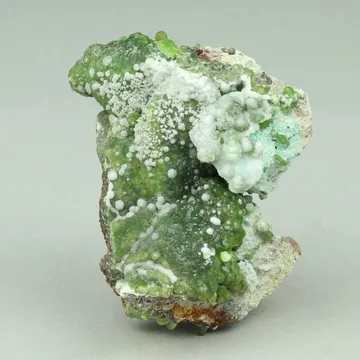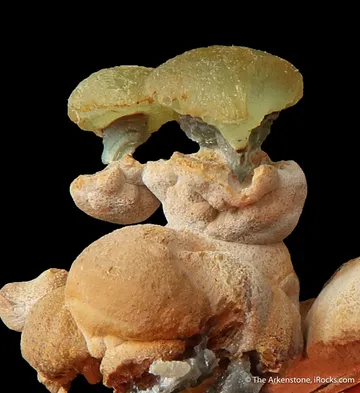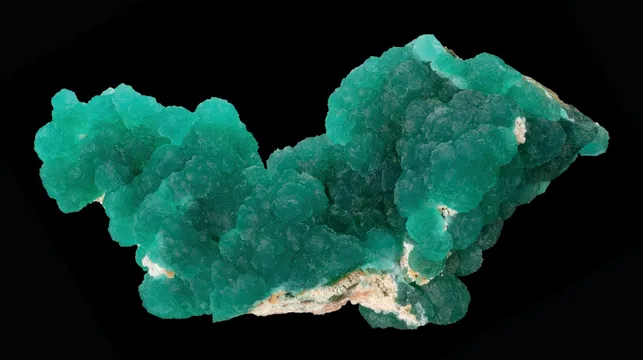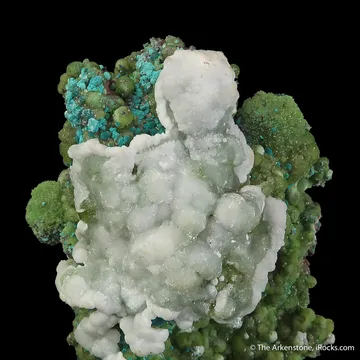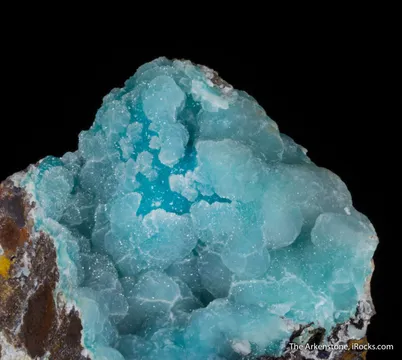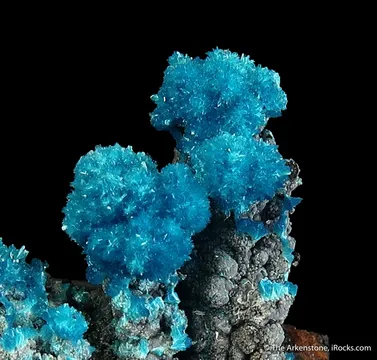
Madem-Lakkos mine, Greece — historic Kassandra locality famed for manganese-rich rhodochrosite in Pb-Zn-Ag deposits; pink botryoidal masses with quartz and sul…
Key facts
Madem-Lakkos is one of the great old names of the Kassandra mining district of northeastern Chalkidiki: a marble-hosted Pb-Zn-Ag replacement deposit whose collector fame rests not on ore tonnage, but on the unusual beauty of its manganese-rich carbonate assemblage. The mine sits in the Stratoni sector of the district, west-northwest of the port village of Stratoni, within the structurally busy Serbo-Macedonian Massif. Its ores were localized in marble horizons of the Kerdylia unit and along the Stratoni fault system, where hydrothermal fluids produced massive sulfides, skarn-related mineralization, quartz-rich breccias, and late carbonate veins.
For collectors, Madem-Lakkos means pale to lively pink rhodochrosite, often in rounded, spherulitic, botryoidal, or crustiform masses rather than the transparent rhombohedra prized from Colorado or Peru. The best pieces have a soft but unmistakable Balkan character: pink rhodochrosite rolling over quartz and black sphalerite, sprinkled with pyrite, joined by calcite or aragonite, and sometimes accompanied by galena, arsenopyrite, bournonite, boulangerite, or stibnite. It is a locality where contrast matters. Fine specimens are not simply pink; they show the full replacement-system palette—rose carbonate, glassy quartz, brassy pyrite, dark sulfides, and white to cream late carbonates in compact, architectural arrangements.
Regional View
Country View
The locality is also important historically. The Kassandra mines belong to a mining landscape worked since antiquity, with lead-rich ores from the Stratoni area smelted for silver and later exploited through Roman, Byzantine, Ottoman, Franco-Ottoman, Greek industrial, TVX, Hellas Gold, European Goldfields, and Eldorado Gold phases. Madem-Lakkos itself is now a depleted and repurposed mine area rather than an ordinary collecting ground. That status gives surviving specimens much of their present appeal: good material is finite, scattered through old collections, dealer stocks, and a small number of modern recycled or legacy holdings rather than coming continuously from active pocket mining.
Search for specimens: View all specimens from Madem-Lakkos mine, Greece
Madem-Lakkos lies in the Kassandra mining district, Aristotelis municipality, Chalkidiki, Central Macedonia, Greece, close to Stratoni and within the long mineralized belt that also includes Mavres Petres, Olympias, Piavitsa, and Skouries. In modern mining terminology it is part of the Stratoni project, together with Mavres Petres. The old Madem-Lakkos orebody lies east of Mavres Petres; the two deposits are separated by roughly two kilometres of prospective marble, and both are tied to the Stratoni fault corridor.
Geologically, the deposit is a polymetallic carbonate-replacement system, commonly described as a distal skarn or skarn-replacement style deposit. The host rocks belong to the Kerdylia unit of the Serbo-Macedonian Massif, a metamorphic complex of biotite gneiss and schist interlayered with marble, amphibolite, hornblende gneiss, and migmatitic rocks. Ore was emplaced principally in marble horizons, with replacement also affecting aplite. The controlling recipe was a combination of reactive carbonate host rocks, folding and fault preparation, and hydrothermal fluids related to Oligocene intrusive activity in the district.
The principal ore minerals are pyrite, sphalerite, galena, arsenopyrite, and chalcopyrite. In mining shorthand the base-metal ore was commonly treated as a blende-pyrite-galena assemblage. Quartz, calcite, and rhodochrosite form the key gangue minerals for collectors, with the collector-quality pockets and vein-breccia material representing the aesthetic edge of a much larger sulfide system. Scientific studies distinguish early massive replacement ore, later disseminated sulfide ore rich in quartz and manganoan calcite, local skarn mineralization, and younger quartz-rhodochrosite vein and breccia assemblages cutting or overprinting the sulfide bodies.
Madem-Lakkos has produced specimens from several visual styles. The classic rhodochrosite material is typically pale pink to stronger rose-pink, forming rounded aggregates, crusts, and spherules on quartz and sulfides. Other pieces show manganoan calcite as pinkish crystals, sometimes fluorescent, on quartz or carbonate matrix. Sulfide specimens may carry sphalerite, galena, arsenopyrite, and pyrite in compact replacement masses, while rarer pieces show sulfosalts such as bournonite or boulangerite. The mine is also noted for pyrite, including unusually large historic crystals reported from the locality.
Mining in the Kassandra district is ancient. Modern summaries of the district describe a peak of ancient activity in the time of Philip II and Alexander the Great, when silver and gold from the region helped finance Macedonian power, and they estimate about one million tonnes of ore extracted during the classical period from evidence including ancient slags. Modern recorded production at Stratoni began in 1901 under Franco-Ottoman operation, continued under the Hellenic Fertiliser Company, passed to TVX in 1996, to the Greek state in early 2004, and then to Hellas Gold in April 2004. Production records for the Stratoni mines from 1901 to 1995 total about 12.6 million tonnes of mined ore; TVX production from 1996 through the 2002 closure added more than 1.7 million dry tonnes milled.
Today Madem-Lakkos is not a casual collecting locality. The deposit is mined out, old workings have been subject to backfilling and rehabilitation, and the broader Madem-Lakkos area has been repurposed into an operational and environmental-management center for the Kassandra Mines. The nearby Kokkinolakkas dry-stack tailings management facility is located at the Madem-Lakkos mining facilities and receives modern and historical tailings and rehabilitation materials. Collectors should treat the locality as an industrial mine property: access is controlled, old underground workings are unsafe and not a legitimate collecting target, and specimen acquisition is normally through established collections, dealers, and legally obtained legacy material.
Madem-Lakkos rhodochrosite is classic European material, prized less for isolated gem rhombohedra than for sculptural pink carbonate growths on a sulfide-replacement matrix. Documented pieces include pale to light pink spherulitic and botryoidal aggregates, crustiform layers, banded pink-to-tan material along broken pocket walls, and brighter complex aggregates on sphalerite; sizes range from thumbnail and miniature examples to cabinet specimens, with a noted historic pseudomorphosis specimen in the Paris natural history museum measuring 32 x 24 cm. The typical associations are quartz, pyrite, calcite, sphalerite, aragonite, arsenopyrite, galena, and chalcopyrite, reflecting the late quartz-rhodochrosite vein and breccia stage overprinting the Pb-Zn-Ag sulfide system. The best pieces show crisp, undamaged rounded rhodochrosite forms with lively pink color, bright luster, and strong contrast against black sphalerite, brassy pyrite, or clear quartz; ordinary pieces are duller, more massive, tan-pink, or visually lost in heavy sulfide matrix.
Calcite from Madem-Lakkos is most desirable when it is manganese-bearing: pink to yellowish, lustrous, and closely tied to the mine’s quartz-rhodochrosite-sulfide assemblage. Documented specimens include pink manganoan calcite crystals about 1 cm long on an 18 x 14 cm matrix, gemmy yellowish clusters on drusy quartz with minor dolomite or rhodochrosite, and larger pieces where pink calcite rhombs are overgrown by white kutnohorite and a later generation of pink calcite blades. Many collector examples are small to small-cabinet size, though very large cabinet pieces are known. Good Madem-Lakkos calcite is separated from common carbonate by crystal definition, luster, attractive placement on quartz or rhodochrosite, and, in manganoan examples, pink fluorescence under ultraviolet light; massive, cleaved, or poorly isolated calcite is far less compelling.
Beyond rhodochrosite and calcite, Madem-Lakkos has a compact but significant suite of ore and gangue minerals. Mindat currently lists 34 valid minerals for the locality, including native gold, graphite, bornite, chalcopyrite, covellite, sphalerite including marmatite, pyrrhotite, galena, bismuthinite, stibnite, pyrite, marcasite, arsenopyrite, bournonite, boulangerite, geocronite, jamesonite, seligmannite, tennantite-subgroup and tetrahedrite-subgroup minerals, hematite, magnetite, pyrolusite, quartz including rock crystal, gypsum including selenite, dolomite including manganese-bearing dolomite, scheelite, diopside, grossular, epidote, K-feldspar including adularia, muscovite-sericite, and chlorite-group minerals. The locality is not principally collected as a type-locality suite; its scientific and market importance lies instead in its world-class rhodochrosite, exceptional pyrite reports, and the presence of uncommon Pb-Sb and Pb-Cu-Sb sulfosalts in a well-studied carbonate-replacement system.
The main authenticity issue is not widespread fakery, but locality discipline. Madem-Lakkos rhodochrosite is distinctive yet can be confused in the marketplace with material from other European polymetallic deposits, with pink manganoan calcite from unrelated localities, or with vaguely labelled “Kassandra,” “Stratoni,” “Macedonia,” or “Chalkidiki” specimens that may actually belong to Mavres Petres, Olympias, Piavitsa, or another district locality. Good labels matter. Older tags may use spellings such as Madem-Lakko, Madem-Lakko Mine, Madem-Laccos, Madem-Lacco, Cassandra Mines, Kassandra Mines, or Stratoni operations; these are not automatically wrong, but they should be interpreted carefully.
No well-documented, locality-specific treatment industry is known for Madem-Lakkos specimens. Still, collectors should be alert to dyed pink calcite being sold as rhodochrosite in the broader market, especially when the color is too uniform, penetrates fractures unnaturally, or appears on obviously common cleaved calcite. On real Madem-Lakkos specimens, the pink rhodochrosite is usually part of a coherent quartz-sulfide-carbonate paragenesis, and many pieces show subtle variation from pale pink through tan or cream rather than a synthetic-looking saturated rose. When in doubt, compare hardness, cleavage, acid reaction, fluorescence, and crystal habit, and favor specimens with older provenance or analytical confidence.
Condition is a serious factor. Rhodochrosite and calcite are soft carbonates, and Madem-Lakkos specimens commonly present rounded or crustiform surfaces exposed on pocket walls; bruising, dulled high points, abrasion on spherules, and edge losses can reduce value sharply. Aragonite “fingers,” fine quartz druse, and delicate calcite coatings are especially vulnerable. Sulfide matrices add weight and can hide old contacts, repairs, or sawed backs, so examine edges under magnification. Pyrite-bearing specimens should be stored dry and stable; although Madem-Lakkos pyrite is not notorious for rapid decay in the way some sedimentary pyrites are, any pyrite-marcasite association deserves low humidity and periodic inspection.
Fluorescence is a useful bonus rather than a universal diagnostic. Manganoan calcite from Madem-Lakkos may fluoresce pink to coral or watermelon tones under longwave ultraviolet, and some examples respond under shortwave as well. Rhodochrosite may be visually attractive but is not the main fluorescence prize. Use filtered UV lamps and eye protection, and do not judge locality solely by fluorescence, because many manganese-bearing calcites worldwide can show similar responses.
Availability is limited but not impossible. Small rhodochrosite, calcite, quartz, and sulfide combination pieces still appear through Greek dealers, European show stock, online auctions, and older private collections. Fine rhodochrosite with strong pink color, undamaged botryoidal or spherulitic growth, and sharp quartz-sulfide contrast is much harder to replace. Cabinet-size classics, specimens with old European labels, and unusual combinations such as rhodochrosite with aragonite, bournonite, or well-crystallized sphalerite command a premium because the mine is depleted and the active Madem-Lakkos area is no longer a collecting source in the ordinary sense.
The most powerful story at Madem-Lakkos begins long before the modern mine names. In the ancient Kassandra district, lead-rich ores from the Stratoni area were smelted for silver, and modern mining reports repeat the old claim that the district’s precious metals helped finance the ambitions of Philip II and Alexander the Great between about 350 and 300 BC. The scale was not romantic token mining: estimates based on ancient slags suggest roughly one million tonnes of ore were extracted during the classical period. For a collector holding a few centimeters of rhodochrosite, quartz, and sulfides from Madem-Lakkos, that deep history changes the specimen. It is not just a carbonate from a pretty Greek pocket; it is a late collector’s window into one of the longest-lived metallurgical landscapes of the Aegean world.
The modern mining story is nearly as layered. Production records since 1901 show about 12.6 million tonnes mined at Stratoni through 1995, a century-scale industrial history that passed from Franco-Ottoman management to the Hellenic Fertiliser Company, then to TVX, the Greek state, and Hellas Gold. The production table tells its own story in hard numbers: concentrate production peaked in 1976, output declined through 1977-1986, selective mining introduced in 1988 produced higher grades, and a historical low arrived in 1996 just as ownership changed. By 2002, TVX had closed the operation; by 2004, Hellas Gold had taken over the wider Kassandra complex. In mineral-collecting terms, that long industrial arc explains why Madem-Lakkos specimens often feel like old-stock material rather than fresh pocket production. They are survivors of an orebody that has already had its commercial life.
One of the most memorable collector records is not a tale of a pocket, but of a single specimen: an exceptional rhodochrosite pseudomorphosis specimen in the Muséum national d’Histoire naturelle in Paris, recorded as 32 x 24 cm and dated 1966. Madem-Lakkos is often represented by small pink botryoids and compact quartz-sulfide combinations, so a specimen of that size sits like a monument in the locality’s history. It is the kind of piece that explains why Mindat rates the mine as a classic and world-class locality for rhodochrosite, even though much of the available market material is modest in scale.
The most vivid modern transformation at Madem-Lakkos is what happened after mining. Rather than remaining simply an abandoned old sulfide mine, the area became part of the working infrastructure of the Kassandra Mines. The Kokkinolakkas dry-stack tailings management facility, located at the Madem-Lakkos mining facilities, was designed to receive not only modern Olympias tailings after dewatering but also historical materials left from earlier mining. Its stated capacity is about 10.65 million cubic meters, with a 20-year life cycle. The old locality is therefore doubly present: as a source of classic mineral specimens from depleted workings, and as a modern engineering site where the legacy of those workings is being reshaped, contained, and rehabilitated.
Mark L. Nebel, R. W. Hutchinson, and Robert E. Zartman, “Metamorphism and polygenesis of the Madem Lakkos polymetallic sulfide deposit, Chalkidiki, Greece,” Economic Geology, 86(1), 81-105, 1991. DOI: https://doi.org/10.2113/gsecongeo.86.1.81. A key paper arguing that Madem-Lakkos records multiple ore types and a more complex history than a single hydrothermal replacement event.
G. Zeschke, “Das Mineralvorkommen von Kassandra und Laurion, Griechenland,” Der Aufschluss, 14(5), 125-129, 1963. A classic German-language collecting-era reference cited for Madem-Lakkos rhodochrosite, quartz, sphalerite, pyrrhotite, and extraordinary pyrite.
Peter Bancroft, The World’s Finest Minerals and Crystals, 1973. Important to collectors because it records the exceptional 32 x 24 cm Madem-Lakkos rhodochrosite pseudomorphosis specimen in the Paris natural history museum.
Chris R. Siron, John F. H. Thompson, Tim Baker, Robert Darling, and Gregory Dipple, “Origin of Au-Rich Carbonate-Hosted Replacement Deposits of the Kassandra Mining District, Northern Greece: Evidence for Late Oligocene, Structurally Controlled, and Zoned Hydrothermal Systems,” Economic Geology, 114(7), 1389-1414, 2019. DOI: https://doi.org/10.5382/econgeo.4671. A modern district-scale interpretation tying Madem-Lakkos, Mavres Petres, and Piavitsa to the Stratoni fault zone and zoned hydrothermal systems.
Chris R. Siron, John F. H. Thompson, Tim Baker, Robert Darling, Gregory Dipple, Sarah Monecke, and Panagiotis Voudouris, “Structural Controls on Porphyry Au-Cu and Au-Rich Polymetallic Carbonate-Hosted Replacement Deposits of the Kassandra Mining District, Northern Greece,” Economic Geology, 2018. DOI: https://doi.org/10.5382/econgeo.2018.4561. Useful for the structural setting of the Stratoni fault zone and the relationship of quartz-rhodochrosite vein breccias to earlier sulfide ores.
Patrick Forward and Antony Francis, “Technical Report on the Stratoni Project,” European Goldfields Ltd., September 21, 2010. URL: https://s2.q4cdn.com/536453762/files/doc_downloads/Reports/Technical_Report_-_Stratoni_(Sept_2010).pdf. A practical mining reference for locality position, production history, ore geometry, mineralization, water management, and modern ownership.
C. Kanellopoulos, S. Sboras, P. Voudouris, K. Soukis, and R. Moritz, “Antimony’s Significance as a Critical Metal: The Global Perspective and the Greek Deposits,” Minerals, 14(2), 121, 2024. DOI: https://doi.org/10.3390/min14020121. Includes discussion of Greek antimony-bearing systems and references to Sb minerals in the Kassandra district.
F. Zaccarini, G. Garuti, F. Proenza, and coauthors, “Implementing Antimony Supply and Sustainability Measures via Extraction as a By-Product in Skarn Deposits: The Case of the Chalkidiki Pb-Zn-Au Mines,” Sustainability, 16(20), 8991, 2024. DOI: https://doi.org/10.3390/su16208991. A recent applied study connecting the Chalkidiki Pb-Zn-Au mines, including Stratoni/Madem-Lakkos-Mavres Petres, with antimony-bearing mineralization.
Vasilios Melfos, field-guide and educational publications on ore deposits of northeastern Greece. URL: https://www.researchgate.net/publication/351090994_Field_guide_to_ore_deposits_of_NE_Greece_2013. Useful for summarizing Madem-Lakkos ore stages and the quartz, rhodochrosite, calcite, manganoan calcite, sulfide, fahlore, chalcopyrite, and sulfosalt assemblages.
“Kokkinolakkas: A Video Overview,” Hellas Gold. A short media presentation of the dry-stack tailings technology at the Kokkinolakkas facility located at the Madem-Lakkos mining facilities. URL: https://www.hellas-gold.com/en/mining-projects/kassandra-mines/kokkinolakkas-tailings-management-facility/
“Hellas Gold Virtual and Augmented Reality Innovation Shines at Euromines Safety Awards,” Eldorado Gold. A media article with embedded video on the VR/AR training center deployed at Madem-Lakkos and recognized with the 2024 Euromines Safety Awards silver award. URL: https://www.eldoradogold.com/news-and-insights/our-stories/hellas-gold-virtual-and-augmented-reality-innovation-shines-euromines
“Visitor Guide,” Hellas Gold. Includes a virtual-tour reference and key facts for the Kokkinolakkas Tailings Management Facility at Madem-Lakkos, including capacity, life cycle, and design notes. URL: https://www.hellas-gold.com/media/ehgj5qae/visitor-guide.pdf
Mindat locality page: Madem-Lakkos — The most useful single collector index for the locality, with coordinates, spelling variants, mineral list, photo galleries, and references.
Mindat: Rhodochrosite from Madem-Lakkos — Species-specific entry documenting the locality’s classic status for rhodochrosite, associated minerals, and the noted Paris museum pseudomorphosis specimen.
Mindat: Calcite from Madem-Lakkos — Species-specific entry useful for Madem-Lakkos calcite associations, including rhodochrosite, quartz, pyrite, sphalerite, gypsum, dolomite, bournonite, and galena.
Mindat: Pyrite from Madem-Lakkos — Important for the locality’s remarkable pyrite record, including historical reports of very large cubic crystals.
European Goldfields Technical Report on the Stratoni Project, 2010 — Essential background on geology, mining history, orebody geometry, ownership, production, and the relationship between Madem-Lakkos and Mavres Petres.
Nebel, Hutchinson, and Zartman, 1991, Economic Geology — Foundational paper on the metamorphism and polygenetic ore history of the Madem-Lakkos deposit.
Siron et al., 2019, Economic Geology — Modern district synthesis on the origin of the Kassandra carbonate-hosted replacement deposits.
Hellas Gold: Kokkinolakkas Tailings Management Facility — Current operator information on the modern dry-stack facility located at the Madem-Lakkos mining facilities.
Hellas Gold: Parallel Rehabilitation — Current rehabilitation context for Madem-Lakkos and the broader Stratoni mining area.
Hellas Gold: Tailings Management — Overview of filtered tailings management and the Kokkinolakkas facility in the Madem-Lakkos area.
Fabre Minerals: Rhodochrosite from Madem-Lakko — Dealer archive example of a classic Madem-Lakkos rhodochrosite on sphalerite with old European provenance.
Mineral Auctions: Rhodochrosite classic material from Madem-Lakkos — Useful market record for botryoidal pale-pink rhodochrosite with calcite and fluorescence notes.
Minfind: Rhodochrosite with Aragonite from Madem-Lakko — Recent market listing illustrating the small-cabinet rhodochrosite-aragonite style and current scarcity of fine pieces.