Serpieri Mine, Greece - Lavrion’s Kamariza area famed for vivid blue secondary sulfates (serpierite, glaucocerinite, ktenasite) whose tiny crystals attract col…
Key facts
Serpieri Mine is one of the named Kamariza workings in the Lavrion mining district of southeastern Attica, a district that sits at the extraordinary junction of geology, classical history, industrial archaeology, and systematic mineralogy. For collectors, the name “Serpieri” carries two overlapping meanings: the actual mine and shaft complex at Agios Konstantinos, and a long-standing specimen-label tradition attached to vivid blue secondary copper-zinc sulfates from the Kamariza mines. The deposit belongs to Lavrion’s carbonate-replacement Pb-Zn-Cu-Ag-Au system, developed chiefly in marbles and marble-schist contacts of the Lavrion and Kamariza units, with related dikes, veins, breccias, and a small garnet-rich skarn occurrence in the Serpieri area. The primary ores—galena, sphalerite, pyrite, chalcopyrite, arsenopyrite and associated sulfosalts—were overprinted by one of the world’s most productive oxidation environments, generating a collector’s palette of smithsonite, malachite, aurichalcite, linarite, brochantite, ktenasite, serpierite, glaucocerinite and related layered hydroxysulfates.
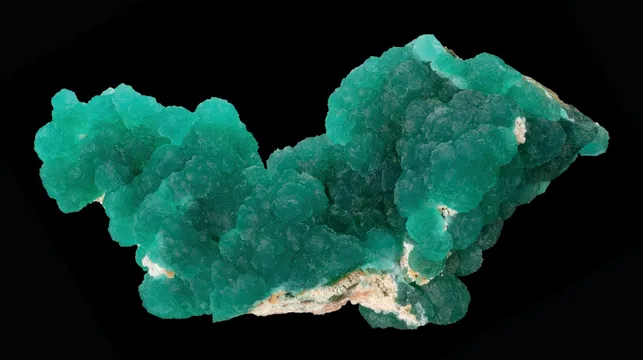
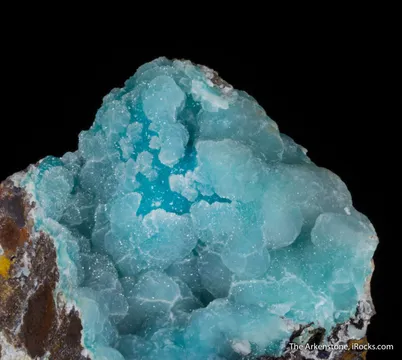
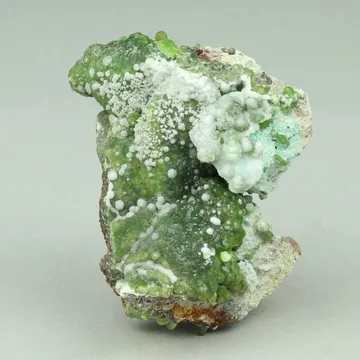
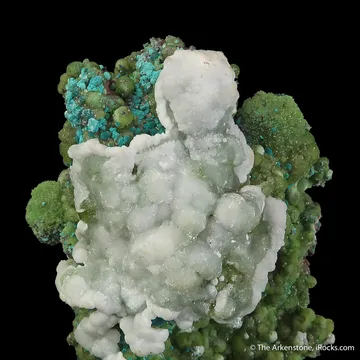
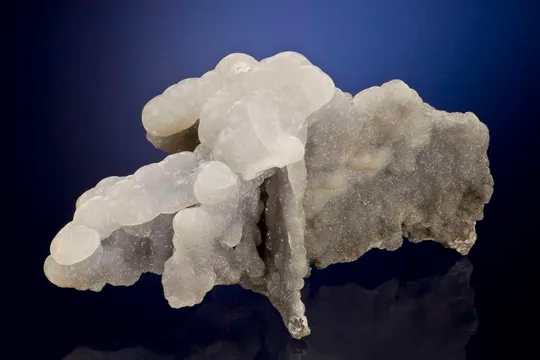
The finest Serpieri-labelled specimens are usually small but intensely visual: turquoise to sky-blue sprays and rosettes of serpierite, pale blue-green waxy glaucocerinite-type masses, blue-green ktenasite, cuprian smithsonite and aurichalcite on rusty limonitic matrix. They are not cabinet minerals in the sense of big, lustrous, freestanding crystals; their appeal is concentrated under the lens, where tufts, radial aggregates and crusts resolve into tiny needles, blades, plates and sparkling druses. Historically, the mine is bound to Giovanni Battista Serpieri, the Italian engineer and mining entrepreneur whose name is attached to the modern revival of Laurium, to the Serpieri shaft at Kamariza, and to the blue sulfate mineral serpierite itself.
Regional View
Country View

Photo: Wikimedia Commons

Photo: Wikimedia Commons
A point worth making plainly: many older labels and dealer descriptions call Serpieri Mine the type locality for serpierite. More careful modern treatments of the original 1881 literature place the type locality at the Kamariza mines generally, because the original descriptions did not name a single shaft; the paragenesis of the Paris type specimens has even been argued to fit Jean Baptiste or Hilarion material better than the Serpieri shaft itself. That does not diminish Serpieri as a classic source of superb serpierite specimens, but it does make accurate labeling especially important.
Search for specimens: View all specimens from Serpieri Mine, Greece
Serpieri Mine is part of the Kamariza Mines group at Agios Konstantinos, the former Kamariza village, in the Lavreotiki municipality of East Attica. The Serpieri shaft coordinates used by modern locality databases are approximately 37.72462 N, 24.01338 E. Administratively and historically it belongs to the Lavrion, Laurion, or Laurium mining district, the great ancient and modern silver-lead-zinc district between Thorikos, Lavrio and Cape Sounion.
Geologically, Kamariza is one of the principal mining centers of Lavrion’s carbonate-replacement Pb-Zn-Ag system. Ore deposition was localized in marbles, marble-schist contacts, and structurally prepared zones associated with the Lavrion detachment system and Miocene magmatism. In the Kamariza area, mantos, chimneys and replacement veins of massive sulfide ore occur with galena, sphalerite, pyrite and chalcopyrite, accompanied by quartz, fluorite and calcite. Around Serpieri, published work also records altered microgranite or felsic dikes cut by sulfide-bearing quartz-carbonate-sericite veinlets and a modest garnet-rich skarn at the contact with Lower Kamariza marble. The skarn assemblage includes andradite, wollastonite, apatite and magnetite in the prograde stage, followed by retrograde calcite, actinolite, epidote, chlorite, quartz, hematite, pyrite, chalcopyrite and pyrrhotite.
The collector minerals come chiefly from the oxidation of this sulfide system. Rainwater, vadose circulation, changing water tables and marine influence over a long period mobilized lead, zinc, copper, arsenic, sulfur, chlorine and other elements from the ore. At Serpieri and nearby Kamariza workings, that process produced brightly colored secondary carbonates and sulfates on limonitic gossan, oxidized marble and altered ore. The most characteristic Serpieri-suite pieces are cuprian smithsonite, aurichalcite, malachite, serpierite, ktenasite, glaucocerinite, zincaluminite, zincowoodwardite and natroglaucocerinite, together with more familiar Lavrion minerals such as calcite, gypsum, linarite, brochantite, baryte and iron oxides.
Mining here is inseparable from the broader history of Lavrion. Ancient exploitation of the district reached deep into prehistory and became central to Athenian silver production in classical antiquity. Modern mining revived in the 1860s after the work of Andreas Kordellas and the business initiative of Giovanni Battista Serpieri and his French partners. Serpieri, Roux and associates began exploiting the ancient slags and silver-lead resources, and the district soon became one of the most important industrial centers of the young Greek state. By 1867, the modern Lavrion industry employed about 1,300 people directly and supported much of the local population indirectly.
The Serpieri No. 1 shaft became one of the landmark installations of Kamariza. It was constructed by the French Mining Company of Lavrion in 1880, reached about 165 meters deep, and connected five levels of workings. The iron headframe remains a defining visual marker of Agios Konstantinos. The shaft operated into the 20th century—local heritage sources give activity until 1973—and the surrounding industrial buildings, including the engine house, became part of the Mineralogical and Mining Museum of Agios Konstantinos, opened in 2006. The museum setting is especially appropriate: it places the specimens, the hoist, the mine, and the village built around mining in one physical frame.
Collecting access today is limited. Most Serpieri underground workings are inaccessible, and the district is both a mining-heritage landscape and part of the Lavreotiki UNESCO Global Geopark, designated in 2023. Surface dumps and historic mine areas must be approached with respect for local regulations, archaeological protections, unstable ground, and private or municipal control. Guided visits and museum interpretation are the appropriate way to experience the mine infrastructure; entering abandoned workings without permission, equipment and expert guides is not safe.
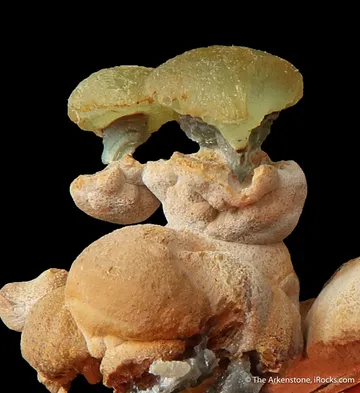
Several finds give the locality its continuing mineralogical importance. Serpieri Mine No. 5 is significant for zincaluminite, one of the old Lavrion layered double hydroxide minerals; recent specialist work involved reopening the caved-in No. 5 workings to obtain enough material for modern crystal-chemical study. Serpieri is also repeatedly cited for exceptionally rich glaucocerinite-type aggregates, and the locality database records glaucocerinite and natroglaucocerinite as type-locality minerals or co-type-locality minerals tied to the Serpieri/Kamariza complex. For serpierite itself, the best Serpieri-labelled pieces are not usually large crystals but rich seams, crusts and vug linings of blue acicular to platy crystals, commonly on limonitic or oxidized carbonate matrix with aurichalcite, malachite, smithsonite, ktenasite or glaucocerinite.
At Serpieri Mine, serpierite occurs as saturated blue to turquoise microcrystals: radial sprays, tufts, crusts and sparkling aggregates of acicular to tabular crystals, usually on oxidized limonitic matrix and commonly associated with aurichalcite, malachite, smithsonite, ktenasite and pale glaucocerinite-type material. Published and dealer-documented examples range from millimetric fields of view to miniature specimens several centimeters across; the crystals themselves are typically submillimetric to about 1–2 mm, with the value lying in density of coverage, color saturation, freshness, and clean contrast against brown gossan rather than in individual crystal size. The best pieces have a vivid “electric” blue color, well-separated rosettes or richly continuous seams, and enough relief that the crystals sparkle under oblique light; ordinary pieces are thinner crusts, pale coatings, or mixed blue-green smears that need magnification before they resolve into good crystal groups. Because old literature and specimen commerce often call Serpieri Mine the type locality while modern readings of the 1881 descriptions favor “Kamariza mines” more generally, top Serpieri-labelled serpierite should be valued for its classic Kamariza quality and documented provenance, not merely for an unexamined “TL” tag.
Other minerals documented from Serpieri Mine include adamite varieties, agardite-group minerals, aurichalcite, baryte, brochantite, calcite, chalcopyrite, devilline, fluorite, galena, glaucocerinite, gypsum, hydroniumjarosite, ktenasite, linarite, malachite, natroalunite, natroglaucocerinite, natrojarosite, pyrite, rosasite, sclarite, smithsonite, spangolite, sphalerite, zincaluminite and zincowoodwardite. The most important scientific names in the Serpieri orbit are glaucocerinite and natroglaucocerinite, both part of the complex Lavrion family of layered zinc-aluminum hydroxysulfates, and zincaluminite, a historically important species for which Serpieri Mine No. 5 supplied notable material. The practical collector should remember that several of these pale blue to blue-green species are visually treacherous: glaucocerinite, natroglaucocerinite, zincaluminite and zincowoodwardite can be difficult or impossible to separate by eye on small specimens, and some Serpieri “blue sulfate” labels are better treated as informed historical attributions unless supported by modern analysis.
The principal authenticity issue for Serpieri Mine is locality and species attribution, not a famous tradition of manufactured fakes. “Serpieri Mine” appears on many old and dealer labels for blue Kamariza serpierite, and some are probably shorthand for the wider Kamariza mining complex rather than a precisely documented Serpieri shaft pocket. The most persistent label problem is the phrase “type locality for serpierite.” It is still common in commerce, but current specialist treatments note that the original 1881 publications did not name the Serpieri shaft and instead referred to the Kamariza mines. A specimen can be perfectly genuine Serpieri or Kamariza serpierite and still carry an overconfident type-locality claim.
Species-level mislabeling is also common in this mineral family. Bright blue serpierite may be confused with ktenasite, devilline, langite-group minerals, linarite or even vivid aurichalcite when seen as microcrusts. Pale blue-green waxy or platy masses labelled glaucocerinite, natroglaucocerinite, zincaluminite or zincowoodwardite should be approached analytically; without provenance and testing, many such labels are best read as “glaucocerinite-group” or “layered hydroxysulfate” rather than as certain species names. For valuable examples, Raman, XRD or SEM-EDS documentation materially improves confidence.
Condition is critical. Serpierite is slightly to moderately soluble in water and should not be cleaned ultrasonically. Avoid soaking, aggressive rinsing, steam cleaning and prolonged high humidity. Many Lavrion secondary sulfates and chlorides are delicate, and fibrous or acicular sprays can be flattened by careless brushing. Keep specimens dry, dust-free, and away from repeated temperature and humidity cycling. Fine blue crusts on friable limonite or oxidized marble are particularly vulnerable to edge loss and matrix crumbling.
The best Serpieri serpierites are scarce but not unobtainable. Micromounts and small miniatures appear periodically; richer miniatures with saturated color and excellent coverage are much less frequent and command strong prices, especially when supported by old labels, reputable dealer provenance, or analytical work. Larger hand specimens exist, but visual quality usually depends on small-scale crystal richness rather than cabinet size. In the present market, the most desirable pieces are vivid blue, three-dimensional sprays on contrasting limonite, association pieces with aurichalcite or malachite, and analytically secured examples of the rarer layered hydroxysulfates.
The Serpieri story begins with a person as much as a shaft. Giovanni Battista Serpieri, born in Rimini in 1832, came out of an Italian mining and metallurgical background and moved through Marseille and Athens into one of the defining industrial ventures of modern Greece. When the economic promise of Lavrion became clear, he joined Hilarion Roux and other partners to exploit the district’s silver-lead ores and ancient metallurgical residues. In the 1860s the venture grew at a pace that still reads like the opening of an industrial novel: furnaces, metal works, laboratories, storage buildings and port facilities rose around the old mining country, and by 1867 about 1,300 employees worked directly for the enterprise. A region known to classical historians for Athenian silver had become a modern industrial town.
The shaft that bears his name became Kamariza’s landmark. Serpieri No. 1, sunk in 1880 by the French Mining Company of Lavrion, descended about 165 meters and connected five levels. It was not merely a hole in the ground but a vertical artery: ore, tools and men passed through it, and the village around it grew with the mine. The iron headframe still announces the site before one reaches the museum. The engine house that once powered the lift now houses the Mineralogical and Mining Museum of Agios Konstantinos, so that a visitor stands among specimens in the very industrial setting that made those specimens possible.
One of the best modern mineralogical episodes concerns not serpierite, but zincaluminite. Old Lavrion material had carried the name for more than a century, but the species became increasingly problematic as modern studies of the hydrotalcite supergroup refined the boundaries between zincaluminite, glaucocerinite and related layered hydroxysulfates. Serpieri Mine No. 5 was one of the few places where noticeable quantities of zincaluminite-like material had been found. To settle its chemistry and structure, an international team, aided by local experts, reopened the caved-in workings of Serpieri No. 5. That small act—returning to a collapsed old mine for enough pale, easily overlooked material to define a species—captures why Lavrion remains scientifically alive rather than merely historic.
Another story is hidden in plain sight on specimen labels. The blue mineral named serpierite was publicized in 1881 in honor of Serpieri, “inventor of modern Laurium,” yet the exact mine behind the type material has become a cautionary tale. Later labels and publications repeatedly fastened on the Serpieri Mine as the type locality. A closer reading shows that the original authors spoke of Kamariza, not an individual shaft. Even more intriguingly, the paragenesis of the Paris type specimens has been judged to point toward Jean Baptiste or Hilarion rather than Serpieri. Thus the mineral named for Serpieri may owe its name to the man, but not necessarily its type specimen to the shaft. For a collector, few localities offer a better reminder that a neat old label can be both historically meaningful and technically imprecise.
Lavrion’s stories are often microscopic. A great seam of serpierite photographed in the third level of the Jean Baptiste Mine had a field of view of two meters—huge by micromineral standards—yet the collectible crystals from such environments are commonly millimetric. Glaucocerinite, now one of the district’s defining pale blue-green rarities, was discovered in 1932 among Lavrion specimens acquired by the Natural History Museum Vienna in 1892 and 1893; the material had effectively waited in the collection for nearly four decades before Emil Dittler and Rudolf Ignaz Köchlin recognized it as new. The lesson is deliciously Lavrion: the mine can produce the mineral, but the species may only become visible years later under the right eyes, in the right museum drawer.