






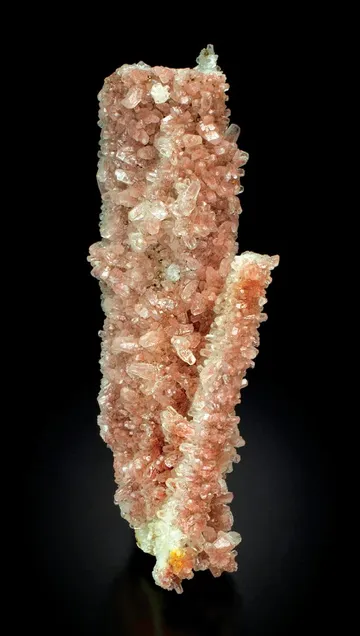
Llano County, USA - famed for rare-earth pegmatites at Baringer Hill and diverse quartz, fluorite, topaz and gadolinite specimens; rugged, collectible appeal.
Key facts
Llano County sits at the heart of the Texas Hill Country’s Central Mineral Region, where the Precambrian core of the Llano Uplift brings ancient granites, gneisses, schists, marbles, amphibolites, and pegmatites to the surface. For collectors, the county is not important because of one mine or one species; it is important because several very different mineral stories overlap here. There is the legendary rare-earth pegmatite of Baringer Hill, now drowned beneath Lake Buchanan, whose black, radioactive yttrium-bearing minerals made it one of the great American mineral localities of the early electric-light era. There are related rare-earth pegmatites such as Petrick, Rode Ranch, and Badu Hill, where quartz, feldspar, fluorite, zircon, gadolinite-group minerals, samarskite, thorite alteration products, and other heavy accessory species make dense, academically interesting specimens. There is the llanite dike north of Llano, famous for blue quartz phenocrysts scattered through a brown rhyolitic groundmass with pinkish feldspar. And there are smaller pegmatite and stream-gravel occurrences that have produced quartz, smoky quartz, and documented topaz.
The county’s best specimens tend to have a rugged, old-Texas character rather than the pristine perfection of alpine clefts or Brazilian gem pockets. Baringer Hill material is typically heavy, dark, massive to crude-crystalline rare-earth mineralization in red albite, quartz, fluorite, magnetite, and mica. The finest quartz-related pieces are judged by distinct crystal form, color, and association: smoky quartz from pegmatitic cavities or lake-shore pegmatite fields; milky quartz and microcline masses from the rare-earth pegmatites; and blue quartz as rounded to bipyramidal phenocrysts in llanite. Topaz from Llano County is far scarcer in the specimen market than the better-known Mason County material, but it belongs to the same broad Llano Uplift family of fluorine-rich granitic and pegmatitic mineralization.
Regional View
Country View
Llano County’s collecting identity is inseparable from loss. Baringer Hill, the locality that made the county internationally known to mineralogists, was submerged when Lake Buchanan filled in the late 1930s. Specimens from that pegmatite now circulate mainly as old collection pieces, museum holdings, or estate material, and labels matter enormously. Modern field collecting in the county is a patchwork of private ranchland, quarries, lake-level-dependent exposures, and roadside or river-gravel material where legal access is limited and variable. The result is a locality with two markets at once: common-to-available llanite and quartz-family material for regional collectors, and genuinely scarce historic pegmatite specimens for specialists in rare-earth minerals.

Search for specimens: View all specimens from Llano County, USA
Llano County occupies a central part of the Llano Uplift, the deeply eroded Precambrian exposure in central Texas. Its specimen deposits are mainly granitic pegmatites and related hydrothermal or late-magmatic bodies emplaced into older metamorphic rocks and granites. The most famous example, Baringer Hill near Bluffton, was an irregular pipe-like to short-dike pegmatite on the west bank of the Colorado River. Early descriptions placed it in granite intruded into the Valley Spring and Packsaddle metamorphic formations. The exposed pegmatite was only on the order of a few hundred feet long, but it was zoned: graphic granite around the outside, coarse microcline-perthite and milky quartz inside, and a distinctive red albite-rich shoot that carried most of the rare-earth mineralization.
The Baringer Hill ore was not a conventional vein of metal sulfide. It was a rare-earth pegmatite assemblage, concentrated in and around red albite, quartz, fluorite, magnetite, biotite, and accessory radioactive minerals. The early miners were after yttria-bearing minerals, especially gadolinite-rich material, for experimental and early commercial electric-light technology. The masses described from the hill were astonishing by American rare-earth pegmatite standards: gadolinite in many-pound masses, allanite reportedly to hundreds of pounds, large fluorite masses, and smoky quartz of exceptional size. The actual rare-earth minerals made up only a small fraction of the pegmatite, but they occurred as heavy black to brown masses and crystals, commonly altered, sometimes surrounded by radially cracked quartz that miners learned to read as a sign of ore.
Mining at Baringer Hill was intermittent from the late 1880s into the early twentieth century. John J. Barringer’s discovery of a heavy greenish-black mineral led to the recognition of gadolinite and drew the attention of William E. Hidden, William Niven, and other mineralogists and entrepreneurs. The hill passed through the orbit of early electric-light interests, including the Nernst lamp era, and yielded rare-earth minerals at a scale large enough to make it nationally important. By the 1930s the deposit was already a historic locality, and the construction of Buchanan Dam doomed it as a collecting site. Lake Buchanan covered Baringer Hill in 1937, and today the locality is inaccessible except through old specimens.
Several other Llano County pegmatites and prospects keep the mineralogical story from being only historical. The Petrick pegmatite, at the Kingsland Granite Company Quarry area near the southern end of Lake Buchanan, resembles Baringer Hill in broad style and has yielded smoky quartz, milky quartz, microcline, fluorite, gadolinite, fergusonite, samarskite, thorite alteration material, zircon variety cyrtolite, molybdenite, powellite, and other species. Badu Hill, discovered in 1936 by Tillie Badu Moss, became important for feldspar and is a late-stage rare-earth pegmatite with quartz, microcline, fluorite including chlorophane-type material, gadolinite-group minerals, samarskite, thorogummite, zircon, and associated alteration species. Rode Ranch is especially significant because it is the type locality for behoite, Be(OH)2, and also produced rare-earth minerals related to the regional pegmatite suite.
The Sandy Mountain–Sunrise Beach area in southeastern Llano County is a separate but important specimen district. Numerous pegmatites are recorded south and west of Sandy Mountain near Sunrise Beach, with topaz documented there along with quartz, microcline, muscovite, schorl, fluorite, cassiterite, scheelite, and metamorphic contact minerals such as andalusite, sillimanite, diopside, tremolite, vesuvianite, and wollastonite. This is not the source of the classic commercial Texas blue topaz reputation—that belongs chiefly to Mason County—but it establishes topaz as a real Llano County occurrence within the broader Llano Uplift pegmatite province.
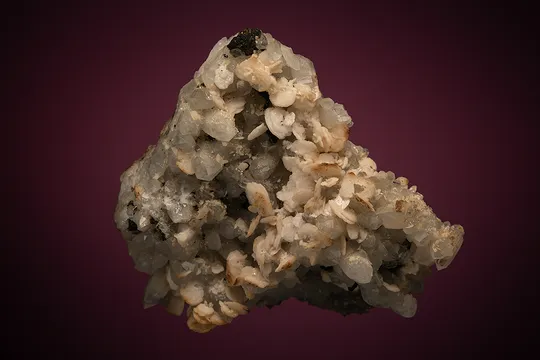
Another locality beloved by collectors is the llanite occurrence north of Llano, a Mesoproterozoic porphyritic rhyolite dike famous for blue quartz and pinkish feldspar phenocrysts in a fine brown groundmass. Most llanite specimens are rock specimens rather than display-quality mineral specimens in the strict cabinet sense, but well-cut and polished pieces show the blue quartz beautifully. Fresh broken pieces can be dull until trimmed, wetted, polished, or cut; the aesthetic value lies in strong contrast, abundant blue quartz spots, and clean sawn surfaces.
Access today is the limiting factor. Baringer Hill is underwater. Petrick, Badu Hill, Rode Ranch, Oxford, many pegmatite prospects, and most promising ranchland exposures are private or controlled properties, and active or former quarries are not casual collecting sites. Lake Buchanan shoreline pegmatites such as Pebble Beach are noted as accessible only under low-water conditions, and even then land status and safety must be checked before collecting. Roadcuts and river gravels around Llano have long attracted rockhounds for llanite, quartz, agate, and occasional heavy transparent stones, but any serious collector should treat local permission, traffic safety, and land ownership as part of the specimen’s provenance.
Quartz from Llano County is best understood as several different collector materials rather than one uniform style: milky quartz in the coarse quartz-microcline zones of Baringer Hill, Petrick, and Badu Hill; drusy and cavity quartz in pegmatite seams; stream-worn quartz and agate in Llano-region gravels; and the celebrated blue quartz of llanite, where small rounded to bipyramidal phenocrysts sit in rhyolitic matrix with feldspar. At Baringer Hill, quartz occurred in enormous masses, including central barren pillars and large blocks in the pegmatite, but crystallized cabinet-quality quartz was comparatively uncommon; early descriptions note only limited pockets of smoky crystals and small druses in seams. In llanite, the finest quartz specimens are not judged by large isolated crystals but by the intensity and distribution of the blue phenocrysts, clean contrast against the brown groundmass, and attractive sawed or polished presentation.
Smoky quartz is one of Llano County’s most evocative pegmatite minerals because the historical literature records both ordinary pocket material and a truly enormous Baringer Hill crystal: a large smoky quartz crystal reportedly removed from a cavity on the river side of the mine weighed more than 600 pounds and measured roughly 43 inches high, 28 inches broad, and 15 inches thick. Mindat records smoky quartz from Baringer Hill, the Petrick pegmatite, and the Pebble Beach pegmatites at Lake Buchanan; the collector look is typically brown to gray-brown quartz from pegmatitic cavities or quartz-feldspar masses, commonly with iron staining, feldspar, mica, fluorite, or rare-earth accessory associations. The best pieces are sharply terminated, translucent, undamaged crystals or clusters with honest locality documentation; ordinary pieces are more often iron-stained, broken, or simply quartz-rich pegmatite fragments with smoky zones.
Topaz from Llano County is a documented but comparatively uncommon member of the county’s pegmatite suite, recorded from the Sunrise Beach area of the Sandy Mountain pegmatites together with quartz, microcline, muscovite, schorl, fluorite, cassiterite, scheelite, zircon, and aluminous or calc-silicate metamorphic minerals. In the broader Llano Uplift, Texas topaz is associated with fluorine-rich NYF-type pegmatites and related granitic systems, and the familiar collector material is usually colorless to pale blue, pale yellowish, or stream-worn transparent crystals and fragments. For Llano County specifically, good topaz specimens need a credible old label or modern locality documentation tying them to Sandy Mountain–Sunrise Beach or another verified Llano County occurrence; sharp form, transparency, undamaged terminations, and association with pegmatitic quartz-feldspar matrix separate the scarce specimen-grade material from the many quartz pebbles and glassy fragments that are optimistically called topaz in central Texas.
Beyond quartz, smoky quartz, and topaz, Llano County is a serious rare-earth and rare-mineral county. Baringer Hill is the type locality for yttrialite-(Y) and rowlandite-(Y), while Rode Ranch is the type locality for behoite. Baringer Hill also produced gadolinite-(Y), allanite, fergusonite-group material, uraninite historically called nivenite, thorite altered to thorogummite, cyrtolite, fluorite including chlorophane-type material, magnetite, biotite, molybdenite, rutile, chalcopyrite, pyrite, sphalerite, and other accessories. Petrick and Badu Hill extend the same rare-earth pegmatite theme with fluorite, gadolinite-group minerals, zircon/cyrtolite, samarskite-(Y), thorite alteration products, powellite, and molybdenite. Oxford-area serpentinite and talc localities add an entirely different assemblage, including magnetite, chromite, talc, anthophyllite, cobalt-nickel arsenide and arsenate reports, and a cautionary history of questioned or discredited chloride minerals.
The first authenticity issue with Llano County specimens is locality precision. “Llano County,” “Llano Uplift,” “Llano,” “Mason,” “Kingsland,” “Baringer Hill,” “Petrick,” “Badu Hill,” and “Rode Ranch” are not interchangeable labels. Topaz is especially prone to loose labeling because the famous Texas topaz tradition is centered mainly in Mason County, while Llano County topaz is specifically documented from the Sunrise Beach–Sandy Mountain pegmatites. A stone labeled simply “Texas topaz, Llano” should be treated cautiously unless the label history, matrix, or collecting record supports a Llano County source.
Baringer Hill material is scarce and should be approached as a historic specimen class. Because the locality has been underwater since Lake Buchanan filled, any true Baringer Hill specimen must predate submergence or come from old stock, museum deaccession, estate material, or material collected before flooding. Strong provenance—old labels, recognizable handwriting, collection numbers, or a chain through known Texas collectors—adds real value. Specimens with vague “Baringer Hill area” wording may instead come from Petrick, Badu Hill, Rode Ranch, or other related pegmatites; these can still be desirable, but they are not the same thing.
Condition expectations vary by species. Quartz and smoky quartz should be examined for bruised terminations, healed or contacted faces, iron staining, and glued repairs. Blue quartz in llanite is normally seen as embedded phenocrysts, not free-standing gem crystals; chips, saw marks, tumbling, and polish quality affect presentation more than classic crystal damage. Rare-earth minerals from Baringer Hill and related pegmatites are commonly metamict, altered, fractured, and intergrown with red albite, quartz, fluorite, or mica. A perfect glossy crystal is less typical than a heavy, dark, partly altered mass with good association and label pedigree.
Radioactivity and toxicity deserve practical respect. Uraninite, thorite, thorogummite, gadolinite-group minerals, fergusonite-group material, samarskite, yttrialite, yttrocrasite, and some zircon/cyrtolite-rich specimens may be radioactive or contain uranium and thorium daughters. Handle them as mineral specimens, not curiosities: avoid grinding or cutting without proper controls, do not store friable radioactive material in living spaces or near photographic film, wash hands after handling dusty pieces, and keep labels with the specimen. Chlorophane-type fluorite from Badu Hill and related occurrences is notable for thermoluminescence, but heating specimens to demonstrate glow is poor conservation practice and can damage both fluorite and matrix.
One of the county’s most important cautionary tales involves Oxford Quarry chloride minerals. Albrittonite and nickelbischofite were reported from the Oxford serpentine quarry in the late 1970s, but later American Mineralogist work raised serious problems: albrittonite is now treated as unapproved or synthetic rather than a valid natural species, and the natural occurrence of nickelbischofite at Oxford is questioned. Collectors should be wary of any “type” claims for these hydrous chlorides, especially loose, brightly colored, deliquescent material without institutional-grade documentation.
In the market, llanite and ordinary quartz-family material from the Llano area are usually available, though quality varies widely. True Llano County topaz with a precise locality is much less common than generic Texas topaz. Baringer Hill rare-earth specimens are genuinely scarce and priced according to species, historic label quality, size, and recognizability; small but well-documented pieces can be more important than larger, vague dark masses. Petrick, Badu Hill, and Rode Ranch specimens appear intermittently, often through Texas collections, club networks, and specialist dealers rather than broad commercial supply.
The Baringer Hill story begins almost improbably. In July 1886, John J. Barringer noticed a heavy greenish-black mass projecting from granite in Llano County and kept it because it looked odd. When he dug into the weathered surface rock, he opened a small pocket of huge gadolinite crystals and masses. The published 1889 account gives the pocket’s scale with wonderful precision: at least 500 kilos of gadolinite came from a space no more than 4 feet deep, 3 feet wide, and 8 feet long. Before anyone understood what the material was, locals called it “tin-ore,” “black-jack zinc,” and “volcanic-glass,” and much of the first haul was simply handed out to visitors.
The hill itself was not grand. Later descriptions make it a low mound on the Colorado River floodplain, roughly a few dozen feet high, standing above softer weathering granite because the pegmatite resisted erosion. That modest rise became a mineralogical prize because it held a rare suite of yttrium, thorium, uranium, zirconium, beryllium, fluorine, and rare-earth minerals in unusual abundance. William Niven was sent from New York to investigate, and William E. Hidden soon became the great name associated with the locality. Hidden’s papers are still vivid because he wrote like a man who had worked the rock rather than merely catalogued it.
The early electric-light connection gives Baringer Hill a strange industrial glamour. Gadolinite was not merely a cabinet mineral; it was a possible raw material for light. Thomas Edison’s and George Westinghouse’s circles were interested in the hill because rare-earth oxides could be used in experimental lamp technology. The Nernst lamp era briefly made yttria-bearing minerals practical commodities. In one retelling, Barringer was paid either $5,000 or $10,000 in gold for the hill—sources differ—but either sum captures how quickly an unassuming knob of pegmatite became valuable once scientists recognized what lay inside it.
Hidden’s descriptions of the 1903–1905 work are among the best field notes in American pegmatite history. He recorded huge smoky quartz, fluorite masses weighing hundreds of pounds, orthoclase crystals several feet across, biotite books four feet across, and rare-earth minerals found by following radial cracks in quartz. These radiating fracture patterns became known as “stars.” Hidden considered them pointers to ore, especially to thorium-, uranium-, and zirconium-rich bodies. In one account, while mining the richest material, Hidden and an assistant developed reddened skin and a burning sensation on exposed flesh, while covered skin was not irritated. Hidden suspected radioactivity, an explanation that was startlingly modern for a miner-mineralogist working when the effects of radioactive minerals were still poorly understood.
The measurements attached to Baringer Hill specimens read like legend but come from sober mineralogical sources. A 73-pound gadolinite mass from 1903 became an iconic photographed specimen. A still larger gadolinite mass found the next year was described as about 36 inches long and 11 inches thick at its widest point, weighing a little over 200 pounds, with bright green chatoyancy at certain angles and a broad obsidian-like conchoidal fracture. The smoky quartz crystal from the river side of the mine was larger still, reportedly over 600 pounds. Such numbers explain why old Baringer Hill labels carry a power far beyond Texas regional collecting.
The closing scene came with water, not depletion. By 1932, Kenneth K. Landes could still study the Baringer Hill pegmatite in the field, but he already noted that the area was soon to be submerged by a hydro-electric project. Buchanan Dam changed the collector’s relationship to the locality permanently. The hill disappeared beneath Lake Buchanan in 1937. Since then, Baringer Hill has existed for collectors as a drowned locality: a place reconstructed from papers, labels, museum drawers, and the heavy black specimens that escaped before the water rose.

_(Mesoproterozoic,_1.106_Ga;_roadcut_~9_miles_north_of_Llano,_Texas,_USA)_2.jpg)