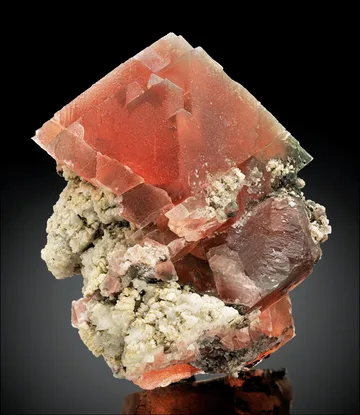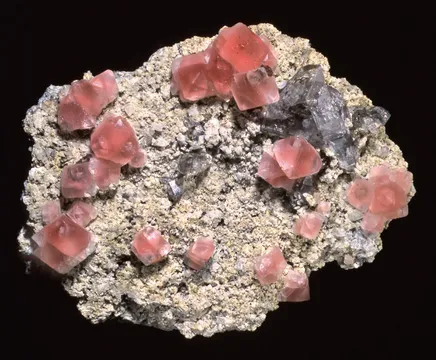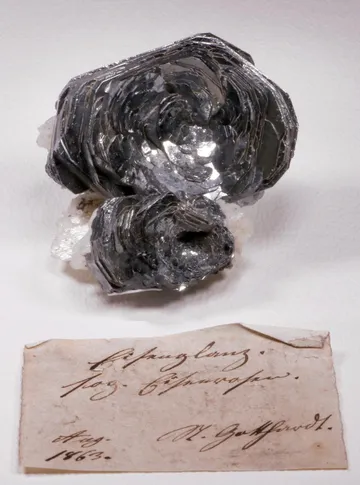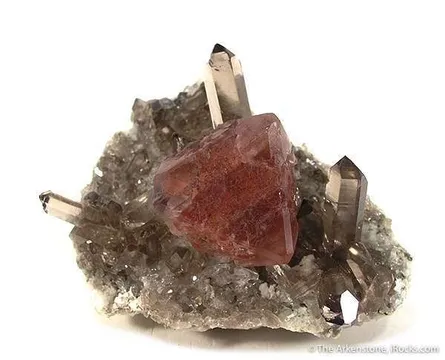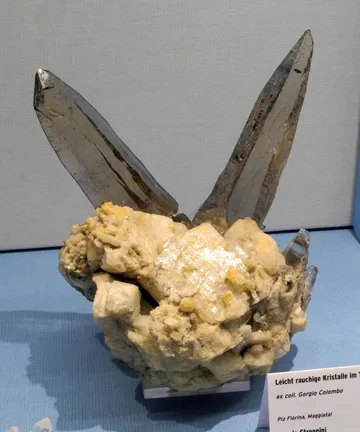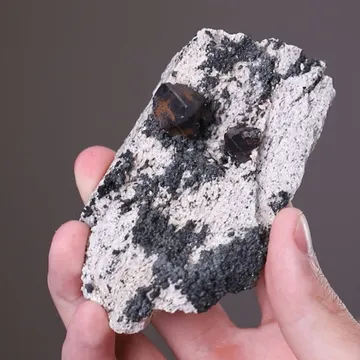
Lengenbach Quarry, Switzerland — renowned type locality in white dolomite, hosting arsenic-rich sulfosalts and micromounts of realgar, pyrite, and sphalerite.
Key facts
Lengenbach is one of the great paradoxes of mineral collecting: a small, pale quarry in a side valley above Fäld, with no history as a profitable metal mine, yet one of the most productive type-localities on Earth. Its fame rests on a metamorphosed Pb-Zn-As-Tl-Ba mineralization enclosed in pure white Triassic dolomite marble of the Penninic Monte Leone nappe. Within that sugary white carbonate, thin mineralized ribbons and pockets carry pyrite, sphalerite, realgar, baryte, galena, and an astonishing family of arsenic-rich sulfosalts containing Pb, Tl, Ag, Cu, Hg, Zn, Fe, and Sb in combinations that still challenge crystallographers.
For collectors, Lengenbach is not a locality of huge hand specimens. Its best pieces are intimate, sharply contrasted miniatures and micromounts: cherry-red realgar in white dolomite; brassy pyrite crusts; honey to brown sphalerite in small vugs; lead-gray prismatic jordanite, sartorite, baumhauerite, dufrénoysite, rathite, hatchite, hutchinsonite, lengenbachite, and tennantite-group crystals tucked into cavities only a few millimetres across. The deposit has been known to mineralogists for more than two centuries, and modern systematic collecting since 1958 has made it a laboratory in the field—one where specimens pass from quarry face to stereomicroscope, then to electron microprobe and single-crystal X-ray diffractometer.
Regional View
Country View
The visual language of Lengenbach is unusually consistent: white, granular dolomite; metallic lead-gray sulfosalts; pinpoints and crusts of pyrite; and, when the specimen is fortunate, a flash of deep red realgar or amber sphalerite. That simplicity is deceptive. In the central Tl-rich part of the quarry, very small changes in redox conditions and chemistry produced species that may be visually indistinguishable but structurally distinct. This is why a label saying “sartorite” or “jordanite” from Lengenbach can be a collecting statement, a historical clue, and sometimes a research question all at once.

Photo: Wikimedia Commons

Photo: Wikimedia Commons
Search for specimens: View all specimens from Lengenbach Quarry, Switzerland
The quarry lies about 1 km southeast of Fäld in the Binntal, Canton Valais, in a steep little side valley where the Lengenbach stream cuts through a conspicuous band of white dolomite marble. The host is Triassic meta-dolomite in the Penninic Monte Leone nappe, and the mineralization is stratabound near the upper part of a roughly 240 m dolomite sequence. The ore body sits at the northern front and subvertical hinge zone of a large fold, so the collector’s “matrix” is not merely a white background; it is part of the structural trap that preserved a very unusual metamorphosed ore assemblage.
The best-known mineralization is polymetallic and arsenic-rich, with Pb-Zn-As-Tl-Ba as defining elements and Ag, Cu, Hg, Fe, Sb, Cd, Sn, Te, and U appearing in particular phases or late discoveries. Pyrite and sphalerite belong to the broader base-metal assemblage, while the extraordinary reputation of the quarry comes from the sulfosalts crystallized in small cavities, seams, and mineralized ribbons. Modern interpretations distinguish different redox environments in the dolomite: a more reduced assemblage involving graphite and/or pyrite-pyrrhotite, and an As(III)-rich environment controlled by the baryte-pyrite sulfate-sulfide buffer. The latter is the collector’s target zone, the central part of the quarry where the rare Tl-Pb-Ag-Cu sulfosalts are concentrated.
Within this central dolomite, the mineralization is not a single broad vein but a set of narrow, bedding-parallel ribbons and lens-like bodies. FGL work has emphasized three realgar-rich ribbons designated ribbon 1, ribbon 1/2, and ribbon 2. They are spaced on the order of a metre apart, can reach roughly 4 m by 2 m in plan, and pinch and swell to a maximum thickness of about half a metre. All three are recognizable in the quarry because of their realgar content, yet they differ sharply in mineralogical value: ribbon 1 has been especially rich in thallium species; ribbon 1/2 is brittle and orpiment-rich but poorer in thallium; ribbon 2 is exceptionally rich in realgar but nearly barren of thallium minerals.
Historically, Lengenbach begins as an ore prospect before it becomes a specimen quarry. Eighteenth-century searches for iron in the Binntal led to work on pyrite-rich dolomite at Lengenbach, including an exploratory tunnel later known as the Engländerstollen. By the nineteenth and early twentieth centuries the locality had become a classic among European mineralogists. The quarry’s first great collector-scientific period came around 1900–1912, when Richard Harrison Solly and others brought Lengenbach sulfosalts into the literature and into the great museum collections. Work slackened during and after the First World War, and the quarry suffered from avalanches and rock debris, but it did not vanish from mineralogical memory.
The modern phase began in 1958 with the Arbeitsgemeinschaft Lengenbach, a working association that restored systematic specimen extraction for science and collecting. AGL operated from 1958 to 1997 and recorded tens of thousands of specimens under official L-numbers. It was followed by the Interessengemeinschaft Lengenbach from 1998 to 2002, and then by the Forschungsgemeinschaft Lengenbach, founded in 2003. The FGL model is unusual and important: Lengenbach is worked not for ore production but for carefully recovered specimens, with scientifically interesting material set aside for specialists and dolomite material supplied, when available, to the public collecting dump.
Collectors visiting today should treat Lengenbach as a managed scientific and tourist locality, not an open quarry for free excavation. The Binntal Landscape Park describes a walk of about 20–30 minutes from the Fäld car park to the mineral quarry, and tools have been available through the Mineral Museum and the Imfeld restaurant in Fäld. The public “knocking site” depends on fresh material being supplied; recent visitor information notes that quarry activity has been limited, so loose material may be scarce. Productive collecting, when possible, is generally a matter of patiently breaking and examining white dolomite blocks for small druses, sulfide specks, red realgar, and metallic sulfosalt grains, not of swinging a sledge at the quarry wall.
The finds that define Lengenbach are often small enough to be missed in the field. A pyrite seam, a red realgar veinlet crossing a pale “Picasso” fracture surface, or a modest calcite-lined cavity may carry a serious mineral. The lower dolomite levels in front of the concrete hall have yielded modern material, and FGL photographs document manual work in realgar-rich zone 1 producing prismatic lead-gray baumhauerite crystals up to 2 cm in small calcite cavities. Other small realgar veins have hosted tennantite historically called “binnite,” hatchite-wallisite, imhofite, edenharterite, jentschite, and related rarities. The best Lengenbach specimens are therefore not always obvious showpieces at first glance; under magnification, they can become world-class locality pieces.
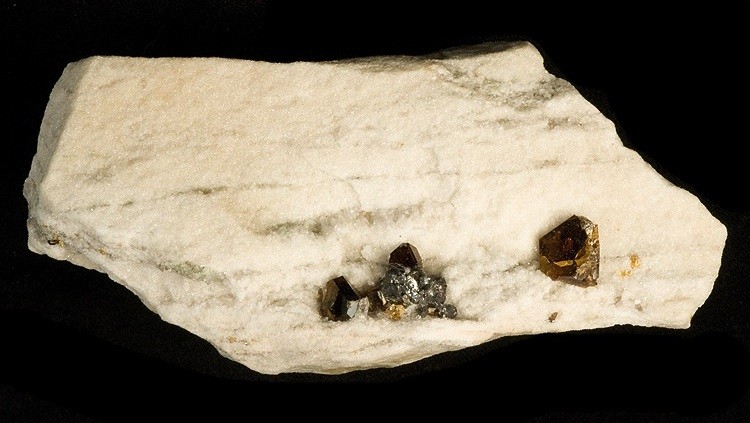
Photo: Wikimedia Commons
Realgar is the color signature of Lengenbach: deep cherry-red to orange-red crystals, veinlets, and granular masses set into brilliant white saccharoidal dolomite, commonly with pyrite and locally with sphalerite, jordanite, sartorite-group minerals, hutchinsonite, or other sulfosalts. Most collector-grade crystals are small, from millimetre-sized grains and vug crystals to centimetre-class groups, but the locality has produced exceptional historical crystals far larger than ordinary Lengenbach material. The most desirable pieces retain fresh, transparent to translucent red crystals with sharp faces and minimal yellow-orange alteration; ordinary pieces are more massive, bruised, powdery, or already partly converted to pararealgar. Realgar-rich ribbons mark important zones in the central quarry, yet realgar abundance alone does not guarantee rare thallium sulfosalts, as the realgar-richest ribbon 2 has been much poorer in thallium species than ribbon 1.
Pyrite is abundant and essential at Lengenbach, both visually and genetically: it appears as brassy grains, seams, microcrystalline aggregates, crusts, and small sharp crystals in the dolomite, commonly associated with realgar, sphalerite, jordanite, sartorite, dufrénoysite, rathite, seligmannite, hutchinsonite, tennantite-group minerals, baryte, and other sulfosalts. It is more than a decorative accessory, because pyrite participates in the redox framework that helped stabilize the arsenic-rich sulfosalt assemblages. Fine collector pieces show bright metallic pyrite crisply contrasting with white dolomite and red realgar, or as glittering microgranular patches around more important sulfosalt crystals. Ordinary Lengenbach pyrite is plentiful and may be massive or nondescript; superior examples are clean, lustrous, well isolated, and enhance rather than obscure the rare species on the specimen.
Dolomite is the stage on which nearly every Lengenbach specimen is judged. The classic matrix is pure white to cream, sugary, saccharoidal Triassic dolomite marble, locally drusy or cavity-bearing, and its whiteness gives the locality’s specimens their celebrated contrast: red realgar, brassy pyrite, honey-brown sphalerite, and lead-gray sulfosalts all stand out sharply against it. In cavities, dolomite may form small rhombohedral crystals or granular sparkling linings; elsewhere it is massive, friable, layered, or fractured. A good Lengenbach dolomite specimen is not valued because dolomite is rare, but because the matrix is clean, bright, undyed, not iron-stained to distraction, and spatially frames the ore minerals in small natural pockets. Broken, chalky, or overly massive dolomite with buried sulfides is common; sculptural white dolomite with open vugs and visible associations is far more desirable.
Lengenbach sphalerite occurs as lustrous honey-yellow, yellow-brown, amber, brown, or black crystals and grains in dolomite, commonly with pyrite, galena, jordanite, realgar, quartz, and other sulfides and sulfosalts. Compared with many major sphalerite localities, Lengenbach crystals are small, but their color and transparency can be excellent under magnification; a centimetre-class sphalerite crystal is large for the quarry. Fine pieces show isolated, glassy sphalerite crystals in open white dolomite vugs, ideally with visible jordanite or pyrite for locality character. Ordinary specimens are small black blebs or partially embedded crystals, and because dark sphalerite can visually mimic galena or other lead-gray sulfides, careful labeling matters, especially when it occurs beside rare sulfosalts.
Sartorite from Lengenbach is a historic type-locality species and, in modern collecting terms, part of a complicated “sartorite” problem: many lead-gray prismatic Pb-As-Tl sulfosalts once grouped visually as sartorite have been separated into structurally distinct species. Classic sartorite appears as metallic bluish-black to lead-gray prismatic crystals, laths, grains, and aggregates in white dolomite, often associated with realgar, pyrite, rathite, dufrénoysite, hatchite, seligmannite, and tennantite-group minerals. Individual crystals are usually millimetre-sized, with a few attractive pieces showing sharp prisms several millimetres long in cavities or on dolomite. The finest collector pieces have well-defined, isolated metallic crystals with convincing provenance or analytical support; ordinary pieces are gray splinters or mixed sulfosalt masses that cannot be reliably assigned without analysis.
Jordanite is one of the foundational Lengenbach sulfosalts, a type-locality Pb-As-Sb sulfide that forms lead-gray to black, metallic, prismatic crystals, aggregates, and masses in the dolomite. It is regularly associated with sphalerite, pyrite, galena, dolomite, quartz, dufrénoysite, realgar, tennantite, and related sulfosalts, and it is part of the broader structural progression from Pb-rich to As-rich Lengenbach sulfosalt assemblages. Fine collector examples show lustrous prismatic jordanite crystals, sometimes in 1 cm-class aggregates, sitting clearly in sugary dolomite or paired with amber sphalerite; such pieces are much more desirable than compact gray masses. Because jordanite overlaps visually with dufrénoysite, sartorite-group minerals, rathite, and other lead-gray sulfosalts, old labels and visual identifications deserve respect but not blind trust.
Baumhauerite is a signature Lengenbach Pb-As sulfosalt, discovered there and still most collectible in material from this quarry. It occurs as lead-gray to black metallic prismatic crystals and aggregates in dolomite, commonly in the same small-cavity environment as realgar, pyrite, sphalerite, rathite, sartorite, dufrénoysite, and other arsenic sulfosalts. Most crystals are small and need magnification, but modern FGL quarry work has documented prismatic, lead-gray baumhauerite reaching about 2 cm in typical small calcite cavities, which is exceptional for the species. Top Lengenbach pieces show a discrete, lustrous, well-formed prism with visible matrix and associations; ordinary examples are dull gray fragments or mixed sulfosalt masses that may be impossible to distinguish visually from related species such as argentobaumhauerite, rathite, liveingite, or sartorite-group minerals.
The tennantite story at Lengenbach has been sharpened by modern tetrahedrite-group nomenclature: the old collector name “binnite” now belongs largely to tennantite-(Zn), and the quarry is also the type locality for tennantite-(Hg). Lengenbach tennantite-group minerals occur as dark metallic tetrahedral to pseudo-cubic crystals and grains in dolomite and realgar-rich assemblages, associated with pyrite, sphalerite, realgar, lengenbachite, marcasite, hatchite-wallisite, imhofite, edenharterite, jentschite, and other sulfosalts. Crystals are typically small, but sharp forms on white dolomite are highly collectible, especially when old “binnite” provenance is preserved. The best pieces have isolated, lustrous, geometrically crisp crystals with analytical or modern nomenclature support; ordinary pieces are dark tetrahedrite-group specks whose exact end-member cannot be inferred by appearance alone.
Beyond these collector staples, Lengenbach is renowned for an extraordinary roster of type-locality and one-locality or near-one-locality minerals. The list includes lengenbachite, dufrénoysite, rathite, hutchinsonite, hatchite, seligmannite, smithite, trechmannite, wallisite, edenharterite, imhofite, jentschite, marrite, nowackiite, gabrielite, dalnegroite, debattistiite, eckerite, ralphcannonite, ferrostalderite, richardsollyite, philrothite, several newly defined sartorite-series members such as heptasartorite, enneasartorite, hendekasartorite, dekatriasartorite, buynite, and the recent rathite-related geuerite and giuşcăite. Many of these are visually modest—sub-millimetre needles, crusts, grains, or inclusions—but scientifically major. A serious Lengenbach collection is therefore built as much around verified identities, old L-numbers, and analytical history as around cabinet aesthetics.
The principal authenticity concern at Lengenbach is not widespread mass-market fakery, but the difficulty of identification. Many of the famous species are tiny, metallic, lead-gray sulfosalts with similar habits. A specimen labeled sartorite, jordanite, baumhauerite, rathite, dufrénoysite, liveingite, or “sartorite group” may be visually plausible yet analytically uncertain. Old labels are valuable, especially those carrying official L-numbers or museum provenance, but they should be read as historical evidence rather than definitive analytical proof. For rare thallium, mercury, silver, or antimony-bearing species, confidence rises sharply when a specimen has XRD, EDS/WDS, Raman, SEM, or specialist confirmation.
There is at least one documented example in the trade of a supposed Lengenbach assemblage described as a fake or construction, involving a mixture of classic Lengenbach-looking species placed on an unsuitable matrix. The warning sign is simple: know the matrix. Authentic Lengenbach material is overwhelmingly white to cream saccharoidal dolomite marble, sometimes with calcite cavities, baryte, quartz, pyrite, realgar, or sulfide seams. Specimens presented as Lengenbach but built on gypsum, foreign carbonate, artificial bases, glue-filled cavities, or suspiciously theatrical associations deserve close inspection under magnification and UV/solvent-safe lighting. Natural Lengenbach specimens are often subtle; pieces that look too perfectly staged may be exactly that.
Condition is a major part of value. Realgar is light-sensitive and can alter to orange-yellow pararealgar; Lengenbach specimens with powdery orange coatings may be scientifically interesting but are less desirable than fresh red crystals unless the alteration is part of a documented paragenesis. Store realgar-bearing pieces in the dark, avoid prolonged display, and do not “sunlight test” them. Arsenic minerals and thallium-bearing sulfosalts should be handled with the same discipline used for any toxic specimen: avoid dust, do not trim indoors without protection, wash hands after handling, keep away from food, and use closed boxes for fragile or powdery material.
The dolomite itself can be crumbly, and many specimens were recovered from small druses where crystals project into cavities with little support. Pyrite may be bright and stable, but fractured dolomite can shed grains and small sulfosalt crystals can be knocked away easily. Avoid aggressive cleaning; acids are inappropriate for a carbonate-hosted assemblage and can damage both matrix and associated minerals. Mechanical cleaning should be minimal and performed under magnification.
Market availability is better than for most type-locality rarities because decades of organized collecting have placed many specimens into circulation, yet truly fine pieces remain scarce. Realgar on white dolomite, pyrite-rich combinations, and sphalerite are obtainable. Well-crystallized jordanite, sartorite, baumhauerite, dufrénoysite, rathite, lengenbachite, hutchinsonite, tennantite-(Zn), and named rare thallium sulfosalts command a premium when the identity is credible. The best Lengenbach specimens are small but information-dense: strong aesthetics, old provenance, official quarry numbering, and analytical certainty matter more here than sheer size.
The first Lengenbach story begins long before micromounters and electron microprobes. In 1728, the Wallis authorities were looking for workable iron deposits in the Binntal, and Governor J.-G. Courten was asked to find experts. Two years later, two Englishmen living in Paris, Mandel and Aston, obtained a concession. What they found at Lengenbach was not a future iron empire but pyrite-rich dolomite. They drove an exploratory tunnel—the Engländerstollen—into the mountain, then history buried it. In 1902, Franz Jentsch unexpectedly rediscovered the old tunnel while drilling, a reminder that Lengenbach’s scientific quarry grew out of an abandoned eighteenth-century ore hope.
Around 1900, the quarry entered its first golden age. Lengenbach specimens were already moving into European collections, but Richard Harrison Solly made the place personal. He spent successive summers near the village of Binn searching the white crystalline dolomite, and his “patient energy” became part of the locality’s mythology. In 1903 he noticed small, often minute, blood-red crystals that were not realgar, even though realgar was common in the quarry. That observation led into the recognition of hutchinsonite, the first thallium mineral from Lengenbach. When G. T. Prior found about 20 wt % thallium in it, the result was important enough for a note in Nature: hutchinsonite was only the third mineral then known with thallium as an essential constituent.
The quarry’s fortunes then rose and collapsed with the outside world. Its heyday ran from about 1900 to 1912, when labor was cheap enough that specimen quarrying could pay and the appetite for rare sulfosalts was strong. Work ceased during the First World War as sales became difficult. Without steady attention, the quarry deteriorated; rockfalls and avalanches filled it with rubble. Lengenbach did not stop being famous, but it became harder to work and easier to remember than to mine.
In 1945, Joseph Imhof restarted work on a small scale. The effort was costly and short-lived, but it produced one of the locality’s great trophy stories: the largest realgar crystal reported from Lengenbach, 7 cm long, 3 cm wide, and weighing 90 g, now in the Natural History Museum in Bern. For a quarry whose serious specimens are often measured in millimetres, that red crystal is almost mythical—an outsized flash from a place better known for microscope work.
The 1958 reopening changed everything. Imhof pushed for funding; Dr. Grossglauser became an effective sponsor; and the plan reached Mr. von Sinner, then president of the museum commission in Bern. From that effort came the Arbeitsgemeinschaft Lengenbach, the syndicate that made systematic modern specimen extraction possible. The AGL’s work transformed Lengenbach from a famous old locality into a sustained research engine. The later FGL continued that model with a distinctly modern network: collectors in the quarry, specialists at instruments, and new species emerging from specimens that might otherwise have looked like dark specks in white rock.
The most Lengenbach kind of discovery is one that begins in disappointment. A dull crust, a dark inclusion, or a lead-gray splinter is set aside rather than discarded; years later, XRD, EDS, WDS, or single-crystal work gives it a name. Richardsollyite came from such modern quarry work in 2015 in the Tl-rich ribbon in the center of the quarry, first recognized by its simple but unmatched Tl-Pb-As-S chemistry, then described as a new species honoring Solly. Tennantite-(Hg) was found on a single known specimen in T. Raber’s collection, where preliminary EDXS work suggested an unusually mercury-rich tetrahedrite-group composition later confirmed during formal characterization. Spaltiite’s 2026 description carried the same Lengenbach signature: a new thallium sulfosalt known from only three crystals on one dump specimen, with the holotype placed in the Natural History Museum Basel.
Thomas Raber and Philippe Roth, “The Lengenbach Quarry in Switzerland: Classic Locality for Rare Thallium Sulfosalts,” Minerals 8(9), 409, 2018 — Open-access review of the geology, thallium mineralization, quarry organizations, and post-1958 specimen production.
Stefan Graeser, Dan Topa, Herta Silvia Effenberger, Emil Makovicky, Werner Hermann Paar, and George Dincă, “Spaltiite, Tl2Cu2As2S5, one more new thallium sulfosalt mineral from Lengenbach quarry, Binn, Switzerland,” European Journal of Mineralogy 38, 27–37, 2026 — Description of spaltiite and a current summary of Lengenbach as a type locality for 51 mineral species.
Philippe Roth, Thomas Raber, Eva Drechsler, and Ralph Cannon, “The Lengenbach Quarry, Binn Valley, Switzerland,” Mineralogical Record 45(2), 157–196, 2014 — Major collector-oriented locality article, cited by FGL as the first Mineralogical Record treatment of Lengenbach since 1977 and a comprehensive account through December 2013.
FGL Publications page — Chronological bibliography of peer-reviewed and collector-journal publications by FGL members and associated scientists, including many new species and nomenclature updates.
FGL List of Minerals — Organized list of species known from the quarry, marking type-locality minerals and linking selected species notes and SEM material.
FGL List of Official L-Numbers — Essential provenance tool for specimens distributed through the organized Lengenbach syndicates; useful for dating official L-numbered material.
Bernd A. Hofmann and M. D. Knill, “Geochemistry and genesis of the Lengenbach Pb-Zn-As-Tl-Ba-mineralisation, Binn Valley, Switzerland,” Mineralium Deposita 31, 319–339, 1996 — Key geochemical and genetic paper on the metamorphosed ore system and its redox environments.
Bernd A. Hofmann, “Formation of a sulfide melt during Alpine metamorphism of the Lengenbach polymetallic sulfide mineralization, Binntal, Switzerland,” Mineralium Deposita 29, 439–442, 1994 — Important paper on metamorphic processes affecting the sulfide assemblage.
“Lengenbachite with Jordanite and Calcite from Lengenbach Quarry, Fäld, Switzerland” — Fabre Minerals — Rotating specimen video of a 1980 Lengenbach classic showing prismatic lengenbachite with jordanite, calcite, and microgranular pyrite.
“TUC4589 Sphalerite, Lengenbach Quarry, Switzerland” — Crystal Classics — Dealer specimen video focused on Lengenbach sphalerite.
Forschungsgemeinschaft Lengenbach — Official site of the Lengenbach Research Association, with current news, quarry notes, publications, species lists, and L-number provenance resources.
FGL Quarry page — Brief field-oriented page showing current work areas, realgar-rich dolomite, and examples of minerals found in small cavities and veins.
Mindat: Lengenbach Quarry, Fäld, Binn, Goms, Valais, Switzerland — The central online locality entry, including species list, type-locality minerals, photographs, references, and historical notes.
Binntal Landscape Park: Lengenbach mineral quarry — Visitor information for reaching the quarry from Fäld and current public collecting conditions.
Binntal Landscape Park: Minerals — Accessible regional overview of Binntal mineralogy and the Lengenbach dolomite marble setting.
Wikimedia Commons: Category Lengenbach Quarry — Useful open-image archive of Lengenbach specimens, including realgar, sphalerite, jordanite, sartorite, baumhauerite, dufrénoysite, and locality views.
Minerals and Crystals: documented fake Lengenbach-style specimen — A cautionary dealer note showing why matrix, construction, and provenance should be checked carefully for high-interest locality specimens.
Nicolas Meisser, Philippe Roth, Fabrizio Nestola, Cristian Biagioni, Luca Bindi, and Martin Robyr, “Richardsollyite, TlPbAsS3, a new sulfosalt from the Lengenbach quarry, Binn Valley, Switzerland,” European Journal of Mineralogy 29, 679–688, 2017 — Formal description of richardsollyite, named for Richard Harrison Solly.
Cristian Biagioni, Jiří Sejkora, Števko, Thomas Raber, Philippe Roth, Yves Moëlo, Zdeněk Dolníček, and Marco Pasero, “Tennantite-(Hg), Cu6(Cu4Hg2)As4S13, a new tetrahedrite-group mineral from the Lengenbach quarry, Binn, Switzerland,” Mineralogical Magazine 85, 744–751, 2021 — Description of one of the quarry’s modern tetrahedrite-group type minerals.
Dan Topa, Emil Makovicky, B. Stöger, and C. Stanley, “Heptasartorite, enneasartorite and hendekasartorite, three members of the anion-omission series of ‘sartorites’ from the Lengenbach quarry,” European Journal of Mineralogy 29, 701–712, 2017 — Key work on the modern unraveling of the “sartorite” problem.
Luca Bindi, Fabrizio Nestola, Andrea Guastoni, and Luca De Battisti, “Tl-bearing sulfosalts from the Lengenbach quarry, Binn valley, Switzerland: Philrothite, TlAs3S5,” Mineralogical Magazine 78, 1–9, 2014 — Description of philrothite, one of the important modern thallium sulfosalts from the locality.
Natural History Museum Basel, Regional Mineral Collection — Notes the Basel museum’s large Lengenbach holdings, including its early specimen history and approximately 3,250 objects from the locality.