Ticino, Switzerland - Alpine cleft minerals, metamorphic classics, and rare ore minerals; famed Tessin quartz and the Campolungo Tremolite type locality.
Key facts
Ticino is not a single mine locality so much as a whole Alpine collecting province, and that is exactly why it matters. The canton straddles several of the great structural elements of the Central and Southern Alps: the Gotthard region and Leventina in the north, the Penninic and Sub-Penninic nappes of the Lepontine dome through the high valleys, the Insubric Line across the southern belt, and the Strona-Ceneri basement of the Southern Alps toward Malcantone and the Italian border. For collectors, that complicated geology translates into three overlapping specimen worlds: Alpine cleft minerals from gneiss, granite, schist and carbonate; metamorphic classics from high-grade schists and dolomites; and small but historically important ore districts with gold, iron, arsenic, lead, zinc and copper mineralization.
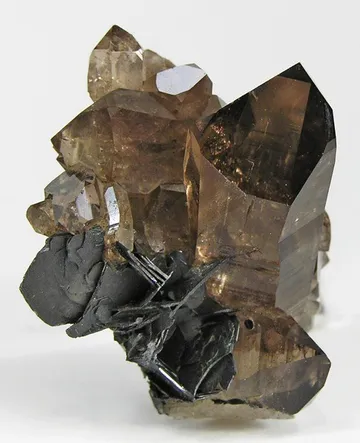
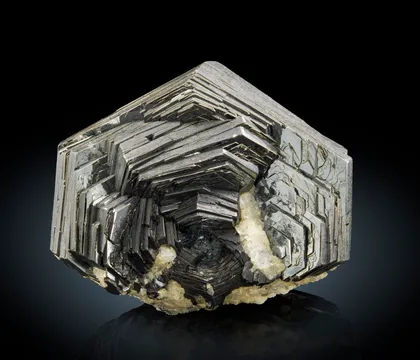
The first image many collectors associate with Ticino is quartz in the “Tessin habit”: tapered, stepped, sharply pyramidal crystals whose prism faces seem to narrow toward the point rather than forming the ordinary straight-sided Alpine prism. Fine pieces from Val Bedretto, Valleggia, Cavagnoli and related northern Ticino localities can be bright, glassy, slightly smoky or water-clear, with silky striated faces and the unmistakable architecture that made “Tessin quartz” a worldwide descriptive term. The canton also produced elite Gotthard-suite hematite iron roses with rutile and adularia; red, yellow-brown and pink-brown zircons from the extraordinary Centovalli nepheline pegmatites; classic blue kyanite and chocolate staurolite in paragonite schist at Sponda Alp–Pizzo Forno; corundum and tremolite from Campolungo; and a long list of rare Alpine accessory species.
Regional View
Country View
Historically, Ticino also has an unusual place in mineral nomenclature. Tremolite takes its name from Val Tremola, yet the true type locality is now understood to be Campolungo, farther south in Ticino, where tremolite occurs in Triassic dolomite. Paragonite, the sodium mica that forms the pearly white matrix of the famous kyanite-staurolite specimens from Pizzo Forno, is also tied to a Ticino type locality. These are not just attractive Alpine specimens; they are reference points in the history of mineralogy.

Photo: Wikimedia Commons
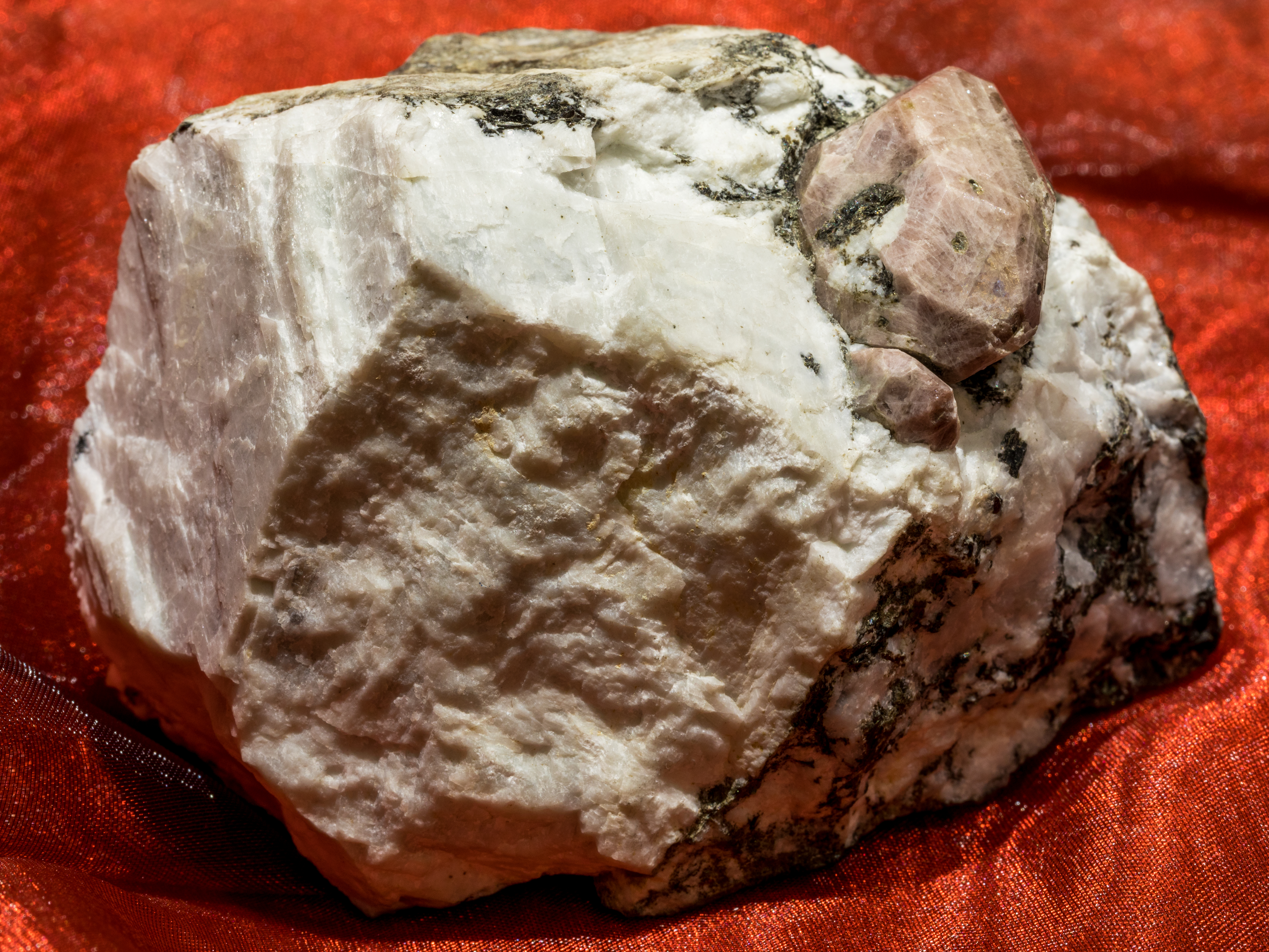
Photo: Wikimedia Commons

Photo: Wikimedia Commons
Search for specimens: View all specimens from Ticino, Switzerland
Ticino’s collector mineralization is best approached as a canton-scale assemblage rather than as a single deposit. In the north, the specimen localities around Airolo, Val Bedretto, Val Canaria, Tremola, Lucendro, Fibbia, Piora, Ritom and the Central St Gotthard Massif are primarily Alpine cleft and vein occurrences. These formed in fractured crystalline rocks during Alpine deformation and metamorphism, where mineral-bearing fluids opened or exploited fissures in gneiss, granite, schist, amphibolite and associated lithologies. The cleft suites are the source of Ticino’s quartz, smoky quartz, adularia, albite-pericline, chlorite, rutile, hematite iron roses, titanite, anatase, brookite, epidote-group minerals and many rarer accessories.
The visual grammar of these northern specimens is distinctly Alpine: white to pearly adularia, chlorite dusting, hematite blades and roses, red-brown rutile, slender quartz, smoky scepters and sharp pericline. Fibbia and Lucendro are particularly important for hematite iron roses, commonly with rutile and adularia. Tremola is historically tied to excellent Tessin-habit quartz with actinolite inclusions. Val Bedretto and Val Cristallina are classic quartz areas, and Valleggia–Cavagnoli is one of the names collectors associate with the most sculptural tapering quartz from the canton. In the Naret area fine titanite has been reported, while the Sella and Ritom areas are known for quartz, pericline, muscovite, red rutile, titanite, pennine and allied Alpine cleft minerals.
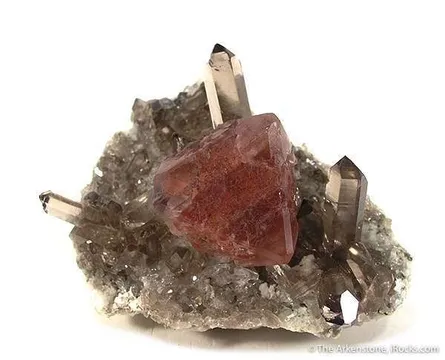
South and west, Ticino changes character. The Centovalli–Gridone–Monte Limidario area produced one of Switzerland’s most remarkable zircon occurrences: unusually large zircon crystals from nepheline-bearing pegmatites associated with the Finero-Centovalli ultramafic/peridotitic setting. These zircons are not ordinary sand-grain accessories; crystals average around centimeter scale at the notable occurrences and reached approximately 9 cm, with brown-red to pink-brown color, phlogopite or biotite, albite, nepheline and other unusual associated minerals, including sodalite and cancrinite reported as exceptional Swiss occurrences.
At Campolungo, in the upper Piumogna Valley, collectors enter the metamorphic-carbonate world. The locality includes Triassic dolomite and associated rocks famous for tremolite, corundum and related species; it is the true type locality of tremolite, despite the misleading historical attachment of the name to Val Tremola. Pizzo Forno and Sponda Alp, above the Chironico Valley, are a different kind of metamorphic classic: blue kyanite and brown staurolite crystals set in lustrous paragonite-rich white mica schist. The matrix is part of the identity of the locality; detached crystals lose much of the geological and aesthetic information that makes the best Pizzo Forno specimens so desirable.
Ticino also has genuine mining history, although its specimen fame is not primarily built on large ore mines. In the Valle Morobbia, the mineralization is tied to the Insubric Line, the major east-west fault zone separating the Central Alpine root zone from the crystalline basement of the Southern Alps. Iron-bearing veins on the left side of the valley belong to a wider district extending into Dongo and Val Cavargna in Italy and nearby Ticino valleys. The Morobbia ores are dominated by iron sulfides, especially pyrrhotite and pyrite, with traces of chalcopyrite; the mineralized faults are interpreted as preferred pathways for late Paleozoic, Carboniferous to Permian, mineral-rich fluids.
In Malcantone, the mineralization is auriferous and polymetallic rather than Alpine-cleft decorative. The Astano–Sessa district, about 15 km west of Lugano, contains small sulfide ore deposits rich in As, Pb, Zn, Fe and Au in gneissic country rocks of the Strona-Ceneri Zone. The ore assemblage includes arsenopyrite, pyrite, sphalerite, galena, pyrrhotite, chalcopyrite and gold in quartz-carbonate gangue, with silver also historically important. Gold mining attempts are documented from 1785, and the district saw nineteenth-century work under engineer Vinasco Baglioni as well as twentieth-century industrial efforts by Mines de Costano SA, founded in 1933. At the Costa di Sessa mine, more than two kilometres of galleries were eventually driven on five levels; work was interrupted during the Second World War when concentrates could not be sent to Belgium for final treatment, resumed afterward, and was suspended in 1952.
Access today must be treated seriously. Mineral collecting in Ticino is regulated by cantonal authorization, administered through the Museo cantonale di storia naturale, and some communes may require additional permission. Older quarries, mine adits and tunnel-related exposures have changed rapidly: some granite quarries were partly backfilled with material from major Alpine tunnel works, while historic mine entrances may be closed, unsafe, privately managed or accessible only on guided visits. Serious collectors should treat Ticino as a permission-and-local-knowledge province, not an open-dig free-for-all. The best modern collecting stories from the canton involve patient fieldwork, repeated visits, careful attention to float and geology, and a willingness to leave protected or unsafe ground alone.
Quartz is the signature collector mineral of Ticino because the canton gave its name to the Tessin habit: tapered, stepped Alpine crystals whose prism-and-pyramid growth produces a pointed, narrowing architecture and mosaic-like face patterning rather than the ordinary straight, even prism. Val Bedretto and Vergeletto are among the leading historic sources of this habit, while Val Cristallina, Tremola, Valleggia, Cavagnoli and the broader Leventina–Bavona–Gotthard region produced water-clear to smoky crystals, needle-quartz groups and quartz associated with actinolite, calcite, adularia, rutile, chlorite and hematite. Fine Ticino quartz is judged less by sheer size than by architecture: a good piece has clean luster, intact tapering terminations, undamaged edges, lively transparency or smoky depth, and enough matrix or association to anchor it unmistakably in the Alpine-cleft environment.
Ticino zircon is concentrated in collector interest around the Centovalli–Gridone–Monte Limidario occurrences, where nepheline-bearing pegmatites yielded exceptionally large brown-red to pink-brown zircon crystals in a white to pale matrix of albite and nepheline with phlogopite or biotite, apatite and other unusual associated minerals. The great Centovalli discovery began with a roughly 3 cm pink-red fragment found in a streambed and confirmed by X-ray work, followed by years of searching before the source pegmatites were located on the steep northern flank of Monte Gridone; the best crystals reached about 9 cm, with many good examples around 2–3 cm. Top specimens show well-formed tetragonal morphology, attractive color, sharp or richly modified faces, visible association with albite-phlogopite-nepheline matrix, and, in particularly desirable material, strong yellow fluorescence under short-wave ultraviolet light.
Rutile from Ticino is most admired as part of the Gotthard Alpine-cleft association, especially at Fibbia, Lucendro and related Central St Gotthard Massif localities where red to wine-red striated crystals and needles occur with hematite iron roses, adularia, quartz, dolomite, muscovite and chlorite. In the finest old-style pieces, rutile is not merely an inclusion or accessory dusting: it forms sharp acicular crystals or oriented epitaxial growths on lustrous hematite blades, adding a red metallic accent to black-silver “rose” forms. Good Ticino rutile specimens are therefore judged by placement and association as much as crystal size; a few bright, well-positioned rutile crystals on a complete iron rose or adularia matrix can be far more important than a larger but visually lost scatter of needles.
Other documented Ticino minerals include two type-locality species of special importance: tremolite from Campolungo and paragonite from Sponda Alp–Pizzo Forno. The canton also has classic Pizzo Forno kyanite and staurolite, Campolungo corundum including ruby and sapphire material, Gotthard bazzite, adularia and hematite iron roses, Valleggia anatase including red and blue crystals, titanite from the Naret area, scapolite from Lago Tremorgio, euclase from the Cavagnoli area, scheelite from Alpe Bovarina and Iragna, and a long ore-mineral suite in Malcantone and Valle Morobbia that includes native gold, electrum, arsenopyrite, pyrite, pyrrhotite, chalcopyrite, sphalerite, galena and many oxidation products.
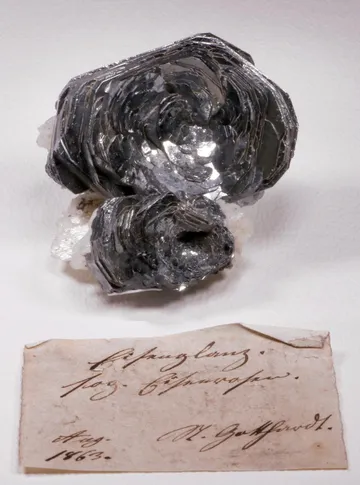
Ticino specimens are often mislabelled at a finer locality level. Older labels may say simply “St. Gotthard,” “Gotthard,” “Tessin,” “Fibbia” or “Airolo,” even when the actual source may have been Lucendro, Tremola, a quarry, a tunnel exposure, or another nearby cleft locality. This matters most for iron roses, rutile associations and Tessin-habit quartz: a broad Gotthard label is historically plausible, but a confident modern sublocality should be backed by provenance, old labels, collection history or distinctive matrix.
The most famous mislocality problem is older than modern mineral dealing: tremolite was named from Val Tremola, but the true type material is now tied to Campolungo. That historical confusion is not a fake in the usual sense, but it is a warning. Ticino has produced specimens whose labels preserve old collecting tradition rather than strict modern locality precision.
For quartz, scrutinize tips, prism edges and repairs. Tessin-habit crystals are attractive because of their tapered geometry, and even small bruises on the stepped faces or terminations can flatten the visual effect. Many crystals have chlorite dusting, iron staining, small rehealed contacts or extraction scars; these are common and not necessarily serious, but a supposedly top-grade piece should have an undamaged termination and crisp tapering form. Be cautious with overcleaned quartz, especially if a specimen looks unnaturally bright but has etched feldspar, dulled chlorite or suspiciously fresh fractures.
For zircon, locality and association are essential. Centovalli zircons are dense, often brown-red to pink-brown, and may sit with albite, phlogopite or biotite and nepheline-bearing matrix. Loose crystals without matrix are harder to place and can be confused in commerce with zircon from other countries. Strong yellow short-wave UV fluorescence is a useful supporting feature for some Centovalli material, but fluorescence alone is not proof of locality.
For rutile and hematite iron roses, watch for assembled or repaired matrix pieces. True Gotthard iron roses can be fragile along platy contacts, and rutile needles are easily broken. A specimen with dramatically isolated hematite on adularia or quartz should be examined for glue, filled attachment points and mismatched luster. Fine old Fibbia/Lucendro pieces are scarce and command strong prices; small, honest thumbnails with complete roses and intact rutile accents are often more collectible than larger damaged cabinet specimens.
Ticino material appears regularly but selectively on the market. Quartz is the most available, especially as generic Ticino or Tessin-habit quartz; exceptional Val Bedretto, Valleggia or Cavagnoli examples with old provenance are much less common. Zircon from Centovalli is genuinely limited and should be treated as a specialty item, not a commodity. Rutile as the main species is scarce; rutile as an accessory on hematite, adularia or quartz is more often encountered, but fine, aesthetic, undamaged Gotthard combinations are highly competitive.
Handling considerations are straightforward but important. Tremolite belongs to the amphibole group, and fibrous/asbestiform habits should not be abraded, sawn, brushed aggressively or cleaned with compressed air. Massive or coarse crystalline display specimens are generally stable if left intact, but dust generation should be avoided. Radioactive minerals are documented from some Ticino occurrences, as in many Alpine rare-element settings, so unusual uranium-bearing species should be stored and handled with normal radioactive-mineral precautions. For Centovalli zircon, minimize unnecessary exposure to strong light and heat, and avoid aggressive acids on matrix because feldspathoid-bearing assemblages can be chemically sensitive.
The finest Ticino story begins not with a glittering crystal pocket but with a fragment in a streambed. In the Centovalli, Fabio Girlanda found a rose-red piece about 3 cm across and had it identified by X-ray work at the museum in Geneva: zircon. Zircon was not rare as a microscopic accessory, but a centimeter-scale, well-colored Alpine zircon fragment was something else entirely. The fragment meant a source had to exist somewhere above the brook, broken from a pegmatite on the steep flanks of Monte Gridone. It took three years of searching to find the first outcrop.
When Girlanda finally reached the source, the result was a mineralogical shock. At the base of a small pegmatite vein lay a large, red, well-formed zircon crystal that caught the sunlight. More crystals appeared in the ground, heavy and dirty, lifted one after another like a harvest. The first occurrence was named Felices Lager, in memory of Felice Guerra, Girlanda’s cousin, who had died in a road accident and had shown him the corners of the Centovalli. A second pegmatite vein was later found after many more trips; it also yielded centimeter-size zircons in a white rock of albite and nepheline. The locality eventually produced zircon crystals to about 9 cm, along with minerals rare or previously unknown in Switzerland, including sodalite and cancrinite in the same unusual pegmatitic environment.
The tremolite story is a collector’s cautionary tale from the birth of mineralogy. The species name points to Val Tremola near the St. Gotthard road, but the mineral itself was not actually found there. Modern study of old specimens and early literature shows that the true source is the Triassic dolomite of Campolungo, about 14 km farther south. The reason for the wrong name appears to have been commercial secrecy. In an 1809 account, Leopold von Buch described the “high, almost inaccessible rock cliffs of Campo Longo” and explained that demand for the beautiful new mineral encouraged the discoverer, probably a farmer from Airolo or Fontana, to protect his source. When buyers asked the dealer Vizard in Bern where the new mineral came from, Val Tremola was named instead. The misdirection worked well enough to give the mineral its name, even though “no trace of the mineral exists in Val Tremola.”
Carlo Taddei gives Ticino’s mineral history its human spine. Born in 1880 and active for decades, he devoted roughly 60 years to the mineralogy of the canton, visited the important localities himself, documented his finds carefully with photographs and explanations, and published Dalle Alpi Lepontine al Ceneri, note di mineralogia in 1937. Many Ticino specimens in old collections passed through his hands or were influenced by his field knowledge. His work helped feed the great Swiss Alpine mineral syntheses that followed, and two of his collections went to institutions in Lugano and ETH Zürich. The honor some felt he deserved did not fully arrive in life, but the labels, specimens and locality observations kept his name alive among collectors.
Malcantone tells a different story: not crystal pockets in high clefts, but the stubborn economics of gold. Gold mining attempts are documented from 1785, with older traces suggesting that people may have known the district’s wealth much earlier. In the nineteenth century, engineer Vinasco Baglioni directed work around Monte Sceré, where tunnels were driven and a processing plant was established near Molinazzo di Monteggio, an area still remembered as the Smelter. In 1933, Mines de Costano SA took up the industrial phase, expanding old workings and building a plant at Lolina. The Costa di Sessa mine eventually hid more than two kilometres of galleries on five levels. The Second World War broke the chain of treatment because concentrates could no longer be sent to Belgium; work resumed afterward but lasted only briefly, and mining was suspended in 1952. For decades the entrance was swallowed by neglect and vegetation before the mine was reopened to public memory as part of Ticino’s mining heritage.