






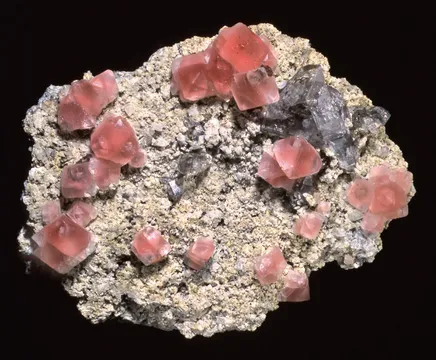
Planggenstock, Switzerland — Alpine fissure locality famed for giant quartz and smoky quartz, with rare pink fluorite perched on quartz, prized by collectors.
Key facts
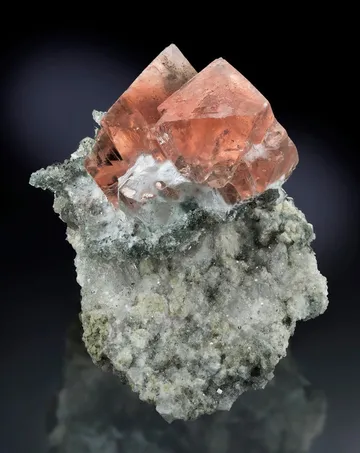
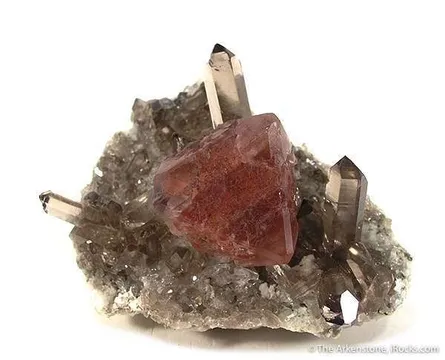
Planggenstock is one of the great modern Alpine cleft localities: a steep, granite-hosted crystal system high above the Göscheneralp in canton Uri, famous not for ore mining but for the work of Swiss Strahler—professional crystal hunters—who opened a succession of extraordinary fissure cavities in the Central Aar Granite. To collectors, the name means two things immediately: giant, glass-clear rock crystal and smoky quartz of museum scale, and the rare pink to raspberry-red octahedral fluorite that sits late on quartz, often with green chlorite sand as a dramatic accent. The best pieces have the unmistakable Alpine look—water-clear, sharply lustrous quartz prisms, sometimes enormous, with transparent rose-red fluorite octahedra that seem almost too vivid for a granitic cleft.
The locality entered mineral-collecting history in stages. Franz von Arx and Paul von Känel began pursuing the system in the 1990s, first through laborious clearing of unstable granite blocks, then through a hand-worked tunnel following promising cleft signs. Their 2005–2006 discovery produced nearly two tonnes of exceptionally clear quartz crystals and crystal groups, now displayed in the “Planggenstock Treasure” exhibition at the Natural History Museum Bern. Later work by von Arx with Elio Müller continued to open deeper parts of the same cleft system, including the 2008 giant-crystal find and later zones notable for intensely colored red-pink fluorite.
Regional View
Country View
Geologically, Planggenstock belongs to the Alpine fissure tradition at its most spectacular. These are not pegmatite pockets or hydrothermal ore veins in the usual mining sense, but extensional clefts opened during Alpine tectonism and later mineralized by hot aqueous fluids during uplift and cooling. Quartz formed early and abundantly; fluorite and chlorite belong to a later stage, which explains why the finest fluorites are perched on quartz rather than intergrown randomly through the granite. That paragenetic sequence is central to recognizing good Planggenstock material: quartz should look like an Alpine cleft crystal, and fluorite should read as a late, octahedral, pink-to-red accent, not as a massive vein mineral.

Photo: Wikimedia Commons / Arkelin

Photo: Wikimedia Commons / Arkelin
Search for specimens: View all specimens from Planggenstock, Switzerland
Planggenstock is a 2,823-meter mountain in the Göscheneralp area of Göschenen Valley, canton Uri. The collecting locality lies in the granitic rocks of the Aar Massif, specifically within the Central Aar Granite, the large east–west granitic body that underlies many of the classic central Swiss Alpine cleft occurrences. Mineralization is Alpine fissure, or Zerrkluft, mineralization: tectonically opened cavities in competent granitic rock were filled by mineralizing fluids, and crystals grew freely into open space rather than being locked as disseminated grains. That open-space growth is why the locality produced freestanding quartz prisms, large crystal groups, and discrete octahedral fluorites of a kind prized by collectors.
The “ore body” here is better understood as a cleft system rather than an ore deposit. The productive structure followed a quartz-bearing zone in granite and consisted of several large fissure cavities connected through a worked tunnel. Early work exposed a broad, low cavity filled with quartz and occasional pink fluorite. Later finds occurred progressively deeper into the mountain: around 30 meters in for the 2005 chamber, roughly 50–60 meters in for the 2008 giant-crystal zone, and eventually in a cleft system reported by the collectors to approach 100 meters of workings. The cavities were low, often only crawl-height, but laterally extensive enough to shelter quartz plates, loose crystals, large groups, chlorite sand, and fluorite.
The mineral sequence is classic for an Alpine granitic cleft. Quartz is the main species and formed early, producing rock crystal, smoky quartz, and locally gwindel-like Alpine forms in the broader Göscheneralp tradition. Fluorite formed later, as octahedra ranging from pale pink to strong raspberry-red or “fire-red” tones; the fluorites are typically on quartz or as loose floater crystals detached from earlier substrates. Green chlorite is a late and common cleft material, seen as coatings, inclusions, or granular “sand” associated with the fluorite-bearing zones. K-feldspar, including adularia, is documented from the locality, though it is not what made Planggenstock famous.
The collecting history is unusually well documented because the locality became a Swiss cultural event. In 1993 Franz von Arx and Paul von Känel examined strong cleft indications in the upper part of the northeast wall. The entrance was buried under huge loose granite blocks, some reported up to about 10 cubic meters, or roughly 25 tonnes. Over 23 days they removed about 150 cubic meters of loose rock and opened a very large cavity, described as roughly 10 to 15 meters wide, about 20 meters deep, and 60 to 70 centimeters high. That first major cavity yielded tonnes of quartz crystals and scattered pink fluorites, including quartz plates and groups large enough to establish Planggenstock as a serious locality before the later “treasure” finds.
A second giant cleft appeared in 1997, about 15 meters lower, confirming that the mountain held not a single lucky pocket but a whole cleft system. The best-known discovery followed on September 21, 2005, when von Arx and von Känel broke into a chamber containing nearly fifty large, clear, well-formed quartz crystals and groups. The largest publicized group weighed about 300 kilograms and carried a central crystal just over one meter long; the Natural History Museum Bern acquired the 2005–2006 treasure in 2010 and opened its permanent display in May 2011. The museum’s dark “treasure chamber” has become one of the great public displays of Alpine quartz.
After Paul von Känel reduced his activity, Franz von Arx continued at Planggenstock with Elio Müller. On September 19, 2008, after months of work, they opened another remarkable cavity, producing about 2.5 tonnes of selected quartz crystals, with individual crystals reaching about 1.2 meters and groups reportedly up to about 500 kilograms. Later seasons were leaner, but the system continued to reward persistence. A 2014 cavity yielded smoky quartz and fine pink fluorite, and a 2019 zone produced intensely colored red-pink fluorites described by the finders as exceptional in both size and purity for the Alps.
Access today is not casual collecting. The main Planggenstock cleft system is a worked Strahler locality associated with named professional collectors, not a public fee-dig. Mineral collecting in the Uri corporation territory is regulated by the Korporation Uri Strahler system, requiring patents or permissions, responsible conduct, cleanup of workings, reporting of significant finds, and restrictions on machine tools unless specifically allowed. Serious collectors should treat Planggenstock specimens as market or provenance pieces, not as invitations to visit the workings.
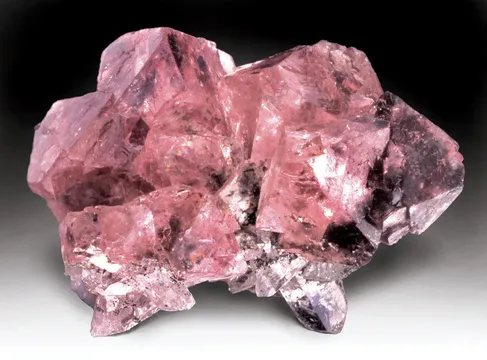
Planggenstock fluorite is the locality’s connoisseur mineral: pink to raspberry-red CaF2, almost always as octahedra, ranging from small thumbnail crystals to exceptional individuals several centimeters across and, in the major pocket literature, rare crystals approaching nearly 10 cm on edge from the 1990s production. The best examples are transparent, sharply octahedral, and strongly colored without looking muddy; many are perched on clear to smoky quartz, while loose floater octahedra and clusters can show recrystallized backs, chlorite inclusions, green phantoms, or natural contact faces from earlier attachment. The great 2019 fluorite zone renewed the locality’s reputation because it yielded unusually large, intensely colored red-pink fluorites with green chlorite sand, and these later pieces are among the most desirable modern Alpine fluorites when they combine saturated color, intact edges, transparency, and a clean quartz association.
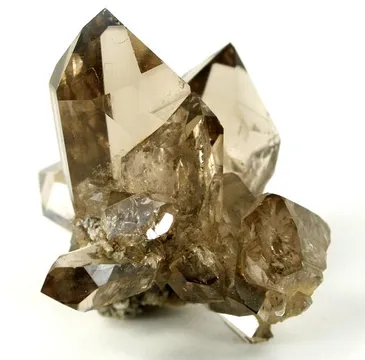
Quartz is the architectural mineral of Planggenstock: clear rock crystal and smoky quartz grew as thick Alpine prisms, large loose crystals, plates, and immense crystal groups in low but laterally broad cleft cavities in the Central Aar Granite. The 2005–2006 find produced nearly fifty major crystals and groups totaling almost two tonnes, with the museum centerpiece weighing about 300 kg and carrying a central crystal about 107 cm long; the 2008 discovery surpassed it in total yield, with crystals reported up to 1.2 meters and groups up to roughly 500 kg. Collector-quality quartz from Planggenstock is judged by glassy transparency, complete terminations, undamaged prism edges, attractive smoky zoning or water-clear brilliance, and, at the very top, the presence of sharply perched pink fluorite or tasteful chlorite accents rather than heavy bruising or dull, clay-stained surfaces.
Other documented Planggenstock minerals are few but important to the locality’s cleft character. Chlorite-group material occurs as late green sand, coatings, and inclusions, especially in fluorite-rich zones, and K-feldspar including adularia is recorded from the locality. Mindat’s current mineral list for Planggenstock is deliberately short—fluorite and quartz as the valid listed species, plus varieties and group-level entries—so claims of elaborate rare-species assemblages from “Planggenstock” labels should be treated cautiously unless accompanied by reliable analytical or collector provenance. No type-locality mineral species is verified from Planggenstock itself.
The first question with a Planggenstock specimen is provenance. Labels may read “Planggenstock,” “Göscheneralp,” “Göschenen,” “Uri,” or simply “Swiss Alps,” and older Alpine pink fluorites from the broader Göscheneralp region can be difficult to assign more precisely without an original collector, dealer, or museum trail. Because Planggenstock is now a high-value locality name, vague “Swiss pink fluorite” labels should not be upgraded to Planggenstock unless the specimen has credible documentation.
No widely documented Planggenstock-specific fake scandal stands out in the published locality sources, but the usual problems of high-end fluorite and quartz apply. Watch for glued fluorite-on-quartz compositions, especially where a single octahedron sits on an oddly convenient contact with mismatched luster, glue shine, or unnatural debris. Loose pink fluorite octahedra can be natural Planggenstock floaters, so lack of matrix is not suspicious by itself; the concern is unsupported locality attribution. Newer pink fluorites from China, including Huanggang material, have also been studied in comparison with Planggenstock fluorites, so a collector buying expensive loose pink octahedra should require more than color and habit as proof of Swiss origin.
Condition is crucial. Fluorite has perfect octahedral cleavage and the sharpest Alpine pink crystals are easily chipped along edges and corners. Contacting on the underside is common and may be entirely natural, particularly where fluorite detached from quartz or calcite; damage becomes a value issue when it interrupts the display faces or removes octahedral tips. Quartz from the big Planggenstock pockets commonly shows natural contacts, pressure marks, chlorite, internal veils, or small bruises from collapse and extraction. On important pieces, a repaired termination, reattached cluster, or stabilized crack should be disclosed clearly.
Color in Planggenstock fluorite deserves careful observation. The most prized examples are not merely “pink” but vividly rose-red to raspberry, transparent to translucent, and lively in daylight. Some crystals show uneven color zoning from intense pink into paler or nearly colorless areas; this can be natural. Green chlorite inclusions and phantoms can either enhance the specimen or muddy it, depending on how they sit in the crystal. Do not assume that stronger color automatically means better: sharp form, transparency, intact edges, and an unquestionable Alpine association matter just as much.
Market availability is real but limited. Small single fluorites and miniature fluorite-on-quartz pieces appear periodically from European dealers, often at strong prices relative to size. Cabinet-size examples with vivid fluorite on transparent quartz are much scarcer, and museum-scale quartz groups belong largely to institutional collections or to the original finders’ controlled sales and exhibitions. The Natural History Museum Bern display removed many of the most important 2005–2006 quartz specimens from the private market, which is part of why well-provenanced Planggenstock pieces remain so desirable.
The Planggenstock story begins not with a glittering chamber but with a wall of danger and doubt. In the upper third of the mountain’s northeast face, von Arx and von Känel read the signs that Alpine Strahler learn to trust: fractures, quartz bands, loosened granite blocks, the geometry of the rock. The suspected entrance was buried under loose granite masses, some as large as small rooms. For 23 days they moved roughly 150 cubic meters of blocks before the mountain gave way to a low cavity. The space was enormous by Alpine cleft standards—10 to 15 meters wide, about 20 meters deep, and barely high enough to work in. It was filled with quartz and scattered pink fluorite. That first breakthrough in 1993 set the pattern for everything that followed: years of patience, cramped work, and a belief that a cleft rarely comes alone.
By 2005, after 14 years in the system, even the believers were close to walking away. They had worked through a long summer without a worthwhile find. The tunnel was about 30 meters into the mountain, winter was beginning to announce itself, and the pair had decided to stop for the season. Then, near the end, von Arx broke through with the pneumatic drill. He shone a flashlight into the small opening and saw the chamber flash back. In one account the light inside shone “wie ein Christbaum”—like a Christmas tree. He called to Paul to yodel. The two men had opened one of the great Alpine crystal chambers of the modern era.
Inside were almost fifty large, unusually clear crystals and groups. The work of rescue was as demanding as the work of discovery. One great group had already detached from the roof and lay upside down on the floor; lifting it with a pulley system took a full day, and moving it roughly 14 meters out of the mine took five days. In another age, a 300-kilogram group might have been broken apart simply to get it off the mountain. Instead, helicopter transport brought it down intact toward the Göscheneralp dam. Von Arx later recalled the emotion of seeing the crystal group safely out, no longer trapped in the dark granite cleft.
The life around the mine became part of the legend. The Planggenstock workings were not a tourist shaft but they were more than a casual dig: a seasonal mountain workplace at around 2,600 meters, with a small one-room shelter, generators, drill gear, water, fuel, gas, food, and supplies flown in by helicopter for the summer. In the tunnel the men worked for hours in crouched or crawling positions, splitting rock and carrying spoil. The shelter had the smell of propane, fried food, cold air, and snow; visitors reportedly helped stock a mountain wine cellar. Outside, weather moved across the high Urner granite. Inside, a warm-air blower kept parts of the working tunnel at about ten degrees Celsius.
The 2008 discovery brought a second act that would have been unbelievable if the first had not already happened. On September 19, 2008, after three months of work, Franz von Arx and Elio Müller opened another chamber. Müller later recalled the moment precisely: at 11:30 a.m., about 50 meters inside the mountain, von Arx looked through a small drilled hole and saw the giant-crystal cave. The recovered material amounted to about 2.5 tonnes of selected crystals, with individuals up to about 1.2 meters and groups reaching several hundred kilograms. Müller described the first sunlight on the crystals outside the mountain as the moment when the force and energy of the find became fully real.
Then came the lean years. After the great chambers, the two continued along the promising quartz band and, for about five years, advanced roughly another 30 meters through hard granite without finding anything comparable. The Planggenstock system asked for the one quality that cannot be faked in Alpine collecting: endurance. In 2014 the mountain yielded again, more modestly but memorably, with smoky quartz and fine pink fluorite. Work then moved in new directions and onto lower levels. By 2018 von Arx and Müller had reached a promising zone in a cleft system approaching 100 meters, and in 2019 the mountain answered with intensely colored, fire-red fluorites—specimens that shifted attention from the giant quartz legend back to the pink fluorite for which Alpine collectors have long loved the Göscheneralp.
The human story has its own weight. Paul von Känel stepped back after the 2005–2006 triumph. Elio Müller, von Arx’s godson and later collecting partner, became inseparable from the continuing Planggenstock chapter, spending summer after summer in the mountain. Sources published after his death describe the loss felt in the Uri collecting world and note that Nina Müller continued working with his crystals, while Franz von Arx and helpers remained active at Planggenstock. The locality is therefore not just a name on specimen labels; it is a living thread of Swiss Strahler culture, where the finest specimens carry the memory of named people, seasons of labor, and exact moments when light entered a chamber for the first time in millions of years.
Stalder, H. A., Wagner, A., Graeser, S., and Stuker, P. (1998). Mineralienlexikon der Schweiz. Wepf Verlag, Basel, 579 pp.; Planggenstock entries cited for fluorite, quartz, rock crystal, smoky quartz, and chlorite-group material. Source: https://www.mindat.org/loc-49592.html
Bancroft, Peter (1973). The World’s Finest Minerals and Crystals, cited by Mindat for Planggenstock fluorite. Source: https://www.mindat.org/loc-49592.html
von Arx, Franz (1995). “Die grosse Kluft am Planggenstock UR.” Schweizer Strahler, pp. 201–211; a key collector account of the early major cleft. Source index: https://mineralienvorkommen.ch/uri%2C-2%2C-ohne-tunnel%2C-stollen%2C-abbaue%2C-teil2.html
von Arx, Franz (2007). “Riesenkristalle aus der Göscheneralp / Kanton Uri.” Schweizer Strahler, pp. 8–13; collector report on the giant-crystal period. Source index: https://mineralienvorkommen.ch/uri%2C-2%2C-ohne-tunnel%2C-stollen%2C-abbaue%2C-teil2.html
Moore, Thomas P. (2010). “Alpine pink fluorite.” The Mineralogical Record, 41(1), 9–52; broad survey of Alpine pink fluorite, including the collector context for Swiss pink fluorites. Source: https://mineralogicalrecord.com/product/mineralogical-record-vol-41-no-1-2010/
Guedes, Roger De Ascenção (2023). “Une fluorine rose sensationnelle au Planggenstock! Göscheneralp, Uri, Suisse.” Le Règne Minéral, 29(171), p. 7. Source: https://uncailloudanslapoche.fr/book/le-regne-mineral-171/
Wilson, Wendell E. (2023). “Alpine Pink Fluorite from the New Gotthard Road Tunnel, Switzerland.” The Mineralogical Record, 54(5), 619–633; relevant comparative context for Swiss Alpine pink fluorite and recent tunnel finds near the Gotthard. Source: https://mineralogicalrecord.com/back_issues/pink-fluorite-vol-54-no-5-september-october-2023/
Hügi, Michael F., Krzemnicki, Michael S., and Wälle, Markus (2025). “Gem-quality pink fluorite from Planggenstock, Switzerland: chemical and physical properties and a comparison with pink fluorites from other localities.” 38th International Gemmological Conference, Athens; includes trace-element and spectroscopic observations on Planggenstock pink fluorite. Source: https://www.igc-gemmology.org/wp-content/uploads/2025/11/2025-Huegi-et-al-Gem-quality-pink-fluorite-from-Planggenstock-Switzerland.pdf
Gnos, Edwin, Mullis, Josef, Ricchi, Emmanuelle, Bergemann, Christian A., Janots, Emilie, and Berger, Alfons (2021). “Episodes of fissure formation in the Alps: connecting quartz fluid inclusion, fissure monazite age, and fissure orientation data.” Swiss Journal of Geosciences, 114, article 14; important modern framework for Alpine fissure formation. Source: https://link.springer.com/article/10.1186/s00015-021-00391-9
Natural History Museum Bern, “Giant Crystals – The Planggenstock Treasure”; permanent exhibition of the 2005–2006 Planggenstock quartz treasure, including the 300 kg rotating centerpiece. Source: https://www.museen-bern.ch/en/exhibitions/event-details/giant-crystals-the-planggenstock-treasure
Mindat locality page for Planggenstock, Göscheneralp, Göschenen Valley, Uri, Switzerland; concise mineral list, coordinates, and reference trail. Source: https://www.mindat.org/loc-49592.html
Mindat photo gallery for Planggenstock; useful specimen photographs and museum-display documentation. Source: https://www.mindat.org/sitegallery.php?loc=49592
“Die Schatzsucher von Planggenstock” — SRF DOK. A television portrait of Franz von Arx and Paul von Känel working the Planggenstock cleft with quartz and pink fluorite. URL: https://www.srf.ch/play/tv/dok/video/die-schatzsucher-von-planggenstock?urn=urn%3Asrf%3Avideo%3A1ad45a96-6e22-4866-ac62-3f7e875d8dc8
“Riesenkristalle” — SRF Schweiz aktuell. A short Swiss television segment on the giant Planggenstock crystals going on display in Bern. URL: https://www.srf.ch/play/tv/schweiz-aktuell/video/riesenkristalle?urn=urn%3Asrf%3Avideo%3A76d1806b-e506-4607-b503-1508f2280d71
“Paul von Känel – der Strahler mit dem Jahrhundertfund” — SRF Regionaljournal Bern Freiburg Wallis. Audio interview with Paul von Känel on the Planggenstock century find and the large quartz acquired for Bern. URL: https://www.srf.ch/audio/regionaljournal-bern-freiburg-wallis/paul-von-kaenel-der-strahler-mit-dem-jahrhundertfund?partId=9fb4a0f9-0eb1-49d1-959f-ebfd487cbfc8
“Die Kristalle im Sasso San Gottardo” — Tele 1 / Bote der Urschweiz. Video item on the 2008 Planggenstock giant crystals exhibited in the former Sasso San Gottardo fortress. URL: https://www.bote.ch/nachrichten/videos/die-kristalle-im-sasso-san-gottardo-sts-5192
Mindat: Planggenstock, Göscheneralp, Uri, Switzerland — Best concise database entry for the locality, coordinates, mineral list, and core references.
Mindat photo gallery: Planggenstock — Useful visual reference for fluorite, quartz, and the Bern museum display.
Natural History Museum Bern: Giant Crystals – The Planggenstock Treasure — Official exhibition page for the 2005–2006 quartz treasure.
Natural History Museum Bern Planggenstock exhibition brochure, English PDF — Museum brochure with discovery history, exhibition context, and Alpine cleft explanation.
Bergkristalle Müller: Der Schatz vom Planggenstock — First-hand collector-side history of the main Planggenstock discoveries from 1993 through the later fluorite finds.
Swiss Alpine Club: “Das Buch der Natur lesen” — Vivid field article on Urner Strahler culture and the 2005 Planggenstock breakthrough.
Blick: “Ihr grösster Fund” — Magazine-style contemporary account of von Arx and von Känel’s great quartz find.
Bergsteiger: “Der Kristallsucher Franz von Arx” — Profile of Franz von Arx with details on the Planggenstock wall, finds, and working conditions.
Korporation Uri Strahler information — Practical reference for Uri mineral-collecting permissions and Strahler regulations.
Uri Strahler regulation PDF — Official rules governing crystal and mineral collecting in Korporation Uri territory.
Hügi, Krzemnicki & Wälle 2025 Planggenstock pink fluorite PDF — Gemmological and geochemical comparison of Planggenstock pink fluorite with other pink fluorites.
Gnos et al. 2021, Swiss Journal of Geosciences — Modern open-access geological framework for Alpine fissure formation.
Le Règne Minéral no. 171 — Issue listing for Roger De Ascenção Guedes’s 2023 note on sensational pink fluorite from Planggenstock.
The Mineralogical Record Vol. 41, No. 1, 2010 — Back-issue listing for Thomas P. Moore’s major “Alpine pink fluorite” article.
The Mineralogical Record Vol. 54, No. 5, 2023 — Back-issue listing for the “Pink Fluorite!” issue, including Swiss Alpine pink fluorite context.
_(Naturhistorisches_Museum_Bern).jpg)
_(Naturhistorisches_Museum_Bern).jpg)