






Göscheneralp, Switzerland — Alpine granite locality yielding glass-clear quartz and pink fluorite octahedra, prized by collectors for iconic specimens and hist…
Key facts
Göscheneralp, high in the Göschenen Valley of Canton Uri, is one of the great Alpine cleft localities of Switzerland: not an ore mine in the normal sense, but a rugged granite country where collectors and professional Strahler have opened tension fissures in the Central Aar granite and brought out quartz and fluorite of extraordinary beauty. Its name belongs in the same conversation as the classic Alpine quartz localities of the Aar Massif, because the best pockets here did not merely yield ordinary rock crystal; they produced large, glass-clear to smoky quartz groups, gwindels, and gemmy rose-pink fluorite octahedra that have become icons of Swiss collecting.
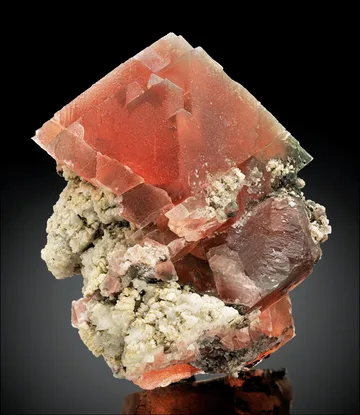
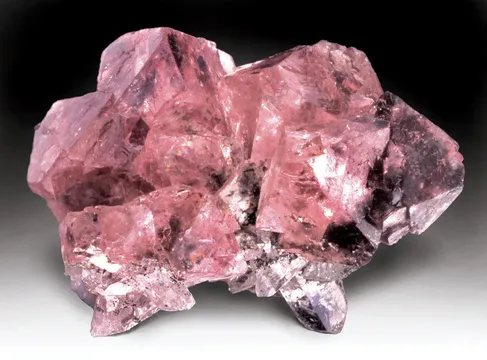
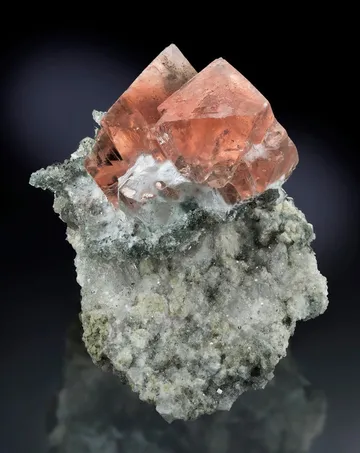
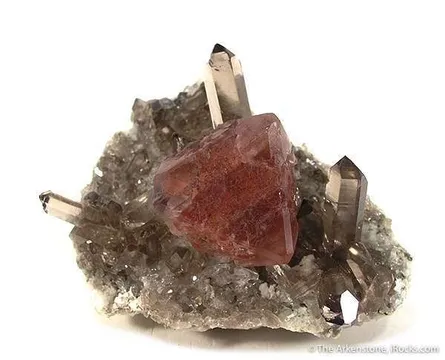
The collector’s image of Göscheneralp is sharp and unmistakable: lustrous, transparent quartz prisms, sometimes with the faint tea color of smoky quartz, accompanied by isolated octahedra of pink to raspberry fluorite. The finest Planggenstock specimens show the Alpine aesthetic at its most refined—clean geometry, open composition, minimal matrix, and a crystalline freshness that makes the pieces look as though they were lit from within. In the very best fluorites, color is not a surface tint but a glowing body color, often made more dramatic by green chlorite inclusions or by contrast with white feldspar and clear quartz.
Regional View
Country View
Historically, Göscheneralp matters for two intertwined reasons. First, it is part of a centuries-old Urner Strahler tradition in which mountain farmers, guides, and later professional crystal hunters searched the granite for open clefts. Second, the Planggenstock finds of the 1990s and 2000s transformed the locality from a respected Alpine collecting ground into a museum-scale legend. The 2005–2006 “Planggenstock treasure” produced nearly two tonnes of exceptional quartz crystals and groups, now exhibited at the Natural History Museum Bern; alongside those giant quartzes, unusually large pink fluorites reinforced Göscheneralp’s standing as one of the premier Alpine fluorite localities.

Photo: Arkelin, Wikimedia Commons
Search for specimens: View all specimens from Göscheneralp, Switzerland
Göscheneralp lies in the upper Göschenen Valley west of the village of Göschenen, in the Urner Alps. Mineralogically, the name covers a cluster of collecting sites around the Göscheneralp basin, including Planggenstock, Winterstock, Lochberg, Feldschijen, the Feldschijen glacier area, Älprigenlücke, Dammastock, Göscheneralp lake, and the Voralpreuss water tunnel. The geological setting is the Central Aar granite of the Aar Massif, a Variscan granitic body later fractured, uplifted, and overprinted during Alpine tectonism. Those tectonic fissures—Alpine clefts—are the deposit type that matters to collectors here.
The “ore bodies” at Göscheneralp are therefore cavities rather than veins mined for metal. They are open or clay-filled clefts in granite, locally developed to exceptional dimensions. Hydrothermal fluids moving through these fractures deposited quartz first and, in selected pockets, fluorite, feldspar, chlorite, zeolites, and accessory minerals. The dominant collector minerals are SiO2 and CaF2, but the texture of the specimens is controlled by the cleft environment: quartz crystals growing freely into open space, octahedral fluorite perched on quartz or feldspar, chlorite dusting or included as green phantoms, and occasional late-stage carbonate or zeolite minerals marking the closing history of the pocket.
Planggenstock is the key sublocality. The famous cleft system was worked not as a commercial ore mine but as a Strahler operation of almost mine-like persistence. Franz von Arx and Paul von Känel began work there in the early 1990s, clearing immense blocks by hand and later driving into the granite with mechanical assistance where permitted. The upper and lower clefts became unusually large by Alpine standards; sources describe spaces measured in tens of meters, reached only after years of labor on exposed rock at high altitude. In 1993–1994, work at Planggenstock revealed large crystal groups and rose fluorite. In 1997, a deeper cleft system was opened. In 2005, after the miners had advanced roughly 30 meters into the mountain, a new chamber yielded the giant quartz groups that made the locality internationally famous.
The most celebrated production period is therefore modern: from the first major Planggenstock finds in the 1990s through the spectacular 2005–2006 quartz recovery and later associated finds. Earlier Göscheneralp material, however, was already part of Swiss collecting culture. Literature and collections record rose fluorite, rock crystal, smoky quartz, gwindel quartz, adularia, calcite, zeolites, and accessories from several named spots around the valley. The area’s older specimens often appear under locality spellings such as Göschener Alp, Göscheneralp, Göschenertal, or simply Uri, and older labels may use Plankenstock or Plattenstock for what is now treated as Planggenstock.
The old settlement history of Göscheneralp adds an unusual human layer to the locality. The former alpine settlement lay in the valley before construction of the Göscheneralpsee reservoir; the dam was completed around 1960, and the old settlement was removed and flooded, with residents resettled at Gwüest. The reservoir now forms the visual center of the valley, and the famous collecting ground rises above and around it rather than existing as a conventional mine district.
Collecting access today is regulated. On land administered by Korporation Uri, mineral and crystal collecting requires a Strahler patent, and the rules are specific: patents are personal, collecting is restricted by regulation, Sundays and legal holidays are excluded, machine assistance and blasting are generally prohibited without special authorization, and a discovered cleft can be formally marked and protected by the patent holder. Serious collectors should treat Göscheneralp as a classic but controlled Alpine locality, not as an open recreational collecting field. Much of the important material on the market comes from old collections, professional Strahler recoveries, or well-documented dealer stock rather than casual modern collecting.
Göscheneralp fluorite is prized above all for rose-pink to deep pink octahedra, especially from Planggenstock and associated clefts in the Göscheneralp area. The crystals occur as sharp isolated octahedra, small clusters, and fluorite-on-quartz combinations, sometimes with albite, adularia, chlorite, and smoky or colorless quartz; green chlorite inclusions can create internal contrast or phantom-like effects within the pink fluorite. Individual Planggenstock crystals documented in the trade and literature range from thumbnail size to unusually large Alpine examples around 10 cm, with large, undamaged, well-colored crystals ranking among the great Swiss fluorites. Ordinary pieces may be pale, bruised, or compositionally crowded; superior Göscheneralp fluorites have saturated pink color, crisp octahedral form, transparency, intact edges, and a natural placement on quartz or granitic matrix that preserves the open Alpine-cleft look.
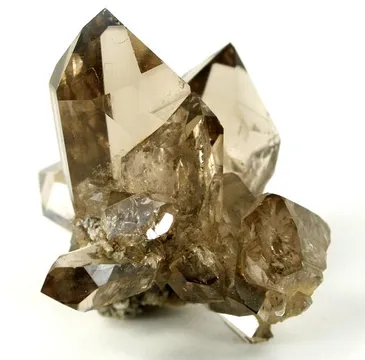
Quartz from Göscheneralp ranges from colorless rock crystal to smoky quartz and gwindel forms, with Planggenstock providing the locality’s most famous giant crystals and Winterstock contributing notable gwindels. The best crystals are lustrous, highly transparent prisms with sharp terminations, sometimes lightly smoky, sometimes water-clear, and commonly associated with pink fluorite, albite/adularia, chlorite, calcite, or iron-oxide staining from late alteration. The Planggenstock treasure demonstrated the exceptional scale possible here: meter-class quartz groups and individual crystals of museum significance, while collector specimens more often appear as cabinet to miniature pieces balancing clarity, termination quality, and Alpine character. Fine Göscheneralp quartz is separated from ordinary Alpine quartz by transparency, undamaged tips and edges, clean luster, sculptural grouping, and, when present, a well-placed rose fluorite accent.
Other documented minerals from Göscheneralp and its sublocalities include anatase, apatite, calcite, chlorite-group minerals, chamosite-clinochlore series material, hematite, heulandite-Ca, K-feldspar including adularia, laumontite, phenakite, scolecite, and stilbite-subgroup zeolites. Winterstock is specifically notable for phenakite, a rare beryllium silicate recorded in Lapis. Planggenstock has also yielded unusual late secondary lead minerals associated with galena-bearing cleft material, including wulfenite, cerussite, hydrocerussite, anglesite, vanadinite, vanuralite, plumbogummite, plumbojarosite, goethite, and opal; these are rarities for the specialist rather than the face of the locality. Göscheneralp’s fame is not based on a type-mineral discovery, but on the exceptional quality and scale of its Alpine cleft quartz and pink fluorite.
The first issue with Göscheneralp specimens is locality precision. Labels reading “Göscheneralp,” “Göschenen,” “Göschener Alp,” “Göschenertal,” “Uri,” “Planggenstock,” and older variants such as “Plankenstock” or “Plattenstock” may refer to overlapping but not identical localities. For high-value fluorite and quartz, especially pink fluorite, a specimen with a specific sublocality and credible old provenance is preferable to a broad “Switzerland” or “Uri” label. Planggenstock attribution carries a premium, but it should be supported by label history, collector pedigree, dealer confidence, or direct Strahler provenance.
No famous, locality-specific fake industry is documented for Göscheneralp in the way that some classic localities have known glued composites or routine enhancements. The broader market risks are more ordinary: mislabelled Alpine pink fluorite from other Swiss, French, or international localities; trimmed or repaired quartz groups; fluorite crystals reattached to quartz; and modern “Swiss pink fluorite” claims applied too broadly. Because pink fluorite is valuable and visually seductive, inspect contact points under magnification. Natural cleft attachments generally show coherent mineral growth, matching clay or chlorite residues, and no glossy adhesive meniscus. Isolated fluorite crystals should be judged on form and provenance rather than romantic locality claims alone.
Condition is central. Fluorite from Göscheneralp is relatively soft and cleaves perfectly, so chipped octahedral edges, bruised corners, and internal fractures are common; even small edge rubs matter on high-end pink octahedra. Quartz is tougher, but tips, prism edges, and base contacts are frequent damage points, especially on large Alpine groups that had to be removed from narrow clefts. Chlorite dusting, clay residue, and iron staining may be natural and even attractive, but aggressive cleaning can dull fluorite or expose hidden cleaves. Avoid prolonged intense sunlight for fine pink fluorite, as colored fluorite in general deserves conservative light exposure.
Fluorescence is worth checking but should not be overvalued. Some Göscheneralp fluorite specimens are reported as fluorescent under long- and short-wave UV, but the locality is collected primarily for color, form, transparency, and association. Pink fluorite on quartz remains far scarcer and more liquid in the fine-mineral market than ordinary quartz from the valley. Cabinet-quality quartz from older finds is obtainable, but fine Planggenstock pink fluorite, especially with strong color and minimal damage, appears only intermittently and commands a strong premium. Museum-scale quartz from the 2005–2006 find is effectively outside the normal collector market; the great assemblage is institutional.
The defining Göscheneralp story begins with two men working in a mountain rather than simply collecting on one. Franz von Arx and Paul von Känel had spent years at Planggenstock, convinced that the granite still held a major cleft. In the early 1990s they cleared roughly 150 cubic meters of blocks and rubble from the upper area—some blocks described as up to 10 cubic meters and around 25 tonnes—before the mountain rewarded them with large quartz groups and rose fluorite. That was not the end of the work. In 1997 they opened another large cleft system deeper in the granite, and year after year the operation took on the character of a small alpine mine.
By autumn 2005 the work had become an ordeal of persistence. After a long summer in the Planggenstock cleft without a single worthwhile find, the two men were close to giving up. Then, on the next-to-last working day, von Arx broke through with the pneumatic hammer. He shone a flashlight through a small hole, and the chamber beyond glittered “wie ein Christbaum”—like a Christmas tree. One glance was enough for him to call to von Känel, essentially, “Give a cheer!” The chamber lay about 32 meters inside the mountain and contained quartz crystals and groups of a scale almost never seen intact in the Alps.
The recovery was as important as the discovery. The great group, about 300 kg with a central crystal just over a meter long, could not simply be dragged out. Sources describe five days of work just to move the main group out of the mine, including a full day of lifting with an elaborate block-and-tackle system. In earlier generations, the group would probably have been broken into pieces for transport. Instead, helicopter support made it possible to bring the heavy quartz safely down to the dam area of the Göscheneralpsee. Von Arx later recalled being moved to tears when the crystal group reached the valley intact.
The working conditions at Planggenstock were both austere and strangely domestic. The site sat high above the valley on a narrow rock ledge, with a small one-room shelter, generators, equipment for drilling, and seasonal supplies flown in by helicopter. Water, fuel, gas, and food went up in spring for the summer season, while visitors gradually helped stock what one account called a surprisingly rich wine cellar. Inside the mine, a long low tunnel led into the granite; in places one could stand, and a warm-air blower kept the interior at about 10 °C. Yet the routine remained eight-hour days of splitting rock, hauling rubble, and waiting for the next sign from the stone.
When the Planggenstock crystals first went on display in the old church at Flüelen, the staging turned the find into a public event. The church interior was darkened, the crystals were lit dramatically, and security guards watched over the specimens. Debate followed about where such a Swiss “national symbol” belonged: in Uri, in Bern, perhaps even in the Federal Palace. The Natural History Museum Bern ultimately acquired the treasure and created a permanent display around it. In Bern, the central 300 kg group rotates slowly in a darkened treasure chamber, a theatrical presentation that suits a specimen born in darkness and brought out by years of stubborn labor.
Göscheneralp’s story is not only the story of one spectacular find. It is also the story of a local culture of Strahler families and mountain people. Konrad Mattli, long associated with the Göscheneralp inn at Gwüest, grew up with crystals as part of daily life; his father and grandfather had searched clefts before him. As a boy he crawled into fissures, and as an adult he treated strahlen as his summer passion. In winter he made ski tours across the Alps, but in summer, by his own telling, there was only one pursuit: crystal hunting. His house was filled with pieces he had found himself—some sold “for money,” others kept like old friends on the buffet, windowsills, and guest-room cabinet.
One of the most charming Mattli episodes has nothing to do with a pocket underground and everything to do with how far Göscheneralp crystals traveled. In Paris, what impressed him was not the usual tourist spectacle but seeing crystals from his own valley in the mineral collection of the French natural history museum. The moment captures the peculiar reach of Göscheneralp specimens: born in remote granite clefts above a Swiss reservoir, carried out by Strahler, traded or preserved, and finally admired in city museums far from the cold, broken rock that produced them.
_(Naturhistorisches_Museum_Bern).jpg)