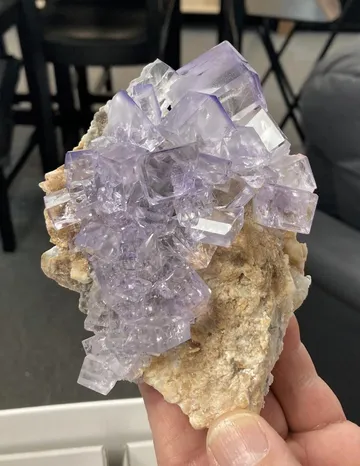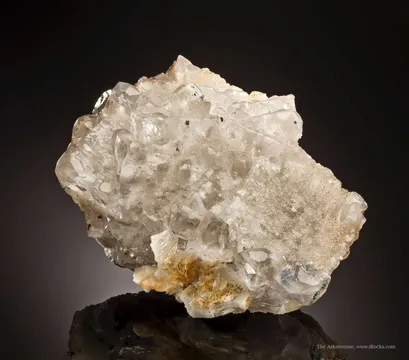
La Viesca Mine, Spain - part of the Asturian fluorite belt; blue to lilac fluorite on quartz, renowned pockets and collector rarity.
Key facts
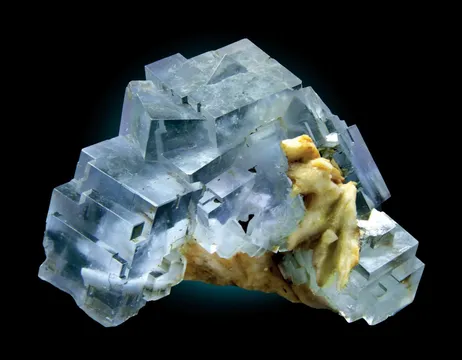
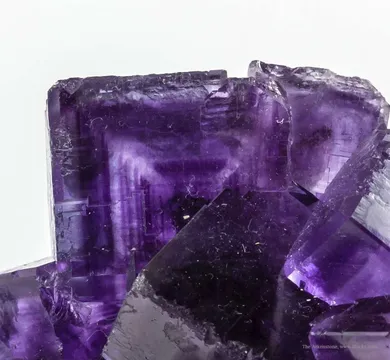
La Viesca is the modern collector’s name that keeps the La Collada fluorite district alive. Set near Huergo and La Collada in Siero, Asturias, the mine belongs to the great Asturian fluorite belt: low-temperature hydrothermal fluorspar mineralization concentrated along the contact between Paleozoic basement rocks and Permo-Triassic cover, where fractures, breccias, karstic openings, and stratabound horizons made room for fluorite, quartz, calcite, baryte, and minor sulfides. For collectors, its importance is not just industrial tonnage but personality. La Viesca fluorites are instantly recognizable when they are good: blue to lilac cubes, commonly beveled by rhombododecahedral faces, often transparent enough to show internal violet phantoms or geometric color zoning, and frequently perched on bright, white quartz. The best pieces have a cool, glassy, almost glacial look, but many also show the satiny or “bubbly” surface texture that separates them from the sharper, darker purple Berbes classics.
Regional View
Country View
Historically, La Viesca sits in a district with more than a century of fluorite mining, but many of the specimens that made the mine internationally familiar to collectors came from named pockets in the late twentieth and early twenty-first centuries. Reguerín, Tres de la Collada, Coquera de la Calcita, Galería 49, Las Calizas, La Falla, La Negrina, El Funco, and Las Monjas are not abstract mine levels to specimen people; they are pocket names attached to real visual differences—deep blue versus lilac color, quartz-rich matrix versus calcite combinations, bevel shape, phantom sharpness, surface texture, and the presence or absence of epimorphic quartz after calcite. The Las Monjas pocket of May 2010 is especially famous because it produced world-class fluorite specimens and the distinctive quartz epimorphs whose shapes suggested nuns’ bonnets.
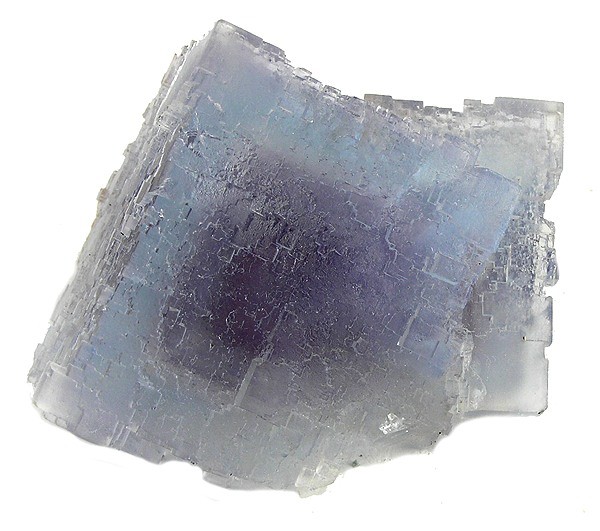
Photo: Wikimedia Commons
Search for specimens: View all specimens from La Viesca Mine, Spain
La Viesca Mine is in the La Collada mining area near Huergo, Siero, Asturias, northwestern Spain. In geological terms, it is part of the Asturian fluorspar province, where economic fluorite occurs at and near the base of the Asturian Permo-Triassic Basin. The La Viesca mineralization has been described as Mississippi Valley–type in regional mining documents: stratiform to stratabound fluorite developed along a layer following the paleorelief of the Carboniferous-Permian unconformity, together with vein mineralization in fractures that served as feeder structures. The ore is hosted both in Carboniferous limestones and in basal Permo-Triassic sandstones, and the district structure is governed by major NW-SE and E-W fault systems, including structures related to the Llanera fault family.
The ore-forming system was a low-temperature hydrothermal one. Fluid-inclusion work on Asturian fluorite deposits, including La Collada-La Viesca material, records homogenization temperatures chiefly in the 80–170 °C range and recognizes both relatively low-salinity H2O-NaCl fluids and more saline H2O-NaCl-CaCl2 brines. The broad model is one of ascending basinal brines interacting with basement and Permo-Triassic rocks, then mixing with less saline surficial fluids in permeable carbonates, breccias, and fractures. That explains the mixture of vein and stratabound ore styles and the typical collector assemblage: fluorite as the dominant species, with quartz, calcite, baryte, and scattered sulfides.
Mining in the La Collada district began in the first decade of the twentieth century, and early production was intermittent. The district included several fluorite workings—Coroña, Josefa-Veneros, Filón Collada, and others—before La Viesca became the modern focus. Fluoruros S.A. was central to the mid-century history of the district and investigated the Olga concession in the 1970s and 1980s, calculating roughly 700,000 tonnes of raw mineral resource after mechanical drilling. A later phase was opened at La Viesca by Preparación Minera del Norte near the end of the first decade of the 2000s. From 2011, MPD Fluorspar, S.L.U., part of the Minersa group, carried out intensive exploration and mining, including underground drilling and surface drilling. Public project documents state that from the 2011 reopening to the date of those documents roughly 450,000 wet tonnes of ore had been extracted at an average grade of about 33% CaF2.
La Viesca’s industrial status has shifted in recent years. Asturias mining records list it as an underground fluorspar operation with MPD Fluorspar, S.L.U. as operator and title holder, while a 2022 labor judgment records a 2021 communication that known reserves were practically exhausted, followed by a temporary suspension project and workforce reductions connected with the end of extraction work. Subsequent public notices and news reports show continued interest in the district: exploration projects have sought to test the north and northwest continuation of the mineralization, and in 2026 the regional administration authorized additional drilling in the La Collada project area. For collectors, the practical conclusion is simple: La Viesca is not a casual collecting site. It is an industrial mine and mineral-rights area, and any access must be through explicit permission from the operator and relevant landholders.
Collector production is best understood pocket by pocket. The mine has yielded numerous fluorite-bearing geodes since its earlier workings, and the distinctive material is often tied to named finds. Reguerín II, found in December 2001, produced blue to violet fluorite on quartz, commonly with color shifts under different lighting. Tres de la Collada, found in May 2003 in the old No. 3 gallery, produced a large volume of specimens, including blue material reminiscent of older Josefa-Veneros pieces and more magenta-violet examples unlike the usual sky-blue La Viesca look. Coquera de la Calcita, dated January 2004 in specimen records, is notable for fluorite with quartz and white scalenohedral calcite, as well as unusually large calcite pieces. Las Calizas, La Falla, La Negrina, Galería 65, El Funco, Galería 49, La Salina, and pocket “42” are also recorded on mine plans and in specimen literature. Las Monjas, discovered in May 2010, stands apart for the quality and size of its fluorite and for the quartz epimorphs after dissolved scalenohedral calcite that gave the pocket its name.
La Viesca fluorite is chiefly cubic, commonly modified by rhombododecahedral bevels and marked by stepped or polycrystalline growth on the cube faces; color ranges from colorless and pale sky-blue through blue-violet, lilac, and deeper violet, with geometric zoning and phantoms among the mine’s most desirable traits. Crystals on collector pieces range from small, sharp miniatures to major cabinet specimens with individual cubes several centimeters across, and museum-documented examples include La Viesca fluorite aggregates with cubes up to 10 cm on edge. Quartz is the classic matrix, but calcite, baryte, chalcopyrite, pyrite, and sphalerite occur on some pieces. The finest specimens have transparent or gemmy interiors, clean beveled forms, attractive three-dimensional stacking, sharp contrast against white quartz or calcite, and strong zoning without being dulled by damage or overly satiny growth; ordinary examples tend to be smaller, cloudier, more contacted, or visually flat despite still showing the characteristic La Viesca blue-lilac palette.
Quartz at La Viesca is more than a neutral white background: it is one of the mine’s defining specimen partners, appearing as drusy, sparkling, hyaline to white coatings and, in the Las Monjas material, as large epimorphs after scalenohedral calcite that had been dissolved away before or during later mineralizing events. These quartz epimorphs can form hollow, bonnet-like forms, and the most collectible examples are those where the quartz architecture is intact and fluorite crystals of good size sit directly on or among the epimorphs. On more common pieces, quartz forms a granular or sugary white matrix beneath blue to violet fluorite cubes; on better ones it provides bright contrast, textural delicacy, and evidence of the pocket’s paragenetic history rather than merely serving as matrix.
Calcite from La Viesca occurs as white to colorless scalenohedral and bipyramidal crystals, commonly in association with fluorite and quartz; the Museo Geominero collection includes a La Viesca calcite specimen described as an aggregate of bipyramidal crystals up to 8 cm. In collector specimens, calcite is less abundant than fluorite and quartz but can be highly important aesthetically, especially where white scalenohedra contrast with transparent blue-lilac fluorite or where later quartz has preserved calcite’s shape as epimorphs after the original crystals dissolved. Strong La Viesca calcites are judged by clean crystal form, freshness, association, and lack of bruising on exposed scalenohedral points; pieces with fluorite perched among calcite or quartz-after-calcite forms are more desirable than isolated, dull calcite masses.
Other documented La Viesca minerals include baryte, chalcopyrite, pyrite, sphalerite, galena, and hematite. Sphalerite is a notable rarity for the mine, especially honey to toasted-honey crystals associated with transparent fluorite on quartz; early sphalerite-with-fluorite pieces caused real excitement among Spanish collectors because the association was new and scarce for La Viesca. Chalcopyrite appears as small brassy crystals on fluorite and can add excellent color contrast, while pyrite may occur as tiny coatings or inclusions. No verified type-locality mineral species is attached to La Viesca in the principal mineral lists and publications consulted; its importance rests instead on world-class fluorite, exceptional quartz epimorphs after calcite, and rare, well-documented sulfide associations.
La Viesca specimens are common enough that collectors can still obtain representative examples, but top-tier pieces are not common. Small to cabinet-size fluorites appear regularly from old collections and dealer stock, while large, clean, strongly zoned, three-dimensional examples—especially from named pockets such as Las Monjas, Reguerín II, Galería 49, Coquera de la Calcita, or Tres de la Collada—are substantially scarcer and increasingly provenance-sensitive. When possible, buy specimens with old labels, pocket names, collection histories, or dealer documentation, because La Viesca sits among a cluster of Asturian fluorite localities whose specimens can be confused in the market.
The most common mislabelling issue is not outright fakery but imprecision: “Asturias,” “La Collada,” “Berbes,” and “La Viesca” have sometimes been used loosely on labels, especially for older Spanish fluorites. La Viesca is usually suggested by blue to lilac color, bevelled cubes, geometric zoning, satiny to subtly bubbly cube faces, and quartz-rich matrix; Berbes specimens more often show the classic intense purple color with baryte associations, though exceptions exist. Older Josefa-Veneros and La Collada pieces can be close enough in habit that provenance matters. A label naming a precise pocket is valuable only when it is plausible and supported by credible chain of custody.
Condition is a serious issue. Fluorite has perfect octahedral cleavage and La Viesca crystals often stand proud on quartz or calcite, so corner bruises, cleaved edges, and repaired crystals are common risks on otherwise attractive specimens. Beveled edges can hide small chips under certain lighting; inspect with a loupe and rotate the piece in both daylight and oblique artificial light. Larger cabinet pieces should be checked for restored corners, reattached crystals, and stabilized matrix. Professional restoration has been openly disclosed on some high-end La Viesca pieces, and disclosure should be expected, not treated as optional.
Fluorescence is variable. Early published descriptions noted absent fluorescence for some La Viesca open-pit material, while later dealer and auction records document minor longwave and shortwave fluorescence or localized red to purple responses in certain specimens. In practice, do not buy La Viesca fluorite primarily for fluorescence unless the response is demonstrated on that exact specimen. Handle all fluorite away from acids and thermal shock, avoid ultrasonic cleaning, and be conservative with water if the specimen includes friable quartz, calcite, baryte, or sulfide-bearing matrix. The best display light is usually daylight-balanced lighting that reveals the blue-violet zoning without washing the crystals colorless.
The La Viesca story is unusually pocket-driven. One of the most memorable early episodes began not with a formal mining advance but with collectors picking over what looked like an unpromising mound of earth. Beneath it they uncovered an old gallery that Fluoruros had deliberately blocked long before, apparently to prevent accidents after the working had been abandoned. That accidental rediscovery opened the way to one of the specimen-producing chapters that made La Viesca a modern Spanish classic: fluorite in blue to violet cubes, commonly with quartz and calcite, emerging from spaces that had been sealed out of sight since the earlier mining period.
Reguerín II, found in December 2001, became one of the touchstones for recognizing La Viesca character. Its specimens show the district’s familiar cube-plus-dodecahedron habit—cubes with beveled edges—but the color can be theatrical. Under daylight or fluorescent light, pieces may read blue; under warmer incandescent light, the same crystals shift toward violet. On good examples the effect is not vague “color change” marketing but a real interplay between zoning, body color, and lighting. The matrix is commonly quartz-rich, giving the blue-violet crystals a clean white stage.
Tres de la Collada followed in May 2003 and earned its name from the old No. 3 gallery where it was found. The cavity was described as larger than two cars together and filled with specimens—about 6,000 pieces by one account. That number sounds extravagant until one remembers how pockets work: most of the output was not elite. The best pieces, however, added new shades to the La Viesca vocabulary. Some bluer specimens echoed the older Josefa-Veneros style, with beveled edges and a cooler tone; others were much more magenta than the sky-blue fluorite collectors expected from the mine. As with Reguerín II, many showed the blue-to-violet lighting shift, and the white quartz matrix became part of the find’s signature.
A small surface detail became one of La Viesca’s most useful fingerprints. Many specimens are not glass-bright in the way a collector might expect from a freshly opened fluorite pocket; instead the faces can look satin-like. Under magnification, that texture is explained by a later generation of tiny globular fluorite partially coating the earlier crystals. It is a subtle feature, easy to miss in photographs, but once seen through a 10× loupe it becomes one of those locality clues collectors remember.
Las Monjas, discovered in May 2010, is the pocket that moved from local fame into international collector mythology. It produced roughly 400 specimens, from tiny 4 x 4 cm pieces weighing about 10 g to an enormous 70 x 70 cm specimen weighing 135 kg. The pocket’s name—“The Nuns”—came from the shapes of quartz epimorphs after scalenohedral calcite: the calcite had disappeared, leaving quartz shells whose silhouettes suggested nuns’ bonnets. The most coveted Las Monjas pieces combine that sculptural quartz-after-calcite architecture with sizeable, transparent fluorite cubes perched on top. They are not merely attractive fluorites; they preserve a sequence of mineral growth and dissolution in a form a collector can read with the naked eye.
A mine plan circulated among collectors maps the geography of these finds like a memory palace: the main entrance, Level 1, Las Monjas in May 2010, La Falla in August 2004, La Negrina in April 2006, El Funco in August 2009, La Salina from July to December 1992, Galería 65 in April 2008, pocket “42” in December 2009, Las Calizas from February to May 2007, zones rich in geodes, and zones where calcite geodes with fluorite were abundant. For a locality guide, the plan matters because it reminds us that “La Viesca” is not a single look. It is a mine full of small mineralogical neighborhoods, each with its own habits, associations, and collector reputation.