






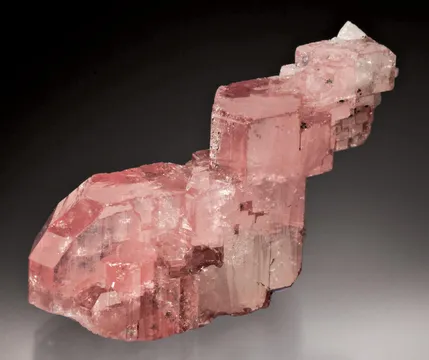
La Pita Mine, Colombia — western emerald belt locality producing velvety green emeralds on calcite matrix, with rare accessory minerals like parisite-(Ce) and…
Key facts
La Pita is the modern classic of Colombia’s western emerald belt: a comparatively young producing mine that rose, within a few years of its first major pocket, to stand beside the much older names Muzo, Coscuez, and Chivor in both gem production and mineral-specimen lore. The mine lies in the Maripí area of Boyacá, in the western flank of the Cordillera Oriental, where emeralds are not pegmatitic or schist-hosted in the usual global sense but belong to the distinctive Colombian sediment-hosted model. Here, hot saline basinal brines moved through fractured, organic-rich Cretaceous black shales of the Muzo Formation, reacting with carbonaceous and evaporitic strata to produce calcite-rich veins, breccias, pyrite, rare-earth fluorcarbonates, and emerald.
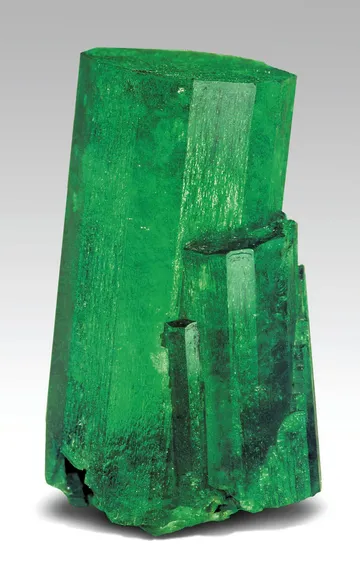
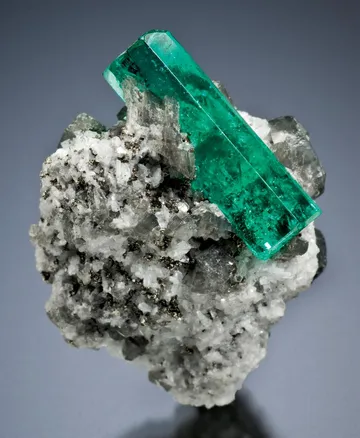
For collectors, La Pita matters because it produced emeralds with the saturated, velvety green color expected from the greater Muzo region, but on matrix specimens that entered the market in the late 1990s and early 2000s with a fresh modern pedigree. The finest pieces show sharp hexagonal emerald prisms, sometimes doubly terminated, standing in white to colorless calcite, bordered by black shale and occasional pyrite. The color contrast is the whole drama: electric green beryl against snowy carbonate and carbonaceous rock. Good specimens are scarce because crystals of that caliber have always had a second life waiting at the cutting wheel.
Regional View
Country View
The locality also has a mineralogical importance that goes beyond emerald. La Pita parisite-(Ce) has been the subject of detailed modern crystallographic work because apparently simple brown parisite crystals can be complex intergrowths of rare-earth fluorcarbonate phases, including röntgenite-(Ce) and an unnamed bastnäsite-synchysite polysomatic phase. In specimen terms, that means La Pita belongs to a small set of Colombian emerald mines where the accessory minerals are not mere matrix but part of the scientific story of emerald formation.
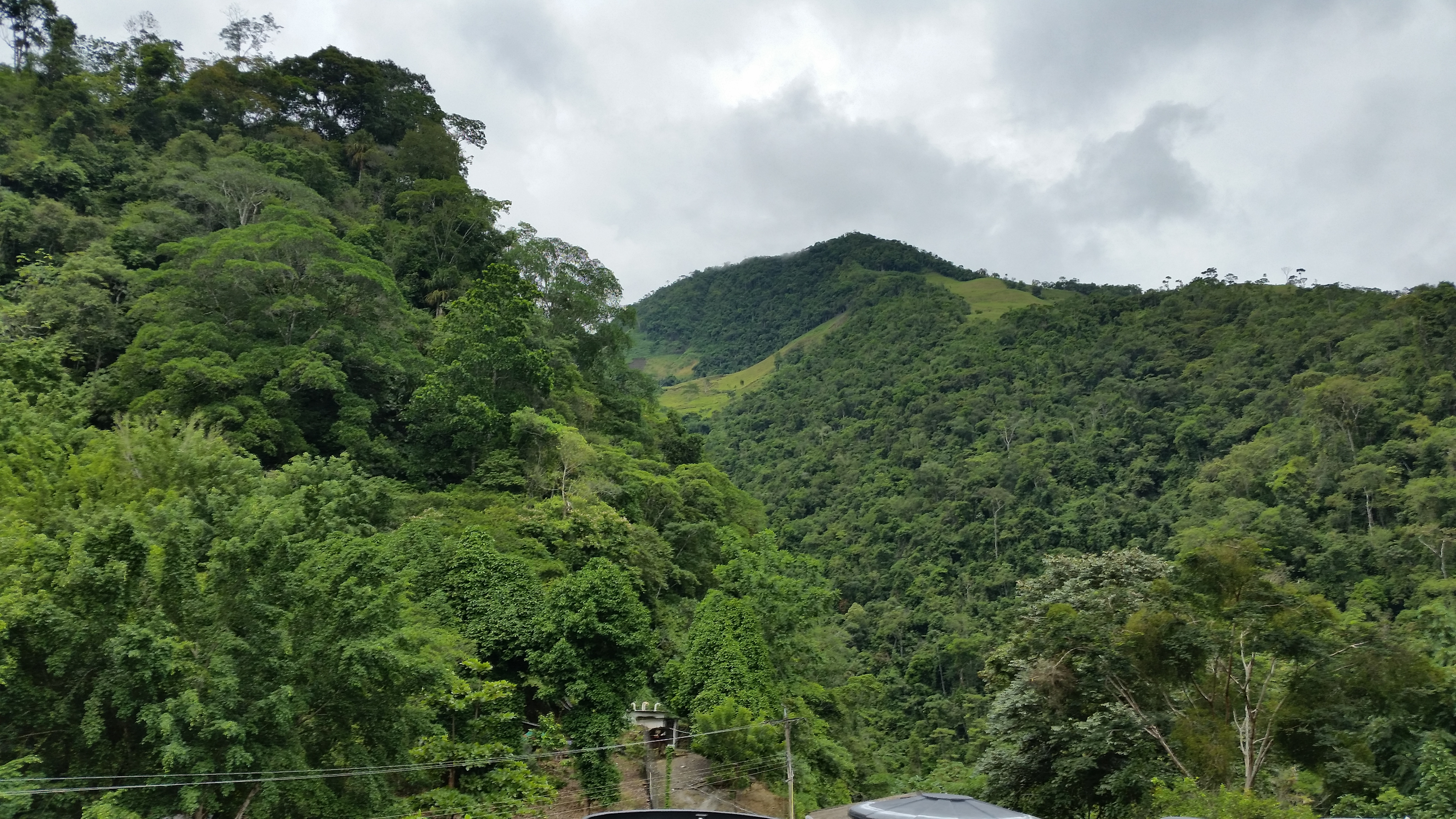
Photo: Tequendama/Wikimedia Commons

Photo:

Search for specimens: View all specimens from La Pita Mine, Colombia
La Pita is in the Maripí municipality of western Boyacá, close to the Río Minero and within the western emerald belt of Colombia’s Cordillera Oriental. The working ground is part of the same broad emerald province that includes Muzo, Coscuez, Peñas Blancas, Polveros, Cunas, Totumos, Consorcio, and related Maripí operations. In geological terms, La Pita is a Colombian-type sediment-hosted emerald deposit: emerald occurs in fractures, pockets, and calcite-rich veins cutting organic-rich calcareous shale of the Muzo Formation, rather than in the granitic pegmatites or metamorphic schists familiar from many other beryl localities.
The ore controls are structural. Field accounts from La Pita describe two important parallel structures, the Río Minero and La Pita faults, with the La Pita fault interpreted as a reverse fault formed in a compressional setting. The mine follows mineralized fractures in black shale, and miners trace calcite veins and other indicators rather than a regular, laterally persistent ore seam. The productive zone is part of a broader mineralized strip reported through Polveros, Totumo, Cunas, Consorcio, La Pita, and toward Puerto Gringo. That geometry explains both La Pita’s impressive output and its frustrating unpredictability: a vein may be chased for a day, a week, a month, or longer and still produce no emerald, while another pocket can repay years of development almost at once.
The standard La Pita ore specimen is black shale and white calcite, with emerald seated in a vein cavity or exposed where miners have trimmed the carbonate. Calcite is the principal showy matrix mineral, ranging from massive white vein fill to glassy rhombs and drusy pocket linings. Emeralds occur as hexagonal prisms and columnar crystals, commonly etched or fractured to some degree, with the best pieces showing high transparency, saturated green color, sharp termination, and natural attachment in calcite. Scientific and dealer records also document trapiche emerald from the mine, an important point for collectors because La Pita material can share the Muzo-region vocabulary of trapiche structure, gota de aceite internal texture, and complex post-growth dissolution.
Mining began in the modern era in the mid-1990s. Detailed field reporting places La Pita’s opening in 1995, with its first significant emerald-bearing pocket in 1999. By that year the main tunnel had already reached about 1,200 meters, and the mine was operated by Zuliana de Esmeraldas. The concession was described as roughly 39 hectares. Subsequent production periods included the southern sector in 1999, strong years in the northern area in 2001 and 2002, major floor-level production in 2007 and 2008, and further important yields in 2010 and 2014. Production since 1999 has been estimated in the trade literature at more than one billion dollars in rough emerald value, placing La Pita among the defining emerald mines of modern Colombia.
A government inspection document from Colombia’s Agencia Nacional de Minería identified the mine as La Pita under title plate 033-96M, with Zuliana de Esmeraldas as titleholder and Copemin S.A.S. as contract operator; the approved mineral was emerald and the underground method was described as galleries oriented by the direction of mineralization. That kind of operation is far removed from casual collecting. La Pita should be regarded as an active, private, industrial emerald mine: access is by permission only, security is serious, and specimens normally reach collectors through miners’ shares, local mine markets, Bogotá dealers, established mineral dealers, or older collections.
The underground workings described by GIA’s 2015 visit were substantial. The team entered by the main tunnel, reached the first vertical shaft 625 meters in, then a 35-meter descent, a second 42-meter shaft around 700 meters in, and another 44-meter shaft about 100 meters farther. The fifth level was 110 meters below the main tunnel floor, and workings extended from about 120 meters below to 30 meters above the mine floor. Ventilation and emergency planning were notably better than at some other Colombian emerald workings: air was driven through shafts and working areas and exhausted through chimneys, with exits planned for flooding. Water remained a central difficulty, especially in inactive areas, where acidic water could rapidly attack wood supports and metalwork.
Collectors should understand that most La Pita emerald production was and is treated as gem rough first. When significant production accumulates, rough may be bagged, sealed, weighed, taken to Bogotá, sorted, auctioned, and divided among partners or shareholders. Fine crystals may be selected as mineral specimens, but the economic pressure to cut is intense. That is why an undamaged, well-positioned La Pita emerald on calcite is far scarcer than the mine’s overall production numbers might suggest.
La Pita emerald is the gem variety of beryl, Be3Al2(Si6O18), and the collector pieces most worth pursuing show the Muzo-region ideal: intense saturated green prisms in sharp contrast with white calcite and black shale. Documented specimens include isolated columnar crystals around 9 to 25 mm long studied for their growth and dissolution features, matrix pieces with emerald in calcite, and larger crystals reported in the La Pita literature up to about 10 cm, though such large crystals are seldom preserved as specimens. Habits range from ordinary hexagonal prisms with basal pinacoid terminations to etched crystals, conical or partly conical crystals, and trapiche emerald; some La Pita crystals show growth steps, basal hillocks, grooves, etch pits, irregular openings, or features related to skeletal growth and later corrosion. The best pieces here are not merely green beryl in carbonate: they combine saturated color, transparency, complete termination, undisturbed calcite attachment, and enough matrix to prove the Colombian black-shale setting.
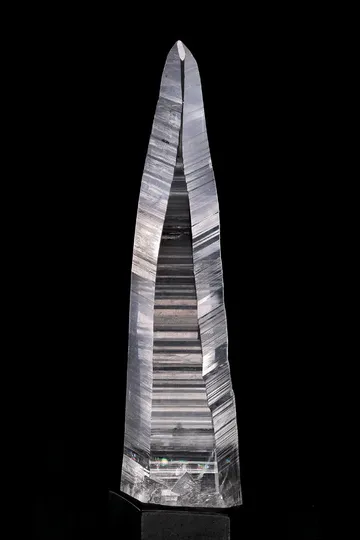
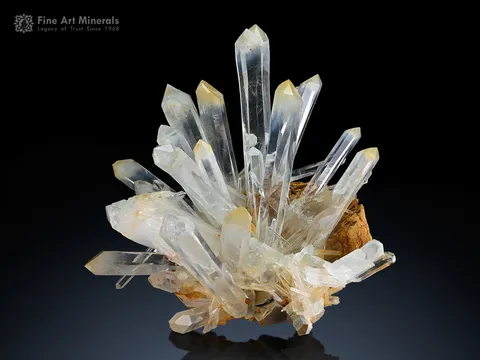
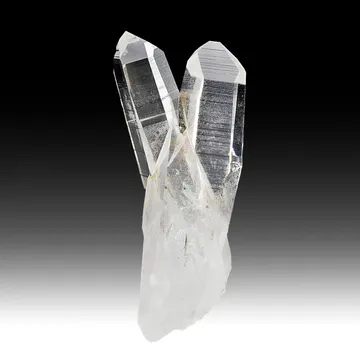
Calcite is the visual stage on which most collectible La Pita emeralds perform. It occurs as the white to colorless carbonate vein material and pocket lining that filled fractures in the organic-rich shale, ranging from massive white vein fill to glassy rhombs and sparkling drusy cavities. On the finest specimens, calcite is not an afterthought: transparent to translucent rhombohedra frame the emerald, protect it in a vug, or leave the crystal standing proud against a pale background. Ordinary pieces may be little more than broken white carbonate with an included green fragment, while superior pieces have clean calcite crystallization, minimal bruising, natural attachment, and a composition that makes the emerald appear geologic rather than mounted. Calcite is also the common matrix for La Pita parisite-(Ce), where reddish brown rare-earth fluorcarbonate crystals are set off beautifully by white carbonate.
At La Pita, “beryl” in collector usage almost always means emerald-bearing beryl from the black-shale carbonate vein system, but the broader species name is useful because not every crystal has ideal gem color or clarity. The mine has produced prismatic beryl crystals in calcite, emerald fragments in shale, and crystals with complex growth histories: columnar, conical, etched, skeletal, or trapiche-related forms are all part of the Colombian beryl story here. The strongest beryl specimens from La Pita are those where the crystal still reads as a complete mineral specimen, not simply gem rough: sharp hexagonal form, visible termination, strong green body color, and natural matrix are paramount. Lesser examples may be fractured, pale, heavily included, or embedded in broken calcite, but they still document the unusual sediment-hosted origin of Colombian emerald.
Parisite-(Ce), CaCe2(CO3)3F2, is the great accessory rarity of La Pita and one of the reasons the mine attracts mineralogists as well as emerald collectors. La Pita crystals studied in detail are brown to reddish brown in daylight and more yellowish brown under artificial light, with transparent to included examples; habits are prismatic to barrel-shaped, commonly dominated by hexagonal dipyramids striated perpendicular to the c-axis and basal pinacoid faces. Matrix specimens can be superb, with reddish brown parisite perched in protected vugs of white calcite; a documented example from La Pita measures 5.1 x 3.6 x 2.7 cm overall with a 1.4 cm parisite crystal. The finest pieces offer well-formed parisite on crystallized calcite, not just loose brown grains, and the La Pita material is especially important because modern study shows that some crystals are syntaxic intergrowths involving parisite-(Ce), röntgenite-(Ce), and another complex rare-earth fluorcarbonate phase.
Other documented mineral names tied to La Pita include trapiche emerald as a variety of beryl and röntgenite-(Ce), Ca2(Ce,La)3(CO3)5F3, identified in the same rare-earth fluorcarbonate work that clarified the complexity of La Pita parisite. Pyrite, albite, dolomite, fluorite, quartz, bitumen, and carbonate alteration belong to the broader Colombian emerald-mineralization assemblage and appear in accounts of the western belt and related Maripí deposits, but collectors should be cautious about assigning accessory species on La Pita labels unless the individual specimen has been verified. The rare-earth fluorcarbonates are the notable rarities here; La Pita is not best known as a type locality, but it is now an important reference locality for understanding how deceptively complex Colombian parisite-group material can be.
La Pita emerald specimens should be evaluated with two markets in mind at once: the mineral-specimen market and the gem market. A fine, undamaged, gemmy La Pita crystal on calcite may be worth far more intact than an average matrix specimen, but a top crystal is always vulnerable to cutting economics. For this reason, the best surviving specimens tend to have an obvious mineralogical “reason to live”: an aesthetic calcite pocket, an undisturbed attachment, a dramatic crystal on matrix, a trapiche structure, or a rare association such as parisite.
Authenticity issues are those of Colombian emerald specimens generally rather than a single well-documented La-Pita-only fake style. Be especially wary of bright emerald crystals glued into drilled or convenient-looking cavities in calcite, black shale, or mixed carbonate matrix. Under magnification, examine the contact between emerald and matrix: look for glue films, bubbles, polished or sawed contact surfaces, unnatural gaps, dyed residues, or calcite crystals broken and reassembled around a loose emerald. A convincing La Pita specimen should show geological intimacy between the crystal, calcite, and shale; the emerald should not look like a faceted-gem crystal theatrically placed into white matrix.
For loose stones and cut gems, oiling and clarity enhancement are routine concerns for Colombian emeralds. Cedarwood oil and other fillers are commonly used in the emerald trade and must be disclosed in gem commerce. Mineral specimens are a subtler case: a specimen may be untouched, cleaned, oiled to improve appearance, stabilized, repaired, or mounted. Ask whether the emerald crystal has been oiled, resin-filled, repaired, reattached, or acid-cleaned. On matrix pieces, any treatment that changes the look of fractures can dramatically change both value and ethics of sale.
Condition is critical. La Pita emeralds commonly show natural etching, growth steps, basal openings, grooves, hillocks, or corrosion features; these are not automatically damage and may actually be desirable evidence of Colombian growth history. Distinguish natural dissolution from fresh bruising. Fresh chips are usually brighter, sharper, and less patinated than etched natural surfaces. Terminations, prism edges, and the emerald-calcite contact are the places to inspect first. Calcite itself is soft and cleaves easily, so protruding matrix crystals often have cleave nicks even when the emerald is sound.
Color can mislead. A heavily included but deeply colored emerald may appear strong in photographs, while a fine transparent crystal may be more valuable even if smaller. The top La Pita look is saturated green with enough transparency to glow, preferably on pale calcite. Dark shale matrix can enhance contrast but can also hide repairs and contacts. Wet-looking surfaces, unusually uniform green staining around the crystal, or green color bleeding into cracks in calcite should be treated with suspicion.
Parisite-(Ce) from La Pita is a different collecting problem. It is rarer on matrix than emerald, less likely to be recognized by non-specialist sellers, and easily confused within the rare-earth fluorcarbonate group. The 2021 study of La Pita crystals showed that species-level identification can require Raman spectroscopy, X-ray work, or electron microscopy because parisite-(Ce) may be intergrown with röntgenite-(Ce) and other layered fluorcarbonate phases. For an advanced suite, a tested parisite-(Ce) or röntgenite-(Ce)-bearing La Pita specimen is far more interesting than an unverified brown accessory crystal labeled by appearance alone.
Availability is intermittent. Small emerald-in-calcite pieces and loose rough appear regularly enough in dealer channels, while fine undamaged matrix specimens are genuinely scarce. Cabinet-sized pieces with multiple vugs, sharp emeralds, calcite, shale, and pyrite are major purchases when attractive. Parisite on calcite from La Pita is much less common and should be bought for form, matrix, and documentation rather than size alone.
La Pita’s modern story begins not with a centuries-old colonial legend but with a road, a river, and a patch of altered ground. During access-road work above the Río Minero, workers and landowners noticed a yellowish zone associated with black, carbonate-altered shale like that of the Muzo emerald country. The name Amarillal—“the yellowish place”—attached itself to the discovery area. The first entrance was driven into a mountainside ravine near the river, and the tunnel was advanced hundreds of meters before it intersected the main mineralized structure. In collector memory, that detail matters: La Pita was not a romantic rediscovery of an ancient Spanish mine. It was a late-twentieth-century geological chase into black shale.
By 1999 the chase had become a bonanza. GIA’s field account records that La Pita opened in 1995 and that its first significant production came in 1999, when miners found an emerald-bearing pocket. Javier Puerto, the mine manager interviewed by GIA, began work there that same year. By then the tunnel was already 1,200 meters long. In the world of emerald mining, where a tunnel can be barren for months and then suddenly produce a fortune in a pocket, that is the hard arithmetic of faith: meters of shale, calcite, water, and waiting before green appears.
The GIA visit gives one of the clearest underground pictures of La Pita. The team entered the main tunnel and walked 625 meters to the first vertical shaft, descended 35 meters, continued to a second shaft at about 700 meters that dropped 42 meters, and then reached another shaft another hundred meters farther, 44 meters deep. Two additional, shallower shafts were full of water and inactive. When no one works an area, the mine itself begins to eat its supports: acidic water corrodes wood and rusts metal in a matter of months. The fifth level was 110 meters below the main tunnel floor. The scale is easy to lose in a gemstone display case; the route to a thumbnail emerald may have passed through a kilometer of tunnel and a stack of wet vertical workings.
Puerto’s explanation of emerald mining is one of the most useful field lessons a collector can carry. Many mines are geometric: a seam or orebody can be modeled, measured, and mined with production forecasts. Emeralds are different. At La Pita, miners follow structures and indicators through calcareous shale. A company might spend two or three years preparing ground, or it might hit emeralds after fifteen days. A vein might be searched for a day, a week, a month, or longer, and many veins produce no emerald at all. That uncertainty is written into every good specimen. A crystal on calcite is not just a mineral object; it is a preserved exception to the mine’s long barren intervals.
La Pita also shows how modern Colombian emerald mining tried to formalize without losing its old rhythms. GIA described a two-stage distribution protocol with around eighteen partners or delegates. Emeralds were extracted carefully, placed into bags in the presence of the partners, sealed, locked in a safe, and later washed, weighed, checked, and auctioned. Some material was selected for cutting and some kept as rough specimens. The miners, too, had a role in the first division, receiving a percentage of production in addition to wages and benefits. The system explains why specimens can emerge through several channels and why documentation matters: a fine La Pita crystal may have passed from tunnel to sealed bag, from shareholder meeting to Bogotá office, and then into the mineral trade.
The production numbers are staggering. Puerto identified three major periods: 1999 in the southern sector, good years in the northern area in 2001 and 2002, a large floor-level production in 2007 and 2008, and considerable yields in 2010 and 2014. GIA reported the estimated rough value since 1999 at over one billion dollars. Yet the best matrix specimens remain rare, because emerald is a gem before it is a cabinet specimen. A crystal that a mineral collector sees as a perfect hexagonal prism in calcite may be seen by another buyer as a suite of faceted stones.
One episode from the neighboring Consorcio ground captures the combustible social geography of the Maripí mines. A field-travel account describes miners from Prominas del Zulia driving the La Pita tunnel until it passed under land held by Esmeraldas Santa Rosa, where a major pocket of high-quality emeralds was found. The overlap was delicate enough that Victor Carranza, the “Emerald King,” intervened to help broker a compromise before the conflict could harden into something worse. Whether told as business dispute, geology, or folklore, the story fits the country: underground structures do not respect surface boundaries, and a calcite vein can cross from one legal world into another.
Even the specimen morphology has its own story. A 2023 GIA study of unusual Colombian emerald shapes included several La Pita crystals: an 18.0 mm columnar crystal with irregular openings in the basal face and grooves on prism faces; small conical La Pita crystals under 9 mm long; and a 25.0 mm, 35.87 ct crystal with a partly conical and partly columnar habit. That larger crystal carried growth steps, hillocks, and evidence of multiple growth and dissolution stages. For a collector, such pieces explain why “damage” is not always damage. Some strange La Pita surfaces are records of aggressive fluids, interrupted growth, and later overgrowth—events in the pocket before any miner ever saw the crystal.
Karl Schmetzer and Gérard Martayan, “Morphology of Colombian Emerald: Some Less Common Cases and Their Growth and Dissolution History,” Gems & Gemology, Vol. 59, No. 1, 2023, pp. 46–71. Includes several La Pita emerald crystals in its study set, with measurements and descriptions of columnar, conical, etched, and complex growth forms. https://my.gia.edu/dam/jcr:e6db0f39-a16b-4855-96c9-6ed0f49449ec/spring-2023-gems-gemology-morphology-colombian-emerald.pdf
Manuela Zeug, Lutz Nasdala, Martin Ende, Gerlinde Habler, Christoph Hauzenberger, Chutimun Chanmuang N., Radek Škoda, Dan Topa, Manfred Wildner, and Richard Wirth, “The parisite-(Ce) enigma: challenges in the identification of fluorcarbonate minerals,” Mineralogy and Petrology, Vol. 115, 2021, pp. 1–19. A key paper on La Pita parisite-(Ce), röntgenite-(Ce), and complex rare-earth fluorcarbonate intergrowths. https://gfzpublic.gfz.de/pubman/item/item_5003579_6/component/file_5004900/5003579.pdf
Andrew Lucas, Tao Hsu, Pedro Padua, Shane McClure, Kevin Schumacher, Jonathan Muyal, and others, “Colombian Emerald Industry: Winds of Change,” Gems & Gemology, Fall 2017. The most useful modern field report for La Pita’s operation, workings, geology, production periods, distribution system, and mine-market context. https://www.gia.edu/gems-gemology/fall-2017-colombian-emerald-industry
J.-C. Michelou, “Les nouvelles mines de La Pita (Colombie), 1ère partie,” Revue de Gemmologie, No. 143, 2001, pp. 9–13. A contemporary French-language account of the new La Pita mines, cited in GIA’s 2002 review. https://www.gia.edu/dam/jcr:e51a961c-b26c-4b82-a0fe-dc5ecc96e7b7/FA02.pdf
E. Fritsch, B. Rondeau, F. Notari, J.-C. Michelou, B. Devouard, J.-J. Peucat, J.-P. Chalain, Y. Lulzac, D. de Narvaez, and C. Arboleda, “Les nouvelles mines d’émeraude de La Pita (Colombie), 2e partie,” Revue de Gemmologie, No. 144, 2002, pp. 13–21. Covers La Pita geology, mineralogy, and gemological properties, cited in GIA’s 2002 review. https://www.gia.edu/dam/jcr:e51a961c-b26c-4b82-a0fe-dc5ecc96e7b7/FA02.pdf
Yannick Branquet, Bernard Laumonier, Alain Cheilletz, and Gaston Giuliani, “Emeralds in the Eastern Cordillera of Colombia: Two tectonic settings for one mineralization,” Geology, Vol. 27, No. 7, 1999, pp. 597–600. Foundational paper for the tectonic setting of Colombian emerald deposits, including the western belt framework to which La Pita belongs. https://horizon.documentation.ird.fr/exl-doc/pleins_textes/pleins_textes_7/b_fdi_51-52/010019064.pdf
Gaston Giuliani, Alain Cheilletz, Carlos Arboleda, Victor Carrillo, Félix Rueda, and James H. Baker, “An evaporitic origin of the parent brines of Colombian emeralds: fluid inclusion and sulphur isotope evidence,” European Journal of Mineralogy, Vol. 7, 1995, pp. 151–165. Establishes the evaporitic brine model central to understanding Colombian emerald formation. https://horizon.documentation.ird.fr/exl-doc/pleins_textes/pleins_textes_6/b_fdi_35-36/42470.pdf
G. Giuliani, M. Chaussidon, C. Arboleda, F. Rueda, V. Carrillo, and S. M. F. Sheppard, “Geoquímica y origen de los depósitos de esmeraldas en Colombia,” Boletín de Geología, Vol. 21, No. 36, 1999, pp. 7–13. Spanish-language synthesis of Colombian emerald geochemistry and hydrothermal alteration in black shales. https://revistas.uis.edu.co/index.php/revistaboletindegeologia/article/view/7510
Mindat.org locality entry for La Pita Mine, La Pita, Maripí, Western Boyacá Province, Boyacá Department, Colombia. Useful for verified species listings, locality hierarchy, photographs, and reference trails for emerald, parisite-(Ce), röntgenite-(Ce), and trapiche emerald. https://www.mindat.org/loc-34136.html
La Pita Emerald Mine — Gemological Institute of America. A short field video embedded in GIA’s Colombian emerald industry report, showing La Pita as a modern Maripí emerald operation along the Río Minero. https://www.gia.edu/gems-gemology/fall-2017-colombian-emerald-industry
Emerald Mine Markets Tour — Gemological Institute of America. A GIA video segment on mine-market trading in Colombia, including the western-belt context in which the La Pita mine market operates. https://www.gia.edu/gems-gemology/fall-2017-colombian-emerald-industry
Los Españoles Emerald Mine — Gemological Institute of America. Not La Pita itself, but highly relevant Maripí district footage and commentary from the same mineralized zone extending through La Pita, Cunas, Consorcio, and neighboring mines. https://www.gia.edu/gems-gemology/fall-2017-colombian-emerald-industry
Wikimedia Commons: La Pita Mine media category — Wikimedia Commons contributors. Photographs of the La Pita mine setting and portal, plus mineral images from the locality. https://commons.wikimedia.org/wiki/Category:La_Pita_Mine
Wikimedia Commons: Minerals of the La Pita Mine — Wikimedia Commons contributors. Open-license images of emerald, calcite, and parisite-(Ce) specimens from La Pita. https://commons.wikimedia.org/wiki/Category:Minerals_of_the_La_Pita_Mine
Mindat: La Pita Mine locality page — The best single locality database page for species, photographs, hierarchy, and references.
GIA: Colombian Emerald Industry — Winds of Change — Essential field report with detailed La Pita underground observations, production history, and mine-market context.
GIA PDF: Morphology of Colombian Emerald — Important for La Pita emerald habits, etching, conical forms, and growth/dissolution textures.
GFZ Public: The parisite-(Ce) enigma — The key scientific paper on La Pita parisite-(Ce), röntgenite-(Ce), and fluorcarbonate identification problems.
Wikimedia Commons: La Pita Mine — Open-license mine photographs and links to La Pita mineral images.
Wikimedia Commons: Minerals of the La Pita Mine — Useful image set for emerald, calcite, and parisite-(Ce) specimen comparison.
European Journal of Mineralogy PDF: Evaporitic origin of Colombian emerald brines — Foundational geochemical paper for the hot brine model behind Colombian emerald formation.
Geology PDF: Emeralds in the Eastern Cordillera of Colombia — Classic tectonic-setting paper for Colombia’s western and eastern emerald belts.
Agencia Nacional de Minería inspection PDF, La Pita title documentation — Government mining-inspection record identifying title, operator, and underground exploitation context.
GIA Historical Reading List: Emeralds from Colombia — Broad bibliography for Colombian emerald geology, gemology, treatments, and history.


-Calcite-160241.jpg)