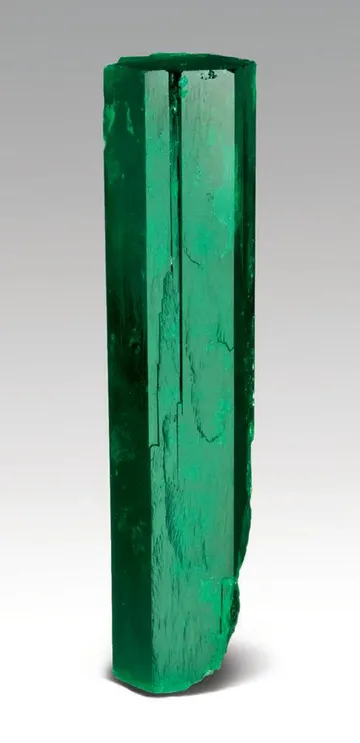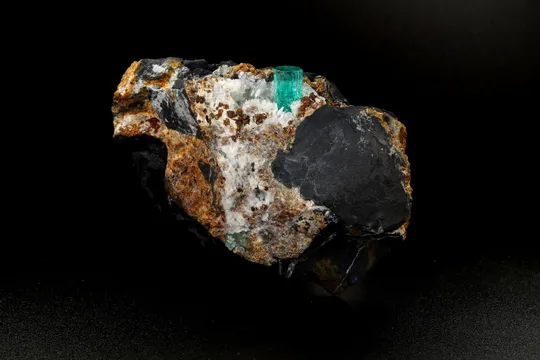
Chivor Mine, Colombia - famed emerald locality yielding bluish-green beryl in veins with pyrite and calcite; significant, well-documented for collectors.
Key facts
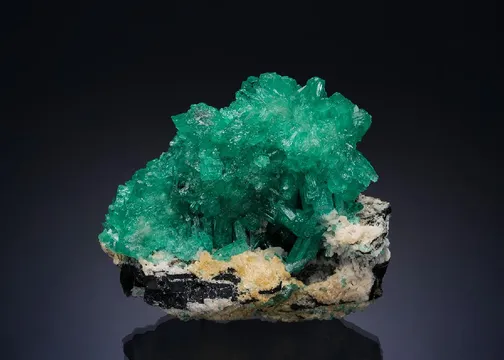
Chivor is one of the great names in specimen emerald: a hard-rock, sediment-hosted hydrothermal deposit in the eastern emerald belt of Colombia’s Eastern Cordillera, where beryllium-bearing brines moved through Lower Cretaceous black shale, limestone, carbonate breccia, and fault-controlled vein systems. For collectors, its importance is not simply that it produced fine emeralds, but that it produced emeralds with a highly recognizable mineralogical setting: bluish green beryl crystals in veins and pockets with pyrite, albite, calcite, dolomite, quartz, fluorite, muscovite/sericite, and black shale. The best Chivor specimens have a taut mountain-mineral aesthetic—bright green prismatic emerald, pale carbonate or albite, brassy pyrite, and dark sedimentary matrix—rather than the pegmatitic associations many collectors expect from beryl.
Historically, Chivor stands at the beginning of the Colombian emerald story known to Europe. The old Somondoco workings were known before the Spanish conquest, were investigated by Gonzalo Jiménez de Quesada’s men in 1537, and became one of the first New World sources to reshape European ideas of what a fine emerald could be. After Spanish colonial exploitation and abandonment, the mine disappeared into forest and legend for roughly two centuries before its modern rediscovery and twentieth-century revival. The later cast of owners, engineers, stock promoters, miners, and dealers—Francisco Restrepo, Fritz Klein, Peter W. Rainier, Russell Anderton, Willis Bronkie, and others—makes Chivor unusually well documented for a gem mine.
Regional View
Country View
Geologically, Chivor is a Colombian-type emerald deposit: no granite pegmatite is required, and the emerald-forming chemistry is tied instead to basinal brines, evaporitic components, organic-rich sediments, sulfate reduction, carbonate-sulfide veining, and fault permeability. In the Chivor district, emerald is especially associated with thin albite-pyrite veins and with structures extending from a main brecciated level; old descriptions emphasize “iron bands” of pyrite and limonite that helped guide miners through the productive stratigraphy. That gives Chivor specimens a different character from many western-belt Colombian emeralds: pyrite and albite are often more telling than massive white carbonate alone, and the brightest examples show a cool, luminous green with a noticeable bluish cast.

Photo:
The mine’s finest matrix specimens tend to be small but intensely visual: hexagonal emerald prisms standing from calcite, albite, quartz, and pyrite-rich matrix, often with the emerald partly gemmy and partly veiled by natural healed fissures, carbonaceous inclusions, or contacts from growth against the vein wall. Fine Chivor emerald crystals can be sharp, lustrous, doubly terminated, or clustered; rarer oddities include hollow “emerald cup” forms, tapered crystals, spear-like crystals, and etched or spongy habits from late fluid interaction. The Patricia Emerald, a 632 ct uncut crystal from Chivor preserved at the American Museum of Natural History, remains the locality’s best-known single mineral object.
Search for specimens: View all specimens from Chivor Mine, Colombia
The Chivor Mine lies in the municipality of Chivor, Boyacá Department, in the Guavió-Guatéque emerald district on the eastern side of the Colombian Eastern Cordillera, about 90 km northeast of Bogotá. The historic workings sit in steep Andean country above the Sinaí and Rucio river valleys, near the Guavio drainage; older accounts describe the locality as framed by the Río Rucio, Río Sinaí, Río Guavio, El Púlpito, and the Montecristo range. The coordinates used in modern locality records place the mine near 4° 54′ 12″ N, 73° 22′ 8″ W.
Chivor belongs to the eastern emerald belt, alongside the Gachalá and Macanal areas, in contrast to the western belt that includes Muzo, Coscuez, La Pita, Peñas Blancas, and Yacopí. Colombian emerald deposits are structurally controlled hydrothermal systems in folded and faulted Cretaceous sedimentary rocks. At Chivor, the productive rocks are commonly described as Lower Cretaceous marine sediments of the Guavio Formation or Calizas del Guavio: black shales, carbonaceous argillites, limestones, and carbonate-rich units cut by veinlets, breccias, and fault-related permeability zones. Research on Colombian emeralds places eastern-belt mineralization at roughly 65 million years old, older than the western-belt emerald mineralization.
The deposit is famous for thin, irregular veins and pockets rather than broad continuous ore. At Chivor, emerald occurs sporadically in albite-pyrite and pyrite-rich veins that may run parallel to bedding, intersect fractures, or branch from a larger brecciated level. Historic geological descriptions divided Chivor veins into pyrite veins, albite veins, and combined pyrite-albite veins, with quartz and pyrite especially common. Several accounts describe three roughly parallel “iron bands,” made mainly of pyrite and limonite, spaced about 50 m apart in the stratigraphic section; emeralds were most often found below the lowest iron band or between the lowest and middle bands, suggesting those layers influenced or trapped ascending mineralizing solutions.
The mineralization is a classic basinal-brine system. Hot saline fluids interacted with evaporitic material and organic-rich shale, leaching and transporting elements needed for emerald formation. Sulfate reduction and reaction with organic matter helped mobilize beryllium, chromium, and vanadium, while hydrogen sulfide combined with iron to form abundant pyrite. That removal of iron from the fluid system is important: iron can quench emerald’s red fluorescence and dull its perceived color, while chromium and vanadium give the best Chivor emeralds their saturated, slightly bluish green. Albite, calcite, dolomite, quartz, fluorite, pyrite, and muscovite/sericite record the same hydrothermal pulse and its wall-rock alteration.
Chivor’s mining history begins before written European records. The Chibcha or Muisca world knew emeralds from the Somondoco region, and Spanish chronicler Pedro Simón preserved the story of Quesada sending Pedro Fernández Valenzuela and 40 men to investigate the deposits in 1537. The first recorded Chivor concession was granted to Francisco Maldonado de Mendoza in 1592. Colonial mining used water-management works, including a long aqueduct that brought water to holding ponds, or tambres; once emerald veins had been exposed and crystals removed, stored water could be released to wash overburden down the steep hillside.
After Spanish exploitation, Chivor was abandoned in the seventeenth century, with 1672 often cited as the year the mine was closed by order of Carlos II. For more than 200 years the workings were overtaken by forest. The modern rediscovery is associated with Colombian mining engineer Francisco Restrepo, who studied old manuscripts and searched the Eastern Andes for the lost Somondoco mines. Different historical accounts handle the exact date differently—some emphasize the late 1880s and mining titles in 1889, while older retellings often give 1896—but the essential point is clear: Restrepo’s work brought Chivor back from legend into production.
The twentieth-century corporate history is unusually tangled. Restrepo was followed by German gem merchant Fritz Klein, who worked with him before World War I and later published one of the first extensive accounts of the mine. The Colombian Emerald Syndicate became involved after World War I, and the Colombia Emerald Development Corporation took over in the 1920s. The company was renamed Chivor Emerald Mines, Inc. in 1933. Peter W. Rainier managed the mine in the late 1920s and early 1930s, Russell W. Anderton was associated with renewed activity after World War II, and the company entered insolvency in 1952. Willis Frederick Bronkie, acting as receiver and mining engineer, ran operations during much of the receivership era; the receivership was lifted in 1970, after which Chivor gradually returned toward Colombian ownership.
Modern Chivor is not an open collecting locality. It is an active emerald district with concession-based, controlled underground workings, private operators, security considerations, and a local gem economy. Principal operations in the Chivor area have been reported under Soescol Ltda. and San Francisco C.I.S.A., associated with Uvaldo Montenegro and Hernando Sánchez, respectively. Modern mining is underground tunneling rather than the old open-cut terrace work. Named mines, tunnels, and sectors reported from the district include San Pedro, San Gregorio, Manantial, Oriente, Piedra Chulo, Quebra Negra, Gualí, Dixon, Tesoro, Gavilanes, San Judas, El Acuario, Mirador, Milenio, Porvenir, Palo Arañado, Calichal, Camoyo, Klein & Cuatro, and El Púlpito.
Specimens reach collectors through miners, local Chivor dealers, Bogotá emerald traders, international gem-and-mineral dealers, and old collections. The town of Chivor has had a small informal street market where faceted stones, rough crystals, and matrix specimens are offered by miners, but serious collectors should understand that the mine itself is controlled and that “self-collected” claims require scrutiny. The best documented Chivor finds include the Patricia Emerald, discovered in 1920 by Justo Daza during Fritz Klein’s period of activity, as well as historic hollow emerald “vasos,” fine elongated crystals, matrix pieces from albite-pyrite veins, and large Chivor-region emeralds such as the 982 ct Angel of the Andes.
Emerald is Chivor’s defining mineral, and its best examples are lustrous hexagonal prisms of bright, slightly bluish green beryl, commonly transparent to translucent and set in pale calcite, dolomite, albite, quartz, brassy pyrite, or gray to black shale. Crystals may be single, doubly terminated, clustered, tapered, or etched; studies and museum examples document Chivor emeralds from a few millimeters to multi-centimeter crystals, with exceptional historic crystals such as the 632 ct Patricia Emerald far beyond normal specimen size. Chivor emeralds are most characteristic in albite-pyrite veins and structurally controlled pockets rather than in pegmatites, and fine specimens are separated from ordinary pieces by sharp natural terminations, saturated but not overly dark color, strong glassy luster, transparency in at least part of the crystal, credible undisturbed matrix contact, and a balanced association with pyrite or pale gangue instead of a broken crystal merely embedded in white carbonate.
Pyrite at Chivor is much more than a background accessory: it is part of the ore-forming story, occurring in veins, altered “iron bands,” inclusions, and matrix associations with emerald. On collector specimens it appears as bright brass-yellow grains, cubes, pyritohedra, crusts, and vein-rich masses in calcite, albite, quartz, and shale; on the best emerald pieces, a small lustrous pyrite crystal can provide the visual anchor that proves the specimen belongs to the Colombian sediment-hosted vein environment. Good Chivor pyrite specimens are not usually judged as stand-alone pyrite classics but as paragenetic specimens: sharp pyrite with fresh metallic luster, minimal oxidation, and natural spatial relationship to emerald or albite is far more desirable than dull limonitized pyrite, scattered brassy specks, or pyrite used merely to disguise an assembled emerald-on-matrix specimen.
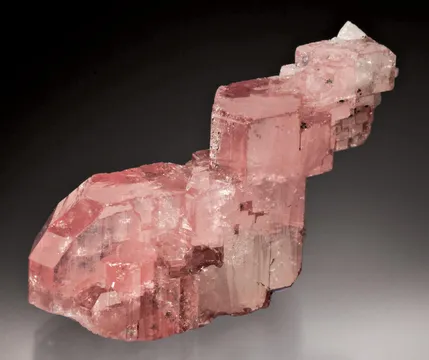
Beryl from Chivor is most celebrated as emerald, but the locality has also produced paler beryl, blue-green to aquamarine-like crystals, and lower-grade opaque to translucent beryl locally referred to as morralla when encountered in the vein before or instead of gem emerald. These crystals retain the hexagonal beryl habit—short to elongated prisms, sometimes doubly terminated—and occur in the same sediment-hosted hydrothermal assemblage of albite, pyrite, quartz, calcite, dolomite, and shale. The best Chivor beryl specimens appeal to locality specialists because they show the full range of the system, from glassy blue-green crystals out of old collections to pale beryl in emerald-bearing matrix; ordinary examples are massive, cloudy, broken, or poorly positioned, while the most desirable pieces show sharp form, intact terminations, natural matrix attachment, and a color or habit that clearly links them to Chivor’s emerald veins.
Dolomite at Chivor belongs to the carbonate part of the emerald paragenesis, occurring as gray, cream, white, or iron-bearing brown carbonate associated with emerald, albite, pyrite, calcite, quartz, and shale. In the hand specimen it may be difficult to separate visually from calcite without testing, and many Chivor matrix specimens are sold under broad carbonate descriptions unless the carbonate has been analyzed or is crystallographically distinct. Collector-quality Chivor dolomite is valued chiefly when it frames emerald or pyrite attractively: sharp pale rhombs, granular gray carbonate contrasting with green beryl, or brown iron-bearing dolomite in a documented Chivor association are more meaningful than anonymous carbonate matrix, and good labels matter because Chivor carbonate assemblages are easily oversimplified in the trade.
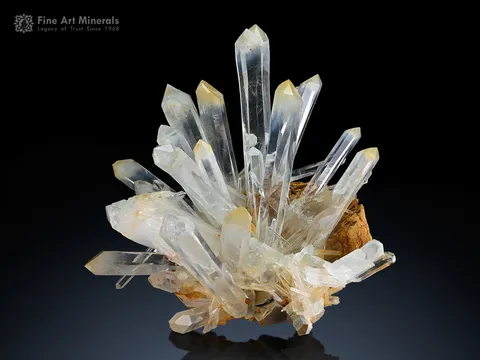
Calcite is one of Chivor’s common gangue minerals and a frequent visual partner to emerald and pyrite, occurring as pale white, cream, gray, or translucent carbonate in veins and matrix pieces. Fine Chivor emerald specimens may show green beryl perched on calcite with pyrite accents, while calcite-rich specimens without emerald are usually saved only when the crystals are unusually sharp, lustrous, or associated with attractive pyrite. Chivor calcite is collectible because it preserves the mine’s hydrothermal setting, but it is also the mineral most often involved in specimen repairs or fabrications: excellent pieces show undisturbed crystal contacts, natural vein continuity, and no suspicious glue-filled junctions around emerald bases, while ordinary pieces are massive carbonate blocks with scattered beryl fragments or pyrite specks.
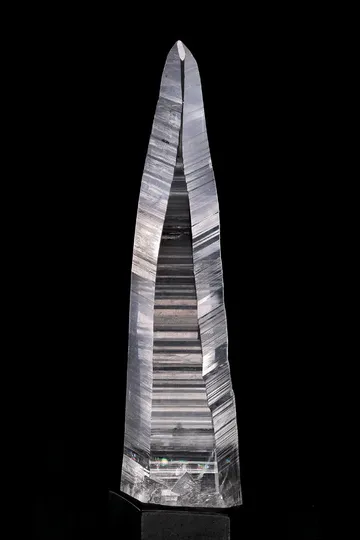
Euclase from the Chivor district is a true connoisseur mineral: BeAl(SiO4)(OH) occurring in voids, pockets, and veins in the same tectonically controlled Lower Cretaceous sedimentary environment that hosts emerald. Published work on Chivor euclase describes it with calcite veins and fault breccias in black shale, argillite, and limestone, formed from hot, dense saline fluids whose conditions overlap those of associated emerald mineralization. Specimens are typically far scarcer than emerald, and the best examples show sharp, lustrous, transparent to translucent crystals—commonly colorless, pale blue, or blue-green—naturally attached to carbonate or shale; Chivor euclase is easily undervalued when small, but locality specialists prize intact crystals with good luster, visible terminations, and reliable provenance because Colombian euclase is far less abundant in the market than Colombian emerald.
Other minerals documented from Chivor include albite, allophane, ankerite, apatite-group minerals, fluorite, goethite, halloysite, hematite, kaolinite, limonite, muscovite/sericite, opal-AN, parisite-group material, and quartz. Albite is especially important because Chivor emeralds are classically tied to albite-pyrite veins, and cleavelandite-like albite can be an important visual and genetic clue on matrix specimens. Fluorite, parisite-group minerals, euclase, iron-bearing dolomite, and well-crystallized quartz are the rarities to watch for in high-grade Chivor assemblages, while goethite, limonite, and hematite record the weathering of the pyrite-rich “iron bands.” Chivor is not primarily a type-locality mine in the way Muzo is for parisite-(Ce); its mineralogical importance lies instead in the unusually well-studied emerald paragenesis and in rare Be-mineral assemblages preserved in a sediment-hosted hydrothermal setting.
Chivor emerald specimens should be bought with the same caution one would apply to the best Muzo and Coscuez matrix pieces. Documented fakes exist: emerald crystals have been glued into calcite, pyrite, quartz, or mixed Colombian matrix, sometimes using crushed carbonate and adhesive around the base to imitate natural vein contact. Especially suspicious are “too perfect” display pieces with a large isolated emerald standing cleanly from a convenient pocket, emerald bases hidden by powdery carbonate, unnaturally glossy glue halos, mismatched contact surfaces, or matrix that seems built around the crystal rather than broken with it. A natural Chivor specimen should make geological sense: emerald, albite, pyrite, carbonate, quartz, and shale should show convincing continuity, not theatrical arrangement.
Treatments are also part of the Chivor market. Emeralds are commonly clarity enhanced with oils or resins in the gem trade, and traditional oiling does not make a crystal unnatural, but it affects value and should be disclosed. Mineral specimens are not always sold with the same treatment reporting expected for faceted emeralds, so inspect crystals under magnification for filled fractures, surface-reaching fissures with oily residues, color concentrations in cracks, resin fluorescence, or unnatural luster. Avoid ultrasonic cleaning, steam cleaning, solvents, or prolonged soaking; even if the emerald itself is hard, its fractures, fillings, matrix, and repaired contacts may not tolerate aggressive treatment.
Condition is decisive. Emerald has good hardness but is commonly fractured, and Chivor crystals often show contacts from vein growth, etched surfaces, repaired breaks, bruised terminations, or chipped prism edges. Matrix pieces are particularly vulnerable because emerald crystals project from relatively soft carbonate or feldspar-rich gangue. Pyrite can oxidize in poor storage conditions, especially if already altered to limonite, so keep specimens dry and stable. Calcite and dolomite are acid-sensitive and easily scratched, and matrix should not be cleaned with acids unless one is prepared to sacrifice carbonate associations.
Locality mislabeling is common because “Colombian emerald” is used loosely in the gem and souvenir trades. Chivor material may be confused with Muzo, Coscuez, Peñas Blancas, Gachalá, or generic Boyacá emerald matrix, and visual color alone is not proof. Chivor emeralds are often described as bright, bluish green and relatively lively, but individual stones vary, and laboratory origin determination for cut gems depends on inclusions, chemistry, and spectroscopy rather than romance or seller memory. For mineral specimens, old labels, documented collection history, mine-sector information, and credible dealer provenance add real value.
Market availability is uneven. Small Chivor emeralds and modest emerald-in-carbonate matrix pieces appear regularly enough that a serious collector can be selective. Fine examples—sharp, lustrous, gemmy emeralds with intact terminations on undisturbed calcite, albite, pyrite, quartz, or shale—are scarce and expensive because they compete with both mineral collectors and the gem trade. Euclase from Chivor is far rarer than emerald in the specimen market. Pyrite, calcite, and dolomite from Chivor are most desirable when they are part of a meaningful emerald assemblage or when the crystallization is unusually fine for the district.
The old story begins not in a mine office but in a view across mountains. Spanish accounts say that in 1537, Gonzalo Jiménez de Quesada pressed for the source of emeralds worn and traded by the Chibcha. The deposit was then called Somondoco, after the nearby village where emeralds were sorted. Quesada sent Pedro Fernández Valenzuela and 40 men to investigate. What mattered was not only the green crystals they extracted, “good and not so good,” but the view: from the heights of the workings they could see the plains of the Orinoco through an opening in the eastern sierras. Centuries later, that same geographic clue—the mine from which the llanos could be seen—would become central to the rediscovery of Chivor.
Colonial Chivor was engineered brutally into the mountain. A 20 km aqueduct, built with Spanish engineering and Chibcha labor, carried water to the steep mine. The water was held in tambres, or ponds. Miners exposed the emerald veins and picked out the crystals carefully; then the stored water was released in sudden force, scouring debris and overburden downhill. It is a striking image: emeralds plucked by hand from veins in black sedimentary rock, followed by a man-made flood rushing down the Andean slope.
The mine then vanished into forest and manuscript. Francisco Restrepo, a Colombian mining engineer, spent years hunting the lost Somondoco workings after studying old accounts in the national library. The key was not a modern map, but a description old enough to have become legend: the position from which the Orinoco plains could be seen through a break in the range. Restrepo’s search in the Eastern Andes lasted about eight years in the best-known retelling. When he found the old workings, Chivor re-entered modern mining history after roughly two centuries of abandonment.
In January 1921, the story becomes a pocket-sized drama. A worker named Justo Daza had opened what looked like a promising vein and pocket. Fritz Klein reached into the vein “up to his elbow” and pulled out small albite, apatite, and quartz crystals. He reached farther, felt a larger object, and put it straight into his pocket without looking. “If what is in my pocket is an emerald, I will have fulfilled my contract,” he told a colleague. The crystal was the Patricia Emerald: a doubly terminated 632 ct emerald now preserved at the American Museum of Natural History. Daza, whose name should be inseparable from the find, is said to have received about $10.
Peter W. Rainier gave Chivor one of its most vivid twentieth-century voices. Arriving in the late 1920s, he planted an iron stake at El Púlpito on the edge of the concession and looked out through the Montecristo gap toward the far llanos. He later wrote that Andean scenery was deceptive, “so huge in its conception, that one could drop an ordinary mountain range into one of its great valleys.” From Las Cascadas, his estate and tea plantation about 15 km away, the mine was visible across the Guavio Valley. The estate had a water turbine and was remembered as the only place with electricity for hundreds of kilometers. It was also described as the first tea plantation in South America.
Rainier’s Chivor was not romantic in the easy sense. The journey could mean train, truck, horseback, fast rivers, slippery rock paths, and dawn-to-dark riding. He rode a horse named Moro between Las Cascadas and the mine, and later travelers retracing the route on foot and mule found it punishing even in the dry season. At night the valley itself became part of the story. Rainier wrote of waterfalls whose music followed every action—thin “feathery wisps” in the dry season and a roaring crescendo when wet-season torrents leaped from the terraces.
The mine also had bandits, lawsuits, and theatrics that sound almost invented until one follows the archival record. Rainier’s memoir Green Fire famously includes “Joaquin the bandit,” to whom Rainier partly dedicated the book as the man who challenged him to a duel and was “the most evil man I ever met.” Rainier answered the duel challenge by suggesting bricks at five paces in a crowded marketplace, a proposal that made the bandit back down. In another tense encounter, Rainier described standing chest-to-chest with Joaquin, terrified that if the man gained enough distance to draw his revolver, Rainier would be finished.
One of the most cinematic episodes came after Rainier had to vacate the mine. Joaquin and his men moved in. Rainier, veteran emerald miner Chris Dixon, and Dixon’s two sons later drove the bandits out in a nighttime raid with guns and dynamite, even though the mine was no longer under Rainier’s control. According to Rainier’s son, after his father retook Chivor from the bandits, Rainier and his wife Margaret communicated at night across the valley with 18-inch flashlights. Chivor peak lay 15 km down the Guavio River from Las Cascadas, and the nightly light signal told her he was alive.
By the 1940s and 1950s, Chivor had changed less than one might expect. Manuel Marcial de Gomar, the Florida-based jeweler who worked at Chivor as an interpreter for Russell Anderton, remembered that horses were still necessary, and so were weapons. He recalled government-issued revolvers in the district and gave one of the most memorable pieces of travel advice in emerald literature: after a day’s travel, do not take the room above the bar. “If there was any revelry in the bar,” he said, “those who shot in the air were liable to kill the guest above.”
The numbers from later mining are just as revealing as the anecdotes. In April 1958, 96 men and nine contractors were reportedly working in two tunnel areas, and one of those areas produced gemstones worth more than $100,000 from about two meters of emerald-bearing vein. Yet the mine could go months without producing a single facetable emerald crystal. In the 1960s the annual value of Chivor’s emerald yield was reported to swing from as high as $2,000,000 to as low as $200,000. By the end of that decade, the operation had shrunk to about 25 workers, and the company’s merchandising of rough and cut stones had become more prominent than the mine itself.
Karl Schmetzer, Gérard Martayan and Andrea R. Blake, “History of the Chivor Emerald Mine, Part I (1880–1925): From Rediscovery to Early Production,” Gems & Gemology, Spring 2020 — Detailed archival reconstruction of Chivor’s modern rediscovery, early ownership, Fritz Klein period, and pre-1925 corporate history.
Karl Schmetzer, Gérard Martayan and Andrea R. Blake, “History of the Chivor Emerald Mine, Part II (1924–1970): Between Insolvency and Viability,” Gems & Gemology, Summer 2020 — Essential source for the American corporate period, Rainier and Anderton eras, receivership, Bronkie management, and the modern concession/tunnel framework.
Robert Weldon, Jose Guillermo Ortiz and Terri Ottaway, “In Rainier’s Footsteps: Journey to the Chivor Emerald Mine,” Gems & Gemology, Summer 2016 — Field-style account combining Chivor geology, history, Rainier archival material, modern travel observations, and specimen context.
Andrew Lucas et al., “Colombian Emerald Industry: Winds of Change,” Gems & Gemology, Fall 2017 — Modern overview of the Colombian emerald industry with useful geological cross-sections and eastern-versus-western belt context.
T. Chavez-Gil, F. H. Romero-Ordoñez, M. Rubiano L. and R. A. Schultz-Guttler, “Características Mineralógicas y Petrológicas de la Euclasa del Distrito Minero de Chivor, Colombia,” Geología Colombiana, 22, 171–187, 1997 — Dedicated mineralogical and fluid-inclusion study of euclase in the Chivor mining district.
D. A. Banks, G. Giuliani, B. W. D. Yardley and A. Cheilletz, “Emerald mineralisation in Colombia: fluid chemistry and the role of brine mixing,” Mineralium Deposita, 35, 699–713, 2000 — Important paper on Colombian emerald fluid chemistry and brine mixing, including eastern-belt occurrences tied to the Chivor district.
G. Giuliani, A. Cheilletz, C. Arboleda, F. Rueda, V. Carrillo and S. M. F. Sheppard, “Geoquímica y origen de los depósitos de esmeraldas en Colombia,” Boletín de Geología, 21(36), 7–13, 1999 — Spanish-language synthesis of the geochemistry and origin of Colombian emerald deposits, emphasizing hydrothermal fluids in black shale fracture systems.
Isabella Pignatelli, Gaston Giuliani, Christophe Morlot, Lise Salsi and Gérard Martayan, “Colombian Emerald Oddities: Review and Formation Mechanisms,” The Journal of Gemmology, 38(1), 26–43, 2022 — Discusses unusual Colombian emerald habits including eastern-belt Chivor-type vaso, spongy, spear-shaped, fibrous, and sceptre-like emerald morphologies.
American Museum of Natural History, “The Patricia Emerald: A Gemstone’s Story” — Museum account of the 632 ct Patricia Emerald from Chivor, one of the most important uncut emerald crystals preserved from the mine.
American Museum of Natural History, Mignone Halls of Gems and Minerals: The Patricia Emerald — Current museum exhibit context for the Patricia Emerald, described as the largest gem-quality emerald reported from Chivor.
Mindat locality record: Chivor Mine, Chivor, Boyacá Department, Colombia — Locality coordinates, mineral list, photographs, and bibliographic references for collectors.
Mindat photo record: Beryl var. Emerald with Calcite and Pyrite, Chivor Mine — Documented thumbnail emerald specimen with calcite and pyrite from Chivor, photographed by Rob Lavinsky.
“Chivor: Inside the Legendary Colombian Emerald Mine,” Collectissim — 2025 video tour inside Chivor featuring George Smith interviewing Don Uvaldo Montenegro on mine history, underground work, and emerald geology.
“GRS Gemresearch Documentary: Colombian Emerald Mines - Sample Collection Chivor Mine,” GRS Gemresearch — Field-documentary segment showing sample collection at Chivor for gemological reference work.
“In Rainier’s Footsteps: Journey to the Chivor Emerald Mine,” GIA / Gems & Gemology — Article page with embedded video segments, including Peter Rainier’s story, Rainier’s time at Chivor, horseback travel in emerald country, and El Dorado/Guatavita historical context.
Mindat: Chivor Mine, Chivor, Boyacá Department, Colombia — Best quick reference for locality data, coordinates, mineral list, references, and collector photographs.
Wikimedia Commons: Minerals of the Chivor Mine — Freely licensed photographs of Chivor emerald and beryl specimens, including calcite-pyrite matrix examples.
GIA: In Rainier’s Footsteps: Journey to the Chivor Emerald Mine — The most readable field narrative on Chivor’s landscape, history, emerald geology, and Rainier-era stories.
GIA: History of the Chivor Emerald Mine, Part I — Archival history of the mine’s rediscovery, Restrepo, Klein, and early ownership.
GIA: History of the Chivor Emerald Mine, Part II — Archival history of the corporate, Rainier, Anderton, Bronkie, receivership, and post-1970 periods.
GIA: Colombian Emerald Industry: Winds of Change — Broad modern context for Colombian emerald mining, geology, market structure, and the eastern and western emerald belts.
Geología Colombiana: Euclase from the Chivor Mining District — Technical Spanish-language paper on euclase mineralogy and formation conditions in the Chivor district.
AMNH: The Patricia Emerald — Museum feature on Chivor’s most famous surviving emerald crystal.
Boyacá tourism listing: Sendero Verde Esmeralda — Current tourism-oriented description of guided emerald-mine experiences in Chivor, useful for understanding controlled modern access.