A collector's guide to Cabiche, Colombia: its geology, mining history and notable minerals, illustrated with the 45 specimens documented from this locality on EarthWonders.
Key facts
Cabiche is a small Andean locality in the Quípama municipality of Boyacá, set within Colombia’s storied emerald country but known to mineral collectors for something quite different from cuttable green beryl. Its modern fame rests on yellow- to orange-included quartz, widely traded as “Mango Quartz” and formerly also called “Corona Quartz.” The best pieces show water-clear quartz prisms whose terminations are saturated by fibrous yellow, golden, orange, or amber inclusions, producing a dramatic two-tone effect: transparent colorless bases rising into mango-colored caps. The deposit is not a classic pegmatite or alpine-cleft quartz locality; it is a shallow, fracture-controlled hydrothermal occurrence in faulted Cretaceous carbonate rock in the Muzo–Quípama emerald region, where open spaces and broken limestone surfaces allowed quartz, clay-like fibrous inclusions, carbonate phases, albite, and iron oxides to crystallize in a narrow and apparently zoned system.
Collectors value Cabiche because it added a genuinely new visual language to the modern quartz market. Fine specimens combine sharp luster, glassy transparency, vivid internal color rather than surface staining, and airy sprays or jackstraw groups that can look almost too architectural to be natural. Historically, the material also carries the romance and shadow of Colombian emerald mining. Yellow quartz was reportedly noticed during road work in the era of Don Víctor Carranza, the powerful “Emerald Czar,” then effectively disappeared from the market before being rediscovered in late 2017 and brought into international circulation. That rediscovery changed Cabiche from a farming hamlet and emerald-side district into one of the most recognizable contemporary quartz localities.
Regional View
Country View
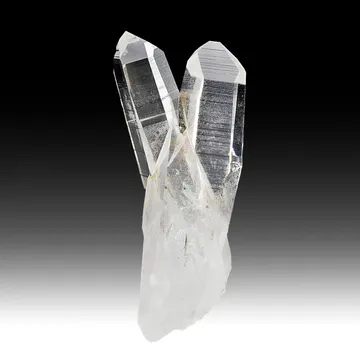
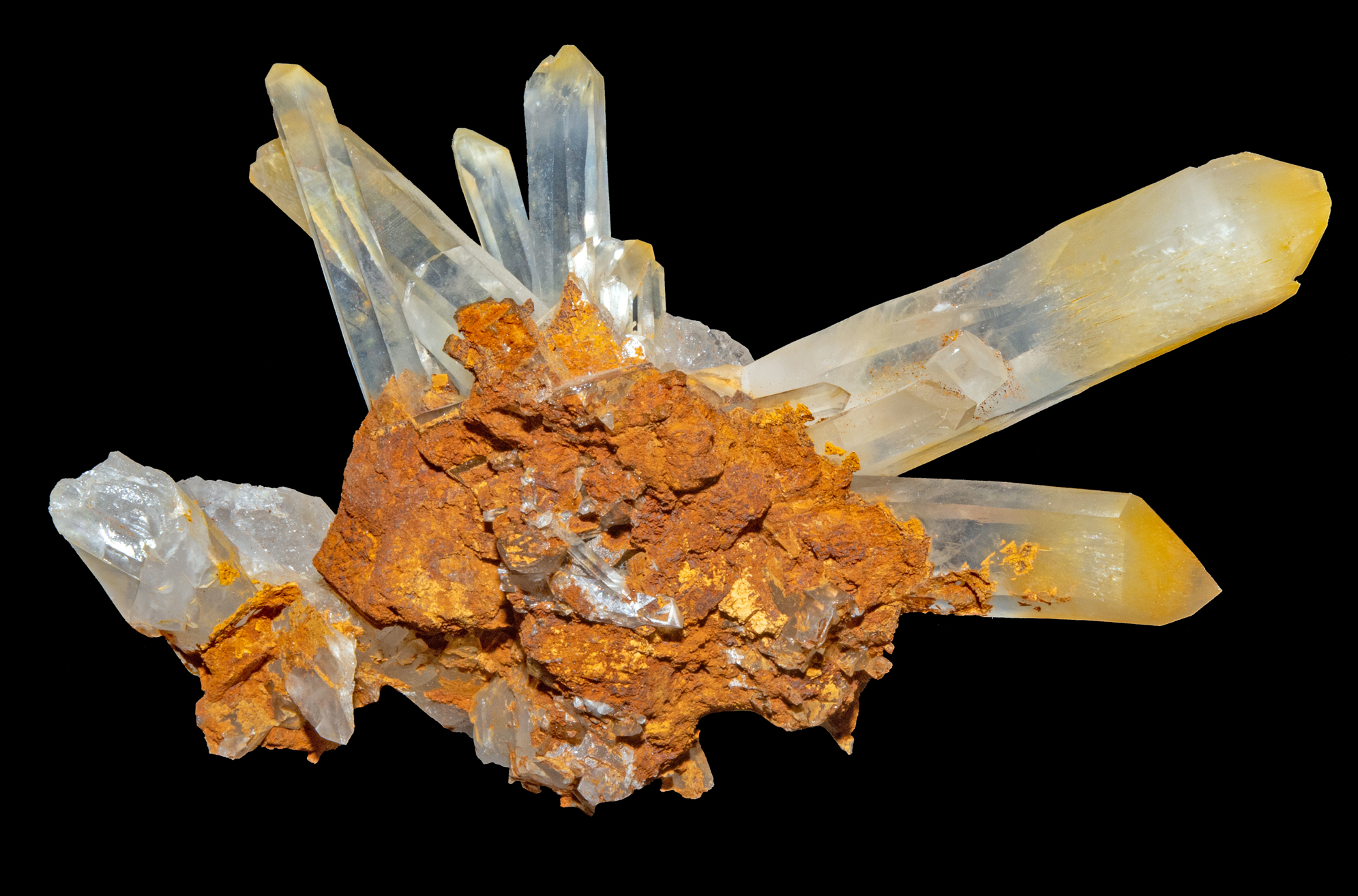
The classic Cabiche look is not merely “yellow quartz.” In the better crystals, color is controlled by fine internal fibers concentrated near the terminations or distributed along selected growth zones. Some crystals show stepped or pitted tips where fibrous material interrupted quartz growth; others preserve clear, smooth, highly lustrous prism faces with a golden glow confined to the final growth. Larger clusters can reach cabinet size, and documented specimens include show pieces in the 10–20 cm range and exceptional sprays with individual crystals several centimeters long. The most coveted examples have strong color saturation without muddy iron-oxide overprint, minimal damage, three-dimensional architecture, and a sharp contrast between clear quartz and the yellow-orange included zones.

Search for specimens: View all specimens from Cabiche, Colombia
Cabiche lies in the Quípama municipality of western Boyacá, close to the Muzo–Quípama emerald district and only a short regional distance from famous emerald mines such as Muzo, Coscuez, La Pava, and Tequendama. The broader district belongs to Colombia’s western emerald belt on the western side of the Eastern Cordillera, where mineralization is structurally controlled and hosted in Cretaceous sedimentary rocks. Unlike emerald deposits associated with granitic rocks elsewhere in the world, the Colombian emerald belts are famous for hydrothermal mineralization in organic-rich black shales, calcareous mudstones, limestones, carbonate veins, breccias, and fault-related openings. Cabiche’s mango quartz occurrence belongs to this same structural and hydrothermal world, though the collectible quartz pocket itself is described from heavily faulted Upper Cretaceous limestone rather than a typical emerald pocket in black shale.
The productive quartz workings are shallow and fracture-controlled. The best-known find was exposed near a road between Cabiche and Quípama, where faulted limestone and open cavities carried quartz crystals with yellow-white to orange fibrous inclusions. Mineralization appears to have developed in stages. Early carbonate, probably dolomite or ankerite, coated limestone surfaces and was later altered to rusty limonite in many pieces. A later episode deposited drusy albite on carbonate-coated rock and locally on limestone. Quartz crystallized intermittently with the fibrous included phase; in many crystals the fibers are absent from the core and concentrated in later growth, especially near the terminations. Later iron oxides stained some fibers and surfaces, producing blackish-orange crusts and coffee-colored variants.
The occurrence is best understood by collectors as a set of pockets or zones rather than a large industrial ore body. The original roadcut material had elongated robust crystals with yellow and white inclusions concentrated at the tips. The 2017 rediscovery pocket above the road produced the material that brought Cabiche to the international market: sparkling groups of quartz with yellow fibers in the terminations. A spring 2018 zone just above the road and below the rediscovery area yielded some of the brightest orange material, with inclusions extending farther down toward the bases of the crystals. Areas to either side produced more white-tipped quartz, while prospecting below the road yielded coffee-colored fibers, probably influenced by iron oxides. During the summer of 2018, a distinct find of delicate needle quartz with bright yellow included tips added another recognizable Cabiche style.
The historical mining story is unusually specific. Yellow included quartz is reported from the 1980s, during the dominance of Don Víctor Carranza in Colombian emerald mining. Road excavation through emerald territory exposed the quartz-bearing zone; yellow-tipped pieces were saved for Carranza, while white-tipped material was discarded. The deposit was eventually closed off, reportedly covered by concrete, and the whereabouts of Carranza-era specimens are unknown. For decades, Cabiche quartz was essentially absent from the collecting world.
Modern production began after the rediscovery in late 2017, when local campesinos found an opening in bedrock while hiking and began working the pocket. Extraction has been artisanal, with a handful of local miners moving rock by hand tools and, at times, using a jackhammer or gunpowder to remove overburden. The workings are close to the surface, where tree roots penetrate the fractured rock and can entangle quartz clusters. This is not a public collecting locality in the North American sense. Collectors generally encounter Cabiche material through Colombian miners, exporters, dealers, and the secondary market rather than by visiting and collecting directly. As with many emerald-belt localities, land tenure, mining rights, security, and local relationships matter; casual field collecting should not be assumed to be possible or appropriate.
Production has been episodic rather than continuous. The market saw the strongest impact after the 2017–2018 finds, and Cabiche specimens remain available, but quality varies widely. Small loose points, thumbnail clusters, and modest cabinet pieces are relatively obtainable. Large, undamaged, vividly saturated, three-dimensional sprays with transparent bodies and intense orange or yellow terminations are much less common and command strong collector attention. The locality’s best specimens are now entrenched as modern classics of included quartz.
Cabiche quartz is prized for transparent to translucent prisms internally colored by fibrous halloysite-like inclusions, most famously concentrated in bright yellow, golden, mango-orange, or amber terminations above colorless bodies. Habits range from single points and small sprays to cabinet-size clusters, with documented show pieces in the 6–22 cm range and occasional needle-like groups, curved crystals, crude floaters, doubly terminated points, and Japan-law twins. Associated pocket material may include limonite after carbonate, drusy albite, minor calcite, and iron-oxide staining; some crystals show stepped or pitted terminations where fibers interrupted growth, while the finest examples preserve sharp luster, clean transparency, vivid internal color, and undamaged three-dimensional architecture. Ordinary pieces tend to be pale, iron-muddied, acid-bleached, incomplete, or flat in composition; the best Cabiche specimens have the unmistakable “clear body, mango cap” contrast that made the locality famous.
Beyond quartz itself, the most important documented Cabiche mineral is halloysite, the clay mineral now commonly used for the fibrous inclusions that give Mango Quartz its color, although early work on the material showed why that identification was initially difficult and why humboldtine was later rejected for the internal fibers. The Cabiche pocket assemblage also includes limonite pseudomorphs after probable dolomite or ankerite, drusy albite, minor globular calcite, emerald-variety beryl reported in the associated mineralization, an unidentified brown-black metallic bladed phase, and occasional spots of an unidentified fibrous blue inclusion within quartz. Cabiche is not known as a type locality for a new mineral species; its importance is instead specimen-mineralogical: a highly distinctive included quartz habit from a narrow Colombian emerald-belt setting.
The main authenticity issue with Cabiche material is not a flood of documented fakes but a combination of misidentification, overconfident labeling, and the unusual appearance of the quartz itself. The early trade and some early analytical work associated the yellow inclusions with humboldtine, but later study showed that surface humboldtine could form as a cleaning-related product when oxalic acid interacted with iron; the included fibrous material within the quartz is now generally traded and catalogued as halloysite. Good labels should therefore read “quartz with halloysite inclusions” or “Mango Quartz,” not simply “humboldtine in quartz.” If a specimen is sold as humboldtine included quartz from Cabiche, treat the label as historically interesting but mineralogically suspect unless accompanied by specific analytical documentation.
The second issue is appearance. Some Cabiche clusters, especially crown-like or jackstraw groups with sharp, bright, parallel points, can look superficially like laboratory-grown quartz to people unfamiliar with the locality. Natural Cabiche pieces should show credible pocket context: variable crystal size and orientation, natural contacts or matrix, limonite or carbonate remnants, growth interruptions, included fibers following crystal growth rather than paint-like surface color, and no uniform synthetic seed-plate geometry. Suspicion is healthy, but dismissing all vivid Mango Quartz as artificial is a mistake; the best natural pieces really are that odd.
Condition is crucial. Quartz is hard, but Cabiche specimens often consist of thin, projecting points on friable limonitic or clay-rich matrix. Pocket stress, broken side points, bruised terminations, and later recrystallized break surfaces are common. Many pieces were recovered from fractured shallow workings, and some early production was damaged cosmetically by aggressive acid cleaning. The yellow-orange fibers are especially vulnerable where they breach the quartz surface: acid can wick along the fibers and bleach the color. Avoid oxalic acid, harsh chemical cleaning, ultrasonic cleaners, and prolonged soaking unless you are prepared to risk loss of color or matrix integrity. Dusting with air, a soft brush, and minimal distilled-water spot cleaning are safer.
Color saturation drives value. Pale yellow, scattered fibers, and iron-stained brownish pieces are much more available than saturated orange-capped crystals with water-clear lower zones. Aesthetic clusters with crystals rising in different directions, strong luster, complete terminations, and balanced matrix are the market leaders. Needle-quartz sprays, Japan-law twins, chatoyant material suitable for cabochons, and pieces showing unusual zoning or intense orange color are specialty targets for advanced collectors. Small points remain common enough for locality representation, but top cabinet examples are scarce, increasingly recognized, and less often casually priced as a novelty quartz.
Cabiche’s story begins in an emerald landscape where almost everything that was not green was once treated as waste. In the Boyacá emerald mines, miners chased el sueño verde, “the green dream,” and specimens that collectors now admire—quartz, euclase, apatite, and associated minerals—were often thrown aside. Against that background, the yellow quartz of Cabiche was strange enough to be noticed. In the 1980s, road work between Cabiche and Quípama cut into a zone of quartz crystals with yellow and white included tips. Don Víctor Carranza, the dominant emerald figure of the era, ordered miners to save the yellow pieces for him. The white-tipped crystals were discarded. The yellows were sent away to the Emerald Czar.
The most memorable detail is what happened next: the deposit was not simply mined and forgotten. After yellow quartz was extracted, Carranza reportedly ordered the area closed and covered with a thick slab of concrete so that no one else would have even a single point. It is a wonderfully Colombian emerald-district episode—part mineral discovery, part secrecy, part power. What became of those early specimens remains one of the locality’s small mysteries. They may have stayed with the Carranza family, gone quietly to favored emerald clients, or vanished into the undocumented private trade.
Nearly forty years later, in the winter of 2017, the locality reappeared in a much humbler way. Grandchildren of a local campesino were hiking on the mountain above the road when they found a hole following a crack in the bedrock. Beneath the limestone, washed clean by long jungle rainfall, the walls were lined with yellow quartz clusters. The scene reads like a pocket collector’s dream: a forgotten roadcut story, a crack in the rock, rain-polished crystals waiting in the dark, and a small group of local people suddenly holding the key to a world-class modern quartz find.
The first new production nearly lost the feature that made it important. Following standard Colombian quartz-cleaning practice, early pieces were put into tubs of acid to remove iron oxides. The miners and early handlers did not yet understand how sensitive the material could be. Where fibrous inclusions reached the surface, acid traveled into them and stripped the yellow color. Many specimens from that first pocket were bleached before their significance was fully appreciated. The survivors were saved largely by accident: some were too large or too delicate for the bins, and others were already clean enough not to need aggressive treatment. Those pieces reached the American market and immediately caught collectors’ attention.
Once enthusiasm and money flowed back to Cabiche, prospecting widened. The work remained local and physical. A few campesinos scaled the slopes, moving rock with hand tools; at times, overburden was loosened with a jackhammer or gunpowder. The workings were so shallow that tree roots ran through the fractured rock and tangled with quartz clusters. In 2018, the locality began to show its zoning. One area yielded especially bright orange inclusions rather than the earlier yellow tips. Below the road came coffee-colored fibers, probably colored by iron oxides. In the summer, delicate needle quartz appeared from the yellow-producing zone. The locality was no longer a single novelty pocket; it was a small, complex mineralized system with recognizable sub-styles.
Even the name carries a time stamp. The material circulated for a while as “Corona Quartz,” a name that fit the crown-like, multi-tipped terminations produced where inclusions interrupted growth. Then the COVID-19 pandemic made “corona” an unfortunate trade word. “Mango Quartz” took over—less geological, but visually apt. Today, the best specimens still justify both names: crowns of quartz with sunlight in their tips.
David Ziga, John Rakovan, and Chris Emproto, “Re-emerging Treasures: Yellow Quartz from Cabiche, Municipal de Quípama, Boyacá Department, Colombia,” Rocks & Minerals, volume 94, number 3, 2019, pages 240–247. The essential locality article, with history, geology, production notes, specimen photographs, and analytical discussion of the yellow fibrous inclusions. Taylor & Francis abstract
David Ziga, John Rakovan, and Chris Emproto, “Re-emerging Treasures: Yellow Quartz from Cabiche, Municipal de Quípama, Boyacá Department, Colombia,” PDF copy of the Rocks & Minerals article. Useful for figure captions and the detailed production history of the 2017–2018 rediscovery. PDF
Mindat occurrence record for quartz from Cabiche, Quípama, Western Boyacá Province, Boyacá Department, Colombia. Useful for locality hierarchy, occurrence status, associated-photo data, and the bibliographic tie to the 2019 Rocks & Minerals article. Mindat quartz occurrence
Mindat locality page for Cabiche, Quípama, Departamento de Boyacá, Colombia. Useful for the locality hierarchy and the list of minerals recorded nearby in the Cabiche area. Mindat locality
Gaston Giuliani and coauthors, “Formation of the Muzo hydrothermal emerald deposit in Colombia,” Nature, volume 369, 1994, pages 552–554. Not a Cabiche quartz paper, but foundational for understanding why the surrounding Muzo–Quípama emerald region is geologically unusual: hydrothermal Colombian emerald mineralization in sedimentary rocks without the igneous association typical of many emerald deposits worldwide. Nature
Groat and coauthors, “Emerald Deposits: A Review and Enhanced Classification,” Minerals, volume 9, number 2, 2019. A broad peer-reviewed context source for Colombian emerald belts, western-belt deposits, hydrothermal breccia, black shale hosts, and the distinctive non-granitic character of Colombian emerald mineralization. MDPI Minerals
Eloïse Gaillou and coauthors, “Colombian Trapiche Emeralds: Recent Advances in Understanding Their Formation,” Gems & Gemology, Fall 2015. Useful background on the structural and hydrothermal setting of the Colombian emerald belts, including the contrast between western and eastern belt mineralization. GIA Gems & Gemology
“Mango Quartz, Colombia” — MChMinerals, fine minerals — A short specimen video showing the appearance and movement of a Cabiche-style Mango Quartz specimen under display lighting.
“Quartz With Halloysite (Natural Mango Quartz) From Colombia – 283 Grams” — Astro West — Dealer video of a halloysite-included Mango Quartz cluster from Colombia, useful for seeing the orange caps and needle-like habit in motion.
Mindat: Cabiche, Quípama, Departamento de Boyacá, Colombia — Locality hierarchy and regional mineral list for Cabiche.
Mindat: Quartz from Cabiche, Quípama, Western Boyacá Province, Boyacá Department, Colombia — Occurrence page for Cabiche quartz with photo and reference links.
Rocks & Minerals article PDF: “Re-emerging Treasures: Yellow Quartz from Cabiche” — The key publication for Cabiche’s geology, rediscovery, inclusion analysis, and production history.
Taylor & Francis: “Re-emerging Treasures: Yellow Quartz from Cabiche” — Publisher page for the 2019 Rocks & Minerals article.
Wikimedia Commons: Quartz with halloysite 1.jpg — Open-license photograph of a Cabiche quartz specimen with halloysite inclusions.
Wikimedia Commons: Quartz with halloysite 4.jpg — Open-license photograph showing the crossed-crystal habit and yellow included tips.
Mindat discussion: “Quartz and Humboldtine from Cabiche, Boyaca, Columbia” — Useful collector discussion of the humboldtine misidentification and the halloysite interpretation.
Fabre Minerals reference page for South America — Dealer reference noting the Cabiche quartz/halloysite material and the rejected humboldtine interpretation.
IUGS Geological Heritage: The Muzo Emerald Deposit — Regional geological context for the nearby Muzo–Quípama emerald district and its structural hydrothermal setting.
GIA: Colombian Trapiche Emeralds—Recent Advances in Understanding Their Formation — Background on Colombian emerald-belt geology, including western-belt structure and hydrothermal mineralization.