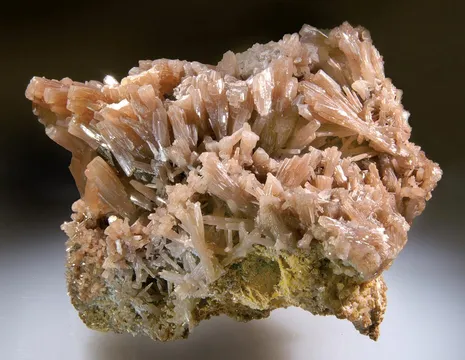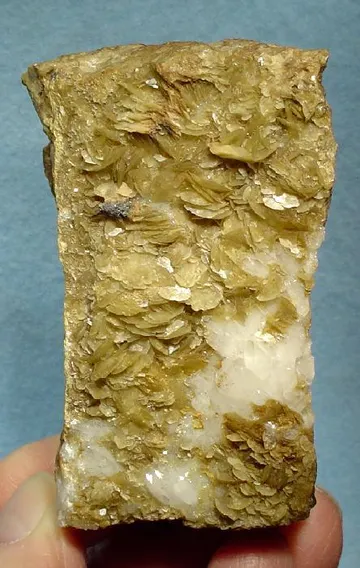
Kautenbach Mine, Germany — renowned locality for pyromorphite-bearing galena (Blaubleierz), gray-blue pseudomorphs with rare textures, valued by collectors.
Key facts
Kautenbach is one of those small European mines whose name carries far beyond the scale of its workings. The deposit was a lead-copper vein system in the Hunsrück, near Bernkastel-Kues on the Mosel, where quartz veins and lenses cut Devonian metasediments. Economically it was a modest old lead, copper, silver, and pyrite mine; mineralogically it became famous for one of the great paradoxes of classic specimen collecting: galena preserving the form of pyromorphite.
The celebrated Kautenbach material is the old German “Blaubleierz,” also called plumbeine on specimen labels: grey to blue-grey galena, PbS, replacing hexagonal pyromorphite, Pb5(PO4)3Cl, commonly with relic pyromorphite still hidden or visible within the pseudocrystals. The best pieces are not ordinary galena cubes. They are stout, six-sided, barrel-like or prismatic forms, sometimes clustered into heavy miniature-to-small-cabinet specimens, with a dull metallic to sparkling spongy surface, ochre-yellow to greenish pyromorphite remnants, local cerussite, and late coatings of green pyromorphite, goethite, covellite, pyrite, or marcasite. Their appeal is both visual and intellectual: they record a rare chemical reversal in the oxidation zone, where a lead phosphate formed from galena and was later converted back into a sulfide while retaining the pyromorphite shape.
Regional View
Country View
Historically, Kautenbach specimens sit in the same mental cabinet as the great 19th-century pseudomorph classics from Saxony, Cornwall, and Huelgoat, but Kautenbach is the benchmark locality for Blaubleierz. Modern work has shown that the Kautenbach replacement texture is not simply massive galena filling an old mold: in the classic material the galena is intimately intergrown with fluorapatite, a texture consistent with reducing, sulfide-bearing, calcium- and fluorine-bearing thermal waters interacting with earlier supergene pyromorphite. That makes these pieces unusually satisfying to collectors who care about paragenesis as much as aesthetics.

Photo: Wikimedia Commons
The finest old Kautenbach examples show sharp pseudomorphic form rather than anonymous metallic crusts. A good specimen lets the eye read the former pyromorphite crystals immediately: hexagonal outlines, broad basal faces, barrel-shaped sections, or blocky prismatic aggregates. Some pieces preserve a yellow-green phosphate core under a grey galena skin only a fraction of a millimetre to a few millimetres thick; others are almost fully transformed, with a granular or spongy metallic surface that catches light differently from normal cleavable galena.
Search for specimens: View all specimens from Kautenbach Mine, Germany
The Kautenbach Mine lay in the Kautenbach valley, in the Traben-Trarbach area of Rhineland-Palatinate, a few kilometres east of Bernkastel-Kues. The deposit belongs to the old Hunsrück-Mosel mining country, where small but persistent hydrothermal veins were worked for lead, copper, silver-bearing ore, and pyrite. The country rock at Kautenbach is Lower Devonian metasedimentary rock—slaty to schistose sandstones and clayey rocks of the Rhenish Massif—cut by post-Variscan quartz veins and lenses. In collector terms, the important geological point is that Kautenbach combined lead sulfide ore, oxidizing near-surface fluids, phosphate availability, and later reducing thermal waters: exactly the strange sequence needed to produce galena after pyromorphite.
The old Kautenbach workings exploited three nearly parallel lodes described in German accounts as the Spattrum, the Kautenbacher Bleigang, and the Kautenbacher Kupfergang. The ore assemblage was dominated by lead and copper sulfides in quartz, with galena, chalcopyrite, pyrite and related sulfides, and later supergene lead minerals. Mindat records lead, copper, and silver as commodities, and lists the mineral suite as including galena, pyromorphite, fluorapatite, cerussite, chalcopyrite, covellite, sphalerite, marcasite, pyrite including bravoite, pyrrhotite, nickeline, calcite, quartz, goethite, and tetrahedrite-tennantite group minerals. The collectible fame of the mine rests overwhelmingly on the lead-phosphate-to-lead-sulfide pseudomorphs, but the broader assemblage is that of a compact polymetallic vein system.
Mining in the Kautenbach district is older than the famous specimens. The nearby Dorotheenberg workings on the right side of the brook were mentioned in 1599 as “der Dorothea-Berg,” and local mining history suggests still earlier activity. By the 18th century the district was active again. In 1748 the Kautenbach mining area was granted to the Pidoll brothers, who soon struggled with water. On 26 August 1752 the Dorothea operation passed to Adolph Böcking, and work resumed in 1759, with ore sent to the Allenbach smelter. The mine was never an easy one: water inflow, poor ventilation, and ore haulage were recurring problems, and the workings extended well below adit level.
A particularly revealing snapshot comes from 1762, when the operation employed 15 miners, 17 haulers and ore washers, one smith, 23 crushing and washing workers, and two attendants for the water machinery. The mine was being worked roughly 50 to 64 metres below the adit level, with small internal shafts complicating haulage and drainage. In 1779 a breakthrough under the Kautenbach into the Bernkastel Tiefenbach adit brought in more water than the mine could control, forcing St. Dorothee to stop. Other parts of the district continued; by 1792 several workings were active on the Kurtrier side, and local sources describe a large work force in the valley. In 1796 Anton Stöck continued the Kautenbach mine, and in 1820 the Tiefer Kautenbacher Stollen was driven below the village for drainage and haulage.
The same water that plagued the miners became a distinctive part of the Kautenbach story. Warm springs were cut during mining, and later hydrogeological work describes a Clara adit, two deep adits, and the Eleonoren-Stollen driven downstream to carry off thermal water. The thermal water was later used and marketed for bathing and medicinal purposes at Bad Wildstein; one hydrogeological summary gives a temperature of 33.3° C and interprets a deep circulation path on the order of hundreds of metres. In mineralogical terms, those warm, reduced, calcium- and fluorine-bearing waters are now central to explaining how pyromorphite could be replaced by galena plus fluorapatite.
The classic Blaubleierz specimens were not modern dump finds. They were recovered during the period of underground mining, especially the 19th-century working era, and were already famous enough to be described in the mineralogical literature of the 1840s and 1850s. Contemporary and later descriptions emphasize that the best pieces came from vugs or drusy zones in the lead vein, with individual pseudomorphic crystals reaching about 4 cm and drusy groups reported up to 20 cm across. Today the locality is effectively closed to collecting: the adits are inaccessible, recognizable dumps are absent, and serious Kautenbach specimens on the market are almost always old collection pieces, frequently with older German or European labels.
Kautenbach galena is prized not as conventional cubic galena but as Blaubleierz: galena pseudomorphous after pyromorphite, often with fluorapatite intergrown in the replacement texture and with surviving yellowish, greenish, or brownish pyromorphite cores. The characteristic habit is six-sided, prismatic to barrel-shaped pseudocrystals, commonly in compact clusters; single pseudocrystals may reach about 4 cm, though many collector pieces are thumbnails to miniatures with crystals in the 1–3 cm range. The surface can be grey, bluish grey, granular, spongy, or slightly sparkling rather than cleanly cleavable, and the best specimens retain sharp former pyromorphite geometry with attractive contrast from relic pyromorphite, late green pyromorphite, goethite, covellite, pyrite, or marcasite. Ordinary pieces look like dark, rough lead ore; fine ones make the pseudomorph unmistakable from across the room.
Pyromorphite at Kautenbach is inseparable from the Blaubleierz story. The original pyromorphite formed as a supergene lead phosphate in the oxidized part of the vein system, and much of the famous material preserves it only as cores, patches, or later overgrowths on galena pseudomorphs. Descriptions of Kautenbach pyromorphite emphasize dirty-yellow, yellowish, greenish, and brownish colours rather than the bright apple-green display material known from some other German localities; crystals were hexagonal and could be stout to barrel-shaped, with exceptional examples around 4 cm. Good pyromorphite-associated Kautenbach specimens are valued when they show the transition clearly: yellow-green pyromorphite relics beneath or between grey galena skins, fresh late pyromorphite sparkling on the pseudomorphs, or partial replacements where the collector can read both generations at once.
Pyrite from Kautenbach is a subordinate but important accessory in both the ore and specimen assemblage. Historical and modern descriptions of the Blaubleierz pieces note botryoidal aggregates of pyrite and marcasite on the surfaces of some pseudomorphs, and pyrite was also one of the mine’s economic materials, recorded with “Poch- und Schwefelkies” in old production notes. On specimens, Kautenbach pyrite is most desirable when it is part of the paragenetic scene rather than isolated: brassy balls, crusts, or small aggregates adding texture and colour to grey galena-after-pyromorphite, yellow-green pyromorphite remnants, and iron-oxide-stained quartz. Standalone pyrite is far less important from this locality; collector-grade examples are those that document the late sulfide episode on a classic Kautenbach pseudomorph.
Other minerals documented from Kautenbach fill out a compact but interesting polymetallic-vein assemblage. Fluorapatite is especially important because modern analyses show it intergrown with the galena replacement texture in the classic Blaubleierz. Cerussite occurs in the supergene lead sequence and may appear with rhythmic galena-pyromorphite layering. Covellite is notable as a thin blue coating on some specimens, likely contributing to the “blue lead ore” appearance. Goethite forms later coatings, while marcasite accompanies pyrite on some surfaces. Chalcopyrite, sphalerite, pyrrhotite, nickeline, calcite, quartz, and tetrahedrite-tennantite group minerals are all recorded, but none has the collector importance of the galena-pyromorphite pseudomorphs. Kautenbach is not best understood as a type-locality mine for a valid IMA species; it is instead a classic locality for a historically named variety and texture—Blaubleierz or plumbeine—that became a reference point for pseudomorph collectors.
Kautenbach specimens require careful label reading. “Galena,” “Blaubleierz,” “Plumbeine,” “Bleiglanz nach Pyromorphit,” “galena after pyromorphite,” and the obsolete “Sexangulit” may all refer to the same family of material. Old labels may also use Bernkastel, Berncastel, Mosel, Hunsrück, or Kautenbach without the modern administrative hierarchy. Because many Kautenbach examples are partial replacements, a label reading “plumbeine” should not be assumed to mean pure galena throughout; modern work shows relic pyromorphite cores are common, and many specimens are genuinely galena plus pyromorphite plus fluorapatite.
The main authenticity issue is not widely documented fakery but misdescription and over-optimistic naming. Massive galena or dark lead ore from the region should not command Kautenbach Blaubleierz prices unless it preserves the former pyromorphite morphology. Conversely, a rough, grey, granular coating on a six-sided pyromorphite form may be exactly what one wants. The collector should look for the hexagonal outline, barrel-like habit, retained crystal faces, visible phosphate remnants, old collection provenance, and associations consistent with Kautenbach. Pieces with vague “Germany” or “Bernkastel” labels can be plausible, but sharp provenance matters because the mine has produced no meaningful modern collecting supply.
Condition is a serious value factor. These pseudomorphs can have fuzzy, granular, cavernous, or spongy surfaces by nature, so “roughness” is not automatically damage. Broken prism edges, crushed basal faces, rubbed high points, and freshly exposed yellow cores from recent impacts are more important to watch for. Some specimens naturally show incomplete replacement, cavities, or loose pyromorphite-galena contacts; handle them as old, fragile sulfide-phosphate aggregates, not as robust galena cubes. Avoid washing, acids, ultrasonic cleaning, and aggressive brushing. A soft air bulb and dry, gentle dusting are safer.
The minerals are lead-bearing. Normal display of stable specimens is not a problem for an informed collector, but avoid creating dust, keep specimens away from children, do not store them with food-preparation materials, and wash hands after handling. Pyrite and marcasite coatings should be monitored for instability, especially in humid storage, though Kautenbach Blaubleierz is usually collected for the galena-pyromorphite pseudomorph rather than pyrite abundance. Fluorescence is not a selling point for this locality; form, paragenesis, age, and provenance are the reasons to buy.
Market availability is limited but not nonexistent. Modest thumbnails and small miniatures appear from old collections, while sharp, display-quality specimens with large pseudocrystals, visible pyromorphite remnants, and early provenance are much harder to replace. The best Kautenbach pieces have the status of classic European pseudomorphs, and serious examples should be evaluated like historical specimens: morphology, label chain, old collection history, completeness, and whether the piece teaches the Kautenbach story at a glance.
The most dramatic Kautenbach story is not a pocket discovery but a mistake underground. The miners were already fighting water, ventilation, and haulage when they drove below the Kautenbach brook and broke through toward the Bernkastel Tiefenbach adit. The incoming water overwhelmed their ability to drain the workings, and in 1779 St. Dorothee had to stop. For a collector, that episode gives the specimens a sharper setting: the same wet, active, chemically restless underground environment that made mining difficult was also part of the fluid history that made Kautenbach mineralogically extraordinary.
The workforce figures from 1762 make the little valley feel crowded. The mine was not simply a hole with a few men picking ore. It had 15 miners underground, 17 people hauling and washing ore, a smith, 23 workers at the crushing and washing plant, and two attendants for the water machinery. The ore was being won 50 to 64 metres below adit level, through a system awkward enough that local accounts singled out poor ventilation, water management, and ore haulage as continuing problems. That was the human machine behind the small, heavy specimens that later entered European cabinets.
Kautenbach also produced one of those odd mining afterlives in which a troublesome inflow becomes an asset. Warm springs were encountered in the mine, and the deep drainage works ultimately helped supply thermal water later used at Bad Wildstein. Hydrogeological accounts describe the Eleonoren-Stollen being driven to carry off thermal water, with the water warm enough—33.3° C in one published summary—to belong to a very different story from ordinary cold mine drainage. Modern mineralogy then brought that thread back to the specimens: reduced, sulfide-bearing thermal waters help explain the conversion of earlier pyromorphite into galena plus fluorapatite.
The 1856 description by Gergens gives the classic collecting moment. He saw a large number of excellent Kautenbach pyromorphite specimens in the possession of the Bernkastel apothecary Stöck and wrote of being struck not only by their beauty and size, but by what they taught about pseudomorph formation and paragenesis. The passage is memorable because it captures the instant when attractive cabinet specimens became evidence. Gergens described pyromorphite crystals around 4 centimetres in diameter and nearly as long, with smooth faces and sharp edges, set in druses up to 20 centimetres across—and almost no crystal without some sign that transformation to galena had begun.