Bad Ems, Germany: historic Lahn Valley locality famed for pyromorphite crystals and varied lead-zinc minerals, prized for provenance, density, and habit.
Key facts
Bad Ems is one of the grand names in European lead-mineral collecting: a historic Lahn Valley ore district where siderite-quartz veins in Lower Devonian rocks carried Pb-Zn-Cu-Ag mineralization, and where the oxidation of galena-rich veins produced some of the most recognizable pyromorphite specimens in the world. In the collector’s vocabulary, “Bad Ems” can mean the mines immediately around the spa town, especially Mercur and Pfingstwiese, but it is also used in the older district sense for the Emser Gangzug, the Ems vein system that includes Friedrichssegen near Lahnstein, Rosenberg at Braubach, Bergmannstrost near Nievern, Neuhoffnung, Fahnenberg, Blöskopf, Pitschbach, Silberkaute and related workings along the Lahn and toward the Rhine.
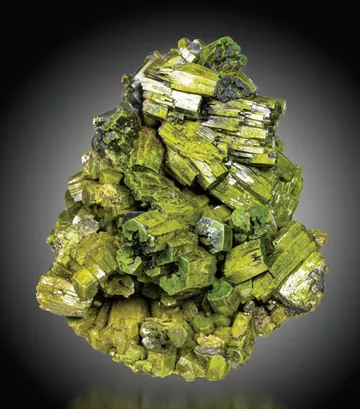
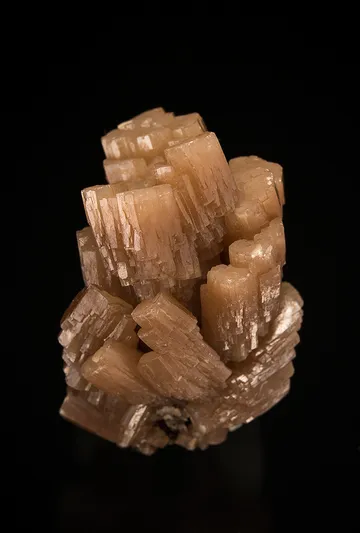
The district’s fame rests above all on pyromorphite: the squat, lustrous, rounded hexagonal prisms historically called “Emser Tönnchen,” literally the little Ems barrels. Fine specimens range from tobacco-brown and honey-brown through olive and dark forest green, with habits that include fat barrel-shaped crystals, stacked cascades of short prisms, knobby all-around aggregates, and crusts or druses on quartz, limonite-goethite matrix, altered siderite vein material and secondary lead assemblages. The best pieces have a compact old-European presence that differs strongly from the bright modern pyromorphites of China or France: they are dense, sculptural, often subtly colored, and prized as much for provenance and locality specificity as for visual impact.
Regional View
Country View
Bad Ems is also an important ore-mineral locality, not merely a pyromorphite locality. Galena and sphalerite were the principal economic sulfides, with chalcopyrite, pyrite, siderite, quartz and carbonate gangue forming the backbone of the veins. The secondary suite is unusually varied for a German lead-zinc district, including cerussite, anglesite, hemimorphite, aragonite var. flos ferri, malachite, azurite, annabergite, gersdorffite, cobalt and nickel minerals, plumbogummite-group material, and modern micromount rarities. Friedrichssegen in particular has continued to matter mineralogically long after mining ceased, because its old dumps and oxidized cavities yielded lahnsteinite, a new zinc hydroxysulfate named for nearby Lahnstein, and cotype material of hanauerite, a photosensitive Ag-Hg-S-I supergene mineral.
Search for specimens: View all specimens from Bad Ems, Germany
Bad Ems lies in Rhineland-Palatinate on the Lahn River, where the historic ore deposits belong to the Emser Gangzug, a northeast-southwest vein system worked for lead, silver, zinc, copper and iron. Different sources give somewhat different extents depending on whether they refer to the tighter Bad Ems-Braubach mining stretch or the broader Ems vein system, but the collector’s locality is best understood as a chain of hydrothermal veins and mine groups rather than a single shaft. The classic mines attached to the Bad Ems collecting name include Mercur, Pfingstwiese, Friedrichssegen, Rosenberg, Bergmannstrost, Neuhoffnung, Fahnenberg, Blöskopf, Pitschbach and Silberkaute.
The geological pattern is consistent across the important specimen-producing mines: siderite-quartz veins cut Devonian schists, shales and related Rhenish Massif rocks and carry galena, sphalerite, chalcopyrite, pyrite and associated Ag-bearing phases. The ore was valuable principally for lead and silver, then also zinc and copper. Oxidation of the upper and accessible parts of the veins transformed portions of the primary sulfide ore into a secondary assemblage rich in lead carbonates, sulfates and phosphates. That alteration is the reason the district became famous to mineral collectors: galena supplied the lead, while phosphate- and chloride-bearing oxidizing fluids allowed pyromorphite to crystallize as drusy coatings, barrel-shaped prisms and dense crystal aggregates.
Mercur and Pfingstwiese are the most central Bad Ems names for pyromorphite in the narrow town sense. Mercur, about 2.5 km northeast of Bad Ems, is described as a lead-bearing siderite vein in Devonian schists and was abandoned in 1945. Its mineral list includes galena, pyromorphite, cerussite, anglesite, sphalerite, chalcopyrite, quartz, siderite, aragonite var. flos ferri, annabergite, hemimorphite, morenosite, nickeline, gersdorffite, cobaltite, breithauptite and other species. Pfingstwiese, about 3 km east-northeast of Bad Ems, was once part of the Mercur Mine and was also abandoned in 1945; the ruined building of the Adolph shaft marks the locality in modern records. For collectors, Pfingstwiese is a small but serious pyromorphite name, documented as a significant occurrence and associated with quartz, limonite, siderite, galena, sphalerite, chalcopyrite, malachite, azurite, pyrite, gersdorffite and flos ferri.
Friedrichssegen, near Frücht and Lahnstein, is the other indispensable name behind many old “Bad Ems” labels. The mine worked the Hauptgang, Liegender Gang and Neuhoffnungsgang on the Emser Gangzug and was historically also known as Köllnisches Loch. It was an important silver-lead-zinc-copper-iron mine, closed as a primary mining operation in 1913, with later dump reworking and flotation activity from 1952 to 1957. Its best pyromorphites are classic brown to translucent brown barrel aggregates, commonly old collection pieces, and the mine is also a major locality for galena, sphalerite, cerussite, siderite, quartz and an unusually rich secondary suite. A 2013 lahnsteinite description noted 138 identified mineral species from Friedrichssegen and emphasized that its pyromorphite druses are represented in museums and collections worldwide.
Rosenberg at Braubach belongs to the broader Bad Ems district usage and is especially important for pyromorphite, cerussite and later mining history. The Rosenberg Mine worked lead, silver, copper and zinc ores north of Braubach on the same Ems vein system. It was first mentioned as a mine in 1723, had earlier regional silver-mining roots around Braubach, passed through periods of abandonment and revival, and remained part of the later industrial mining story, with Rosenberg listed as closing in 1963 and the associated Königstiel operation marking the final Braubach phase in 1967. Rosenberg pyromorphites tend toward beige-brown, orange-brown and greenish material, commonly as small hexagonal crystals on quartz and sulfide matrix, and old specimens from this part of the district are routinely encountered with labels using both “Braubach” and “Bad Ems.”
Bergmannstrost near Nievern, formerly Lindenbach, adds another important vein-style component to the district. It worked the Emser Gangzug for lead, silver, zinc, copper and iron, with five known ore veins and a documented maximum depth of at least about 240 m. Several named ore shoots are especially telling mineralogically: the Pyromorphit-Mittel was rich enough in pyromorphite to be workable over an 80 m length, while the Bleigummi-Mittel was a short but mineralogically distinctive ore body with pyromorphite, galena, plumbogummite and even native silver. Another ore shoot, the Küppler Mittel, carried brown ironstone with nest-like galena and pyromorphite. Such descriptions explain why Bad Ems specimens often show pyromorphite in iron-oxide-rich cavities rather than on clean white quartz alone.
Mining in the Lahn Valley is old. The district is associated with Roman activity and with medieval mining, and documentary references to Lahn-area mining appear by 1220; the Bad Ems town history also records medieval and early modern ore work, followed by major industrial expansion in the nineteenth century. At Friedrichssegen, the modern mine name appears in correspondence by 1850; it was sold in 1852 to Antoine Boudon, reorganized in 1854 as a silver and lead mining joint-stock company, and expanded with shafts, steam engines, dressing works, worker housing and transport infrastructure. By 1880 Friedrichssegen employed 856 people and produced 3,974 tonnes of ore, its record year. Mercur and Pfingstwiese remained active into the twentieth century and were abandoned in 1945, while the later Braubach-Rosenberg story continued beyond the main classic specimen period.
Collecting access today should be regarded as closed unless explicit legal permission is obtained. These are abandoned historic mines, many openings are sealed, flooded, unstable, on private land, or protected as industrial heritage, and underground entry is unsafe. The practical collector’s route is the specimen market and old collections. Labels deserve careful reading: “Bad Ems,” “Ems,” “Nassau,” “Braubach,” “Friedrichssegen,” “Mercur,” “Merkur,” “Pfingstwiese,” and “Rosenberg” may all appear, and the degree of precision varies with label age, dealer convention and collector tradition.
The notable finds were chiefly historic. Friedrichssegen produced the legendary brown barrel pyromorphite druses, including a reported cavity 4 m long, 3 m high and 1 m wide filled with brown lead ore crystals known as Emser Tönnchen. Mercur is tied to olive and dark olive-green, fat, slightly curved barrel crystals, often intergrown and in compact clusters. Pfingstwiese produced richly crystallized, slightly barrel-shaped pyromorphite on both sides of specimens and is regarded as one of the significant Bad Ems pyromorphite sublocalities. Rosenberg yielded orange-brown to brown crystals on quartz and sulfide matrix, as well as coveted green spherical or globular pyromorphite aggregates with cerussite. Good modern finds are not impossible from old dumps and reworked material, especially for micromounts, but the cabinet-quality classics are overwhelmingly historic.
Bad Ems pyromorphite is the district’s signature mineral and is best known for squat to barrel-shaped hexagonal prisms, rounded or curved prism faces, resinous to greasy luster, and colors ranging from honey-brown, tobacco-brown and orange-brown to olive, dark olive green and rarer strong green; crystals are commonly in the millimeter to centimeter range, with fine miniatures and small cabinets showing dense crusts, cascaded groups, all-around aggregates or isolated barrels on quartz, limonite-goethite, siderite-vein matrix and secondary lead minerals such as cerussite and anglesite. Mercur material is especially associated with fat olive barrel crystals, Pfingstwiese with significant world-class pyromorphite on limonite and quartz, Friedrichssegen with classic brown Emser Tönnchen and translucent brown barrel clusters, and Rosenberg with orange-brown to brown crystals on quartz and occasional prized green spherical aggregates. The best pieces are not merely “from Bad Ems” but visually attributable: undamaged lustrous terminations, natural even color, recognizable barrel habit, three-dimensional composition, old provenance and a believable sublocality elevate a specimen far above ordinary drusy fragments or battered brown crusts.
Galena at Bad Ems is the fundamental ore mineral rather than the glamour species, but it is the lead source behind the district’s pyromorphite, cerussite and anglesite, and specimens from Friedrichssegen, Mercur, Pfingstwiese, Rosenberg and Bergmannstrost commonly show metallic gray PbS as massive vein material, cleavable patches, small cubic crystals, sulfide-rich matrix or partially altered remnants with quartz, siderite, sphalerite, chalcopyrite, cerussite, pyromorphite and limonite. Friedrichssegen has particularly abundant documented galena specimen material and photo associations with quartz, pyromorphite, siderite, cerussite and sphalerite, while the main lode there was historically described as carrying galena and blende in roughly equal proportions. The best Bad Ems galena pieces for collectors are not usually isolated textbook cubes; they are locality-rich combination specimens, old ore pieces with sharp metallic faces in quartz-siderite gangue, or rare pseudomorphic and alteration pieces that show the transition from primary galena to the secondary minerals that made the district famous.
Beyond pyromorphite and galena, the Bad Ems district is notable for cerussite, anglesite, sphalerite, chalcopyrite, pyrite, siderite, quartz, aragonite var. flos ferri, hemimorphite, malachite, azurite, annabergite, gersdorffite, cobaltite, nickeline, breithauptite, ullmannite, linnaeite, morenosite, plumbogummite and native copper, with some sublocalities adding highly specialized secondary and micromount species. Friedrichssegen is the type locality of lahnsteinite, Zn4(SO4)(OH)6·3H2O, found as colorless tabular crystals in goethite cavities on the dump and associated with pyromorphite, hydrozincite, quartz and native copper. Friedrichssegen is also a cotype locality for hanauerite, AgHgSI, a yellow adamantine, photosensitive supergene mineral found in tiny prismatic crystals associated there with perroudite, goethite and quartz. These modern descriptions are a useful reminder that Bad Ems is not only a nineteenth-century cabinet-classic locality but also a serious micromount and mineralogical-research district.
The main authenticity issue with Bad Ems specimens is locality attribution, not a well-documented plague of synthetic pyromorphite or mass-produced fakes. The name “Bad Ems” has been used broadly for more than a century, and many old labels compress the wider Ems-Lahn district into a single famous locality. A pyromorphite labelled simply “Bad Ems” may legitimately be from Mercur, Pfingstwiese, Friedrichssegen, Rosenberg, Braubach or another mine in the district tradition, but a precise mine name should be supported by habit, color, matrix and provenance.
For pyromorphite, look first at the terminations. Bad Ems barrels are heavy, brittle and often exposed; chipped high points, broken crystal tips and edge bruising are common on old pieces. Minor peripheral wear can be acceptable on a historic specimen, but damage across the main display face dramatically lowers desirability. Check for glued repairs at the base of prominent crystals, reattached clusters, filled cracks and suspiciously clean contact surfaces. Under magnification, old iron-stained breaks, quartz matrix contacts and naturally intergrown crystals usually read very differently from modern repairs.
Color should be judged with locality in mind. Rich green Bad Ems pyromorphite is real and desirable, especially from Mercur-type material and rare Rosenberg pieces, but vivid color alone is not enough. The finest green specimens should still show convincing Bad Ems morphology and matrix, and old provenance helps. Brown to olive-brown Emser Tönnchen are not second-rate simply because they lack bright green color; for many collectors they are the archetypal Bad Ems look. Specimens that are too uniformly bright, lack appropriate matrix, or are described with vague “Germany” provenance should be approached cautiously.
Galena specimens require the usual lead-mineral handling discipline. Do not generate dust, do not soak crumbly ore pieces unnecessarily, wash hands after handling, and keep specimens away from children and food-preparation areas. Pyromorphite is also a lead mineral and should be treated with the same basic respect. Most stable display specimens pose no unusual hazard if handled sensibly, but friable limonite-goethite matrix and powdery alteration surfaces should not be abraded.
Fluorescence is a minor but interesting point. Some Bad Ems pyromorphites have been documented with fluorescence under UV, including dealer-recorded examples showing response under longwave and minor shortwave, and a light brown Bad Ems pyromorphite has been reported as bright yellow under midwave UV. Fluorescence should be treated as a bonus observation, not an identification requirement; absence of fluorescence does not disqualify a specimen.
Market availability follows a classic-locality pattern. Small brown to olive miniatures and older drusy pieces appear regularly enough, though good ones are increasingly contested. Fine Mercur-type dark olive barrels, richly crystallized Pfingstwiese pieces, aesthetic Friedrichssegen brown barrel clusters, and large undamaged Rosenberg specimens are much scarcer. Green Bad Ems material with strong aesthetics is genuinely coveted. A good old label—especially one narrowing the sublocality or connecting the piece to a known European collection—can add significant collector value.
The greatest Bad Ems specimen story is the Friedrichssegen pyromorphite pocket that entered collector lore as a chamber of Emser Tönnchen. In the nineteenth-century mine, as the workings pushed below the Heinrich adit level and the operation grew into one of Germany’s major lead-silver-zinc producers, miners reportedly broke into a druse 4 m long, 3 m high and 1 m wide. It was filled with crystals of brown lead ore: the barrel-shaped pyromorphite that German collectors would remember by the affectionate name “Emser Tönnchen.” That is not a vague “large pocket” in the usual dealer sense; it is the scale of a small room, and it explains why old Friedrichssegen pyromorphites, even when modest in size, carry the authority of a true classic find.
Friedrichssegen was not only a hole in the hill producing specimens. It became an industrial village. In 1865 the operation had 186 employees, including five officials; by 1870 the number had risen to 238, and between 1868 and 1871 the mine built the Tagschacht housing complex for 48 families near the main shaft. A workers’ casino followed in 1870, and a primary school opened in January 1871 with one teacher. By the record year of 1880, the workforce had reached 856 and the mine produced 3,974 tonnes of ore. When a collector turns over a brown Friedrichssegen pyromorphite with an old European label, it is worth remembering that the specimen came from a place large enough to generate its own housing, school, transport system and social world.
The narrow Friedrichssegen valley created a transport problem severe enough to inspire an engineering first. On November 8, 1880, a narrow-gauge works railway opened from the Ahl mine yard to the Heinrich adit. It was a combined adhesion and rack railway using the system of the Swiss inventor Niklaus Riggenbach, and it was described as the first rack railway in Prussia. The line ran 2,670 m and overcame a height difference of 119.4 m. Ore, men, timber and machinery moved through the same landscape from which classic pyromorphites were extracted; the technical achievement belongs to the same story as the mineral specimens.
Rosenberg’s history is more austere and, in places, more humanly immediate. In the Braubach workings, raw ore was carried in the adit by mine horses, and some miners reportedly walked 20–30 km each day to earn their living. Around 1890, a surface dressing worker earned 4 pfennigs per hour, while a hewer underground earned 21 pfennigs. Those figures make the polished collector word “classic” feel rather small. The pyromorphite, cerussite and galena specimens that now sit in cabinets passed first through a world of long walks, horses in adits, low wages, and ore dressing at the edge of the Rhine-Lahn industrial landscape.
Bergmannstrost preserves a different kind of story in the names of its ore shoots. The mine had a Pyromorphit-Mittel, an ore body named for pyromorphite itself, workable over 80 m. A separate Bleigummi-Mittel, only 15 m long in workable condition, contained pyromorphite, galena, plumbogummite and, in places, native silver. The Küppler Mittel carried 0.8–1 m of brown ironstone with nest-like occurrences of galena and pyromorphite. In other words, the minerals that collectors prize were not incidental surface curiosities; at Bad Ems they could define the mine language, the economic geology and the miner’s map of the underground vein.