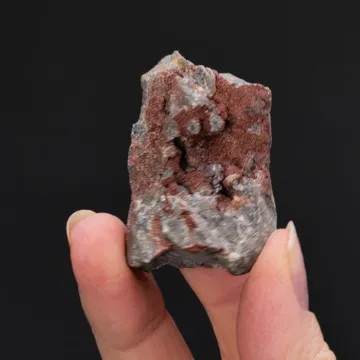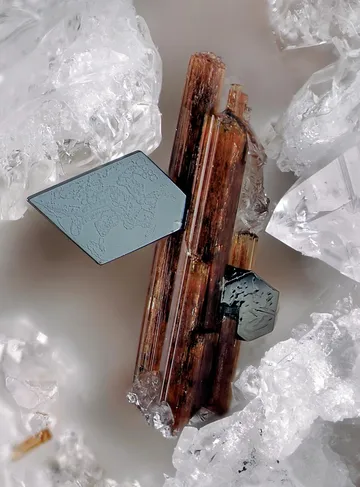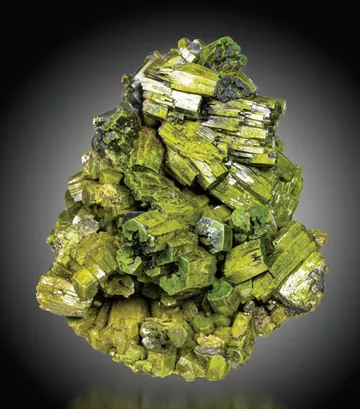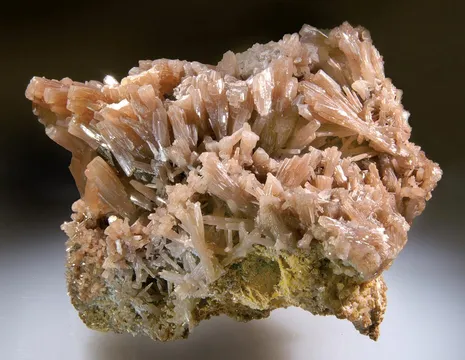
Georg Mine, Germany - a premier bournonite locality famed for dense siderite-supported sulfides and historic Siegerland-Wied mining context.
Key facts
Georg Mine, near Willroth in Rhineland-Palatinate, is one of the great late chapters of the Siegerland-Wied siderite world: a manganese-rich iron-spar vein mine at the southern end of the Horhauser Gangzug, worked deep into the Devonian schists of the Rhenish Massif and remembered by collectors less for iron ore than for the metallic drama preserved in its pockets. Its best specimens are classic German sulfide pieces—steel-gray bournonite, brassy chalcopyrite, and black-gray tetrahedrite seated on pale to honey-brown siderite, often with quartz and occasional sphalerite, galena, pyrite, or rare Bi-Pb-Sb sulfosalts. The mine’s specimen character is unmistakable: heavy siderite matrix; sharply lustrous, compact metallic crystals; and a strong contrast between warm carbonate and cool sulfide luster.
Regional View
Country View
Georg matters because it stands at the intersection of several collecting traditions. To mining historians it is the last major iron-ore survivor of the Wieder district, with its 56 m headframe still dominating the landscape beside the A3 corridor. To mineralogists it is a well-documented example of the Siegerland-Wied siderite veins, complicated by faulting, Variscan sulfide mineralization, and later antimony-rich overprints. To collectors it is above all a bournonite locality: old labels reading “Grube Georg,” “Willroth,” “Horhausen,” or “Westerwald” usually promise the dense, cabinet-scale association of bournonite, chalcopyrite, and siderite that made the mine famous.

Photo: Wikimedia Commons
The locality’s finest pieces have the feel of underground “rescues.” Many were gathered during the 1950s and 1960s, when mining was still active and crystalline cavities were encountered in the ore. The best historical specimens tend to be dense rather than delicate: plates and small cabinets with siderite as the architectural support and sulfides as the visual focus. Top Georg bournonite is not simply present—it is sharp, lustrous, and three-dimensional, with visible cogwheel-style twinning or thick tabular forms rising above siderite. Top Georg chalcopyrite is judged by its placement and surface: isolated or clustered crystals with bright brassy faces, subtle iridescent tarnish, and little bruising.
Search for specimens: View all specimens from Georg Mine, Germany
Georg Mine is the historic Grube Georg at Willroth, in the Altenkirchen-Flammersfeld municipality of Rhineland-Palatinate. In mineral locality usage it belongs to the Wied iron-spar district and the Horhauser Gangzug, a siderite vein system on the northwestern margin of the broader Siegerland-Wied ore province. The ore was chiefly manganese-bearing siderite—German Eisenspat or Spateisenstein—hosted by Devonian schists. Published geological work places the mine near the southern end of the Horhauser Gangzug and emphasizes that the deposit was strongly affected by tectonic disturbance, especially where middle and upper Siegenian strata meet.
The principal ore was a large siderite vein, but the collector interest comes from its sulfide and sulfosalt assemblage. The Georg vein carried Pb-Cu-Zn minerals and a particularly important antimony-bearing mineralization. Bournonite occurred in fractures and small open spaces cutting the siderite mass; later tetrahedrite could be exceptionally well crystallized; and chalcopyrite, pyrite, sphalerite, galena, quartz, and carbonate minerals form the familiar specimen associations. Modern analytical work has also confirmed or discussed rare bismuth-bearing lead sulfosalts from Georg, including cosalite and kobellite, adding a micromineralogical layer to a locality better known for cabinet pieces.
Mining at Willroth has medieval roots. The local mining history records workings on the Willrother Berg before 1338, followed by documented activity under the Counts of Isenburg, later supply to the Sayner and Mülhofener huts, and the formal naming of the operation as Grube Georg in 1803. The Tiefer Georg-Stollen was started in 1811 and reached the ore vein in 1822 after more than 500 m of driving. Prussian control followed in 1815, and the industrial era accelerated after Alfred Krupp acquired the Horhausen mines in 1865. A machine shaft was sunk in 1867–1868, and by the late nineteenth century Georg was tied into a transport network that included a wire-rope haulage connection toward Grube Louise and onward shipment by narrow-gauge railway.
The twentieth-century mine was repeatedly modernized. Electrification came in the 1920s, Sieg-Lahn Bergbaugesellschaft took over in 1926, and new hoisting and processing installations followed. Work paused during the Depression years, then resumed after the Second World War. From the early 1950s the property belonged to Siegerländer Erzbergbau AG. Shaft II, sunk from 1952 to 1954, reached roughly the 970 m range, and the surviving headframe over that shaft became the landmark most visitors associate with the mine today. Ore was worked down to deep levels, including the 800 m and 850 m levels that recur in specimen histories. The last shift was worked on March 31, 1965; the official closure followed on May 21, 1965. With Georg and Füsseberg, the long Siegerland-Wied iron-ore tradition reached its end.
Total production is given locally as about 6.5 million tonnes of iron ore. That figure is not incidental for collectors: Georg was not a short-lived pocket mine but a major industrial operation, and its specimen supply reflects decades of underground exposure rather than a single collecting episode. Early production was modest, while postwar output was substantial; by the early 1960s the mine was producing hundreds of tonnes per day from deep workings. The scale of mining explains why old Georg specimens occur in numerous German collections, yet high-quality examples remain coveted because the best drusy pockets were chance finds in an operating ore mine, not systematic specimen production.
Collecting access today is not comparable to the active-mining period. The headframe and associated museum are preserved for visitors, and tours allow access to the headframe and Hängebank area, but the former Georg-Stollen is not accessible. The site functions as an industrial monument and tourist destination, not as an open mineral-collecting locality. Any modern collecting should be treated as closed unless explicit permission is obtained from the appropriate property and site authorities; the underground workings are inaccessible and unsafe, and the surviving historic infrastructure is protected.
The most collectible finds are tied to the final productive decades. Specimens in published and photographed collections include bournonite on siderite from the 600 m level, found in 1959; a notable bournonite on siderite from the 640 m level, found in 1962; chalcopyrite with colorful tarnish on siderite from the 850 m level, found in 1965; and very large chalcopyrite-on-siderite pieces from the 800 m level, including examples around 35 x 17 cm. These level-specific pieces anchor the locality in time: many of the best Georg specimens are not anonymous “old German” sulfides but documented products of the mine’s last working years.
Siderite is the literal ore of Georg Mine and the stage on which nearly all of its best collector minerals perform. Georg siderite is manganese-bearing iron spar, commonly forming pale beige, yellowish, honey-brown, or brown carbonate masses and bladed to rhombohedral crystal surfaces in cavities. The finest specimen siderite is rarely valued as an isolated carbonate display; instead, it is prized when it forms a fresh, lustrous, well-crystallized matrix for bournonite, chalcopyrite, tetrahedrite, sphalerite, pyrite, or quartz. Plates from the deep levels can be substantial, and old documented specimens range from small-cabinet pieces to large plates; good examples show clean, sharp siderite faces, strong color contrast with metallic sulfides, and minimal bruising on the carbonate edges.
Bournonite is the prestige species from Georg Mine: steel-gray to iron-black, highly lustrous crystals on siderite, typically in compact groups and sometimes with chalcopyrite, quartz, sphalerite, or tetrahedrite. Nineteenth- and early twentieth-century writers already singled out the Georg-Girmscheid area for well-formed bournonite crystals, and later collecting history records important pieces from the 600 m level in 1959 and the 640 m level in 1962. Most crystals are small to moderate, but quality examples may reach the centimeter range, and documented old cabinet specimens show crystals to about 2 cm with sharp, tapered, cogwheel-style forms. The best Georg bournonites combine lustrous, undamaged metallic crystals, obvious three-dimensional relief, and pale siderite contrast; ordinary pieces are darker, flatter, more massive, or visually crowded into sulfide-rich matrix.
Chalcopyrite from Georg Mine is the bright brassy counterpoint to the locality’s darker bournonite and tetrahedrite, occurring as sharp metallic crystals and crystal clusters on siderite, commonly with quartz and sometimes with galena or bournonite. Many market specimens are small to cabinet size, with chalcopyrite crystals in the several-millimeter range; better pieces show striated faces, strong metallic luster, and just enough natural patina or iridescent tarnish to give color without obscuring form. The most celebrated deep-level chalcopyrites are associated with the mine’s final years, including 800 m level pieces of impressive plate size and 850 m level material found in 1965. A top Georg chalcopyrite has isolated crystals well placed on bladed siderite, clean faces, and good visual balance; lesser examples are essentially ore fragments with scattered brassy specks.
Other documented minerals from Georg broaden the locality well beyond its three headline species. The valid mineral list includes acanthite, anglesite, ankerite, arsenopyrite, azurite, baryte, boulangerite, calcite, cerussite, cinnabar, clinochlore including chromium-bearing clinochlore, cosalite, covellite, dolomite, galena, gersdorffite, kobellite, linnaeite, malachite, marcasite, millerite, native bismuth, native copper, pyrite, pyrolusite, pyromorphite, quartz including rock crystal, semseyite, sphalerite, stibiconite, stibnite, tetrahedrite-(Zn), ullmannite, and valentinite, with some older reports requiring caution. For collectors, the notable rarities are the Bi-bearing Pb sulfosalts—especially cosalite and kobellite—plus millerite and ullmannite as district-style nickel minerals; tetrahedrite is also a major Georg accessory and can make highly attractive specimens when sharp black-gray crystals sit with chalcopyrite on siderite.
The main authenticity issue with Georg Mine specimens is locality precision rather than fakery. Old labels may say Georg, Willroth, Horhausen, Westerwald, Siegerland, Wied district, or occasionally refer to the adjacent or consolidated Girmscheid connection. That variation is historically understandable, but it matters: the best Georg labels preserve the mine name and ideally the level or collector provenance. Pieces simply labeled “Horhausen” or “Westerwald” should be evaluated against the mineral association and label history before being promoted as Georg Mine.
No well-established tradition of treated or manufactured Georg material is associated with the locality. The usual collector concerns are mechanical condition and old-label drift. Siderite cleaves and bruises easily, so edge wear, broken rhombs, and rubbed high points are common on older pieces. Bournonite and tetrahedrite crystals can be chipped along edges or dulled by handling; chalcopyrite may tarnish naturally, and attractive iridescence should be distinguished from greasy handling films or later cleaning residues. Heavy sulfide-on-siderite specimens are also prone to hidden repairs if a protruding crystal cluster has detached from the carbonate matrix, so inspect contact points carefully under magnification.
Georg specimens occupy a strong place in the German classic market. Small chalcopyrite-on-siderite pieces remain obtainable, and modest bournonite examples appear periodically from old collections and European dealers. Fine bournonite with sharp cogwheel crystals, documented deep-level material, large chalcopyrite plates from the final working years, and specimens with old German collection or dealer labels are significantly scarcer. The most desirable pieces are not necessarily the largest; they are the ones that show the Georg look instantly—warm siderite, metallic relief, and a label trail back to the last productive decades of the mine.
Fluorescence is not a selling point for Georg classics. These are primarily opaque sulfide and carbonate specimens, best viewed in strong directional white light. Handle bournonite and chalcopyrite pieces by the matrix, not the metallic crystals, and avoid aggressive acids or brightening treatments that might etch siderite, loosen old matrix, or strip the natural patina that collectors expect from historic Georg material.
The surviving headframe at Willroth makes Georg feel unusually present for a closed ore mine. It is not a romantic ruin hidden in forest but a tall industrial landmark beside modern transport corridors, visible from the Autobahn A3 and the Cologne–Frankfurt ICE route. In its working life there were two shaft installations; today the remaining tower stands above Shaft II, the postwar shaft sunk in the early 1950s. Visitors now climb toward a viewing platform, but the structure was built for a different rhythm: cages, ore cars, signal bells, and men moving between daylight and the deep siderite vein.
The mine’s timeline reads like a compressed history of the district. Medieval miners had already worked the Willrother Berg in pits before the first documentary milestones. By 1811 the Tiefer Georg-Stollen had been started in the Komp, and in 1822 it finally reached the ore vein after more than half a kilometer of driving. The age of horse haulage and hillside ore transport gave way to Krupp’s industrial order after 1865, then to machine shafts, wire-rope haulage, electrification, and postwar reconstruction. When the last shift left on March 31, 1965, the closing was not merely a local event; it marked the end of the iron-ore era in the Wieder district.
The most vivid collecting story from Georg belongs to the miners themselves. During normal stoping they sometimes broke into crystalline cavities. Officially, mineral collecting underground was not allowed, but the temptation was obvious: a druse lined with siderite and metallic sulfides could hold exactly the sort of bournonite or chalcopyrite now prized in cabinets. Accounts from former-miner collections describe the procedure with dry humor. If a beautiful pocket was hit, the Steiger had to be informed; he then helped himself generously to the finest specimens. Once he had gone, the miners took their chance, but time was short. Production mattered, and the cavity had to be blasted again so no shift time was wasted on minerals.
That tension between ore and specimens explains why Georg pieces often feel both rich and abrupt. These were not leisurely diggings by collectors; they were accidental windows opened in an active iron mine. A bournonite pocket could be admired, stripped quickly, and then destroyed in the next round. A chalcopyrite plate could survive because someone underground recognized it in time. The most famous preserved examples from the 1950s and 1960s therefore carry more than mineralogical information. A 1959 bournonite from the 600 m level, a 1962 bournonite from the 640 m level, and a 1965 chalcopyrite from the 850 m level are not just coordinates in a mine plan; they are survivors from moments when specimen collecting briefly interrupted industrial extraction.
One photographic account of the mine’s working world is wonderfully concrete. In one underground scene, miners wait in front of the cage at the start of a shift. In another, the vein is visible while a detonator and cable are pushed into a drill hole with a wooden stick. A later image shows the 550 m level, where a miner heats sausages for breakfast with the flame of his carbide lamp. The same sequence shows drilling, blasting, mucking, loading iron ore into mine cars, and transporting it to the filling point for hoisting. Against that background, the mineral specimens take on a different character: every glossy bournonite crystal sat in a workplace of dust, noise, carbide light, and tight schedules.
The Georg collections that surfaced from former miners are especially valuable because they preserve that underground context. A group photographed from the Henry Weskamp collection was said to have been collected in the 1950s and 1960s by Steiger Erich Lück from Hollert near Montabaur. The pieces include a 15 x 8 cm bournonite on siderite from the 600 m level, a 12 x 8 cm bournonite on siderite from the 640 m level, tetrahedrite and chalcopyrite combinations, and a 12 x 11 cm chalcopyrite with colorful tarnish on siderite from the 850 m level. These are exactly the kinds of data serious collectors value: not only species and mine, but level, year, collector, and the working culture that made recovery possible.