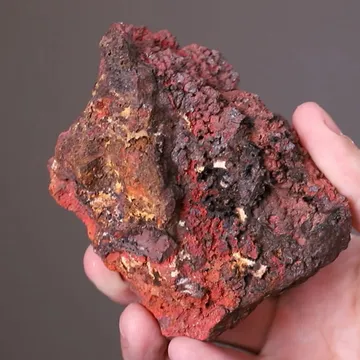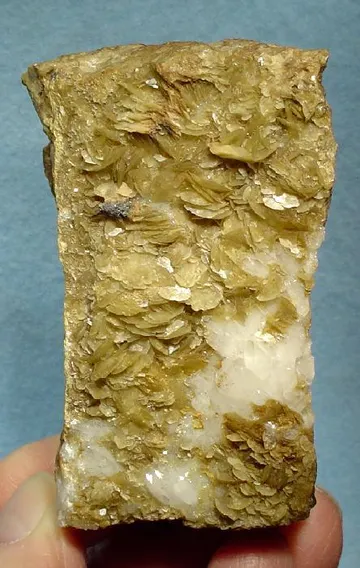
Friedrichssegen Mine, Germany - Emser Gangzug locality famed for barrel-shaped pyromorphite crystals; historic mining and rich secondary minerals.
Key facts
Friedrichssegen is one of the great old names of the Bad Ems–Lahn lead-zinc district: a hydrothermal polymetallic vein mine in the Rhenish Slate Mountains, worked for lead, zinc, copper, silver and siderite, and remembered by collectors above all for its brown and green pyromorphite. The mine lies in the Friedrichssegen district of Lahnstein, in Rhineland-Palatinate, in a side valley of the Lahn between Lahnstein and Bad Ems. Its veins belong to the celebrated Emser Gangzug, a mineralized fault-and-vein system whose oxidized lead ores produced some of Europe’s most recognizable 19th-century pyromorphite and cerussite specimens.
The classic Friedrichssegen look is compact, heavy, old-mine material: lustrous barrel-shaped pyromorphite crystals, often honey-brown, tobacco-brown, olive-brown, dark brown or green, sometimes stacked into parallel-growth clusters and sometimes perched more dramatically on matrix. The district term “Emser Tönnchen” — the little Ems barrels — is especially apt here, because the best crystals have rounded hexagonal barrel forms with gleaming prism faces and blunt terminations. Cerussite, linarite, malachite, azurite, mimetite, silver-bearing minerals and a long list of microscopic secondary lead-zinc-copper species make the locality far more than a one-mineral classic, but pyromorphite is the reason Friedrichssegen appears in old collections, museum drawers and serious lead-mineral cabinets around the world.
Regional View
Country View
The mine’s significance is unusually broad. It is a specimen locality, a mining-history locality, and a modern mineralogical locality all at once. Friedrichssegen yielded major pyromorphite specimens while it was an operating mine, generated enough mineralogical curiosity to appear repeatedly in 19th-century German literature, and still produced new scientific interest from dump material long after closure, including the description of lahnsteinite, Zn4(SO4)(OH)6·3H2O, from the old Friedrichssegen dumps.

Photo: Wikimedia Commons
Search for specimens: View all specimens from Friedrichssegen Mine, Germany
Friedrichssegen was a hydrothermal polymetallic vein deposit in Devonian rocks of the Rhenish Slate Mountains. The ore-bearing fissures were repeatedly opened during Variscan deformation and filled by hot metal-bearing fluids; later oxidation by surface waters, and locally by carbonic-acid-bearing waters along deeper fractures, created the supergene mineral suite that made the mine famous to collectors. The primary ore assemblage centered on galena, sphalerite, chalcopyrite, tennantite, pyrite, linnaeite, bournonite, siderite and quartz. Near surface and down oxidized fractures, galena and other sulfides supplied lead, copper, zinc, silver, arsenic, phosphate, sulfate and carbonate chemistry for pyromorphite, cerussite, mimetite, malachite, azurite, linarite and many rarer secondary minerals.
The principal worked structures late in the mine’s life were the Hauptgang, the liegender Gang and the Neuhoffnungsgang. The main vein was broken by northeast- to east-west-striking faults into separate ore shoots or “Mittel.” Historic descriptions record numerous such ore shoots, with widths ranging from only a few centimeters to much larger bodies, and the richest workings lay within a complex, strongly segmented vein field rather than a single simple lode. Below the oxidation zone the veins passed into siderite-quartz and sphalerite-galena mineralization; with depth, parts of the lead-zinc veins became increasingly barren and changed toward quartz-siderite ground.
Mining around Friedrichssegen is traditionally traced back to Roman activity, but secure documentation begins much later. Mining rights in the region are recorded in 1220, and an 18th-century predecessor working appears in records as the “Kölschen Löcher” or “Köllnisches Loch.” The name Friedrichssegen appears in the mid-19th century, and the mine entered its great industrial period after its sale in 1852 as the Anonyme Aktiengesellschaft des Silber- und Bleibergwerkes Friedrichssegen bei Oberlahnstein. During its productive prime the operation developed a large underground and surface infrastructure: multiple adits and shafts, extensive rail haulage underground, modern concentrating works, gas lighting, water reservoirs, workshops, social buildings and a mine railway down the valley.
The scale matters when judging specimens. This was not a small prospect that happened to produce a few good cabinet pieces; it was a major 19th-century mine with a company village. Historical summaries give 21,723 m of underground workings, 18,200 m of track for mine carts, eight adits, six shafts, and a total vertical range of 664 m from the highest entry at the Früchter Luftschacht to the deepest levels. Ore production was strong in the 1880s, with recorded annual ore output of 12,981 tonnes in 1880 and 13,761 tonnes in 1886. The mine’s infrastructure included a narrow-gauge rack railway built in 1880, noted as the first of its kind in the Kingdom of Prussia, and a station at Friedrichssegen built by the mine in 1884.
The famous specimen discovery is the great 1867 pyromorphite cavity encountered when the Heinrich-Stollen broke through to the first deep level. The cavity was described as a giant druse whose walls were covered with brown pyromorphite “Emser Tönnchen,” measuring about 10 m high, 10 m long and 2 m wide. That single episode explains why Friedrichssegen pyromorphite entered the bloodstream of European mineral collecting: the crystals were not merely an accessory oxidation product but a spectacular pocket-scale lining in a major working mine.
The mine’s fortunes declined after the mid-1890s. A shareholder-commissioned assessment concluded that the readily workable ore was nearly exhausted, and the deeper levels were partly allowed to flood to reduce costs. The mine changed hands around 1900, was reorganized into Bergwerks-Aktiengesellschaft Friedrichssegen in the early 20th century, and briefly revived, employing hundreds of workers again in 1905–1906. Falling ore discoveries, costly deep development and debt overwhelmed the operation. The mine was effectively shut down in 1913; usable iron and equipment were removed, making any full restart unrealistic. A later attempt to revive underground mining from 1926 to 1928 failed. From 1952 to 1957 the old dumps in the Friedrichssegen valley were reprocessed, after which the flotation plant closed.
Collecting today should be treated as historical-market collecting, museum study, or permission-only field work. The adits and shafts are abandoned industrial workings, and some entrances are gated, including for bat protection. The Carl-Stollen and Bergbaupfad preserve the locality as a mining-heritage landscape rather than an open collecting site. The most realistic path to a good Friedrichssegen specimen is through old collections, dealer stock, auctions and well-provenanced specimens with labels that distinguish Friedrichssegen from the broader “Bad Ems” district.

Photo: Wikimedia Commons
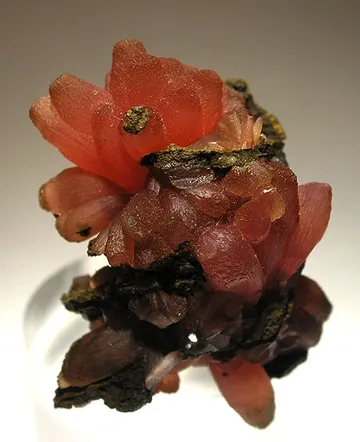
Friedrichssegen pyromorphite is the locality’s signature mineral and one of the classic European expressions of Pb5(PO4)3Cl: stout hexagonal “Emser Tönnchen,” commonly brown to honey-brown, tobacco-brown, olive-brown or green, with individual crystals on good specimens reaching around the centimeter scale and historical accounts noting crystals up to about 3 cm from the mine. The best pieces show lustrous, well-separated barrel crystals or elegant stacked parallel-growth clusters, ideally with crisp form, deep color, minimal edge bruising, and enough matrix or relief to avoid looking like an amorphous lump of brown lead phosphate. Associations include cerussite, galena, quartz, goethite/limonite, mimetite and other oxidized lead-zone minerals; one particularly desirable style is pyromorphite developed on or after cerussite, including perimorphs and replacement textures that record the sequence of lead-carbonate to lead-phosphate alteration in the oxidized zone. Ordinary Friedrichssegen pieces are dense brown aggregates with modest definition; fine ones have sculptural crystal architecture, old-label provenance, and the unmistakable barrel habit tied to the 19th-century workings, especially the historic pyromorphite-rich cavities of the Heinrich-Stollen zone.
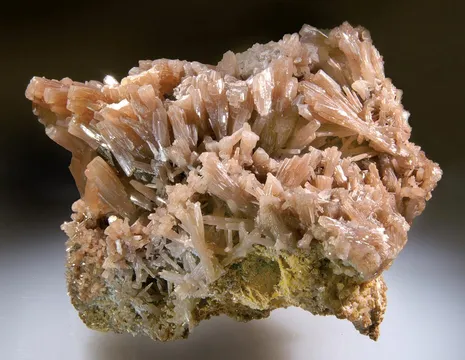
Cerussite from Friedrichssegen is the quieter companion to the pyromorphite but is important both as a collectible species and as part of the mine’s oxidation story. It occurs as colorless to white, translucent to transparent lead-carbonate crystals in the galena oxidation zone, commonly associated with pyromorphite, goethite/limonite, quartz and residual galena, and historic mineralogical work specifically treated “Weißbleierz” from Friedrichssegen because the locality produced crystallized and altered cerussite worthy of study. Good Friedrichssegen cerussite is valued for sharpness, transparency, visible twinning or reticulated habits where present, and for specimens that preserve the relationship between cerussite and later pyromorphite; the most instructive pieces show pyromorphite coating, replacing or forming perimorphs after cerussite, rather than merely mixed earthy lead minerals. Because pyromorphite dominates the locality’s market identity, Friedrichssegen cerussite can be under-recognized, but well-crystallized examples with old German labels are true Bad Ems district classics.
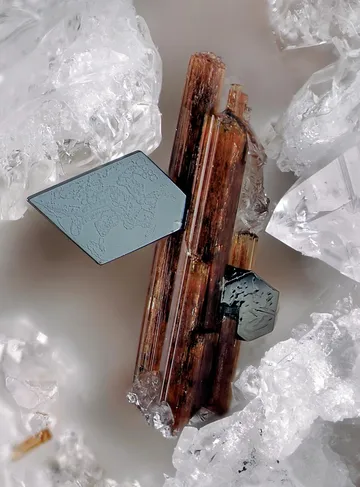
Beyond pyromorphite and cerussite, Friedrichssegen is a remarkably mineral-diverse oxidized Pb-Zn-Cu-Ag system. Documented species include primary galena, sphalerite, chalcopyrite, tennantite, linnaeite, pyrite, bournonite, siderite, quartz and silver amalgam minerals, plus supergene cuprite, native copper, native silver, malachite, azurite, linarite, brochantite, serpierite, aurichalcite, hydrozincite, leadhillite, susannite, hydrocerussite, mimetite, corkite, beudantite, hidalgoite, hinsdalite, kintoreite, plumbogummite, schulenbergite, ramsbeckite and many other micromount-scale rarities. The mine is the type locality for lahnsteinite, Zn4(SO4)(OH)6·3H2O, found on dump material and associated with hydrozincite, pyromorphite, native copper and goethite. Friedrichssegen also supplied cotype material for hanauerite, AgHgSI, a yellow, photosensitive silver-mercury sulphohalide occurring there in microscopic prismatic crystals with perroudite, goethite and quartz.
The main authenticity issue for Friedrichssegen is locality precision, not widespread artificial manufacture. Old labels often use broad district names such as “Bad Ems,” “Ems,” “Nassau,” “Braubach,” or “Lahn,” and historically some specimens from Friedrichssegen circulated under the Bad Ems name because collectors treated the Emser Gangzug as a classic district rather than a set of sharply separated modern database localities. A specimen labeled simply “Bad Ems” may be genuine old material but not necessarily attributable to Friedrichssegen without supporting habit, matrix, collection history, or a more specific old label.
Confusion with other Bad Ems–Lahn mines is common. Friedrichssegen pyromorphites tend to be especially associated with brown to olive-brown barrel crystals and stacked or compound growths; other district localities can produce similar material, and labels reading Rosenberg, Braubach, Mercur, Pfingstwiese or Friedrichssegen should be evaluated carefully. A precise Friedrichssegen attribution is strongest when it is backed by an old label, a recognized collection pedigree, or a style consistent with documented Friedrichssegen specimens.
Condition is a serious consideration. Many pieces are old, dense, brittle lead-phosphate aggregates that passed through mining, trimming, transport and generations of collection handling. Expect minor bruising on prism edges and terminations, especially on exposed barrel crystals. Large, isolated crystals on matrix are less common than compact clusters and should be checked under magnification for glued repairs, filled contacts, or freshly broken contacts at the base of crystals. Cerussite is softer and more brittle than pyromorphite and may show cleaves, bruised tips or dull alteration surfaces; pyromorphite-on-cerussite combinations should be handled as lead-carbonate specimens first, not as robust lead-phosphate lumps.
No special treatment tradition is strongly associated with Friedrichssegen pyromorphite in the collector literature, but cleaning can easily reduce value. Iron oxides and dark goethitic matrix are part of the locality’s natural appearance; aggressive acid cleaning or mechanical brightening risks damaging associated cerussite, carbonate crusts and fragile microminerals. Specimens containing hanauerite or other silver-mercury halides are scientific micromount material and should be protected from strong light, since hanauerite is documented as photosensitive and can darken after exposure, especially in sunlight.
Market availability is steady but finite. Small old-time pyromorphite clusters appear regularly, while top miniatures, matrix pieces with individual crystals, large compound barrels, fine green pieces, and specimens with 19th-century or early 20th-century labels command a premium. Cerussite is much less commonly offered as a Friedrichssegen display mineral, and lahnsteinite or hanauerite are specialist micromount or analytical-suite species rather than mainstream cabinet specimens. For serious collectors, provenance can be decisive: a modest but well-labeled Friedrichssegen pyromorphite is often more desirable than a prettier “Bad Ems” specimen with no sublocality trail.
The great Friedrichssegen specimen story begins underground in 1867, when miners driving the Heinrich-Stollen through to the first deep level broke into a cavity so large that it reads less like a pocket and more like a room in the mountain. The druse was described as about 10 m high, 10 m long and 2 m wide, its walls covered with brown pyromorphite crystals — the “Emser Tönnchen.” For a collector, it is almost impossible not to picture the lamplit moment: a working mine chasing ore, then suddenly a wall of brown lead-phosphate barrels in a cavity high enough to swallow a house façade. Those crystals became part of the locality’s legend, and examples from the mine still carry the aura of that discovery.
Friedrichssegen was not merely a hole in the hillside. By the 1880s it was an industrial village whose mine company built infrastructure at a scale that seems extravagant for a specimen locality. There was a gas plant with roughly 1,900 m of lines, a mine railway down the valley, a company-built railway station, a school, a simultaneous church, a hospital with pharmacy, bath facilities, laundry, and separate casinos for officials and workers, each with a bowling alley. The underground system was reported at more than 22 km of workings, with more than 18 km of track for mine carts. The mine had the feel of a self-contained world: ore, machines, social life, discipline, music, education and poverty all tied to the veins.
The railway is one of the most distinctive chapters. In 1880 Friedrichssegen built a narrow-gauge rack railway using a combined adhesion-and-rack system to carry ore from the workings down toward Ahl and the Lahn. It was noted as the first such line in Prussia. For mineral collectors, this matters because it explains how such a steep valley mine could move large quantities of ore and why the mine’s output reached the scale it did in the 1880s. Specimens that entered collections from Friedrichssegen came out of a highly organized industrial operation, not an occasional hand-worked dig.
The mine also had its darker episodes. A fire broke out on 19 February 1890 between the fifth and sixth deep levels in the 18th ore shoot. The miner Rau from Dahlheim died in the flames; Elberskirch from Frücht suffered severe smoke poisoning; five mine horses were lost; and the whole mine remained closed for four weeks. Such details are easy to pass over in a locality guide, but they put weight behind every “old mine” label: these specimens came from a workplace where ore, heat, smoke, water and debt were daily realities.
The decline was swift and human. After production fell sharply in the late 1890s, the lower levels were flooded to save money. The mine was sold, revived, reorganized and expanded again, but debt and dwindling ore discoveries kept tightening the circle. In late 1912 local reports describe the mine almost at a standstill. Materials and coal were being moved away for use elsewhere, workers were being dismissed, and businesses in the mining village lost their customers as people left. One newspaper notice stated that around 1 December 1912 barely ten men would remain employed, “gegenüber 1 000 vor mehreren Jahren” — compared with 1,000 only a few years earlier. The next spring, the silence reached even the school and church calendar: in March 1913, only two boys and one girl from Friedrichssegen and Frücht together were confirmed, whereas in earlier years more than 30 children had annually left school.
The modern memory of Friedrichssegen is unusually tangible. The Bergbaumuseum preserves minerals, old photographs, a miner with lamp and uniform, a plate from the former mine casino, company “Consumgeld,” and a long model of the Friedrichssegen valley as it looked around 1900. That model is more than decoration; it is a miniature reconstruction of the lost mining landscape — the adits, the shaft buildings, the workers’ rows, the processing works, the school, the railway and the steep valley geometry that shaped the mine. For a collector holding a brown pyromorphite from Friedrichssegen, the museum objects help restore the missing world around the specimen.