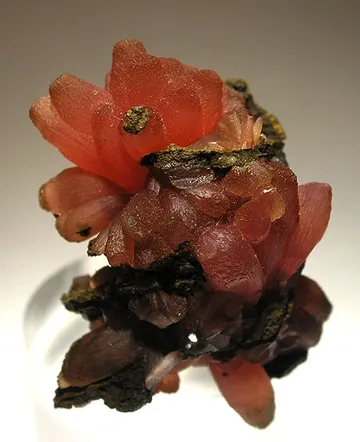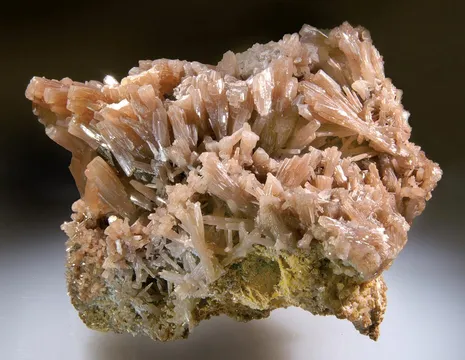
A collector's guide to Bellerberg volcano, Germany: its geology, mining history and notable minerals, illustrated with the 44 specimens documented from this locality on EarthWonders.
Key facts
Bellerberg is one of the great paradoxes of European mineral collecting: a basalt-lava volcano whose finest mineralogical legacy is not the basalt itself, but the foreign rock fragments that the magma caught, baked, reacted with, and froze into a microscopic bestiary of high-temperature minerals. The locality lies in the East Eifel of Rhineland-Palatinate, between Ettringen, Kottenheim, and Mayen, where a Pleistocene volcanic complex built the Ettringer Bellerberg on the west side and the Kottenheimer Büden on the east side of the crater. Its lavas are generally described in the mineralogical literature as leucite-tephrite to basaltic-tephritic rocks, carrying thermally metamorphosed silicate, carbonate-silicate, and limestone xenoliths.
For collectors, “Bellerberg” usually means the Caspar quarry and closely related Bellerberg lava-field sites: the productive modern quarry faces, the contact zones around xenoliths, and the historic Bellerberg quarry districts that supplied basalt lava for millstones, building stone, and aggregate. What makes the locality important is the extraordinary combination of pyrometamorphic calcium minerals, feldspathoids, melilites, garnets, oxides, sulfides, zeolites, and low-temperature alteration minerals that occur together in small, sharply zoned inclusions. A single nodule can pass from dense, dark basalt through bleached reaction rims into pink, cream, brown-grey, blue-green, or white mineral bands, each band recording a different stage of heating, melt infiltration, gas reaction, or late hydration.
The best cabinet-scale specimens from Bellerberg are not usually dramatic “big crystal” pieces in the Alpine or ore-vein sense. The locality’s prestige is in thumbnails, micromounts, analytical reference specimens, and rare species. A good Bellerberg specimen rewards a lens: metallic hematite plates on porous matrix, fresh black mica books, pale zeolites in hairlike sprays, blue-green copper-bearing microcrystals, reddish-brown clinker minerals, and polished xenolith fragments where mineral zones are legible like a geological cross-section. Historically, the place ranks among the most consequential type-locality clusters in Germany, with classic names such as ettringite, brownmillerite, mayenite/chlormayenite-related minerals, eifelite, almarudite, rondorfite, tschörtnerite, sharyginite, wernerkrauseite, alfredcasparite, karlleuite, and hopmannite tied to the Bellerberg volcanic field and its quarries.
Regional View
Country View

Photo: Wikimedia Commons
In the field, the Bellerberg volcano is also a landscape of industrial archaeology. The same lava streams that interest mineralogists became a foundation of the Mayen-Kottenheim-Ettringen stone-working district. The Mayener lava flow, the Ettringer lava flow, and the Winfeld flow were quarried for millstones and basalt-lava building stone; the older quarry fields now preserve high basalt walls, crane remains, tracks, and paths, while the active Caspar operation remains the serious mineralogical source.

Photo: Wikimedia Commons
Search for specimens: View all specimens from Bellerberg volcano, Germany
Bellerberg is a Pleistocene volcanic complex of the East Eifel volcanic field. The volcano developed near Mayen on the margin of the Middle Rhine Basin fault zone, where magma rose along structural weaknesses and produced cinder cones, crater-wall remnants, and three principal lava flows. The western crater wall is the Ettringer Bellerberg, while the eastern wall is the Kottenheimer Büden; the lava fields include the Ettringer, Mayener, and Winfeld flows. In modern mineral-label usage, the collector’s “Bellerberg” is often narrower than the volcanic complex: most contemporary rare-mineral specimens are from the Caspar quarry at Ettringen, also seen on labels as Steinbruch Caspar, Ettringer Bellerberg, Ettringen Basaltlavawerk, or simply Bellerberg.
The deposit is not an ore deposit in the normal mining sense. The commercial product is basaltic volcanic rock, especially basalt lava for aggregate and stone uses, while the collectible mineralization occurs in xenoliths and reaction zones within the lava. Calcium-rich carbonate and carbonate-silicate inclusions were transformed at very high temperature into sanidinite-facies, clinker-like assemblages. These include melilite minerals of the åkermanite-gehlenite series, wollastonite, diopside, grossular-andradite garnet, anorthite, larnite, brownmillerite, chlormayenite-wadalite-series minerals, perovskite, spinel-group oxides, hematite, magnetite, and sulfides. Silicate xenoliths can carry quartz, sanidine, pyroxenes, amphiboles, biotite, titanite, fluorapatite, and zirconium-, strontium-, barium-, titanium-, and copper-bearing accessory phases. During cooling and later alteration, cracks and cavities were filled with calcite, ettringite-thaumasite-series minerals, hydrocalumite, brucite, gypsum, tobermorite-group minerals, zeolites, fluorite, baryte, celestine, gismondine-Ca, chabazite-Ca, and other late species.
The “ore bodies” of interest to collectors are therefore discrete xenoliths rather than veins or lenses of ore. Important specimens are often remembered by their xenolith or sample codes: CS-034, the alfredcasparite-bearing xenolith collected by Christof Schäfer on July 25, 1990; CS-036, the vondechenite-bearing xenolith; CS-043, a Ca-rich altered xenolith with species such as afwillite, larnite, quartz, sharyginite, srebrodolskite, thaumasite, tobermorite, and zeophyllite; the karlleuite-bearing xenolith collected in the open quarry by Bernd Ternes and Günter Blaß in 1980; and CS-090, the hopmannite type-locality xenolith from the Seekante district, collected during May 2023 fieldwork. These are not “pockets” in the gem-pegmatite sense, but they play the same role for Bellerberg collectors: finite, intensely studied discoveries that produce a distinctive assemblage and then disappear into collections, thin sections, polished blocks, and museum drawers.
Basalt working around Mayen is ancient. The Mayener lava flow has been quarried for roughly 7,000 years, first for grinding stones and later for millstones and building material; Roman and later medieval extraction made the district famous well beyond the Eifel. The Ettringer Lay quarry district on the southwest flank of the Bellerberg volcano became important later, with basalt extraction beginning around 1850. The modern Caspar quarry operated for decades under Alfred Caspar GmbH & Co. KG and was later taken over by Terratec-Basalt GmbH. Mineralogically, the Caspar operation became a central source because active quarrying continually exposed fresh xenoliths, while a network of Eifel specialists recognized, trimmed, exchanged, and analyzed the most promising material.
Collecting access today must be treated as highly restricted. The Caspar quarry is an active industrial quarry, and reports from collector and locality sources consistently describe access as limited, with long periods in which collecting was completely forbidden. The historic landscape sites around Ettringer Lay, Kottenheimer Winfeld, and the Mayener Grubenfeld are important for understanding the volcano and the basalt industry, but they are not a substitute for legal permission to collect in an active quarry. For specimens on the market, the safest labels are those that distinguish “Caspar quarry, Ettringen, Bellerberg volcano” from broader historic names such as “Ettringer Bellerberg,” “Mayen,” or simply “Eifel.”
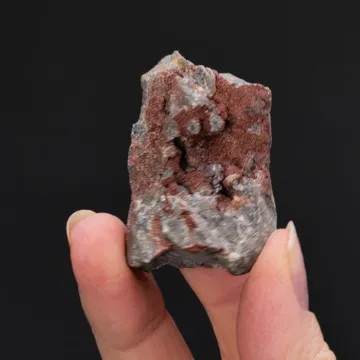
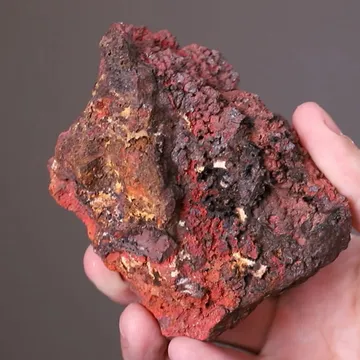
Bellerberg hematite is a collector’s mineral of contrast and precision rather than size: the desirable pieces show lustrous dark metallic-grey crystals, commonly platy to complex, perched on porous basaltic or xenolithic matrix and best appreciated under magnification. Hematite is documented as an accessory phase in Ca-rich xenoliths and in later-studied multicoloured Bellerberg inclusions with perovskite, magnetite, spinel-group minerals, pyroxenes, feldspathoids, chlormayenite-wadalite minerals, sulfides, and late hydrous calcium phases. A documented small-cabinet specimen from the Caspar quarry carried bright complex crystals to about 6 mm, which is already a meaningful size for the locality; better examples have fresh metallic lustre, recognizable individual crystal form, clean exposure, and honest Bellerberg/Caspar provenance, while ordinary pieces are merely dark iron-oxide flecks in porous lava or altered xenolith.
Quartz at Bellerberg belongs chiefly to the silicate-xenolith story: it is recorded from the Caspar quarry and occurs as a significant component in some silicate inclusions, including the alfredcasparite-bearing xenolith where it is part of an assemblage with K-feldspar, diopside-hedenbergite to aegirine-group pyroxenes, clinoenstatite, wollastonite, titanite, gehlenite, fluorapatite, cuspidine, spinel-group oxides, perovskite, chalcopyrite, zirconium minerals, and late cavity fillings such as calcite, fluorite, gismondine-Ca, baryte, and celestine. It is not the locality’s headline “large quartz crystal” species; its best collector value is as sharp, cleanly exposed quartz in a Bellerberg paragenesis, especially where it helps anchor a well-labelled silicate xenolith or accompanies rarer phases, while plain massive quartz or quartz-bearing matrix without visible associations is of much less interest.
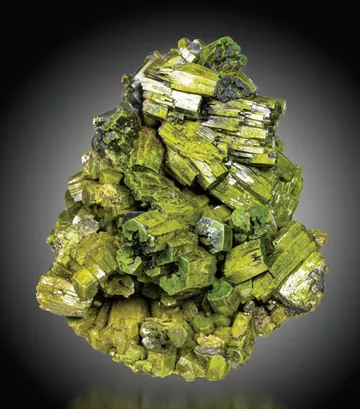
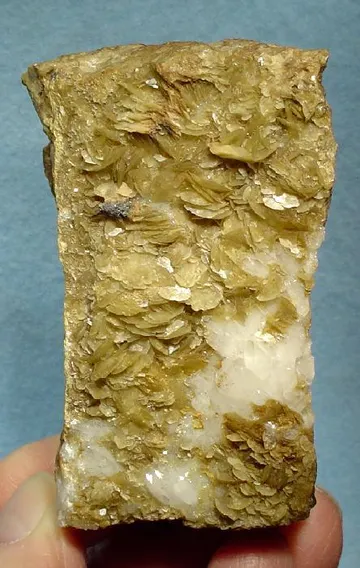
Biotite from Bellerberg is most valuable when it is read as a xenolith mineral rather than as a standalone mica: black to very dark brown micaceous plates and books occur in the thermally altered silicate-rich inclusions that make the locality famous, with documented associations including quartz, sanidine, tridymite, augite, magnesio-hornblende, enstatite, almandine-spessartine-rich garnet, fluorapatite, hematite, braunite, roedderite, and the rare milarite-group minerals for which the Bellerberg assemblage is notable. Attractive pieces show fresh, reflective mica faces with minimal edge fraying and enough associated minerals to identify the Bellerberg environment; mediocre examples are loose, weathered black flakes or basalt-matrix mica lacking a distinctive paragenesis.
Other documented Bellerberg minerals are the reason the locality has an international reputation among systematic collectors. Classic and modern type-locality or Bellerberg-defining rarities include ettringite, brownmillerite, eifelite, almarudite, rondorfite, tschörtnerite, reinhardbraunsite, friedrichbeckeite, sharyginite, wernerkrauseite, alfredcasparite, karlleuite, and hopmannite, with further notable species such as chlormayenite, wadalite, srebrodolskite, larnite, gehlenite, wollastonite, perovskite, lakargiite, cuspidine, fluorellestadite, gismondine-Ca, chabazite-Ca, tobermorite-group minerals, afwillite, thaumasite, hydrocalumite, baryte, celestine, fresnoite, batisite, baddeleyite, calzirtite-related phases, and wesselsite. The rarest Bellerberg material is commonly microcrystalline and analytical: a specimen may be visually modest but scientifically important because a polished fragment, Raman spectrum, microprobe traverse, or single-crystal study ties it to a named xenolith and a specific high-temperature reaction zone.
The principal authenticity issue for Bellerberg specimens is locality precision. “Bellerberg,” “Bellberg,” “Ettringer Bellerberg,” “Mayen,” “Eifel,” and “Caspar quarry” are not always used consistently on older labels. Many good specimens labelled simply “Bellerberg” are almost certainly from the Caspar quarry, but serious collectors should preserve the original label and add a modern clarification rather than overwrite it. For recent rare species, a label that names the xenolith, quarry sector, collector, analytical method, or publication connection is far more valuable than a broad “Eifel” label.
I would treat most Bellerberg rarities as micromount or analytical specimens first and display specimens second. Many important species occur as crystals tens to hundreds of micrometres across; without magnification and a reliable identification trail, they can be impossible to distinguish from visually similar brown, black, white, or colourless microphases. For high-value rare species, ask whether the identification is visual, SEM-EDS, EPMA, Raman, X-ray, or publication-based. Visual identifications alone are risky for phases such as brownmillerite, srebrodolskite, sharyginite, perovskite, lakargiite, magnetite, hematite, and the many white hydrous calcium silicates and zeolites.
Condition problems are typical of porous volcanic and altered xenolith specimens. Basalt matrix can be crumbly; thin mica books cleave and fray; metallic hematite plates bruise on high points; and fine zeolite or ettringite-group sprays are easily crushed by cotton, membrane-box pressure, or careless trimming. Hydrous secondary minerals should be kept dry, stable, and away from heat. For storage, rigid micromount boxes are safer than loose thumbnail trays, and polished xenolith fragments should be protected from abrasion because the scientific value is often in a tiny exposed zone.
Bellerberg material is available, but unevenly. Commoner species and older micromounts circulate among European collectors, while type-locality rarities and specimens tied to named xenoliths appear only sporadically and are often retained by specialists. Hematite, quartz, and biotite from the locality should not be priced as generic species; they are worthwhile when the specimen is aesthetically strong, when the association is unmistakably Bellerberg, or when the label history links it to the Caspar quarry and the Eifel micromount community.
One of the most revealing Bellerberg stories is hidden in the name alfredcasparite. Alfred Caspar, born in 1926 and deceased in 2022, owned and operated the Caspar quarry for almost half a century. The modern description of alfredcasparite records more than a business connection: Caspar is remembered as someone who showed real understanding of mineral collectors and remained open to geological and mineralogical investigation of his deposit. That attitude matters at a locality like Bellerberg. Without access to fresh quarry faces, without permission to examine odd xenoliths rather than consign every block to aggregate, and without the trust between quarry operators and field mineralogists, many of the locality’s rare species would have remained anonymous specks in basalt.
The alfredcasparite type specimen itself has the compact drama of a classic micromineral discovery. Christof Schäfer collected the relevant xenolith on July 25, 1990, at a time when quarrying was concentrated on the crater wall at Kottenheimer Büden. The block was only about 30 x 20 x 20 cm, yet it carried quartz, sanidine, pyroxenes, wollastonite, titanite, gehlenite, fluorapatite, cuspidine, spinel-group minerals, perovskite, chalcopyrite, zirconium-bearing phases, late fluorapophyllite-(K), calcite, fluorite, gismondine-Ca, baryte, celestine, the new Sr-Ti disilicate alfredcasparite, and the second world occurrence of wesselsite. It is hard to imagine a better example of why Bellerberg collectors keep unglamorous-looking xenoliths: a fist-to-head-sized lump of altered volcanic cargo can become a whole mineralogical paper.
Karlleuite reaches even further back into the human chain of Bellerberg collecting. Its xenolith was collected in 1980 by Bernd Ternes and Günter Blaß in the open quarry, but the mineral was not formally published until 2024. In the interval, the specimen’s coloured layers waited out decades of improved instrumentation and renewed attention. The mineral name honors Karl Leu of Nachtsheim, who began collecting Eifel minerals in 1981 and became one of the region’s important amateur specialists. That arc—from a 1980 field find, to a lifetime of Eifel collecting, to recognition of the first natural n = 1 Ruddlesden-Popper-type layered perovskite mineral—captures the particular tempo of Bellerberg work. Discoveries here are rarely single-day triumphs; they are often the result of old specimens, careful labels, patient sectioning, and a collector community that remembers who found what and where.
Hopmannite adds a still more local note. The mineral was named for Dr Michael Hopmann, 1874–1962, a monk at Maria Laach monastery, mineral collector, and respected authority on East Eifel volcanism. In the Eifel district he was known affectionately as “Dr Stein”—Dr Stone. The hopmannite-bearing xenolith was collected during fieldwork in May 2023 from an active quarry in the southern lava flow, in the Seekante district. It was not a little chip: the described xenolith measured about 70 x 50 x 30 cm and showed multicoloured zones, with hopmannite in dark-grey bands and irregular milky aggregates of calcium-bearing hydrosilicates nearby. The name connects a twentieth-century monk-geologist with twenty-first-century microanalysis, and it suits Bellerberg: a place where local field knowledge and advanced mineral chemistry are inseparable.
Hentschel, G. (1964). “Mayenit, 12CaO·7Al2O3, und Brownmillerit, 2CaO·(Al,Fe)2O3, zwei neue Minerale in den Kalksteineinschlüssen der Lava des Ettringer Bellerberges.” Neues Jahrbuch für Mineralogie, Monatshefte. Later mayenite work and Bellerberg literature cite Hentschel’s 1964 description as the foundation for mayenite and natural brownmillerite from the Ettringer Bellerberg limestone xenoliths.
Abraham, K., Gebert, W., Medenbach, O., Schreyer, W. & Hentschel, G. (1983). “Eifelite, KNa3Mg4Si12O30, a new mineral of the osumilite group with octahedral sodium.” Contributions to Mineralogy and Petrology, 82, 252–258. Type description of eifelite, one of the signature Bellerberg milarite/osumilite-related rarities.
Mihajlović, T., Lengauer, C. L., Ntaflos, T., Kolitsch, U. & Tillmanns, E. (2004). “Two new minerals, rondorfite, Ca8Mg[SiO4]4Cl2, and almarudite, K(□,Na)2(Mn,Fe,Mg)2(Be,Al)3[Si12O30], and a study of iron-rich wadalite, Ca12[(Al8Si4Fe2)O32]Cl6, from the Bellerberg (Bellberg) volcano, Eifel, Germany.” Neues Jahrbuch für Mineralogie - Abhandlungen, 179(3), 265–294. Type description of rondorfite and almarudite and a key paper on iron-rich wadalite from Bellerberg.
Effenberger, H., Giester, G., Krause, W. & Bernhardt, H. J. (1998). “Tschörtnerite, a copper-bearing zeolite from the Bellberg volcano, Eifel, Germany.” American Mineralogist, 83(5–6), 607–617. Formal description of tschörtnerite, the light-blue copper-bearing zeolite famous among Bellerberg micromounters.
Lengauer, C. L., Hrauda, N., Kolitsch, U., Krickl, R. & Tillmanns, E. (2009). “Friedrichbeckeite, K(□0.5Na0.5)2(Mg0.8Mn0.1Fe0.1)2(Be0.6Mg0.4)3[Si12O30], a new milarite-type mineral from the Bellerberg volcano, Eifel area, Germany.” Mineralogy and Petrology, 96, 221–232. Type description of friedrichbeckeite, another rare Bellerberg Be-bearing ring silicate.
Galuskin, E. V., Kusz, J., Armbruster, T., Bailau, R., Galuskina, I. O., Ternes, B. & Murashko, M. (2012). “A reinvestigation of mayenite from the type locality, the Ettringer Bellerberg volcano near Mayen, Eifel district, Germany.” Mineralogical Magazine, 76(3), 707–716. Important re-examination of mayenite from its Bellerberg type locality and its relationship to related mayenite-group phases.
Galuskin, E. V., Krüger, B., Krüger, H., Blaß, G., Widmer, R. & Galuskina, I. O. (2016). “Wernerkrauseite, CaFe3+2Mn4+O6: the first nonstoichiometric post-spinel mineral, from Bellerberg volcano, Eifel, Germany.” European Journal of Mineralogy, 28(2), 485–493. Type description of wernerkrauseite, a scientifically important Bellerberg oxide from altered xenoliths.
Juroszek, R., Krüger, H., Galuskina, I., Krüger, B., Jeżak, L., Ternes, B., Wojdyla, J., Krzykawski, T., Pautov, L. & Galuskin, E. (2018). “Sharyginite, Ca3TiFe2O8, a new mineral from the Bellerberg volcano, Germany.” Minerals, 8(7), 308. Open-access description of sharyginite and one of the best modern accounts of multicoloured Bellerberg metacarbonate xenolith zoning.
Juroszek, R., Krüger, B., Marciniak-Maliszewska, B. & Ternes, B. (2022). “Minerals of the arctite supergroup from the Bellerberg volcano xenoliths, Germany.” Mineralogical Magazine, 86(6), 929–939. Documents nabimusaite, gazeevite, and zadovite from altered Bellerberg carbonate-silicate xenoliths.
Juroszek, R. & Ternes, B. (2022). “Crystal chemistry and Raman spectroscopy study of bennesherite, Ba2Fe2+Si2O7, and rare accessory Ba minerals from Caspar quarry, Bellerberg volcano, Germany.” Mineralogical Magazine, 86(5), 777–791. Key study of Ba-rich accessory phases and residual-melt crystallization in Bellerberg xenoliths.
Juroszek, R., Prusik, K. & Schäfer, C. (2024). “Alfredcasparite, Sr2TiO(Si2O7), a new mineral from the Caspar quarry, Bellerberg volcano, Germany, and new data on wesselsite, SrCuSi4O10.” Journal of Geosciences, 69(3), 161–172. Type description of alfredcasparite and confirmation of the second world occurrence of wesselsite in the same Bellerberg xenolith.
Juroszek, R., Krüger, B., Cametti, G., Ternes, B. & Blaß, G. (2024). “Karlleuite Ca2MnO4 – a first mineral with the Ruddlesden-Popper type structure from Bellerberg volcano, Germany.” Mineralogy and Petrology, 118, 569–580. Type description of karlleuite from a Bellerberg xenolith collected in 1980.
Juroszek, R., Krüger, B., Cametti, G., Marciniak-Maliszewska, B. & Schäfer, C. (2026). “Hopmannite, Ba2(Ti5Fe)O13, a new hexatitanate from the Bellerberg volcano, Germany.” Mineralogy and Petrology, 120, 227–240. Modern type description of hopmannite from a 2023 Seekante xenolith in the Bellerberg southern lava flow.
Mindat — Bellerberg volcano, Vordereifel, Mayen-Koblenz, Rhineland-Palatinate, Germany — Broad locality page for the volcano complex, species list, and sublocality structure.
Mindat — Caspar quarry, Ettringen — Essential specimen-label reference for the active quarry most collectors mean by “Bellerberg.”
Geo-Archiv — Steinbruch Caspar am Bellerberg bei Ettringen — Concise German overview of the Caspar quarry, basalt extraction, mineral richness, and historic type-locality status.
Vulkanpark / Geopark Laacher See — Industrie- & Kulturdenkmäler — Good regional context for the Ettringer Lay, Kottenheimer Winfeld, basalt quarry landscapes, and public geosites.
LGB Rheinland-Pfalz — Basaltbergbau Mayen — Official geological and mining-history background on the Mayen basalt-lava workings.
Kuladig — Steinbruchgebiet Ettringer Lay — Cultural-landscape account of the Ettringer Lay quarry district on the Bellerberg volcano.
Journal of Geosciences PDF — Alfredcasparite from the Caspar quarry — Open-access modern paper with geology, quarry context, xenolith description, and rare Sr-bearing minerals.
MDPI Minerals — Sharyginite from the Bellerberg volcano — Open-access type-mineral paper with excellent detail on multicoloured xenolith zoning and pyrometamorphic associations.
Springer Nature — Karlleuite from Bellerberg — Open-access type description of karlleuite and its high-temperature xenolith assemblage.
Springer Nature — Hopmannite from Bellerberg — Open-access type description of hopmannite from the Seekante district, with useful modern paragenetic interpretation.
American Mineralogist — Tschörtnerite from the Bellberg volcano — Foundational paper on the blue copper-bearing zeolite tschörtnerite.
Albion Fire and Ice — Caspar quarry locality page — Dealer-locality summary useful for market names, operator history, access cautions, and current micromount availability.