






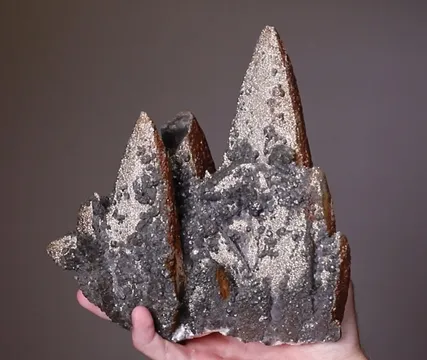
Karlovy Vary Region, Czech Republic locality guide — historic mining area known for cassiterite, uraninite, and iconic Jáchymov labels prized by collectors.
Key facts
For mineral collectors, the Karlovy Vary Region is less a single locality than a compact mineralogical province at the western end of Bohemia, where the Krušné hory and Slavkovský les metallogenic belts have supplied European collections for centuries. Its great classic names are Jáchymov, Horní Slavkov, Krásno, Čistá, Boží Dar, and their old German labels: Joachimsthal, Schlaggenwald, Schönfeld, Lauterbach, Gottesgab. The region’s collector identity rests on two different but equally important ore worlds. Around Horní Slavkov and Krásno, Variscan lithium-topaz granites and greisenized cupolas produced tin-tungsten mineralization rich in cassiterite, quartz, topaz, fluorite, zinnwaldite, wolframite, fluorapatite, arsenopyrite, molybdenite, scheelite, and a formidable suite of supergene phosphates and arsenates. North of Karlovy Vary, Jáchymov became the archetypal five-element Ag-Bi-Co-Ni-U district: the source of historic silver, pitchblende, native arsenic, native silver, acanthite, proustite, nickeline, cobalt-nickel arsenides, uranyl minerals, and a world-class catalogue of type-locality species.
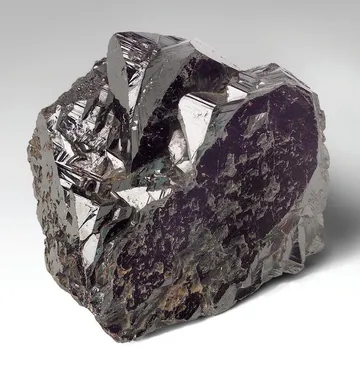
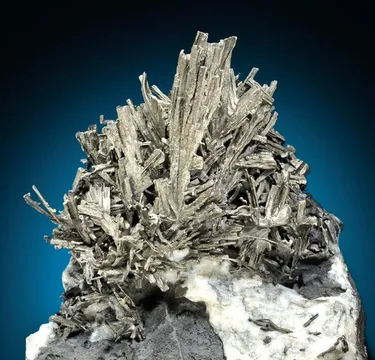
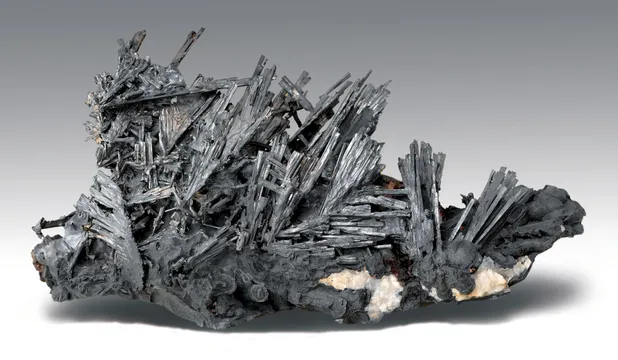
The best Karlovy Vary specimens have the look collectors associate with old central European mining: heavy, dense, compact pieces from deep workings; black, mirror-bright cassiterite twins on pale quartz or zinnwaldite; rock-crystal quartz with sulfides and purple fluorite; botryoidal jet-black uraninite in pinkish carbonate gangue; bright micromount arsenates from oxidized Jáchymov veins; and labels that may be almost as interesting as the specimen. A label reading “Schlaggenwald,” “Schönfeld,” or “Joachimsthal” is not merely antiquarian decoration—it often places the specimen in the same collecting tradition as nineteenth-century museum suites in Vienna, Prague, Freiberg, Berlin, and Paris.
Regional View
Country View
The region’s geology is collector-friendly because the specimen styles follow the deposit types closely. The Krásno–Horní Slavkov tin field is centered on apical parts of the Krušné hory granite body, especially the Huber and Schnöd stocks and related vein systems. There, greisenization replaced feldspars with quartz, topaz, mica, and ore minerals; open cavities in quartz veins supplied display crystals, while greisen and stockwork material supplied dense ore specimens. Jáchymov, by contrast, is a vein district in metamorphic rocks above a granite pluton. Its fame is not just abundance but complexity: primary ore minerals, oxidation-zone uranyl compounds, arsenates, sulfates, carbonates, and rare secondary species have kept professional mineralogists returning to the same old mine dumps and museum drawers for generations.

Photo: Wikimedia Commons

Photo: Wikimedia Commons
Search for specimens: View all specimens from Karlovy Vary Region, Czech Republic
The collector’s Karlovy Vary Region is dominated by three mineral districts. The Krásno–Horní Slavkov tin-tungsten district lies in the Slavkovský les area between Krásno and Horní Slavkov, where granitic cupolas of the Krušné hory granite body intruded metamorphic rocks of the Slavkov crystalline complex. The economically and mineralogically important bodies are greisens, quartz veins, stockworks, and altered granite stocks, most famously the Huber stock and Schnöd stock. In these, the feldspar-rich granite was strongly greisenized and argillitized; quartz, topaz, lithium mica, and ore minerals replaced the original granite fabric, while open cavities in quartz veins allowed crystals of cassiterite, quartz, arsenopyrite, fluorite, topaz, fluorapatite, wolframite, and associated sulfides to develop.
The principal ore minerals of the Krásno–Horní Slavkov field were cassiterite and wolframite, with important accessory molybdenite, arsenopyrite, chalcopyrite, sphalerite, scheelite, fluorite, apatite, topaz, zinnwaldite, and quartz. The best display specimens came from quartz-rich zones rather than from ordinary fine-grained greisen: black cassiterite twins perched on quartz, smoky to clear quartz crystals from vugs, purple fluorite on quartz, topaz-bearing greisen, and micromount supergene species from oxidized material in the Huber open pit and Huber mine levels. The Huber stock is especially important to collectors because it produced both handsome cabinet material and a remarkably diverse suite of secondary phosphates, arsenates, sulfates, tungstates, and molybdates.
Mining in the Slavkovský les tin field began with placer working and passed into underground mining as the easily washed cassiterite was exhausted. The medieval and early-modern centers were Horní Slavkov, Krásno, and Čistá. Krásno had a mining court and tin weighing office in the fourteenth century, while Horní Slavkov became one of Bohemia’s great mining towns during the boom of the late fifteenth and sixteenth centuries. The Pluh family period, from 1494 to 1547, was especially important for Horní Slavkov, whose wealth came from tin and silver. The great drainage and haulage adits of the district testify to serious capital investment: the Pluhova adit was driven for decades, reaching several kilometers in length by the late sixteenth century and remaining useful in later mining phases.
Modern production revived during the twentieth century. After work paused following World War I, renewed mining and exploration led to wartime and postwar activity for tin and tungsten. Mining was resumed in 1941, expanded during the war years, then continued under Czechoslovak state control. Rudné doly Příbram administered the Krásno deposit in the later period, and the Stannum mine was the final active Sn-W operation. Tin and tungsten mining in the area ended definitively in January 1991 with the closure of Stannum. The final mining-related tunnelling in the Slavkov Forest area was the Barbora drainage channel, completed to drain mine waters after the end of activity.
Jáchymov is a different sort of locality. It lies on the southern slope of the Krušné hory north of Karlovy Vary and is one of Europe’s classic five-element vein districts. The veins cut metamorphic rocks and carried silver, bismuth, cobalt, nickel, arsenic, and uranium mineralization. Silver made Joachimsthal famous in the sixteenth century and gave its name to the “thaler,” ultimately ancestor of the word “dollar.” Later, cobalt and nickel ores were important, then uranium ores for pigments, radium extraction, spa waters, wartime programs, and postwar Soviet supply. The main uranium mineral in the classic specimens is uraninite, historically called pitchblende, often accompanied by carbonate gangue, nickeline, rammelsbergite, native arsenic, native silver, acanthite, proustite, and a large oxidation suite of uranyl sulfates, carbonates, arsenates, phosphates, and vanadates.
The Jáchymov mines named on old labels include Svornost, Rovnost, Eliáš, Barbora, Bratrství, Eduard, Adam, and numerous vein names such as Geschieber, Geister, Klement, and Daniel adit level. Svornost is especially important: it is one of the district’s oldest and most famous mines and remains tied to Jáchymov’s radon-spa identity because mine waters are used for therapeutic baths. Bratrství, another former uranium mine, now contains a radioactive-waste repository in part of the abandoned underground complex, which is a clear reminder that not all historically mineralized ground is a collecting locality.
Collecting access today must be approached conservatively. Much of the region lies in protected landscapes, registered old mine workings, undermined ground, private or municipal land, museum-managed sites, or areas affected by radioactive contamination. Old adits and shafts are unsafe and should not be entered. In the Krásno–Horní Slavkov area, most significant classic specimens now come from old collections, estate material, museum deaccession duplicates, or material collected during earlier mining and remediation. At Jáchymov, small radioactive specimens and micromount secondaries still circulate, but serious collecting requires permission, radiological common sense, and restraint; many dumps are overgrown, depleted, unstable, or subject to access restrictions. For visitors interested in geology rather than specimen extraction, the Krásno Mining Museum, the preserved Jeroným tin mine near Čistá, the Jáchymov museum displays, the Red Tower of Death, and the Jáchymov Hell educational trail are the responsible way to see the mining landscape.
Cassiterite from the Karlovy Vary Region is above all a Horní Slavkov–Krásno classic: dense, black to dark brown-black SnO2 in sharp prismatic and twinned crystals, commonly on quartz, zinnwaldite, topaz-bearing greisen, or massive cassiterite matrix. Ordinary material is granular, massive, or only partly crystalline, but good specimens show bright adamantine to submetallic faces, crisp twinning, clean separation from the matrix, and the visual contrast of black cassiterite against pale quartz or mica. Literature on the Krásno Sn-W district records cassiterite as one of the major ore minerals of the Huber and Schnöd stock systems, with well-formed crystals in quartz vein cavities and associations including quartz, rock crystal, sulfides, fluorite, topaz, wolframite, fluorapatite, chalcopyrite, arsenopyrite, and locally rhodochrosite. Fine old Horní Slavkov pieces can be deceptively heavy for their size and may carry German locality labels reading Schlaggenwald or Schönfeld; the most desirable examples have undamaged luster, undulled crystal faces, strong relief, and enough matrix to prove their origin rather than appearing as anonymous black tin-ore lumps.
Quartz is the structural and aesthetic backbone of Karlovy Vary Region specimens: in the Krásno–Horní Slavkov greisens it forms the veins, vugs, drusy linings, rock-crystal pockets, smoky to milky crystals, and amethystine quartz that carry cassiterite, fluorite, wolframite, fluorapatite, scorodite, zavaritskite, russellite, and sulfides. Good quartz specimens from the district are not valued merely because they are quartz, but because they document the ore environment—sharp crystals with cassiterite twins, purple fluorite cubes, sulfide dusting, or unusual growth features are far superior to stained massive vein quartz. Old Horní Slavkov quartz specimens are known for odd interrupted-growth forms, including capped or “Russian-doll” style crystals, and the best examples combine size, undamaged terminations, transparency or pleasing smoke, and a clear association with the tin-tungsten suite. Jáchymov quartz occurs in the vein system as well, including documented occurrences in Svornost and Rovnost mine veins, but for display collectors the most recognizable Karlovy Vary quartz remains the quartz of the Sn-W greisen field around Huber stock and Horní Slavkov.
Beyond cassiterite and quartz, the region is one of Europe’s great mineral-name landscapes. Jáchymov alone has hundreds of documented valid minerals and dozens of type-locality species, including uraninite, acanthite, fluorite, millerite, johannite, zippeite, lavendulan, haidingerite, lindackerite, mixite, parauranophane, metauranopilite, and many modern uranyl and arsenate species such as adolfpateraite, běhounekite, čejkaite, ježekite, mathesiusite, paddlewheelite, and svornostite-(K). The Krásno–Horní Slavkov district adds a different suite: topaz, zinnwaldite, wolframite, hübnerite, fluorapatite, fluorite, scheelite, molybdenite, arsenopyrite, chalcopyrite, rhodochrosite, sphalerite, carpholite, and rare phosphates and supergene minerals from the Huber stock; carpholite was described from Krásno material in the nineteenth century, and later work added locality-name species such as krásnoite and tvrdýite from the Krásno district. Zlatý Kopec near Boží Dar contributes skarn mineralization with cassiterite, sphalerite, chalcopyrite, and magnetite, while the broader region also includes kaolin, lignite, basaltic and ultrabasic rocks, and the mineral-spring systems that made the spa towns famous.
The first authenticity issue is locality precision. “Karlovy Vary Region” is administratively correct but mineralogically broad; a serious label should distinguish Horní Slavkov, Krásno, Huber stock, Schnöd stock, Jáchymov, Svornost Mine, Rovnost Mine, Eliáš Mine, Zlatý Kopec, or Čistá wherever possible. Old German names are normal and desirable, not suspicious: Schlaggenwald is Horní Slavkov, Schönfeld is Krásno, Joachimsthal is Jáchymov, and Gottesgab is Boží Dar. Conversely, modern specimens labelled only “Bohemia,” “Czech Republic,” or “Joachimsthal area” deserve closer scrutiny if they are expensive, radioactive, or claimed as type-locality material.
For cassiterite, the main market pitfall is overgeneralized European labelling. Horní Slavkov and Krásno cassiterites are often black, lustrous, and twinned, but similar-looking cassiterite is known from Bolivia, China, Cornwall, Saxony, and Portugal. A convincing Karlovy Vary piece should have old provenance, a coherent matrix association, or a reliable dealer history. Matrix matters: quartz, zinnwaldite, topaz-bearing greisen, fluorite, and the characteristic central European Sn-W assemblage support the attribution. Loose black cassiterite crystals without label history are less secure.
Condition is a serious factor. Cassiterite itself is tough, dense, and chemically stable, but old specimens often have bruised high points, chipped twin crests, iron staining, or quartz contacts that were trimmed harshly. Quartz from Horní Slavkov and Krásno commonly shows edge wear, cleaved or rehealed contacts, and iron or clay coatings from dump exposure. Fluorite is softer and more vulnerable to cleavage damage. Many attractive secondary arsenates and phosphates from Huber stock and Jáchymov are micromount minerals; they should be handled as analytical specimens, not cleaned aggressively.
Radioactive specimens from Jáchymov require special discipline. Uraninite, uranyl sulfates, uranyl carbonates, uranyl arsenates, and bright green or yellow secondaries can be historically and mineralogically important, but they should be stored in closed, labelled containers, kept out of living spaces when possible, monitored with a suitable radiation instrument, and never cut, ground, soaked, heated, or cleaned ultrasonically. Dust control is more important than fear: avoid abrasion, wash hands after handling, and do not store radioactive specimens with fragile paper labels in sealed humid conditions where radon daughters, acidity, or efflorescent salts may damage the label. Many Jáchymov secondaries are hydrated and can dehydrate, powder, or alter if kept too dry or exposed to heat.
Fluorescence is not the main selling point for the classic cassiterite-quartz material, but it can matter in Jáchymov uranyl minerals and some associated carbonates. Use ultraviolet examination cautiously on radioactive specimens and avoid prolonged close handling. Treatments are not the usual problem for this region; mislabelling, missing sublocality, and post-collection alteration are far more important. The safest high-end purchases are specimens with old labels, museum or named-collection provenance, or unmistakable associations from classic workings.
Availability varies sharply by species. Cassiterite from Horní Slavkov and Krásno is available but good old pieces are not common; sharp, undamaged, matrix examples are substantially scarcer than massive ore. Quartz is obtainable, though fine aesthetic examples with classic associations are more limited than the word “quartz” suggests. Jáchymov radioactive and micromount material appears regularly in specialist circles, but truly fine uraninite, old silver-suite specimens, and well-documented type-locality rarities are collector-to-collector or museum-level material.
Jáchymov’s story begins with silver and money. In the early sixteenth century, rich veins on the Bohemian side of the Ore Mountains transformed a valley settlement into Joachimsthal, one of Europe’s most consequential mining towns. Its silver coins, the Joachimsthaler, shortened to thaler, travelled far beyond the district; the name eventually echoed into the English “dollar.” For a mineral collector, that linguistic trail matters because it fixes Jáchymov in the same mental map as Freiberg, Schneeberg, and Annaberg: places where ore specimens, coinage, mining law, chemistry, and state power were never separate subjects.
The district’s mineralogical afterlife became even stranger. Uraninite, once an unwanted heavy black mineral in silver and cobalt workings, became the raw material from which new elements and new sciences emerged. Waste from uranium pigment production at Jáchymov, previously just industrial residue, became precious after the discovery of radioactivity. Marie Skłodowska-Curie and Pierre Curie used material derived from Jáchymov pitchblende residues in the work that led to polonium and radium. What had been a waste heap became a source of invisible power, medical hope, laboratory fame, and eventually danger.
The same water that seeped through old mine workings brought Jáchymov a second life as a spa. Radioactive mine water was carried at first in buckets and later became the foundation of formal radon therapy. By the early twentieth century, visitors came not for silver but for radon baths, and the Radium Palace became the architectural symbol of the town’s transformation from mining camp to medical resort. Few mineral districts have such a peculiar sequence: silver money, uranium pigments, radium chemistry, spa medicine, forced uranium extraction, and then heritage tourism, all layered into the same valley.
The darker story is inseparable from the specimens. After World War II, the old uranium field became a strategic supplier to the Soviet nuclear program. Prison camps, guarded worksites, and the Red Tower of Death near Ostrov were part of the same landscape that produced mineralogical rarities. At the Red Tower, uranium ore was crushed, sorted, sampled, and prepared for dispatch; the building’s red brick walls now stand as a preserved witness to the 1950s uranium system. Collectors should not romanticize that period. A Jáchymov uraninite specimen may be scientifically beautiful, but the postwar mining landscape was also a landscape of coerced labor, radiation exposure, illness, and political imprisonment.
Krásno and Horní Slavkov tell a different story, older and more technical. Tin began in the stream gravels, where cassiterite’s density made it recoverable by washing. When the placers could no longer satisfy demand, miners followed the tin underground into hard granite and greisen. At the preserved Jeroným Mine near Čistá, the visitor can still read the method in the walls: soot-blackened chambers, fire-setting scars, and hand-tool marks from miners who heated the rock with wood fires and shocked it with water so it would crack under hammer and pick. The mine is valued today not because it was the richest, but because it survived with its early mining fabric unusually intact.
There is a pleasingly physical detail in the old tin districts: water, wood, and gravity mattered as much as ore. The great adits drained workings, carried water, ventilated galleries, and connected mines to the surface economy. The Pluhova adit, driven for decades, became one of the engineering signatures of the Horní Slavkov–Krásno field. By the time the twentieth century ended, the region’s mining history closed with another drainage project, the Barbora channel, built not for medieval silver or Renaissance tin but to manage mine water after the industrial age had passed.
.jpg)

