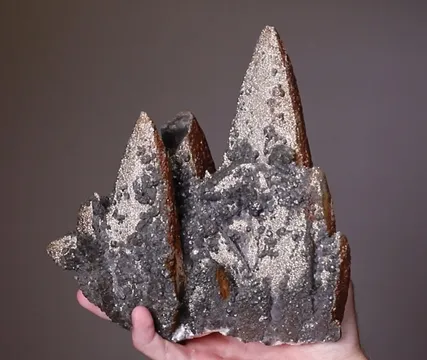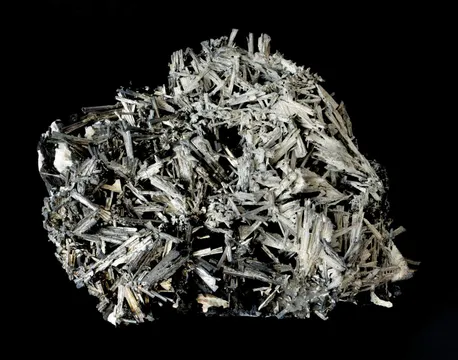
Příbram, Czech Republic — historic mining locality famed for silver-base metal veins and a uranium district yielding uraninite, coffinite, and rare selenides.
Key facts
Příbram is one of Europe’s great old mining names: a compact but extraordinarily complex ore region in central Bohemia where centuries of Ag-Pb-Zn mining were later overprinted by one of the world’s major vein-type uranium districts. For collectors, its importance rests on that double identity. The western Březové Hory–Bohutín side is the classic base-metal and silver district, long celebrated for galena, sphalerite, siderite, calcite, barite, quartz, native silver and “ruby silver” sulfosalts. The eastern Příbram uranium and base-metal district — with deposits and vein knots such as Třebsko, Kamenná, Lešetice, Brod, Jerusalém, Háje, Bytíz, Skalka and Obořiště — supplied the twentieth-century mineralogical excitement: uraninite, coffinite, Ag-Sb bonanza mineralization, and a remarkable late selenide suite that continues to yield new species.
Geologically, the district lies in the Bohemian Massif near the contact between the Teplá-Barrandian volcano-sedimentary sequences and the Central Bohemian Plutonic Complex. Its veins cut folded siliciclastic rocks and associated doleritic bodies, and the mineralization records repeated hydrothermal pulses: an older siderite-sulphide stage, carbonate-dominated stages, a calcite-uraninite stage, and younger calcite-sulphide events that remobilized earlier metals into spectacular late pockets. The result is a locality where cabinet aesthetics and micro-mineral research meet unusually well: metallic silver pseudomorphs after dyscrasite, gunmetal stephanite, red pyrargyrite, honey-brown barite, orange-red sphalerite, and lustrous calcite-lined veins all have a distinctly Příbram look.
Regional View
Country View
The best specimens are not merely “from Příbram”; they usually belong to a particular mine, shaft, vein, or level. Dyscrasite and native silver from the uranium district often carry labels such as Třebsko, Háje, Bytíz, shaft No. 16, shaft No. 21, or specific vein names. The older Březové Hory pieces more often invoke Anna, Vojtěch, Prokop, Marie, Ševčiny, Lill, Jánská, or the famous named veins. Those details matter: they separate historically meaningful, research-grade locality specimens from the many older Bohemian pieces that entered collections simply as “Pribram.”

Photo: Wikimedia Commons

Photo: Wikimedia Commons
Search for specimens: View all specimens from Příbram, Czech Republic
The name Příbram covers a cluster of historically and geologically connected deposits rather than a single mine. The older and better-known mining quarter is Březové Hory, now part of Příbram, with the associated Bohutín and Černojamské areas. This was primarily an Ag-Pb-Zn base-metal district, with ore in quartz-siderite-calcite veins carrying galena, sphalerite, pyrite, tetrahedrite-group minerals, bournonite, boulangerite and silver minerals. The eastern uranium district is a separate but closely related hydrothermal vein system where uranium ores dominate, especially in calcite-rich veins, but where base metals, Ag-Sb minerals and selenides form some of the locality’s most prized collector and research material.
The geological setting is a structurally busy border zone of the Bohemian Massif. The ore area sits near the boundary between the Moldanubian domain and the Teplá-Barrandian unit, close to the Central Bohemian Plutonic Complex. Host rocks include folded greywackes, siltstones, shales and volcanic intercalations of late Proterozoic to early Paleozoic age, contact-influenced by nearby granitoids and cut by numerous older dolerite dykes. Vein formation was late Variscan to post-Variscan in character, with mineralizing fluids evolving downward in temperature and repeatedly reopening fractures. That repeated structural and chemical reworking explains why Příbram specimens so often show complex replacements: silver after dyscrasite, pyrargyrite after dyscrasite, calcite after earlier carbonates, and late selenides cutting or overprinting older uranium-carbonate assemblages.
The uranium district is commonly divided into numerous vein clusters grouped into named ore knots, including Třebsko, Kamenná, Lešetice, Brod, Jerusalém, Háje, Bytíz, Skalka and Obořiště. The main mineralization sequence is usually treated as four broad stages: siderite-sulphide, calcite, calcite-uraninite, and calcite-sulphide. The calcite-uraninite stage supplied the bulk of the economic uranium, while later calcite-sulphide mineralization introduced or remobilized Ag, Sb, As, Se and base metals into small but mineralogically rich veinlets and pockets. The celebrated Ag-Sb finds at Háje, especially the H14F and H14F3 veins near shaft No. 21, belong to this late story.
Březové Hory mining is documented in written sources by the early fourteenth century, with lead-silver ore processing recorded in 1311. Příbram was elevated to a royal mining town in 1579, and the district became a major industrial mining center in the eighteenth and nineteenth centuries under the technical reforms associated with Jan Antonín Alis. The Vojtěch shaft was opened in 1779, followed by Anna in 1789 and later by important shafts including Marie, Prokop and Ševčiny. In 1875 Vojtěch became famous as the first mine in the world to reach a vertical depth of 1,000 m using a single hoisting rope. The nineteenth-century mines were deep, technically ambitious and productive: at their height they supplied the overwhelming share of silver and lead output in the Austro-Hungarian monarchy.
The twentieth century brought two endings and one new beginning. The base-metal mines declined as silver economics worsened and the deeper workings became expensive; Březové Hory mining finally ended in the late 1970s, with the district subsequently flooded at depth. Uranium mining, however, began after the Second World War and transformed the eastern side of the district. Shafts at Bytíz, Háje, Brod, Lešetice and related deposits exposed thousands of hydrothermal veins, including 1,641 uranium-bearing veins, 35 base-metal veins and 19 monometallic silver veins in the uranium district. From 1947 to 1991 the Příbram uranium operations produced roughly 48,800 tonnes of uranium, with additional lead, zinc and silver. Shaft No. 16, associated with the rich Háje-Bytíz sector, eventually reached 1,838 m and became one of the deepest shafts in the Czech mining record.
Collecting access today is fundamentally different from the mining era. The underground mines are closed; many deep workings are flooded, sealed, or incorporated into post-mining infrastructure, and several former uranium facilities have undergone remediation. The Mining Museum Příbram at Březové Hory preserves the tangible mining landscape, including historic shaft buildings, underground tours, mining machinery and mineral displays, but it is a museum site rather than a collecting venue. Material in the collector market comes from old mine production, museum-era dispersals, estate collections, dealer inventories, and, for some uranium-district material, older dump finds. Because of radioactivity, specimen handling, transport and export rules can matter for uraninite and secondary uranium minerals; serious collectors should treat Příbram radioactive pieces as regulated mineral specimens, not casual field rocks.
The most important specimen finds are tied to late-stage pockets and replacement zones rather than to bulk ore. At Háje shaft No. 21, exploration of the H14F and H14F3 veins between the sixth and ninth levels in the 1980–1990 period revealed unusual monometallic silver ores dominated by native silver, dyscrasite, allargentum and Ag-Sb sulphosalts. Detailed work on H14F3 between the seventh and ninth levels documented calcite and siderite as abundant gangue, dyscrasite in several habits, native silver as wires and bushy aggregates around the eighth level, pyrargyrite associated with silver, and orange to red sphalerite in small crystals and grains. Shaft No. 16 at Háje/Bytíz is equally important for modern mineralogy: it produced significant uranium ore and also the type material for several microscopic selenide species, including Příbram’s namesake příbramite.
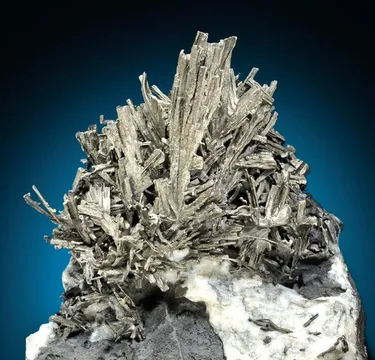
Dyscrasite is the signature collector mineral of the Příbram uranium district, especially from the late Ag-Sb pulses at Háje and related vein systems. The best pieces show metallic silver-white to pale bronze-grey dyscrasite as stout blades, tabular crystals, columnar prisms and skeletal aggregates, commonly in calcite or carbonate gangue and associated with native silver, allargentum, miargyrite, pyrargyrite, Sb-rich arsenic and minor sulphides. On the H14F3 vein at shaft No. 21, dyscrasite was documented between the seventh and ninth levels, with the older Sb-arsenic plus dyscrasite assemblage most characteristic around the seventh level and later silver-rich replacements becoming stronger upward toward the eighth level. Ordinary specimens are broken metallic smears or indistinct granular masses; the desirable ones preserve sharp crystal form, visible twinning or bladed architecture, bright fresh surfaces, and clear evidence of the dyscrasite-to-silver replacement history that makes Příbram so distinctive.
Native silver from Příbram ranges from massive and hackly ore to elegant wires, curls, bush-like aggregates and pseudomorphs after earlier dyscrasite, with the uranium-district material from Háje and Třebsko especially sought after. In the H14F3 vein at Háje shaft No. 21, native silver was particularly associated with the eighth-level portion of the system, where late hydrothermal solutions dissolved earlier mineralization and redeposited silver with pyrargyrite and allargentum; analyses also show that this silver can contain measurable Hg and Sb. The finest collector pieces combine bright metallic luster, three-dimensional wire or arborescent form, and a stable carbonate matrix, while silver pseudomorphs after dyscrasite are valued when they retain robust bladed or doubly terminated dyscrasite morphology rather than collapsing into shapeless silver masses.
Calcite is not a side note at Příbram; it is one of the principal gangue minerals that records the district’s hydrothermal sequence. In the uranium district, several generations of calcite mark the superimposed carbonate, calcite-uraninite and calcite-sulphide stages, and calcite is the host or matrix for many of the best Ag-Sb and selenide specimens. At Háje H14F3, calcite and siderite were the dominant gangue minerals around the silver-antimony ore, while in the older Březové Hory mines calcite occurs with galena, sphalerite, pyrite, chalcopyrite, cerussite and goethite. Attractive specimens tend to show white to colorless rhombs, stacked drusy crusts, translucent cleavable crystals or vein cavities lined with sparkling carbonate; the most collectible pieces use calcite as an aesthetic stage for silver, dyscrasite, sulphosalts or old Březové Hory base-metal crystals.
Stephanite from Příbram belongs to the district’s classic silver-sulphosalt suite and is most familiar from old Březové Hory labels, especially Anna and Vojtěch material, although the broader district’s late Ag-Sb chemistry provides the context for its formation. It occurs as steel-grey to gunmetal-grey crystals, commonly tabular or short prismatic, with a bright metallic luster that can look deceptively fresh even on old specimens; thumbnails in the 1–2 cm range are already significant for the locality. Good Příbram stephanite is judged by sharpness, undamaged terminations, recognizable crystal form and old provenance, ideally with calcite, quartz, galena, silver or other Ag minerals; mediocre examples are small blackish grains in sulphide ore that require a label more than a loupe to carry their interest.
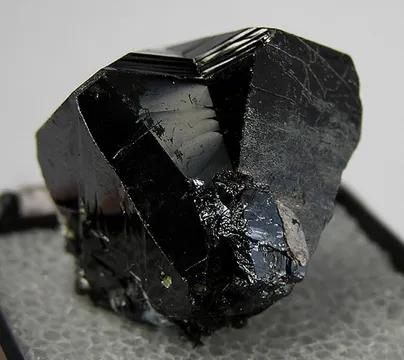
Sphalerite is one of the key base-metal minerals at Příbram and appears in both the older Březové Hory Ag-Pb-Zn veins and the uranium-district base-metal stages. In the Háje H14F3 silver vein, sphalerite was documented mainly as orange to red crystals and grains growing in Sb-rich arsenic on the seventh level and as microscopic aggregates on native silver at the eighth level; a younger Fe-poor generation shows strong cathodoluminescence. In Březové Hory specimens, sphalerite commonly accompanies quartz, siderite, galena and pyrite, forming brownish, reddish or resinous crystals and crusts. The best specimens have lively color, luster, translucency at the edges, and association with classic Příbram matrix minerals; dull massive sphalerite without vein context is far less desirable despite the locality name.
Quartz at Příbram is chiefly a gangue and textural mineral, but it is an important one because the older base-metal veins are commonly quartz-siderite-calcite bodies with galena, sphalerite, pyrite and silver minerals. In deeper Březové Hory ore, fine-grained quartz with disseminated pyrite, galena, sphalerite, boulangerite and Ag minerals formed the hard, compact ore type, while in collectible vein cavities quartz can appear as milky, clear or smoky crystals associated with siderite, sphalerite, galena, pyrite, calcite and occasional silver minerals. Good Příbram quartz specimens are usually combination pieces rather than stand-alone quartz classics: the quartz should be undamaged, naturally seated, and part of a clearly Příbram assemblage, especially with lustrous sphalerite, siderite, galena or later carbonate overgrowths.
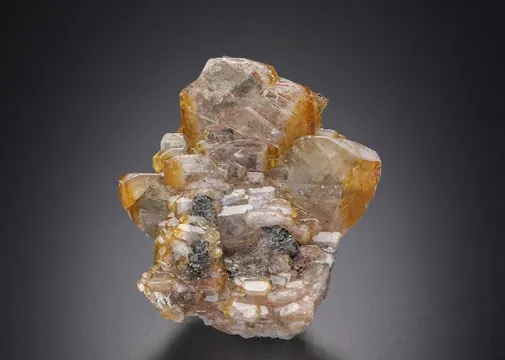
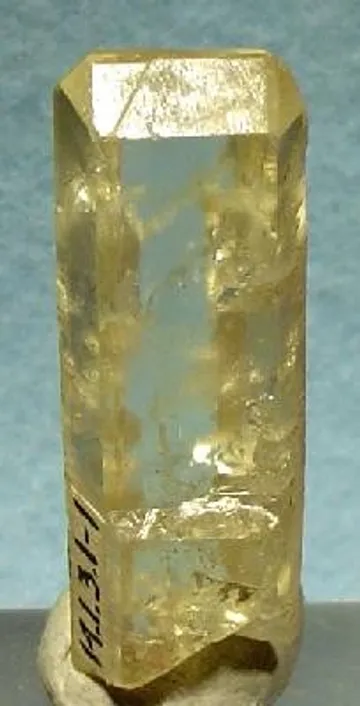
Barite is a classic but less common Příbram collector mineral, known from the older base-metal district as part of the evolving carbonate-sulphate vein sequence and, at Bohutín, from a younger barite-stibnite stage in the Klementská vein. Historical paragenetic work recognized more than one generation of barite, including grey, large rectangular crystals with carbonate crusts; surviving collector specimens may show colorless, grey, honey-brown or darker brown tabular crystals, sometimes with a glassy luster and sharp chisel-like edges. Prokop mine pieces with known level data are especially desirable because old Příbram barite is not abundant in the market. The best examples are isolated, lustrous, damage-free crystals or clusters with credible old labels; ordinary pieces are small cleaved plates or anonymous heavy gangue fragments.
Pyrargyrite is Příbram’s “ruby silver” at its most romantic: dark red to nearly black Ag-Sb sulphosalt that flashes red on thin edges and belongs to the late silver-rich events of the district. On the H14F3 vein at Háje shaft No. 21, pyrargyrite was documented only from eighth-level specimens, where it occurs with native silver as grains and as pseudomorphs after dyscrasite reaching about 2 cm. In the older Březové Hory suite, pyrargyrite joins proustite, stephanite, acanthite and other silver minerals as part of the classic silver assemblage that made Příbram famous among nineteenth- and twentieth-century collectors. The best pieces show identifiable crystal form, red internal reflections or translucent edges, and association with native silver or calcite; black granular sulphosalt without visible morphology is much harder to evaluate and should be backed by strong provenance or analysis.
Beyond the display minerals, Příbram is a modern type-locality engine. The uranium district’s late selenide assemblages include příbramite, CuSbSe2, named for the locality; bytízite, Cu3SbSe3, from the Bytíz deposit; and the hakite-series minerals hakite-(Cd), hakite-(Fe) and hakite-(Zn), all tied to the Háje/Bytíz uranium-mining environment. Brod has produced škáchaite, CaCo(CO3)2, a cobalt-dominant dolomite-group mineral from vein B117, and the wider Příbram ore area has yielded tetrahedrite-(Cd) from Radětice. Grimmite, NiCo2S4, adds a thiospinel chapter to the district’s research story, while uraninite, coffinite, anthraxolite, clausthalite, tiemannite, berzelianite, umangite, eskebornite, antimonselite, chaméanite, crookesite, bournonite, boulangerite, galena, pyrite, siderite, dolomite, witherite, cerussite, goethite, stibnite, arsenic and numerous secondary uranium minerals round out a species list that is far richer than the ordinary collector market suggests.
Příbram labels deserve close reading. “Příbram” alone is useful but incomplete; “Březové Hory,” “Bohutín,” “Háje,” “Bytíz,” “Brod,” “Třebsko,” “shaft No. 16,” “shaft No. 21,” “Anna Mine,” “Vojtěch Mine,” “Prokop Mine,” “Ševčiny Mine,” “Lill Mine,” or a vein designation adds major value. Old Bohemian and Austrian-era labels may use Germanized spellings such as Pribram, Przibram, Birkenberg for Březové Hory, or Adalbert for Vojtěch. Those are not defects; they can be part of the specimen’s historical value.
The main authenticity issue is not widespread modern fakery but misidentification and overbroad locality labeling. Silver after dyscrasite is commonly sold as dyscrasite, silver, or both; the distinction matters, because complete silver replacement can preserve dyscrasite morphology while leaving little or no original dyscrasite visible. Acanthite and old “argentite” labels also require care, as high-temperature argentite in collections is generally represented by acanthite-paramorph material or old naming conventions. “Steinmannite” is another locality-specific caution: the name has been used historically for Sb/As-bearing octahedral to cuboctahedral galena from Březové Hory, but it is not a valid species. For Ag-Sb sulfosalts — especially pyrargyrite, proustite, stephanite, miargyrite and polybasite-group material — visual identification alone can be unreliable when specimens are small, tarnished or intergrown.
Condition is often the decisive market factor. Dyscrasite and silver specimens are typically on carbonate matrix, which can be cleaved, bruised or trimmed aggressively; bright metallic surfaces may tarnish, and delicate wires or bladed pseudomorphs bend easily. Stephanite and pyrargyrite are brittle, darken with exposure, and commonly show edge bruising. Calcite is soft and easily cleaved. Barite from Příbram is both heavy and cleavable, so edge chips and repaired plates should be expected and disclosed. Sphalerite can chip at crystal edges, and old Březové Hory combination pieces often carry natural iron staining that should not automatically be mistaken for damage or alteration.
Radioactive Příbram material requires special handling. Uraninite, coffinite-bearing ore and secondary uranium minerals from Háje, Bytíz, Lešetice and related shafts can be significantly active. Store them in labeled, closed containers away from living areas, wash hands after handling, avoid grinding or trimming, and do not keep friable radioactive dust-producing material loose in display cases. Bright yellow-green secondary coatings sold as “tyuyamunite” or other uranium minerals from Příbram should be treated cautiously unless analyzed; many are poorly crystalline or visually ambiguous. Fluorescence can help with some secondary uranium minerals, but it is not a substitute for analysis.
On the market, Příbram remains available but uneven. Small uranium-district uraninite pieces and old Březové Hory sulphide specimens appear regularly, while high-quality dyscrasite, silver after dyscrasite, well-crystallized stephanite, sharp pyrargyrite, documented Prokop barite and attractive Anna calcite are much less common. The premium specimens combine three things: strong aesthetics, precise mine or vein provenance, and a credible old collection or publication trail.
The great Příbram story begins not with a specimen cabinet but with depth. In 1875, the Vojtěch mine reached 1,000 m vertical depth, a world first for a shaft worked with a single hoisting rope. The achievement was not an isolated stunt; it came out of a century of technical ambition in the Březové Hory district, where Jan Antonín Alis had pushed deep vertical shafts, water management, better smelting and more systematic mine organization. By the 1870s, Příbram was a place where mine engineering itself had become a mineral-collecting backdrop: the same deep veins that supplied galena, sphalerite, calcite, barite and silver minerals were forcing miners and engineers to solve problems of hoisting, ventilation, pumping and heat at depths that few mines in the world had reached.
The celebration of Vojtěch’s 1,000 m mark produced one of the district’s most tangible historical objects: the Příbram commemorative silver coin, the “švancara,” presented to miners in September 1875. It was struck from Příbram silver and bore the memory of the feat in both Czech and German. For collectors, that coin is a reminder that specimens from Příbram are not just pretty vein minerals; they are pieces of a mining culture that measured pride in meters below the surface and in kilograms of silver brought up through steam, rope and timber.
Then came the catastrophe that turned the district’s pride into mourning. On 31 May 1892, a fire broke out in the Marie mine, on the 29th level. Smoke and poisonous gases moved through the connected underground workings into neighboring shafts, turning the technical strength of the district — its linked mine system — into a deadly weakness. Rescue equipment was primitive. Against the gases, rescuers had little more than cloth soaked in vinegar wrapped around the mouth and nose, and rum was issued in the belief that it would help them withstand the fumes. The recorded figures are almost unbearable in their concreteness: 1,116 bottles of rum and 144 liters of vinegar were consumed during the rescue effort.
The disaster killed 319 miners and left 289 widows and 920 orphans. Black flags flew from public buildings, the Mining Directorate and the shafts; mass burials were organized quickly in Příbram and Březové Hory. The tragedy drew attention far beyond the district. On 2 June, Tomáš Garrigue Masaryk — not yet president, then a Czech political figure and intellectual — visited Březové Hory with other representatives and pressed the mine administration for support to the bereaved families. Concerts and collections were organized, including benefits in Prague, and the story of Příbram’s mine fire circulated through the press at home and abroad.
The district did not stop. Mining resumed before the end of 1892, and reconstruction continued into 1894, including improvements such as fixed electric lighting at shaft stations and main galleries. That recovery is one of the darker truths behind old Příbram specimens: many were won from a district that was technically advanced, deeply proud, and still perilous. When an old Březové Hory silver or calcite specimen carries an Anna, Marie, Prokop or Vojtěch label, it belongs to a landscape where industrial modernity, mineral beauty and human cost were inseparable.
The uranium era added another layer, quieter in the mineral cabinet but immense underground. After 1947, the eastern Příbram district was driven hard for uranium, with shafts, levels and crosscuts extending through Háje, Bytíz, Brod, Lešetice and neighboring deposits. By the time the last uranium ore car was ceremonially brought up from shaft No. 19 on 30 September 1991, Příbram had produced tens of thousands of tonnes of uranium and thousands of kilometers of underground workings. Some of the most prized late collector specimens — dyscrasite, silver, pyrargyrite, selenides and uraninite — are the mineralogical survivors of that enormous postwar excavation.
Pavel Škácha, Jiří Sejkora, František Knížek, Vladimír Slepička, Jiří Litochleb and Ivana Jebavá, “Occurrences of unique monometallic Ag mineralization at the H14F3 vein between the 7th and 9th level of the shaft No. 21 Háje, the Příbram uranium-base metal ore district, Czech Republic,” Bulletin mineralogicko-petrologického oddělení Národního muzea v Praze, 20(2), 230–254, 2012. Core paper for Příbram dyscrasite, native silver, pyrargyrite, sphalerite and Ag-Sb assemblages at Háje shaft No. 21.
Pavel Škácha, Jiří Sejkora and Jakub Plášil, “Příbramite, CuSbSe2, the Se-analogue of chalcostibite, a new mineral from Příbram, Czech Republic,” European Journal of Mineralogy, 29(4), 653–661, 2017. Type-mineral record for příbramite from the mine dump of Uranium Mine No. 16, Háje.
Pavel Škácha, Jiří Sejkora and Jakub Plášil, “Bytízite, a new Cu-Sb selenide from Příbram, Czech Republic,” Mineralogical Magazine, 82(1), 199–209, 2018. Description of bytízite from the Bytíz deposit, one of the important new selenide species tied to the Příbram uranium district.
Jiří Sejkora, Jakub Plášil, Zdeněk Dolníček, Jana Ulmanová and Radek Škoda, “Škáchaite, CaCo(CO3)2, a new member of the dolomite group, from the Brod deposit near Příbram, Czech Republic,” Mineralogical Magazine, 88, 255–261, 2024. Type description of škáchaite from vein B117, shaft No. 6 at Brod.
Jiří Sejkora, Cristian Biagioni, Pavel Škácha, Silvia Musetti, Anatoly V. Kasatkin and Fabrizio Nestola, “Tetrahedrite-(Cd), Cu6(Cu4Cd2)Sb4S13, from Radětice near Příbram, Czech Republic: the new Cd member of the tetrahedrite group,” European Journal of Mineralogy, 35, 897–907, 2023. Type description for tetrahedrite-(Cd), important for the wider Příbram ore area’s tetrahedrite-group mineralogy.
Pavel Škácha, Jiří Sejkora, Jakub Plášil and colleagues, “Selenide Mineralization in the Příbram Uranium and Base-Metal District (Czech Republic),” Minerals, 7(6), 91, 2017. Essential open-access review of the district’s extraordinarily diverse selenide mineralization and paragenesis.
Zdeněk Dolníček, Jiří Sejkora and Pavel Škácha, “Hypogene Alteration of Base–Metal Mineralization at the Václav Vein (Březové Hory Deposit, Příbram, Czech Republic): The Result of Recurrent Infiltration of Oxidized Fluids,” Minerals, 14(10), 1038, 2024. Modern geochemical and mineralogical study of altered base-metal mineralization in the Březové Hory part of the ore area.
Jakub Plášil, Pavel Škácha, Jiří Sejkora, Radek Škoda, Radim Pavlíček and Radana Vrtišková, “Extending the mineralogy of U6+ (VII.): Kristekite, [Cu2(H2O)4(UO2)(SeO3)3]·4H2O, a new mineral from Příbram, Czech Republic,” Mineralogical Magazine, 2026. Recent type-mineral record showing that Příbram’s uranium-selenite mineralogy remains active ground for new species work.
Hornictví na Příbramsku: Březové Hory — Česká televize / ČT edu Educational video on the Březové Hory mining landscape and the Příbram mining tradition.
Příbram si připomíná 130 let od největší důlní katastrofy v Čechách — TV Nova / TN.cz News segment with historian Josef Velfl on the 130th anniversary of the 1892 Marie mine disaster.
Mining Museum Březové Hory — V4 Industrial Heritage Media page with embedded video material introducing the Příbram Mining Museum and the preserved Březové Hory mining complex.
Příbram locality page — Mindat Broad mineral list and locality framework for Příbram and its constituent mines.
Březové Hory deposit — Mindat Detailed species and sublocality data for the classic Ag-Pb-Zn side of the district.
Mine dump, Uranium Mine No. 16, Háje — Mindat Key modern locality page for type-locality selenides and radioactive minerals from the Háje/Bytíz sector.
Mining Museum Příbram Official museum information for the preserved Březové Hory mining complex, exhibitions and underground tours.
Důl Anna — Hornické muzeum Příbram Official history of the Anna Mine, one of the principal Březové Hory shafts.
Historie těžby stříbra na Příbramsku — AOPK ČR / CHKO Brdy Concise, well-documented overview of silver mining history, waterworks, shafts, output and the 1892 disaster.
Historie bývalých Uranových dolů Příbram — Zdař Bůh.cz Useful historical summary of the Příbram uranium-mining enterprise, production totals, shaft depths and closure chronology.
Příbram and Kutná Hora mining districts — field guide PDF Field-guide treatment of geology, paragenesis, mining history and environmental context for Příbram and Kutná Hora.
Selenide Mineralization in the Příbram Uranium and Base-Metal District — Minerals Open-access technical paper on the district’s selenide suite and late uranium-district paragenesis.
Grimmite, NiCo2S4, a new thiospinel from Příbram — European Journal of Mineralogy Open-access type-mineral paper illustrating Příbram’s continuing role in new species mineralogy.