






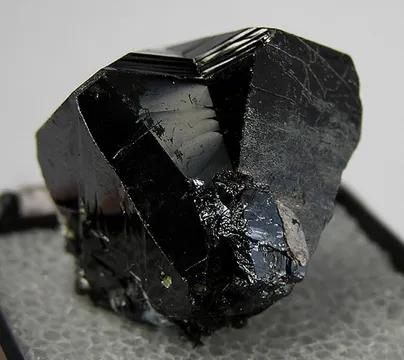
A collector's guide to Jáchymov ore district, Czech Republic: its geology, mining history and notable minerals, illustrated with the 62 specimens documented from this locality on EarthWonders.
Key facts
Jáchymov is one of the foundational localities of mineral collecting: a classic five-element Ag-Co-Ni-Bi-U vein district on the Czech side of the Krušné hory, or Erzgebirge, where the collector’s cabinet, the history of money, and the history of radioactivity meet in the same narrow mountain valley. Its veins cut Cambrian–Ordovician metasedimentary rocks in the mantle of the Karlovy Vary granite pluton, within the long-lived Gera–Jáchymov fault zone. Mineralization is not a simple “silver vein” story but a succession of hydrothermal stages: early Sn-W associations, quartz-sulphide mineralization, carbonate-uraninite with dark fluorite, carbonate-arsenide with native silver, bismuth and nickel-cobalt arsenides, and a silver-rich arsenic-sulphide stage that produced the district’s famous ruby silvers.
For collectors, Jáchymov’s best specimens have a distinctly old European look. Proustite and pyrargyrite occur as deep red to nearly black-red crystals, often perched on dull grey native arsenic, sulphides, quartz or carbonate. Acanthite may appear as rich steel-grey to black coatings and subhedral crystal aggregates rather than modern showy wires. Native silver is most desirable as twisted, tarnished wires, dendrites and masses in vein rock. Sternbergite, argentopyrite and related rare silver species usually demand a hand lens, but old specimens with eye-visible crystals are among the district’s great prizes. Many pieces are small, dense, dark, and historically labelled “Joachimsthal” or “St. Joachimsthal”; the magic is often in the pedigree as much as in the sparkle.
Regional View
Country View
Jáchymov also matters because it is a type-locality powerhouse. Uraninite, sternbergite, proustite, acanthite, johannite, zippeite, uranopilite, lindackerite, voglite, lavendulan, mixite and a long list of later uranium minerals all tie back to this district or its immediate mines. Few ore districts have had so many different mineralogical “lives”: Renaissance silver, cobalt and nickel, uranium colors for glass and porcelain, radium chemistry, Soviet-era uranium, radioactive spa water, and modern micromineralogy.

Photo: Wikimedia Commons

Photo: Wikimedia Commons
Search for specimens: View all specimens from Jáchymov ore district, Czech Republic
The Jáchymov ore district occupies the immediate area of the town of Jáchymov and its surrounding slopes, roughly 20 km north of Karlovy Vary. The district lies between about 450 and 850 m elevation on the southern flank of the Krušné hory. Geologically it belongs to the Saxothuringian Zone and the Krušné hory metallogenic unit. The country rocks are chiefly biotite and biotite-muscovite mica schists, locally albitized and pyritized, with subordinate calc-silicate gneiss, quartzite, amphibolite and orthogneiss. These rocks form the envelope of the Karlovy Vary granite pluton; younger leucocratic granites with high U relative to Th, plus greisenized apical zones carrying Sn, Nb, Be, fluorite, topaz and Li-micas, are part of the wider system.
The ore field is a textbook five-element vein system, but Jáchymov’s veins are not uniform ribbons of ore. They are fault-controlled, discontinuous bodies in which barren stretches alternate with rich lenses and pillars. Old miners grouped the veins by trend: north–south “midnight veins” and east–west “morning veins.” The north–south veins tend to be richer and wider; the east–west veins are more variable in attitude and thickness. The richest ore commonly developed where a vein split into several branches. Toward the granite contact, veins commonly became barren and died out.
The district is usually described in major vein clusters named for the mines that worked them: Rovnost, Barbora-Eva, Bratrství, Svornost, Plavno and Panoráma, with Abertamy often included in broader district discussions. Important named veins and workings include Fundgrubner, Geschieber, Geister, Bergkittler, Evangelista, Hildebrand, Anna, Trojická, Červená and others. The modern collector should learn these names because old labels often preserve a mine, shaft, adit or vein rather than the town alone.
The main hydrothermal sequence is critical for understanding Jáchymov specimens. A minor quartz-sulphide stage includes galena, sphalerite, chalcopyrite, pyrite, arsenopyrite, pyrrhotite and dolomitic carbonates. The carbonate-pitchblende stage deposited uraninite in reddish dolomitic carbonate pigmented by disseminated hematite, commonly with dark violet to black fluorite. The carbonate-arsenide stage brought native silver and bismuth with skutterudite, nickeline, rammelsbergite, safflorite and related Ni-Co arsenides. The later sulpharsenide stage is the collector’s great ruby-silver event: native arsenic, realgar, proustite, pyrargyrite, acanthite, stephanite, polybasite, pearceite, sternbergite and argentopyrite.
Mining began from the spectacular silver discoveries of the early 16th century. The settlement was founded in 1516 after rich silver ore was found at the site of the abandoned village Konradsgrün, and within two decades it had become the second largest town in Bohemia after Prague. The Schlick family’s mint produced Joachimsthaler coins, shortened to thaler and later to tolar; the word is part of the linguistic ancestry of “dollar.” In the silver boom, thousands of miners worked hundreds of mines and prospects, and 16th-century silver production has been estimated at 200 to 300 tonnes. Early ore sorting was demanding: rich hand-sorted ore could exceed 60% Ag, while material around 0.7% Ag could still be payable in the 16th-century economy.
As silver declined, cobalt and nickel became more important. From the mid-18th century the government revived systematic mining, extracting remaining silver reserves and establishing a mining school at Jáchymov in the early 18th century. Uraninite, long discarded on dumps or used as backfill in older workings, gained economic value in the 19th century when uranium compounds were used for coloring glass and porcelain. The district then entered its radium era after the recognition of radium and polonium from Jáchymov pitchblende residues, and finally its Cold War uranium era after the Second World War.
The uranium expansion after 1945 was enormous. By 1952, nine mines were operating: Rovnost I, Eliáš, Eduard, Svornost, Rovnost II, Eva, Barbora, Bratrství and Plavno, while Panoráma and Popov were under exploration. Production peaked in 1955–1957, when more than 100 km of underground workings could be opened in a year and annual uranium extraction reached hundreds of tonnes. Mining declined from 1959 as fields were exhausted, and uranium mining ended in 1964, closing a roughly 450-year history of ore mining in the district. Svornost continued in a different life: radon-bearing mine water has been used for spa therapy, and the mine remains famous as one of Europe’s oldest mines still connected with active use.
Collecting today is not a matter of entering old mines. Many workings are closed, flooded, dangerous, protected as heritage sites, or involved in spa-water or waste-repository functions. The accessible Štola č. 1, near the Svornost mine, is a mining museum rather than a collecting site. Surface finds on old dumps and disturbed ground have been possible historically, especially for radioactive secondaries and dark uraninite fragments, but collectors must treat the district as a heritage and radiation-sensitive locality. Permission, land status, radiation hygiene and local restrictions matter. The safest and most responsible path for most collectors is to acquire old, labelled specimens from established collections, especially pieces with labels naming Joachimsthal, St. Joachimsthal, Svornost, Rovnost, Eliáš, Bratrství or a named vein.
The best specimen finds belong largely to old mining. Early workings in the cementation zone produced large native silver, including a recorded mass of about 280 kg. Classic proustite crystals and massive ruby-silver specimens entered museums and aristocratic collections centuries ago; one celebrated proustite specimen presented to the National Museum in Prague in 1814 weighed about 3 kg and measured roughly 15 × 13 × 10 cm. Modern notable finds are often microscopic to thumbnail-scale discoveries from old material, dumps or museum specimens: rare uranium sulphates and arsenates, tiny but important silver sulphosalts, and type-locality species whose scientific importance far exceeds their display size.
Jáchymov proustite is the locality’s signature ruby silver and, historically, one of the minerals that made “Joachimsthal” a household name among European collectors. It belongs mainly to the arsenic-sulphide stage, forming small but sharply developed deep cochineal-red to nearly black-red crystals, short prisms and rich crusts on native arsenic, quartz, dolomite and silver-bearing sulphides; the best old specimens show transparent red edges or internal glow rather than merely dark granular coatings. Sizes are usually modest by modern display standards, but the district produced exceptional old pieces, including the famous 1814 National Museum specimen of nearly solid proustite weighing about 3 kg. Good Jáchymov proustite is judged by old provenance, intact luster, visible crystal form, association with classic arsenic-silver minerals, and freedom from the bruising, darkening and abrasion so common on centuries-old ruby silvers.
Acanthite from Jáchymov is a classic, dark, heavy silver sulphide of the old district rather than a modern sculptural showpiece: it occurs as equant crystals, subhedral to euhedral patches, massive coatings, matted crusts and replacements in cavities left by leached native silver, commonly associated with quartz, carbonate, proustite, stephanite, argentopyrite, pyrite and arsenides. Historic specimens can be several centimeters across as rich grey-black ore plates, while the eye-visible crystals are often small and tucked into rough surfaces. The finest examples separate themselves by being obviously crystalline, not merely massive “silver glance,” and by carrying old labels or associations that place them in the sulpharsenide assemblage of Jáchymov’s classic silver veins.
Jáchymov pyrargyrite, the antimony-rich counterpart to proustite, appears in the same broad ruby-silver tradition but is generally less abundant on the market and often darker, with blackish-red prismatic crystals that reveal wine-red translucence only at thin edges or under strong light. It is documented from the silver-bearing sulpharsenide associations with native arsenic, proustite, sternbergite, acanthite, stephanite, quartz and carbonate, and old cabinet pieces may show stout prismatic crystals rising from pale gangue or dark ore. Quality depends on positive identification, visible red internal color, sharp crystal terminations, and a convincing Joachimsthal pedigree; ordinary pieces can be visually difficult to separate from proustite or dark silver sulphides without analysis or trustworthy provenance.
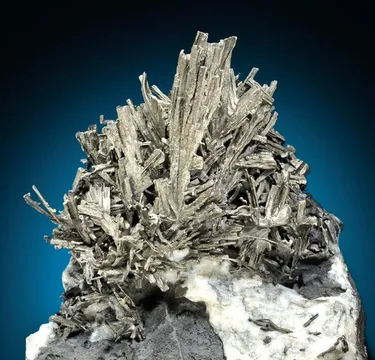
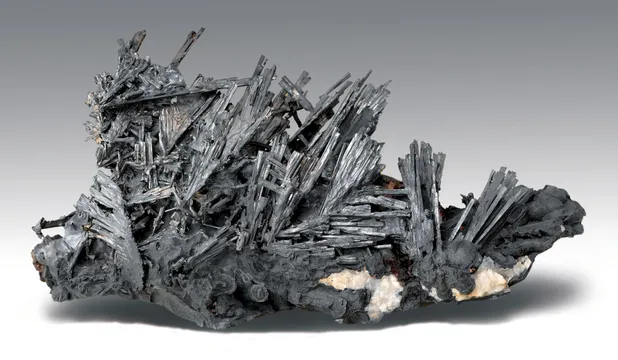
Stephanite at Jáchymov is a silver-antimony sulphosalt of the sulpharsenide stage, reported as short prismatic crystals in the same small-cavity environment that hosts acanthite, proustite, pyrargyrite, polybasite, pearceite and rare argentopyrite. It is typically iron-black to steel-grey with a metallic luster, and crystals are usually small, so the desirable pieces are those in which the morphology is distinct rather than lost in a dark sulphide mass. Good Jáchymov stephanite is valued for old locality integrity, crisp prisms, associations with ruby silvers or native arsenic, and analytical confidence, because visually similar dark silver sulphosalts from Joachimsthal material can be treacherous.
Native silver from Jáchymov is the historic engine of the district: early mines worked rich cementation-zone ores with large masses, while the later collector material most often shows tarnished wires, dendrites, filiform aggregates, plates and irregular masses enclosed in quartz-carbonate-arsenide vein rock. In the sulpharsenide stage, dendritic native silver was commonly overgrown by nickel minerals such as skutterudite, rammelsbergite and nickeline, and in some cases silver was later leached out, leaving hollow forms that could be filled by acanthite or quartz. The best collector pieces are not merely “silver from Bohemia” but labelled Joachimsthal specimens with three-dimensional wires or dendrites, visible relationship to arsenide gangue, and enough natural tarnish and matrix to feel geologically honest.
Sternbergite is one of Jáchymov’s great connoisseur species: a rare silver-iron sulphide for which the district is the type locality, usually occurring as minute metallic blades, tablets or crystals in the sulpharsenide assemblage. Published work treats it as very rare at Jáchymov, commonly in small isolated crystals or crystalline aggregates with pyrargyrite, proustite, acanthite, argentopyrite, quartz and dark sulphide-arsenide matrix. Most specimens require magnification, so old pieces with eye-visible violet-blue to burnished metallic blades, even only millimeters across, are exceptional; a good sternbergite here is judged by unmistakable platy habit, richness for the species, and an old Joachimsthal provenance strong enough to justify the locality premium.
Beyond those six species, Jáchymov is extraordinary for both primary ore minerals and secondary uranium minerals. The primary list includes uraninite, native bismuth, native arsenic, nickeline, rammelsbergite, skutterudite, safflorite, löllingite, argentopyrite, polybasite, pearceite, realgar, orpiment, galena, sphalerite, chalcopyrite, pyrite, marcasite, barite, fluorite, calcite, dolomite and quartz. Type-locality or historically pivotal species include uraninite, sternbergite, proustite, acanthite, johannite, zippeite, uranopilite, lindackerite, voglite, haidingerite, lavendulan, mixite, metarauchite, jachymovite, mathesiusite and many later uranyl sulphates, arsenates and carbonates described from old Jáchymov material. The district’s modern scientific output is still alive: recent work has documented tiny rare silver phases such as dervillite in association with proustite, bismuth and native silver in arsenic veinlets of the Trojická vein at Svornost.
Jáchymov is a locality where provenance is everything. Old labels may read Joachimsthal, St. Joachimsthal, Jachymov, Joachimsthaler Revier, Bohemia, Böhmen or Czechoslovakia, and all can be legitimate depending on age. The danger is that those historical names can also be applied loosely to neighboring Erzgebirge material or to Czech uranium specimens from other districts. Uraninite is especially prone to optimistic relabelling: botryoidal and massive uraninite from Příbram is more common on the market and is sometimes offered as Jáchymov. A convincing Jáchymov uraninite should have an old label, a named mine or vein, or matrix and associations consistent with the district.
For the silver sulphosalts, the main authenticity issue is not usually outright fakery but identification. Dark pyrargyrite, proustite, stephanite, polybasite, acanthite and argentopyrite can look deceptively similar in old, tarnished aggregates. Labels made before modern analytical work may preserve historical names such as argentite or ruby silver without distinguishing the exact species. For high-value pieces, especially sternbergite, argentopyrite, stephanite or unusual ruby-silver associations, analysis or a strong museum/dealer pedigree is important.
Condition is a serious matter. Proustite and pyrargyrite can darken with light exposure, and fine crystals are soft, brittle and easily bruised. Jáchymov ruby silvers should be stored in the dark and handled sparingly. Native silver may be naturally tarnished; aggressive cleaning can remove the old surface that helps the piece look and feel authentic. Acanthite and other silver sulphides are soft and easily rubbed. Many old specimens are dense ore fragments with small exposed crystals, so edge chipping, broken terminations and rubbed high points are common.
Radioactive minerals from Jáchymov require disciplined handling. Uraninite and many uranyl secondary minerals may be significantly radioactive and can shed dust or generate radon in closed storage. Keep radioactive specimens in labelled containers, avoid inhaling dust, wash hands after handling, do not store them in living or sleeping areas, and be especially cautious with friable yellow-green sulphates or powdery secondary coatings. Arsenic-bearing species such as native arsenic, realgar, orpiment, proustite and many arsenates add a chemical hazard; they should not be licked, cut, abraded or displayed where children or pets can touch them.
Market availability is uneven. Small old Jáchymov ruby silvers, acanthite-rich ore pieces, uraninite fragments and micromounts appear regularly, but genuinely fine, aesthetic, well-crystallized material is scarce. Museum-quality proustite, eye-visible sternbergite, rich argentopyrite, old native silver wires and named-mine specimens with early labels bring strong competition. The district is so famous that mediocre examples sell on locality alone, but the best purchases combine three things: correct species, old provenance, and visible mineralogical character.
The opening scene of Jáchymov’s mineral history is almost absurdly compact. A short adit had been driven in the middle of what is now the town, near the former house No. 496, by Kaspar Bach from Geyer and an older prospector from Ostrov nad Ohří. The work was abandoned for lack of money. Then Stefan Schlick took up the effort in 1516. After driving the abandoned drift only about two metres farther, the miners struck rich native silver on what became the Fundgrubner, or Discovery, vein. A settlement first called Thal rose in the valley, then in 1517 was renamed with ceremony as Thal des heiligen Joachims — the valley of Saint Joachim — the name that became Joachimsthal.
The boom was violent in its speed. By 1534, Jáchymov had become the second largest town in Bohemia after Prague. The district helped give birth to neighboring mining settlements: Hora Svaté Kateřiny in 1528, Abertamy in 1529, Pernink in 1532 and Boží Dar in 1533. At its height, 10,000 to 15,000 miners are described as working about 900 mines and prospects in the region. That world left the collector with more than specimens. The silver coins struck at Jáchymov became Joachimsthalers, then thalers, then tolars, a linguistic trail that leads eventually to the word “dollar.”
The early silver was not just rich in a bureaucratic sense; it could be spectacularly physical. Sixteenth-century ore dressing was crude enough to lose perhaps 20 to 25% of the silver during wet crushing, yet the profits from 1516 to 1577 could still approach 30%. Ore containing about 0.7% Ag could be payable; hand-sorted very rich ore could exceed 60% Ag. One recorded native silver piece from the early cementation-zone mining weighed about 280 kg. That number is difficult to hold in the mind: not a cabinet specimen, not a boulder one person could shift, but a mass of silver from the same mountain veins that later produced tiny proustite crystals and sternbergite blades.
The town’s rise carried culture with it. Agricola and Johannes Mathesius were part of the Jáchymov world, and a Latin school was established there. Its library became famous enough that later historians treated it as a collection of exceptional world importance. Jáchymov was not only a place where ore was broken and smelted; it was a Renaissance mining town in which books, coins, sermons, metallurgy and mineral observation were entangled.
Then the same district that had minted money became a crucible of radioactivity. Uraninite, once a nuisance in the old silver workings, was discarded on dumps or packed into mined-out spaces. In the 19th century it found a use in uranium colors for glass and porcelain. At the end of that century, residues from Jáchymov pitchblende became central to the work of Marie and Pierre Curie, and the district became tied forever to radium and polonium. A locality that had already altered the vocabulary of currency now altered the vocabulary of chemistry and physics.
The radium era had its own strange afterlife in water. Miners had long known that Jáchymov mine waters seemed useful for rheumatic complaints. In 1905, physicists Heinrich Mache and Stefan Meyer recognized high radioactivity in some mine springs. At the urging of mining director Josef Štěp, the first radioactive spa opened in 1906 in house No. 282. Later named springs — Curie, Becquerel, Evangelist, Prokop and others — made the mine waters part of the town’s identity. The Svornost mine, born in the silver era, eventually became a source of radon-bearing spa water rather than ore.
The darker 20th-century story is inseparable from the specimens. After the Second World War, Jáchymov uranium was mined on a huge scale for the Soviet nuclear program. The names Rovnost, Eliáš, Eduard, Svornost, Barbora, Bratrství and Plavno are not just locality labels; they are also places associated with forced labor and political prisoners. In the mid-1950s, the district was being opened at a staggering pace, with more than 100 km of underground workings driven in peak years. For collectors, that history should temper the romance of the old labels. A Jáchymov uraninite is not merely a radioactive curiosity; it is a piece of a district where scientific fame, spa culture, Cold War extraction and human suffering overlap.
Petr Ondruš, František Veselovský, Ananda Gabašová, Jan Hloušek and Vladimír Šrein, “Geology and hydrothermal vein system of the Jáchymov (Joachimsthal) ore district,” Journal of the Czech Geological Society 48, 3–18, 2003 — The essential geological framework for the vein system, rock units, tectonics, vein clusters and mineralization stages.
Petr Ondruš, František Veselovský, Ananda Gabašová, Jan Hloušek, Vladimír Šrein, Ivan Vavřín, Roman Skála, Jiří Sejkora and Milan Drábek, “Primary minerals of the Jáchymov ore district,” Journal of the Czech Geological Society 48, 19–147, 2003 — The major reference for primary minerals, including silver sulphosalts, arsenides, uraninite, native metals and gangue species.
Petr Ondruš, František Veselovský, Jan Hloušek, Roman Skála, Ivan Vavřín, Jiří Frýda, Jiří Čejka and Ananda Gabašová, “Secondary minerals of the Jáchymov (Joachimsthal) ore district,” Journal of the Czech Geological Society 42, 3–76, 1997 — A cornerstone paper documenting more than two hundred secondary minerals from the district.
František Veselovský, Petr Ondruš and Jan Hloušek, “History of secondary minerals discovered in Jáchymov (Joachimsthal),” Journal of the Czech Geological Society 42, 115–122, 1997 — A focused account of Jáchymov as a type locality and the historical development of its secondary mineralogy.
František Veselovský, Petr Ondruš and Jiří Komínek, “History of the Jáchymov (Joachimsthal) ore district,” Journal of the Czech Geological Society 42, 127–132, 1997 — A concise but data-rich summary of silver, cobalt-nickel, uranium, radium and postwar mining periods.
Mindat Type Locality Report for Jáchymov — Useful for checking which species are treated as type-locality minerals from Jáchymov and its individual mines.
Mindat locality page for the Jáchymov ore district — Broad species list, sublocalities, references and photographs for the district-level locality.
Jakub Plášil, Emil Makovicky, Václav Petříček and Pavel Škácha, “Dervillite from Jáchymov, Czech Republic: a non-harmonic approach to the refinement of atomic displacement parameters of silver,” Mineralogical Magazine 89, 257–265, 2025 — Recent work showing that Jáchymov’s old silver mineralogy still yields new crystallographic insights.
Jan Hloušek, Jakub Plášil, Jiří Sejkora and Pavel Škácha, “Novinky a nové minerály z Jáchymova (2003–2014),” Bulletin mineralogicko-petrologického oddělení Národního muzea v Praze 22, 2014 — A Czech-language update on new finds and new minerals from the district during a highly productive modern research period.
Vladimír Horák, Pavel Škácha and Jakub Plášil, “History of mining on the Geister vein in the western part of the Jáchymov ore district,” Bulletin mineralogie-petrologie 22, 192–201, 2014 — A detailed vein-level mining history for one of the district’s richest silver structures.
“The radioactive ‘capital’ of the world” — BBC Reel / BBC Global — A short, accessible film on Jáchymov’s uranium, radium and radon-spa history.
“A Radioactive Bath” — Uranium: Twisting the Dragon’s Tail / PBS-WVIA — A brief segment on Jáchymov’s reinvention as a radon spa.
“Cesta do hlubin unikátního dolu Svornost v Jáchymově” — iDNES.tv — Czech-language video taking viewers into the Svornost mine environment.
“Dějiny hornictví: Těžba uranu v Jáchymově” — Česká televize / ČT edu — Educational Czech television excerpt on uranium mining in Jáchymov after the Second World War.
“DMB2791 STEPHANITE, PROUSTITE, Jáchymov, Czech Rep” — Crystal Classics / Vimeo — Dealer video of a Jáchymov stephanite-proustite specimen, useful for studying the look of dark sulphosalt material in hand specimen.
Jáchymov ore district on Mindat — The best starting point for species lists, sublocalities, photographs and references.
Jáchymov town locality on Mindat — Useful for town-level records, including many type-locality and museum-linked species.
Svornost Mine on Mindat — Key sublocality page for one of the district’s most historically important mines.
Geschieber vein, Svornost Mine on Mindat — Valuable for rare silver and uranium mineral records tied to a named vein.
Jáchymov Mining Landscape — Erzgebirge/Krušnohoří Mining Region — Heritage overview placing Jáchymov within the UNESCO-listed Ore Mountain mining landscape.
Štola č. 1 — Town of Jáchymov — Official information on the accessible mining-museum adit.
Adit No. 1 — Jáchymov gateway site — English-language visitor overview of the adit near Svornost.
Svornost Mine — Jáchymov gateway site — English-language history of the district’s most famous mine.
Rovnost Mine — Jáchymov gateway site — English-language background on the deep Rovnost shaft and its uranium-era history.
SÚRAO Bratrství Repository — Context for the former Bratrství uranium mine’s later use as a radioactive waste repository.
Wikimedia Commons: Minerals of Jáchymov — Open-image category with photographs of proustite, acanthite, pyrargyrite, sternbergite, uraninite and museum displays.
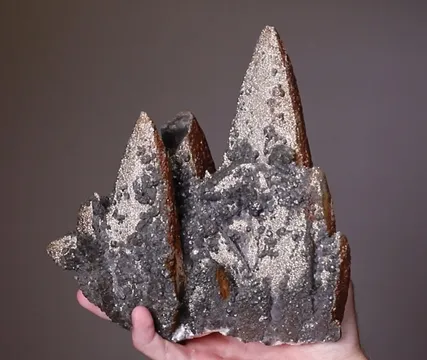
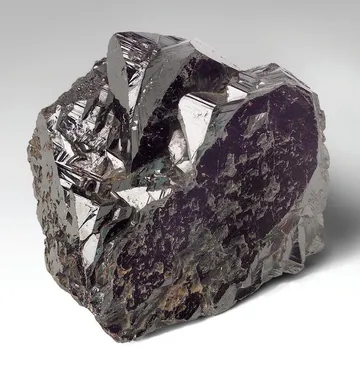
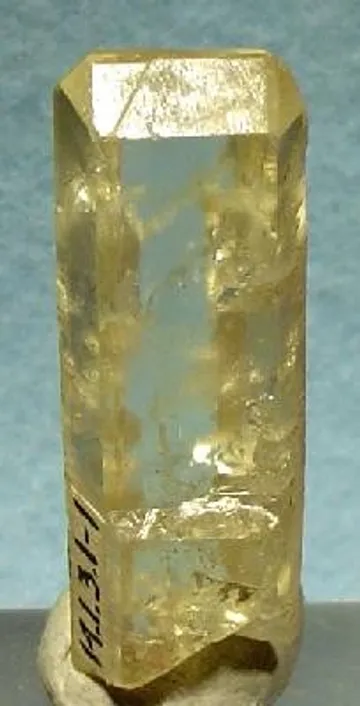

_4.jpg)