






Illinois-Kentucky Fluorspar District, USA — historic fluorite belt known for color-zoned, glassy cubes with calcite and sphalerite; prized Denton-style specime…
Key facts
The Illinois-Kentucky Fluorspar District is the great American fluorite province: a broad, fault-broken mineral belt straddling the Ohio River in southern Illinois and western Kentucky, where carbonate-hosted hydrothermal ores made fluorite an industrial commodity and, later, a collector’s obsession. Geologically it belongs with the fluorite-rich end of Mississippi Valley-type mineralization, but the district is not an ordinary lead-zinc camp with fluorite as an accessory. Here fluorite itself was the ore, deposited with calcite, sphalerite, galena, barite, chalcopyrite, quartz, witherite, strontianite, celestite, and a suite of rarer barium-strontium carbonates in veins, bedding-replacement bodies, residual gravels, and locally mineralized breccias around the Hicks Dome igneous center.
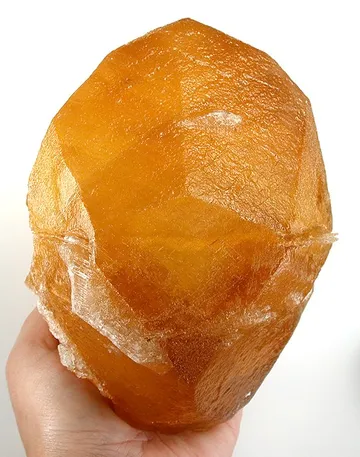
Collectors know the district by mine names that have become shorthand for quality: Minerva No. 1, Denton, Annabel Lee, Cave-in-Rock, Rosiclare, Hill, Deardorff, Crystal, Victory, Gaskins, and many others. The finest specimens are unmistakable. They can be sharp, glassy cubes with yellow cores and purple rims; blue, violet, amber, and colorless zones stacked like panes of stained glass; lustrous stepped cubes carrying honey calcite or dark sphalerite; and, in the classic Denton look, transparent purple-to-blue fluorite dusted or included with brassy chalcopyrite. Good Illinois-Kentucky fluorite is not merely colorful. It has architecture: modified cubes, bevels, etched windows, phantom zoning, petroleum inclusions, and enough internal clarity to make the specimen change character under backlighting.
The district’s historical weight is equally strong. Fluorite was discovered near Rosiclare in the nineteenth century, first treated as a curiosity or waste beside lead mining, then made valuable as an open-hearth steel flux and later as feedstock for hydrofluoric acid and fluorine chemistry. For much of the twentieth century the district dominated U.S. fluorspar output; its mines fed the steel, aluminum, chemical, welding-rod, glass, enamel, and defense industries. As cheap imports undermined the underground mines, the last great specimen-producing operations faded, leaving collectors with a finite legacy of saved pockets, old mine runs, estate material, and a small trickle of modern pieces from active quarrying and limited fluorspar recovery.
Regional View
Country View

The region is also important because it resists simple labels. “Cave-in-Rock” is commonly seen on old tags, but many such labels refer to a mining subdistrict rather than a single mine. “Rosiclare” can mean the town, the historic vein system, a trading locality, or a broader commercial label. Kentucky material is often grouped with Illinois material because the ore bodies and companies crossed state and river boundaries in practice as well as geology. Serious collectors pay close attention to old labels, mine names, subdistricts, associated minerals, and visual style, because locality precision can change both scientific interest and market value.

Search for specimens: View all specimens from Illinois-Kentucky Fluorspar District, USA
The district occupies a structurally busy part of the Illinois Basin where Hardin, Pope, and Gallatin Counties in Illinois meet the western Kentucky fluorspar counties of Crittenden, Livingston, and Caldwell. Its ore deposits are chiefly carbonate-hosted, low-temperature hydrothermal bodies. The classic ore settings are fissure veins along faults and fractures, stratiform or bedding-replacement bodies in limestone, and residual fluorspar gravels derived from weathered ore. The main host rocks are Mississippian carbonates, especially units in and near the Ste. Genevieve, Renault, Downeys Bluff, and related Chesterian limestones, with mineralizing brines moving along northeast-trending fault systems and reacting with carbonate beds.
Structurally, the district is dominated by a mosaic of horsts, grabens, high-angle normal faults, cross faults, and fracture belts arranged around the broad uplift of Hicks Dome. Hicks Dome is not a mine locality in the collector’s sense so much as the structural and magmatic key to the district: a circular uplift and igneous-breccia center whose associated ultramafic and alkaline igneous activity has long been invoked as a source of fluorine and unusual trace elements. The ore fluids were saline brines, rich in fluorine and carbon dioxide, and the district is widely treated as a fluorite-rich Mississippi Valley-type system with an igneous influence stronger than in many Midcontinent lead-zinc districts.
The vein deposits are the older mining image of the district: steep structures filled or replaced by fluorite, calcite, sphalerite, galena, barite, and quartz, locally several feet to tens of feet wide, and mined down hundreds of feet. The Rosiclare-Goodhope-Fairview vein system is the historic emblem of this style. Near Rosiclare, shafts followed the vein northward from the Ohio River area, and the ore could be mined at impressive depth for a fluorspar district. Vein ore commonly carried abundant calcite, and some early mining focused as much on lead as on fluorspar before fluorite became the economic target.
The Cave-in-Rock area became famous for bedding-replacement ore bodies. These were not narrow veins but broad, tabular to irregular bodies localized along bedding horizons and fracture networks in limestone. Many were mined as room-and-pillar underground operations after near-surface ore was stripped or quarried. Such orebodies could be tens to hundreds of feet wide, several feet to a few tens of feet thick, and highly variable in length, with fluorite replacing limestone in banded, imperfectly banded, and brecciated textures. For the collector, these replacement bodies mattered because they produced open cavities and pockets where fluorite crystals grew freely rather than merely forming massive ore.
The mining history begins in the Rosiclare area in the nineteenth century. Fluorite was recognized there in 1839 by James Anderson while digging a well near Fairview Landing, and mining began in Illinois in the 1840s. For decades, the brightly colored mineral was an attractive nuisance or a minor byproduct; its industrial value expanded when open-hearth steelmaking made fluorspar a useful flux in 1888. By the early twentieth century, Rosiclare and nearby Cave-in-Rock had become fluorspar centers competing with long-established English districts. World War I and World War II sharply increased the strategic importance of domestic fluorspar, and the district’s production rose with demand for steel, welding materials, aluminum, chemical manufacture, and defense-related uses.
Several companies and family operations shaped the district. The Rosiclare Lead and Fluorspar Mining Company was the first major producer in the Rosiclare area and left behind the office building that now houses the American Fluorite Museum. Ozark-Mahoning became one of the best-known operators in the Illinois field, especially around Cave-in-Rock and Rosiclare. Minerva Oil Company operated important mines and mills north of Cave-in-Rock. In western Kentucky, Ben E. Clement and associated Crittenden County operators built a parallel history of fluorspar mining and specimen saving. By the late twentieth century, the major underground mines closed under pressure from foreign competition and the high cost of underground work.
The most famous specimen-producing mines are concentrated on the Illinois side. Minerva No. 1, near Cave-in-Rock, is legendary for yellow, blue, and purple zoned cubes, petroleum inclusions, calcite combinations, witherite, strontianite, benstonite, alstonite, and the type-locality mineral paralstonite. Denton, in the Harris Creek subdistrict, produced some of the most coveted transparent purple and blue fluorites in the world, commonly with calcite, sphalerite, and chalcopyrite. Annabel Lee, also in the Harris Creek area, is prized for fluorite, calcite, barite, and combinations with strong color and sharp crystal form. Rosiclare-vein material tends to be older, often massive or ore-oriented, but good specimens from the vein system carry the historical aura of the district’s first great fluorspar camp.
The district’s collecting access today is limited and must be treated conservatively. The great underground specimen mines are closed, reclaimed, flooded, privately owned, or unsafe. Old shafts, stopes, highwalls, dump piles, and quarry benches are not casual rockhounding sites. Modern collecting opportunities have been associated with museum-organized digs, private permissions, and occasional surface or quarry material, especially around Kentucky’s Ben E. Clement Mineral Museum programs and limited Illinois-area quarry activity. Current production in the district is not a return to the old specimen mines: the present-day material is tied to quarrying, stockpiles, and small-scale fluorspar recovery rather than the sustained underground pocket production that made the old classics.
Pocket production was never evenly distributed. Many mines yielded mostly ore, while a few horizons and pods produced highly aesthetic crystals. Collectors and dealers refer to mine levels and zones such as the Rosiclare, Sub-Rosiclare, Bethel, and other replacement horizons, and certain Denton pockets, including late-period material from the early 1990s, have become especially desirable. The best pieces were rescued by miners before crushing, bought at mine offices or from local families, traded through regional shows, and preserved in collections such as the Clement collection. The result is a market full of specimens with mixed histories: some have precise mine-level provenance, others carry only “Cave-in-Rock” or “Rosiclare,” and many attractive old pieces deserve careful locality skepticism.
Fluorite is the district’s defining mineral and occurs as massive ore, banded “coontail” material, cleavage masses, and superb crystals, most famously cubic to modified cubic crystals in yellow, amber, purple, blue, colorless, and rarely greenish tones, often with sharp color zoning and phantoms. Minerva No. 1 is especially associated with yellow cores, blue and purple rims, petroleum inclusions, calcite, witherite, strontianite, and rare barium carbonates; Denton is prized for transparent purple-to-blue cubes with chalcopyrite, sphalerite, and calcite; Annabel Lee and other Harris Creek mines produced strong fluorite-calcite-barite combinations. Common pieces are bruised ore fragments or isolated cubes, while the best specimens show undamaged lustrous crystal faces, strong internal zoning, attractive contrast with calcite or sulfides, and enough transparency to glow under transmitted light.
Calcite is the principal carbonate gangue and one of the district’s key specimen minerals, occurring as early rhombohedral masses and crystals, later scalenohedra, short prismatic crystals, acicular forms, white coatings, and honey to amber crystal groups perched on fluorite. The finest calcites are strongly associated with the Denton and Annabel Lee mines, where bright honey-colored calcite clusters on purple or blue fluorite give the classic Southern Illinois contrast; Minerva No. 1 and Cave-in-Rock material also produced calcite with zoned fluorite, sphalerite, witherite, and benstonite. Ordinary calcite is common and easily bruised, but top pieces have clean luster, distinct habit, balanced placement on fluorite, and minimal contact damage on the exposed points and edges.
Chalcopyrite in the Illinois-Kentucky district is usually an accessory sulfide rather than a dominant display mineral, but it is highly valued when it appears as brassy microcrystals, dustings, coatings, or sparkling inclusions on and in fluorite, especially in Denton Mine specimens. It occurs with the broader fluorite-sphalerite-galena-calcite-barite assemblage and may sit in stepped growth hollows, line clefts between fluorite cubes, or appear as metallic specks suspended inside transparent blue-purple crystals. Good chalcopyrite pieces here are judged less by the size of the chalcopyrite crystals than by contrast and placement: a transparent fluorite plate with bright, undarkened chalcopyrite distributed across faces or included in clean zones is far more desirable than a dull, heavily coated or badly cleaved example.
Barite is widespread in the district and occurs as massive material, druses, blades, tabular crystals, and late coatings or sprays on fluorite, calcite, and sulfides; well-formed barite crystals are documented from Minerva No. 1, Denton, Annabel Lee, Gaskins, Crystal, Victory, and related mines. In the paragenesis of the Cave-in-Rock ores, barite is a late major mineral, and that late position explains why it so often decorates or partially covers earlier fluorite rather than forming the main visual mass. Ordinary barite here can be chalky or subordinate, but fine specimens show crisp white, cream, or lightly tinted blades arranged cleanly on zoned fluorite, or distinctive drusy surfaces that enhance rather than obscure the color and form of the fluorite beneath.
Beyond the four collector staples, the district has a deep supporting cast. Sphalerite and galena are locally abundant and important both economically and aesthetically, with sphalerite commonly providing a dark matrix for fluorite. Pyrite and marcasite occur in minor to locally notable amounts, and oxidized lead-zinc-copper minerals such as cerussite, smithsonite, hemimorphite, greenockite, malachite, cuprite, and pyromorphite are documented from parts of the district. Strontianite, witherite, celestite, quartz, ferroan dolomite, and bitumen are all important to the collector’s eye and to the paragenesis. Minerva No. 1 is especially significant for barium-strontium carbonate rarities: benstonite occurs there in world-class quality, alstonite is a notable associate, and paralstonite is a type-locality mineral described from Minerva No. 1 material.
The district’s main authenticity issue is not usually outright faking; it is locality inflation. Old labels reading “Cave-in-Rock,” “Rosiclare,” or “Illinois” may be honest but imprecise, and later owners often convert a broad district label into a famous mine name without evidence. A fluorite with purple-blue zoning and chalcopyrite may look “Denton-like,” and a yellow-purple zoned cube may look “Minerva-like,” but visual style alone is not proof. Provenance matters: old mine tags, collection labels, purchase history, and association with known miners or local dealers can be as important as the specimen itself.
Condition is the second major issue. Fluorite has perfect octahedral cleavage and relatively low hardness, so large Illinois pieces commonly show edge bruises, cleaved corners, contacted backs, broken matrix, or repaired cubes. The broad, flat cube faces make small abrasions obvious under side lighting. Calcite on these specimens is even more vulnerable; honey calcite points and scalenohedra are frequently chipped, dissolved, or dulled by cleaning. Barite may be fragile and cleavable, while chalcopyrite can tarnish or darken if stored in damp conditions.
Hydrocarbon and bitumen inclusions are part of the district’s character, not necessarily a defect. Some fluorites show petroleum blebs, dark internal clouds, or organic coatings; these can add interest and may produce reddish or unusual fluorescence effects in some pieces. Fluorite itself is famously named from fluorescence, but Illinois-Kentucky specimens are not bought chiefly as fluorescent minerals in the way Franklin calcites or willemites are. Test with longwave and shortwave UV if fluorescence matters to you, but judge the specimen primarily by crystal quality, color, zoning, transparency, association, and provenance.
Cleaning should be cautious. Acid cleaning can brighten calcite-free fluorite but may destroy calcite, etch associated carbonates, loosen matrix, or reveal hidden bruising. Iron staining is common on old mine material and is not automatically undesirable; aggressive cleaning can make a historically honest specimen look unnatural. Petroleum inclusions and coatings should not be attacked with solvents unless one understands exactly what is being removed. Older repairs with epoxy are not rare in cabinet-size plates, and collectors should inspect large cubes and matrix contacts under magnification and UV.
Market availability remains relatively good for a closed classic district because thousands of specimens were saved, but quality is very uneven. Small fluorite pieces, cleavage masses, and mine-run fragments appear regularly. Good miniature and cabinet fluorites from Minerva No. 1, Denton, and Annabel Lee are consistently in demand. Top transparent Denton plates with chalcopyrite, sharp Minerva zoned cubes with blue-purple phantoms, excellent fluorite-calcite combinations, and rare-carbonate associations from Minerva No. 1 have become serious collector material. Kentucky district specimens, especially with precise mine names, are less frequently encountered in the same aesthetic league but can be historically and regionally important.
The district begins, in collector lore, with a well. In 1839, James Anderson was digging near Fairview Landing, just southwest of what is now Rosiclare, when he encountered fluorite. It was not yet the treasure later generations would chase. In the early years the valuable material was lead, and the colored calcium fluoride could be treated as waste. That reversal is one of the great ironies of the district: the mineral now displayed in museum cases, traded under famous mine names, and photographed like stained glass was once valuable chiefly after industry learned that it helped steel flow cleaner in the open-hearth furnace.
Rosiclare’s old mining office gives the district one of its best physical survivals. The office of the Rosiclare Lead and Fluorspar Mining Company, sitting beside the historic vein system, became the American Fluorite Museum. That is the right kind of afterlife for the building. It stands near the ground where the Rosiclare, Goodhope, and Fairview vein system was followed for miles, with dozens of shafts sunk along it over the years. The vein reached widths of about 30 feet and was mined in places to more than 700 feet deep. For a visitor who knows specimens only as glowing cubes in a case, those dimensions restore the industrial scale behind the beauty.
On the Kentucky side, Ben E. Clement’s story is inseparable from the survival of thousands of specimens. Clement moved to Marion in 1919 and entered the fluorspar business after a friend in banking urged him to try it. He became a mine owner and manager, but his collector’s instinct changed the fate of countless pieces. Miners brought colorful crystals up from underground to sell for extra income; Clement wanted first look. Over decades, from the 1920s until his death in 1980, the habit of saving mine specimens became a museum-quality archive of the district. The result is the Ben E. Clement Mineral Museum in Marion, where the cases preserve not only fluorite but also the paper trail, photographs, equipment, and local memory of the western Kentucky mines.
One of the strongest images from the Clement collection is scale. Visitors expect colorful cubes; they may not expect fluorite specimens weighing tens or hundreds of pounds, or a dark purple Minerva Mine specimen described at 65 pounds with calcite “capes” extending between the fluorite cubes. The museum’s significance is not simply that it owns many specimens, but that so many were collected close to their source, within the working life of the district, before the mines closed and before labels began to drift through the secondary market.
The twentieth-century boom was not a quiet mineral-collecting idyll. In Crittenden County and around Marion, fluorspar was employment, not hobby. During the Depression, Frank “Bo” Moodie IV recalled that one regional operation employed 500 men, making it one of the largest employers in western Kentucky. Fluorspar linked small towns to Pittsburgh steel, wartime shipbuilding, aircraft aluminum, welding materials, and later chemical industries. When imports and costs closed the mines, the loss was not abstract. Families who had expected sons and grandsons to work underground instead watched the industry thin into quarries, museums, old labels, and conversations about whether fluorspar might ever return.
The modern field collector encounters a quieter but more complicated landscape. Some old mine areas are reclaimed, some are dangerous, some are private, some are hidden by vegetation, and some survive only as names on specimen tags. Hastie Quarry near Cave-in-Rock offers one of the most tangible modern cross-sections of the old district. As limestone quarrying advances through Ste. Genevieve and related beds, old underground workings can be exposed in highwalls, and fluorite left behind by earlier mining may be recovered. There, the past is not romanticized: the same hill can show industrial aggregate, old room-and-pillar fluorspar work, banded ore, and occasional collectable crystals.
_1_(34521863256).jpg)
