






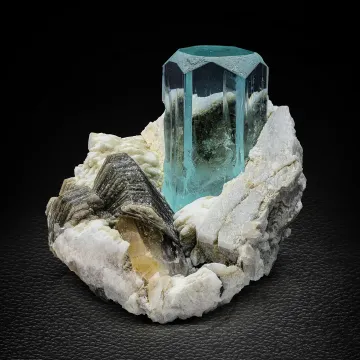
Hunza District, Pakistan - marble-hosted ruby and sapphire specimens, plus aquamarine and fluorite from pegmatites; a storied locality prized by collectors.
Key facts
Hunza District sits in one of the most storied mineral corridors of the Karakoram: a high, structurally complex belt where ruby-bearing marbles, metamorphic country rock, granitic intrusions, and gem pegmatites are crowded into a steep Himalayan landscape. For collectors, “Hunza” has two overlapping meanings. In strict modern administrative terms, Hunza District was created after the division of the former Hunza–Nagar District, and the verified district record is centered especially on the Upper Hunza ruby-and-sapphire marble occurrences, plus quartz-bearing localities such as Khyber and Morkhun. In the specimen trade, however, older “Hunza Valley,” “Hunza-Nagar,” “Gilgit District,” and “Northern Areas” labels also cover the adjacent Nagar side of the valley, including the celebrated Chumar Bakhoor pegmatites whose aquamarine, fluorite, muscovite, and apatite combinations have long traveled under broad Hunza-market labels.
The classic Hunza collector specimen is ruby in marble: purplish red to pinkish red corundum, commonly as hexagonal crystals standing in pale calcite marble, sometimes with phlogopite, chromian muscovite, spinel, chlorite, margarite, pargasite, or pyrite. The look is unmistakable when good: a hard, saturated corundum crystal glowing against white to grayish marble, the crystal often fractured or partly included, yet visually powerful because of its color contrast and natural matrix setting. The best pieces are not merely gem rough left uncut; they are sculptural marble-hosted corundum specimens from a locality that helped introduce Pakistan’s northern gemstone wealth to the international collecting world after the Karakoram Highway opened access to a formerly isolated valley.
Regional View
Country View
The geology that matters most to ruby collectors is the marble sequence: concordant marble layers, commonly 1–5 meters thick and locally up to about 10 meters, intercalated with garnetiferous mica schists and biotite-plagioclase gneisses in the northwestern Karakoram. These rocks were intruded by aplite and pegmatite dikes and were metamorphosed under high-temperature amphibolite-facies conditions. The ruby formed in carbonate rocks whose chemistry was unusually favorable: aluminum- and chromium-bearing components, carbonate-rich fluids, and a metamorphic history that allowed corundum and spinel to crystallize in marble rather than in the pegmatites more familiar from other Pakistani mineral districts.
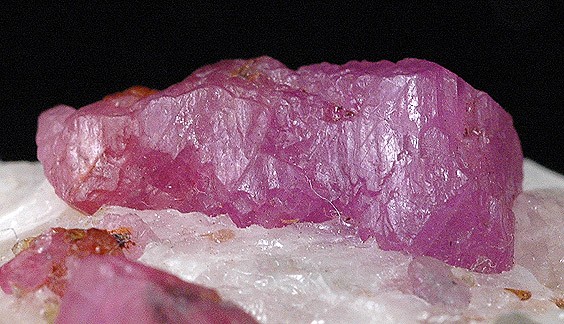
Photo: Wikimedia Commons
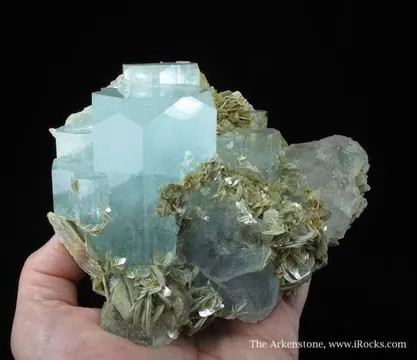
For aquamarine and fluorite collectors, the broader Hunza Valley market story leads across the old Hunza–Nagar collecting geography to Chumar Bakhoor. There the specimen style is entirely different: pale to sky-blue beryl prisms rising from bladed muscovite in granitic pegmatite, sometimes with fluorite, fluorapatite, feldspar, quartz, schorl, and topaz. These specimens are among the most recognizable modern Pakistani matrix minerals, and older labels may state simply “Hunza Valley,” “Nagar,” “Northern Areas,” or “Gilgit,” making careful label interpretation part of collecting the district.
Search for specimens: View all specimens from Hunza District, Pakistan
Hunza’s collector minerals come from two closely related but mineralogically distinct settings: marble-hosted corundum mineralization in the Hunza Valley and gem pegmatite mineralization in the wider historical Hunza–Nagar specimen trade. The ruby-bearing marbles belong to the Karakoram Metamorphic Complex north of the Main Karakoram Thrust. They are metamorphosed and recrystallized carbonate beds within a thick sequence of metasedimentary and metavolcanic rocks between the central granitic belt to the north and the Kohistan-Ladakh formations to the south. The gem-bearing carbonate belt has been described as extending for more than 100 kilometers from the Hunza Valley toward the Ishkoman Valley.
The ore bodies are not ore bodies in the industrial sense. They are ruby-, sapphire-, spinel-, and pargasite-bearing marble horizons, lenses, layers, and structurally controlled exposures in very steep terrain. Around Karimabad, Aliabad, Altit, Ahmedabad, Hassanabad/Datumbaresho, Bajoring, Gharei Chhar, Phudan Daar, Gafinas, and Dong-e-Das/Ganesh, the productive zones occur high above the villages, commonly several hundred meters to a kilometer above the valley floor. The marbles are interlayered with gneiss and mica schist and locally cut by pegmatite, aplite, granite, and related intrusive rocks. The richest ruby/spinel zones are reported where marble blocks and layers are affected by intrusive dikes and favorable structural positions.
The ruby mineral assemblage is classic marble-corundum: calcite marble with corundum, phlogopite, margarite, sheridanite, Al-rich pargasite, anorthite, spinel, chlorite-group minerals, muscovite, and locally pyrite. In hand specimen, the collector sees this as red to pink corundum in white, gray, or slightly yellowish marble, sometimes with green mica or amphibole and with spinel in pink, red, violet, or blue tones. Gemologically, most Hunza ruby is included, fractured, or translucent rather than clean faceting rough; nevertheless, fine small crystals and matrix groups are prized because they show natural crystal form and the dramatic red-on-marble contrast.
Mining history in the ruby belt is a mixture of local knowledge, state-backed exploration, and artisanal work. The gemstones likely were known locally before they became widely recognized in the international trade, but the opening of the Karakoram Highway in the early 1970s allowed specimens and information to move outward. Pakistan Mineral Development Corporation operated Hunza ruby mines for seven years from 1972 to 1979, and the Gemstone Corporation of Pakistan then ran mine operations from 1979 to 1994. Government figures record roughly 0.1 million carats of rough ruby production by the Gemstone Corporation period through 1994, with most material falling in low to medium grade and only a small fraction reaching top grade.
Production has always been uneven. One modern field update recorded about 100 miners and local dealers involved in ruby mining and trading around the Hunza Valley in 2011, at several deposits whose production began in the 1960s and 1980s. That same report described a color progression from deeper red material around Datumbaresho to pinkish red around Aliabad and Karimabad, and pinkish to bluish red around Dong-e-Das/Ganesh. The stones were described as generally small and included, with mineral specimens an important part of the production rather than an afterthought.
Mining methods have traditionally been simple and specimen-sensitive by necessity. Marble has been broken with hammers, hand picks, pneumatic drills, and sometimes dynamite; in places, branching adits have been driven into the marble. Miners break the marble into smaller pieces, remove usable gem rough, and preserve crystals left in matrix when their cutting value is poor or their specimen value is high. This is why Hunza ruby specimens are so often a compromise between mineral aesthetics and damage: the marble is workable, but corundum crystals are naturally fractured, included, partly resorbed, or locked into carbonate.
The pegmatite side of the broader Hunza Valley trade is represented most famously by Chumar Bakhoor in the Sumayar/Nagar area. Its gem-bearing pegmatites crop out high above the valley, commonly described above 4,000 meters and in mine areas around 4,600–4,800 meters or higher, reached by steep foot approaches. Geological work describes two important pegmatite groupings: muscovite-schorl pegmatites and quartz-muscovite-feldspar pegmatites associated with the Sumayar pluton and calc-silicate and amphibolite host rocks. These are pocket-bearing granitic pegmatites, not large mechanized mines, and they yield aquamarine, beryl, fluorite, fluorapatite, quartz, albite, microcline, muscovite, schorl, topaz, and related accessory minerals.
The Chumar Bakhoor story is now central to how collectors read Hunza-labeled aquamarine and fluorite. The gemstone deposits are widely attributed to discovery by local hunter Muhammad Shah in 1984, after which aquamarine-on-muscovite and associated fluorite and apatite pieces began entering the market under broader Nagar, Hunza Valley, Hunza-Nagar, and Northern Areas labels. A later field account described a village-based miners’ association at Sumayar, with work groups operating the pegmatites and the benefits intended to support the community. Because of altitude, snow, and access, mining is seasonal and the finest pieces are the result of short working windows, careful pocket extraction, and long transport from high camps to valley dealers.
Collecting access today should be understood as commercial mining access, not recreational collecting. The ruby workings are steep, locally controlled, and in active or intermittently active mining terrain. The pegmatites are higher still, seasonal, and reached through local guides, miners, and village networks. Serious collectors normally acquire Hunza material through Pakistani dealers, Peshawar and Gilgit trade channels, international mineral dealers, established auctions, or older collections. For high-value specimens, locality precision, old labels, and provenance matter: “Hunza,” “Hunza Valley,” “Gilgit,” “Nagar,” “Aliabad,” “Ganesh,” “Khyber,” and “Chumar Bakhoor” may describe different administrative moments, trade habits, or actual sources.
Corundum from Hunza District is best known as marble-hosted ruby and sapphire, with crystals ranging from pale blue, violet, pink, and purplish red to richly saturated ruby red. The crystals are typically hexagonal, often partly translucent to opaque, commonly fractured, and may show calcite inclusions, carbonate patches, parting, and growth zoning; smaller crystals tend to be sharper and more multifaced, while larger crystals are more likely to be blocky, fractured, or less completely formed. The best Hunza corundum specimens show a distinct crystal standing naturally in pale calcite marble, preferably with strong color, visible hexagonal form, and minimal glued repair; ordinary pieces are massive, highly fractured, chalky, or visually lost in marble. Associations that matter here include calcite, phlogopite, chromian muscovite, spinel, margarite, chlorite, pargasite, and locally pyrite, all of which help distinguish true marble-corundum Hunza material from loose ruby rough or specimens assembled later for the market.
Ruby is the signature Hunza specimen mineral: red corundum in recrystallized marble, found in the valley’s ruby belt around Aliabad, Karimabad, Altit, Ahmedabad, Hassanabad/Datumbaresho, Bajoring, Phudan Daar, Gafinas, and Dong-e-Das/Ganesh. Colors range from brownish red and pinkish red through purplish red to bright red and occasional “pigeon’s blood” tones, with Datumbaresho reported for deeper red material and Aliabad/Karimabad more often pinkish red. Crystals may be single hexagonal prisms, groups, or etched crystal masses in marble; many are fractured or cabochon-grade, but collector value depends on natural matrix contact, face definition, saturation, translucency when backlit, and freedom from obvious glue or filler. The most desirable specimens keep the locality’s contrast intact: ruby rising cleanly from white to gray marble, sometimes with mica or spinel, rather than loose corundum fragments or artificially mounted crystals.
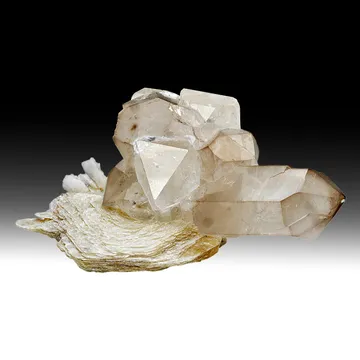
Quartz is documented from Upper Hunza, Khyber, and Morkhun and also appears in the broader Hunza-Nagar pegmatite suite, where it is associated with muscovite, feldspar, aquamarine, fluorite, and other pocket minerals. In the ruby marbles and metamorphic rocks it is a subordinate matrix and vein mineral rather than the star, but at Khyber and in pegmatite-related pieces it may occur as clear to milky crystals, coatings, or matrix points. The better Hunza-associated quartz specimens are those in which quartz participates in a natural pegmatite composition—especially with aquamarine, muscovite, feldspar, or fluorite—rather than isolated common crystals lacking precise locality. For collectors, quartz is most valuable here as geological context and matrix architecture: it helps tell whether a specimen belongs to the metamorphic marble story, a vein setting, or the high pegmatite pocket tradition of the wider Hunza Valley trade.
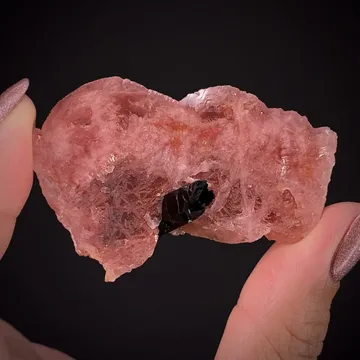
Fluorite associated with Hunza-market specimens is principally the celebrated Chumar Bakhoor material from the historical Hunza-Nagar collecting sphere: transparent to translucent crystals in white, green, pale pink, orange-pink, and stronger pink tones, commonly on bladed muscovite and sometimes with aquamarine or fluorapatite. Habits include octahedra, cubes, modified cubo-octahedra, dodecahedral modifications, and large spinel-law twins, with the finest 2006-type pink specimens regarded as exceptional among modern fluorites for their combination of size, color, transparency, and dramatic mica matrix. Good pieces show natural seating on muscovite, strong color, bright luster, undamaged edges, and convincing association with aquamarine or apatite; ordinary examples are pale, bruised, detached, glued, or merely labeled “Pakistan” without a traceable Chumar Bakhoor/Hunza-Nagar history. Fluorite is also a useful warning species here, because aquamarine-fluorite-muscovite combinations are valuable enough to have attracted artificial assembly.
Aquamarine from the broader Hunza Valley collecting tradition is dominated by Chumar Bakhoor-style beryl: pale water-blue to sky-blue hexagonal prisms, commonly transparent to translucent, perched on sparkling bladed muscovite and sometimes accompanied by fluorite, fluorapatite, albite, microcline, quartz, schorl, or topaz. The locality’s strength is not the deepest color in Pakistan but the specimen architecture—upright blue prisms on mica plates, often cabinet-sized and naturally displayable. Crystals may range from thumbnail-size accents to several-centimeter display pieces and larger matrix groups, with one documented GIA specimen measuring about 77 × 55 × 45 mm and weighing 1418 ct while containing visible fluorite inclusions. The best examples have intact terminations, glassy faces, pleasing blue tone, undisturbed mica around the base, and no suspicious socketing or filler; weak pieces are nearly colorless, damaged, or so heavily repaired that the matrix relationship becomes uncertain.
Muscovite plays two roles in Hunza collecting. In the ruby marbles, greenish chromian muscovite may form fine scaly material between ruby crystals and marble or partly wrap the lower parts of ruby crystals; it has sometimes been mistaken for fuchsite in older or casual descriptions, but X-ray work on Hunza material identified muscovite containing minor chromium and vanadium. In the pegmatite specimens of the broader Hunza-Nagar trade, muscovite is the glittering matrix that makes Chumar Bakhoor aquamarine, fluorite, and fluorapatite specimens so visually distinctive: tabular to bladed books and druses, usually silvery to brownish, supporting blue beryl or pink fluorite. Good muscovite on Hunza specimens is crisp, undisturbed, and integrated around crystal bases; scraped, carved, or oddly cleared mica at the contact is a red flag for artificial assembly.
Beryl from the Hunza Valley market sphere appears most often as aquamarine, but the broader beryl label is appropriate for paler, weakly blue, greenish blue, or nearly colorless crystals from Chumar Bakhoor and related Nagar/Hunza-labeled pegmatites. Crystals are typically hexagonal prisms, singly or in groups, on muscovite-rich pegmatite matrix; some are bright and transparent, while others are etched, contacted, frosted, or internally veiled. Fine beryl specimens from this association are judged by termination quality, clarity, color, luster, and the naturalness of the matrix contact, especially where muscovite blades continue around the base rather than looking excavated. Beryl pieces with schorl, feldspar, quartz, fluorite, or fluorapatite are particularly desirable when the combination is demonstrably natural and not a loose beryl crystal mounted onto unrelated mica.
Sapphire from Hunza is the non-red corundum of the marble belt, reported in pale blue, violet, lilac, pinkish, nearly colorless, and bluish-red to violet shades associated with the same calcite-marble environment as ruby. It is less common than red ruby in the classic Hunza material and tends to be judged less as cutting rough than as a locality-variety specimen when it shows identifiable corundum crystal form in marble. Associations include calcite, mica, spinel, pargasite, chlorite, and the other marble minerals of the corundum assemblage. The best sapphire specimens are sharply crystallized, visibly blue or violet rather than merely gray corundum, and accompanied by honest matrix; ordinary examples are pale, included, poorly formed, or difficult to separate visually from low-color corundum unless the label and provenance are strong.
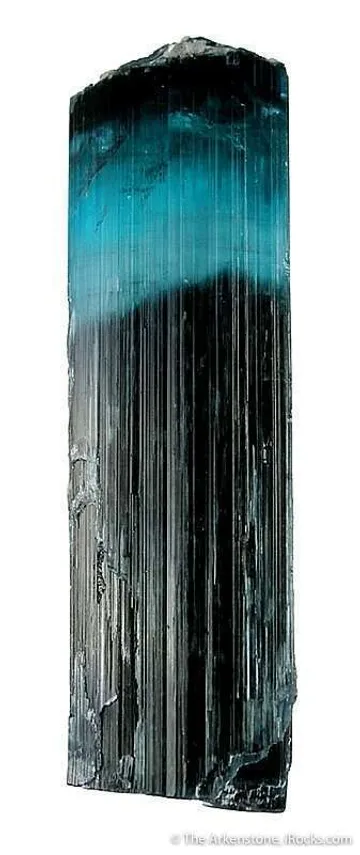
Other documented minerals from the modern Hunza District record include calcite, aragonite, chlorite-group minerals, chondrodite, titanite, tourmaline, and almandine-spessartine series garnet, while the broader Hunza-Nagar collecting tradition adds the familiar Chumar Bakhoor pegmatite companions: fluorapatite, albite, microcline, schorl, topaz, and beryl varieties. No valid type-locality mineral is convincingly documented for Hunza District in the verified sources used here. The rarities that matter most to collectors are instead paragenetic rather than taxonomic: pargasite in the ruby marbles, blue to violet spinel accompanying corundum, titanite with quartz, calcite, chlorite, and muscovite from Upper Hunza, and exceptional fluorite-aquamarine-fluorapatite-muscovite pegmatite combinations preserved under older Hunza Valley trade labels.
Hunza specimens reward close looking. The most common ruby condition issues are natural fracturing, calcite-filled cracks, included carbonate, bruised crystal edges, contact marks, and incomplete crystal form. These flaws are normal for the locality and should not automatically be treated as damage; many legitimate Hunza rubies are too included for faceting but excellent as mineral specimens. Smaller crystals may be sharper and cleaner, while larger crystals often show fewer faces, heavier internal disruption, or more massive corundum. The strongest values go to natural ruby-on-marble groups with good color, clear hexagonal form, no obvious repair, and a believable relationship between crystal and marble.
Authenticity is a serious issue. Recent GIA reporting documented reconstructed “Frankenstein” specimens from Hunza and Gilgit market channels: natural fragments of ruby and host rock artificially assembled with resin-like adhesive, with glue sometimes camouflaged and harder to detect when oiled. That is directly relevant to Hunza ruby collectors. Examine the crystal base under magnification, use angled light, and look for glossy seams, resin meniscus, crushed-marble filler, inconsistent dirt in cracks, abrupt gaps between corundum and matrix, and oil-wet surfaces hiding joins. A clean repair disclosed by a reputable dealer is a different ethical category from a ruby glued onto unrelated marble and sold as natural.
The same problem affects aquamarine-on-muscovite and fluorite-on-muscovite specimens sold under Nagar, Hunza Valley, or Chumar Bakhoor labels. Loose aquamarine crystals have been fitted into scraped or carved mica matrices, and fluorite or apatite accents can be added to increase value. Natural pieces should show mica blades growing around the base, feldspar or quartz contacts that make sense, and no suspicious white putty, clear glue, polished socket, or isolated “trophy” crystal centered too perfectly on a mica plate. Longwave UV may reveal some adhesives, but some glues do not fluoresce, so UV is only one test.
Mislabelling is common and not always dishonest. Older specimens may be labeled “Hunza Valley,” “Gilgit District,” “Northern Areas,” “Hunza-Nagar,” “Nagar,” “Aliabad,” or “Chumar Bakhoor,” reflecting changing administrative divisions and older trade habits. For ruby, Aliabad marbles, Ganesh/Dong-e-Das, Karimabad-area workings, and Datumbaresho-type material can be confused under the general Hunza name. For aquamarine and fluorite, a broad Hunza Valley label may actually indicate Chumar Bakhoor in Nagar. The specimen itself should be read against the label: marble-hosted corundum with spinel or pargasite belongs to the ruby belt; blue beryl on bladed muscovite belongs to the pegmatite story.
Treatments are most relevant to gem rough and cut stones, less so to undisturbed matrix specimens. Ruby may be oiled to reduce the visual impact of fractures, and oil can also help conceal adhesive seams. Aquamarine rough is commonly heat treated in the gem trade to reduce greenish tones, but complete muscovite-matrix aquamarine specimens are less likely to be heated because mica, feldspar, repairs, inclusions, and thermal shock make treatment risky. Nevertheless, unusually intense color in a loose beryl crystal should be considered separately from a natural matrix specimen.
Fluorescence can be useful but should not be overinterpreted. Ruby’s chromium-related red fluorescence may be visible, but matrix, lighting, iron content, and surface condition all affect what a collector sees. Fluorescent glue is a warning sign, not a complete diagnostic, and non-fluorescent glue does not prove a specimen is natural. Fluorapatite from Chumar Bakhoor can show notable fluorescence, and some dealers specifically market fluorescent apatite-on-muscovite specimens from the locality.
Availability is split by species. Ordinary Hunza ruby fragments and modest ruby-on-marble specimens appear regularly enough, but fine, sharp, saturated, naturally seated ruby crystals in marble are far scarcer than the name recognition suggests. Good Chumar Bakhoor aquamarine-on-muscovite specimens remain available on the market, though top pieces with strong blue color, pristine terminations, and undisturbed matrix are increasingly competitive. Quality pink fluorite from the important finds, especially large, transparent, undamaged, well-composed examples with aquamarine or apatite, is much less common and usually trades as a serious collector specimen rather than routine Pakistani material.
The modern Hunza ruby story begins with a road. Before the Karakoram Highway reached the valley in the early 1970s, the rubies existed in a world that was physically close to villages yet commercially remote from the mineral cabinets of Europe, Japan, and North America. The red crystals were there in the marble, visible enough that local inhabitants and the Mir of Hunza almost certainly knew of them, but the valley’s isolation kept both stones and information largely local. After the highway opened, tourists and travelers began carrying specimens out, and the material was soon examined and introduced to gemologists through the 1976 work of Okrusch, Bunch, and Bank. That shift—from village-known red crystals to published marble-hosted ruby locality—is one of the quiet turning points in Pakistan’s mineral-collecting history.
The old field descriptions are wonderfully concrete. The marble outcrops could be seen from the valley floor near Karimabad and Aliabad, pale bands set into darker metamorphic country rock below the Mutschual and Shispar glaciers. One exploited outcrop lay along the southernmost tip of the Shispar glacier; another was on a steep mountainside above a large talus slope near Aliabad; two more were on either side of the bridge behind Karimabad. One of those actually crossed the road. The other was high above the right bank of the Hunza River in an almost vertical rock face. That is the setting behind many cabinet specimens: not an abstract locality dot, but pale marble bands on a wall of Karakoram rock, with terraced fields and 7,800-meter Rakaposhi towering over the valley.
The mine work was direct and unforgiving. In the ruby marbles, miners broke rock with hammers, hand picks, pneumatic drills, and dynamite, then reduced the marble further to free usable crystal. Pieces too included or fractured for cutting could become mineral specimens, which is why so many Hunza rubies preserve the original drama of red corundum in white carbonate. The work also explains the paradox of the locality: some crystals are among the most beautiful natural ruby specimens Pakistan has produced, yet many are bruised, cracked, repaired, or only partly exposed. The marble yields, but it does not yield gently.
A 2011 field update gives the human scale. About 100 miners and local dealers were involved around Hunza, and the deposits stretched across named places that now function almost like a collector’s map: Datumbaresho in the northwest; Aliabad and Karimabad with Bajoring, Gharei Chhar, Phudan Daar, and Gafinas; then Altit, Ahmedabad, and Dong-e-Das, also called Ganesh, toward the east. Most workings sat 500–1,000 meters above the villages at roughly 3,000 meters elevation. The color shifted along the belt: deep red at Datumbaresho, pinkish red around Aliabad and Karimabad, pinkish to bluish red around Dong-e-Das. The stones increased in size in that same direction, from less than 0.4 gram to more than 20 grams, but most remained cabochon quality at best. For a collector, those numbers make a fine Hunza matrix ruby feel even more fortunate: the odds favor small, included material, not a clean, sharp, well-seated crystal.
The Chumar Bakhoor story belongs to the other side of the Hunza mineral imagination: high pegmatites, blue beryl, and mica. The discovery is attributed to Muhammad Shah, a local hunter, in 1984. That origin story fits the landscape. The deposits are not roadside quarries; they are high workings reached by hours of steep walking from the Sumayar side, with pegmatites cropping out above 4,000 meters and mining camps looking down toward the Hunza Valley. The early specimens did not always carry the now-familiar Chumar Bakhoor name. They moved through the trade as Nagar, Hunza-Nagar, Hunza Valley, Gilgit, or Northern Areas, which is why old labels can seem vague even when the specimen style is unmistakable.
Jim Clanin’s field account of Pakistani mountain mining captures why the specimens are expensive before they ever reach a dealer’s cabinet. At high elevations, pockets may remain frozen, small engines and pneumatic gear can struggle, and the mining season can shrink to a few months between snow and weather. In many places, equipment and supplies must be carried by animal or by the miners themselves. Chumar Bakhoor was described as organized through a miners’ association in Sumayar, with groups of local miners working the pegmatites and the proceeds intended to benefit the village. One later summary recorded 55 groups of six men each. That means a fine aquamarine-on-muscovite from the locality is not simply a crystal from a pocket; it is the product of altitude, weather, village organization, and a short season of work.
The great fluorite moment came at the 2006 Munich Show, when Italian dealer Riccardo Prato displayed five extraordinary Chumar Bakhoor fluorite specimens at his Pregi Gemme stand. Pink fluorite from Pakistan was not new, and octahedral crystals with aquamarine or fluorapatite on muscovite had already been known for years, but this find was different. Roberto Appiani later described the 2006 pieces as far superior to previous discoveries and among the finest known examples of fluorite. Collectors who know the usual pale or battered pegmatite fluorites understand why that mattered: here were pink, transparent, large, aesthetic fluorites from a modern Pakistani pegmatite field, some in combinations with the very species that made Chumar Bakhoor famous.
A small but remarkable 2025 GIA note added a new curiosity to the locality’s record: a sharp light-blue aquamarine crystal from Chumar Bakhoor, 77 × 55 × 45 mm and 1418 ct, carrying a dozen white octahedral fluorite crystals inside it. The fluorite inclusions ranged from 5 to 10 mm across and were visible throughout the aquamarine. For a mine field active for roughly four decades, that was surprising enough that the author called it effectively one-of-a-kind in the available literature. It is a perfect Chumar Bakhoor detail: the locality famous for aquamarine with fluorite on muscovite also produced, at least once, aquamarine with fluorite literally locked inside.


_2.jpg)