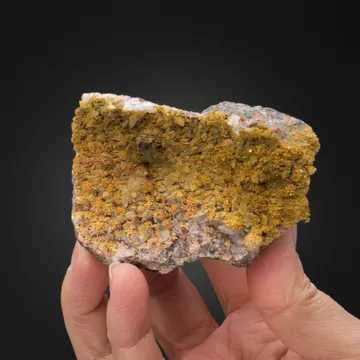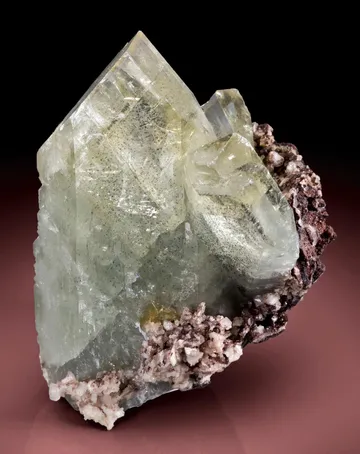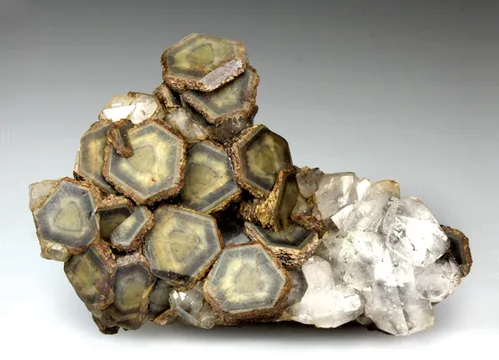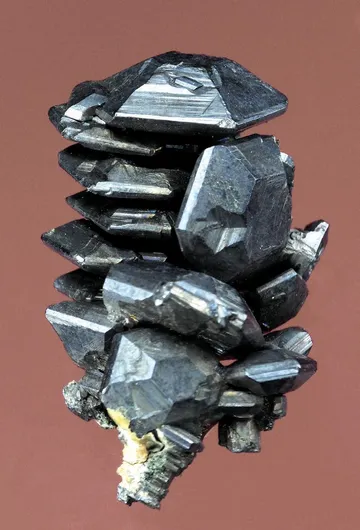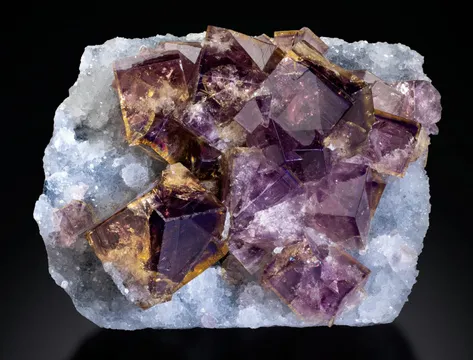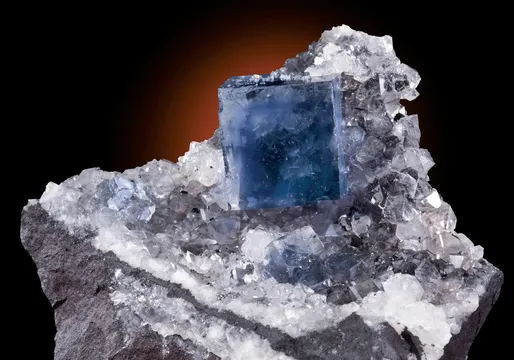
Hilton Mine, UK — classic North Pennines locality famed for lemon-to-honey yellow fluorite cubes, often twinned with baryte; a coveted site for collectors.
Key facts
Hilton Mine is one of the classic names of the North Pennines for a very particular reason: it produced golden to amber-yellow fluorite of a quality and character almost unmatched in Britain. The mine lies high in Scordale, the steep valley of Hilton Beck on the western escarpment of the Pennines near Appleby-in-Westmorland, where the Northern Pennine Orefield passes outward from the familiar fluorite-bearing ground into a barium-rich zone. Hilton sits in that borderland. Its veins and flats cut Carboniferous limestones close to the Whin Sill, and the result is an assemblage in which fluorite, baryte, witherite, calcite, galena and a surprisingly rich suite of secondary and nickel minerals meet in compact but specimen-rich ground.
The collector’s image of Hilton is unmistakable: lustrous yellow cubes, many as penetration twins, sometimes crowded on smaller yellow cubes, sometimes perched against white tabular baryte, and often carrying tiny metallic inclusions that flash under light. The best pieces have a saturated lemon-to-honey colour, glassy faces, sharp edges, internal clarity and undamaged twin forms. These are not common English fluorites that happen to be yellow; they are a coherent locality style, mostly associated with the Dow Scar Level and its baryte-rich flats, and old labels from Hilton are prized because new collecting from the underground workings is no longer available.
Regional View
Country View
Hilton’s specimen reputation rests on the contrast between its remote, austere Pennine setting and the warmth of its finest fluorite. The mine was first important as a lead producer, then as a barium-mineral producer, but its lasting place in cabinets came later, when collectors recognized that the old lead and barytes workings had preserved exceptional crystal pockets. In the best old specimens, the yellow fluorite seems almost architectural: twinned cubes rising from a crust of smaller cubes, or set off by white baryte blades, grey galena, quartz and iron-stained matrix.

Photo: Wikimedia Commons

Photo: Wikimedia Commons
Search for specimens: View all specimens from Hilton Mine, UK
Hilton Mine is part of the Scordale group of mines in Murton parish, Cumbria, on the eastern side of Scordale opposite the Murton workings. The mineralization is classic Northern Pennine vein-and-flat mineralization: ore-bearing fissures and associated metasomatic replacement flats in Lower Carboniferous limestone, especially the Melmerby Scar Limestone and Robinson Limestone, close to the overlying Whin Sill. The Whin Sill is important here not as a collectible mineral source in itself, but as a geological control: Hilton’s richest replacement bodies occur at or near its base, where permeability, structure and chemical contrast favoured ore deposition.
The deposit carried galena as the lead ore, with baryte, witherite, fluorite, calcite, quartz, siderite, sphalerite and pyrite as the principal gangue and associated minerals. Hilton is unusual in the western Pennine escarpment because it produced fluorite specimens of first rank within a barium-dominant district. The mine lies near the outer margin of the fluorite zone and within the barium-rich part of the orefield, which explains the tight association of yellow fluorite with baryte in the Dow Scar flats. Dunham noted that fluorite was more common in stopes on veins lower in the Melmerby Scar Limestone than in the upper flats, but the collector-famous yellow material is overwhelmingly associated with the baryte-rich ground in the Dow Scar Level.
The Hilton workings include levels driven into the limestone on the east side of Scordale, with the Dow Scar High Level one of the key names on specimen labels. Historic remains in the Hilton area include spoil heaps, dressing waste, a wooden launder, mine buildings, a dressing mill, settling tanks, buddle pits and a substantial wheelpit. These are not merely picturesque ruins; they record the shift from lead ore dressing to later barium-mineral processing. Scordale as a whole also preserves hushes, dams, leats, tramways, mineshops and dressing floors, making the valley one of the more impressive surviving lead-mining landscapes of the Pennine escarpment.
Mining was under way at Hilton and nearby Murton by the 18th century. The London Lead Company worked the Hilton and Murton mines for lead concentrates from 1824 to 1876, and recorded output for Hilton is given as 10,060 tons of lead concentrates. After the lead period, the discarded and formerly less-valued barium minerals became the economic target. The Scordale Mining Company reopened the mines in 1896, producing witherite that year, and Brough Barytes Company later took over operations, followed by Scordale Barytes Ltd from 1912. Recorded barytes production from 1896 to 1913 was 7,194 tons, and work ceased after 1919 with the plant dismantled. A little later work by W. Wharton is recorded in the 1930s, and a 1949 British Pathé newsreel shows barium-sulphate mining and washing at Scordale. The lease remained in the hands of B. Laporte Ltd until final abandonment in 1963.
For collectors, the key specimen-producing ground was the Dow Scar Level and its flats. Old accounts and specimen labels repeatedly point to the Dow Scar flats as the source of the best yellow fluorite. One celebrated collecting period was the late 1960s and early 1970s, when collectors including Lindsay Greenbank and Mick Sutcliffe recovered outstanding fluorite and fluorite-on-baryte specimens from underground. Some specimens are specifically attributed to the Dow Scar Vein or to the left-hand side of the horse level near a pillar area, several hundred feet in from the entrance. Wilson’s Level, below the flats, is noted for white to grey chisel-shaped baryte groups.
Collecting access today is effectively closed for serious specimen recovery. The Scordale mines are within the Warcop Military Training Area and the lead-mining landscape is a Scheduled Monument. The remaining underground workings are dangerous, and underground collecting is prohibited. Surface access in the wider valley depends on military range conditions and legal access arrangements, but collectors should treat Hilton as a closed classic locality: specimens now entering the market are overwhelmingly old finds, old collections, deaccessions, or material recovered long ago from spoil and historic workings.
Hilton fluorite is the locality’s signature mineral: yellow, amber, lemon and pale champagne cubes, commonly as penetration twins, with the finest specimens coming from the Dow Scar Level and especially the baryte-rich flats. Individual crystals on documented specimens commonly fall in the 5 mm to 25 mm range, with fine twins around 15 mm to 27 mm particularly prized; matrix plates and cabinet specimens may show many smaller cubes supporting larger twinned crystals. Associations include white to grey baryte, galena, quartz, calcite, pyrite, sphalerite, cerussite, smithsonite and hydrozincite, and small pyrite or chalcopyrite inclusions are a classic feature. Good Hilton fluorite is separated from ordinary material by strong yellow colour, glassy lustre, transparency, sharp undamaged twin geometry, minimal internal fracturing and an aesthetic balance between larger twins and a field of smaller cubes; under ultraviolet light, Hilton fluorite may show a purplish to blue-violet response.
On Hilton labels using the American spelling, barite refers to the same BaSO4 mineral more often called baryte in British literature, and it is one of the essential matrix and pocket minerals of the mine. Hilton barite is recorded as large, tabular, white to translucent crystals, with some pockets in the Dow Scar flats yielding clear to white platy groups in sticky clay-filled vugs, and with certain examples reaching hand-sized display proportions. The most desirable barite-associated specimens are those where pale tabular blades frame or underlie yellow fluorite cubes, because this combination captures the unusual fluorite-baryte overlap that makes Hilton distinctive within the North Pennines. Cleaner, well-terminated tabular groups with minimal bruising are scarcer than massive or iron-stained baryte, and specimens retaining sharp fluorite, fresh baryte and old collection provenance are notably preferred.
Under the British spelling, baryte is central to Hilton’s identity both as an ore mineral of the later mining period and as the most important companion to the famous yellow fluorite. Large tabular white and translucent crystals are documented from Hilton, including substantial groups from clay-filled cavities in the flats and chisel-like white to grey baryte groups from Wilson’s Level below them. At the back of the flats, where fluorite dies out, baryte occurs with nailhead calcite and baryte pseudomorphs after witherite, giving the locality a second barium-mineral character beyond the showier fluorite plates. Good Hilton baryte specimens are clean, sharply terminated and three-dimensional; the best combination pieces show baryte not as dull gangue but as a sculptural matrix that sets off the amber fluorite.
Calcite from Hilton is not the headline mineral, but it is important in understanding the mine’s pocket environment and it appears on old labels with fluorite, baryte, galena and pyrite. The back of the Dow Scar flats is noted for cavities of nailhead calcite where fluorite becomes less prominent, and calcite also occurs with baryte pseudomorphs after witherite. Another memorable Hilton habit is calcite enclosing or accompanying large pyrite balls in the deads, with reported masses up to about 25 cm in diameter. Good Hilton calcite specimens are more locality-specialist than competitive show pieces: sharp nailheads, clean association with baryte or fluorite, and an old Dow Scar or Hilton label give them their value.
Witherite at Hilton is much scarcer in collections than the mine’s baryte or fluorite, despite its economic importance during the barium-mineral phase of working. The mineral is documented from Hilton as BaCO3, associated especially with baryte, and Hilton-Murton production included witherite during the 1896 reopening. Collectible witherite from the Scordale mines includes typical radiating masses, spheroidal material from surface exposures in the Hilton-Murton area, and iron-stained pseudohexagonal pyramidal crystals up to about 25 mm reported from levels below the Whin Sill when access was still possible in the early 1980s. Good Hilton witherite is prized less for size than for verified provenance, recognizable crystal form, and survival without heavy alteration or replacement by baryte.
Beyond the five major collector species above, Hilton has a notable and unusually broad accessory suite. Galena was the principal lead ore and occurs with oxidation products including cerussite and anglesite. Sphalerite, smithsonite, hydrozincite, hemimorphite, aurichalcite, rosasite, malachite and azurite record zinc and copper mobility in the oxidized zone. The nickel assemblage is especially important: nickeline, gersdorffite, millerite and annabergite occur in nickel-rich pods and pockets below the Whin Sill, and later study added tiny supergene species including adamite and mimetite, the first reliable reports of those arsenates from the Alston Block of the Northern Pennine Orefield. Hilton is also the source of the first British occurrence of köttigite, found as minute colourless transparent crystals on oxidized nickel-rich material with galena, gersdorffite and annabergite. No type-locality mineral species is documented from Hilton itself, but the mine is a first-rank British reference locality for yellow fluorite, baryte-fluorite associations and nickel-bearing supergene microminerals.
Hilton Mine specimens should be bought with locality scrutiny. The classic look is yellow to amber cubic or penetration-twinned fluorite, commonly with baryte, galena, quartz, calcite or iron-stained matrix. Generic “Cumbria fluorite” labels, or vague “Weardale” labels attached to yellow fluorite, are not enough. Hilton is in Cumbria and within the broader North Pennines, but its specimens differ from the better-known green Rogerley and Heights material of Weardale and from many purple Durham fluorites. Old labels naming Dow Scar Level, Dow Scar Vein, Dow Scar flats, Hilton Mine, Scordale, Murton, Appleby, Westmorland or Cumbria add confidence, especially when the specimen style matches the locality.
No widely documented program of artificial treatment or systematic faking is associated specifically with Hilton Mine fluorite, but mislabelling is a real risk because yellow British fluorite has circulated through many old collections and dealer stocks. Watch for specimens with improbable modern collecting stories; underground collecting at Hilton is prohibited, and the mine lies within the Warcop military training area. Freshly mined claims should be treated skeptically unless supported by a transparent history. Conversely, old material may have labels using obsolete county language such as Westmorland, or variant spellings such as Dowscar rather than Dow Scar, and those should not be dismissed automatically.
Condition matters sharply. Hilton fluorite often occurs as exposed cubes and twins on ridges or plates, so edge bruising, tiny cleaves, rubbed corners and contacted bases are common. Minor peripheral wear may be acceptable on a representative old specimen, but the value rises steeply for undamaged twins with glassy faces and strong colour. Internal fractures can reduce the apparent gemminess that makes the best Hilton pieces so compelling. Baryte blades are brittle and easily chipped; witherite and baryte pseudomorph material should be handled gently, and old clay-filled or iron-stained pocket material should not be aggressively cleaned.
Fluorescence can be a useful supporting character but not a standalone proof of origin. Hilton fluorite is reported to fluoresce purplish, lavender or blue-violet under ultraviolet light, with some specimens stronger under longwave than shortwave. Because many Northern Pennine fluorites fluoresce, the response should be considered alongside crystal habit, colour, associations and provenance. Witherite deserves careful handling because soluble barium compounds are toxic; intact mineral specimens are not a normal handling hazard if kept dry and not abraded or ingested, but do not lick, powder, acid-test or wet-clean witherite.
Market availability is limited but steady at the collector level. Small Hilton fluorites, baryte combinations and older representative pieces appear periodically from British collections, while fine cabinet specimens with sharp yellow penetration twins and strong Dow Scar provenance are much scarcer and can command strong prices. The best pieces are now historical specimens rather than products of an active collecting locality, and that old-find status is part of their appeal.
The most vivid modern chapter at Hilton belongs not to the lead miners but to the collectors who entered the abandoned workings in the late 1960s and early 1970s. Names such as Lindsay Greenbank and Mick Sutcliffe recur on important specimens, especially from the Dow Scar Level. One fluorite-on-baryte specimen shown in a collectors’ forum was recovered in 1970 by Sutcliffe and Greenbank, from the Dow Scar Level, and measured 13 x 9 x 7 cm. Other old-find pieces are attributed to “a few long and dangerous underground collecting trips” around 1969–1972, with at least one specimen described from the left-hand side of the horse level near a pillar area about 400 ft in. That is the sort of provenance collectors remember: not just “Hilton Mine,” but a particular reach of an old level, a short span of years, and the people who brought the yellow twins back into circulation.
Earlier, Scordale had a rougher drama written into the hillside itself. The valley preserves hushes, artificial gullies cut by sudden releases of dammed water to tear open mineral ground. Lowfield Hush, downstream from the Hilton and Murton workings, is the unforgettable example: a steep V-shaped cut roughly 250 m long and 20 m deep, with reservoirs and dams above it. A Cumberland Geological Society field account calls Lowfield Hush “infamous” and records the tradition that an extraordinarily large release there helped lead to hushing being outlawed in 1811. For anyone who has walked Scordale, this is not an abstract mining technique; it is a scar in the fellside, a reminder that prospecting could reshape an entire valley slope.
The London Lead Company period adds another human layer. After the era of hushing, the company operated the mines and invested in the Hilton community, including a clean water supply and a school. The lead price collapse of the late 1870s ended that phase, and the valley fell quiet until barytes and witherite became worth working. The change in economics changed the mine’s identity: what had once been gangue or a secondary product became ore.
A 1949 Gaumont British newsreel, now archived by British Pathé, preserves the late barium-mining scene in motion. Its slate describes the “Loneliest Mine High in the Pennines,” and the footage shows miners entering the shaft, tubs of barium-sulphate material, and washing before sorting. For collectors used to seeing Hilton as a source of warm yellow fluorite, the film is a useful corrective: in living memory the place was not a romantic specimen locality but a working industrial mineral site, supplying barytes for practical use.
Even after mining, visits to Scordale retained a sense of negotiation with the landscape. On 27 August 1990, a Cumbria Amenity Trust Mining History Society party visited during a Bank Holiday pause in firing on the Warcop range. Sixteen people split into two groups: the larger party went to Hilton Mine, described as a large and complex lead mine that had yielded many fine yellow fluorite crystals and calcites; the smaller group went into the firing danger area toward Long Fell to examine barytes workings in the Melmerby Scar Limestone at 1900 ft. The report notes that no new ground was entered at Hilton, which says much about the maturity of the site even then: by 1990, the classic discoveries had already passed into collection history.
Another field visit, on 4 August 2018, shows what remains possible on the right day. A Cumberland Geological Society group of 21 walked up the track beside Scordale Beck on one of the few non-firing days on the MOD ranges. They observed the Melmerby Scar Limestone forming near-horizontal beds with vertical jointing, the Whin Sill at the head of the valley, and the mining remains along the route. After lunch near the end of the track, a determined search in the stream bed produced numerous samples of cubic yellow fluorite. The day ended in sunshine around 3:30 pm. It was not a return to the great Dow Scar pockets, but it captured Hilton’s enduring magnetism: even the stream bed could still offer a glint of the yellow fluorite that made the mine famous.