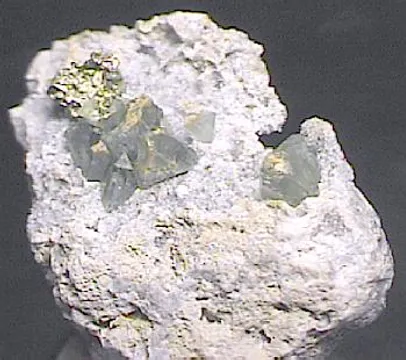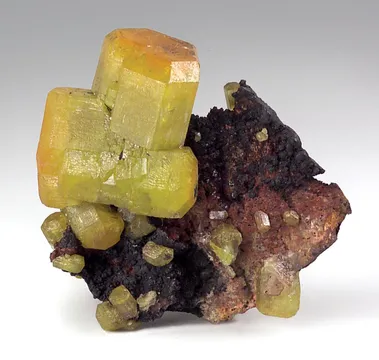
Hesse, Germany locality guide - diverse mining districts (Taunus, Lahn-Dill, Bieber, Richelsdorf) yielding pyromorphite, calcite, and rare secondary minerals f…
Key facts
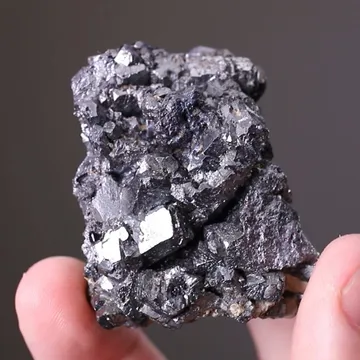
Hesse is not a single-mine locality in the way a cabinet label might make it appear; it is a compact German state with several old mineral provinces packed into it. For collectors, that breadth is exactly the point. Within Hesse are the lead-silver veins of the Taunus, the iron and manganese ore fields of the Lahn-Dill district, the Kupferschiefer and cobalt workings of the Richelsdorf and Bieber districts, the basaltic and diabase quarries of central Hesse, and the micro-mineral paradise of the Odenwald. The best Hessian specimens tend to carry the look of their host district: pyromorphite in sharp green to yellow-green hexagonal crystals on quartz or slate from Taunus lead veins; calcite as white, cream, iron-stained, pink cobaltoan, or quartz-associated groups from ore mines and quarries; and highly specialized secondary phosphates, arsenates, and bismuth minerals from small oxidized vein systems.
Regional View
Country View
The state’s mineralogical importance rests on two overlapping traditions. One is mining history: copper shale at Sontra and Richelsdorf, cobalt-nickel-bismuth veins at Bieber, ironstone in Lahn-Dill, and lead-silver veins in the Taunus were worked for centuries and left behind a long trail of dumps, adits, shafts, smelting sites, museums, and handwritten labels. The other is species-level mineralogy: Hesse is the type region for a remarkable roster of minerals, especially in the Odenwald and the Bieber-Richelsdorf districts. Serious collectors therefore encounter “Hesse” labels in two very different contexts—attractive display specimens, especially calcite and pyromorphite, and analytical micromounts whose value lies in locality precision.

Photo: Wikimedia Commons
The most visually collectible Hessian material is not uniform. A Taunus pyromorphite can be a tight crust of waxy green barrels only a few millimetres across, a drusy coating in quartz vugs, or a small cabinet plate studded with separate crystals. A Lahn-Dill calcite may be white to beige, but the better pieces gain distinction from sharp “nail-head” form, pagoda-like stepped growth, hematite-red inclusions, or ironstone matrix. Richelsdorf and Bieber specimens often lean toward ore-mineral and secondary-arsenate collecting: cobalt and nickel arsenides, baryte, siderite, erythrite, annabergite, and rare supergene species rather than large show pieces.
Search for specimens: View all specimens from Hesse, Germany
Hesse’s mineral deposits belong to several distinct geological settings. In the Lahn-Dill region, Devonian to Carboniferous volcanic and sedimentary rocks of the Rhenish Massif host Lahn-Dill-type iron ores, with hematite-dominant ore, quartz and carbonate gangue, and later carbonate-filled cavities. The associated diabase, limestone, and ironstone workings around Dillenburg, Oberscheld, Braunfels, Wetzlar, and Solms produced much of the classic central-Hessian mining landscape. The same broad region also yielded manganese, copper, nickel, lead, zinc, mercury, baryte, limestone, diabase, and slate, which explains why old labels from “Hessen-Nassau” can be frustratingly imprecise unless the mine name is preserved.
The Taunus localities are different in both geology and specimen style. The best Hessian pyromorphite comes from hydrothermal Pb-Ag vein systems in Devonian slates, quartzitic sandstones, and siltstones, especially the Jeanette mine near Kransberg, the Vereinigung mine near Eisenbach, and the Emilie II workings near Altweilnau, including the Hexentisch area. These veins were worked mainly in the 18th and 19th centuries for galena, silver-bearing lead ore, and associated copper minerals. Jeanette, about one kilometre south of Kransberg, worked a quartz vein system with argentiferous galena; the recorded main mining period there ran from 1819 to 1836, with later attempts in the 1890s and again during 1941–1943. The mine’s specimen reputation, however, comes largely from collector finds on the old workings and dumps, especially in the 1970s and 1980s.
North and northeast Hesse bring in the Kupferschiefer story. The Richelsdorf district around Sontra, Nentershausen, Iba, Bauhaus, and Richelsdorf exploited copper shale, sandy ore, cobalt-bearing “rücken” structures, and later baryte. Mining is documented there from the 15th century, with the old Sontra mining ordinance of 1499 remembered as an influential early regulation. The ores were generally low-grade by modern standards, but mineralogically rich: copper, cobalt, nickel, arsenic, antimony, barium, and secondary alteration minerals created a suite in which rarity often matters more than size. Richelsdorfite itself is named for the district and tied to the Wilhelm mine at Bauhaus/Nentershausen.
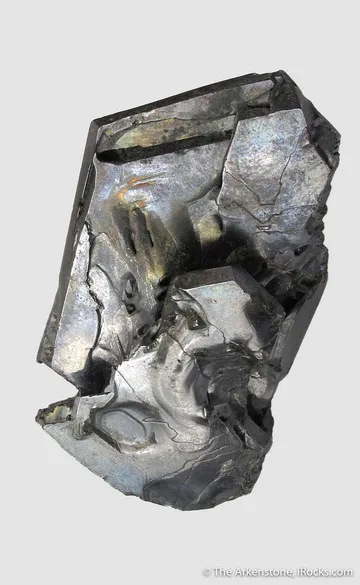
Bieber, in the Spessart part of southeastern Hesse, is one of the state’s classic cobalt-nickel-bismuth districts. Its post-Variscan veins are related regionally to the Permian Kupferschiefer environment and cut a complex setting of crystalline basement, Zechstein cover, and Buntsandstein. Mining began with stratabound copper-lead-silver mineralization and later focused on cobalt-nickel-bismuth veins such as the Lochborn, Röhrig, Büchelbach, and bismuth vein systems. The ore minerals documented from Bieber include skutterudite, native bismuth, cobaltite, alloclasite, niccolite, maucherite, gersdorffite, rammelsbergite-pararammelsbergite, safflorite, löllingite, and emplectite. For collectors, Bieber matters as a type-locality district for bieberite and rösslerite and as a source of old cobalt-ore specimens, many of which entered museums during the main 18th- and 19th-century mining period.
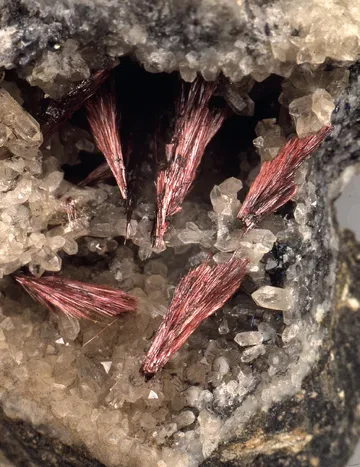
The Odenwald, especially the Reichenbach–Gadernheim–Hohenstein–Borstein area, is Hesse’s most important micromineral province. Here, small silicified baryte veins and oxidized copper-lead-bismuth mineralization in the crystalline Odenwald produced a suite of rare secondary phosphates, arsenates, and bismuth minerals. The finds are not generally cabinet-scale display material; their importance is in type-locality status, unusual chemistry, and analytical confirmation. Names such as reichenbachite, hentschelite, medenbachite, petitjeanite, and phosphogartrellite place this small district among the important European localities for phosphate-arsenate micromineralogy.
Collecting access today is highly variable and often poor. Many mines are closed, collapsed, gated, converted to bat habitat, protected as heritage or nature sites, or on private land. Some dumps that once supplied collectors are now explicitly closed to digging, and active quarries should be assumed off-limits without advance permission from the operator. Serious collectors should treat old Hessian material as a provenance-driven market: a specimen with a precise mine, district, date, and old German label is often more desirable than a brighter but vaguely labelled “Hesse” piece.
Calcite from Hesse is best understood district by district rather than as a single look. In the Lahn-Dill iron district, calcite occurs with hematite-rich ore and iron-stained matrix, and the better specimens show sharp white, beige, honey, or reddish included crystals, sometimes in compressed trigonal “nail-head” or stepped pagoda-like groups from mines around Oberscheld and Dillenburg. Quarry material from places such as Steeden, Herborn-Seelbach, and other limestone, diabase, and quartz-bearing workings adds plates of calcite on quartz or iron-coloured calcite in small to cabinet sizes. Richelsdorf adds the unusual collector note: vivid pink cobaltoan calcite from Bauhaus is rare for the district, and top examples stand out by saturated colour, translucency, rounded botryoidal form, and clear separation from the duller ore matrix.
Hessian pyromorphite is most admired from the Taunus lead-silver veins, especially Jeanette near Kransberg, Vereinigung near Eisenbach, and Emilie II/Hexentisch near Altweilnau. Jeanette material is typically green, though brownish and whitish examples are documented, and it appears as individual prismatic to acicular crystals, spherical aggregates built of smaller subindividuals, crusts, and vug linings on quartz or slate; crystals may reach about 2 cm in exceptional cases, but fine small-cabinet plates with lustrous, evenly distributed millimetre crystals are the usual collector prize. Vereinigung material can range from dark green through yellow-green and locally translucent crystals, and Emilie II/Hexentisch is especially associated with small but attractive lead-oxidation-zone material. The best Hessian pyromorphites combine rich green colour, waxy to bright lustre, undamaged terminations, and a precise Taunus mine label, because vague “Germany” or “Bad Ems” labels are far easier to sell than to trust.
Other Hessian minerals give the state much of its scientific weight. Bieberite, CoSO4·7H2O, and rösslerite, Mg(HAsO4)·7H2O, are tied to the Bieber district, with bieberite named for Bieber and both species connected with oxidized cobalt-bearing mineralization. Richelsdorfite, Ca2Cu5Sb(AsO4)4(OH)6Cl·6H2O, is named for the Richelsdorf district and occurs as a secondary copper-antimony arsenate. Around Reichenbach in the Odenwald, rare phosphates and arsenates include reichenbachite, hentschelite, medenbachite, petitjeanite, and phosphogartrellite; these are generally micromount species, but they are among the most locality-defining minerals from Hesse. Strengite, FePO4·2H2O, has its type locality at the Eleonore mine near Gießen/Biebertal and links Hesse to the classic phosphate literature as well as to specimen collecting.
Hesse is a locality where labels matter. “Hesse, Germany” alone is too broad to support a serious attribution unless the specimen is already tied to a known old collection or accompanied by an antique label. For calcite, the most common problem is not fakery but under-labelling: many pieces simply say Hesse, Hessen, Hessen-Nassau, Dillenburg, or Lahn-Dill, and the exact mine may be unrecoverable. Reddish calcites should be checked carefully for whether the colour is internal iron staining, hematite inclusions, or merely surface oxide. Pink “cobaltoan calcite” from Bauhaus is uncommon enough that locality, colour distribution, and matrix should be assessed skeptically; intense pink alone is not proof of Hessian origin.
Pyromorphite from Hesse is prone to mislabelling in two directions. Attractive German pyromorphite is often generically attributed to more famous localities, while small Taunus pieces may be sold simply as “Bad Ems” or “Germany” when they are actually from Jeanette, Vereinigung, Emilie II, or another minor vein. Conversely, not every green pyromorphite on quartz with a German label is Hessian; Rhineland-Palatinate, Baden-Württemberg, Bavaria, and Saxony all produced classic material. Look for old regional labels naming Kransberg, Jeanette or Johannette, Eisenbach, Vereinigung, Altweilnau, Hexentisch, or Taunus. Jeanette pyromorphite is commonly on quartz or slate, often as waxy green millimetre crystals or spherical aggregates, and richer plates are scarcer than the size of the old dumps might suggest.
Condition is especially important on Taunus pyromorphites. The small crystals can be bright and attractive, but exposed terminations bruise easily, and crusts may detach from friable slate or weathered quartz. Many specimens are dump-collected rather than fresh mine-pocket pieces, so iron staining, clay, and old repairs should be expected. Cleaning should be conservative; aggressive acid work risks disturbing associated carbonates, iron oxides, and fragile supergene coatings.
For rare Hessian secondary species, especially from Bieber, Richelsdorf, and Reichenbach, assume that visual identification is not enough. Many species are microscopic, compositionally complex, or members of series and groups where appearance overlaps. Bieberite is water-soluble and dehydration-prone, and old “bieberite” labels may conceal erythrite or other pink cobalt minerals unless analytically confirmed. Reichenbach, Hohenstein, Borstein, Gadernheim, and nearby Odenwald pieces should ideally come with analytical notes, an expert collection pedigree, or a reference to a documented micromount collection. For market availability, calcite from Hesse appears occasionally and is usually affordable unless it has unusual form, colour, or an old label. Good Taunus pyromorphite is less common, and large, rich, precisely labelled Hessian plates command a premium. Type-locality micromounts are specialized, thinly supplied, and often trade privately among German and European micro collectors.
In the Richelsdorf district, the mining landscape begins almost like an old chronicle. The earliest surviving record cited for the district names mining in 1460, at a time when furnaces were already active around places such as Sontra, Nentershausen, Iba, and Richelsdorf. By 1499, Sontra had its own mining ordinance, later remembered as a model for other German mining districts. That is a remarkable pedigree for what collectors today may encounter as a tiny arsenate crust or an obscure handwritten “Richelsdorf” label: behind the specimen is a legal, technical, and industrial tradition half a millennium old.
One of the most vivid modern survivals of that history is in Sontra. The local mining museum, maintained by the Knappenverein Kupferschiefer-Bergbau Sontra, gained fresh momentum after a late-medieval adit dated to 1486 was discovered during excavation work. In the cellar of the town hall, the association built a reconstructed mine gallery and displays tools and miners’ lamps, bringing the old copper-shale workings back into a form visitors can understand at body scale. For a collector used to seeing only a trimmed hand specimen, the reconstructed gallery gives the right sense of proportion: Kupferschiefer mining often meant following a thin, stubborn bed, not walking through the grand arched chambers of a romantic silver mine.
The 20th-century Richelsdorf revival left its own hard industrial traces. At Brodberg near Sontra, a large plant was built in the late 1930s as copper shale mining was resumed. Sandy ore was processed by flotation, the concentrate was added during smelting of the copper shale, and the resulting copper matte went onward to Hettstedt in the Mansfeld region. The slag tells the story in blunt numbers: roughly 95 percent of the smelted material became slag, which was cast into blocks. Even today, accounts of the Brodberg site note slag stones in the road surface, a utilitarian afterlife for what had passed through furnace heat.
Bieber has a different flavour—part cobalt colour works, part old-money mining, part mineralogical type locality. Its cobalt ores fed blue pigment production, and the district’s silver was prestigious enough to be struck into Bieber talers in the 18th century. The same mines that yielded commercial cobalt, nickel, bismuth, copper, lead, and silver later became scientifically important because their supergene alteration products included bieberite and rösslerite. The economic story and the mineralogical story are inseparable: without the cobalt rush and the old workings, collectors and mineralogists would not have had the oxidized material that made Bieber a name in systematic mineralogy.
The Taunus pyromorphite story is quieter but very familiar to collectors: abandoned lead mines, grown-over dumps, and patient searching in the late 20th century. Jeanette, south of Kransberg, had already finished its meaningful mining career long before many of its most desirable pyromorphites reached collections. The mine’s best-known collecting period came from the 1970s and 1980s, when German collectors recovered green crystals, spherical aggregates, crusts, and quartz-vug specimens from old workings and dumps. That late collector chapter is why Jeanette pyromorphite can look like a classic old-mine European specimen even when the piece itself was not collected during the mining period.
T. Wagner and J. Lorenz, “Mineralogy of complex Co-Ni-Bi vein mineralization, Bieber deposit, Spessart, Germany,” Mineralogical Magazine, 66(3), 385–407, 2002 — the key modern mineralogical study of Bieber’s cobalt-nickel-bismuth vein assemblages, paragenesis, and post-Variscan setting.
W. Krause, K. Belendorff and H.-J. Bernhardt, “Petitjeanite, Bi3O(OH)(PO4)2, a new mineral, and additional data for the corresponding arsenate and vanadate, preisingerite and schumacherite,” Neues Jahrbuch für Mineralogie, Monatshefte, 1993, 487–503 — type description for petitjeanite from the Gadernheim–Reichenbach area of the Odenwald.
Petitjeanite mineral page, Mindat — useful summary of the type locality, associated minerals, and type-material repository for this Odenwald bismuth phosphate.
N. H. W. Sieber, E. Tillmanns and O. Medenbach, “Hentschelite, CuFe2(PO4)2(OH)2, a new member of the lazulite group, and reichenbachite, Cu5(PO4)2(OH)4, a polymorph of pseudomalachite, two new copper phosphate minerals from Reichenbach, Germany,” American Mineralogist, 72, 404–408, 1987 — publication basis for two important Reichenbach phosphate species; the linked Handbook page summarizes reichenbachite and cites the original paper.
Phosphogartrellite mineral page, Mindat — documents phosphogartrellite as a 1996-approved, 1998-published Tsumcorite-group species from Point 15.1, Hohenstein, Reichenbach.
Bieberite mineral page, Mindat — records bieberite as a valid grandfathered species named after its discovery locality at Bieber, Hesse.
Rösslerite mineral page, Mindat — gives the Bieber type locality, original 1861 reference by Blum, and associated type-locality minerals.
Richelsdorfite mineral page, Mindat — records richelsdorfite as a copper-antimony arsenate named for the Richelsdorf district and tied to the Wilhelm mine, Nentershausen.
A. Bechtel and W. Püttmann, “The origin of the Kupferschiefer-type mineralization in the Richelsdorf Hills, Germany, as deduced from stable isotope and organic geochemical studies,” Chemical Geology, 91, 1–18, 1991 — an important geochemical treatment of the Richelsdorf Kupferschiefer mineralization.
H. Harder, “Beitrag zur Petrographie und Genese der Hämatiterze des Lahn-Dill-Gebietes,” Heidelberger Beiträge zur Mineralogie und Petrographie, 4, 54–66, 1954 — cited in locality records for Lahn-Dill hematite ore deposits and relevant to calcite-bearing ironstone associations.
Mindat: Jeanette Mine, Kransberg, Usingen, Hochtaunuskreis, Hesse — essential locality page for the most important Hessian pyromorphite source, including mineral list, coordinates, and access note.
Mindat article: Pyromorphite, Germany — includes a focused Hesse section covering Jeanette, Vereinigung, Emilie II/Hexentisch, habits, history, and collecting restrictions.
Hessian state mining overview — current official context for mining and raw-material extraction in Hesse.
Hessian state page: Abbau von Bodenschätzen — concise official overview of historic Hessian raw-material districts, including Lahn-Dill iron and manganese, Sontra Kupferschiefer, Messel oil shale, and modern potash and quarrying.
Geopark Westerwald-Lahn-Taunus: Rohstoffe — good public-geology introduction to iron ore, clay, mining heritage, and the end of Lahn-Dill iron mining.
Industriekultur Lahn-Dill: general industrial history — useful historical overview of the scale of mining, smelting, and metalworking in the Lahn-Dill region.
Industriekultur Lahn-Dill: Eisenerzgruben — background on Lahn-Dill iron mines, including Fortuna and the regional ore-mining landscape.
Richelsdorfer Gebirge overview — compact summary of the Richelsdorf mining district, Kupferschiefer, cobalt, baryte, and closure history.
DGGV: Cornberger Sandsteinbruch und Kupferschiefer im Richelsdorfer Gebirge — geotope description linking Cornberger sandstone, Rotliegend conglomerates, Kupferschiefer, Zechstein limestone, and mining history.
Bergbauregion Richelsdorf/Sontra cultural overview — accessible regional history, including the 1460 mining record, Sontra mining ordinance, and museum context.
Bergbau-Museum Kupferschiefer-Bergbau, Sontra — visitor information for the Sontra mining museum and its reconstructed gallery.
Untertage.com: Das Zechenhaus im Spessart — detailed collector-friendly account of Bieber mining geology, cobalt-nickel-bismuth veins, and the Zechenhaus setting.
Cambridge Core: Wagner and Lorenz, Bieber Co-Ni-Bi vein mineralization — primary scientific source for Bieber ore mineralogy and paragenesis.
VFMG Reinheim-Odenwald: Reichenbach — regional collector page on Reichenbach as a micromount and type-locality district.
Mindat: Odenwald, Germany — broad locality page for the Odenwald, including Reichenbach, Gadernheim, and associated rare minerals.
Wikimedia Commons: Calcite-261769.jpg — verified photograph and metadata for rare pink cobaltoan calcite from Bauhaus, Richelsdorf District, Hesse.
Wikimedia Commons: Steinbruch Herborn-Seelbach — quarry photographs including calcite on quartz from Herborn-Seelbach.