Hartenstein, Germany - historic uranium locality with pitchblende and coffinite in complex veins, Saxon whewellite twins, and UNESCO mining heritage.
Key facts
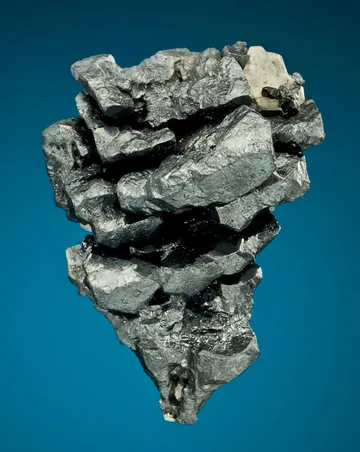
For mineral collectors, “Hartenstein” means above all the former Wismut Shaft 371 and its connection with the Schlema–Hartenstein / Niederschlema–Alberoda uranium district in the western Erzgebirge of Saxony. It is not a small vein exposure with a single signature mineral, but a deep, technically important uranium mine whose specimens came from one of the most complex hydrothermal vein systems in Europe: pitchblende and coffinite in dolomite- and quartz-calcite veins, overprinted by arsenide, sulfide, silver, bismuth, cobalt-nickel, and selenium-rich parageneses. The best pieces have the unmistakable Saxon look—white to pale pink carbonate matrices, metallic arsenides and silver minerals, red-brown hematite staining, and, most prized of all, lustrous white to translucent whewellite twins that seem almost too organic and soft-looking for a hard-rock uranium mine.
Regional View
Country View
The locality label deserves care. Many older specimen labels reading simply “Hartenstein,” “Schlema-Hartenstein,” or “Schacht 371” refer to the main shaft complex on Hartenstein ground, even though the principal ore bodies belonged geologically to the Niederschlema–Alberoda deposit to the south. This has become normal collector usage, but it is more precise to read Hartenstein specimens as Shaft 371 / Schlema-Hartenstein material unless a label preserves a specific vein, level, or pocket.

Photo: Wikimedia Commons
The mine’s historical weight adds to its collecting significance. Shaft 371 was developed in the 1950s by SDAG Wismut, became the central production shaft of the Aue mining operation, and by the later life of the district was the crucial route into one of the world’s great uranium vein deposits. The preserved headframe, machine house, and related buildings are now part of the Erzgebirge/Krušnohoří mining landscape recognized by UNESCO, and the Wismut deposit collection at the site keeps a large mineralogical archive of Saxon and Thuringian uranium mining.

Photo: Wikimedia Commons
Search for specimens: View all specimens from Hartenstein, Germany
The Hartenstein collector locality is centered on Shaft 371, in the Poppenwald area in the Zwickauer Mulde valley between Hartenstein and Bad Schlema. The shaft was sited deliberately north of the richest ore contour so that the protective shaft pillar would not sterilize ore reserves, but it served the Niederschlema–Alberoda uranium deposit—the dominant part of the Schneeberg–Schlema–Alberoda ore district. In collector language the distinction is often blurred; in geological language it matters, because the mineral specimens attributed to Hartenstein are products of the deep hydrothermal vein system of Niederschlema–Alberoda.
The deposit is a vein-type uranium system on the Gera–Jáchymov fault zone. The ore veins cut a Paleozoic sequence of amphibolites, black shales, quartzites, and skarns, above a Variscan granite that is much less strongly mineralized. More than a thousand hydrothermal veins were recorded in the Niederschlema–Alberoda system. Most strike roughly north-northeast to south-southwest and vary from narrow seams only centimeters thick to veins several meters across. Uranium mineralization is dominated by pitchblende and subordinate coffinite, commonly in dolomite-rich and quartz-calcite gangue.
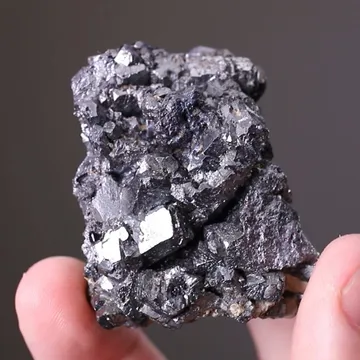
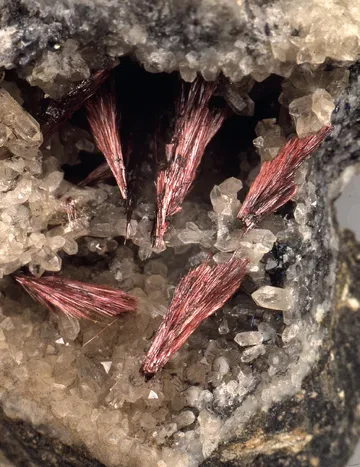
Collectors encounter several overlapping mineralogical “worlds” in specimens from Shaft 371. One is the uranium-carbonate assemblage: pitchblende, dolomite, calcite, quartz, fluorite, hematite, lepidocrocite, pyrite, chalcopyrite, and locally galena or sphalerite. Another is the arsenide and native-element assemblage, with native arsenic, native bismuth, löllingite, safflorite, nickeline, nickelskutterudite, skutterudite, and related cobalt-nickel minerals. A third, more specialized world is the selenium-rich assemblage for which the broader Niederschlema–Alberoda district is scientifically important: clausthalite, berzelianite, eucairite, tiemannite, umangite, bohdanowiczite, watkinsonite, and the type mineral schlemaite. The resulting specimen suite is not dominated by bright cabinet crystals in the Freiberg sense; instead it rewards close looking, paragenetic labels, and the ability to recognize small but significant metallic phases on carbonate gangue.
Mining in the wider Schlema and Schneeberg area began long before uranium was an industrial commodity. Silver, copper, iron, cobalt, nickel, and bismuth ores were worked in the region from the late medieval and early modern periods, and pitchblende was familiar to miners long before its uranium content was understood. After the Second World War, the district was transformed by Soviet-German uranium production under Wismut. Shaft 371 was begun on April 4, 1956, handed over to production on May 1, 1959, and officially entered Wismut history as “Jugendschacht 1. Mai.” As upper levels were exhausted and production became increasingly concentrated, Shaft 371 became the key production shaft; from 1972 it remained the last principal hoisting shaft of the Niederschlema–Alberoda deposit.
The scale was exceptional. The mine workings reached depths of more than 1,800 m in the uranium deposit, and official Wismut sources record more than 73,000 t of uranium produced from the Shaft 371-connected operation before mining ended in 1990. Other technical summaries for the broader Schlema–Alberoda district round the recovered uranium to about 80,000 t. The difference reflects whether one is discussing the specific Shaft 371 production complex or the wider ore district, and collectors should not treat those figures as contradictory labels for a single hand specimen.
Shaft 371 was also an unusually deep collecting source. Documented specimen localities include levels such as -855 m on the “Tiber” vein for schlemaite, -1305 m on the “Beryll” vein for witherite, -1395 m for whewellite and chalcopyrite-bearing assemblages, and -1485 m and -1575 m levels cited on calcite and whewellite specimens. These depths explain both the mineralogical richness and the modern rarity: many of the best pieces came not from open collecting but from underground mining finds preserved by miners, mine geologists, or institutional collections.
After uranium production ceased, remediation began in 1991. Underground workings were secured, mine water management became a long-term concern, buildings and waste areas were remediated, and the enormous dumps were reshaped, sealed, or revegetated. By 1997, flood water had reached the -540 m level, ending the period in which Shaft 371 could still function as an extraordinary deep visitor mine. The shaft was sealed with a concrete plug in 2011. Today the site is not a collecting locality in the ordinary sense. The operating and remediation responsibilities remain with Wismut, the deposit collection is publicly accessible on announced opening days, and the dumps should be treated as protected, remediated, radiologically sensitive ground rather than as casual collecting piles.
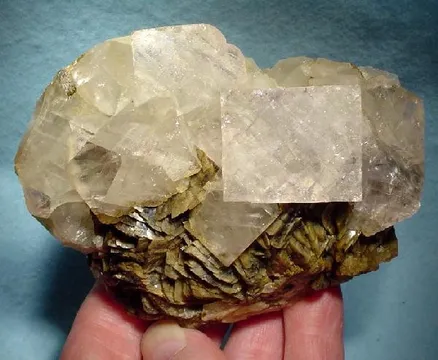
Hartenstein whewellite is the locality’s collector signature: white, pearly to silky, translucent calcium oxalate crystals, often twinned into V-shaped or heart-like forms, on or near carbonate-sulfide gangue. Published accounts place whewellite in the late sulfide stage of the bismuth-cobalt-nickel assemblage, and a classic illustrated example is a heart-shaped twin with chalcopyrite from the south flank on the -1395 m level. Other documented labels and market records cite the -1575 m level of Shaft 371, where sharp translucent twins and compact clusters were preserved as individual finds or from very small pockets rather than from large, continuous cavities. The normal size range on the market is thumbnail to small miniature, with crystals around 2 cm already highly desirable; literature for the broader Schlema–Alberoda occurrence records crystals up to 10 cm, and a later geochemical review reports exceptionally large material from Schlema-Hartenstein, including crystals reaching hundreds of grams. The best pieces are sharply twinned, lustrous, translucent rather than chalky, undamaged at the terminations, and preferably mounted or naturally positioned on contrasting dolomite, sulfide, or dark matrix.
Dolomite from Hartenstein is not merely a neutral matrix mineral; it is one of the main gangue phases of the uranium-bearing magnesium-carbonate-pitchblende stage and a key visual component of many Shaft 371 specimens. In the Niederschlema–Alberoda veins, the carbonate commonly ranges compositionally from dolomite through iron-bearing dolomite toward ankeritic compositions, with colors from white and pale pink to flesh-red or dark brown depending on hematite and lepidocrocite content. Massive, banded, fine-grained “Geldolomit,” pseudomorphs after earlier calcite scalenohedra, and later pale rhombohedral crystal coatings are all part of the same evolving carbonate story. Collector pieces from Shaft 371 are typically white to pinkish dolomite druses and crusts associated with hematite, lepidocrocite, siderite, chalcopyrite, calcite, fluorite, polybasite, and other metallic minerals; the better specimens are fresh, pearly, three-dimensional carbonate plates carrying a contrasting ore mineral or later calcite rather than merely stained carbonate vein fragments.
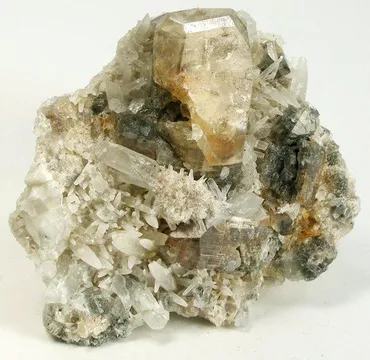
Calcite at Hartenstein occurs in several generations, from the quartz-calcite-pitchblende stage to later carbonate-sulfide vein assemblages, and the collector pieces are best appreciated in paragenetic context rather than as generic calcite. Shaft 371 specimens include colorless to milky calcite crystals, white double-terminated crystals on dolomite, pinkish-gray to reddish-brown hematite-included calcite, and calcite with quartz, hematite, pyrite, chalcopyrite, galena, or dolomite. Documented examples range from small hand specimens with calcite on dolomite to crystals several centimeters across; one collector-documented Shaft 371 piece shows a 6.2 cm double-terminated white calcite on dolomite, while another records colorless to milky calcite from the -1485 m level. Good Hartenstein calcite is clean, well-terminated, and clearly placed in the ore assemblage—especially calcite on crystallized dolomite, calcite with hematite coloration, or calcite carrying metallic accents—whereas ordinary pieces are abundant carbonate fragments with little form or contrast.
Beyond the three EarthWonders-highlighted species, Hartenstein / Shaft 371 has an unusually rich documented list, including allargentum, anhydrite, aragonite, arsenolite, berzelianite, bohdanowiczite, chalcopyrite, clausthalite, cubanite, eucairite, fluorite, galena, geminite, hematite, hexahydrite, kaatialaite, lautite, löllingite, marcasite, molybdenite, native arsenic, native bismuth, native silver, nickeline, nickelskutterudite, orickite, parasymplesite, pentahydrite, picropharmacolite, polybasite, proustite, pyrite, pyrrhotite, safflorite, siderite, skutterudite, sphalerite, tiemannite, umangite, uraninite, watkinsonite, witherite, and the type-locality mineral schlemaite. Schlemaite, (Cu,□)6(Pb,Bi)Se4, is the scientifically most important rarity: it was described from the “Tiber” vein on the -855 m level, block 5128, near Shaft 371, in association with selenides and dolomite-ankerite gangue. Witherite is another Shaft 371 classic, documented from the “Beryll” vein on the -1305 m level as greenish-white crystal aggregates with pyrite, and proustite, native silver, allargentum, safflorite, and nickelskutterudite give the locality its distinctly Saxon polymetallic character.
The main authenticity issue is locality precision, not widespread fakery. “Hartenstein,” “Schlema,” “Schlema-Hartenstein,” “Niederschlema-Alberoda,” and “Shaft 371” have all been used on labels, sometimes loosely. A specimen labelled simply “Hartenstein” is credible if the mineral and style fit Shaft 371, but a high-value whewellite, proustite, witherite, schlemaite-associated ore section, or silver mineral should ideally preserve an older label, a level, a vein name, or a chain of ownership.
Whewellite deserves special caution. It is rare, soft-looking, and visually unlike common carbonate specimens, but it can be confused in poor photographs with calcite, baryte, pale cerussite, or altered carbonate crystals. Good Shaft 371 whewellite should show the characteristic twinning, pearly to silky luster, translucent white body color, and a credible Saxon uranium-district provenance. Because the finest examples are scarce and expensive, unlabelled “Schlema” whewellites should be treated conservatively unless the habit and provenance are persuasive.
Carbonate specimens often have the usual problems of deep-mine material: bruised calcite terminations, cleaved dolomite edges, hematite and lepidocrocite staining, and sulfide oxidation. Proustite from the district is light-sensitive, and old specimens may be darkened or surface-altered if displayed carelessly. Native silver and allargentum may be etched free of arsenic or carbonate on some old specimens; this is part of the historical collecting style for the district, but it should be disclosed when obvious because it changes the visual character of the piece.
Radioactivity is a real handling consideration for uraninite, pitchblende, and some mixed ore specimens from Shaft 371. The white whewellite, dolomite, and calcite specimens are not automatically problematic, but many Hartenstein pieces come from a uranium mine and may carry small radioactive ore inclusions or be mounted on ore-bearing matrix. Serious collectors should store uranium-rich pieces in ventilated, labelled boxes, avoid grinding or trimming them without controls, wash hands after handling dusty ore, and keep strongly radioactive specimens away from living areas and children.
Market availability is uneven. Dolomite, calcite, siderite, hematite, chalcopyrite, and minor ore pieces from Shaft 371 still appear with some regularity in German collections, auctions, and show stock. Better whewellite, witherite from Gang Beryll, rich proustite, fine native silver or allargentum, and labelled deep-level selenide material are scarce to rare. Top whewellite pieces with sharp V-twinning and clean translucency are among the most sought-after Hartenstein specimens and can command prices far beyond their physical size.
The place itself has a strange double identity: a quiet Saxon valley locality that, below ground, connected to a mine on a nearly industrial-city scale. Shaft 371 was not placed where a romantic old adit might have followed a glittering vein into the hillside. It was engineered as a modern round concrete-lined shaft, deliberately sited outside the most valuable ore contour so that the safety pillar around the shaft would not waste uranium reserves. Its surface buildings were raised from 1956 onward; on May 1, 1959, the shaft was handed to production, and its ceremonial name, “Jugendschacht 1. Mai,” tied it directly to the political theater of Wismut-era mining.
By the time production had shifted downward and other shafts lost importance, Shaft 371 became the great throat of the mine. From 1972 onward it was the last principal production shaft of the deposit, serving workings that reached more than 1,800 m depth. Wismut’s own public account states that as many as 3,000 people were employed at the Shaft 371 operation. The figures are hard to absorb in specimen terms: more than 4,000 km of horizontal development in the broader mine system, tens of millions of cubic meters of underground void, rock temperatures around 65 °C in the deepest workings, and uranium output measured not in kilograms or pockets but in tens of thousands of tonnes.
For a few years after production ended, collectors and visitors encountered an almost unbelievable afterlife of the mine. During the early remediation period, visitors could descend Shaft 371 to deep levels; contemporary accounts describe it as for a time one of Europe’s deepest visitor mines. That window closed as flooding advanced. In 1997 the water reached the -540 m level, the underground visitor era ended, and in March 2011 the last great Wismut shaft was finally sealed. The specimens that escaped before then—whewellite twins, calcite on dolomite, silver minerals, and microscopic selenides—became the portable memory of a place no collector will ever again work in the old way.
There is also a modern public story at the site. In 2025 the “No Secret” exhibition opened in the former machine house at Shaft 371, and more than 1,300 visitors came during the first exhibition weekend. The most evocative detail is that even former miners who had spent their working lives entering the mine through Shaft 371 were seeing some of the machine-house installations for the first time; during active Wismut operation those areas had been restricted. A place once defined by secrecy, uranium production, and controlled access is now being recast as a technical monument and memory site.