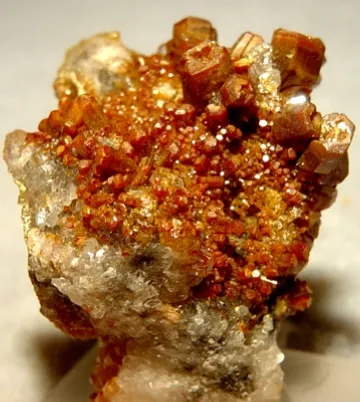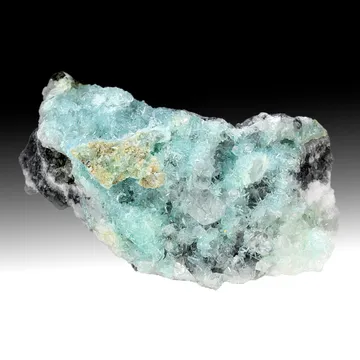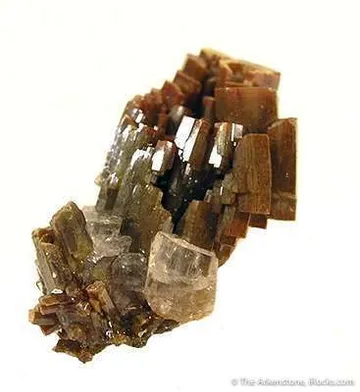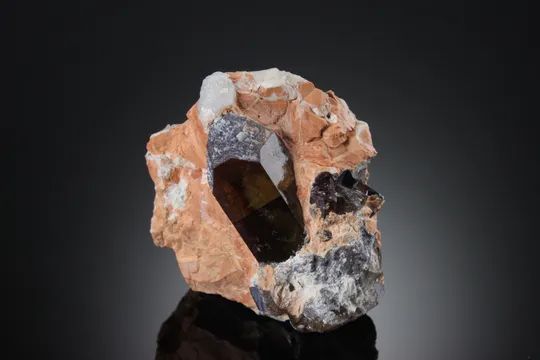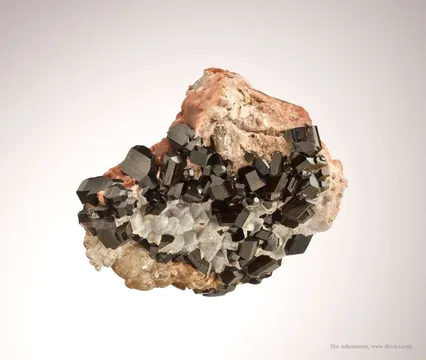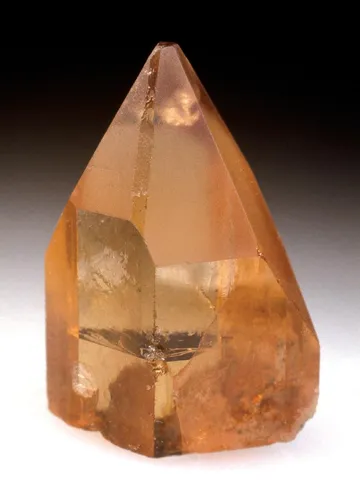
Guerrero Mine, Mexico — Taxco collector locality known for blue barite blades, calcite and quartz, and rare sulfosalts; prized for the Taxco look and scarcity.
Key facts
The Guerrero Mine is one of the collector-relevant workings of the old Taxco silver district in northern Guerrero, Mexico: a classic Ag-Pb-Zn camp whose mineralization is carried by intermediate-sulfidation polymetallic veins, stockworks, and replacement mantos developed in the Morelos limestone, Mexcala shale-sandstone sequence, and older Taxco schist. For specimen collectors, Guerrero is not a single-species locality in the way that Ojuela is for arsenates or Naica is for selenite; its importance lies in a compact but distinctive Taxco suite—blue to blue-gray barite, calcite, quartz including amethyst and smoky quartz, pyrite, sphalerite, galena, fluorite, pyrargyrite, and a supporting cast of sulfides, sulfosalts, oxides, and acid-sulfate alteration minerals. The best display pieces have the unmistakable Taxco look: transparent pale-blue barite blades and spear-like groups, sometimes with pyrite or quartz, and late calcite as clear to milky balls or sharp scalenohedra. Good Guerrero specimens are scarce because much of the district’s modern production was industrial ore mining rather than collector-oriented pocket work, and the Taxco complex has been immobilized by a long labor strike that began on July 30, 2007.
Regional View
Country View
The Guerrero I Mine is recorded at about 18° 31' 59" N, 99° 35' 44" W, roughly southeast of the El Solar Mine and only a few kilometers from Taxco de Alarcón. That geography matters to labels: specimens may be seen as “Guerrero Mine,” “Guerrero I,” “El Solar shaft,” “El Solar,” or simply “Taxco,” and older collection labels sometimes blur the distinction between the Guerrero workings and the nearby El Solar surface plant and shaft system. In the collecting trade the strongest Guerrero identity belongs to the blue barite suite—Level 4 and El Solar-shaft labels are especially worth preserving—and to calcite/barite combinations figured or discussed in the Taxco literature.
Search for specimens: View all specimens from Guerrero Mine, Mexico
The Guerrero Mine belongs to the Taxco mining district, a historic Mexican silver district south of Mexico City and north of Acapulco, set in the northern part of Guerrero State. The district is dominated by polymetallic intermediate-sulfidation mineralization: fissure-filling veins are the main ore style, with replacement veins, mantos, breccia chimneys, and stockworks also present. The broader Taxco stratigraphy includes Taxco schist and phyllite, the Cretaceous Morelos limestone, the Mexcala Formation of shale and sandstone with calcareous intervals, the Balsas red-bed sequence, and younger volcanic rocks of the Tilzapotla volcanic field. The hydrothermal system is tied to late Eocene–Oligocene magmatism of the Sierra Madre del Sur, and modern geochronology places the classical Taxco mineralization very close to about 33 Ma, following Calavera-group dike emplacement.
At Guerrero itself the key ore structure is the El Cobre vein. Geological work describes the El Solar shaft of the Guerrero Mine as collared in the Mexcala Formation at about 1,730 m elevation. The El Cobre vein is reported to extend roughly 400 m vertically, from level 0 to level 9, and at least 2 km along strike. Its width decreases markedly downward—from as much as about 30 m high in the system to around 1.5 m on level 9—and the vein is not a simple planar sheet: it branches, pinches, swells, splays, and contains barren intervals. It is generally narrower in the Mexcala Formation than in the Morelos limestone, a useful point for understanding why specimen cavities and ore textures vary so much from one Taxco label to another.
The Guerrero ore assemblage is a classic silver-base-metal suite. The principal hypogene sulfides include pyrite, sphalerite, galena, chalcopyrite, marcasite, arsenopyrite, hematite, rare pyrrhotite, and sulfosalts such as boulangerite, bournonite, falkmanite, pyrargyrite, tetrahedrite-group minerals, and freibergite-group minerals. Quartz and calcite are the major transparent gangue minerals, with dolomite, siderite, fluorite, barite, and locally amethystine or smoky quartz. In the El Cobre vein, lead and iron increase downward while zinc and silver decrease downward; the district’s mantos tend to be relatively zinc-rich and lower in lead and silver than the veins. The manto deposits, especially in the Babilonia–El Solar–Guerrero area between the El Cobre and Babilonia vein systems, were important replacement bodies in the Morelos limestone.
Mining in the Taxco district began before the Spanish colonial period, with pre-Hispanic workings followed by intensive colonial silver extraction from the 16th century onward. José de la Borda’s mid-18th-century operations opened one of Taxco’s great silver eras, particularly from 1747 into the early 1760s. Modern industrial mining brought the district into the ASARCO orbit in the 20th century; by 1974 the property had come under Industrial Minera México, S.A. de C.V. In 1976 a new Unidad Taxco connected the district’s underground workings so ore could be concentrated through the El Solar shaft and surface plant. The Taxco complex later comprised the San Antonio, Guerrero, and Remedios underground mines and a flotation plant producing lead and zinc concentrates carrying silver and gold credits.
For collectors, the practical history is simple and important: Guerrero material on the market is old-stock, collection-circulated, or derived from specimens recovered before the long shutdown. The Taxco unit strike began on July 30, 2007, and company filings and Mexican labor reporting still describe the Taxco complex as suspended because of that dispute. Collecting access should therefore be considered closed unless explicit permission is obtained from the landowner, concession holder, and any relevant local authorities. The mine is an industrial underground operation with unstable workings, acid mine drainage issues, and sensitive labor and environmental context; it is not a recreational collecting locality.
The notable specimen zones most often attached to Guerrero labels are the El Solar shaft and Level 4 barite occurrences. Documented collector specimens include pale-blue to blue-gray barite blades with pyrite, frosted quartz, and late calcite; a figured Mineralogical Record specimen is described as a 10 cm barite crystal cluster with late-stage scalenohedral calcite from the Guerrero Mine, Taxco. Mindat photo captions document barite groups from Level 4, including clear blue spear-like crystals to about 1 cm in 7.5 cm clusters, and barite/calcite specimens with thick blue blades to about 4.5 cm coated by clear to milky calcite balls. Calcite specimens from the mine include yellow scalenohedral aggregates forming larger scalenohedral forms, sometimes with galena at the base. These are not abundant trade goods; the finest pieces are usually traceable to older Mexican-specialist dealers or long-held private collections.
Calcite from Guerrero is best understood as a late to repeated gangue phase in the El Cobre–Taxco vein system, not as a standalone production mineral. It is recorded as associated with all veins at the mine and appears both as vein carbonate and as specimen-quality crystals. The most recognizable Guerrero calcites are scalenohedral: clear to milky late-stage crystals on blue barite, yellow miniature scalenohedral aggregates that build into larger scalenohedral forms, and calcite with quartz, galena, or pyrite. Documented specimen sizes range from small cabinet pieces around 5–10 cm to figured examples such as a 10 cm barite-and-calcite cluster and an 8 cm yellow scalenohedral calcite specimen. The best calcites here are not merely sharp; they carry Taxco context—good contrast against blue barite, pyrite, quartz, or sulfide matrix, clean terminations, and a label tying them to Guerrero, El Solar shaft, or Level 4.
Barite is the signature collector mineral of Guerrero Mine. The classic habit is transparent to translucent, pale blue, blue-gray, or nearly colorless bladed crystals, often described as spears or stacked arborescent clusters. Level 4 labels are especially desirable, and El Solar-shaft labels are part of the same collector conversation because the shaft is recorded as connected with the Guerrero Mine system. Known specimens include clear blue spear clusters with individual crystals to about 1 cm, larger 7.5 cm groups, thick blue blades to about 4.5 cm partly coated by clear to milky calcite balls, and blue-gray barite with pyrite or frosted quartz. Elite pieces have saturated blue color, glassy luster, complete blade terminations, three-dimensional open growth, and crisp contrast with calcite or pyrite; ordinary pieces tend to be white, thin, edge-rubbed, or massive-looking, and lose much of the locality’s special character.
Other documented Guerrero Mine minerals include quartz, amethyst, smoky quartz, pyrite, sphalerite, galena, chalcopyrite, marcasite, arsenopyrite, bornite, chalcocite, acanthite, native silver, pyrargyrite, boulangerite, stibnite, tetrahedrite- and freibergite-subgroup minerals, fluorite, dolomite, hematite, magnetite, hetaerolite, ilvaite, jarosite, gypsum, epsomite, rozenite, pickeringite, starkeyite, boyleite, nimite, and the historically reported “kehoeite.” Guerrero is not chiefly valued as a valid type-locality suite; its rarity interest lies instead in well-localized Taxco barite, uncommon Taxco ilvaite and silver-sulfosalt associations, and the acid-sulfate minerals documented from oxidized mine wastes.
The most important authenticity issue is locality precision. “Guerrero” can mean the Mexican state, the Guerrero I Mine at Taxco, or unrelated Guerrero-state amethyst localities; “El Solar” can refer to the El Solar Mine, the El Solar shaft of the Guerrero Mine, or the surface processing plant; and many old labels simply say “Taxco.” A strong Guerrero specimen should ideally have an old label, dealer provenance, level information, or a visual match to the documented Guerrero barite/calcite suite. Be cautious with attractive amethyst labeled “Guerrero Mine”: Guerrero-state amethyst also occurs at other localities, and Taxco-area amethyst with rhodochrosite is more often discussed in connection with Los Remedios material than with Guerrero I.
I am not aware of a documented commercial fake problem specifically targeting Guerrero Mine barite or calcite. The more realistic risks are mislabeling, overbroad “Taxco” labels, and repairs to brittle barite blades. Barite has perfect cleavage and the Guerrero blades commonly present as exposed edges or spear terminations, so inspect for glued terminations, edge bruising, and cleaved tips under magnification. Calcite is softer and acid-sensitive; avoid acid cleaning unless you are deliberately sacrificing carbonate coatings, and never assume a quartz/barite piece can be treated safely without testing a hidden area first.
Specimens containing modern sulfate efflorescences from mine dumps or tailings require different handling than stable cabinet barite/calcite pieces. Minerals such as epsomite, rozenite, pickeringite, boyleite, starkeyite, and jarosite may form in oxidizing, acidic mine-waste environments; some hydrated sulfates are soluble, humidity-sensitive, powdery, or prone to dehydration. They are of scientific interest, but not the same collecting category as hypogene barite crystals from underground cavities. Keep such material dry, isolated from showy cabinet pieces, and clearly labeled as tailings or efflorescence material if that is its origin.
Rarity is real. Fine Guerrero blue barite is not common on the open market, and pieces with reliable Level 4 or El Solar-shaft provenance command more attention than generic “Taxco barite.” Calcite is less rare as a species but scarce as a high-quality, well-localized Guerrero specimen. Since the mine has not been a normal producing specimen source during the long post-2007 shutdown, the best acquisitions tend to come from older collections, Mexico-specialist dealers, or auctions dispersing 1980s–1990s material.
The modern Guerrero story runs through the El Solar shaft. In 1976, the Taxco operation was reorganized as a new Unidad Taxco in which the district’s mines were connected underground so ore could be concentrated at a single point: El Solar. That practical industrial decision is why today’s collector labels can read like a puzzle—Guerrero Mine, El Solar shaft, Taxco, Level 4—each one preserving a different part of the same underground geography. The collector looking at a blue barite spray is also looking at the remains of a district-scale mining system designed for lead and zinc concentrates, not for mineral cabinets.
One small but vivid collector trace survives in a 2025 Mindat forum post by Harold “Hal” Prior: a 4.3 x 2.3 x 2.3 cm Level 4 El Solar Shaft, Guerrero Mine barite acquired from Dennis Beals at the Tucson show in 1995. Prior described it as a superb cluster of lustrous transparent blue bladed barite, with the blue color “quite pronounced.” That is exactly the sort of provenance that matters for this locality. A modest thumbnail or miniature with a known level, a named Mexican specialist dealer, and a 1990s Tucson trail can be far more meaningful than a larger but vaguely labeled “Mexico barite.”
The shutdown story is less romantic but essential to understanding availability. The strike at the Taxco unit began on July 30, 2007, alongside disputes at other Grupo México operations. By 2008 Mexican labor authorities had declared the Taxco strike legally existent, and by the 2020s company filings still listed the complex as suspended. For collectors, that long interruption is why Guerrero specimens have the feel of old-stock survivors: small windows of recovery, older dealer circulation, and collection recycling rather than a continuing flow of new pockets.