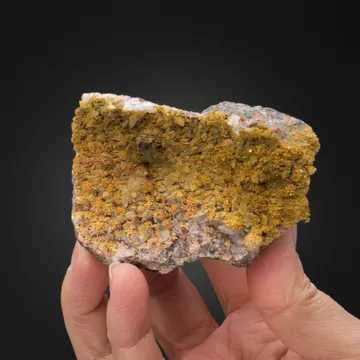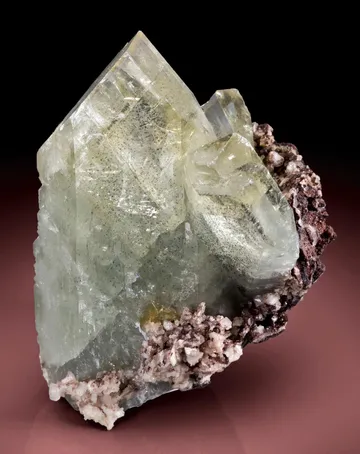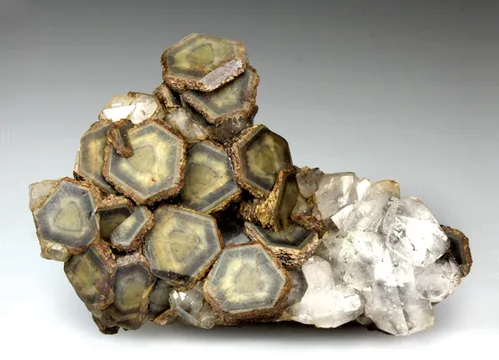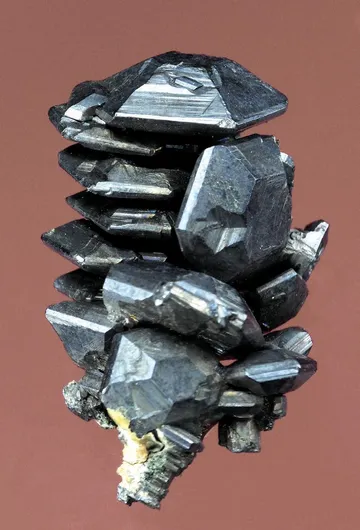
Geevor Mine, UK, Cornwall tin locality famed for chalcocite, cassiterite-bearing veins, quartz and calcite; strong provenance prized by collectors.
Key facts
Geevor is one of the great late chapters of Cornish hard-rock mining: a twentieth-century tin mine sitting on, and eventually penetrating beyond, one of Britain’s most storied older mining districts. The mine lies at Pendeen on the Atlantic-facing Tin Coast of west Cornwall, where the Land’s End granite meets metamorphosed Devonian country rock—the miners’ “killas.” Its collectible minerals belong to the complex Cornubian lode system: cassiterite-bearing quartz-tourmaline-sulphide veins, later sulphide and carbonate stages, and a remarkable suite of supergene copper and uranium minerals generated in the mine’s altered, wet, sulphide-rich workings.
For collectors, Geevor’s name is carried above all by sharp chalcocite, attractive quartz and calcite combinations, cassiterite-bearing lode sections, and late uranyl mineral rarities from named levels and lodes. The best cabinet-scale chalcocites show dark metallic, flattened pseudohexagonal crystals on massive chalcocite-rich ore; finer calcites are pale to orange, tabular to discoidal or prismatic, often on quartz; and the quartz ranges from milky lode material to clear crystals, in some cases with a delicate pinkish cast from the Levant-section Hanging Wall Vein. Geevor specimens are rarely “pretty Cornish” in the pastel showroom sense; at their best they are geological documents—lode fragments with strong provenance, mine-level specificity, and unmistakable St Just character.
Historically, Geevor matters because it was among the last deep tin mines in Cornwall and the last mine to close in the St Just Mining District. Its modern workings absorbed and connected with older ground, including North Levant, Wheal Carne, Boscaswell Downs, Pendeen Consols, and the Levant section beneath the sea. The mine’s preserved surface plant, mill, Dry, shafts, and museum now make it one of the most complete surviving twentieth-century Cornish tin-mining sites, and a key interpretive centre within the Cornwall and West Devon Mining Landscape World Heritage Site.
Regional View
Country View
Geevor’s mineralogy is inseparable from its mining geography. The mine straddled the granite–killas contact near Victory Shaft, and later development pushed into undersea and adjacent ground where old copper-rich lodes, newly discovered veins, and deep tin targets overlapped. Names such as Coronation Lode, Grenfell Lode, Pig Lode, Peath or Peeth Lode, North Lode, Simms Lode, Hanging Wall Vein, and Prospect East are not collector’s decorations: they are the keys to separating routine Geevor material from specimens with precise geological meaning.

Photo: Wikimedia Commons

Photo: Wikimedia Commons
Search for specimens: View all specimens from Geevor Mine, UK
Geevor Mine is at Pendeen, near St Just in west Cornwall, on the north coast of the Land’s End peninsula. In geological terms it is part of the Cornubian orefield, where late-Variscan granite intrusion, fracture development, wall-rock alteration, and repeated hydrothermal pulses produced tin-copper lodes with a long and complicated mineral history. The mine sits close to the contact between coarse-grained biotite granite of the Land’s End pluton and Devonian metasedimentary and metavolcanic rocks. Toward the granite contact the country rock was metamorphosed and metasomatised, giving spotted slates, mica-rich phyllites, hornfels, tourmaline-rich rocks, and locally skarn-like assemblages.
The principal economic ore mineral was cassiterite, SnO2, the “black tin” recovered from the lodes and milled to concentrate. In the Geevor–Levant ground, cassiterite occurs in quartz-tourmaline-sulphide lodes, with pyrite, chalcopyrite, arsenopyrite, sphalerite, chalcocite, bornite, hematite, chlorite, fluorite, and later carbonates. The broader district is a classic demonstration of Cornish lode zoning, though Geevor’s own history shows how imperfect and overlapping those zones can be: high-temperature cassiterite and tourmaline stages are succeeded by sulphide, quartz, fluorite, calcite, siderite, and late supergene minerals. British Geological Survey summaries cite R. H. T. Garnett’s work at Geevor for a four-stage fracture and mineralisation sequence, beginning with wall-rock alteration and cassiterite-bearing stages, followed by sulphide deposition including chalcocite, then quartz and fluorite, then carbonates, and finally quartz-jasper filling in tension fractures.
Geevor’s lode system is best understood as a modern mining operation superimposed on older St Just workings. Mindat’s locality compilation records veins including the Footwall Vein, Hanging Wall Vein, and Prospect East Vein, and lodes including Edwards, Mundic, Carn, New, North Pig, Peath, Pig, Coronation, Simms, Prince of Wales, Treglowns, Stennack, Whisky, Savells, Prospect B, Grenfell, North, South Pig, Jumbo, and Caunter. Coronation Lode is particularly important to collectors, having yielded quartz, calcite, chalcocite, cassiterite, opal, hematite-coated material, and rhodochrosite-bearing specimens. Grenfell Lode is a key name for some of the best crystallized chalcocite specimens. The Hanging Wall Vein in the Levant section is tied to attractive quartz and to important late uranium mineral records.
The mining history is layered. A date of 1791 is cut into an adit wall in the Wheal Carne section, and nineteenth-century records refer to Wheal Geevor and North Levant. North Levant closed in 1891, but renewed attention came in the early twentieth century after Cornish miners returned from South Africa and prospecting revived the property. North Levant and Geevor Limited was registered in 1906 under the West Australian Gold Fields interest. In 1911 the company became Geevor Tin Mines Limited, with capital raised to acquire and work North Levant, Geevor, and Wheal Carne. Wethered Shaft, begun around 1910, served early development, while Victory Shaft—started in 1919 roughly half a kilometre west of Wethered Shaft—became the great twentieth-century working shaft.
Victory Shaft ultimately reached about 1,575 feet, or roughly 480 metres, by 1975. In the 1960s, as the developed Victory-section tin lodes became increasingly worked out, Geevor explored adjoining old properties. Boscaswell Downs was dewatered and Treweeks Shaft rehabilitated, and Simms Lode was discovered about 600 metres from the main workings. The Levant ground, famous for undersea mining but complicated by a seabed breach, was eventually sealed, drained, and approached again from Geevor. A sub-incline shaft from Victory Shaft was driven down at about 25 degrees below the horizontal to exploit Levant-section lodes; it was officially opened by Queen Elizabeth II on 28 November 1980 and reached 21 Level before the tin-price collapse ended deeper ambitions.
The economics turned brutally in October 1985, when the International Tin Council collapse sent tin prices down sharply. Geevor closed in April 1986, then re-opened in January 1988 after a rescue programme based on broken-ore removal, stope-pillar recovery, and tramming rather than major new development. Production stopped again on 16 February 1990, and the mine entered care and maintenance. In May 1991 the pumps were finally switched off and the deep workings flooded. The surface site was purchased by Cornwall County Council and, after intense local volunteer effort, opened as Geevor Tin Mine Heritage Centre in August 1993. Today the mine is a museum and scheduled monument rather than a collecting locality in the field sense; specimens now available to collectors come overwhelmingly from old mine collections, dealer stock, former miners and geologists, historic pockets, and specimens rescued before flooding.
The most important specimen-producing episodes are tied to named lodes and levels. Coronation Lode supplied quartz with cassiterite and hematite, chalcocite seams with cassiterite and dark opal, and the distinctive calcites that appear as pale, orange, prismatic, tabular, or discoidal crystals on quartz. A documented 16 Coronation lode section shows an 80 mm chalcocite seam with small sharp cassiterite crystals throughout and a small area of dark brown common opal. Grenfell Lode material includes rich miniature-scale chalcocite specimens with flattened crystals to about 9 mm on massive chalcocite. Pig Lode produced iridescent prismatic chalcocite with second-generation tabular growth. Peath or Peeth Lode and the Hanging Wall Vein are central to Geevor’s late uranium mineral story, including andersonite, schröckingerite, sodium-zippeite, johannite, gypsum, brochantite, atacamite, and related sulphate-carbonate assemblages recovered in the final years of access.
Geevor chalcocite is the signature collector species for the mine: metallic dark grey to black, commonly flattened and pseudohexagonal, and most prized when the crystals are sharp, lustrous, and clearly perched on massive chalcocite-rich matrix rather than merely forming dull ore. Good examples are recorded from Grenfell Lode, Pig Lode, and Coronation Lode, with documented crystals reaching about 9 mm on a 5.5 cm Grenfell Lode miniature and smaller sparkling crystals on chalcocite-tennantite ore from older collection material. Coronation specimens may show chalcocite seams with small cassiterite crystals and dark common opal, while Mindat photo associations include quartz, bornite, cassiterite, wittichenite, roquesite, tennantite-group material, paratacamite, pyrite, connellite, malachite, opal, and chalcopyrite. The best Geevor chalcocites have three virtues at once: definite lode provenance, bright metallic crystal faces, and enough open texture to show form; ordinary pieces are massive black sulphide fragments with little crystallographic relief.
Quartz at Geevor is both ore-stage gangue and specimen matrix, and its collector value depends strongly on association and lode context. Coronation Lode quartz is documented with rhodochrosite, cassiterite, hematite, chalcocite, and opal, and the better pieces carry bright cassiterite crystals, pastel-pink frosted rhodochrosite rhombs, hematite or limonite coatings, or chalcocite-rich seams rather than being plain milky vein quartz. The Hanging Wall Vein in the Levant section produced clear quartz crystals with a pink hue in material collected in 1976, while specimen labels also cite Hanging Wall Vein, 1400 level, for mid-1970s quartz pieces sold through Dick Barstow. Good Geevor quartz is therefore judged less by size alone than by clarity, intact terminations, lode provenance, and the quality of its Cornish associations—especially cassiterite, chalcocite, calcite, or rhodochrosite.
Geevor calcite is best known from Coronation Lode and related level-specific material, where it occurs as lustrous white hexagonal tabular crystals, orange prismatic crystals to several millimetres, colour-zoned six-sided prismatic crystals, flattened tabular crystals reportedly to 3.5 cm, and attractive orange discoidal clusters to over 1 cm on quartz. Coronation Lode, Level 15 and Level 16 pieces are documented with quartz, pyrite, hematite, aragonite, and weathered sulphides, and at least one dealer-described miniature from the Phillips Collection carried orange discoidal calcite on quartz with an original Coronation Lode provenance tag. The best calcites are clean, bright, and architectural, with crystals elevated on quartz rather than buried in iron-stained lode; small edge bruises are common, but a good Geevor piece keeps the unusual Cornish habit, colour zoning, or orange tone intact.
Beyond the three main EarthWonders species, Geevor is important for cassiterite, bornite, chalcopyrite, sphalerite, pyrite, arsenopyrite, tennantite-group minerals, wittichenite, roquesite, fluorite, hematite, siderite, rhodochrosite, aragonite, gypsum, devilline, brochantite, atacamite, paratacamite, connellite, malachite, and opal varieties including dark common opal and reported fire-opal material. Its most scientifically distinctive collector suite is the late uranium mineral assemblage, including andersonite and schröckingerite recorded as new to Britain, sodium-zippeite from 14, 16, and 17 level settings, cuprosklodowskite from 17 level Peeth Lode, johannite, compreignacite, becquerelite, autunite, uraninite or pitchblende, and related secondary phases. Nearby Wheal Owles, not Geevor itself, is the classic type-locality name tied to penwithite; Geevor’s contribution to that story is the 1967 and 1974 neotocite-like manganese silicate material studied close to the penwithite type ground, rather than a Geevor type-locality mineral.
The first authenticity issue with Geevor specimens is locality precision. “Geevor” can mean the strict Geevor lodes, the larger twentieth-century Geevor sett, material from connected Levant-section workings, or old specimens historically labelled under North Levant, Boscaswell Downs, or Pendeen-area names. This matters most for copper chloride minerals: botallackite has been widely associated with the Botallack–Levant coast, but Mindat explicitly notes that botallackite reputedly from Geevor came from the connected Levant workings, mostly South Lode, and not from the Geevor lodes proper. Serious labels should preserve “Levant section,” “Coronation Lode,” “Grenfell Lode,” “Pig Lode,” “Peath/Peeth Lode,” “Hanging Wall Vein,” or level data whenever available.
Chalcocite condition is a major grading point. The flattened pseudohexagonal crystals chip at edges and can become visually dead if rubbed, oiled, or stored in abrasive contact with other sulphide specimens. Rich massive chalcocite matrix is heavy and brittle; evaluate old pieces under raking light for bruising on the crystal rims and for repaired matrix breaks. Thin chalcocite seams with cassiterite in quartz are often more important geologically than visually, so a documented lode-section specimen may deserve retention even when it lacks showy crystals.
Calcite and quartz pieces from Geevor commonly carry iron staining, weathered pyrite, hematite dusting, or fragile aragonite/gypsum additions. Do not over-clean them. Acid treatment would obviously destroy calcite and may strip contextual coatings that help tie a specimen to the lode. Ultrasonic cleaning is a poor choice for mixed Cornish lode specimens with sulphides, carbonates, and clay or gypsum residues. Gentle dry brushing and careful storage are usually preferable.
The uranium minerals require special handling. Andersonite, schröckingerite, sodium-zippeite, cuprosklodowskite, johannite, and related uranyl species from Geevor are generally small, delicate, and in some cases efflorescent or hosted on gypsum and altered mine-wall material. They should be kept dry, boxed, labelled, and away from prolonged bright light and casual handling. As with all uranium-bearing specimens, avoid inhaling dust, wash hands after handling, and store them with sensible separation from living spaces. Their value lies in verified identification and level/lode data, not in size.
Geevor material is not abundant on the market in the way that nineteenth-century Cornwall classics can be, but it appears steadily from old British collections, former dealer stock, and deaccessioned cabinet material. Chalcocite is the most recognizable and saleable Geevor species; good Grenfell or Pig Lode pieces with sharp metallic crystals are considerably scarcer than massive ore examples. Calcite from Coronation Lode remains available occasionally and is often modestly priced unless unusually aesthetic, large, or well provenanced. Quartz alone is commoner, but quartz with cassiterite, rhodochrosite, chalcocite, or old Hanging Wall Vein data is much more desirable. For advanced collectors, a modest-looking specimen with an original Geevor geologist, miner, Barstow, Weller, Haas, Trebilcock, or other respected Cornish provenance can be more significant than a cleaner but vague “Cornwall” label.
Geevor’s modern story begins with a name older than the twentieth-century mine. In the Wheal Carne section, a date—1791—is cut into an adit wall, a quiet mark from the older mining landscape that Geevor eventually swallowed into its own working territory. By the 1880s North Levant had up to 176 workers, but after its closure in 1891 the district fell back to intermittent work by a few men. Then, around the Boer War years, Cornish miners returning from South Africa took up the ground again. Their prospecting was good enough that a new lease followed in 1905, the company was registered as North Levant and Geevor Limited in 1906, and by 1911 Geevor Tin Mines Limited had been formed to work North Levant, Geevor, and Wheal Carne.
Victory Shaft was a declaration of intent. Sinking began in 1919, about 500 metres west of Wethered Shaft, as the mine’s future moved toward the coast and the old undersea lodes. Wethered remained productive until 1944, but Victory became the centre of the mine’s twentieth-century life. It was deepened repeatedly, eventually reaching about 1,575 feet, and from it men, ore, materials, and machinery passed into a working system that ultimately extended under the Atlantic.
The Levant connection was one of Geevor’s great engineering dramas. Levant, the famous mine under the sea, had closed in 1930, but its lodes remained tempting. When Geevor’s geologists and managers looked westward in the 1960s, they faced a physical problem that every miner on that coast understood immediately: the old workings had been breached from the seabed. Before Geevor could safely re-enter and drain the ground, that breach had to be plugged and sealed. While the Levant problem was being tackled, tunnelling toward Boscaswell Downs found Simms Lode about 600 metres from the main workings, and Treweeks Shaft was re-opened to provide a second access. When the Levant plan finally advanced, Geevor drove a sub-incline from 15 Level at Victory Shaft at an angle of 25 degrees below horizontal. Queen Elizabeth II opened the sub-incline on 28 November 1980. It eventually reached 21 Level, about 2,100 feet or 630 metres below the surface elevation at Victory Shaft, before the price of tin made the intended deeper work impossible.
The end came not as a single event, but as a sequence of shocks. In October 1985, the tin price fell from about £10,000 per tonne to £3,400 almost overnight. Geevor closed in April 1986, in the official account “in a blaze of publicity, protest and emotion.” But broken ore still lay underground, and men were brought back to recover it before the pumps were due to be switched off. Around 44,000 tonnes of ore were removed. Then, after a change of chairman in October 1987, a rescue programme began. On 30 January 1988, Geevor went back into production with fewer than 100 miners and a weekly target of 2,000 tonnes of ore hoisted. Some miners returned from Australia, the Sudan, Saudi Arabia, Canada, South Africa, and elsewhere in Britain. By late autumn the mine was in profit again—but the reprieve was short.
The most brutal human moment was in the Dry. Former Geevor miner Ian Davey remembered Thursday, 15 February 1990: a meeting called at about 7:15 a.m., managers present whom some men had never seen before, and the announcement that the mine was shut from that time. Some miners had already gone underground and did not yet know they had lost their jobs. The men were told to remove their personal belongings by 9:30 a.m.; anything left would be burnt. Penwith Local History Group records the closure date as 16 February 1990 and the redundancy as immediate, the ending of “three thousand and more years of winning tin in St Just” with the hard phrase “with immediate effect.”
The Dry became Geevor’s most haunting exhibit because it preserved not simply mining equipment, but absence. Hilary Orange’s study of the Dry describes a room that feels silent only because its old noises have gone: showers running, toilets flushing, locker doors banging, a kettle boiling, men clocking in and out. The building had once been the social heart of the mine. Former stoper David Harvey, interviewed in 2008, said visitors often sensed its atmosphere, almost “like the feeling as if you go into a chapel or a church.” Then he cut through the romance with a miner’s realism: what visitors did not get was “the stink of filthy clothes.” His stope was 100 degrees Fahrenheit; water came down all day; clothes rotted off men in perhaps three months. In the morning, clothes dried on the pipes were “like cardboard,” and had to be beaten on the ground before they could be worn again.
There was also the saved-mine story. After the pumps were switched off in May 1991 and the deep workings flooded, surface machinery began to be sold or cut up for scrap. Cornwall County Council bought the site, and a group of volunteers—mostly former Geevor employees—worked through the winter of 1992–93 with no heating and no mains power to create a museum. Their phrase was simple and stubborn: “Make it Happen.” Geevor Tin Mine Heritage Centre opened in August 1993. For collectors, that effort matters because it preserved the context in which the specimens make sense: the shafts, the mill, the Dry, the maps, the mineral displays, and the voices of the people who knew exactly what Coronation Lode, Hanging Wall Vein, 15 Level, or Peeth Lode meant.