Fort Drum, USA: Rucks' Pit yields fossil Mercenaria permagna clams with honey-yellow to amber calcite crystals, often geode-like and prized by collectors.
Key facts
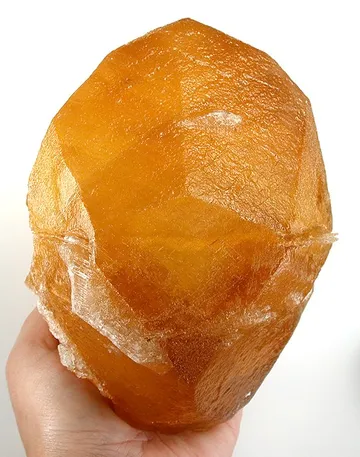
Fort Drum’s mineralogical reputation rests almost entirely on one remarkable occurrence: Rucks’ Pit, near Fort Drum in northeastern Okeechobee County, Florida. It is not a metal mine, pegmatite, or alpine cleft locality, but a former aggregate and shell-rock quarry in late Pliocene to Pleistocene nearshore marine sediments. Its collector specimens are fossil mollusks—above all large articulated Mercenaria permagna clams—whose interiors became natural vugs lined or filled with honey-yellow to amber calcite. The best pieces have the visual punch of a geode and the intellectual charm of a fossil: gray coquina or sparry limestone matrix, a preserved shell form, and gemmy scalenohedral calcite growing inward from the hinge area like frozen sunlight.
The locality became internationally recognized only after a change in mining methods. When dynamite blasting gave way to track-hoe excavation, intact crystal-filled clams began surviving the quarrying process. From 2002 through the mid-2000s, commercial and hobby collecting recovered specimens that otherwise would have gone to road-base aggregate. The classic look is unmistakable: a clam or whelk shell with a natural “window” dissolved through the side, exposing lustrous golden calcite crystals within. In strong examples the calcite is transparent to translucent, pale yellow to honey-brown, and arranged as elongated scalenohedral crystals, sometimes with stepped growth and occasional doubly terminated individuals.
Regional View
Country View
Geologically, the deposit sits on the eastern edge of the Osceola Plain, in a former shallow-water shoreline setting. The productive beds belong to an informal Nashua-Caloosahatchee faunal unit above the upper Tamiami Formation and below Fort Thompson shelly sediments. The critical horizon was a zone of Mercenaria clams preserved in life position, roughly one meter above the top of the Tamiami Formation, with additional less persistent clam zones above it. Acidic groundwater dissolved shell material and moved calcium carbonate through the porous sediment; open space inside the articulated shells then acted as a protected crystal chamber where calcite could grow.
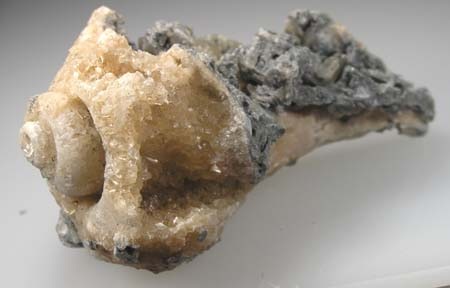
Photo: Wikimedia Commons
Although Mercenaria clams made the locality famous, whelks, ark shells, olives, cones, mussels, and other mollusks were also found with calcite linings or replacement. These are usually scarcer and often more fossil-forward than mineral-forward, but a fine calcite-lined Busycon whelk from Fort Drum is a highly desirable companion to the classic clam specimens. The Fort Drum material also has a strong ultraviolet personality: good calcite commonly fluoresces yellow-green to blue-green under UV and briefly phosphoresces after the lamp is switched off, making the locality especially attractive to collectors who bridge systematic mineralogy, fossils, and fluorescent minerals.
Search for specimens: View all specimens from Fort Drum, USA
Fort Drum mineral specimens come from Rucks’ Pit and the related Fort Drum Crystal Mine material in Okeechobee County, Florida. The original quarry lay about 5 km east of the small community of Fort Drum, roughly midway between Orlando and West Palm Beach. It was worked for shell rock, coquina, sand, and limerock aggregate, not for minerals. In mineral-collecting terms, however, the quarry became one of Florida’s signature localities because a commercial aggregate horizon intersected an unusually specimen-rich fossil and calcite zone.
The pit exposed a sequence of shallow-marine and nearshore sediments. At the base was the Tamiami Formation, described at the site as fossiliferous fine quartz sand with variable silt, clay, and carbonate content. Above it were variably lithified beds transitional between Caloosahatchee beds to the south and the Nashua Formation to the north. These beds included densely packed Mercenaria shell layers, imbricated shell beds, clay stringers, and calcite-cemented shell-bearing sand or sandy limestone. Overlying units included Fort Thompson shelly sediments and surficial sands. The quarry rock itself was a porous, calcite-cemented, shell-rich limestone or coquina-like sparite, ideal as aggregate but also ideal for preserving enclosed cavities.
The productive mineralization was not a vein or ore body in the conventional sense. It was a fossil-vug calcite occurrence controlled by shell cavities, groundwater chemistry, and stratigraphy. The most important collectible specimens came from articulated Mercenaria permagna shells in life position. In the lower and most productive zone, the clams were commonly hinge-up, and in favorable pockets their shell interiors had been partly emptied by dissolution and then filled by calcite. The largest and best crystal groups grew downward and outward from the hinge region into the protected interior space of the fossil. Many specimens show gray micritic limestone or clayey infill in the lower part of the shell and open crystal-lined space above.
Mining history at the site spans more than a century in a broad sense. Shell mining in the area began in the early 1900s, associated with the Florida East Coast Railroad, when shell material was dug from shallow pits in what later became the northeastern part of the flooded north pit. The Rucks family bought the property in 1959, reopened mining in 1961, and Okeechobee County mined shell there intermittently for years. In 1987 the family expanded into mining the gray sparry limestone base rock. Early blasting with dynamite destroyed most delicate mineral specimens; charges spaced on twelve-foot centers shattered rock deep behind the working face, leaving little chance for complete crystal-filled shells to survive.
The turning point came when the Rucks operation stopped using dynamite and switched to mechanical removal with track hoes. By 2002, Eddie Rucks Jr. and Florida Geological Survey geologist Thomas M. Scott were seeing intact calcite-filled Mercenaria specimens in the newly exposed, less-shattered rock. In late 2002 Dickerson Florida, Inc. took over daily mining operations and rapidly expanded aggregate production. At the same time, Mickey Cecil of The Fossil Geode and Gary L. Maddox of Apalachee Minerals worked with Eddie Rucks Jr. to recover and market specimens, preserving material that would otherwise have been crushed.
Commercial specimen recovery began in earnest in 2003. The north wall or dam area proved especially important because explosives had not been used there, protecting the basal Mercenaria zone. Collectors and commercial diggers worked various wall exposures and key ditches as the quarry advanced. The first major bonanza came in December 2003 and January 2004 in a north-south key ditch near the east wall, where soft rock yielded Mercenaria clams from about 2.5 to 15 cm long with superb calcite. Roughly 150 to 200 flats were collected in a short period, enough to bring the material to the Arizona Mineral and Fossil Show in Tucson, where major museums, including the Smithsonian, purchased specimens.
The 2004 hurricane season battered the operation. Hurricanes damaged infrastructure, knocked out electric pumps, and flooded the pit. When water levels fell late that year, collectors found a continuation of the earlier bonanza zone, and another push of collecting supplied material for the 2005 Tucson shows. A further productive zone was uncovered in late November 2005 in a key ditch in the southeastern part of the pit, producing large multi-clam matrix slabs as water levels were finally lowered. By 2006 the quarrying operation had reached its practical limit against the property boundary; the pit was allowed to flood and the original quarry ceased operating as an active aggregate source.
Access today must be understood carefully because labels can confuse collectors. “Rucks’ Pit,” “Ruck’s Pit,” “Fort Drum Crystal Mine,” and “Fort Drum” are often used interchangeably in trade, but they do not always mean the same collecting context. The original Rucks’ Pit quarry is flooded and private. Pacific GeoLab has reported exclusive fossil and crystal rights to the original quarry property and periodically offers limited organized dig events at Rucks Pit. Separately, the Fort Drum Crystal Mine property—long associated with stockpiled productive material removed before the old quarry flooded—has continued as a fee-dig operation under new ownership since November 2024, with scheduled dig dates, reservations, screening stations, mine piles, and “keep what you find” collecting. Serious labels should distinguish, when known, between original in-situ Rucks’ Pit quarry material, older Fort Drum Crystal Mine tailings material, and newer organized-event recoveries.
Calcite is the defining mineral of Fort Drum, occurring as pale yellow-white to honey-brown crystals growing inside fossil Mercenaria permagna clams and, less commonly, other mollusks such as Busycon whelks and Anadara ark shells. The crystals are typically scalenohedral to elongated rhombohedral forms, often transparent to translucent, with the largest and cleanest groups developed from the hinge area of articulated clams; documented individual crystals reach more than 3 cm in the best Mercenaria specimens, while typical collected clams and shell geodes range from small miniatures to large cabinet pieces and multi-clam matrix slabs. Fine specimens show a natural shell window, strong luster, rich amber color, intact crystal tips, good fossil form, and minimal gray clay or iron staining obscuring the interior. Ordinary pieces are common as partial clams, bruised crystal linings, broken shell fragments, or washed-pile finds, but undamaged in-situ wall-mined specimens with gemmy hinge clusters remain the elite Fort Drum material.
Crystalline calcite is essentially the only collector mineral for which Fort Drum is famous, but the site is not mineralogically barren beyond calcite. Mindat and the Southeastern Geological Society guidebook document pyrite as microcrystals on and between yellow calcite crystals, usually tarnished brown cubes visible only under magnification; dark brown to black stains on some Mercenaria exteriors were also described as microcrystalline pyrite. Iron oxides occur as rust-colored stains produced quickly by iron-rich groundwater on freshly exposed wall rock. Quartz is abundant as sand in the cover and as a component of the calcite-cemented sparry limestone, and clay and marl occur as sedimentary units and cavity fill. No valid type-locality mineral species is known from Fort Drum; the locality’s type-like significance lies instead in its fossil names and its singular fossil-calcite specimen habit, especially the famous crystal-lined Mercenaria and rarer whelk material.
Fort Drum specimens are usually easy to recognize but easy to mislabel. A proper label should ideally say Rucks’ Pit, Fort Drum, Okeechobee County, Florida, USA, and should clarify whether the piece came from the original quarry workings, old Fort Drum Crystal Mine stockpiles, or a modern organized dig. Many commercial labels use “Ruck’s Pit,” “Rucks Pit,” “Fort Drum Crystal Mine,” or simply “Okeechobee” interchangeably. That is acceptable in casual trade, but for serious collection records the distinction matters: original mid-2000s quarry pieces, especially matrix specimens recovered before flooding, are more significant than later tailings-pile finds of uncertain exact extraction point.
The most common condition issue is crystal damage. Calcite is soft, and the Fort Drum crystals are exposed in awkward shell windows; tips and faces are easily scratched, bruised, or dulled. Track-hoe-mined loose material and washed-pile finds can look attractive when wet but may show numerous dings once dry. The best pieces were dug from pit walls by undercutting and side-cutting the matrix, then lifting the whole clam or matrix block without striking the crystal opening. Look closely for bruised terminations, abraded faces, glued shell fragments, clay packed into the vug, and iron staining that masks color and luster.
Cleaning requires restraint. Gray coquina matrix and shell material are part of the specimen, not dirt to be removed indiscriminately. Water, soft brushes, and careful mechanical trimming are safest. The classic collecting literature records successful removal of rust-colored iron oxide stains using Super Iron Out, but also warns that regular Iron Out containing oxalic acid can frost calcite. Strong acids are particularly risky because calcite reacts readily and polished or gemmy surfaces can be etched quickly. A freshly cleaned specimen should retain sharp luster, visible crystal faces, and the natural shell architecture; over-cleaned pieces often look chalky, pale, and lifeless.
Fluorescence is a major collecting attribute. Good Fort Drum calcite commonly fluoresces yellow-green to blue-green under longwave and shortwave UV and may phosphoresce briefly after the lamp is switched off. Because many specimens contain porous limestone, shell remnants, clay, and iron staining, fluorescence can vary across a single piece. Store specimens dry, avoid prolonged outdoor exposure, and protect them from vibration: the fossil shells and calcite bridges are more fragile than they look.
Market availability is broad but tiered. Small partial clams, loose shell fragments, and ordinary tailings pieces remain widely available. Good complete clams with open windows and pleasing honey calcite command more interest. Rarer whelks, strong fluorescent examples, transparent hinge clusters, and multi-clam matrix slabs are much harder to replace. Top Fort Drum specimens have a distinctive crossover market—mineral collectors, fossil collectors, fluorescent-mineral collectors, and Florida specialists all want them—so exceptional pieces do not behave like ordinary common calcite.
The early collecting years at Rucks’ Pit had the atmosphere of a Florida field-trip legend forming in real time. On January 18, 2003, eighty-six members from twelve different clubs gathered at the Fort Drum General Store. The instructions had been simple—meet at the general store, “not Fort Drum Diner”—and that was apparently enough, since the reports note there was only one road through town and those were the only two businesses. It was 37 degrees that morning, cold by south Florida standards, with wind across the open country. By afternoon the day had turned bright and mild, and collectors were scattered through the quarry learning where the “good stuff” lived: some areas yielded mostly whelks and gastropods, others the big Mercenaria clams whose interiors held larger calcite crystals.
By October 11–12, 2003, the locality was already drawing a crowd. One field-trip report counted 126 people from twenty-two fossil and rock clubs and nine states gathered again at the Fort Drum General Store. Dr. Ed Petuch of Florida Atlantic University spoke about rare shells from the pit and the environment of the Fort Drum area roughly three million years ago. Mark Renz was there too, with Florida fossil material on display. The weekend produced the sort of finds that made the pit feel half fossil expedition and half mineral pocket: an excellent llama or camel jaw with seven teeth, alligator and shark teeth, beautifully preserved seashells, unnamed cowries, buckets of calcified clams and busycons, and matrix pieces holding five or six clams with large calcite crystals. After the collecting day, the Easy People Band played country music while the crowd sat down to barbecue, baked beans, and cole slaw.
One of the best personal accounts from that October weekend reads like a family initiation into field collecting. Jason B. Hamilton arrived with his wife Pam, daughters Britney and Sarah, his father Craig, and friends Jon and Elaine with their children. Just before the group descended into the pit, he stopped the girls and produced gifts from behind his back: for Britney, an engraved shiny new rock pick; for Sarah, a matching brightly colored hand rake and hand shovel. Their eyes, he wrote, grew “as large as calcified clams.” The family spent the first day chipping at the wall, learning what to look for and how to extract specimens safely.
On the second day, Hamilton slowed down. He had nicked too many promising pieces the day before and changed tactics, clearing more overburden and pouring pond water over the strata to wash away loose dirt and clay. The method revealed the concretionary rock around the shells and let him work under and around specimens before prying them free. First came a cluster of four clams with exposed calcite crystals, good enough that he stopped immediately and hand-carried it to the truck, showing it off as he went. Then, near the end of the day, his patience paid off again: a six-clam cluster, each clam with well-defined exposed calcite bridges and large crystals. Mickey Cecil stopped him to inspect it and insisted he show it around before leaving. At the barbecue area, Hamilton met Eddie Rucks and thanked him for allowing the collecting. Rucks reportedly said he had never seen such a nice piece, let alone a cluster like that.
Commercial collecting had its own drama. The north wall, spared from dynamite because blasting might have ruptured the dam, preserved some of the best early material. Gary Maddox described working the basal Mercenaria zone for months, much of it while standing in waist- to armpit-deep water. Two curious alligators kept the collectors alert. In the heat of a south Florida summer, that water was not entirely unwelcome; when a rich zone appeared along the middle-west wall in 2003, the commercial crew learned that immersion was sometimes better than baking on the quarry floor.
The first major bonanza came in December 2003 and January 2004. In a north-south key ditch near the east wall, soft rock yielded Mercenaria clams from 2.5 to 15 cm long with superb calcite. About 150 to 200 flats were collected quickly, and the crew decided to take the material to Tucson. Preparation became a race: cleaning, pricing, boxing, and packing specimens for the Arizona Mineral and Fossil Show. Maddox later wrote that he was still pricing flats during the drive west. At Tucson the pieces finally caught the mineral world’s attention, and major museums, including the Smithsonian, bought specimens.
Then came the hurricanes. In the fall of 2004, three storms passed near or over the pit, wrecking infrastructure and knocking out the electric pumps. The quarry flooded completely. When water levels finally began to subside in December, visiting collectors found the continuation of the previous year’s bonanza zone. A track hoe was brought in to strip overburden, and again the site produced loose, brilliantly crystallized Mercenaria and substantial multi-clam matrix specimens. For the second consecutive year, the crew repeated the frantic pre-Tucson routine: recover, clean, trim, box, price, and get the Florida crystal clams in front of collectors before the show doors opened.
Even after the original quarry flooded, field-trip stories continued around the Fort Drum Crystal Mine stockpiles. A 2015 fossil-club trip described the collecting area as a farm field with spoil piles, hoses, hand tools, and a simple rule: dig, wash, and keep looking. Rain came down torrentially for over an hour, driving the collectors into cars or under a wooden awning, but the downpour had an upside. It washed off specimens, and after the storm the group walked around picking up pieces the rain had freshly revealed. Chickens, turkeys, and ducks wandered through the scene, and the day ended with Eddie showing visitors more finds in his warehouse—and with eggs from the chickens.