A collector's guide to Empire State No. 4 Mine, USA: its geology, mining history and notable minerals, illustrated with the 90 specimens documented from this locality on EarthWonders.
Key facts
Empire State No. 4 Mine is the modern collector name for the great No. 4 working at Balmat, in the Balmat-Edwards zinc district of St. Lawrence County, northern New York. It is not a small “specimen mine” in the usual sense, but an active industrial zinc mine cutting deep, folded, metamorphosed Proterozoic rocks of the Adirondack Lowlands. That tension is part of its fascination: from a mine built to produce sphalerite concentrate have come some of the finest recent American cabinet minerals—purple to peach calcite, gem sphalerite, purple anhydrite, and the famous jet-black complex magnetite crystals of the Fowler orebody.
The setting is a marble-hosted zinc deposit in the Grenville Province, where sulfide-rich horizons originally formed in carbonate and evaporite-bearing sediments and were later folded, recrystallized, and remobilized during high-grade metamorphism. For the specimen collector, the important result is that open cavities are uncommon. When the mine does break into a pocket, the specimens often have a look quite unlike the familiar Mississippi Valley-type calcite-sphalerite suites: lustrous calcite twins in lavender and pink, transparent yellow to amber sphalerite, halite-associated magnetite, anhydrite blades of startling color, and sulfides set in pale marble and calc-silicate gangue rather than limestone rubble.
Regional View
Country View
The best Empire State No. 4 specimens tend to be immediately recognizable. The calcites are not merely “pink calcite” but sharp, glassy rhombohedral, scalenohedral, and Rossie-habit twinned crystals, sometimes with pyrite dusting that gives individual faces a satin or sandy texture. The sphalerites are most coveted when low-iron, transparent, and yellow to amber, commonly perched with calcite or quartz rather than lost in massive ore. The anhydrites, especially the recent purple material, have changed expectations for a species that most collectors once knew chiefly as blocky evaporite cleavages. And the magnetites—black, metallic, highly modified cubic and tetrahexahedral crystals—are among the locality’s enduring classics.

Photo: Wikimedia Commons
Search for specimens: View all specimens from Empire State No. 4 Mine, USA
Empire State No. 4 Mine lies near Balmat, southeast of Gouverneur, New York, in the Balmat-Edwards-Pierrepont zinc mining region of the northwestern Adirondack Lowlands. Modern technical reports place the mine and mill complex on Sylvia Lake Road in the Town of Fowler, with access from New York State Route 812 and with the active No. 4 shaft adjacent to the mill. The district as a whole has been worked from several camps—Balmat, Edwards, Hyatt, and Pierrepont—and older specimen labels may say Balmat No. 4, ZCA No. 4, St. Joe No. 4, or Empire State Mine depending on the ownership era and the habits of the label writer.
Geologically, the deposit belongs to the great class of metamorphosed, stratabound, marble-hosted zinc deposits of the Grenville Province. The zinc mineralization is principally sphalerite in siliceous dolomitic and calcitic marbles, with evaporite-bearing units, talc-tremolite-anthophyllite rocks, diopside-rich quartz layers, and graphitic or pyritic schists present in the broader Upper Marble sequence. In practical collecting terms, this is why Balmat specimens so often pair ore minerals with pale carbonate and calc-silicate gangue, and why halite and anhydrite appear in some of the most unusual associations. The ore was originally tabular and bedding-parallel, then folded, recrystallized, and locally remobilized during Grenville deformation and metamorphism. The structural complexity is extreme: zinc-rich zones plunge and fold through the mine at depth, and mineralization can vary sharply over short distances.
The No. 4 ore was discovered in 1965 by systematic fence drilling across the Sylvia Lake Syncline. Historical production tables list the No. 4 mine as having produced about 10.2 million tons at 7.9% zinc through the earlier operating period, separate from the older No. 2 and No. 3 Balmat mines. The mine has been operated under several names and companies: St. Joe Minerals and predecessors dominated the district until the late twentieth century, Zinc Corporation of America operated the mines after 1987, Hudbay reopened Balmat No. 4 in 2006 and worked it into 2008, and Titan Mining later acquired the assets, restarted the operation, and changed the mine name from Balmat to Empire State Mines in 2017. Current reports continue to describe Empire State Mines as an active underground zinc operation producing zinc concentrate, with recent work also evaluating graphite on the same property.
The No. 4 shaft accesses deep levels, and modern mine planning has included zones such as Upper Mahler, Lower Mahler, New Fold, and Mud Pond, with other modeled areas including American, Cal Marble, Davis, Fowler, Northeast Fowler, Number 2 Deeps, and Sylvia Lake. Specimens do not come evenly from all of these zones. The collector history is instead built around rare openings encountered during mining: the Fowler orebody magnetite occurrence of the early 1990s; New Fold sphalerites from the 3,931–3,971 levels; a 3,981-level pocket of pink to purple calcite; the 3,990-level “Bear Den” calcite pocket; and the remarkable 4,051-level calcite pocket opened in June 2023. These are mine discoveries, not public-collecting localities, and the best specimens entered the collecting world through miners, mine personnel, and specialist dealers rather than by fee digging.
Collecting access today should be considered closed to the public. Empire State No. 4 is an active industrial mine with permits, underground workings, mill infrastructure, tailings facilities, and controlled access. Specimens in circulation are mine-recovered pieces. That matters for provenance: a good label should specify not just “Balmat” but, when possible, Empire State No. 4 Mine, the level or pocket, and an older synonym if the specimen predates the 2017 name change.
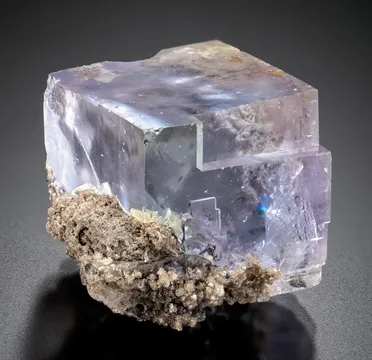
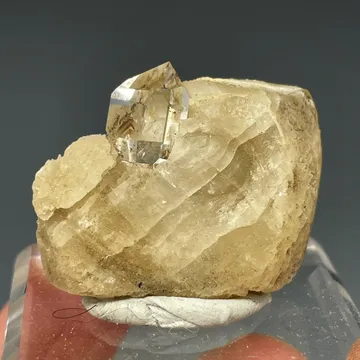
Calcite is the specimen species that brought modern Empire State No. 4 to broad collector attention: the finest examples are lustrous pink, peach, lavender, or purple crystals from recent deep pockets, especially the 3,981-level discovery, the 3,990 “Bear Den,” and the huge 4,051-level pocket opened on June 8, 2023. Habits include simple and highly modified rhombohedra, scalenohedra, tabular twins, twins on 0001, and Rossie-habit penetration twins; good crystals are transparent to translucent with glassy or satin luster, while lesser examples are grayer, more pyrite-dusted, or have dulled faces. Sizes range from small single crystals to major cabinet specimens, with published and photographed examples from Empire State No. 4 reaching well over 10 cm and a noted cover specimen at 28 cm. Associations include sphalerite, anhydrite, pyrite, baryte, halite, and locally quartz; the most desirable pieces combine strong color, intact terminations, transparency, balanced twinning, and the distinctive Balmat surface textures without becoming visually muddy.
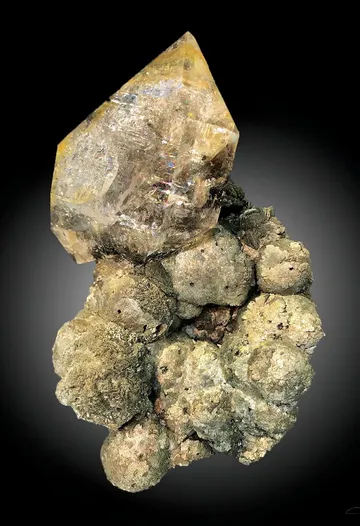
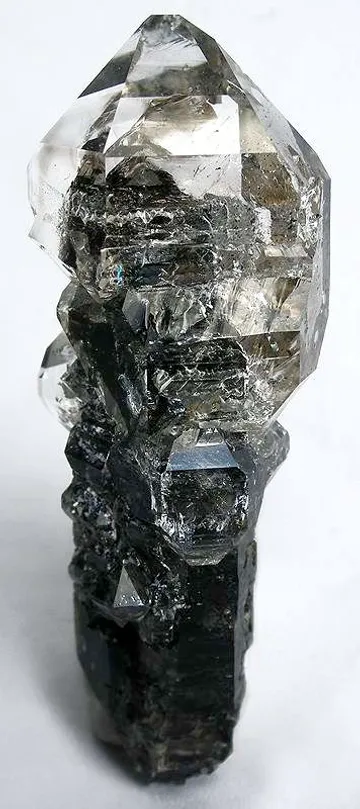
Sphalerite is both the ore mineral and one of the great collector minerals of Empire State No. 4. In the mine it occurs abundantly as massive black to brown zinc ore, but the collector-grade crystals come from vugs and remobilized openings, where they may be transparent yellow, amber, red, greenish, or black. Recent fine examples have come from the New Fold area between the 3,931 and 3,971 levels and from calcite-rich openings; dealer and publication records document crystals and groups of several centimeters, commonly with calcite, quartz, pyrite, magnetite, and occasionally anhydrite. The best sphalerites from this mine are not simply sharp—they are gemmy, bright, and light-colored enough to glow on the shelf, with crisp form and minimal bruising. Ordinary pieces tend to be massive ore, dark cleavages, or dull crystals without the exceptional luster and transparency that made the recent Balmat sphalerites so sought after.
Anhydrite from Empire State No. 4 is remarkable because it breaks the usual collector expectation for the species: the important specimens are thick, lustrous, translucent to transparent blades and crystals, with the best recent examples showing purple, pink-purple, or color-zoned hues. The notable modern material is tied to deep No. 4 mine pockets, including New Fold-area labels and the 3,981-level context reported for some major specimens; published photographs show Empire State No. 4 anhydrites in the 6–11.5 cm range, while a Wilensky-exhibited crystal is recorded at 14 cm tall. Calcite is a common and attractive association, and pyrrhotite or sphalerite may also appear. Good pieces are judged by color saturation, transparency, completeness of the blade edges, lack of cleavage bruising, and whether the crystal retains an elegant, three-dimensional floater or near-floater form rather than presenting as a broken sulfate shard.
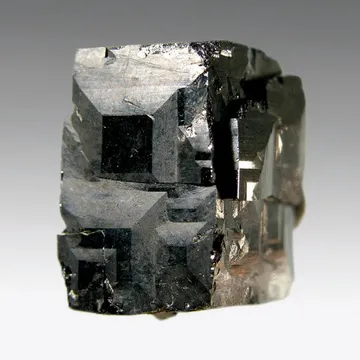
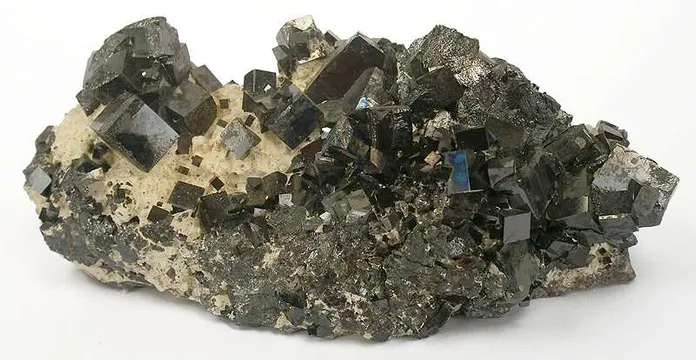
The classic Empire State No. 4 magnetites are from the Fowler orebody occurrence encountered by Zinc Corporation of America mining in 1991, where unusual mineralization produced magnetite lining halite-filled veins with anhydrite, sphalerite, and calcite, or enclosed in halite-talc matrix with other minerals. These are not typical octahedral magnetites; the best crystals are highly lustrous, jet-black, complex cubic to tetrahexahedral forms, commonly sharp and metallic enough to display as show minerals rather than as reference oxides. Published and museum/dealer examples document crystals from about 2 cm to more than 6 cm, with some specimens showing crystals to around 3.5 cm on small-cabinet matrix. The finest pieces have brilliant, unworn faces, readable complex form, and enough matrix or crystal clustering to show the unusual Balmat paragenesis; damaged edge crystals, overcleaned surfaces, or featureless black masses are much less desirable.
Beyond the four collector headline species, Empire State No. 4 has a serious mineralogical list that includes chalcopyrite, pyrite, pyrrhotite, galena, realgar, orpiment, halite, baryte, quartz, hematite, dolomite, tremolite, talc, phlogopite, diopside, willemite, svabite, braunite, clino-suenoite, and several copper and zinc secondary species. Two minerals give the locality particular scientific weight: donpeacorite, MnMgSi2O6, described as a new orthopyroxene from a manganiferous pod in the Balmat marbles, and turneaureite, Ca5(AsO4)3Cl, the chlorine-dominant arsenate apatite-group mineral for which Balmat is one of the type occurrences. Turneaureite is also of interest to fluorescent-mineral collectors because Balmat material has been reported with orange shortwave fluorescence.
Empire State No. 4 specimens demand careful labeling. A specimen may be perfectly legitimate if it is labeled ZCA No. 4, St. Joe No. 4, Balmat No. 4, or Empire State Mine, but those names refer to different eras and label conventions. Conversely, “Balmat” alone is too broad for better material: the district includes multiple mines and ore zones, and serious buyers will pay a provenance premium for a specific mine, level, pocket, collection history, and date of recovery. Recent calcites should ideally carry pocket or level data such as 3,981, 3,990, 4,051, New Fold, or Bear Den where known.
No well-established, locality-specific fake industry is documented for Empire State No. 4, but misidentification and overbroad labeling are real risks. Lavender calcite from Balmat can be confused in casual commerce with other pink or purple calcites; yellow sphalerite can be sold without distinguishing recent No. 4 material from older Balmat, Pierrepont, Hyatt, or Edwards pieces; and magnetite specimens from the famous Fowler occurrence are sometimes loosely called “Balmat magnetite” without the ZCA No. 4 context. Because the locality has recently become fashionable, labels from recognized dealers, mine-connected sources, or documented older collections are worth keeping with the specimen.
Condition is especially important. Calcite is soft and cleaves readily, and many Balmat calcites have complex reentrant faces, twins, and thin edges that chip during extraction, trimming, or shipping. Pyrite micro-inclusions and surface dusting can be natural and desirable when they create selective face texture, but they can also make a crystal look gray or dirty; evaluate whether the texture is aesthetic rather than assuming every dull area is damage. Sphalerite is brittle and has perfect cleavage, so broken corners and bruised faces are common. Anhydrite has good cleavage and should be handled as a delicate sulfate; avoid soaking, aggressive cleaning, or storage in conditions that encourage surface alteration. Magnetite is physically tougher but its mirror-bright faces reveal even small rubs, and matrix pieces may include soluble halite or soft talc that should not be washed casually.
Fluorescence is a secondary but interesting aspect of the locality. Balmat sphalerite can fluoresce orange in some material, and turneaureite is reported with shortwave orange response. Calcite fluorescence should not be treated as a primary authentication test here; color, habit, paragenesis, and provenance are much more useful. Store sulfide-rich pieces in a stable, dry environment, especially specimens with pyrite or pyrrhotite, and keep labels physically separate from specimens that may shed powder or moisture.
Market availability is unusually dynamic for a classic American zinc locality. The 1990s magnetites are established classics and fine ones are scarce. Recent calcite, sphalerite, and anhydrite have made the mine visible again, so small and mid-range examples appear with specialist dealers and at major shows, while the best lavender or purple calcites, gem sphalerites, and large purple anhydrites are already treated as high-end modern American specimens. The mine is active, but that does not mean specimen supply is predictable: open pockets are rare in this deep, metamorphosed ore system, and future production may yield no comparable crystals for long stretches.
The Balmat story begins not with zinc but with a refugee. John D. Balmat, born in Paris in 1785, fled revolutionary France with his mother and brother after the family drew the ire of Robespierre. He later settled the hamlet that now bears his name. The 2025 Mineralogical Record account lingers on the almost novelistic details: Balmat was connected through his mother to the Duchess of Oldenburg, married Nancy Gooder in 1812, and raised a large family of eight boys and six girls in the North Country. A neighbor’s memoir remembered, with evident amazement, that he never heard the Balmat children “indulge in profane language.” That domestic aside now sits oddly beside the mine’s modern identity as a deep, mechanized producer of zinc and world-class specimens.
The 1991 Fowler orebody magnetite occurrence is one of those episodes that makes operating mines irresistible to collectors. Zinc Corporation of America was not looking for display minerals; it was recovering sphalerite from a stratabound orebody. Then the miners cut an altered zone with a mineralogy unlike the usual ore. Magnetite lined halite-filled veins with anhydrite, sphalerite, and calcite, while other crystals were locked in halite and talc. The habit was startling—black, metallic, complex cubic and tetrahexahedral crystals rather than ordinary octahedra. When these pieces reached collectors, they rewrote the reputation of Balmat magnetite almost instantly. Today, the best examples still look improbably fresh: glossy black crystals with stepped and modified faces, some preserved because calcite once coated and protected them.
The recent calcite discoveries have the feel of a modern pocket chronicle. In 2022, a pocket on the 3,981-foot level produced colorless, pink, and purple calcites, many transparent and lustrous, many showing Rossie-habit twins. It was not a huge opening—about 6 by 5 by 2.5 feet—but it was productive enough that miners worked it through the summer and early fall before it was filled in. On September 4, a secondary opening of comparable size appeared adjacent to the original find, adding more specimens to the run. For collectors used to thinking of purple calcite as an exotic oddity from scattered localities, Balmat suddenly offered serious, display-quality crystals in a color few expected from an Adirondack zinc mine.
The 3,990-level “Bear Den” pocket had a different personality. It was larger than the 3,981 opening, but the calcites were usually yellow-brown rhombohedral parallel-growth crystals, with some water-clear and tabular twinned examples. That contrast is a useful reminder that “Balmat calcite” is not one look. One pocket gave lavender and purple twins; another gave bright yellow-brown rhombs; the 4,051-level pocket that opened on June 8, 2023, produced an even broader color range—pale tan, pink, peach, lavender, and in some larger crystals a deeper purple. Reports from that 4,051 opening describe glassy and satin faces, stepped growth, organized dissolution textures, and surfaces like fine shark’s teeth. Some faces looked sandy because of microscopic pyrite at or just beneath the surface. On the best specimens those quirks became character; on lesser ones they turned the crystals gray.
The sphalerite story runs in parallel with the calcite boom. New Fold openings between the 3,931 and 3,971 levels yielded red, amber, black, and attractive yellow sphalerites, with all but the black examples reported as transparent, lustrous crystals. Crystals to several centimeters were not unusual. The best yellow pieces have the glow that makes sphalerite maddeningly desirable: too soft and cleavable for jewelry in most cases, but visually gemmy enough to tempt anyone who likes transparent sulfides. When associated with colorless calcite or quartz, they give Balmat a very different face from the dark massive ore that built the mine.
The purple anhydrite finds added a final twist. Anhydrite is familiar to mineralogists, but fine freestanding crystals of the species are not abundant in collections, and purple examples are rare enough that even seasoned dealers took notice. Recent Balmat specimens have been described as thick, blade-like, gem-quality crystals in pink to purple hues, some on calcite and some as dramatic individual crystals. The claim that the finest Balmat anhydrites rank among the best known for the species is not casual show hype; it reflects how few comparable anhydrite specimens existed before these deep New York pockets emerged from an active zinc mine.