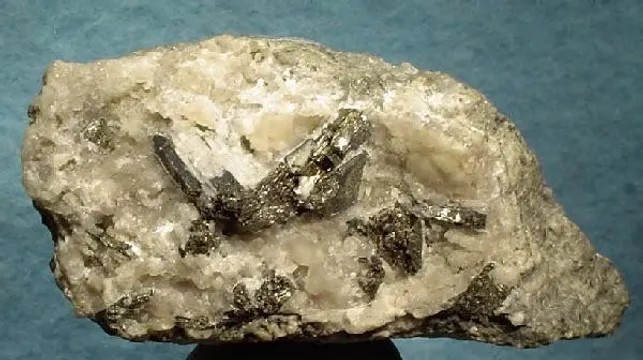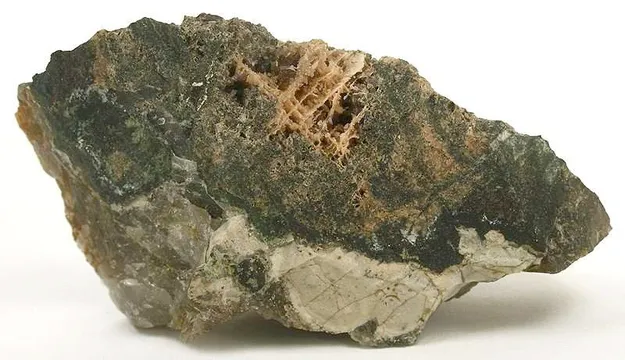
Elk Creek, USA - renowned for golden barite in septarian concretions with yellow calcite linings and fossil-rich interiors, a top collecting locality.
Key facts
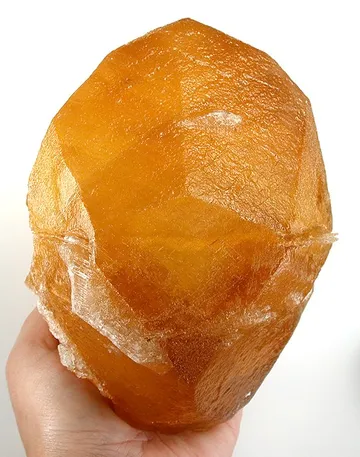
Elk Creek is the great American locality for golden barite in septarian concretions: not a mine in the usual sense, but a long reach of creek-cut Pierre Shale in Meade County, South Dakota, where erosion exposes large fossiliferous limestone concretions whose hollow interiors may be lined with yellow calcite and crowned by transparent to translucent baryte crystals. The collector’s image of Elk Creek is instantly recognizable: honey, amber, root-beer, smoky brown, or wine-colored barite crystals, commonly elongated and tapering rather than the flat blades expected from many barite localities, standing on a warm yellow calcite floor within the broken shell of a Cretaceous concretion.
The geological setting is part of the Upper Cretaceous Pierre Shale, laid down in the Western Interior Seaway east of the Black Hills. At Elk Creek the barite-bearing concretions are documented from the Gregory Member, a calcareous shale unit associated with Baculites gregoryensis. The mineralization is diagenetic rather than hydrothermal vein mining: large oblate, septarian, partly hollow concretions formed in marine mud, cracked, and later received mineralizing fluids that deposited calcite septa, drusy calcite linings, and baryte in the open spaces. The same concretions may preserve ammonites, baculites, scaphites, Inoceramus, and other marine fossils, making the locality unusually important to both mineral collectors and paleontologists.
Historically, Elk Creek moved from regional curiosity to national classic through repeated specimen recovery, publication, and high-quality preparation. The deposits were known by the late nineteenth century, entered the collector literature decisively with the 1987 “Famous Mineral Localities” article in The Mineralogical Record, and were later recognized in the American Mineral Treasures tradition as one of the elite U.S. specimen localities. Modern collecting has been driven by private ranch access, lease arrangements, and patient extraction of concretions rather than casual open collecting.
Regional View
Country View
The best Elk Creek pieces succeed because of contrast and improbability: glassy amber barite over yellow calcite, sometimes with the dark shale or brown carbonate rind still visible as a frame. Large concretions may be barren, or may contain only calcite, broken crystals, or earthy coatings; the exceptional ones open into a true pocket, with terminated barite crystals rising from a crystalline calcite lining. Growth hillocks, curved dome faces, doubly terminated crystals, and intense UV response are all part of the locality’s character, but the same features come with risk: many crystals have internal strain and can fracture from temperature shock or careless handling.
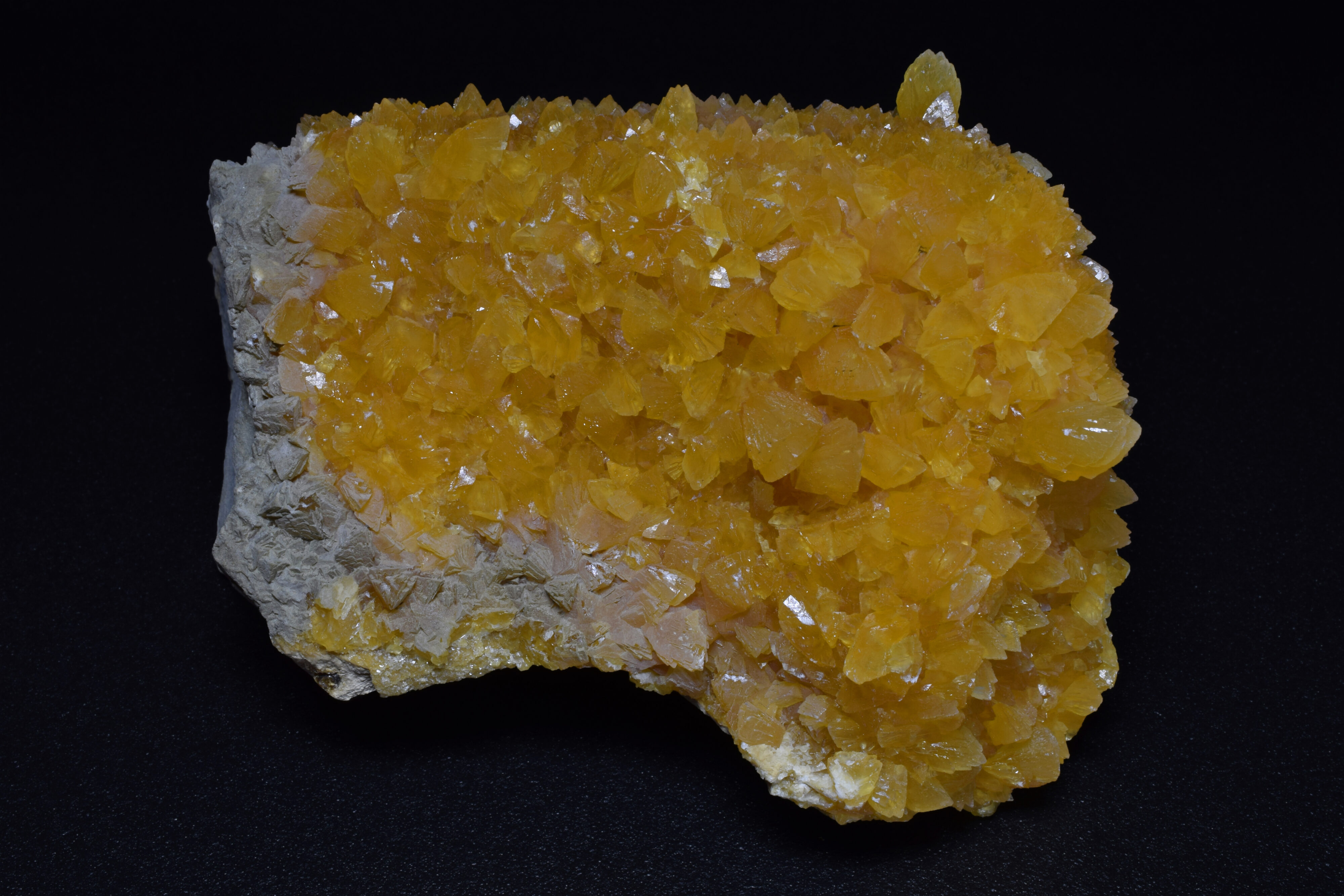

Photo: Mineral Auctions
Search for specimens: View all specimens from Elk Creek, USA
Elk Creek, as used by mineral collectors, refers to a long creek locality in Meade County, South Dakota, extending westward from the area of its confluence with the Cheyenne River. The mineral specimens come from concretions in Pierre Shale exposures along the creek and its draws, not from an underground mine or a hard-rock vein system. Mindat records the classic locality at about 44.24865, -102.50355 and describes the collecting reach as running west for roughly 20 miles; collector accounts often broaden the productive area toward the Elk Creek–Dalzell–Elm Springs country.
The deposit type is fossiliferous septarian concretion mineralization in Upper Cretaceous marine shale. In practical collecting terms, the “ore bodies” are large oblate limestone concretions, commonly in the one-to-three-meter range at their largest, distributed in several stratigraphic horizons. At Elk Creek, the best documented barite-bearing concretions are in the Gregory Member of the Pierre Shale. Their septa are calcite-rich, their cavities may be lined with yellow calcite, and the pockets may carry baryte as single crystals, crossed groups, small clusters, sprays, or larger tapered crystals. The lower concretion horizon, at or near creek level, has been regarded as especially favorable, and later field accounts describe two distinct productive concretion horizons for most calcite-and-barite specimens.
The geology explains the look of the specimens. The enclosing Pierre Shale was deposited in the Western Interior Seaway, and the concretions commonly carry marine fossils: Baculites, Placenticeras, Scaphites, Nautilus, and Inoceramus are all part of the Elk Creek collecting story. The concretions are partly hollow, and those voids became miniature geodes. Yellow calcite commonly forms the crystalline lining, sometimes as dogtooth to rhombohedral crystals, sometimes as drusy or botryoidal-looking surfaces; barite then sits on or among that calcite. The finest pieces show transparent to gemmy amber barite with strong luster, well-defined terminations, and enough matrix to establish the classic color contrast.
Elk Creek has no conventional record of industrial mining for barite comparable to a bedded barite or vein barite operation. Its production history is specimen production: surface discovery, digging out concretions, opening them, trimming, preparation, and specimen marketing. The deposits were known by at least 1891, and old collections contain Elk Creek pieces from the 1970s, when good specimens could still enter collections at relatively modest prices. The 1987 Mineralogical Record article fixed the locality in the literature, and high-end modern recovery has included organized private collecting and specimen-mining ventures, notably involving the Litchfield family and preparation/marketing by Collector’s Edge.
Collecting access today is the limiting factor. The productive Elk Creek exposures are on private property, and serious collecting requires advance permission from landowners or participation through legitimate arrangements with those holding access rights. The creek banks and shale slopes also deserve respect: Pierre Shale can be unstable, concretions are heavy, and opening them cleanly is delicate work. Older “hammer it open” methods damaged many specimens; modern recovery of valuable material often involves careful excavation, controlled splitting or sawing, and professional preparation.
The best documented recent finds came from large concretions opened during organized collecting. A July 2016 concretion about 60 cm across contained bright yellow calcite and a spray of dark golden barite, and after preparation one associated specimen carried crystals reported to 20 cm. July 2018 produced large pieces with multiple sprays, barite crystals to 10 cm, growth hillocks, and a noted botryoidal calcite habit from that zone. In September 2021, the Litchfield family reported several productive concretions with yellow calcite and gemmy golden barite, including specimens with multiple sprays, doubly terminated crystals, and strong UV response.
Barite from Elk Creek is the locality’s defining mineral under the American trade spelling: BaSO4 crystals grown in the hollow spaces of fossiliferous septarian concretions, typically perched on yellow calcite. The classic habit is elongated parallel to the b-axis, producing stubby to slender prismatic crystals with length-to-width ratios reported from about 2:1 to 7:1; the best examples are transparent to gemmy, lustrous, sharply terminated, and colored pale yellow, honey, amber, smoky brown, wine-brown, or deep golden brown. Miniatures with one perfect crystal are commoner than cabinet groups, but the locality has produced much larger pieces, including modern finds with crystals to 10 cm and prepared specimens reported with crystals to 20 cm. Superior Elk Creek barite is judged by color saturation, transparency, lack of internal fracture, sharp terminations, position on contrasting yellow calcite, and the presence of intact matrix from the concretion pocket; ordinary pieces tend to be broken, clouded, poorly isolated, or crowded by damaged crystals.
Calcite is more than a matrix at Elk Creek: it is the yellow crystalline lining that gives the barite its famous setting, and in some concretions it is the only collectible mineral present. It occurs as septa, druses, dogtooth to rhombohedral crystals, yellow crystalline carpets, and locally botryoidal-looking calcite surfaces inside the calcareous concretions of the Pierre Shale. Good calcite-only specimens show saturated buttery to golden-yellow color, bright luster, complete crystal coverage, and an undamaged natural pocket surface; barite-bearing pieces depend on calcite for contrast, scale, and locality identity. Fluorescent examples are especially desirable, with documented Elk Creek calcite showing yellow response under both longwave and shortwave ultraviolet, in some cases brightest under longwave. The best calcite specimens retain the feel of an opened septarian nodule rather than a trimmed anonymous yellow crust.
Baryte is the IMA spelling for the same BaSO4 species celebrated by U.S. collectors as barite, and the Elk Creek material deserves the more formal name when discussed mineralogically because of its unusual morphology, fluorescence, and gem potential. Crystals may be colorless through yellow and amber to deep golden brown, commonly transparent enough that broken or unsuitable crystal fragments have been faceted into rare collector stones. The locality’s baryte often shows curved or bumpy dome faces, and close inspection may reveal numerous growth hillocks—features tied in the literature to stress within the crystal structure and to the notorious sensitivity of some Elk Creek crystals to abrupt temperature change. Excellent baryte pieces combine clean, tapering, well-terminated crystals with yellow calcite and minimal internal cracking; lesser pieces may still be attractive, but are discounted heavily when the main crystal is cleaved, thermally shattered, bruised at the termination, or visually lost in a mass of matrix.
Other documented Elk Creek minerals include gypsum, marcasite, and whewellite. Gypsum occurs as lathlike to bladed crystals, sometimes on crystallized yellow calcite. Marcasite is a scarce locality association, reported as tiny botryoids and wedge-shaped microcrystals on yellow calcite seams over Pierre Shale matrix. Whewellite, Ca(C2O4)·H2O, is the standout rarity: Elk Creek has produced beige to white, flattened, etched, reticulated, and blocky crystals or aggregates on calcite, including unusually large examples that have been described in the trade as among the best for the species; some are brilliantly fluorescent and phosphorescent, and rare calcite pseudomorphs after whewellite are also known.
Elk Creek specimens should be evaluated first for damage and preparation history. Barite has perfect cleavage and low hardness, and the Elk Creek crystals are particularly vulnerable to internal fracturing from abrupt temperature changes; handling a cold crystal with warm fingers has been specifically noted as enough to cause immediate internal fracture in sensitive material. Avoid rapid thermal change, hot display lights, prolonged direct sun, ultrasonic cleaning, and aggressive washing. A soft brush, cool water used cautiously, and minimal handling are safer than any chemical or mechanical cleaning routine.
The most common condition problems are internal cracks, bruised or chipped terminations, cleaved bases where crystals were removed from the pocket wall, shattered crystal tips, and matrix instability. Many concretions break in unpredictable ways, and the yellow calcite linings can shed small crystals if the matrix is friable. Repairs are not inherently scandalous for Elk Creek material—broken pocket pieces and detached crystals are a known consequence of extraction—but they must be disclosed. Ask specifically about stabilization, reattachment of barite crystals, repaired calcite plates, and any restoration of missing termination areas on high-value pieces.
Authentication is usually a matter of recognizing the locality’s exact combination: yellow calcite from septarian concretions, amber to golden elongated baryte, and a Pierre Shale or carbonate-concretion matrix. The barite habit is distinctive, but not every golden barite on yellowish matrix is Elk Creek; South Dakota labels should be checked for Meade County, Elk Creek, Dalzell, or related ranch provenance, and not confused with other barite localities or with the unrelated Elk Creek carbonatite project in Nebraska. “Barite” and “baryte” labels may be interchangeable in the market, while “calcite” may be either a species label for calcite-only pieces or a matrix association for barite specimens.
UV response adds collector value but should not be treated as the sole proof of origin. Elk Creek baryte has been reported to fluoresce and phosphoresce yellow-white under shortwave ultraviolet, while calcite can fluoresce yellow under shortwave and longwave. Some pieces show strong and attractive fluorescence; others may vary by generation, coating, or condition. If fluorescence matters to the purchase, ask for images under specified wavelengths and for daylight images as well.
Market availability is broad at the lower and middle levels but narrow at the top. Small single crystals, loose crystals, and modest barite-on-calcite miniatures appear regularly. Good small-cabinet pieces with transparent amber crystals on bright yellow calcite are much scarcer and now bring serious prices. Large, balanced, undamaged cabinet specimens with saturated color and strong contrast are genuinely rare; auction records and dealer listings show that top pieces can move from the low thousands into far higher territory, especially when the main crystals are gemmy, sharply terminated, and aesthetically placed.
The Elk Creek story is inseparable from the Litchfield family: Don and Sue Litchfield and their children Kenny, Karly, and Kaylee have spent decades working the golden barite and Pierre Shale fossil ground, with more than 40 years of collecting in the region and roughly 25 years focused exclusively on Elk Creek. Their field photographs read like a diary of slow, dusty reward—large gray concretions dug from shale banks, shade rigged over a work site, and the tension of opening a stone that might hold nothing, a fossil, a yellow calcite cavity, or a world-class barite pocket.
One July 2016 concretion tells the whole gamble. Don Litchfield is shown digging out a large septarian concretion from the Pierre Shale, the source describing it as filled with calcite and a pocket of barite. Another view shows a partly opened barite-bearing concretion, 60 cm across, with bright yellow calcite and a spray of dark golden barite still inside. After professional preparation by Collector’s Edge, the same find yielded a golden barite on calcite specimen with crystals reported to 20 cm. That is the kind of transformation Elk Creek collectors dream about: a mud-colored Cretaceous lump becoming an amber crystal sculpture.
July 2018 produced another memorable sequence. Don and Kenny Litchfield are pictured taking a break in the shade while working a large septarian concretion loaded with calcite and multiple sprays of golden barite. The field note attached to that photograph is especially useful to collectors: two distinct concretion horizons produced most of the calcite and barite specimens. From that season came a golden barite specimen with four sprays of crystals to 10 cm, showing growth hillocks, on calcite from a zone with botryoidal habit. Another July 2018 piece measured 60 cm and, after preparation, was documented with crystals to 10 cm.
The September 2021 collecting trip has a different tone: Kenny had 30 days’ leave from the Army and flew back from Germany, and Don, Karly, and Kaylee joined him for several weeks at Elk Creek. The family reported getting into several excellent concretions containing yellow calcite and gemmy golden barite. One 15 cm specimen had multiple sprays of gemmy crystals with growth hillocks, many crystals doubly terminated, and strong fluorescence from both calcite and barite. Another 12 cm golden barite on calcite specimen was photographed on the lunch table on September 27, 2021, after being collected that morning—a small detail, but one that captures the immediacy of the find before trimming, preparation, pricing, or display.
The fossil side of Elk Creek can be just as dramatic. Karly Litchfield is documented collecting a 73.5-million-year-old Placenticeras meeki from the Pierre Shale in September 2021, from an ammolite-bearing horizon at the base of a large knobby barite-and-calcite concretion zone. A separate July 2019 find by Don and Kaylee Litchfield produced a Placenticeras meeki about 1 meter across; after preparation it measured 90 cm and showed rainbow-colored ammolite. The specimen was reported on display at the Fossil & Mineral Co-op in Tucson, a reminder that Elk Creek is not merely a barite locality with fossils in the background, but a place where mineral pockets and Cretaceous marine life occupy the same concretion story.