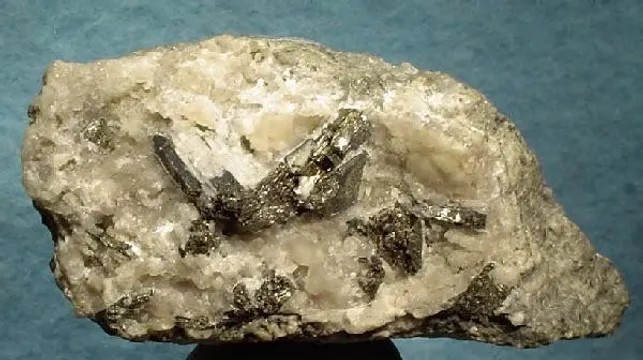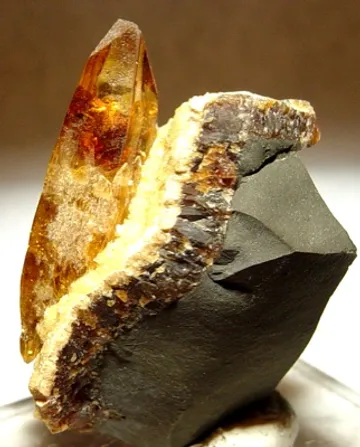
South Dakota, USA — Black Hills pegmatites yield a rich paragenesis (spodumene, beryl, hureaulite) and historic mines, a must for serious collectors.
Key facts
For mineral collectors, “South Dakota” almost always means the Black Hills: the isolated, pine-dark Precambrian uplift in the western part of the state, where the Harney Peak Granite and its surrounding swarm of rare-element pegmatites produced one of North America’s great pegmatite mineral provinces. The best-known collectible suite is not a single ore, but a layered story of feldspar, quartz, muscovite, beryl, spodumene, tourmaline, lithium phosphates, tin-niobium-tantalum oxides, and late, jewel-like secondary phosphates formed as primary triphylite-lithiophilite masses oxidized and hydrated inside zoned pegmatite bodies.
The Black Hills pegmatites matter historically because they were both mines and laboratories. They supplied mica, feldspar, beryl, lithium minerals, columbite-tantalite, cassiterite, and specimen stone through several mining cycles, while the phosphate pockets of the Custer and Keystone districts gave mineralogy a remarkable run of new species. The Tip Top mine near Fourmile, Bull Moose near Custer, White Elephant near Pringle, Etta near Keystone, Peerless, Tin Mountain, Big Chief, and related pegmatites form a locality network that serious systematic collectors learn almost as a district-wide paragenesis rather than as isolated mines.
The best South Dakota pegmatite specimens have a distinctive look: glassy pink hureaulite sitting on black-green rockbridgeite; purple to amethystine leucophosphite tucked into cavities; yellow-brown jahnsite prisms only a few millimeters long but sharply formed; sugary green tavorite; smoky quartz and schorl in coarse feldspar; rose quartz masses; and, at the historical extreme, spodumene crystals so large that miners photographed the empty molds as if standing in a tunnel.
Regional View
Country View
South Dakota is not only a pegmatite state. Its northern Black Hills gold belt includes the Homestake mine at Lead, the long-lived iron-formation-hosted gold giant that reshaped the region’s mining history and later became the Sanford Underground Research Facility. Collectors also know the state for prairie agates, Fairburn-type agate material, Badlands and grasslands sedimentary curiosities, gypsum, barite-calcite associations, and scattered uranium and vanadium minerals, but the specimens that most define the state on the international mineral market are the Black Hills pegmatite minerals—especially the phosphate suites from Custer County.


Search for specimens: View all specimens from South Dakota, USA
The collector-localities of South Dakota are concentrated in the Black Hills, particularly around the southern Black Hills pegmatite field surrounding the Harney Peak Granite. The pegmatites occur as dikes, lenses, pods, and irregular zoned bodies intruding Proterozoic mica schists and related metamorphic rocks. Their common framework minerals are albite and oligoclase, microcline and perthite, muscovite, and quartz; their collector importance comes from the accessory and late-stage minerals enriched in Li, Be, B, P, Mn, Fe, Ca, Mg, Nb, Ta, Sn, U, and related elements.
The broad geological progression around the Harney Peak Granite runs from granite and layered pegmatitic granite outward into simple quartz-feldspar pegmatites and then into more complex zoned pegmatites. In the best-developed bodies, collectors and mine geologists recognize border zones, wall zones, intermediate feldspar-quartz-mica zones, quartz cores, replacement units, and fracture fillings. The richest specimen pockets are usually not open gem pockets in the alpine sense; many are vuggy cavities inside altered phosphate masses, especially where triphylite-lithiophilite and related primary phosphates were corroded, oxidized, hydrated, and partially replaced.
In the Custer district, the Tip Top mine near Fourmile is the flagship phosphate locality. It is a former beryllium occurrence in a primary and secondary phosphate-bearing granite pegmatite body, located southwest of Custer. Historically it was worked for feldspar and beryl after earlier interest in other pegmatite minerals, and it is now known chiefly for its secondary phosphates. The important specimen material comes from cavities and fractures in oxidized phosphate masses, where hureaulite, leucophosphite, rockbridgeite, jahnsite-group minerals, robertsite, collinsite, mitridatite, bermanite, tavorite, metaswitzerite, and other species occur in tight, colorful associations. Many fine Tip Top pieces are cabinet-scale phosphate masses with several species visible, but the best scientific and aesthetic specimens are often small plates or miniatures requiring magnification.
Bull Moose, also near Custer, is another classic phosphate locality for hureaulite, tavorite, vivianite, strengite, phosphoferrite, phosphosiderite, leucophosphite, ludlamite, kryzhanovskite, fairfieldite, barbosalite, and associated altered triphylite material. Compared with Tip Top, Bull Moose hureaulite is often valued when individual pink to salmon crystals stand prominently on dark phosphate matrix rather than merely coating cavities. Labels from old collections may say Bull Moose Mine, Bull Moose Quarry, or Custer, and the difference matters because Custer County contains several phosphate-bearing pegmatites within a short distance of one another.
The White Elephant mine near Cicero Peak and Pringle is a major companion locality, especially for phosphate assemblages and the type-locality mineral walentaite. It also produced lepidolite, tourmaline, quartz, feldspar textures, hureaulite with leucophosphite, and a suite of secondary phosphates comparable in paragenetic spirit to Tip Top. The nearby Custer Mountain lode, Elkhorn, Hot Shot, Linwood, Rock Ridge, Ross, High Climb, Shamrock, and other mines each add their own specialty minerals and label problems to the South Dakota story.
The Keystone area has a different visual signature. The Etta mine is famous for immense spodumene crystals and for columbite-tantalite, cassiterite, mica, feldspar, beryl, and lithium production. Peerless, Hugo, Tin Mountain, Ingersoll, and other Keystone-Hill City pegmatites show the classic Black Hills combination of mica, feldspar, beryl, spodumene, tourmaline, lithia mica, phosphates, uranium minerals, and oxide minerals. Etta’s historic spodumene “logs” are not merely large for a cabinet; they are among the most spectacular giant-crystal occurrences ever documented in a mine.
Mining history in South Dakota begins for most readers with Black Hills gold, but the pegmatites followed their own economic rhythm. Mica was important early, especially where large books could be cut for electrical and industrial uses. Feldspar became a ceramic and glass raw material. Beryl became strategic during the beryllium era. Spodumene and amblygonite supplied lithium. Columbite-tantalite, cassiterite, and related oxides provided tantalum, niobium, and tin in smaller but historically significant quantities. During the 1940s, U.S. Geological Survey and Bureau of Mines work mapped and evaluated the pegmatites for strategic minerals, leaving a documentary record that remains fundamental for locality study.
Collecting access today is highly variable. Some old prospects and dumps lie on public lands where small-scale personal collecting may be allowed if the site is not claimed, closed, posted, protected as a historical or archaeological site, or within a national park, monument, state park, private parcel, or active operation. Other famous mines are private, claimed, flooded, hazardous, or closed to casual collecting. Tip Top in particular should be treated as a controlled, claimed locality rather than a casual destination. The safest practical route for collectors is to work through local clubs, landowners, claim holders, reputable dealers, and museums, and to treat every old shaft, open cut, and dump as both a legal and physical hazard until confirmed otherwise.
South Dakota hureaulite is a Black Hills phosphate classic, best known from the Tip Top and Bull Moose mines, with additional records from White Elephant, Custer Mountain, Elkhorn, Hot Shot, Rock Ridge, Ross, Soda Spar, and related pegmatites. It occurs as secondary Mn phosphate in oxidized triphylite-lithiophilite masses, typically as pale yellow, pale pink, rose, salmon, or red-brown prismatic crystals, crystal groups, and compact coatings in cavities. Tip Top pieces are usually judged by sharpness, color, and associations: pink hureaulite to around centimeter scale on black-green rockbridgeite, with leucophosphite, jahnsite-group minerals, robertsite, mitridatite, metaswitzerite, bermanite, collinsite, todorokite, or tavorite, is far more desirable than massive, bruised, or earthy material. Bull Moose is especially prized when a single well-formed pink crystal rises cleanly from contrasting dark matrix; these are among the most attractive hureaulites from the United States.
Other South Dakota minerals important to systematic collectors include an unusually rich set of type-locality and rare phosphate species. The Tip Top mine alone is documented as the type locality for ehrleite, fransoletite, jahnsite-(CaMnMg), jahnsite-(NaFeMg), pahasapaite, parafransoletite, pararobertsite, robertsite, segelerite, tinsleyite, tiptopite, and whiteite-(CaMnMg). Black Hills pegmatites beyond Tip Top add type-locality or otherwise notable minerals such as walentaite from White Elephant, sinkankasite from Barker-Ferguson, johnwalkite from Champion, olmsteadite from the Hesnard area, perloffite, rosemaryite from Rock Ridge, and important occurrences of scorzalite, tavorite, leucophosphite, phosphoferrite, phosphosiderite, kryzhanovskite, fairfieldite, ludlamite, vivianite, wodginite, columbite-tantalite, cassiterite, beryl, spodumene, lepidolite, schorl, elbaite, rose quartz, uraninite, autunite, and torbernite.
The chief authenticity issue with South Dakota material is not widespread artificial production; it is locality precision and species identification. Many old labels say only “Custer,” “Black Hills,” “Custer County,” or “South Dakota pegmatite,” which may be adequate for decorative quartz, feldspar, or schorl but is weak provenance for phosphate rarities. A hureaulite labeled simply “Custer” could plausibly come from Bull Moose, Tip Top, Custer Mountain, Elkhorn, Hot Shot, Rock Ridge, or another nearby pegmatite, and the value of the specimen can change substantially with an exact mine attribution.
The phosphate minerals are also easy to miscall by appearance alone. Hureaulite, jahnsite, laueite, leucophosphite, phosphosiderite, childrenite-eosphorite group minerals, mitridatite, and altered phosphate mixtures can occur together at millimeter scale. Color is useful but not definitive. Serious South Dakota phosphate specimens, especially those offered as rare species or type-locality material, deserve supporting provenance and, for high-value pieces, analytical confirmation by X-ray diffraction, Raman, SEM-EDS, or comparable methods.
Condition is critical. Hureaulite can form exposed crystals perched on hard, dark phosphate matrix, and the finest examples often have a single vulnerable display crystal or a small spray of crystals standing above broken rockbridgeite or triphylite. Tip Top and Bull Moose pieces commonly show bruised crystal tips, pocket clay, iron-manganese staining, crumbly altered phosphate, or unstable edges where the matrix has softened. Avoid aggressive cleaning: many associated species are hydrated phosphates, some are friable, and acid cleaning can damage or destroy delicate associations. Mechanical trimming under magnification is usually safer than chemical treatment.
Radioactivity is a separate handling consideration for some Black Hills pegmatite minerals. Uraninite, torbernite, autunite, microlite, columbite-tantalite, and associated U- or Th-bearing material occur in parts of the district. These specimens should be stored with labels noting radioactivity, kept away from prolonged living-area exposure, and handled with the usual precautions against dust inhalation and ingestion. Most hureaulite specimens are not themselves the radioactive concern, but mixed pegmatite suites from Custer or Keystone can include radioactive species.
Market availability is uneven. Common South Dakota quartz, feldspar, mica, schorl, rose quartz, and pegmatite rock are abundant. Good hureaulite is much scarcer, and top Bull Moose or Tip Top specimens are usually old-collection pieces or dealer material from past finds rather than fresh open collecting. The most desirable examples combine exact mine provenance, strong color, visible crystal form, contrasting matrix, and named associations. Micromounts and thumbnails of rare Tip Top phosphates are still attainable, but cabinet pieces with sharp, well-displayed hureaulite or multiple rare species are genuinely limited.
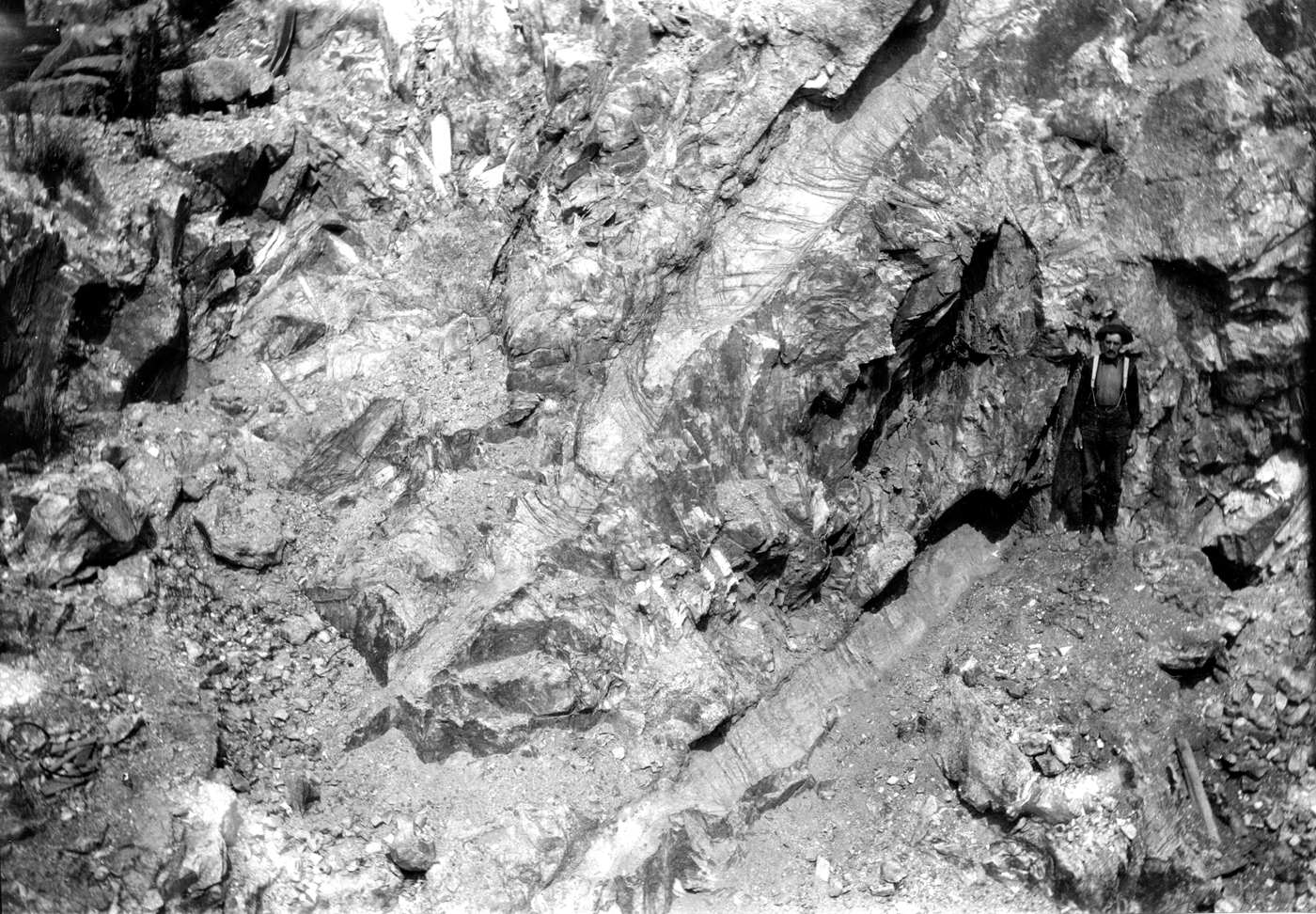
At the Etta mine near Keystone, the Black Hills’ habit of exaggerating crystal size became literal. The mine was already a pegmatite landmark when, in 1904, miners exposed spodumene crystals so large that the photographic record shows a man standing beside the empty crystal molds for scale. One documented crystal was about 42 feet long, with a cross-section on the order of 3 by 6 feet; another source on giant crystals cites a photographed spodumene from Etta at 47 feet long. These were not museum miniatures waiting to be wrapped in cotton. They were industrial “logs” of lithium ore embedded in the pegmatite, quarried as part of a mine that had begun in mica and tin-era speculation before becoming a lithium producer. Earlier New England spodumene crystals measured in feet had once seemed astonishing; after Etta, the word “enormous” had to be recalibrated.
The Homestake story belongs to ore rather than pegmatite, but no South Dakota mineral guide is complete without it. The original Homestake claim was located in 1876 during the Black Hills gold rush. Over the next 125 years, the mine at Lead became the Western Hemisphere’s emblem of persistence: deep shafts, miles of workings, iron-formation-hosted ore, and a company town whose name—Lead, pronounced “Leed”—preserved the miners’ word for a lode. The final ton of ore was mined on December 14, 2001, almost directly under the Open Cut near the original strike. The mill shut down on February 13, 2002, after processing 167.63 million tons of ore and producing 39.62 million ounces of gold and 9 million ounces of silver over its history.
Homestake’s second life was stranger and, in its way, more elegant. Long before the modern laboratory conversion, physicist Raymond Davis placed a solar-neutrino detector at the 4,850-foot level in the 1960s. The mine that had been driven to find gold became a shield against cosmic rays, and its darkness helped reveal a problem in solar physics: Davis was seeing only about one-third of the expected neutrinos. Decades later, that “solar neutrino problem” was resolved through particle physics, and Davis shared the 2002 Nobel Prize in Physics. The same mine that closed as an ore producer became the Sanford Underground Research Facility, with science taking over the depths once held by miners, hoists, pumps, and ore cars.
Tip Top’s story is quieter but more intimate for mineral collectors. Its great contribution was not a single giant crystal but a series of small cavities in altered phosphate masses. In those pockets, primary triphylite-lithiophilite was transformed by oxidation, hydration, and late fluids into a miniature mineralogical laboratory. A collector breaking dark phosphate matrix might expose pink hureaulite, greenish-grey to purplish leucophosphite, nut-brown jahnsite, black to red-brown robertsite, orange laueite, greenish mitridatite, deep red-brown bermanite, or colorless collinsite. Many crystals are only fractions of a millimeter to a few millimeters, yet the locality yielded a dozen type-locality species. Tip Top’s genius is that it rewards the hand lens more than the sledgehammer.