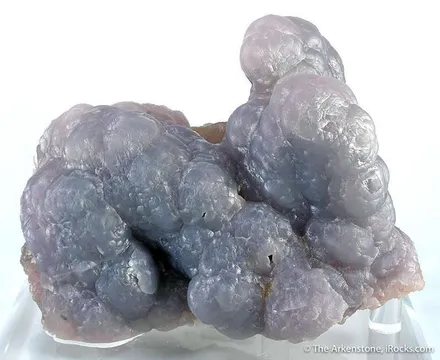
El Refugio Mine, Mexico, Choix, Sinaloa, famed for botryoidal smithsonite colors from a restricted oxidized zone, making specimens highly prized by collectors.
Key facts
El Refugio is the classic smithsonite mine of Choix, in northern Sinaloa: a small, zinc-rich carbonate-replacement/skarn occurrence that became disproportionately important because its oxidized zone yielded some of the most distinctive botryoidal smithsonite ever recovered in Mexico. The mineralization belongs to the Choix district, where thin Cretaceous limestones were intruded by granitic to quartz-dioritic bodies and locally converted to garnet skarn and zinc-bearing replacement ore. At El Refugio, collectors prize the supergene zinc carbonate rather than the primary sulfide ore: smithsonite formed above sphalerite-pyrite mineralization in a narrow oxidized zone, and that limited zone produced the mine’s unforgettable palette.
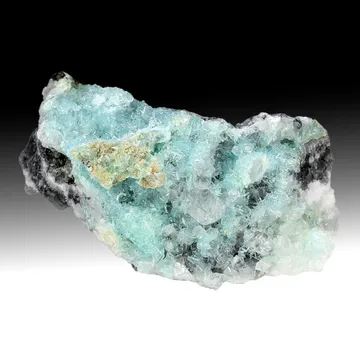
The best Refugio smithsonites are not merely “pink Choix” pieces. They can be wet-looking, translucent, botryoidal crusts with lavender, lilac, bubble-gum pink, sky-blue, blue-green, yellow, cream, brown, gray, and white zones, sometimes in a single specimen. Fine examples show rolling three-dimensional relief, silky to vitreous luster, scalloped growth edges, and banded cross-sections that read like agate in pastel zinc carbonate. Ordinary plates may be flat, bruised, gray, or chalky; the memorable pieces look alive under a lamp, with color suspended in a thick translucent rind.
Regional View
Country View
Collectors often meet this material under broader labels such as “Choix, Sinaloa” or, more problematically, “Santa Anita Mine.” The literature and specialist discussion have steadily narrowed the great multicolored Choix smithsonite to El Refugio as the real source of the celebrated material. That matters: El Refugio is not simply a geographic name on an old label, but the key to understanding why these pieces look the way they do—small skarn, restricted oxidation, repeated growth of smithsonite, and a short-lived specimen bonanza that will likely not be repeated on the same scale.

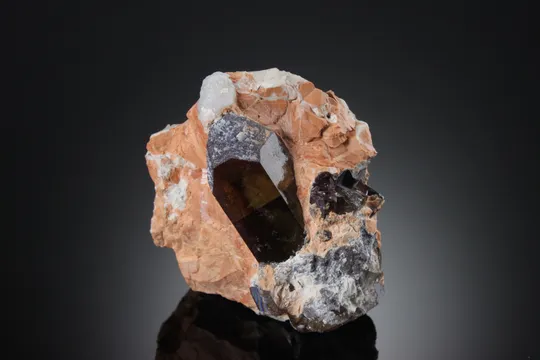
Photo: Daderot, Wikimedia Commons

Search for specimens: View all specimens from El Refugio Mine, Mexico
El Refugio lies in the Choix area of Choix Municipality, Sinaloa, near the transition into the Sierra Madre Occidental. The district contains several small vein, skarn, and carbonate-replacement occurrences developed where carbonate beds were cut by intrusive rocks. The collector locality is best understood as a zinc-rich CRD/skarn system: primary sphalerite-pyrite mineralization below, an oxidized supergene zone above, and garnet skarn at or near the contact with a quartz-diorite intrusive body.
The ore body that mattered to collectors was vertically restricted. That phrase is important for both geology and collecting: the best smithsonite was not a vast blanket of secondary zinc ore, but a limited oxidized interval in which zinc released from sulfides was redeposited as ZnCO3 in open spaces, seams, crusts, and botryoidal linings. The finest colors appear to have been concentrated in the richer zones, especially the pink and lavender material, which is why older high-grade pieces are now treated as classic specimens rather than repeatable production.
Historically, the Choix district was worked for metals before mineral collectors paid serious attention to its smithsonite. A broader district account records acquisition of the Choix mines by Compañía Minera y Beneficiadora de Metales de Choix in 1903, takeover by Compañía Minera de Peñoles in 1906, and district production from 1906 to 1955 of silver, gold, zinc, and lead. That production history belongs to Choix as a mining district rather than to specimen collecting at El Refugio alone, but it explains why old workings existed for later specimen miners to reopen.
For collectors, the El Refugio story begins in earnest in the 1960s and 1970s, when vivid botryoidal smithsonites began entering American collections and dealer stocks. Benny Fenn Sr., the legendary Mexico mineral dealer and rancher, is repeatedly tied to the mine’s specimen production. Sources connected with the Choix smithsonite literature describe an engineer bringing smithsonite from the mine to Fenn in 1972, after which Susie Davis identified it; ExtraLapis accounts credit Fenn with operating the mine for specimen-grade smithsonite from 1972 to 1982. Later remining in the late 1990s and early 2000s produced additional material, especially blue-green and multicolored specimens, but the richest pinks are widely regarded as old-production pieces.
Specimen morphology reflects the oxidized pocket environment. Most pieces are plates or crusts of botryoidal smithsonite on silicified or limonitic matrix, sometimes with very little true rock backing. Better cabinets may show thick rinds that glow when backlit, vuggy relief, or a complete pocket-like lining rather than a simple flat crust. Documented market examples range from small cabinets around 6 cm to large cabinets over 16 cm; exceptional heavy pieces from the 1990s have been described at more than 2.6 kg, with rind thickness locally approaching 2 cm.
Collecting access today should be regarded as effectively closed for practical purposes. Published locality notes describe the mine as worked out, and modern dealer accounts describe the locality as abandoned, played out, or unsafe. Serious collectors should focus on well-documented older specimens, not field collecting. Any attempt to visit old Mexican mine workings without explicit land and mineral-rights permission, local security knowledge, and professional mine-safety precautions is irresponsible; at El Refugio, the potential reward no longer justifies the risk.
Smithsonite from El Refugio is the locality’s defining mineral and one of the great color suites for the species: chiefly botryoidal, reniform, crustiform, and pocket-lining ZnCO3 in plates and sculptural vug sections, commonly from miniature to cabinet size and occasionally much larger. The most desirable pieces show translucent, wet-luster botryoids in pink, lavender, lilac, sky-blue, blue-green, yellow, white, cream, gray, or banded combinations of several colors; the finest examples have thick, backlit rinds, strong three-dimensional relief, clean rounded surfaces, and intact scalloped margins rather than flat, abraded, or chalky coverage. Typical associations and matrix remnants include goethitic iron oxides, aragonite reported in photo associations, silicified skarn, and, on some specimens, fluorescent willemite or hydrozincite noted under shortwave ultraviolet light; good El Refugio pieces are separated from ordinary Choix plates by saturated pastel color, translucency, luster, relief, and credible old provenance to the Refugio workings rather than a vague or misattributed Santa Anita label.
Mindat’s locality-level mineral list for El Refugio records smithsonite as the only valid mineral species formally listed at the mine, which is unusually narrow for such a famous collector locality. Broader Choix-district lists and specimen records document the skarn and oxidation environment around it: goethite, aragonite associations with smithsonite photographs, garnet noted as grossular on silicified skarn remnants, and fluorescent-mineral records describing minor willemite and hydrozincite on smithsonite-rich pieces. The mine is not celebrated as a type locality; its importance rests almost entirely on the quality, color range, and collector history of its smithsonite.
The principal authenticity issue with El Refugio smithsonite is not dyeing or laboratory treatment, but locality labeling. Colorful Choix smithsonites have long circulated under “Choix,” “Santa Anita,” and occasionally incomplete Mexican labels. Specialist discussion of Wendell Wilson’s 2011 Refugio article, including reference to Mario Ayub Touché’s information, holds that the Santa Anita Mine did not produce the famous colorful smithsonite and that such labels should be corrected to El Refugio when the specimen matches the classic Choix material. Old labels should be preserved, but not followed blindly.
Condition is the next major concern. Botryoidal smithsonite bruises, chips, and whitens along high points and edges; many plates were extracted from tight vugs or hacked from crusts, leaving broken margins or sawed backs. On pink and lavender pieces, abrasions are especially visible because the damaged spots turn pale against saturated color. Examine raking-light luster, rim damage, repaired breaks through matrix, and whether the display face is naturally rounded or merely a broken cross-section. Thick, translucent rinds are a plus, but they can hide internal fractures.
Fluorescence can be a bonus, not a guarantee. Some El Refugio smithsonite fluoresces under shortwave ultraviolet light in blue, pink, red, or purple tones; minor willemite may contribute green fluorescence, and hydrozincite can produce bright blue-white to blue responses. Longwave response may be weak or absent on some pieces. Use shortwave UV carefully, protect your eyes and skin, and do not rely on fluorescence alone for locality attribution because response varies within the material and among associated zinc minerals.
The market is mature and provenance-driven. Small, attractive Choix/El Refugio smithsonites still appear regularly, but top examples with vivid old pink, lilac, lavender-blue zoning, strong translucency, and undamaged relief are scarce. Dealer and auction records show modest pieces selling in the low hundreds, while exceptional large or unusually saturated pieces have been valued or offered in the thousands. The very best old-production specimens tend to come out of older collections, and labels from Benny Fenn, major Mexico specialists, or well-documented institutional and private collections add meaningful confidence.
The El Refugio story begins, in collector memory, with a small piece of zinc carbonate in the hands of an engineer. In 1972, an engineer who had worked in Chihuahua and had mapped the Choix mine brought a smithsonite specimen to Benny Fenn. Fenn had Susie Davis identify it. That plain sequence—one rock carried to the right dealer, one correct identification—opened the door to a decade of specimen mining that made “Choix” one of the necessary names in any serious smithsonite suite.
Benny Fenn’s role matters because he understood both Mexico and the mineral market. ExtraLapis accounts credit him with operating the mine for specimen-grade smithsonite from 1972 to 1982, exactly the period into which many old, richly colored pink and lavender examples fall. Later dealer descriptions still distinguish “early finds made by Benny Fenn” from later remining, because the old material can have a particular wet, saturated, bubble-gum quality that recent material often does not match. Collectors who handled both generations learned to look for thick rind, saturated pink-lavender color, and a waxy shimmer that seems to sit just below the surface.
A quieter story is told by labels. One well-documented collector account describes a 7 x 5 x 5 cm purple botryoidal smithsonite bought from the Royal Ontario Museum gift shop in 1978 as “Smithsonite, Chihuahua State, Mexico.” Decades later, the collector re-evaluated the specimen against the Mexico VI issue of The Mineralogical Record and the ExtraLapis smithsonite issue. The piece had three generations of smithsonite—purple over blue-gray, with blue-beige overgrowth—and tiny light-green grossular garnets on the underside tied to silicified skarn. The old Chihuahua label was not simply wrong; it was a fossil of a time before the Choix/Refugio story had been sorted out.
The 1990s brought another surge. Large, multicolored pieces entered the market from renewed work at the locality, including blue-green and whitish-green botryoidal plates of a size rarely seen today. One documented auction specimen from the late-1990s production measured 14.7 x 12.9 x 9.4 cm, weighed 2,645 grams, and carried a smithsonite rind mostly 1.5 cm thick, locally to 2.0 cm. That is the kind of detail collectors remember: not just “large,” but a five-pound-plus Choix smithsonite whose rind glowed when backlit.
Another specimen shows why pocket form is so prized here. Most El Refugio pieces are rolling crusts or plates; one auctioned example was described as a complete pocket or vug of rich pink smithsonite, weighing 1,500 grams and donated by Les and Paula Presmyk of De Natura. That form is uncommon for the locality because it lets the viewer see the mineral as it grew—not merely a colorful skin broken from a wall, but the curved interior of a zinc-carbonate cavity.