A collector's guide to Eagle Mine, USA: its geology, mining history and notable minerals, illustrated with the 88 specimens documented from this locality on EarthWonders.
Key facts
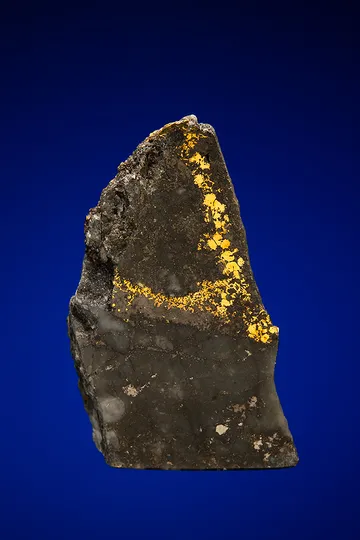
The Eagle Mine at Gilman, Colorado, is one of the great North American specimen localities born from an industrial ore body rather than a small collector’s pocket mine. Its fame rests on a huge carbonate-hosted polymetallic replacement system on Battle Mountain, above the Eagle River between Minturn and Red Cliff, where Laramide-age fluids moved through Paleozoic sedimentary rocks and produced mantos, chimneys, and quartzite-hosted sulfide bodies rich in zinc, lead, copper, silver, gold, and manganese. For collectors, the mine is not remembered for ore tonnage alone: it is remembered for brilliant pyrite, jet-black iron-rich sphalerite, golden barite, rosettes of pink rhodochrosite, tan to brown siderite, sharp chalcopyrite, and pale dolomite and ankerite associations that look unmistakably “Gilman.”
Regional View
Country View
The best Eagle Mine specimens have a compact, high-contrast look: mirror-bright brassy pyritohedra or cubes on black sphalerite; flattened rhodochrosite rhombs arranged into pink discs and rosettes; gemmy orange-golden barite plates on siderite; black marmatite with galena, pyrite, and disk-like siderite; and fine sulfide-carbonate combinations that sit comfortably in the hand but carry the visual complexity of a much larger ore system. Eagle Mine pieces are classics of Colorado collecting precisely because they combine industrial geology, old mining history, and cabinet-grade crystallization in one locality.
Historically, the locality spans the full arc of the Colorado mining frontier: early lead-silver and gold excitement in the 1880s, a shift to difficult but profitable zinc sulfide ore in the early twentieth century, consolidation by the Empire Zinc division of New Jersey Zinc, large-scale mechanized mining, an underground flotation mill, and finally closure, flooding, and Superfund remediation. The result is a locality that is both abundant in old collections and permanently closed to new collecting, so provenance, old labels, and accurate locality detail matter more here than they do for many still-producing districts.
Search for specimens: View all specimens from Eagle Mine, USA
The Eagle Mine is part of the Gilman mining district, historically also called the Battle Mountain or Red Cliff district, in southeastern Eagle County, Colorado. The district lies at the northwestern end of the Colorado Mineral Belt and is built around replacement mineralization in Paleozoic sedimentary rocks, especially the Leadville Dolomite and associated units, with additional ore in Sawatch Quartzite and Precambrian rocks. The ore system is best understood as a carbonate-hosted sulfide replacement deposit with manto bodies, chimney bodies, and smaller quartzite-hosted and vein occurrences.
The three principal ore settings are important for collectors because they help explain the mineral associations seen on old specimens. Thin-bedded deposits occur in the Sawatch Quartzite; elongated manto ore bodies occur in the dolomitized Leadville Limestone/Leadville Dolomite; and steep pipe-like chimneys cut across the section. The mantos were largely zinc-rich, with abundant black sphalerite in a gangue of pyrite and manganiferous siderite. The chimney ores included pyritic cores rich in copper, silver, and gold minerals, with chalcopyrite, tetrahedrite-freibergite-group minerals, and galena appearing more prominently than in many zinc-rich manto zones.
Pyrite is central to the mineralogy of the mine. Geological studies recognize more than one generation of pyrite, including early pyrite in chimney cores and pyritized quartzite, pyrite closely associated with siderite and sphalerite in the base-metal stage, and later pyrite associated with copper-silver ore. This paragenetic complexity is one reason Eagle pyrite is more varied than a casual collector might expect: specimens range from massive bright pyritic ore to sharp pyritohedra and cubes, bladed textures interpreted as pyrite after marcasite, and pyrite intimately intergrown with sphalerite and siderite.
The main economic metals changed through time. Rich silver-lead carbonate ores were found in the Gilman area around 1879, and by the early 1880s the surrounding mines were producing silver and gold. The Little Chief, Iron Mask, Belden, and Black Iron mines were among the important early properties that later became part of the larger Eagle Mine complex. In the 1890s and early 1900s, manganese-bearing iron ore and oxidized ores were also mined, but the decisive twentieth-century shift was toward large-scale zinc production from sulfide ore.
Empire Zinc, a division of New Jersey Zinc, began consolidating the Battle Mountain properties between 1912 and 1915. By 1918, most deposits in dolomite rocks—apart from small occurrences near Red Cliff—were being worked through the Eagle Mine. The Wilkesbarre shaft at Gilman and the Newhouse tunnel near Belden became key access points. The Wilkesbarre shaft reached the important 16 level, and the Newhouse tunnel served as a main haulage route connected with that level. The mine ultimately included about 70 miles of underground workings, and historical accounts describe dozens of new tunnels driven during expansion.
The underground mill, installed in 1929, is a distinctive part of Eagle Mine history. Rather than hauling all crude ore down the canyon for milling, New Jersey Zinc built a flotation mill underground within the mine workings. Concentrates were transported through the Newhouse tunnel toward the Belden railroad area, while tailings were slurried through pipeline systems to disposal areas down valley. This industrial arrangement shaped both the mine’s success and its later environmental problems.
Production was substantial by Colorado standards. The Gilman district, most of it tied to the Eagle Mine and its predecessors, produced zinc, silver, copper, lead, gold, and manganese in quantity. Published figures for the district through the early 1970s place output in the range of hundreds of thousands of short tons of zinc and lead, more than 100,000 short tons of copper, tens of millions of ounces of silver, and hundreds of thousands of ounces of gold. A geological model published for the district cites cumulative ore production of roughly 11.7 million metric tons at average grades near 8.5 percent zinc, 1.5 percent lead, 0.7 percent copper, 228 grams per metric ton silver, and 1.7 grams per metric ton gold.
Mining did not end in one clean moment. Most mining and milling activity ceased in December 1977 after zinc reserves and prices weakened, but some copper-silver production continued intermittently until the mine was finally allowed to flood in 1984. The company town of Gilman was vacated soon afterward, and the Eagle Mine area was placed on the National Priorities List as a Superfund site in 1986 because of heavy-metal contamination affecting soils, structures, groundwater, surface water, sediments, the Eagle River corridor, tailings, roaster piles, and the abandoned townsite.
Collecting access today should be considered closed. The mine workings are flooded, the site is contaminated, portions of the old town and mine area are access-restricted, and the locality is dangerous for both legal and physical reasons. Any Eagle Mine specimen now entering the market should be assumed to be from old mine production, old mine-employee collecting, museum- or dealer-dispersed material, or old private collections—not from modern field collecting.
The best specimen material appears to have come from a variety of mine zones rather than a single named “pocket” in the style of a pegmatite. Collectors and museum records identify specimens from levels and ore bodies such as the 20 level and Rocky Point ore body, and old dealer and collection labels record stope-level details on some sphalerite-ankerite and rhodochrosite-sphalerite pieces. These details are especially desirable, because many specimens are simply labeled “Eagle Mine, Gilman, Colorado,” without level, stope, or ore-body information.
Pyrite is the signature collector mineral of the Eagle Mine, occurring as bright brassy cubes and pyritohedra, striated sharp crystals, massive lustrous ore, and locally bladed textures interpreted as pyrite after marcasite; good miniature to cabinet specimens commonly show pyrite with black sphalerite, siderite, galena, chalcopyrite, rhodochrosite, or barite, and the strongest pieces are those with sharp undamaged faces, high luster, geometric isolation on matrix, and the classic Gilman contrast of gold metallic pyrite against black marmatite or pale carbonate. Eagle Mine pyrite is not merely a late accessory: it belongs to several generations in the ore sequence, including early pyrite in chimney cores and quartzite, sphalerite-siderite-stage pyrite in base-metal mantos, and later copper-silver-stage pyrite, which helps explain the range from dense ore pieces to crisp display specimens.
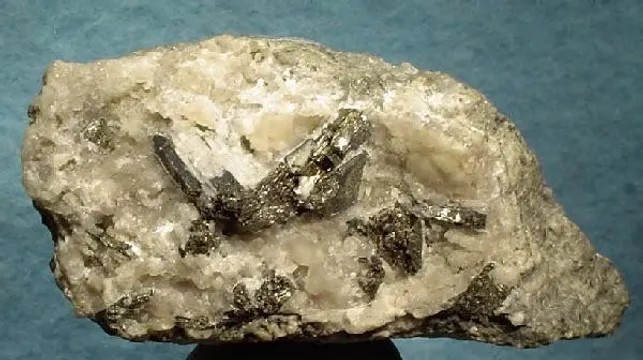
Eagle Mine sphalerite is typically the iron-rich black variety historically called marmatite, appearing as lustrous black crystals, striated forms, hopper-growth faces, compact druses, and massive to crystalline ore, most often with pyrite, galena, siderite, chalcopyrite, rhodochrosite, dolomite, or ankerite. It was the dominant zinc ore mineral of the manto system and is the visual foundation of many classic specimens: good pieces show reflective black crystals rather than dull granular ore, clean contrast with brassy pyrite or tan carbonate, and, in the finest combinations, pink flattened rhodochrosite rosettes or sharp chalcopyrite perched on the sphalerite matrix.
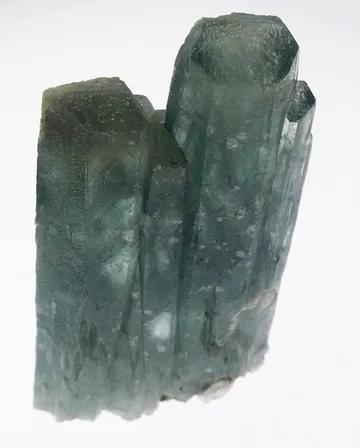
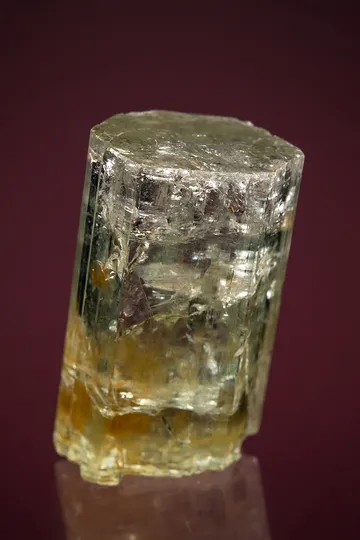
Eagle Mine barite is prized as transparent to translucent golden, amber, orange, or honey-brown crystals, commonly in small plates or drusy groups on siderite, sulfide matrix, or pyrite-bearing rock. Classic examples may carry individual crystals in the several-millimeter to centimeter range, with older pieces known from mid-twentieth-century collecting and old Colorado collections; the most desirable specimens have bright glassy luster, saturated warm color, minimal bruising on crystal edges, and the unmistakable association with Gilman siderite or dark sulfides rather than loose, nondescript barite druse.
Rhodochrosite from the Eagle Mine is among the most recognizable Colorado rhodochrosite styles: not the thick blocky Sweet Home habit, but compressed pink to medium-pink rhombs forming discs, lenticular crystals, and rosettes on black sphalerite, pyrite, quartz, chalcopyrite, pyrrhotite, and locally fluorapatite. Documented examples include small thumbnails with a single pink disc on brilliant pyrite, fine miniatures with deep-pink rosette growths on sphalerite and pyrite, and larger cabinet pieces covered with flattened rhombs; the best specimens are judged by color, completeness of the rosettes, crystal sharpness, contrast against black sphalerite, and freedom from edge bruising on the delicate flattened rhombs.
Siderite is abundant in the Eagle Mine ore system and appears on specimens as tan, brown, orange-brown, or pale carbonate crystals, commonly disk-like, bladed, lenticular, or rosette-forming, with pyrite, sphalerite, galena, barite, and chalcopyrite. It is more than background gangue here: manganiferous siderite marks important base-metal stages and surrounds or accompanies many sulfide bodies, while collectors prize siderite pieces with well-defined discs, lustrous surfaces, and strong association—especially golden barite on siderite plates or black sphalerite and pyrite relieved by pale siderite rosettes.
Chalcopyrite at the Eagle Mine reflects the copper-bearing character of the district, especially the copper-silver chimney ores and the overlapping base-metal sequence in which sphalerite, chalcopyrite, and galena are closely related. Collector pieces usually show brassy chalcopyrite crystals or crystal groups on black sphalerite, with pyrite, galena, siderite, rhodochrosite, or dolomite; good examples are sharp, bright, and well isolated, with a single prominent chalcopyrite on lustrous sphalerite often far more attractive than a larger but massive sulfide aggregate.
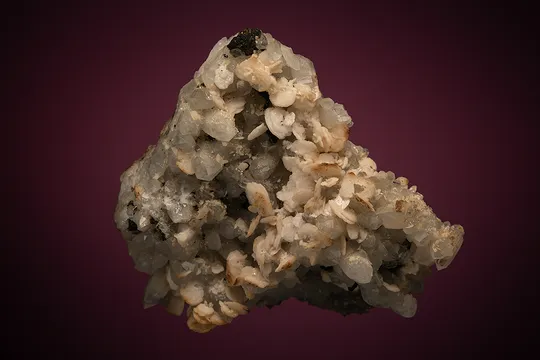
Dolomite is both a host-rock and specimen mineral at Gilman, appearing as pale brown, gray, cream, off-white, or milky rhombohedra with pyrite, galena, sphalerite, chalcopyrite, tetrahedrite-freibergite-group minerals, and sometimes ankerite-like carbonate. Eagle Mine dolomite specimens range from small rhombohedral clusters to cabinet plates with crystals around the centimeter scale; the best pieces have sharp undamaged rhombs, clean pale color, visible sulfide accents, and enough matrix contrast to distinguish them from the more common massive dolomite host rock.
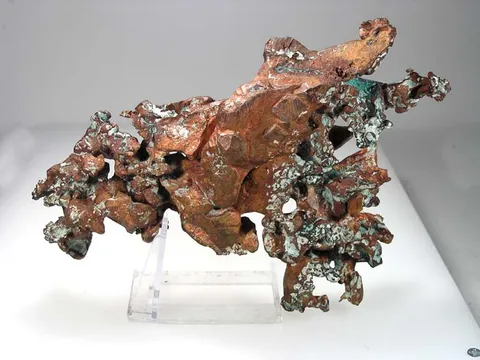
Other documented Eagle Mine minerals include galena, calcite, quartz, amethyst, ankerite, marcasite, pyrrhotite, smithsonite, anglesite, cerussite, hemimorphite, chalcocite, covellite, digenite, native copper, native gold including electrum, hessite, petzite, polybasite, proustite reported with uncertainty, stephanite, stromeyerite, matildite, arsenopyrite, tetrahedrite-group and freibergite-group minerals, tennantite-(Fe), melanterite, römerite, szomolnokite, pyrolusite, goethite, jarosite, and other primary, oxidized, and post-mining species. The mine is not celebrated as a type-locality source; its importance lies instead in the richness and quality of its classic sulfide-carbonate assemblages and in the diversity of silver, copper, bismuth, and telluride minerals recorded from the ore system.
Eagle Mine specimens are common enough that an advanced collector can still build a representative suite, but fine examples are finite old-stock material. The mine is flooded, access-restricted, contaminated, and not a modern collecting locality, so the supply is entirely from older collections, historic mine-era recovery, dealer inventories, and institutional or estate dispersals. Pyrite, sphalerite, siderite, and small mixed sulfide pieces remain obtainable; fine rhodochrosite rosettes, attractive golden barite, sharp chalcopyrite-on-sphalerite combinations, and large undamaged pyrite miniatures are much more competitive.
The most common locality issue is imprecise labeling rather than outright fakery. Many labels read only “Eagle Mine, Gilman, Colorado,” while better labels may preserve “20 level,” “Rocky Point ore body,” stope numbers, or old mine names that were later consolidated into the Eagle Mine complex. Because Gilman, Red Cliff, Battle Mountain, Eagle Mine, New Jersey Zinc Eagle Mine, Wilkesbarre shaft, Newhouse tunnel, Iron Mask, Little Chief, Belden, Black Iron, and other historic names can appear on labels, collectors should preserve old tags and avoid “tidying up” locality history into a less informative modern shorthand.
No widely recognized class of fabricated Eagle Mine specimens dominates the market, but repairs, trims, and reassemblies should be watched for, especially on heavy sulfide-carbonate plates and barite specimens with thin matrix. Some older pieces were removed from ore and may have sawn bases, contact faces, bruised edges, or stabilization. Dolomite and carbonate specimens can show dull coatings or old glue; sphalerite-galena-siderite aggregates may be structurally weak; and at least one documented sphalerite-galena-siderite specimen from the locality is noted as having broken down from a larger deteriorated piece, a useful reminder that not all Gilman ore matrices age equally well.
Condition standards should be species-specific. Pyrite should be sharp, bright, and free of obvious bruising on prominent faces. Sphalerite should show luster and crystal form rather than merely black massive ore. Barite should be checked carefully for chipped terminations and rubbed edges because its value here depends heavily on transparency and warm color. Rhodochrosite rosettes are delicate; flattened rhombs chip at the edges and can lose their visual rhythm even when damage is minor. Siderite and dolomite may have natural dullness, but broken rhombs and stained or crumbly matrix should be reflected in price.
Handling concerns are practical rather than dramatic. These are sulfide-rich specimens from a mine with well-documented heavy-metal contamination, so avoid wet cleaning that may mobilize soluble oxidation products, do not use acids casually on mixed sulfide-carbonate pieces, and wash hands after handling friable ore. Secondary sulfates such as melanterite, römerite, and szomolnokite are moisture-sensitive and should be kept dry. Pyrite from Eagle Mine is generally stable in collections when dry, but any specimen showing white, greenish, or powdery sulfate bloom should be isolated and monitored.
The first great story from Battle Mountain is not a modern collector’s tale but an ore-discovery vision. In an early history of Gilman, Ole A. Gustafson described the upper Iron Mask workings as caves “large enough for a camp meeting,” filled with grotesque and beautiful crystallizations and solid ore glittering in candlelight. To a mineral collector, that sentence explains the entire charm of Gilman: before it was a company town, before the underground mill, before the Superfund site, it was a mountain of cavities, ore, and candle-lit wonder that made prospectors imagine they had stepped into a mineral Arabian Nights.
The boom was fast and rough. By 1880 the Battle Mountain region had a smelter, a sawmill, and enough scattered claims to require elected mining-district officers. The Denver and Rio Grande Railway reached Red Cliff on November 20, 1881, then pushed through Eagle River Canyon with stations at Belden below the future Gilman townsite and at Minturn. The camp that became Gilman first grew as Clinton, and by late 1887 it had a hotel, general store, billiard hall, sampling room, newspaper, and saloons. The optimism was immense: in 1886 the Iron Mask Mine was shipping more than a hundred tons of ore per day, the state mine inspector estimated 100,000 tons of ore worth $3,482,000, and the workforce of fewer than eighty men doubled in two weeks.
The boomtown had a violent edge. One early account described “Rowdies,” or “Rough Riders,” who might ride horseback into a saloon and shoot out the town lights if the mood took them. Fire was just as dangerous as gunplay. In 1899 a blaze burned down roughly half of Gilman’s business district, including the Iron Mask Hotel, the schoolhouse, the Little Bell Mine shaft house, and several stores. A year later another fire nearly took the town. The rebuilt streets may have looked more substantial, but the silver crash of 1893 had already broken the early economy, and Gilman waited years for zinc to give the mountain a second life.
One of the most vivid mine-rescue episodes in Colorado mining history occurred at the Eagle No. 2 mine on May 10, 1924. At 3:30 in the afternoon, five men working in a large stope were cut off by an extensive cave-in. The ground was “extremely heavy,” requiring square-set timbering, and some timbers had already been showing pressure. The initial rescue attempt through a drift and raise was abandoned on May 12 because broken timbers sealed the way. A diamond drill was brought in, and a 90-foot hole, drilled at a 25-degree vertical angle, was started at 5 p.m. and completed at 11 o’clock. The drill hit the calculated point exactly.
Until that drill hole broke through, nobody knew whether the trapped men were alive. Communication through the hole revealed that all five were safe. Food, carbide for lamps, playing cards, newspapers, and cigarettes were sent down in short tubes. A rescue drift begun at 4 o’clock on May 13 cut through 25 feet of solid ore in seventeen hours. The men had been confined for eighty hours. When they were brought out, they were wrapped up and held in the drift for fifteen minutes to avoid shock from the change of air, then taken to the surface, given a hearty supper, and put to bed. The technical explanation of the accident was hard-headed—old workings, changing ore economics, heavy ground, weakened timbers—but the human detail is unforgettable: five miners waiting in the dark, and a lifeline no wider than a drill hole delivering cards and cigarettes through solid mountain.
Gilman’s later company-town life was engineered almost as carefully as its stopes. New Jersey Zinc’s Empire Zinc division owned the housing, school property, post office property, and retail spaces. By 1919 the company had built rows of uniform houses down the hill from the shaft house; they looked utilitarian, with black tarpaper roofs and gray paint, but they had electricity and hot water. Vesta Coursen later wrote that she had come “to the wilds of Colorado” to find modern improvements she had not enjoyed in the East. The company clubhouse eventually had a pool hall, basketball court, library-lounge, modern kitchen, dance floor, and the only bowling alley in Eagle County.
The end was as striking as the boom. Zinc prices weakened, reserves dwindled, and after most operations stopped in December 1977, Gilman began to empty. In the 1980s the abandoned industrial town became entangled with mine flooding, tailings, contaminated water, lawsuits, and failed redevelopment schemes. By spring 1985 the remaining residents were evicted, and Gilman became a ghost town. A later visitor, Dick Cryan, Jr., returned to broken windows and eroding walls and decided never to go back, preferring to remember a “good, close community where there was no crime, and you could leave for a two-week vacation and never lock the door.”
Then came the environmental chapter that fixed Eagle Mine in modern Colorado memory. After the mine workings were plugged and water-management plans changed, contamination episodes pushed Eagle Mine beyond local history and into public outrage. By spring 1990, orange sludge was reported coating rocks in the Eagle River, blowing out of snow guns at Beaver Creek ski resort, and even coating toilet bowls in Minturn. Cleanup work continued for years, and the same mine that sent pyrite, sphalerite, rhodochrosite, and barite into collections around the world became a case study in how spectacular ore bodies can leave equally spectacular liabilities.