






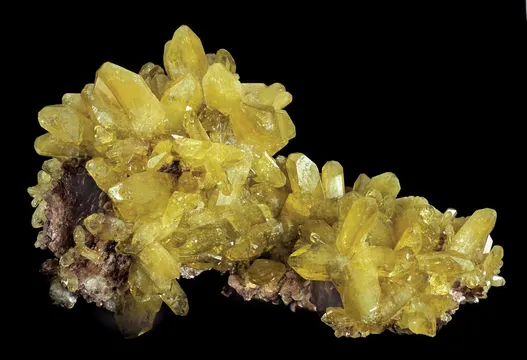
Divino das Laranjeiras, Brazil - renowned for rare phosphate minerals and the classic brazilianite from Córrego Frio, with sharp yellow-green crystals on albit…
Key facts
Divino das Laranjeiras occupies a special place in mineral collecting because the small pegmatites around Linópolis—especially Córrego Frio, Telírio, João Firmino, Almerindo, Pomarolli and neighboring claims—turned a quiet part of eastern Minas Gerais into one of the world’s reference districts for rare phosphate minerals. The district belongs to the Eastern Brazilian Pegmatite Province, within the Galiléia–Mendes Pimentel field of the Conselheiro Pena pegmatite district, where granitic pegmatites intrude schists of the São Tomé Formation and related Rio Doce Group rocks. The most famous bodies are not huge mines but narrow, intensely mineralized pegmatites in which albite, quartz and muscovite form the structural framework, while phosphate alteration of montebrasite and related primary phosphates generated a remarkable suite of collector minerals.
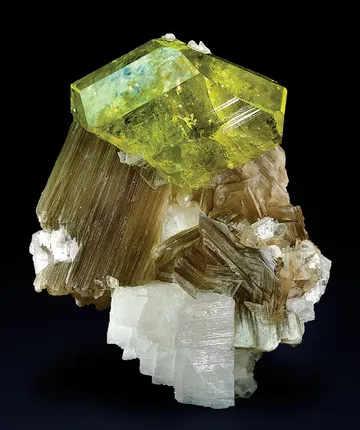
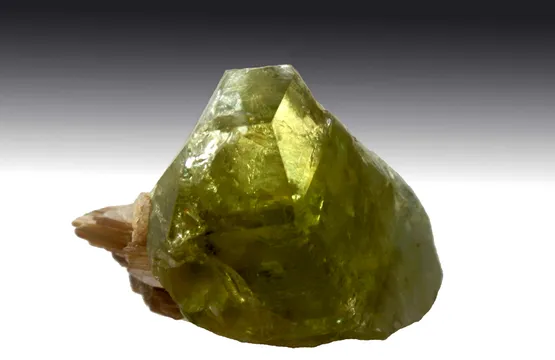
The name collectors remember first is brazilianite. Córrego Frio is the classic type-locality source of the species and, by historical extension, the yardstick against which later Linópolis and Telírio material is judged. The best Divino das Laranjeiras brazilianites are sharp, vitreous, yellow to yellow-green monoclinic crystals, often perched on white albite or gleaming muscovite. Old Córrego Frio pieces tend to be deeper in color, more equant and more historically coveted; Telírio material is often paler yellow-green, prismatic to flattened, wedge-terminated, and wonderfully aesthetic on matrix. Around that central identity gathers a phosphate assemblage that includes eosphorite, childrenite, gormanite, zanazziite, beryllonite, fluorapatite, frondelite, heterosite, vivianite, scorzalite and souzalite, along with quartz, smoky quartz, muscovite, albite, microcline, cassiterite and tantalum oxides.
Regional View
Country View
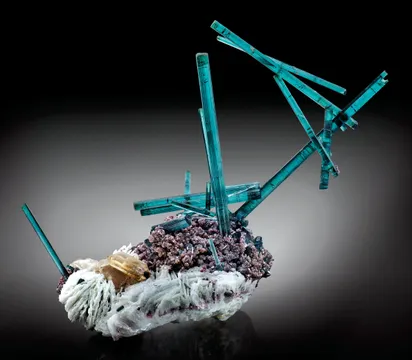
Historically, Córrego Frio is important not merely as “a brazilianite locality” but as the source area tied to the first recognition of brazilianite, scorzalite and souzalite. Later work showed that the Linópolis district is a compact laboratory of phosphate alteration: thin pegmatites, localized pockets and replacement bodies, and an unusually rich secondary mineralogy developed near quartz cores and albite-rich zones. For collectors, that geology translates into specimens that are both beautiful and information-rich—chartreuse brazilianite on cleavelandite, bronze to brown eosphorite-family crystals, dark blue-green scorzalite-souzalite masses, pale matrix minerals that sharpen the color contrast, and occasional heavy black tantalum-oxide crystals that remind one that this is still an LCT pegmatite environment.

Search for specimens: View all specimens from Divino das Laranjeiras, Brazil
The collector locality “Divino das Laranjeiras” is best understood as the Linópolis pegmatite cluster and its surrounding claims in eastern Minas Gerais, close to the Divino das Laranjeiras–Mendes Pimentel boundary and within the broader Conselheiro Pena–Galiléia–Mendes Pimentel pegmatite province. Older specimen labels may read Linópolis, Conselheiro Pena, Galiléia, Rio Doce, Doce Valley, Córrego Frio, Telírio, or simply “near Divino.” The most useful modern labels name the exact mine or claim when known, because Córrego Frio, Telírio, João Firmino and Almerindo are not interchangeable specimen styles.
Geologically, the district consists of granitic pegmatites hosted by schist, with the classic Córrego Frio body described as a narrow tabular pegmatite striking roughly east–west and dipping steeply north in biotite-garnet schist. Its zoning is simple but crucial: an albite-rich border zone, a crystal-cavity or intermediate zone, and a quartz lens or core. Albite, muscovite and quartz dominate the rock volume, while the phosphate mineralization occurs in and around the cavity/intermediate zone and along contacts between albite-rich material and quartz. That intimate association explains why many of the best specimens combine brazilianite with cleavelandite or massive albite, muscovite books and quartz.
The Telírio pegmatite, roughly adjacent in the Linópolis area, became the great later supplier of brazilianite specimens. Published geological work describes it as a zoned but only moderately evolved body, about 7 m in maximum thickness, hosted in biotite schist. Its mineralized intermediate zone includes microcline-albite, quartz, muscovite, beryl, almandine, cassiterite and montebrasite. Near the discontinuous quartz core, miners encountered small semi-spherical replacement pockets—locally called “ximboquinhas”—and massive phosphate-rich blocks carrying brazilianite, beryllonite, eosphorite-childrenite, fluorapatite, frondelite, heterosite, greifensteinite, moraesite, vivianite and zanazziite.
The mineralization is a classic phosphate-alteration story. In the Linópolis–Divino das Laranjeiras pegmatites, brazilianite is interpreted as a secondary product of montebrasite alteration during an early hydrothermal stage, in the approximate 350–250°C range. João Firmino and other nearby Pomarolli farm pegmatites show the same broader theme: primary lithium-aluminum phosphates and related species altered to a diverse suite of secondary phosphates, some of them microscopic rarities and some among the most attractive cabinet specimens of the district.
Mining began as small-scale pegmatite work rather than modern industrial mining. At Córrego Frio, the early 1940s discovery of yellow-green gem crystals led to scientific description of brazilianite and then to systematic collecting and commercial distribution by E. R. Swoboda in the mid-1940s. Córrego Frio later became historically more important than productive; published accounts describe it as abandoned and internally collapsed. Telírio, by contrast, remained a major source of market specimens into the modern collecting era, with important production in the late twentieth century and early 2000s. Other claims—Almerindo, João Firmino, Pomarolli, Sebastião Cristino, Jove Lauriano, Boa Esperança and nearby workings—add both specimen diversity and scientific depth.
Collecting access should be considered private and claim-controlled. These are not casual public dig sites. The productive workings are small, local, and often unstable; old adits and collapsed pegmatite openings are dangerous. Serious collectors should acquire specimens through reputable dealers, old collections, or mine-connected Brazilian sources with precise claim attribution. The most desirable pieces carry labels specifying Córrego Frio for type-locality classics, Telírio for modern matrix brazilianite, João Firmino for phosphate rarities, or Almerindo for unusual secondary species.
Brazilianite is the signature mineral of Divino das Laranjeiras and the reason the Linópolis pegmatites became world-famous: Córrego Frio supplied the type material, while Telírio and neighboring claims later produced the specimens most often seen in modern collections. Good crystals range from small miniatures to several centimeters, with historic Córrego Frio crystals recorded up to large cabinet and even kilogram scale; the collector sweet spot is sharp, glassy, yellow to greenish-yellow crystals on contrasting albite, cleavelandite or muscovite. Old Córrego Frio crystals are prized for saturated color, gem transparency, complex terminations and historical labels, whereas Telírio pieces are loved for aesthetic placement—flattened to short-prismatic wedge-terminated crystals standing on white albite plates or mica. The gap between an ordinary piece and a fine one here is obvious: brightness, transparency, undamaged terminations, separation from the matrix, and that unmistakable lemon-green glow.
Quartz is a structural mineral as much as a specimen mineral at Divino das Laranjeiras, forming quartz cores or lenses in the pegmatites and occurring with albite and muscovite in the mineralized zones. At Córrego Frio the quartz lens was one of the central zones of the pegmatite, while in Telírio and João Firmino quartz appears with microcline-albite, muscovite and phosphate minerals. Collectible quartz from the district is usually valued for association rather than isolated perfection: clear to milky crystals or quartz matrix setting off brazilianite, eosphorite-family minerals, gormanite or phosphates. The best pieces show clean crystallization and balanced association without overwhelming the rarer species; ordinary examples are simply pegmatitic quartz with little aesthetic or locality significance.
Muscovite is one of the essential matrix minerals of the Linópolis pegmatites, present in the albite-quartz-muscovite framework at Córrego Frio and Telírio and often appearing as silvery to pale golden blades or books beneath brazilianite. It is rarely the reason a specimen is purchased by itself, but it can make a Divino das Laranjeiras piece: lamellar mica provides sparkle, structure and color contrast, and some of the most elegant Telírio brazilianites sit on or among stacked muscovite blades. Fine muscovite-bearing specimens have clean, undamaged mica that frames rather than hides the phosphate crystals; less desirable pieces have crumbly mica, iron staining, or crystals crowded so densely that the brazilianite loses its display face.
Albite is the great stage-setter of Divino das Laranjeiras, forming massive border material, porous albite, and bladed cleavelandite-style aggregates that host or frame the district’s phosphates. At Córrego Frio, massive albite is a principal component of the border zone, while at Telírio the intermediate zone contains microcline-albite with quartz, muscovite and montebrasite-derived phosphates. Collector-quality albite here is not merely white background: sharp, lustrous, bladed or etched albite can lift a brazilianite from a loose crystal into a true display specimen. The best albite matrix is bright, sculptural and stable, with brazilianite, eosphorite, muscovite or beryllonite placed in open relief; chalky, stained or visually heavy albite lowers the appeal unless the associated rare mineral is exceptional.
Eosphorite from the Linópolis district belongs to the celebrated childrenite-eosphorite-ernstite phosphate system of eastern Minas Gerais, and Divino das Laranjeiras has produced notable crystals and alteration specimens. At Telírio it is documented with brazilianite, albite, quartz, siderite and zanazziite, while the broader district includes material from Córrego Frio, João Firmino, Almerindo and related claims. Crystals are typically brown, tan to reddish-brown, often prismatic or bladed, and may be partly altered or compositionally intermediate toward childrenite or ernstite. Good pieces show distinct individual crystals, recognizable habit, and pleasing association with albite, quartz or other phosphates; ordinary pieces are massive, oxidized, mislabeled, or so altered that the original eosphorite habit is the only remaining clue.
Childrenite is documented from several Linópolis-area localities, including Telírio, Boa Esperança, João Firmino and Córrego Frio, and it is best treated here as part of a variable childrenite-eosphorite assemblage rather than as a common stand-alone show mineral. Specimens may appear as brown to yellow-brown prismatic or bladed crystals, often in phosphate-rich pockets with albite, quartz, brazilianite and related secondary phosphates. The most interesting childrenite pieces retain sharp crystal form and clear locality attribution, especially where they illustrate the Fe-rich side of the series or occur with other Divino das Laranjeiras phosphates. Good examples are judged by crystal definition, lack of confusing alteration, and association; weak examples are frequently indistinct brown phosphate material requiring analytical confirmation.
Gormanite is one of the district’s more sophisticated phosphate species, recorded from the Linópolis area and from João Firmino-associated phosphate assemblages, where it belongs to the secondary alteration suite rather than to the primary pegmatite framework. In Divino das Laranjeiras collections it is typically valued as a rare-species specimen: blue-green to greenish phosphate material, commonly with albite or other phosphate associates, rather than as a large freestanding crystal species. The best examples have visible color, identifiable morphology or attractive contrast against pale matrix, and reliable analytical or collection provenance. Ordinary gormanite from the district can be visually easy to confuse with other blue-green phosphates, so labels and supporting identification matter more here than they do for instantly recognizable brazilianite.
Hematite is a supporting iron-oxide species in the Divino das Laranjeiras specimen suite, most relevant to collectors where it occurs as dark metallic to reddish-brown material associated with pegmatite alteration, iron-rich phosphate breakdown, or as color and contrast on matrix pieces. Unlike the district’s brazilianite, eosphorite or rare Be-phosphates, hematite from Linópolis is not the classic headline mineral; its appeal lies in locality representation and association. The better pieces show distinct luster, clean contrast with quartz, albite or phosphate minerals, and a label tying them to the Linópolis claims. Average material is common-looking iron oxide and should be valued modestly unless the association or provenance is unusually strong.
Smoky quartz from Divino das Laranjeiras is part of the pegmatite quartz suite and occurs in the Linópolis area, including Telírio and Almerindo material. It is usually collected as an accessory or association mineral rather than as a world-class smoky quartz locality in its own right. Specimens may range from lightly smoky crystals to darker quartz associated with albite, muscovite or phosphate minerals. The most desirable examples have clean terminations, good transparency, and a meaningful association with the district’s rarer species; loose, ordinary smoky quartz without a strong pegmatite association is much less compelling, because the locality’s real identity lies in phosphate mineralogy.
Tantalite, particularly tantalite-(Fe) and columbite-tantalite material, records the LCT character of the Linópolis pegmatites and occurs at localities including Pomarolli and Almerindo in the Divino das Laranjeiras area. Collector pieces are typically heavy, black to charcoal-gray, submetallic to metallic tabular crystals, sometimes striated and occasionally associated with muscovite, albite or feldspar. Fine examples stand out by crystal completeness, lustrous faces, visible striation, and unusually equant or well-terminated form; ordinary examples are dense black fragments with little form. Because columbite-group and tantalite-group species are notoriously difficult to separate by eye, serious specimens should be labeled conservatively unless supported by analysis.
Beyond the species highlighted above, Divino das Laranjeiras is a locality of genuine mineralogical consequence. Brazilianite, scorzalite and souzalite are tied historically to the Córrego Frio pegmatite, and the district also includes type-locality or scientifically important occurrences of atencioite and brandãoite from the Linópolis–João Firmino area, plus a co-type occurrence of bendadaite at Almerindo. Other documented species include beryllonite, fluorapatite, montebrasite, zanazziite, greifensteinite, moraesite, frondelite, heterosite, purpurite, vivianite, phosphosiderite, autunite, roscherite-group minerals, tapiolite-(Fe), cassiterite, beryl, microcline, schorl, almandine, zircon and uranium phosphates. For the advanced collector, that breadth is part of the district’s appeal: a drawer of Linópolis specimens can move from gemmy cabinet display pieces to micros and analytically confirmed rarities without leaving the same small pegmatite field.
The principal authenticity issue at Divino das Laranjeiras is not widespread fakery but locality precision and species precision. Brazilianite from Córrego Frio, Telírio, Linópolis, Mendes Pimentel, Conselheiro Pena and “Doce Valley” has circulated under overlapping historical labels for decades. A specimen labeled only “Brazil” or “Minas Gerais” may be aesthetically fine but loses much of its scientific and collector value. Córrego Frio type-locality material, especially old 1940s crystals, deserves more careful documentation than general Linópolis material; Telírio matrix pieces should ideally be labeled as Telírio rather than vaguely as Córrego Frio.
Species mislabeling is common in the phosphate suite. Montebrasite from Telírio and related pegmatites has often been called amblygonite in older trade usage, even though true amblygonite is fluorine-dominant and visually difficult to separate without analysis. Childrenite, eosphorite and ernstite are another problem area: brown prismatic crystals sold as one member of the series may prove compositionally mixed or mostly another member, and some oxidized eosphorite-shaped crystals once circulated as ernstite replacements. Columbite-tantalite specimens require similar caution; tantalite-(Fe), tapiolite-(Fe), columbite-(Fe) and related black oxides are not safely separated by appearance alone.
Brazilianite condition deserves close inspection. It has good cleavage and can show edge chipping, bruised terminations, internal fractures, contact marks and “crazed” surfaces. On the best Telírio pieces, individual crystals are often perched dramatically on albite, which makes them attractive but vulnerable. Check the bases of crystals for repairs, glue, or concealed contacts, and be realistic: many fine pieces show some natural attachment interruption where brazilianite grew into albite. The strongest collector specimens have clean, unrepaired terminations, vitreous luster, transparent zones, good color saturation and matrix that enhances rather than hides the crystals.
Color treatment is a subtler concern. Brazilianite color has been studied experimentally; irradiation can intensify the yellow component, while heating can reduce some induced yellow coloration, and the green component appears more stable. Most collector specimens are sold as natural color, and there is no reason to assume treatment without evidence, but unusually intense color on otherwise suspicious material should be assessed with normal gem-and-mineral caution. A few documented Telírio specimens also show zoned fluorescence under long- and short-wave ultraviolet light, but fluorescence is not a universal diagnostic test for the locality.
Market availability is uneven. Small to medium Telírio brazilianites still appear with some regularity from old stocks and collection dispersals, while top Córrego Frio type-locality crystals with old provenance are much scarcer and command a premium. Eosphorite, childrenite and gormanite are available intermittently and should be bought with attention to identification. Brandãoite, atencioite and other rare Be-phosphate or micro-mineral species are specialist material, usually requiring analytical provenance and not comparable to display brazilianite in market behavior. Tantalite-(Fe) and columbite-tantalite crystals from Linópolis are collectible but far less iconic than the phosphates.
The story begins with wartime pegmatite country and a mineral that did not yet have a name. In the early 1940s, yellow-green crystals from Córrego Frio drew the attention of E. R. Swoboda, an American mineral dealer who recognized that the material was something unusual. By late 1944 he had obtained a lease on the locality and supervised further excavation. In 1945 and 1946, brazilianite crystals from Córrego Frio were offered to museums, dealers and collectors in the United States, rapidly turning a narrow pegmatite near Divino into an international mineral name.
The early production figures are astonishing for such a small body. Contemporary geological reporting estimated roughly 30 kg of gem crystals and about 200 kg of specimen “pound material” recovered between 1943 and 1946. Many gem crystals were destroyed in cutting or in attempts to isolate clean gem sections. The most painful episode is the reported two-kilogram, many-faced crystal recovered in 1943: miners broke it up while trying to obtain gem-clear pieces. A crystal of about one kilogram survived and was placed on display in the U.S. National Museum in Washington, while other large crystals entered major museum collections. The story is a collector’s cautionary tale in one paragraph: before the mineral was fully appreciated as a specimen species, some of its greatest crystals were treated as cutting rough.
When William T. Pecora visited the pegmatite in June 1947, Córrego Frio was no sprawling industrial mine. The exposed pegmatite was a small tabular body, only about 18 m along the surface and about 10 m vertically, narrowing from about 3 m at the surface to roughly 1.5 m in a lower adit. Yet within that narrow body, the zoning was distinct enough to make mineralogical history: albite-rich border zones, a crystal-cavity zone, and a quartz lens. Albite, muscovite and quartz made up nearly the entire pegmatite, but the small percentage of phosphate minerals changed the mineral world.
The same study introduced scorzalite and souzalite as new phosphate species from Córrego Frio. Scorzalite, named for Brazilian mineralogist Evaristo Pena Scorza, was found as dark blue masses, principally in the border zone and outer margin of the crystal-cavity zone. Souzalite, named for Antonio José Alves de Souza of the Departamento Nacional da Produção Mineral, occurred as green, coarse fibrous material so intimately associated with scorzalite that it was interpreted as a hydrothermal alteration product of it. The largest scorzalite mass observed was about 7 cm across; the largest souzalite mass, about 10 cm.
The later Telírio story is different: less about first discovery, more about recurring aesthetic production. Telírio became the modern face of Linópolis brazilianite—pale yellow-green, sharp, lustrous crystals on albite or muscovite, often in thumbnails to small cabinets. Dealers and collectors have repeatedly noted that Telírio pieces differ from old Córrego Frio classics: the Telírio crystals tend to be more flattened, wedge-terminated, and often arranged as airy groups on white matrix. Modern market updates have shown small batches appearing decades after the type-locality fame had already been established, reminding collectors that the district has produced in pulses rather than as a continuous large mine.
A final thread belongs to the microscopist and the mineralogist. João Firmino, on the Pomarolli farm region, yielded brandãoite—not a dramatic cabinet species, but a new Be-Al phosphate occurring as colorless acicular crystals less than 10 µm wide and less than 100 µm long, forming compact radiating aggregates only about 1.0–1.5 mm across. It is the opposite of a gemmy brazilianite centerpiece, yet it comes from the same phosphate-rich geological world. That contrast is one of Divino das Laranjeiras’ great charms: the district can give a collector a glowing yellow-green thumbnail for the display case and, from a nearby pegmatite, a new mineral species visible only through serious magnification and analysis.
Frederick H. Pough and Edward P. Henderson, “Brazilianite, a new phosphate mineral,” American Mineralogist, 30, 572–582, 1945 — The original description of brazilianite from Córrego Frio material.
William T. Pecora and Joseph J. Fahey, “The Corrego Frio pegmatite, Minas Gerais: scorzalite and souzalite, two new phosphate minerals,” American Mineralogist, 34, 83–93, 1949 — Essential early geological and mineralogical description of the Córrego Frio pegmatite, including scorzalite, souzalite and additional brazilianite data.
Jacques P. Cassedanne, “Famous Mineral Localities: The Córrego Frio Mine and vicinity, Minas Gerais, Brazil,” The Mineralogical Record, 14(4), 227–237, 1983 — The classic collector-oriented locality article for Córrego Frio and nearby Linópolis occurrences.
Luiz A. G. Silveira, Mário L. S. C. Chaves, Klaus Krambrock, Luiz A. D. Menezes Filho, Paulo R. G. Brandão, Ricardo Scholz and Michele A. F. Costa, “Ocorrência, contexto mineralógico e química mineral da brazilianita e seus depósitos em Minas Gerais,” Geociências, 33(3), 378–392, 2014 — Detailed modern review of brazilianite-bearing pegmatites in Minas Gerais, including Córrego Frio and Telírio geology, mineral assemblages, chemistry and color studies.
[Luiz A. D. Menezes Filho, Mário L. S. C. Chaves, Mark A. Cooper, Neil A. Ball, Yassir A. Abdu, Ryan Sharpe, Maxwell C. Day and Frank C. Hawthorne, “Brandãoite, BeAl2(PO4)2(OH)2(H2O)4, a new Be–Al phosphate mineral from the João Firmino mine, Pomarolli farm region, Divino das Laranjeiras County, Minas Gerais State, Brazil: description and crystal structure,” Mineralogical Magazine, 83, 261–267, 2019](https://www.frankhawthorne.com/_files/ugd/70a3a9_0b0a36b2a169460a9899ea7c53716679.pdf) — Type-mineral description of brandãoite and an important account of the João Firmino phosphate assemblage.
Daniel Atencio, “The discovery of new mineral species and type minerals from Brazil,” Brazilian Journal of Geology, 45(1), 143–158, 2015 — Review of Brazilian type minerals, including atencioite and bendadaite material from Linópolis–Divino das Laranjeiras.
Joachim Karfunkel, Mário L. S. C. Chaves, André Banko and Elisabeth Irran, “Ernstite and eosphorite from Minas Gerais, Brazil,” The Mineralogical Record, 28(6), 489–493, 1997 — Important clarification of eosphorite-shaped material sold as ernstite from the Linópolis region.
Geossit / Serviço Geológico do Brasil, “Pegmatito Córrego Frio da Província Pegmatítica Ocidental Brasileira, Minas Gerais” — Brazilian Geological Survey geosite record recognizing Córrego Frio’s international significance as the type locality of brazilianite, scorzalite and souzalite.
Mindat: Divino das Laranjeiras, Minas Gerais, Brazil — Broad locality index for the municipality-level mineral list, claim names, references and photo links.
Mindat: Linópolis, Divino das Laranjeiras, Minas Gerais, Brazil — Useful district-level species list for the Linópolis pegmatite cluster.
Mindat: Córrego Frio mine, Linópolis, Divino das Laranjeiras, Minas Gerais, Brazil — Key locality page for the classic brazilianite type-locality mine and associated species.
Mindat: Telírio claim, Linópolis, Divino das Laranjeiras, Minas Gerais, Brazil — Important modern source locality for brazilianite, eosphorite, muscovite, albite and associated phosphate specimens.
Mindat: João Firmino claim, Linópolis, Divino das Laranjeiras, Minas Gerais, Brazil — Reference locality for João Firmino phosphate assemblages and brandãoite-related material.
Wikimedia Commons: Minerals of Linópolis — Open image category with brazilianite, tantalite-(Fe), gormanite, quartz, muscovite and other Linópolis specimens.
American Mineralogist PDF: Pecora and Fahey, 1949 — Primary source for Córrego Frio geology and the descriptions of scorzalite and souzalite.
Geociências PDF: Silveira et al., 2014 — Best open modern technical source for brazilianite-bearing pegmatites at Córrego Frio, Telírio and related Minas Gerais deposits.
Mineralogical Magazine PDF: Brandãoite description, 2019 — Type description for brandãoite from João Firmino, with geological context and associated minerals.
Serviço Geológico do Brasil / Geossit: Córrego Frio geosite — Official Brazilian geosite record emphasizing Córrego Frio’s type-locality status and regional geology.
Mineralogical Record: What’s New in the Mineral World, Report 63 — Market and collector discussion of Telírio brazilianite, including comparison with older Córrego Frio material.
Fabre Minerals: Brazilianite search results — Dealer archive with well-described Linópolis and Telírio brazilianite specimen styles and dimensions.
Mineral Auctions: Brazilianite on Albite, Telírio claim — Example of modern market description, size and valuation for a Telírio brazilianite-albite specimen.
Mineral Auctions: Tantalite-(Fe), Linópolis — Example of tantalite-(Fe) crystal habit and market appearance from Linópolis.
