







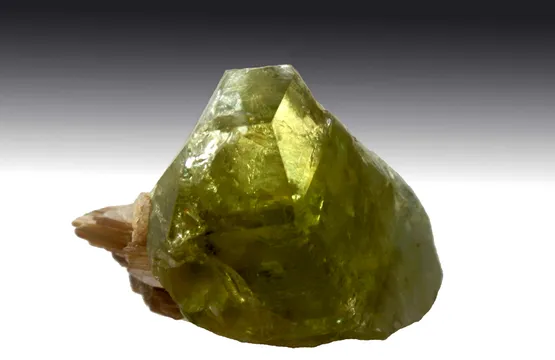
Córrego Frio, Brazil: a type locality for brazilianite, scorzalite, and souzalite, famed for yellow-green brazilianite crystals and classic pegmatite specimens.
Key facts
Córrego Frio is one of the small pegmatite mines whose importance is far larger than its physical size. Set in the Linópolis area of eastern Minas Gerais, in the broader Conselheiro Pena pegmatite district of the Eastern Brazilian Pegmatite Province, the mine is the type locality for brazilianite, scorzalite, and souzalite. For collectors, that is the central fact: this modest zoned pegmatite supplied the material that introduced one of the great yellow-green phosphate classics to mineralogy, and it did so at a moment when wartime mica, feldspar, and strategic-mineral working was opening many of the pegmatites of the Rio Doce region.
The pegmatite itself is a narrow, tabular, well-zoned body in biotite-garnet schist of the São Tomé Formation. Classic descriptions divide it into a massive albite-rich border zone, an irregular crystal-cavity zone richer in quartz and muscovite, and a quartz lens that was largely removed during early mining. The mineralization that made Córrego Frio famous was concentrated between the albite border and the quartz core: yellow to greenish-yellow brazilianite crystals, lamellar muscovite, albite and cleavelandite, quartz, blue-green scorzalite and souzalite masses, apatite, tapiolite, zircon, and a suite of secondary phosphates.
At its best, a Córrego Frio specimen has a look that experienced collectors recognize instantly: sharp, glassy, yellow-green brazilianite crystals, commonly blocky to equant rather than long and flattened, perched on tan muscovite or pale albite. Fine examples can be gemmy enough to flash internally, yet retain enough matrix to prove their pegmatite setting. The finest old pieces are not merely attractive; they are historical documents from the type-locality production of the early 1940s.
Regional View
Country View
The locality has been described under several older geographic conventions and mine names, including Corrego Frio without accents, Lavra do Córrego Frio, Lavra do Duquinha, Lavra da Brasilianita, and references to the former Conselheiro Pena district geography. Modern collector labeling is best kept precise: Córrego Frio mine, Linópolis, Divino das Laranjeiras, Minas Gerais, Brazil, with the acknowledgement that government geosite records place the pegmatite near the boundary with Mendes Pimentel.

Photo: Wikimedia Commons
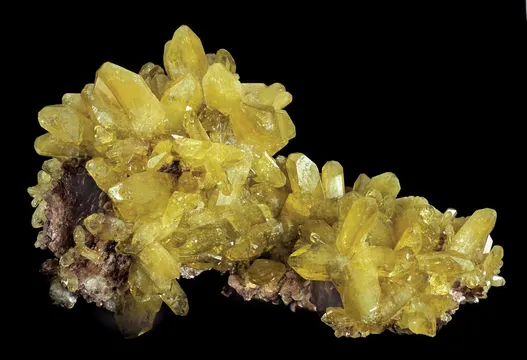
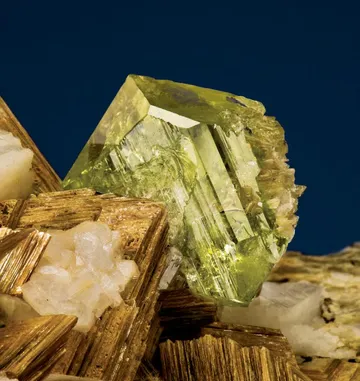
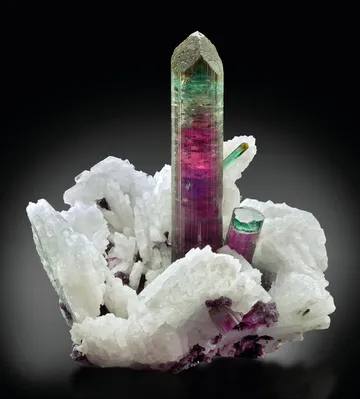
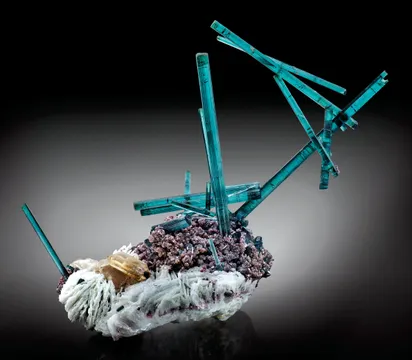

Photo: Wikimedia Commons
Search for specimens: View all specimens from Córrego Frio mine, Brazil
Córrego Frio belongs to the phosphate-bearing granitic pegmatites of the Eastern Brazilian Pegmatite Province, in the Araçuaí Orogen of eastern Minas Gerais. The local bedrock belongs to the Rio Doce Group, especially the São Tomé Formation, where mica-rich schists host many of the pegmatite bodies of the Galiléia–Mendes Pimentel field within the Conselheiro Pena district. Regional studies place these pegmatites in the setting of Neoproterozoic to Cambrian granitic magmatism related to the Araçuaí orogenic cycle, with the economically significant pegmatites forming from residual granitic melts that intruded schistose country rock.
The classic Córrego Frio body is small. Modern geological summaries describe it as a tabular pegmatite, well zoned, with a quartz core and an albite-dominant border zone containing subordinate quartz and muscovite. The mineralized intermediate zone lies between those structural units. Older field descriptions gave the pegmatite an approximately east-west strike and a steep northward dip, essentially parallel to the schistosity of the enclosing biotite-garnet schist. Its exposed thickness was only a few meters at most, decreasing downward in the workings. That compact scale explains why so many good specimens are old, why undamaged matrix pieces are prized, and why Córrego Frio cannot be treated like a continuing large-volume source.
The early American Mineralogist work on Córrego Frio emphasized three structural units. The massive border zone, 30 cm to 1 m thick, was mainly albite with subordinate quartz and muscovite; scorzalite and souzalite occurred there as blue-green elongate masses. The crystal-cavity zone was irregular and richer in quartz and muscovite, with cleavelandite and porous albite. The quartz lens, according to miners interviewed during the 1940s work, had been largely removed; it was only about 5 m long at the surface, roughly 0.5 to 1 m thick, and thinned out within a few meters of depth. Brazilianite crystals occurred in the cavity zone near the quartz lens, commonly with muscovite, albite or cleavelandite, and quartz.
Mining history at Córrego Frio begins, for collectors, with the wartime discovery of attractive greenish-yellow crystals that were at first taken for chrysoberyl. The new mineral was formally described in 1945 by Frederick H. Pough and Edward P. Henderson and named brazilianite in honor of Brazil. In late 1944 the American dealer E. R. Swoboda obtained a lease on the locality and supervised further excavation; by 1945 and 1946, Córrego Frio brazilianite crystals were being offered to museums, dealers, and collectors in the United States. William T. Pecora visited the pegmatite in June 1947 while studying the pegmatites of eastern Minas Gerais, and specimens from that work underpinned the descriptions of scorzalite and souzalite.
The documented early production was limited but historically important. Pecora and Fahey reported about 30 kg of gem crystals and about 200 kg of specimen “pound material” recovered during 1943–1946. Most crystals were small, but the mine also produced exceptional large individuals, including museum-grade crystals in the hundreds of grams and one crystal reported by miners to have weighed about 2 kg before it was broken for gem pieces. That loss is a recurring theme in old brazilianite: the material was beautiful enough to cut, rare enough to collect, and fragile enough that both mining and lapidary handling destroyed many crystals that would now be considered major specimens.
The mine is not a reliable modern field-collecting destination. Brazilian geological records and recent studies describe the old Córrego Frio working as abandoned and internally collapsed. Modern production of brazilianite in the Linópolis area has come more consistently from nearby workings such as Telírio, while old Córrego Frio material circulates through collections, dealers, auctions, and museum holdings. For specimen buyers, the practical collecting access today is the market rather than the mine.
Brazilianite from Córrego Frio is the type-locality benchmark for the species: yellow to greenish-yellow, vitreous, monoclinic crystals that range from sub-centimeter individuals to museum crystals weighing hundreds of grams, with most classic loose crystals less than an inch across and under 10 grams. The best old pieces show sharp, splendent, gemmy crystals, commonly blocky to equant or only moderately elongated, on tan muscovite, white to cream albite or cleavelandite, and quartz; matrix specimens are far scarcer than loose crystals because much early material was removed, trimmed, or broken for cutting. The critical quality points here are color saturation, internal transparency, intact terminations, undamaged lustrous faces, and unmistakable old Córrego Frio provenance rather than a broad “Minas Gerais” or “Conselheiro Pena” label.
Muscovite at Córrego Frio is not a secondary attraction so much as the architectural stage on which the finest brazilianites sit. In the pegmatite it occurs with quartz and albite in the border and crystal-cavity zones, and on specimens it is most familiar as tan, brownish, or silvery lamellar books and blades forming sculptural bases for brazilianite crystals. Fine muscovite-bearing examples matter because they preserve the pocket setting: a sharp yellow-green crystal on intact mica rosettes or books tells a much stronger locality story than a loose crystal, and the mica should be natural, coherent, and not merely a crumbly backing concealing repairs or contacts.
Albite is the dominant feldspar of the Córrego Frio pegmatite and was described as making up much of the massive border zone, with cleavage faces in the albite reaching impressive sizes for such a narrow body. On specimens it appears as pale massive albite, cleavelandite, and white to cream feldspar matrix associated with muscovite, quartz, and brazilianite. Good collector pieces show albite as a clean, undamaged, locality-appropriate matrix rather than an anonymous feldspar lump; the best examples balance white albite, bronze-tan muscovite, and sharp yellow-green brazilianite in a way that immediately reads as classic Córrego Frio.
Other documented minerals from Córrego Frio include quartz, cleavelandite, fluorapatite, zircon, tapiolite, arsenopyrite, microcline, tourmaline, garnet, and a notably rich phosphate suite that has included beraunite, dufrénite, eosphorite-childrenite series material, frondelite, jahnsita, roscherite, sabugalite, strunzite, and wyllieite. The locality’s greatest rarities are its type-locality phosphates: scorzalite, occurring as dark blue massive material in the border and outer cavity zones, and souzalite, a green to blue-green fibrous phosphate intimately associated with scorzalite. Neither is usually a display mineral in the same sense as brazilianite, but both give Córrego Frio a mineralogical importance far beyond its specimen aesthetics.
Córrego Frio brazilianite is a provenance-sensitive classic. The most common problem is not outright fakery but loose or broad labeling: “Conselheiro Pena,” “Rio Doce,” “Linópolis,” “Galiléia,” or “Minas Gerais” may be historically understandable, but they are not equivalent to a documented Córrego Frio label. Nearby Telírio material is also excellent and widely collected, yet it is not the type-locality material; in general, Telírio crystals tend to be paler, shorter-prismatic, flattened, or wedge-terminated, whereas classic Córrego Frio crystals are more often blocky, gemmy, and deeper yellow-green. That distinction is not absolute, so labels, old collection history, and specimen morphology should be considered together.
Condition is the major value separator. Brazilianite has good cleavage, moderate hardness, and brittle behavior; old crystals often show bruised terminations, cleaved edges, repaired breaks, or contact scars from the pocket wall. Lapidary history matters too: much early gemmy material was broken for cutting, and even historical cutting reports noted that heat from dop wax and the action of cutting powder could promote cleavage. A fine undamaged Córrego Frio crystal over 2 cm is already a serious specimen; an aesthetic matrix piece with a sharp crystal on muscovite and albite is considerably rarer.
Color deserves careful handling. Scientific work on Minas Gerais brazilianite showed that irradiation can intensify the yellow component of the color and that heating progressively weakens it; separate gemological references have noted fading and loss of greenish color under heat. This does not mean every vivid specimen is treated, but it does mean collectors should be cautious with unusually intense color, avoid strong heat and prolonged harsh display light, and ask for disclosure if a specimen has passed through gem or treatment channels. For mineral display, keep Córrego Frio brazilianite out of hot cases and away from intense direct sunlight.
Matrix pieces should be inspected for glued reattachments. Brazilianite on muscovite can be naturally perched, but mica books are easy places to hide adhesive and reconstructed contacts. A loupe and long-wave UV light can help reveal glue films, unnatural gaps, and modern repairs, though UV response is not a definitive test for all adhesives. The best pieces have undisturbed mica around the crystal base, consistent patina across crystal and matrix, and a convincing old label trail.
Market availability is limited and uneven. Córrego Frio produced a finite historic suite, and the mine is not a dependable present-day source. Fresh-looking specimens do appear, but many are old collection pieces recycled through auctions and dealers. Expect a strong premium for old labels, museum-quality provenance, complete terminations, transparent saturated color, and matrix. Loose crystals, partial crystals, and contacted examples remain collectible, but the price difference between an ordinary fragment and a fine type-locality matrix miniature can be dramatic.
The first chapter of Córrego Frio brazilianite begins with a mistake that every collector can understand: the attractive greenish-yellow crystals were taken for chrysoberyl. They had enough color and glassiness to invite that comparison, but the crystal habit was wrong. Once Pough and Henderson examined the material, the error became a discovery. The new mineral was not merely another phosphate from Minas Gerais; it was a gem-capable new species, something rare enough that a 1946 note in Nature treated it as an event and compared its gemological arrival with the discovery of benitoite decades earlier.
The locality description preserved from the early years is wonderfully physical. The deposit lay on the south slope of a hill dividing the Rio Doce and the Rio São Mateus drainage, near the head of a small tributary of the Divino River, which drains to the Laranjeiras and then into the Rio Doce. In other words, the type locality of brazilianite was not an abstract dot in Minas Gerais but a little pegmatite near a watershed, a narrow altered dike in biotite schist, exposed and worked just enough to bring an extraordinary phosphate into the world.
E. R. Swoboda enters the story at just the right moment. In late 1944 he recognized the rarity of the crystals, leased the locality, and oversaw further excavation. By 1945 and 1946, brazilianite from Córrego Frio was moving into the American collector world, offered to museums, dealers, and private collectors. When Pecora visited in June 1947, he saw a pegmatite already partly consumed by the work that had made it famous: the quartz lens had been almost entirely removed, and miners could still describe its original shape and dimensions.
The numbers from the 1943–1946 production are striking because they are both large and small. About 30 kg of gem crystals and about 200 kg of specimen “pound material” were recovered. That is enough to seed museums and important private collections, but not enough to make a common mineral classic. The heartbreak is in the cutting losses. Many gem crystals were destroyed during preparation or lapidation, and two miners recalled one many-faced crystal of about 2 kg being broken up in an attempt to obtain gem-clear pieces. Today that single act reads almost painfully: a two-kilogram type-locality brazilianite crystal would be one of the legendary phosphate specimens of the world.
Museum stones and crystals quickly carried the Córrego Frio name outward. Early gemological reporting noted a 978-gram crystal in the Canfield Collection at the U.S. National Museum, 868- and 852-gram crystals in the American Museum of Natural History, and additional material in Rio de Janeiro and at the Natural History Museum in South Kensington. Smaller gem crystals were cut into stones, and one 89-carat crystal was drawn, photographed, measured, and then cut in Birmingham under the supervision of Miss P. E. Cutts of the Gemmological Association. The resulting stones included a 2.988-carat baguette, a 1.507-carat square cut, an 11.13-carat square cut, a 2.215-carat baguette, and other small gems. During cutting, the lapidary noticed not only the pronounced cleavage but also an odd odor agreed to be like “fireworks or gunpowder.”
The mineralogical sequel was just as important as the gem story. Córrego Frio did not stop at brazilianite. Pecora and Fahey’s study showed the pegmatite to contain two additional new phosphates: scorzalite and souzalite. Scorzalite, named for Evaristo Pena Scorza, occurred as dark blue masses in the border and outer cavity zones; souzalite, named for Antônio José Alves de Souza, formed green fibrous masses so closely associated with scorzalite that it was interpreted as an alteration product. A mine only a few meters thick had yielded three species new to science.
Frederick H. Pough and Edward P. Henderson, “Brazilianite, a New Phosphate Mineral,” American Mineralogist 30, 572–582, 1945 — Original description of brazilianite from the Córrego Frio material, establishing the new sodium aluminum phosphate species.
William T. Pecora and Joseph J. Fahey, “The Corrego Frio Pegmatite, Minas Gerais: Scorzalite and Souzalite, Two New Phosphate Minerals,” American Mineralogist 34, 83–93, 1949 — The fundamental geological and mineralogical description of the pegmatite, including zoning, production notes, and the type descriptions of scorzalite and souzalite.
Jacques P. Cassedanne, “Famous Mineral Localities: The Córrego Frio Mine and Vicinity, Minas Gerais, Brazil,” Mineralogical Record 14, 227–237, 1983 — The classic locality article clarifying the mine, its surrounding occurrences, discovery history, and label confusion.
Luiz Antônio Gomes Silveira, Mário Luiz de Sá Carneiro Chaves, Klaus Krambrock, Luiz Alberto Dias Menezes Filho, Paulo Roberto Gomes Brandão, Ricardo Scholz, and Michele Aparecida Flores Costa, “Ocorrência, contexto mineralógico e química mineral da brazilianita e seus depósitos em Minas Gerais,” Geociências 33(3), 378–392, 2014 — Modern study of Minas Gerais brazilianite deposits, including Córrego Frio geology, mineral chemistry, feldspar chemistry, and color-center behavior.
Serviço Geológico do Brasil, GeoSIT: “Pegmatito Córrego Frio da Província Pegmatítica Ocidental Brasileira, Minas Gerais” — Government geosite record summarizing the locality, coordinates, geologic context, type-locality significance, pegmatite zoning, and bibliography.
Smithsonian Institution, “Catalog of Type Specimens in the Mineral Collection, National Museum of Natural History,” Smithsonian Contributions to the Earth Sciences 18 — Lists NMNH type material for brazilianite, scorzalite, and souzalite connected with the Córrego Frio discovery and E. R. Swoboda material.
Handbook of Mineralogy: Scorzalite — Concise reference for scorzalite chemistry, crystallography, naming, and distribution from the Córrego Frio type locality.
Handbook of Mineralogy: Souzalite — Concise reference for souzalite chemistry, crystallography, naming, type material, and Córrego Frio occurrence.
L. C. Trumper, “Brazilianite,” Journal of Gemmology 3(1), 1951 — Early gemological treatment of brazilianite, with locality notes, museum crystals, cut stones, inclusions, and lapidary observations.
Mindat locality page: Córrego Frio mine, Linópolis, Divino das Laranjeiras, Minas Gerais, Brazil — Best single database page for locality aliases, mineral list, photos, and reference trail.
Wikimedia Commons: Minerals of the Corrego Frio Mine — Useful gallery of freely licensed Córrego Frio specimen photographs, mostly brazilianite with albite, muscovite, and quartz.
GeoSIT: Pegmatito Córrego Frio — Brazilian Geological Survey geosite record with coordinates, access description, geologic setting, zoning summary, and bibliography.
Pecora and Fahey, 1949, American Mineralogist PDF — Essential primary source for the pegmatite structure and the type descriptions of scorzalite and souzalite.
Silveira et al., 2014, Geociências PDF — Modern scientific treatment of brazilianite deposits in Minas Gerais, including Córrego Frio and nearby Linópolis deposits.
Mineralogical Record back issue, July–August 1983 — Issue containing Cassedanne’s famous-locality article on Córrego Frio and vicinity.
Mindat species page: Brazilianite — Reference for formula, physical properties, type-locality status, and worldwide occurrences of brazilianite.
Mindat species page: Scorzalite — Reference for scorzalite data, type occurrence, and Córrego Frio type material.
Mindat species page: Souzalite — Reference for souzalite data, type occurrence, and museum type material.
Journal of Gemmology, “Brazilianite,” 1951 PDF — Early gemological account with locality descriptions, museum crystals, cut stones, inclusions, and lapidary notes.
