






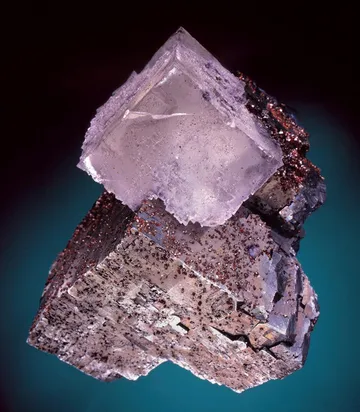
Cumberland Mine, USA: a Middle Tennessee locality famed for amber calcite, purple fluorite, and sphalerite, with rare specimens prized by collectors.
Key facts
Cumberland Mine, near Carthage in Smith County, Tennessee, is one of the quieter names in the famous Middle Tennessee zinc camp, but serious collectors know it as a sister locality to the Elmwood and Gordonsville mines: the same deeply buried Lower Ordovician carbonate system, the same Mississippi Valley-type zinc mineralization, and the same dramatic palette of amber calcite, dark resinous sphalerite, lavender to purple fluorite, ivory barite, celestine, galena, dolomite, quartz, pyrite-marcasite, and locally bituminous material. Its importance is partly geological and partly connoisseurial. Geologically, Cumberland represents the northern part of the Carthage-area MVT system, where mineralizing brines exploited collapse breccias and dissolution cavities in the Knox Group carbonates. As a specimen source, it has produced far fewer collector pieces than Elmwood, and that relative scarcity makes well-provenanced Cumberland labels particularly desirable.
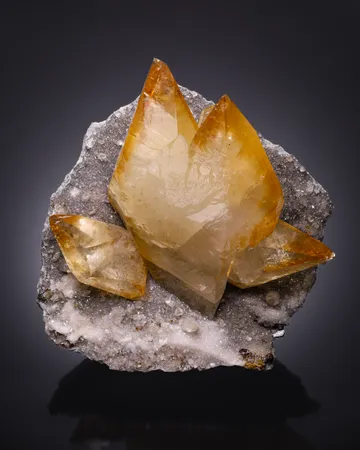
The best Cumberland specimens have the unmistakable Middle Tennessee look: glossy black to reddish-brown sphalerite, often with ruby-red internal reflections under strong light; sharp amber calcite, sometimes doubly terminated or twinned; pale to purple fluorite cubes tucked into cavities or sprinkled over barite; and rounded or bladed ivory barite aggregates perched against sulfide. Compared with the most abundant Elmwood material, Cumberland pieces often carry more premium when the label is precise—especially if it preserves a stope or heading designation—because fine specimens from the mine are much less frequently encountered on the market.
Regional View
Country View
Cumberland belongs to the Middle Tennessee Mines complex, historically grouped with Elmwood, Gordonsville, Carthage, and Stonewall. In the collecting world, these names are easily blended because the mines are close, have been operationally linked, and produced related assemblages; for high-end specimens, however, the exact mine name matters. A true Cumberland specimen should not be casually absorbed into the more famous Elmwood label unless the original documentation actually says Elmwood.

Photo: Wikimedia Commons
Search for specimens: View all specimens from Cumberland Mine, USA
Cumberland Mine is an underground zinc mine near Carthage, Smith County, Tennessee, in the Central Tennessee Ba-F-Pb-Zn district. The deposit is a Mississippi Valley-type zinc system hosted by carbonate rocks of the Lower Ordovician upper Knox Group, especially the Mascot Dolomite and, to a lesser extent, the Kingsport Formation. Regionally, the mine sits on the southern part of the Cincinnati Arch and the Nashville Dome structural high, where nearly horizontal platform carbonates dip gently away from the arch. In practical collecting terms, that structural and stratigraphic setting explains why the specimens are cavernous, breccia-bound, and frequently spectacular: mineralizing fluids moved through dissolution cavities, collapse breccias, and permeable carbonate horizons rather than through narrow alpine-style veins.
The ore is dominantly sphalerite, with galena subordinate and pyrite-marcasite minor. Gangue and specimen minerals include calcite, barite, fluorite, dolomite, quartz, and locally celestine. Modern geochemical work on Cumberland sphalerite distinguishes mineralization as open-space filling in collapsed dolomite breccias and as sulfide replacement of limestones. In the breccia ore, coarse sphalerite occurs with calcite and minor fluorite, galena, barite, and crystalline dolomite; in replacement ore, the gangue is more strongly dominated by coarsely crystalline dolomite. Trace-element studies have shown variations between breccia-hosted and replacement sphalerite, with elements such as Ge, Ga, Cd, Cu, Fe, Pb, Mg, and Mn of interest in understanding fluid evolution and ore-forming stages.
The Middle Tennessee ore bodies are not simple sheets. The economic sphalerite is concentrated in stratabound collapse breccias and dissolution cavities, especially in the Mascot Dolomite. The late breccia systems, rather than the earlier unmineralized breccias, host the main mineralized zones. In the broader mine complex, the most consistently brecciated and intensely mineralized interval has been described as a roughly 200-foot zone between the M-ds and K-ds stratigraphic markers. These breccias grade from rubble cores into mosaic and crackle breccias and then into less disturbed wall rock; sulfides and gangue minerals cement the voids and, in open cavities, form the showy crystals valued by collectors.
The discovery story of the Middle Tennessee district began with New Jersey Zinc’s exploration program in 1964. A long sequence of drill holes—the now well-known “Random Walk” exploration campaign—led to major economic zinc intercepts near Elmwood, and subsequent development established the Elmwood and Gordonsville operations. Cumberland came later. The Cumberland orebody had been partly explored by about 5,000 feet of drift when Union Zinc began dewatering it in 1989, and by October 1991 it had been developed into an operating mine. In fiscal year 2002 the Cumberland Mine produced 619,000 tons of ore at an average grade of 3.70% zinc, and by the 2003 closure it had yielded more than 5.5 million tons of ore at an average grade of 3.28% zinc.
Ownership and operating names have changed repeatedly. New Jersey Zinc gave way to the Jersey Miniere Zinc joint venture, then Union Zinc, Savage Zinc, Pasminco, Strategic Resource Acquisition and Dynatec during the mid-2000s rehabilitation period, and Nyrstar after 2009. Nyrstar acquired and consolidated the Middle Tennessee operations in 2009, placed them on care and maintenance in December 2015, restarted work in September 2016, and had production ramped up again by the second quarter of 2017. The Middle Tennessee Mines were put on a temporary production pause in 2023, and on April 1, 2026, Nyrstar completed the sale of its U.S. assets, including the Mid Tennessee mining complex and the Clarksville smelter, to Korea Zinc. As of the latest public ownership information, collector access should be treated as closed industrial-mine access: no casual collecting, no trespassing, and no assumption that specimens can be obtained from the site except through legitimate releases, mine-approved recoveries, older collections, and the mineral market.
The most collectable Cumberland specimens are pocket pieces from breccia cavities and named underground workings. Documented market examples include material from Stope 40 South, Heading 14, where a large doubly terminated golden calcite was recorded on a matrix covered with barium-bearing celestine; and from 21 South 8 Stope, represented by celestine with calcite, fluorite, and sphalerite. The best pieces are not merely “Middle Tennessee” in style: they are well documented as Cumberland, carry old collection or dealer provenance, and preserve the geometry of open-space growth—perched calcite, sphalerite matrix, barite mounds, fluorite accents, and intact cavity surfaces.
Calcite from Cumberland is valued for the classic Middle Tennessee combination of sharp amber to golden crystals with dark sphalerite, barite, fluorite, and locally celestine, but Cumberland pieces are markedly less common than Elmwood-labeled examples. The best crystals are lustrous, translucent to partly gemmy, and may be doubly terminated, twinned, or complex scalenohedral forms; documented high-end examples include an 8.3 cm doubly terminated twinned calcite perched on a bladed barite ball with tiny pale fluorite cubes, and an 18.5 cm golden calcite from Stope 40 South, Heading 14, resting on matrix covered with barium-bearing celestine. Ordinary Cumberland calcite tends to be massive, bruised, or visually disconnected from its matrix; better pieces show crisp terminations, saturated amber tips, minimal cleavage bruising, and strong association with sphalerite, barite, fluorite, or celestine rather than appearing as isolated calcite without locality character.
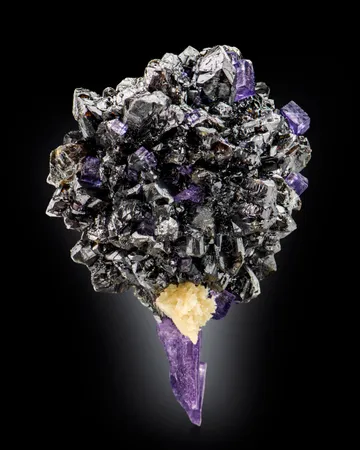
Sphalerite is the principal ore mineral at Cumberland and the backbone of most good specimens, occurring as dark reddish-brown to black, resinous, highly lustrous crystals and aggregates, with ruby-red internal reflections visible in thinner edges or under strong light. In the broader Middle Tennessee deposits, sphalerite occurs as massive breccia fill, vug-fill crystals, and disseminated grains peripheral to breccia bodies; the specimen-grade Cumberland material comes chiefly from open-space breccia cavities, where it can form sparkling plates and sculptural masses associated with amber calcite, fluorite, barite, celestine, quartz, dolomite, and minor galena. Good Cumberland sphalerite is judged by luster, crystal definition, freedom from rubbing on high points, and contrast with pale barite or warm calcite; lesser pieces are massive ore fragments with little open-space crystal development or labels too vague to separate Cumberland from Elmwood or Gordonsville.
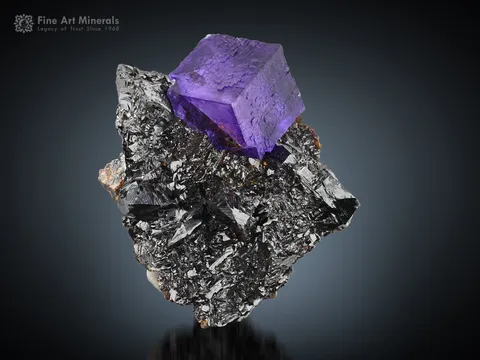
Fluorite from Cumberland is much less abundant as a headline species than calcite or sphalerite, but it is crucial to the finest combination pieces. It occurs as transparent to translucent cubes ranging from nearly colorless to pale lavender and purple; in the Middle Tennessee system, fluorite commonly forms rinds over sphalerite in dissolution cavities, with the remaining void later filled by calcite or barite. Cumberland examples may appear as small gemmy cubes scattered over barite or tucked between calcite and sphalerite, and documented pieces include calcite-on-barite combinations in which tiny mostly colorless to lightly purple fluorite cubes decorate the barite surface. The best fluorite-bearing Cumberland specimens show intact cube faces, attractive purple zoning or tint, and balanced association with calcite, sphalerite, barite, or celestine; single fluorite specimens are comparatively scarce and should be scrutinized carefully against the far more familiar Elmwood material.
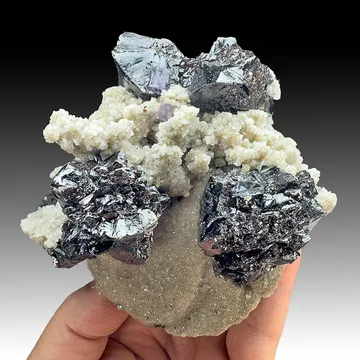
Barite from Cumberland is typically ivory to white and appears as bladed aggregates, rounded balls, hemispherical mounds, or clustered crystal groups, most often as a supporting but visually important species with sphalerite, calcite, quartz, and fluorite. A documented cabinet specimen showed a nearly 6 cm grouping of white barite crystals set on matrix with sparkling sphalerite and calcite, while another well-described Cumberland combination carried a twinned doubly terminated amber calcite perched on a bladed barite ball with fluorite accents. Good pieces have undamaged bladed surfaces, strong contrast against dark sphalerite, and three-dimensional placement rather than flat, chalky masses; because barite is susceptible to edge bruising and because pale barite shows dirt and handling more readily than sphalerite, clean preservation is especially important on Cumberland examples.
Other documented Cumberland and Middle Tennessee mine-suite minerals include galena, pyrite, marcasite, quartz, dolomite, celestine, barium-bearing celestine, and locally enargite, along with bituminous material and liquid hydrocarbons associated with ore and gangue minerals. Celestine is particularly attractive in Cumberland combinations, occurring as pale to white or bluish crystals and sprays with calcite, fluorite, and sphalerite; barium-bearing celestine adds an important rarity note when properly identified. Galena is minor compared with sphalerite but may appear as cubes on sphalerite or breccia fragments. Quartz is commonly present as drusy coatings in breccia cavities, and marcasite or pyrite can occur in small crystals, inclusions, or late coatings. These subordinate species rarely define the locality alone, but they can greatly improve a specimen when they create a complete Cumberland assemblage rather than a simple two-mineral zinc-ore piece.
Cumberland specimens occupy a tricky market position: they look like Elmwood and Gordonsville specimens because they formed in the same mine district, yet true Cumberland-labeled examples are scarcer. The main authenticity issue is not widespread faking, but mislabeling or over-generalization. Specimens sold simply as “Elmwood” or “Middle Tennessee” may not be safely reassigned to Cumberland. Conversely, a vague “Cumberland/Elmwood” label can mean the seller is using Cumberland loosely as part of the mine complex rather than as a precise source. For serious acquisition, favor old labels, mine-run documentation, named stopes, recognized dealer provenance, or specimens traceable to collectors who obtained material during periods of mine-approved recovery.
Condition standards should be strict. Calcite cleaves readily and many Cumberland calcites have small bruises on terminations or edges; acceptable minor wear is common, but the price should reflect it. Sphalerite can show rubbing on exposed high points, broken crystal tips, and dull areas where sulfide crystals contacted pocket walls or were mishandled. Barite mounds and bladed aggregates chip along edges, and pale barite readily displays embedded dirt or iron staining. Fluorite cubes are often small and accessory, so even tiny chips can affect the specimen’s visual quality when the fluorite is the selling point. On complex pieces, examine junctions between minerals carefully: a perched calcite or barite aggregate may look natural from the front but reveal repairs or contact damage at the attachment area.
Cleaning should be conservative. Dark sphalerite can be visually improved by careful dust removal, but aggressive chemical cleaning risks damaging associated carbonates and sulfates or altering subtle surface residues. Calcite and barite should not be exposed to acids; fluorite can tolerate more than calcite chemically but is still easily chipped mechanically. Bituminous films or hydrocarbon residues are part of the geologic character of some Middle Tennessee material and should not automatically be considered dirt to be removed. Because some calcite from this district may show fluorescence, ultraviolet response can add interest, but it should not be treated as a primary test for Cumberland attribution.
Market availability is limited compared with Elmwood. Small sphalerite-calcite pieces and matrix fragments appear periodically, but fine cabinet combinations with sharp amber calcite, attractive barite, visible fluorite, and solid Cumberland provenance are uncommon. Specimens with named underground sources—such as specific stopes or headings—deserve a premium when the mineral quality is also strong. For advanced collectors, the ideal target is not the largest piece, but the specimen that clearly reads “Cumberland”: dark lustrous sphalerite, pale barite or celestine, amber calcite, a touch of fluorite, and an old or specific label that keeps it from being swallowed by the broader Elmwood market.
The Cumberland story begins with an exploration gamble. New Jersey Zinc started drilling in Middle Tennessee in 1964, not by chasing obvious outcrops—the key Knox Group host rocks were mostly hidden beneath younger cover—but by testing a deeply buried carbonate target. The campaign became known for its “Random Walk” of drill holes. The 79th hole finally cut economic zinc mineralization near Elmwood, and the 106th diamond-drill hole, numbered 4-43-9, confirmed a 5.1-meter interval grading 18.5% zinc. Around that discovery hole, a broad drilling grid outlined a deposit large enough that New Jersey Zinc committed to shaft sinking in late 1968. Cumberland was a later chapter in that same underground story: by the late 1980s the orebody already had 5,000 feet of exploration drift driven toward it, and after dewatering began in 1989 it was developed into an operating mine by October 1991.
The collector story is more intimate and more fragile, because the great Cumberland pieces came from industrial ground, not from an open collecting quarry. One notable specimen from Stope 40 South, Heading 14, carried an 18.5 cm golden, doubly terminated calcite on a much larger matrix covered with barium-bearing celestine. The specimen was described as 20 by 30 cm overall, with the calcite translucent, locally gemmy, deeply golden-brown at the tips, and effectively damage-free. That is precisely the sort of specimen that separates Cumberland from ordinary “Tennessee calcite”: not just a good crystal, but a stope-documented pocket piece showing the uncommon celestine-rich association.
Another small but telling specimen was documented from 21 South 8 Stope: a 60 by 60 by 50 mm association of celestine with calcite, fluorite, and sphalerite. It was not large by cabinet standards, but the association is exactly what makes Cumberland rewarding to specialists. In a district famous for big amber calcites and dark sphalerites, the unusual pieces are often the ones that carry celestine, barium-rich celestine, or fluorite in a composition that could only have come from a well-opened cavity.
A 2018 auction example captured the mine’s appeal in miniature: an 8.3 cm doubly terminated twinned calcite perched dramatically on a bladed barite ball, the barite itself sprinkled with tiny gemmy fluorite cubes showing light purple tint. The cataloguer emphasized that mineral specimens from Cumberland are rare compared with Elmwood, and valued the piece at $1,250–$1,500. What made it memorable was not size alone, but architecture: warm amber calcite, pale barite, fluorite accents, and a piece complete enough to display from either side.
The industrial scale of Cumberland is easy to forget when looking at a hand specimen. In 2002 alone, the mine produced 619,000 tons of ore averaging 3.70% zinc. By the 2003 closure, more than 5.5 million tons had been extracted from Cumberland since its 1991 start-up. The mine used an unusually varied set of underground methods—room and pillar, benching, multi-pass mining, shrinkage, block caving, and others—because the ore bodies are irregular breccia and replacement systems rather than neat tabular seams. For the collector, that irregularity is everything: the same collapsed and mineralized cavities that complicated mining are what created the rare open spaces where calcite, fluorite, barite, sphalerite, and celestine had room to crystallize.
.jpg)