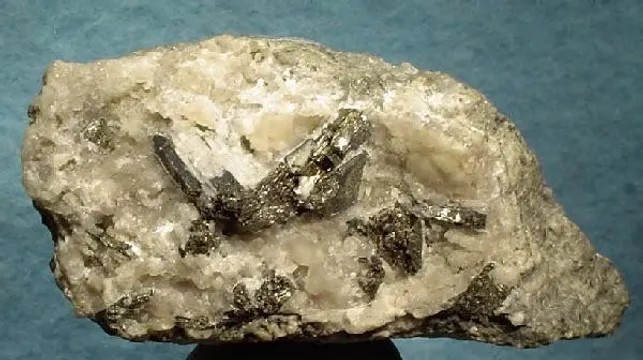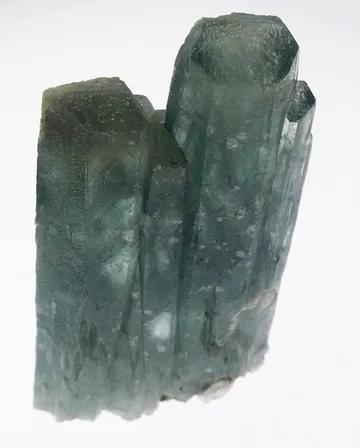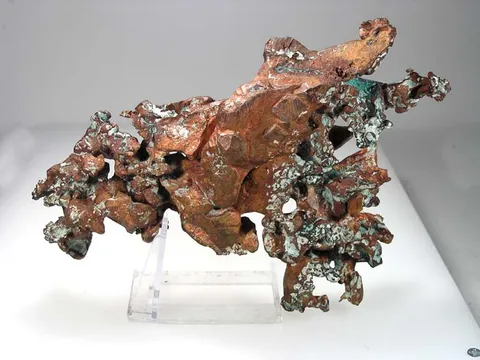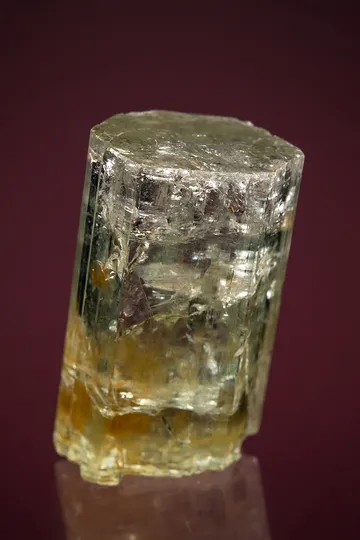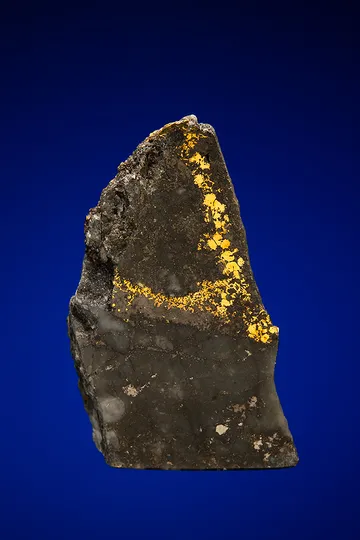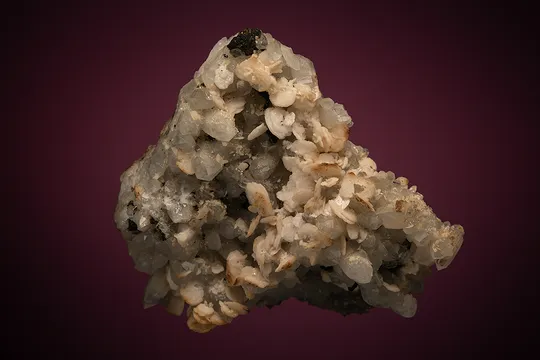
Commodore Mine, Colorado — Creede locality yielding shiny sphalerite, galena, chalcopyrite, and amethystine quartz; prized for epithermal vein specimens.
Key facts
The Commodore Mine is one of the classic Creede district specimen localities: a silver-lead-zinc mine on the Amethyst vein system above Creede, Mineral County, Colorado, set in the volcanic country of the San Juan Mountains. For ore geologists it is part of the Creede graben and the Amethyst fault zone, a productive epithermal vein system in Oligocene rhyolitic host rocks. For collectors it is instantly recognizable by its combination plates: lustrous honey to golden-amber sphalerite, sharp gray galena, brassy chalcopyrite, and purple amethystine quartz on white to pale quartz and sulfide-rich matrix.
The deposit is not a single simple vein in collector terms. Labels may mention the Commodore Mine, Commodore No. 5, the Amethyst vein, the OH vein, or the P-vein, all reflecting the complex web of tunnels, raises, hanging-wall fractures, and later working levels in the mine. The best specimens preserve the look of open-space epithermal crystallization: gemmy sphalerite faces that flash yellow-brown when backlit, small cubic to cubo-octahedral galena accents, sharp chalcopyrite crystals, and sparkling quartz or amethyst druse over the ore.
Regional View
Country View
Historically, the Commodore belongs to Creede’s great silver episode, but its specimen identity is more modern and more intimate than the production figures alone suggest. The mine produced ore from oxidized silver-rich zones near the upper and intermediate workings and deeper base-metal sulfide ore dominated by sphalerite, galena, pyrite, and chalcopyrite. Many collectible pieces are not “pretty ore” by accident; they are fragments from a vein environment where amethystine quartz, barite, chlorite, and sulfides were repeatedly fractured, reopened, and mineralized.

Photo: Wikimedia Commons

Photo: Wikimedia Commons
Search for specimens: View all specimens from Commodore Mine, USA
The Commodore Mine is in the Creede district of Mineral County, Colorado, along West Willow Creek north of the town of Creede. Its mineralization belongs to the Amethyst fault zone, within the structural setting of the Creede graben in the San Juan volcanic field. The host rocks and associated rocks are rhyolitic, and the deposit is best understood as a low- to intermediate-sulfidation epithermal precious- and base-metal vein system, developed in a strongly fractured volcanic pile affected by silicification, chloritization, argillization, and iron-manganese oxidation.
The mine’s principal lodes include the Amethyst vein and related structures, with the OH vein and the ancestral Amethyst or Dean fault appearing in geologic descriptions of the property. In the Commodore workings the Amethyst vein generally trends roughly north to northwest and dips steeply west to southwest; the OH vein is a hanging-wall fracture zone that carried disseminated galena, sphalerite, and pyrite with chalcopyrite in a hematitic chlorite gangue. Ore mineralization was staged. Earlier quartz, barite, and rhodochrosite were followed by amethyst and base-metal sulfides, and later economic silver-bearing assemblages included copper and base-metal sulfides, iron-manganese oxides, tetrahedrite, acanthite, and native silver.
In older descriptions of the Commodore, the best grade ore was reported from roughly 200 to 500 feet below the surface on the fault vein. The upper ore was heavily oxidized and included native silver, chlorargyrite, pyromorphite, anglesite, cerussite, smithsonite, limonite, and wad. At depth, galena, sphalerite, pyrite, and chalcopyrite became increasingly abundant. This vertical transition is important for specimen interpretation: oxidized silver-lead pieces, sulfide-rich sphalerite-galena-chalcopyrite plates, and amethystine quartz combinations all belong to the same broader ore system but may represent quite different positions and episodes within it.
The Commodore was discovered and first produced during the Creede boom period of the early 1890s. The mine was an underground silver, zinc, and lead producer, with copper, gold, antimony, and manganese as lesser commodities in mining records. Unlike some of the neighboring mines that relied on the Nelson drainage tunnel, the Commodore occupied a topographically favorable position and drove its own deep adit, the No. 5 or Manhattan level, lying only about 45 feet above the Nelson tunnel. The workings ultimately extended through multiple tunnels and levels over more than a thousand feet of vertical interval, with the No. 5 level becoming central to deeper haulage and later production.
By the 1940s the Commodore and related Amethyst vein workings had been absorbed into the larger Emperius operating group. Emperius Mining Company pushed the Commodore No. 5 Tunnel as a haulageway for base-metal-rich sulfide ore, and by the late 1940s much of the production from the Amethyst vein system was coming through Commodore No. 5. Reports from the period describe ore mined from stopes, raises, and headings, with lead concentrates shipped to Leadville and zinc concentrates shipped as far as Amarillo. Later operations in the 1960s shifted toward the Commodore, and in 1969 the Amethyst-Commodore mining method changed from shrinkage stoping to sublevel caving.
The historic mine area is visible from the Bachelor Loop, but collecting access should be treated as closed unless permission is explicit and current. Much of the property along the loop is private, the old workings are dangerous, and the Nelson Tunnel/Commodore Waste Rock area is part of a documented environmental cleanup setting. The structures, adits, raises, dumps, and slopes are not casual collecting ground. Collectible Commodore specimens on the market therefore come from old mine production, old collections, dealer-held material, and limited documented finds from specific underground zones rather than from ordinary public collecting.
Modern labels are especially important here. Better specimens may carry zone detail such as “P-vein, 5th Level,” “P-vein 2 South, 5th Level,” “OH vein,” or “Commodore No. 5.” Such labels add real interpretive value because the mine’s specimen suite varies from honey sphalerite-quartz-galena combinations to amethyst-coated sulfide plates and secondary sulfate or oxidation-zone material. The finest collector pieces are not merely rich in sulfide; they show open cavities, undamaged crystal faces, strong luster, color contrast, and a balanced arrangement of metallic and quartz species.
Commodore sphalerite is the mine’s signature collector species: sharp, lustrous, commonly twinned crystals in honey-yellow, golden-amber, orange-brown, greenish-yellow, or apparently black tones that become translucent to gemmy when backlit. Fine specimens range from small miniatures with bright isolated crystals to cabinet plates; documented collector pieces show individual sphalerite crystals around 1.2–1.8 cm, with some larger drusy aggregates and plates where sphalerite dominates the surface. It occurs with galena cubes, chalcopyrite, pyrite, quartz, and especially amethystine quartz from the Amethyst vein system, with specific modern labels including P-vein and OH-vein material. Good Commodore sphalerite is judged by transparency, glassy luster, sharp twinning, rich honey color, and the aesthetic placement of galena or chalcopyrite accents; ordinary pieces tend to be darker, more massive, chipped, or lost in a granular sulfide matrix.
Galena from the Commodore typically appears as steel-gray cubes to cubo-octahedral crystals scattered over sphalerite, quartz, or amethyst druse, and it is often the compositional accent that gives these plates their classic Creede look. Dealer and collection records describe small sharp cubes to about 6–7 mm on amethyst-coated pieces, larger isolated galena crystals around 1.2 cm on old sphalerite plates, and locally hoppered or skeletal galena perched among honey sphalerite and chalcopyrite. Its collecting appeal here lies less in huge crystal size than in contrast: bright gray galena against golden sphalerite and purple quartz, or crisp cubes emerging from sparkling microcrystalline sulfide. The better pieces retain sharp, reflective faces without dull alteration or bruised cube edges; lower-grade examples are blocky gray ore with little separation from the matrix.
Chalcopyrite is a frequent but usually subordinate player in Commodore combinations, appearing as brassy to iridescent crystals on sphalerite and quartz rather than as large stand-alone masses. Fine examples show sharp sphenoidal or twinned chalcopyrite crystals, documented to roughly 1.2–1.4 cm on some collector pieces, associated with gemmy honey sphalerite, small galena cubes, pyrite, and drusy amethyst from the Amethyst vein system. Its best role is visual punctuation: bright golden metallic points set against darker sphalerite or purple quartz. Pieces with fresh, sharply crystallized chalcopyrite and attractive iridescence are desirable; ordinary material is simply brassy sulfide scattered through ore, easily overlooked unless it adds sparkle, geometry, or color contrast.
Quartz at the Commodore is both gangue and specimen-maker. It occurs as white quartz, gray quartz, comb quartz, chalcedonic bands, microcrystalline coatings, and amethystine druse within the Amethyst vein system. In collector specimens it commonly forms the sparkling matrix beneath sphalerite, galena, chalcopyrite, and pyrite, and in older ore descriptions it appears with galena, zinc blende, limonite, manganese oxides, red jasper, chalcedony, and native silver. Cabinet examples may show broad surfaces of fine quartz or amethyst crystals carrying sulfides; the strongest pieces are those where quartz is not merely a base but a clean, glittering stage for well-separated metallic crystals. Dull, broken quartz with embedded ore is commoner and far less appealing than crisp drusy quartz carrying sharp sulfide crystals.
Amethyst from the Commodore is not the large isolated purple crystal style of some worldwide localities; its classic habit is a coating or druse of small violet quartz crystals over sulfide-rich matrix, galena, sphalerite, and chalcopyrite. Documented cabinet specimens include deep purple amethyst crystals covering galena and sphalerite, and smaller plates where medium-purple amethyst coats honey sphalerite, brassy chalcopyrite, and gray galena for a distinctive sparkling effect. The locality’s name-bearing Amethyst vein makes the association historically resonant, but specimen quality depends on color saturation, even crystal coverage, freshness, and whether the sulfides project cleanly above or through the amethyst. The best examples combine purple quartz with undamaged metallic crystals; ordinary examples are pale drusy coatings with little contrast or heavily abraded sulfide.
Other documented Commodore minerals include acanthite, alabandite, anglesite, baryte, bornite, brochantite, calcite, chalcocite, chlorargyrite, chlorite-group minerals, covellite, goslarite, hematite, ktenasite, langite, limonite, marcasite, melanterite, muscovite/illite, native silver, pyrargyrite, pyrite, pyrolusite, pyromorphite, rhodochrosite, serpierite, stibnite, tetrahedrite-group minerals, wad, and quartz varieties including agate and chalcedony. Of these, native silver and silver sulfosalts connect most directly to the mine’s bonanza history, while ktenasite, langite, goslarite, melanterite, and other sulfate minerals reflect oxidation of the zinc-copper-iron sulfide assemblage, especially in OH-vein and mine-dump or secondary environments. The Commodore is not primarily collected for large secondary rarities, but carefully labeled microscopic or small-cabinet secondary minerals from the OH vein can be scientifically interesting.
Commodore specimens are most often authenticated by assemblage, texture, and old labels rather than by spectacular size. The classic look is distinctive: honey to amber sphalerite, gray galena, brassy chalcopyrite, pyrite, and quartz or amethyst druse. Because the Creede district contains several adjacent mines on related structures, labels such as “Commodore,” “Commodore No. 5,” “Amethyst vein,” “Emperius Mine,” “OH vein,” and “P-vein” can become blurred in commerce. A specimen labeled simply “Creede” may be entirely genuine but locality-imprecise; a precise old label with level or vein information is preferable and should be preserved with the specimen.
The most common condition issues are bruised sphalerite edges, missing or contacted galena corners, dulling of chalcopyrite, and broken quartz druse along the margins of plates. Sphalerite is softer than quartz and much more easily damaged than the surrounding siliceous matrix suggests. Galena is heavy and can cleave or ding at cube corners; specimens should be mounted or stored so the metallic crystals are not bearing weight. Amethyst druse is tough by comparison, but tiny points on broad cabinet plates can be rubbed dull by poor wrapping.
Specimens with secondary sulfates deserve special care. Goslarite, melanterite, and related hydrated sulfates are moisture-sensitive and can dehydrate, powder, or migrate under poor storage conditions. Keep any specimen with visible efflorescent sulfate minerals dry, stable, and away from repeated humidity swings. Sulfide-rich ore should not be cleaned aggressively with acids; galena, chalcopyrite, sphalerite, and associated secondary lead, zinc, and copper minerals are best left to mechanical dusting or very conservative rinsing only when stability is certain.
Commodore material remains obtainable, but top-quality examples are not abundant. Modest sphalerite-galena-quartz plates and amethyst-coated sulfide specimens appear periodically through dealers and auctions, often from older collections. Stronger pieces—gemmy yellow-brown sphalerite with sharp galena and chalcopyrite, or saturated amethyst druse with well-placed sulfides—command a premium because they combine beauty, district importance, and precise locality character. The most desirable labels name the vein or level and are backed by collection provenance.
Creede’s Amethyst vein mines were born in a landscape that rewarded nerve. The Commodore stood only a short distance above the booming town, close enough that its ruins still feel like an extension of Creede’s main street, yet geologically it belonged to a steep volcanic canyon world of rhyolite walls, talus slopes, narrow roads, and deeply intersecting underground levels. Early descriptions make clear that the outcrop on the Commodore claim was unimpressive—nearly hidden by talus—so the mine’s importance was not signaled by a great glittering surface exposure. Its wealth had to be followed underground.
By the first years of the twentieth century, the neighboring Amethyst workings were already a labyrinth. The No. 3 shaft reached more than a thousand feet down an incline, drifts were driven every hundred feet on many levels, and connections linked mines that had begun as separate claims: Amethyst to Last Chance, Happy Thought, United Mines, and the Nelson Tunnel. The Commodore, sitting more favorably on the slope, took a different path. It did not simply sign on to the Nelson drainage-tunnel arrangement; it drove its own deep adit, the No. 5 or Manhattan tunnel, only about 45 feet above the Nelson. That decision became part of the mine’s identity: Commodore ore moved through its own underground highway.
Old accounts of the Commodore ore are vivid in a way that specimen collectors will recognize immediately. One specimen from the upper levels, owned by W. G. Messinger of Creede, was described as gray quartz with galena, zinc blende, limonite, and manganese oxide, with woolly wire silver in vugs. Polished specimens owned by mine foreman J. F. Wilson showed alternating bands of red jasper, white quartz, and leaf silver. Those descriptions are a reminder that the mine’s famous sphalerite-galena-amethyst plates are only one chapter in a more varied silver-vein story—one that included crustified quartz, jasper, chalcedony, oxidized lead minerals, and native silver deep in the fractured vein.
In 1943, as Emperius Mining Company consolidated and mechanized much of the district, the Commodore entered another intense phase. Emperius began driving the Commodore No. 5 Tunnel as a haulageway for base-metal-rich sulfide ore from the Amethyst vein system. The mine was not romanticized in the inspector reports; it was counted in feet of drifts, raises, and winzes, in tons per day, and in concentrate grades. Yet one line stands out: gas pockets were encountered in 1943, temporarily closing parts of the mine. The same workings that produced attractive sulfide plates were active industrial ground where ventilation, water, and ground conditions mattered as much as grade.
By 1944 the Commodore No. 5 Tunnel had been extended to a point 500 feet below the deepest workings of the Amethyst No. 5 Tunnel. During the mid-1940s, 60 to 90 tons per day of silver-lead ore were being mined and shipped in some periods, while work continued on the lower Commodore tunnel. In 1948, mining through Commodore No. 5 was active on three stopes, four raises, and four headings; thirteen men worked on the surface, twenty-seven underground, and twelve in the mill. In early 1949, Emperius was mining about 100 tons per day from the Amethyst and Commodore mines, shipping six railroad cars per month of lead concentrates to Leadville, while zinc concentrates went to Amarillo. In June 1949 alone, 3,800 tons of ore were mined from veins three to eight feet wide.
The mine’s water story is just as dramatic as its ore story. The Nelson Tunnel drained the interconnected Amethyst, Chance, and Commodore workings at about 3,000 gallons per minute in 1901. More than a century later, those same underground connections still shaped environmental work at the Nelson Tunnel/Commodore site. Water levels in the Nelson mine pool can flow into the Commodore Level 5 Tunnel, relieving pressure before water returns farther down-gradient to the Nelson system. What began as a drainage and haulage problem of the mining era became a long-term hydrologic and cleanup challenge.
The surface remains one of Colorado’s iconic mine landscapes. Preservation groups have described the Commodore Mining District as among the state’s most scenic and photographed mining sites, with huge cribbing, ore houses, and structures perched above West Willow Creek. But the romance is mixed with fragility: natural elements, ownership complications, Superfund status, and structural instability all shape what can and cannot be done there. For collectors, that tension gives Commodore specimens a special weight. A good plate of sphalerite, galena, chalcopyrite, and amethyst is not just a mineral specimen; it is a crystallized fragment of a mine whose geology, engineering, water, and preservation story are still intertwined.
W. H. Emmons and E. S. Larsen, Jr. (1923), Geology and Ore Deposits of the Creede District, Colorado, U.S. Geological Survey Bulletin 718. Foundational district monograph with detailed historical and mineralogical treatment of the Creede veins, including Commodore ore descriptions and native-silver observations. USGS Bulletin 718
T. A. Steven and J. C. Ratté (1965), Geology and Structural Control of Ore Deposition in the Creede District, San Juan Mountains, Colorado, U.S. Geological Survey Professional Paper 487. Essential structural and paragenetic reference for the Creede graben, Amethyst vein system, and mine-level geology. USGS Professional Paper 487
J. W. Lindemann and others, eds. (1981), Field Trip Notes, Creede Mining District, San Juan Volcanic Province, Colorado, Denver Regional Exploration Geologists Society guidebook. Cited in the USGS MRDS-derived Commodore Mine record as a deposit reference. Western Mining History Commodore Mine record
R. M. Kirkham, R. B. Lovekin, and K. M. Sares (1999), History, Geology, and Environmental Setting of Selected Mines near Creede, Rio Grande National Forest, Mineral County, Colorado, Colorado Geological Survey Open-File Report 99-18. Detailed historical compilation for the Amethyst-Commodore-Nelson workings, production chronology, ownership changes, water issues, and environmental setting. Colorado Geological Survey OF-99-18
Edward Olsen and Charles F. Lewis (1979), “Ktenasite from Creede, Colorado,” American Mineralogist, 64, 446–448. Documents ktenasite from the Creede area; the OH vein at the Commodore is a noted locality for ktenasite in later locality databases. Mindat Commodore Mine page
Edwin B. Eckel, Robert R. Cobban, Shirley K. Mosburg, and Eugene E. Foord (1997), Minerals of Colorado, Fulcrum Publishing. Frequently cited for Colorado mineral localities and secondary minerals including OH-vein sulfate species from Commodore. Mindat Commodore Mine page
Handbook of Mineralogy: Ktenasite, Mineralogical Society of America. Lists the Commodore mine, Creede, Mineral County, Colorado, among U.S. ktenasite occurrences and summarizes the mineral’s secondary origin in oxidized Cu-Zn hydrothermal deposits. Handbook of Mineralogy ktenasite PDF
Creede Colorado - The last boom town, Commodore mine drone video — What I See. Drone and landscape footage of the Commodore mine area and Creede’s mining setting. URL: https://www.youtube.com/watch?v=8Hp3u9bw4bU
2006 - Commodore Mine — Colorado’s Most Endangered Places. Preservation-focused video on the Commodore Mining District, its historic significance, and threats to the structures. URL: https://www.youtube.com/watch?v=1vbDjAG7faE
Creede: The Last Boom Town — Colorado Geological Survey / RMPBS Colorado Experience. District-wide historical media on Creede’s boomtown setting and mining legacy. URL: https://coloradogeologicalsurvey.org/2019/creede-last-boom-town/
Mindat: Commodore Mine, Amethyst vein, Creede Mining District — Best single locality checklist for documented species, sublocalities such as OH vein and Commodore No. 5, coordinates, and specimen-photo references.
Western Mining History: Commodore Mine — MRDS-derived mine summary with commodities, ownership notes, geologic structure, alteration, ore and gangue minerals, workings, and references.
Colorado Geological Survey OF-99-18 — Detailed historical, geologic, production, and environmental treatment of mines near Creede, including the Amethyst-Commodore-Nelson system.
USGS Professional Paper 487: Geology and Structural Control of Ore Deposition in the Creede District — The key structural-geology source for understanding the Creede graben and Amethyst vein system.
USGS Bulletin 718: Geology and Ore Deposits of the Creede District — Classic early monograph with historic mine descriptions, ore mineralogy, and production context.
Wikimedia Commons: Commodore Mine category — Publicly licensed photos of Commodore mineral specimens and the mine setting.
Creede & Mineral County Chamber: Bachelor Loop — Current visitor information for the historic loop road, with safety and private-property guidance.
EPA Site Profile: Nelson Tunnel Commodore Level 5 — Official EPA response page explaining the Nelson Tunnel/Commodore hydrology and cleanup context.
Colorado Preservation, Inc.: Commodore Mining District — Preservation overview of the historic mine structures and district significance.
Mining History Association: Creede, Colorado Mine Tours — Accessible historical overview of the Creede district and its principal mines.
Fabre Minerals: Commodore sphalerite reference specimens — Useful dealer archive for high-quality Commodore sphalerite, galena, and chalcopyrite descriptions.
Weinrich Minerals: Quartz with sphalerite, chalcopyrite, and galena from Commodore No. 5 — Dealer record documenting amethyst-coated matrix with galena and honey sphalerite.
Dakota Matrix: Quartz var. amethyst with galena and sphalerite — Dealer archive showing a large cabinet example of Commodore amethyst with sulfides.