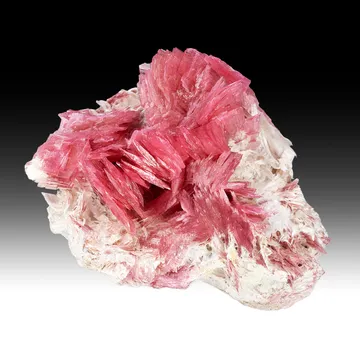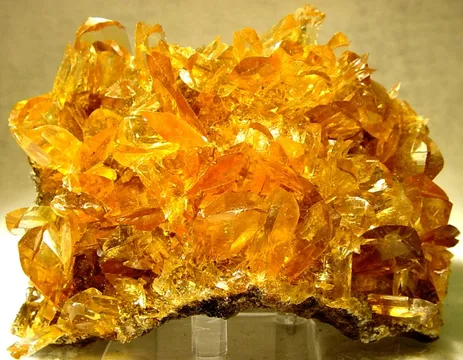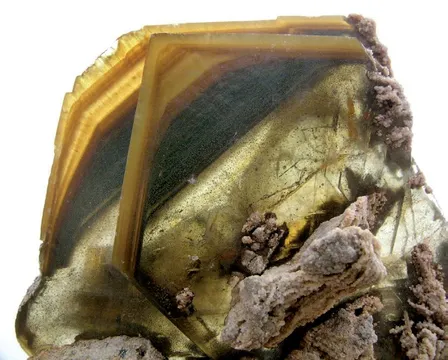
Chiurucu Mine, Peru - a premier collector locality for rose-pink rhodonite blades, often rosettes with quartz, sphalerite, and calcite in skarn deposits.
Key facts
Chiurucu is a collector locality whose reputation rests on a narrow, brilliant event: the production of some of the finest crystallized rhodonite ever to come from Peru. The classic material is generally traded under Chiurucu Mine, San Martín Mine, or Mina San Martín, Chiurucu, near Huallanca in Bolognesi Province, Ancash; older and dealer labels may also place it near Huanzalá or even in Huánuco, reflecting a long-standing label problem rather than a different look to the specimens. In mineralogical terms, the important collector occurrence is a small polymetallic zinc-lead-silver-copper system developed in carbonate rocks, with skarn-style manganese-rich gangue. The published locality notes describe it as a replacement/skarn deposit in limestones of the Santa Formation, at elevations above 4,000 m, about 20 km east of Huallanca.
The best Chiurucu rhodonites are not the familiar black-veined lapidary rhodonite of massive manganese deposits. They are loose or matrix-supported groups of flattened, tabular to bladed crystals: rose-pink to deep reddish pink, translucent at the edges, bright to glassy, and often arranged as rosettes, sheaves, “flowers,” or stepped mounds of blades. The finest miniatures and cabinet specimens combine rhodonite with black to brown sphalerite, sparkling quartz, white calcite, pyrite, and, much more rarely, sharp metallic pyrrhotite. Good examples have enough separation between blades to show crystal form, enough translucency to glow, and enough matrix contrast to keep the pink from becoming a flat monochrome mass.
Regional View
Country View
Chiurucu matters historically because its rhodonite appeared in repeated, short-lived bursts rather than as a steady mine product. Fine bladed groups were noted from the late 1980s and early 1990s, a small amount more came out in 1998, and a major 2006–2007 release briefly revived the locality for collectors. Those finds put Peruvian rhodonite into the same serious conversation as Broken Hill for attractive crystal specimens, though in a distinctly Andean style: thinner, more flowerlike blades on dark sulfide matrix rather than isolated gemmy red prisms in galena.

Photo: Wikimedia Commons
Search for specimens: View all specimens from Chiurucu Mine, Peru
Chiurucu belongs to the Andean belt of polymetallic carbonate-hosted mineralization around Huallanca and the broader Huanzalá–Pachapaqui region. The mine is described in Peruvian locality literature as a skarn-type replacement deposit in limestones of the Santa Formation. That setting explains the specimen assemblage: zinc-rich sulfide ore, chiefly sphalerite, occurs with pyrite, pyrrhotite, chalcopyrite, galena, and manganese-bearing gangue minerals including rhodonite and rhodochrosite. Quartz and calcite provide much of the open-space sparkle on specimens, while epidote, grossular, diopside, and scheelite are part of the published skarn mineralogy for the Chiurucu occurrence.
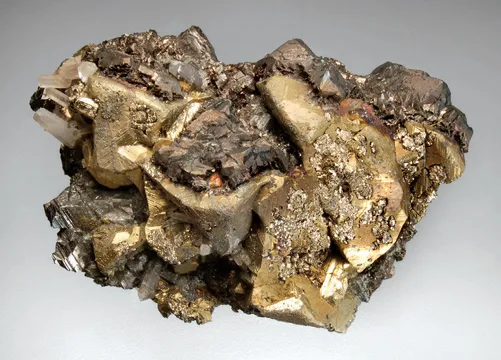
The specimen pockets that made Chiurucu famous were not broad ore stopes filled with collectible crystals. The most important rhodonite formed in veins along the contact between sphalerite ore and surrounding skarn. That contact environment produced the best visual contrast: black to brown sphalerite below, pink bladed rhodonite rising in sprays and rosettes, and later-looking quartz or calcite sprinkled over the surfaces. Pyrite is common as small bright grains or coatings; pyrrhotite, when present as sharp bronze crystals on rhodonite, is one of the most desirable accessory associations from the locality.
Mining history at Chiurucu is modest compared with neighboring giants such as Huanzalá. The occurrence was known by the mid-20th century, and it appears in collector literature as a small zinc working rather than a large modern mine. Later accounts describe the workings as abandoned or long inactive for ordinary ore production, with renewed attention focused on extracting rhodonite specimens. The name San Martín entered the collector market strongly after a mine manager reportedly told show visitors that the Chiurucu mine was then being called San Martín; as a result, older labels may read Chiurucu Mine, Chiurucu prospect, San Martín Mine, Mina San Martín, Chiuruco, Huallanca, Huanzalá, Ancash, or Huánuco.
The principal specimen episodes are now part of the locality’s identity. Deep pink bladed aggregates were first found in 1989 and became well known in the early 1990s, with collectors often singling out the 1991 pocket as one of the great Peruvian rhodonite finds. A few more specimens were recovered in 1998. The best-documented later pulse came in October 2006, when several pockets reportedly yielded roughly 400 rhodonite specimens, including about 40 large, outstanding pieces. By the Tucson 2007 season, groups of delicate rosette-shaped rhodonite, mostly thumbnail to miniature size but with some larger cabinet pieces, had entered the international market.
Collecting access today should be treated as closed unless one has explicit permission from the landowner and mineral-rights holder. The workings are high, remote, and hazardous, and the specimen market is supplied mainly by old finds, dealer inventories, and recycled private collections. The most reliable locality information for a specimen is usually not a single modern label but a chain of evidence: acquisition date, dealer history, matrix style, associations, and whether the piece matches the known 1989–1991, 1998, or 2006–2007 rhodonite habits.
Chiurucu rhodonite is treasured for sharp, flattened tabular to bladed crystals in vivid rose-pink to reddish pink aggregates, commonly as radial sprays, rosettes, sheaves, and mound-like groups on dark sphalerite-rich matrix. Individual crystals on good miniatures are commonly around 5–20 mm, with published and dealer examples showing main blades near 1 cm and exceptional blades exceeding 2 cm; larger cabinet plates can reach well over 10 cm overall. The best pieces show translucency along thin crystal edges, high luster, clean definition between blades, and attractive associations with quartz, calcite, pyrite, sphalerite, and rarely bronze pyrrhotite. Ordinary pieces are flatter, more massive, bruised on exposed blade edges, or so tightly intergrown that the specimen reads as pink crust rather than crystallized rhodonite.
Other documented minerals from Chiurucu and the San Martín/Chiurucu occurrence include sphalerite, pyrite, pyrrhotite, galena, chalcopyrite, alabandite, quartz, calcite, manganese-bearing calcite, and rhodochrosite; broader published skarn descriptions also cite scheelite, epidote, grossular, and diopside in the Chiurucu mineralization. No valid type-locality mineral species is documented from Chiurucu, but the locality is significant for the rarity of attractive crystallized rhodonite itself, especially in combination with sulfide matrix and quartz or calcite rather than as massive lapidary material.
Chiurucu’s main authenticity problem is not synthetic or treated rhodonite; it is locality identity. Serious collectors should expect labels to be messy. “Chiurucu Mine, Dos de Mayo, Huánuco,” “Chiurucu prospect,” “San Martín Mine,” “Mina San Martín,” “Chiuruco,” “near Huanzalá,” and “Huallanca, Ancash” have all appeared in the specimen trade. Some of this reflects older Peruvian geography and show labels; some reflects genuine confusion between similarly named places and nearby mining districts. The safest catalog entry for most modern crystallized rhodonite specimens is San Martín Mine, Chiurucu, Huallanca District, Bolognesi Province, Ancash, Peru, with a note preserving any older label exactly as received.
There is no well-established tradition of dyed, irradiated, or assembled Chiurucu rhodonite in the serious specimen literature, but the habit makes repairs and trimming worth checking. Rosette clusters detach easily from sulfide matrix, thin blades are vulnerable to edge bruising, and many specimens show small contacts along exposed rims. Large “solid rhodonite” groups should be inspected for repaired breaks between blade clusters; matrix specimens should be checked where pink crystal groups meet sphalerite, pyrite, or calcite. Minor edge contacts are common and often acceptable, but sharp, unrepaired blade terminations and undamaged rose-like aggregates command a strong premium.
The color of Chiurucu rhodonite is also lighting-sensitive. Thin crystals can shift from pale rose to saturated raspberry depending on daylight, LED, fluorescent, halogen, or incandescent illumination, and heavily saturated photographs may exaggerate the red. Buy by form and luster as much as by color. Calcite on some specimens may fluoresce strongly under longwave and shortwave ultraviolet light; rhodonite itself is not the fluorescent attraction here. If pyrrhotite is present, keep the specimen dry and stable, as pyrrhotite can oxidize in poor storage conditions.
On the market, Chiurucu is no longer a “find” locality but a classic recycling locality. Miniatures and thumbnails still appear from old stocks and collections, and occasional fine cabinet pieces surface at auctions or specialist dealer updates. The best examples from the early 1990s and 2006–2007 pockets are increasingly treated as world-class rhodonite specimens rather than merely Peruvian locality pieces, and prices rise steeply for size, depth of color, translucency, undamaged blades, matrix contrast, and rare pyrrhotite association.
The most memorable Chiurucu episode unfolded not underground but in a Tucson hotel room. When Luis Burillo opened his room at the InnSuites during the 2007 Tucson show season, one showcase reportedly held about 100 pieces from a new rhodonite find. The effect was immediate: a case glowing rose-pink with delicate Peruvian crystal groups from a little zinc working that many collectors had already mentally filed under “finished.”
A mine manager who had come to Tucson with Burillo added a detail that has caused label debates ever since: the old Chiurucu mine, he said, was now called the San Martín mine. That one conversation helps explain why today’s labels look so inconsistent. A specimen acquired as Chiurucu in the 1990s may be the same collector occurrence as a specimen sold as San Martín, Chiuruco, Huallanca, Ancash after 2007. For an ordinary locality this might be a nuisance; for a world-class rhodonite occurrence it became part of the lore.
The 2006 pocket story is unusually concrete. Several pockets, opened in October 2006, lay in veins along the contact between sphalerite ore and surrounding skarn. They yielded roughly 400 rhodonite specimens, but only about 40 were described as large and superlative. The smaller pieces were mostly loose, delicate rosettes, the sort of thumbnail to miniature aggregates that looked like “roses freshly plucked from their stems.” The finest specimens showed wide, flat, transparent pink to red rhodonite blades rising from matrix, and a very few carried thin, sharp, metallic-bronze pyrrhotite crystals perched on the pink crystal sprays.
Collectors had seen hints before. Deep pink bladed groups were known from 1989, including material that helped put Chiurucu on the cover and in the pages of mineral magazines around 1990. A few more specimens appeared in 1998, but neither episode supplied the market for long. That is why the 2006–2007 release felt so dramatic: it briefly reopened a locality many people thought had already had its say.