A collector's guide to Cambokeels Mine, UK: its geology, mining history and notable minerals, illustrated with the 168 specimens documented from this locality on EarthWonders.
Key facts
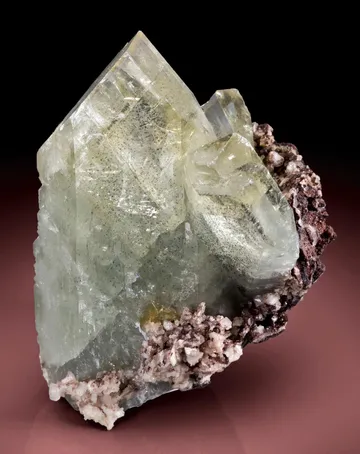
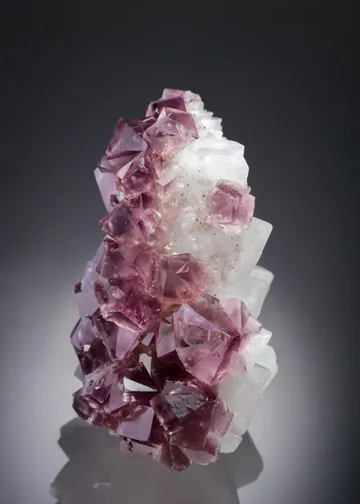
Cambokeels is one of the classic late twentieth-century Weardale specimen mines: a fluorite producer on the Slitt Vein, set between Eastgate and Westgate on the north bank of the River Wear, where commercial fluorspar mining opened pockets that now define the locality for collectors. It belongs to the fluorite-rich inner zone of the Northern Pennine Orefield, a carbonate-hosted vein-and-flat system in which mineralising brines moved through faulted Carboniferous limestones and the Whin Sill, depositing fluorite, quartz, calcite and sulphides in open cavities, replacement flats and vein shoots. The best Cambokeels specimens have a cool, lucid look: lavender to purple or aqua-blue fluorite twins, often on white quartz or calcite, with glittering pyrite dustings and, on some pieces, grey-green chlorite or chamosite coatings that give them a darker, more complex surface than the bright green Rogerley-style Weardale fluorites.
Regional View
Country View
Cambokeels matters because it records several chapters of Weardale mineralisation in one mine. The upper horse-level workings produced pastel fluorite beds; the decline driven in the modern fluorspar period reached fresh ground on the Slitt Vein and exposed the specimen-rich zinc flats; the deeper levels entered a different, sulphide-rich world with notable pyrrhotite; and the 320-level workings in the Whin Sill yielded analcime, fluorapophyllite-(K), chabazite and pectolite on dolerite joint surfaces. For a collector, that breadth is the attraction: a Cambokeels label can belong to a cabinet fluorite, a quartz-fluorite association, a calcite-rich combination, a British pyrrhotite, or a scientific Whin Sill silicate specimen.

Photo: John Gibson / Wikimedia Commons
Search for specimens: View all specimens from Cambokeels Mine, UK
Cambokeels Mine lies on the Slitt Vein, one of the great structures of the Northern Pennines, roughly halfway between Eastgate and Westgate in Weardale. The mine is recorded under several older names, including Cammock Eals, Cammock Isle and Cumnock Isle, while local usage shortened it to “Cambo.” The principal adit is on the north bank of the River Wear below the A689, and the mine site occupies ground close to an abandoned medieval settlement and the former mineral-railway landscape of Weardale.
Geologically, Cambokeels sits in the central fluorite zone of the Northern Pennine Orefield. The regional sequence is a cyclothemic Carboniferous succession of limestones, sandstones, mudstones and thin coals over older basement rocks intruded by concealed Caledonian granites. At Cambokeels, the Slitt Vein cuts through carbonate strata and the Whin Sill, the late Carboniferous quartz dolerite intrusion that is so important to both the local structure and the unusual silicate mineralogy. The main ore setting is the classic Northern Pennine vein-and-flat arrangement: steep vein fissures acted as fluid pathways, while favourable limestone horizons and adjacent permeable or reactive rocks hosted replacement-style “flats.” In the broad genetic sense, the deposit belongs with Mississippi Valley-type fluorite-lead-zinc mineralisation, but Cambokeels is best understood in its Weardale context: fluorite-dominant, quartz- and calcite-rich, locally sulphidic, and intimately tied to the Slitt Vein’s permeability.
The ore history began with disappointment. The Beaumont Company drove a level from the River Wear bank below the Scar Limestone in the later nineteenth century, seeking lead on a large vein that proved poor in galena. Parkburn Level was then driven from Park Burn; after roughly 920 metres of advance, that venture also failed to justify continued lead mining. Fluorspar altered the economics. W. Hird & Co. reopened the ground in the early twentieth century, opencasting the vein at Heights Pasture and later returning to underground work. J. Coulthard worked Cambokeels for fluorspar from 1906 to 1909; W. Hird & Co. worked it after Parkburn Level until 1927; A. Dalton reopened Cambokeels Level in the 1930s and worked a stope west of Fleming’s Shaft before abandonment in 1939.
The post-war period produced a more substantial phase of fluorspar mining. Anglo-Austral Mines Ltd, a subsidiary of the Imperial Smelting Corporation, reopened Cambokeels in 1948 and worked it until 1960, extracting fluorspar along with lead ore and a smaller amount of zinc concentrate from workings above the horse level between Park Burn and Fleming’s Shaft. The most important modern specimen chapter began in February 1969, when Malcolm Brown and Madison acquired the mine and drove a new incline below the old horse level. This work reached high-grade fluorspar ore from the 40-metre level downward. Swiss Aluminium UK later established levels at 200 metres in the Tynebottom Limestone and 240 metres in the Whin Sill and Jew Limestone. Weardale Minerals Ltd acquired the mine in 1982, and the Minworth Group subsequently carried operations down through 280 and 320 metres, reaching the 340 level before closure in 1989.
For collectors, the key specimen-producing ground was the modern decline system, especially the zinc flats around the 325 level. These flats yielded the best-known Cambokeels fluorite: clear to turquoise groups with colour zoning and high lustre, often carrying pyrite, quartz or calcite. The abundance of cavities that delighted specimen collectors was a mining nuisance, and the zinc flats were difficult to work. The deeper workings added pyrrhotite-bearing quartz-sulphide material and an unusual Whin Sill suite, particularly in the 320-level engine or winch chamber and adjacent haulage-way exposures where closely jointed dolerite was lined with analcime and fluorapophyllite-(K).
Collecting access today should be approached conservatively. The mine is disused, on private land, and the underground workings are not an accessible collecting venue. The decline is flooded to the surface, the old Beaumont Horse Level has collapsed near the entrance, and entrances in Weardale mines have commonly been grilled or intentionally made inaccessible to prevent dangerous entry into complex old workings. Mine water now drains from the flooded workings and has been the subject of official pollution investigations because of cadmium, zinc and iron entering the River Wear system. Modern Cambokeels specimens therefore come overwhelmingly from old mine output, retained stock, estate collections, dealer inventories and auction circulation rather than fresh legal underground collecting.

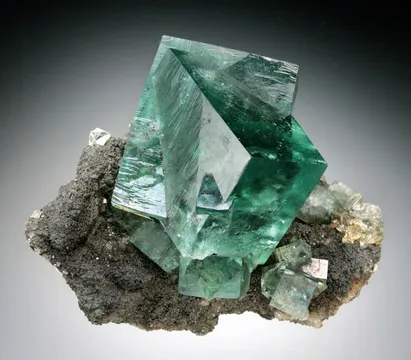
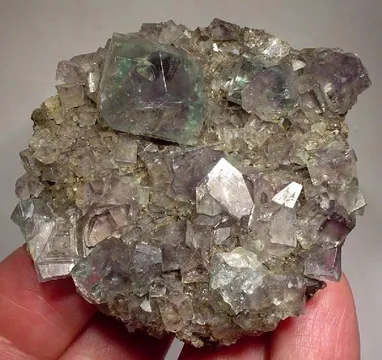
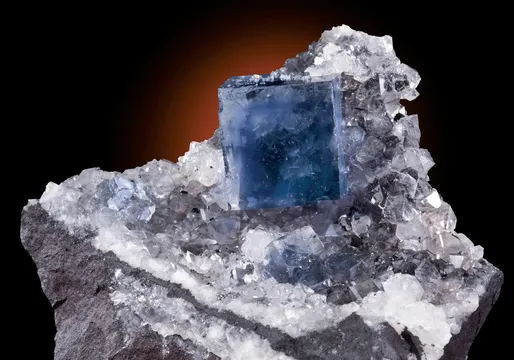
Cambokeels fluorite is principally cubic and very often twinned, with the locality’s best pieces showing pale lavender, lilac, purple, aqua-blue, turquoise-zoned or pink to deep pink transparent crystals on quartz or calcite. The 325 zinc flats are especially important for clear to turquoise, colour-zoned, lustrous groups, commonly dusted with pyrite or partly coated by sparkling quartz or calcite; the 200-metre level in the Tynebottom Limestone is represented by lavender-pink penetration twins to about 2.5 cm on edge with calcite and pyrite; and the 340 level is noted for unusual deep pink transparent twinned cubes on quartz. Ordinary Cambokeels fluorite can be pale, contacted or massive, but good pieces have crisp undamaged cube edges, visible internal zoning, clean interpenetrant twinning, strong glassy lustre and a natural matrix that is not simply background but part of the locality’s character.
Quartz is the signature matrix and companion mineral for Cambokeels fluorite, appearing as white druse, transparent to milky crystals, small sparkling overgrowths and quartz-rich veinstone in the deeper sulphide facies of the Slitt Vein. On the best fluorite specimens it forms a bright, granular or crystalline base that sets off the lavender, aqua or pink cubes; on other pieces quartz may partly coat fluorite, producing the classic Cambokeels look of pale cubic fluorite beneath a glittering “English-style” quartz crust. In the lower levels, quartz becomes more than a matrix: it is part of the iron-sulphide assemblage, associated with pyrrhotite, pyrite, chalcopyrite and bismuthinite-bearing material, so collector-quality quartz specimens from Cambokeels are judged not only by crystal sharpness and cleanliness but by whether they preserve this association without heavy abrasion or confused locality labelling.
Calcite from Cambokeels is both an associate on fluorite and a collectible species in its own right, commonly occurring with quartz, fluorite and pyrite and, in some pieces, forming dense aggregates of glassy colourless flattened rhombs over grey-greenish-purple fluorite. The zinc flats produced attractive calcite-fluorite-pyrite combinations, and documented specimens include small-cabinet pieces with tightly intergrown translucent rhombs on fluorite that fluoresce neon orange-pink while the fluorite beneath responds purple. Better Cambokeels calcites are sharp, lustrous and compositionally interesting rather than merely bulky: look for clean rhombohedral form, minimal edge wear, attractive contrast against fluorite or quartz, and labels tying the specimen to the zinc flats or other mine levels.
Pyrite is one of the important accent minerals at Cambokeels, most familiar to collectors as fine brassy dustings or small sparkling crystals on fluorite from the zinc flats, but it also belongs to the deeper quartz-sulphide assemblage where pyrite occurs with pyrrhotite, chalcopyrite and bismuthinite-bearing veinstone. On fluorite specimens, pyrite can elevate a piece by adding a metallic stippling across pale aqua or purple crystals, especially when it is not so heavy as to obscure zoning or lustre; on chamosite-coated fluorite, the brassy specks against grey-green coating are a distinctive Cambokeels texture. The best pyrite-associated pieces therefore are judged as combinations: the pyrite should be bright, well placed and stable-looking, enhancing rather than masking the fluorite, quartz or calcite beneath.
Cambokeels pyrrhotite is one of the mine’s most distinctive British-interest species, tied to the lower Slitt Vein workings where mineralisation passed downward into quartz and iron sulphides comparable to the sulphide-rich “root” facies seen elsewhere in the Northern Pennines. Specimens are scarce in the market, and crystallised examples may show sharp brassy metallic pseudo-hexagonal crystals, commonly associated with quartz and locally with calcite, fluorite or chlorite-group material; a documented miniature of 4.6 x 4.2 x 1.1 cm from old collector stock illustrates the sort of free-standing crystallised pyrrhotite that now attracts strong competition. Good Cambokeels pyrrhotite is not expected to be large by international standards, but it should be well crystallised, metallic, locality-secure and as free as possible from oxidation, edge contacts and sulphide alteration.
Other documented Cambokeels minerals include sphalerite, chalcopyrite, galena, bismuthinite, dolomite, pectolite, fluorapophyllite-(K), analcime, chabazite and chlorite-group minerals including chamosite or berthierine-chamosite-style coatings on some fluorites. The scientific rarities are small but important: analcime crusts on Whin Sill dolerite, fluorapophyllite-(K) prisms with analcime, rare chabazite rhombohedra, pectolite coatings, and bismuthinite in early quartz-chalcopyrite veinstone. These are not showy in the way Cambokeels fluorite is showy, but they make the locality far more than a single-species Weardale fluorite mine.
Cambokeels fluorite is not especially prone to the famous daylight green fluorescence associated with Rogerley material, so do not buy a Cambokeels specimen expecting that specific effect. Many Cambokeels fluorites do fluoresce under ultraviolet light, commonly in blue to lavender-blue tones, while calcite may fluoresce orange-pink and fluorite beneath may show a purple response in combination pieces. Intensity varies, and old labels rarely quantify wavelength, so fluorescence should be treated as a bonus confirmed by direct observation, not assumed from locality alone.
The main authenticity concern is mislabelling within the broader Weardale trade. Cambokeels specimens can be confused with material from Heights, Frazer’s Hush, Boltsburn, Blackdene, Rogerley, Lady Annabella or other County Durham localities, particularly when a piece is simply labelled “Weardale” or “Durham.” A solid Cambokeels label should ideally include the mine name and, where possible, a level or find area such as 200 metre, 240 metre, 320 level, 325 zinc flats or 340 level. Older labels may use Cammock Eals, Cammock Isle or Cambo Keels; these variants are not red flags, but they should match the specimen’s habit and association.
No well-established Cambokeels-specific fake or routine treatment problem is part of the standard collector literature. The more practical risks are repaired or reassembled fluorite groups, trimmed matrix that removes context, acid-cleaned specimens with dulled fluorite or etched calcite, and sulphide alteration on pyrrhotite or pyrite-rich pieces. Fluorite corners and twin intersections are the first places to inspect under magnification. Quartz-coated pieces should be checked for broken quartz points and for hidden bruising beneath the druse. Calcite-rich pieces commonly show peripheral wear; a little edge abrasion can be tolerable on an otherwise old, well-provenanced specimen, but sharp rhombs and undamaged fluorite corners command a premium.
Availability is moderate for fluorite and much lower for the rarer associations. Old Cambokeels fluorites circulate regularly enough that a patient collector can choose among miniatures and small cabinets, but top zinc-flat twins with colour zoning, high lustre, clean quartz or calcite matrix and old labels are far scarcer. Pyrrhotite, bismuthinite-bearing material and Whin Sill zeolite-suite specimens are specialist pieces: they appear episodically from old British collections rather than as a steady supply. Because the mine is closed, flooded and not a modern specimen operation, specimen quality is fixed by what was saved during the working years.
The first good Cambokeels story is a story of failure becoming, in hindsight, collector fortune. The Beaumont Company drove into the Slitt Vein from the River Wear bank in the nineteenth century and found what miners dread: a large vein with disappointing lead values. Parkburn Level repeated the frustration. It was driven about 920 metres from Park Burn before being abandoned because the vein again failed to deliver enough lead. For a lead miner, Cambokeels was a poor promise; for a later fluorite collector, those same fissures and flats would become part of a classic Weardale specimen source.
The mine’s surface history has a strangely international wartime footnote. During the First World War, demand for limestone from Heights Quarry rose sharply, and the Cambo Keels incline was built by German prisoners of war to improve transport. It was not a minor tramroad: it ran for three-quarters of a mile, was self-acting on a steep 1 in 8 gradient, and used three tracks with a midway passing loop. At the valley floor it met the Wear Valley Railway by a triangular junction at Cambo Keels siding and crossed the River Wear on wooden trestles. For a locality now known through hand specimens in drawers, the former logistics were big, physical and noisy: wagons, incline cables, railway sidings, trestles and the steady movement of stone and spar out of the dale.
The modern collector chapter begins with a different kind of discovery. When Malcolm Brown and Madison reopened the mine in 1969 and drove a new incline below the old horse level, high-grade fluorite ore was found from the 40-metre level downward. Later workings by Swiss Aluminium UK and then Minworth pushed the mine deeper, and the levels became specimen names. The 200-metre level entered the Tynebottom Limestone; the 240-metre level worked within the Whin Sill and Jew Limestone; later work reached 280, 320 and eventually 340 metres. The collector shorthand of “zinc flats” hides the industrial struggle: those open cavities, so important for crystal growth, made drivage difficult, and the very pockets that produced showy fluorite, calcite, quartz and pyrite were also voids interrupting ore extraction.
The deepest story at Cambokeels is almost a geological reversal. A Weardale collector expects fluorite upward in the carbonate vein system, but at Cambokeels the Slitt Vein was traced downward into a quartz and iron-sulphide assemblage resembling the lower parts of the Great Sulphur Vein. That is why Cambokeels pyrrhotite carries such interest. It is not merely an odd sulphide from a fluorite mine; it is a glimpse of a hotter, deeper facies of the Northern Pennine system, the sort of mineralisation that suggests what lies below the familiar fluorite-bearing levels.
There is also a quiet post-closure image from the surface buildings. A September 1994 photograph of the mine workshops records more than corrugated sheet and gravel. The workshop had been used for vehicle and plant maintenance, with the main offices above. At that time, tools and spare parts still lay on workbenches and in cabinets, and papers including mine plans, accounts, service schedules and inventories remained on desks and shelves. Another photograph of the mine buildings records the miners’ washroom, lockers and ambulance room; in 1994 a stretcher and ransacked first-aid cabinet were still present, and overalls and safety helmets still hung in the dry. For collectors, those details are a reminder that the specimens did not emerge from an abstract locality name. They came from a working mine that closed recently enough for paperwork, helmets and spare parts to linger after the pumps stopped.