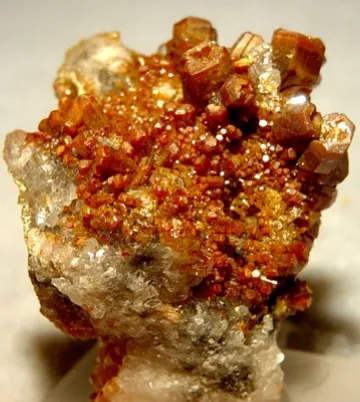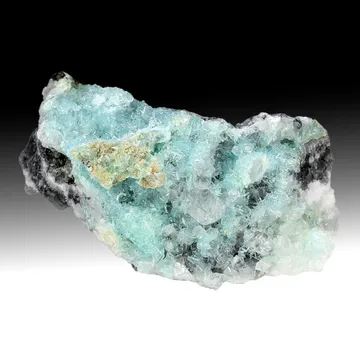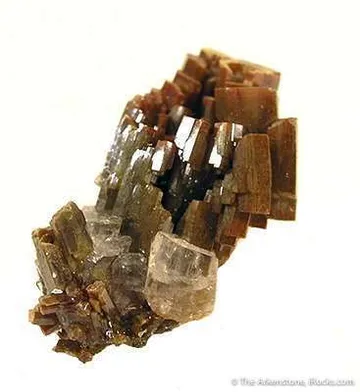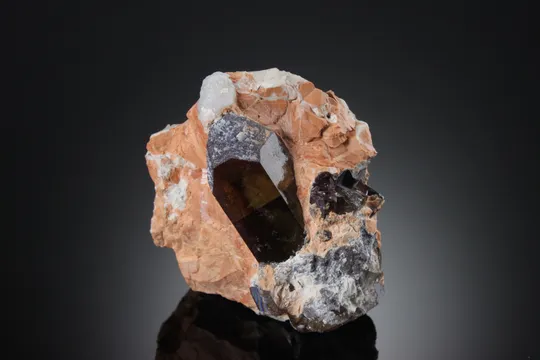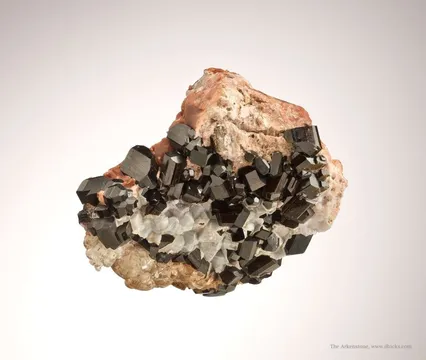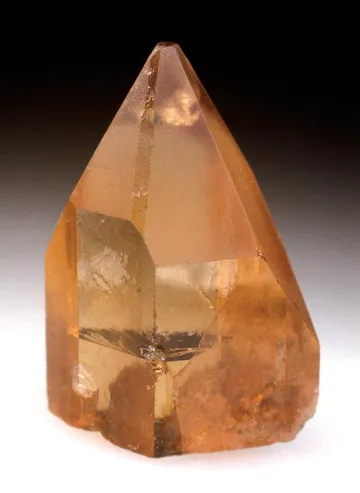
Baja California, Mexico — sulfur from the San Felipe field, plus opal and epidote; a collector-favored locality for signature Baja specimens and history.
Key facts
Baja California is not a single mine locality so much as a long, mineralized peninsula-edge province: desert faults, Mesozoic arc rocks, the Peninsular Ranges batholith, fossil hydrothermal systems, skarns, pegmatites, and young volcanic fields all crowd into a narrow strip between the Pacific and the Gulf of California. For specimen collectors, however, the state has a few unmistakable signatures. The most familiar is the San Carlos–El Apache–Verónica sulfur field south of San Felipe, where pale altered rock and sulfate-rich cavities yielded bright native sulfur in small, glassy, lemon-yellow crystals. The same acid-sulfate alteration system also produced common opal, gypsum, alunite-group minerals, kaolinite, jarosite, dickite, vermiculite, quartz, feldspars, micas, schorl, and zircon, although sulfur remains the great collectible species from that field.
Regional View
Country View
Beyond San Felipe, Baja California’s collector identity becomes more scattered but richer than its modest market presence suggests. Rodriguez Dam near Tijuana is known for uncommon Baja opal specimens, including orange fire-opal veins and matrix pieces with scattered gem opal nodules. San Quintín has supplied old, attractive epidote from skarn material, typically dark olive-green to pistachio-green, lustrous, blocky to bladed, and sometimes set with quartz. Pino Solo and related Peninsular Ranges pegmatitic occurrences add the classic California-border-suite feel: quartz, feldspar, tourmaline, titanite, epidote, garnet-group minerals, and small but historically interesting gem materials.

Photo: Wikimedia Commons

Photo: Wikimedia Commons

Photo: Wikimedia Commons
Historically, Baja California specimens often reached collections under broad or older labels: “San Felipe,” “Baja California Norte,” “Lower California,” or simply “Mexico.” That is part of the charm and part of the problem. A serious collection benefits from separating the sulfur-specimen field south of San Felipe from the opal occurrence at Rodriguez Dam, the San Quintín epidote skarn material, and the pegmatitic/gem localities of the northern ranges. Good Baja pieces have a different look from the great Mexican classics of Chihuahua, Durango, Sonora, or Baja California Sur: they are desert-born, often small, often old-label, and very much tied to the rugged geology of the northern peninsula.
Search for specimens: View all specimens from Baja California, Mexico
The most important collectible deposit in the state is the San Carlos sulfur mine area, also known in the specimen trade and field literature as El Apache, Verónica, or the San Felipe mine. It lies south of San Felipe near the Gulf coast, west of Playa Hermosa and inland from the modern Highway 5 corridor. The mineralized ground is a fossil hydrothermal and fumarolic system developed along a fault zone in country rock that includes granitic, metamorphic, volcanic, and sedimentary units. Sulfurous hydrothermal fluids rose along fractures, oxidized near the surface, and generated acidic solfataric alteration. That acid attack converted feldspathic rocks to clays, kaolinite, natroalunite, alunite, jarosite, anhydrite, gypsum, and related sulfates; silica released during alteration was redeposited as hydrothermal opal and porous opaline residue. The sulfur itself occurs in cavities, altered seams, and sulfate-rich pockets rather than as a conventional metallic ore body.
Briedis’ geological work on the Apache mines described the deposits as near-surface hydrothermal wall-rock alteration formed by now-extinct fumaroles. Block faults were the plumbing. Rising sulfurous solutions deposited native sulfur and generated sulfuric acid; the downward percolating acid enlarged cavities and drove progressive alteration from expandable clays to kaolinite, natroalunite, anhydrite, and gypsum. The study found pyrite at depth but did not support the idea of an important base-metal sulfide deposit below the sulfur field. For collectors, that conclusion is almost poetic: the “ore” of real consequence here has been the sulfur crystal specimen.
Mining at San Carlos/El Apache began in the early twentieth century, with claims worked through the 1950s. The broader San Felipe sulfur workings are described as having had significant production from about 1951 to around 1960, mainly for agricultural fertilizer, with remains of an ore crusher, concrete footings, warehouse foundations, open pits, and an old landing strip still forming part of the field setting. Another Baja sulfur center, the Cucapá-area mine south of Mexicali—known historically under names including La Rafaela, El Éxito, and Promontorio—was commercially important but is not known as a source of collector-quality sulfur crystals comparable to San Carlos.
Specimen collecting at San Carlos became visible by the early 1960s. In the 1970s the site was already a recognized destination for collectors and dealers, and in the 1980s the Verónica claim was worked for specimens by mineral dealer John Whitmore. Later work in the 1990s by collectors and dealers including Mark Kielbaso and Mike New brought out many of the distinctive “lemon drop” hoppered crystals that define the locality in collections today. Fine San Carlos sulfur is not usually large by world standards, but the best pieces show sharp to skeletal, lustrous, transparent to translucent yellow crystals perched attractively on white to tan sulfate-opal matrix.
The ore bodies and pockets at San Carlos are best understood as discontinuous, fault-controlled zones of altered, cavity-rich material rather than persistent veins. Productive pockets yielded sulfur as isolated crystals, druses, groups, and skeletal or hoppered forms. Many specimens are small thumbnails and miniatures; cabinet pieces exist, but strong crystals on aesthetically contrasting matrix are much scarcer than broken yellow massive sulfur or ordinary coated fragments. The nearby Delicias workings produced sulfur specimens visually similar to San Carlos material, which is one reason older labels can be difficult to resolve.
Rodriguez Dam near Tijuana represents a different opal story. It is not a sulfur-specimen mine but a dam-site locality whose best preserved specimens show orange transparent fire opal in vein material or nodules of gem opal in matrix. Old collection pieces may be only a few centimeters across, but they are uncommon on the market and easily confused in broad labeling with better-known Mexican opal from central Mexico. Baja opal from Rodriguez Dam should be kept distinct from Querétaro, Jalisco, San Luis Potosí, or other Mexican opal districts.
Epidote from Baja California is most strongly associated in the specimen trade with San Quintín skarn material and, in older broad labels, with unspecified “Baja California Norte.” The San Quintín skarn occurrence is placed inland from San Quintín in canyon country where epidote, quartz, amphibole/byssolite, and garnet-group minerals fit a contact-metamorphic skarn assemblage. Specimens collected decades ago include matrix plates with lustrous green epidote crystals, blocky terminated crystals to around a centimeter in some old dealer examples, and quartz-epidote associations. Guadalupe Island has also been cited for epidote vugs discovered in the 1960s, though some old material attributed to Guadalupe has been questioned and may in some cases belong to another Baja island locality, especially Cedros Island.
The largest modern economic mineral story in the state is El Arco, a porphyry copper-gold deposit near the center of the peninsula close to the Baja California–Baja California Sur boundary. It is not a classic specimen mine, but it matters geologically. El Arco records Jurassic porphyry copper mineralization in an oceanic-arc setting later affected by Cretaceous Peninsular Ranges batholith metamorphism. Its mineral list includes chalcopyrite, bornite, chalcocite, covellite, digenite, molybdenite, magnetite, pyrite, native copper, native gold, malachite, azurite, chrysocolla, dioptase, calcite, quartz, epidote, and alteration minerals. For collectors, the point is not a steady supply of show specimens but the way El Arco anchors Baja California within a much older and more complex metallogenic framework than its small sulfur and opal specimens might suggest.
Collecting access today must be treated conservatively. The San Felipe sulfur workings are abandoned, remote desert mines with old open pits, unstable cuts, soft altered rock, heat, and vehicle-access issues. The old Puertecitos-road area is crossed by off-road routes and has been intersected by the Baja 1000 course; this makes it visible but does not make it casual. Any visit requires permission from land and mineral-right holders where applicable, capable off-road travel, awareness of mine hazards, and respect for Mexican regulations and local communities. Rodriguez Dam, active infrastructure zones near Tijuana, protected areas, islands, and company exploration projects are not casual collecting grounds.
Native sulfur is the signature specimen mineral of Baja California, especially from the San Carlos–El Apache–Verónica field south of San Felipe and the nearby Delicias workings. The best crystals are bright lemon-yellow to greenish yellow, transparent to translucent, lustrous, and commonly show skeletal or hoppered growth; individual crystals are typically small, with the finest Mexican examples reported at over 1 cm, while many market pieces show crystals in the 5–10 mm range on white, tan, or opaline sulfate-rich matrix. Sulfur occurs with gypsum, anhydrite, alunite-group minerals, jarosite, kaolinite, dickite, opal, clays, quartz, feldspar, mica, schorl, vermiculite, and zircon in a fossil acid-sulfate hydrothermal system. Good pieces here are not just yellow crusts: they have distinct, glassy, undamaged crystals, open space around the crystals, clean contrast against pale matrix, and preferably an old label tying the specimen to San Carlos, El Apache, Verónica, San Felipe, or Delicias.
Baja California opal occurs in two collector-relevant contexts: hydrothermal common opal in the San Carlos sulfur system and rarer gem or fire opal from Rodriguez Dam near Tijuana. At San Carlos, opal is part of the acid-sulfate alteration assemblage, forming clear to milky, botryoidal, coating, or cavity-filling material with sulfur, gypsum, clays, alunite-group minerals, and other secondary products; it can make sulfur specimens more attractive when it gives a glassy coating or pale matrix contrast. Rodriguez Dam material is more gem-oriented, known from small specimens with orange transparent fire opal veins or nodules with flashes of red, green, and blue in matrix; documented examples include pieces only a few centimeters across, but their rarity as Baja rather than central Mexican opal gives them special appeal. The best Baja opal specimens are those whose locality is unambiguous, whose opal is stable and not crazed, and whose color or play-of-color is visible without needing lapidary treatment.
Epidote from Baja California is most admired from San Quintín skarn material and from older broadly labeled “Baja California Norte” specimens. San Quintín pieces are typically dark olive-green to pistachio-green, lustrous, blocky to bladed, and associated with quartz, amphibole/byssolite, and garnet-group skarn minerals; documented old-dealer material includes cabinet matrix specimens with thick blocky crystals around 1 cm, while older broad Baja plates are known with dense coverings of lustrous crystals to several millimeters. Some island-attributed epidote, especially material labeled Guadalupe Island, has a less settled locality history, with reports of vugs discovered in the 1960s and later questions about whether some specimens may instead have come from Cedros Island. Better Baja epidote has sharp terminations, good luster, fresh green color, limited bruising on the exposed crystal tips, and ideally a label specific enough to separate San Quintín skarn material from broad-state or uncertain island material.
Other documented Baja California minerals broaden the state well beyond the three featured species. The San Carlos sulfur field also records alum-(K), alunite, anhydrite, bassanite, dickite, dietrichite, gypsum, hematite, illite, jarosite, kaolinite, microcline, muscovite, natroalunite, orthoclase, plagioclase, quartz, schorl, smectite-group minerals, vermiculite, and zircon. El Arco adds a porphyry-copper suite including chalcopyrite, bornite, chalcocite, covellite, digenite, molybdenite, pyrite, magnetite, native copper, native gold, azurite, malachite, chrysocolla, dioptase, calcite, galena, sphalerite, and epidote. Pino Solo and related pegmatitic or skarn-gem occurrences in the Peninsular Ranges have been associated with quartz, tourmaline, titanite, epidote, garnet-group minerals, prehnite, scheelite, and other gem materials. Within present-day Baja California, the collector record is stronger for classic small localities and rarities than for type-locality species; the famous boleite-group type-locality story belongs to the Boleo district of Baja California Sur and should not be merged carelessly with Baja California state specimens.
Baja California sulfur is locality-sensitive. Many older specimens are labeled only “San Felipe,” “Baja California Norte,” or “Mexico,” but the crystallized collector sulfur is best attributed more narrowly to the San Carlos/El Apache/Verónica area or to nearby Delicias when supporting labels, collection history, or matrix style allow it. Conversely, “San Felipe” as a town label is often imprecise and may simply reflect the nearest recognizable place name used by dealers.
Condition is the central issue with San Carlos sulfur. The crystals are brittle, soft, and easily bruised; sharp hoppered edges and glassy faces are much scarcer than broken or abraded yellow clusters. Heat and rapid temperature change are real concerns for sulfur, and Baja pieces should not be placed in direct sun, hot display cases, vehicle dashboards, or near strong lights. Avoid water cleaning, ultrasonic cleaning, solvents, and any mechanical brushing. Dust is best removed with a very gentle air bulb or left alone.
Opal from Rodriguez Dam and San Carlos should be inspected for crazing, dehydration cracks, glue, oiling, or resin enhancement, especially if represented as gem material. Rodriguez Dam opal is uncommon enough that broad labels such as “Mexican fire opal” should be viewed skeptically unless the locality is supported by provenance. Baja opal is not the default assumption for attractive orange Mexican opal; most Mexican fire opal on the market comes from other states.
Epidote from Baja California is often old material and may be labeled broadly. San Quintín attribution is desirable when supported by an old dealer label, collection card, or known provenance. The crystals can look nearly black in poor light, so fine pieces should be judged under strong neutral lighting for true olive-green transparency or translucency at the edges. Watch for edge wear on dense plates and for repaired matrix cracks in older cabinet specimens.
Documented fakes specific to Baja California sulfur, opal, or epidote are not a major theme in the published record, but mislabeling is common enough to matter. The most frequent problems are overbroad Baja labels, confusion between Baja California and Baja California Sur, and Mexican opal labels that omit the actual state or district. For high-grade pieces, old labels, collection history, and locality-specific matrix are often more valuable than a dramatic but unsupported claim.
Market availability varies sharply by species. San Carlos sulfur remains obtainable and was historically sold in quantity, but top miniatures with crisp, complete, lustrous hoppered crystals are much less common than ordinary yellow matrix pieces. Rodriguez Dam opal is genuinely scarce as a locality specimen. Baja epidote appears intermittently, often as old-stock material from collections rather than as regular new production.
In the early specimen era, San Carlos sulfur seems to have entered the collecting world with exactly the kind of humble drama that turns a locality into a classic. By the early 1960s, bright Baja sulfur was already appearing in rock shops, where bins of inexpensive yellow specimens caught the eyes of beginning collectors. They were not Sicilian giants, and no serious collector mistook them for Agrigento or Cianciana sulfur, but the best Baja crystals had their own charm: clean, lustrous, lemon-yellow forms perched on pale desert matrix. Decades later, the locality still had not been exhausted. That continuity—cheap childhood specimens on one end, serious “lemon drop” hoppered crystals on the other—is central to the San Carlos story.
The field itself has the look of an abandoned desert industrial fossil. The sulfur ground stretched for roughly a kilometer along the old road system south of San Felipe, with pits on both sides of the road and workings in a ravine. To the west stood the crusher area against a hill; at the south end of the valley were the mine operation building and warehouse, now reduced to concrete footings. Past the warehouse site lay a flat landing strip for small aircraft. Before the south road was opened in 1956, the road from San Felipe ended at the mine area, making the sulfur works a kind of terminus in the gulf-side desert.
Collectors and Baja travelers have kept a lively oral map of the place. The same mine appears under different names—San Carlos, El Apache, Verónica, San Felipe—and the surrounding washes and tracks have their own off-road vocabulary. One Baja traveler recalled that in the early 1960s people simply called it the sulfur mine because yellow sulfur was scattered so plainly around the diggings. Another remembered finding the Parral/Azufre route in 1978 by following faint parallel lines of grass in old tire tracks after rain, moving rocks by hand so a low 4WD Subaru could keep going. In that kind of landscape, “locality” is not just a coordinate; it is a road memory.
The older gem-prospecting literature gives Baja California a different texture. In a 1906 account reprinted by Pala International, Elliott Flower traveled with Eduardo Roderiquez from a cabin above 5,000 feet to the Jasay mines. Flower picked up a reddish stone and asked what it was. “Hyacinth,” Roderiquez answered. When Flower asked its value, the reply was brutal: “Nothing. Air bubbles in it.” The next hyacinth was too fractured, and a colored stone after that was dismissed as tourmaline. Roderiquez said he had picked up half a ton of such tourmalines on one slope and had not yet found one fit for the market. It is a wonderfully Baja story: abundance underfoot, promise everywhere, perfection almost nowhere.
That same 1906 narrative also captures how Baja mineral rumors fed themselves. The mountains were said to hold zircon, jargoon, beryl, garnet, turquoise, jasper, epidote, rose quartz, and even whispered “blue clay” compared to South African diamond ground. A prospector’s line—“We’ll find diamonds here yet”—belongs to the age of overconfident frontier geology, but it also explains why Baja specimens can carry such romantic old labels. They came from a place that American and Mexican prospectors alike treated as unfinished business: difficult roads, broken gems, scattered metallic deposits, and always another ridge that might finally produce a clean stone.