A collector's guide to Xia Yang Mine, China: its geology, mining history and notable minerals, illustrated with the 39 specimens documented from this locality on EarthWonders.
Key facts
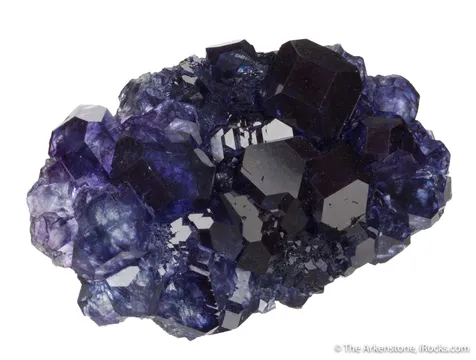
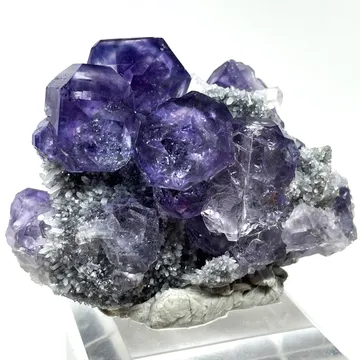
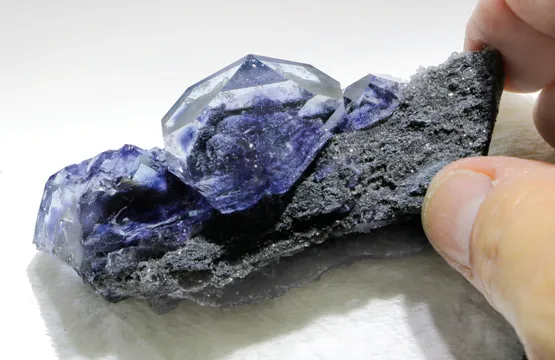
Xia Yang Mine matters to collectors as much for its labels as for its crystals. In the international specimen trade, “Xia Yang” has become the familiar name attached to vivid Fujian fluorites: modified cubes and cuboctahedrons, often dodecahedrally beveled, colored blue, violet, purple, teal, or blue-green, commonly perched on sparkling quartz and sometimes accented by white or colorless calcite. The mine locality itself is recorded at Xia Yang city, Yongchun County, Quanzhou, Fujian, in southeastern China, an active mine whose recorded commodity is lime/cement rather than a classic metallic ore. Mineralogically, the collector suite is compact but distinctive: fluorite, quartz, and calcite in open-space cavity growth, the finest pieces showing gemmy interiors, strong luster, geometric stepped faces, phantoms, and a memorable color response under different lighting.
Regional View
Country View
The locality sits in the Yongchun–Dehua part of inland Fujian, close to Xiayang town and not far from Haixia Limestone Mine at Meihu Town, Dehua County. That distinction has become important: current locality work by Mindat contributors records that a Chinese geologist, in July 2024, identified the famous “tanzanite fluorites” long sold as Xia Yang material as coming instead from the Haixia Limestone Mine area. For collectors, this does not make the specimens less desirable, but it does make old labels worth reading carefully. “Xia Yang,” “Xiayang,” “Yongchun,” “Keng Zi Kou,” and “Haixia Limestone Mine” have all circulated around closely related Fujian fluorite material, and the best modern cataloging should preserve the dealer label while noting the current locality correction when appropriate.
The look is unmistakable when the specimen is a good one. A top Xia Yang-style fluorite is not merely purple fluorite on quartz; it is architectural. Crystal faces may be stepped, frosted by microgrowth, beveled into dodecahedral edges, or broken into pixel-like geometric relief. Some pieces shift visually from blue to violet depending on LED, daylight, incandescent light, or backlighting. Others show pale green to teal rims, darker blue cores, purple phantoms, and quartz protruding through or around the fluorite. The calcites from the same collecting episode are a quieter but very collectible counterpart: transparent to translucent, columnar to pseudo-hexagonal, often on drusy quartz, and known from a 2020/2021 winter find that quickly drew attention among European dealers and online show reports.
Search for specimens: View all specimens from Xia Yang Mine, China
The Xia Yang Mine locality is recorded as an active mine at Xia Yang city, Yongchun County, Quanzhou, Fujian, with coordinates close to 25° 29' 32" N, 117° 59' 53" E. Mindat’s current entry records lime/cement as the commodity and lists only three valid minerals for the mine: calcite, fluorite, and quartz. That is a useful reality check. Unlike the great Chinese polymetallic specimen mines whose mineral lists run for pages, Xia Yang’s collector identity rests on a small carbonate-hosted assemblage, most likely recovered from open cavities, veins, and dissolution spaces associated with limestone mining rather than from a large named fluorite orebody marketed as such.
The broader geological setting is southeastern China’s fluorine-rich Mesozoic metallogenic province, where magmatic-hydrothermal and mesothermal to epithermal fluorite deposits are widespread in provinces including Fujian, Zhejiang, Jiangxi, Hunan, Henan, and Inner Mongolia. Regional studies of Chinese fluorite deposits separate many occurrences into magmatic-hydrothermal and meso-epithermal groups, and Fujian examples commonly involve fluorine-bearing fluids moving through faults, fractures, carbonate strata, or intrusive contact environments. Near Yongchun and Dehua, recent Chinese geological literature has also described fluorine-rich hydrothermal systems interacting with Permian carbonate rocks in skarn-related rare-metal settings. For the collector, the practical expression of this setting is simple: calcium-rich host rocks, silica, carbonate, and fluorine-bearing fluids created cavities where fluorite, quartz, and calcite could crystallize with unusually attractive open-space habits.
The mine’s specimen history is short but vivid. Dealer and publication records place the important fluorite finds in the late 2010s, especially the April 2017 pocket reported for the Keng Zi Kou/Xiayang-area material. Those fluorites entered the market as a new Fujian style: blue-violet to purple, gemmy to translucent, and strongly modified from simple cubes into cuboctahedrons, dodecahedral-looking forms, and stepped modified cubes. By 2018 they were already appearing in high-end dealer inventories, and by the early 2020s Xia Yang-labeled fluorites were regular enough in auctions, retail stock, and collector posts to become a recognized modern Chinese fluorite type.
The ore bodies, as far as specimen evidence reveals them, were not collector-mined vugs in the romantic old sense but working-mining cavities encountered in an industrial carbonate operation. The current Mindat note that ties the famous “tanzanite” material to Haixia Limestone Mine says the source is an underground mine operated by the Haixia cement company and that the mountain beneath has been extensively worked. This helps explain why specimens arrived in batches rather than through long-term legal collecting: pockets were encountered during mining, trimmed, passed into dealer channels, and then dispersed internationally. The official Xia Yang Mine page itself remains active as of its last 2024 check, but collecting access should be regarded as industrial and permission-only. It is not a casual field-collecting destination.
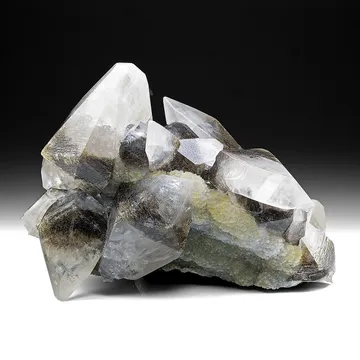
The best-known find remains the 2017 fluorite pocket, whose pieces were praised for their gem-like blue-to-purple color response and sharp modified habits. A second major collecting thread is the winter 2020/2021 calcite find: transparent, columnar to pseudo-hexagonal calcite clusters, commonly bright and glassy, on crystallized quartz. These calcites were promoted by French dealers and noticed in the 2021 Tucson Virtual Show coverage as a fresh Xia Yang Mine discovery. Compared with the fluorites, the calcites are less iconic but surprisingly distinctive: many show a forest or “hedgehog” arrangement of upright crystals, some clear and some opaque on the same specimen, and their matrix of quartz ties them directly back to the fluorite-bearing cavity system.
Fluorite is the mineral that made the Xia Yang name circulate internationally, and the best specimens are blue-violet to purple modified crystals on quartz or calcite matrix, ranging from thumbnails and miniatures to cabinet plates exceeding 20 cm in major auction records. Habits include sharp modified cubes, cuboctahedral crystals, crystals with dodecahedral bevels, and dodecahedron-like forms; many show stepped, geometric, or etched face textures, while the most coveted pieces combine transparency, bright luster, saturated “tanzanite” color, and backlit violet or blue-green zoning. Dealer descriptions document pieces with purple phantoms, teal to light-blue crystals, green edge zoning, “QR Code” pixelated faces, and fluorite growing over or among protruding quartz, while auction records emphasize glassy modified purple-to-violet cubes, odd blue-green octahedral examples, and bright blue fluorescence under UV on at least some specimens. Ordinary examples can be attractive but flat; the better pieces have crisp form, intact crystal edges, depth of color under transmitted light, and enough quartz or calcite matrix to give the cluster scale and contrast.
Quartz from Xia Yang is chiefly a matrix and textural mineral rather than the headline species, but it is essential to the locality’s best aesthetics: small, sparkling, colorless to translucent crystals form the bed on which the fluorite sits, penetrate around fluorite protrusions, and in some pieces create a drusy, sugar-like surface under blue, teal, or violet fluorite. Mindat photo-association data ties Xia Yang quartz very strongly to fluorite and secondarily to calcite, matching the specimens seen in the market: quartz-covered matrix with modified fluorite cubes, quartz druse between fluorite crystals, or crystallized quartz carrying columnar calcite. Good Xia Yang quartz specimens are therefore judged less by the individual quartz crystals than by their role in the composition—clean, bright, undamaged quartz that sparkles without overwhelming the fluorite or provides a sharp, fresh base for transparent calcite is far more desirable than dull or iron-stained matrix with scattered fluorite.
Calcite at Xia Yang appears in two collector-important modes: as a white to colorless contrasting associate with fluorite, and as the principal mineral in the winter 2020/2021 transparent columnar-calcite find. Fluorite-calcite pieces include white calcite matrix under purple-zoned, beveled fluorite cubes, and at least one dealer-described specimen of a lustrous calcite crystal perched on violet fluorite with clear “windows” and UV fluorescence. The stand-alone calcites are transparent to translucent, bright, columnar, and pseudo-hexagonal with flat pinacoid-like terminations; dealer records describe clusters around 7 to 8.5 cm across, some with roughly two-thirds clear crystals and the remainder more opaque, forming dense hedgehog-like sprays on crystallized quartz or, in one Rosell specimen, colorless transparent hexagonal calcite prisms on goethite matrix. The finest calcites are clean, upright, glassy, and undamaged, with a lively contrast between clear and opaque crystals rather than a monotonous, crowded cluster.
No type-locality minerals are documented from Xia Yang Mine in the current public mineralogical record, and the verified species list for the mine remains limited to fluorite, quartz, and calcite. That restraint is useful: labels adding exotic accessory species should be treated cautiously unless supported by analysis or strong provenance. Pyrite appears in broader Yongchun fluorite photo-association data, and goethite is noted as the matrix on at least one dealer-described Xia Yang calcite, but neither expands the formal Xia Yang Mine species list in the principal locality record.
The central authenticity issue is locality, not mineral identity. The fluorite is real fluorite; the concern is whether an old “Xia Yang Mine” label refers to the Mindat-listed Xia Yang Mine in Yongchun County, a broader Xiayang/Yongchun collecting area, Keng Zi Kou-labeled material, or the nearby Haixia Limestone Mine in Dehua County now identified by a Chinese geologist as the source of the famous “tanzanite fluorites.” Serious collectors should keep all historic labels, avoid rewriting provenance too aggressively, and catalog important pieces along the lines of “Xia Yang Mine label; possibly Haixia Limestone Mine, Dehua County, per current locality correction” when the specimen matches the blue-violet tanzanite-fluorite style.
Mislabelling with actual tanzanite is a market problem at the low end. The trade nickname “tanzanite fluorite” refers only to color resemblance, not to zoisite from Tanzania. Online marketplace listings sometimes lean hard into the gem name, so a collector should confirm species by context, crystal habit, hardness, cleavage, and, where necessary, simple non-destructive testing or a trusted dealer guarantee. Fluorite is soft, cleaves perfectly, and should not be confused with gem tanzanite, which occurs as entirely different orthorhombic zoisite crystals from the Merelani area of Tanzania.
Condition is the other major issue. The locality’s fluorites often owe their beauty to beveled edges, stepped faces, and transparent corners; bruising on those edges is immediately visible. Many specimens are trimmed from a limestone or quartz-rich pocket wall, so sawn or broken backs are normal and not disqualifying, but display faces should be evaluated under both reflected and transmitted light. Backlighting can reveal internal color and phantoms, but it can also expose cloudy interiors, cleaves, repairs, and chips. Quartz matrix is tougher than fluorite and may look pristine while fluorite corners have taken damage; inspect junctions between quartz protrusions and fluorite for healed breaks or glue.
Fluorescence is worth checking but not assuming. Dealer and auction records document UV response on some Xia Yang-labeled material, including bright blue fluorescence in one major auctioned fluorite and UV fluorescence in fluorite-calcite material, while other pieces are valued chiefly for visible-light color shift rather than fluorescent strength. Calcite may fluoresce depending on impurities, but the best Xia Yang calcites are usually sold for clarity, pseudo-hexagonal habit, and luster rather than as fluorescent display pieces.
Availability is moderate for fluorite and limited for top pieces. Miniatures and small cabinets still appear from dealers and online marketplaces, but the sharpest, gemmiest, deepest blue-violet clusters with clean quartz matrix have already moved into private collections and auction provenance. Calcite is scarcer in the specimen trade and generally tied to the 2020/2021 find. Large cabinet plates, especially those with undamaged modified crystals, strong color zoning, or unusual blue-green habits, should be expected to command a premium over ordinary purple Chinese fluorite.
The Xia Yang story begins, in collector memory, with a pocket that seemed to arrive already nicknamed. In April 2017, Fujian produced a new fluorite style that did not look like the familiar Chinese classics from Yaogangxian, Shangbao, Huanggang, or Xianghualing. These crystals were not simply cubes: they came as modified cubes, cuboctahedrons, dodecahedral-looking forms, and stepped crystals whose faces caught light like cut stones. Dealers quickly noticed the color trick. Under cooler light the fluorites leaned blue; under warmer light they moved toward royal purple. The comparison was irresistible, and “tanzanite fluorite” entered the collector vocabulary.
The name was good marketing, but the crystals earned it. A major Mardani specimen, 9 x 14.5 x 7 cm and weighing 597 g, was cataloged from Keng Zi Kou Mine, Xiayang Town, Yongchun County. Its description framed the 2017 pocket as “never-before-seen” Fujian fluorite and emphasized the gem-like luster and changing blue-purple color. The phrase stuck because it described what collectors actually saw in hand: not a strict pleochroic mineralogical phenomenon like zoisite, but a specimen whose body color and transparency responded dramatically to lighting.
By the time the material reached auction catalogs, Xia Yang had become a modern shorthand for a whole aesthetic. One Heritage Auctions specimen, 11.3 x 9.1 x 6.5 cm, was described as smoky-purple at face value but erupting into violet with backlighting, its faces covered in stepped geometric features. Another, far larger at 24.8 x 17.1 x 13.0 cm, was considered unusual for the locality because its fluorite leaned deep blue-green and formed long interwoven octahedral stretches with a 5.1 cm crystal on the display side. Under UV that piece fluoresced bright blue. The record is useful because it shows the range hiding under the Xia Yang name: the familiar purple modified cubes, yes, but also greener, octahedral, heavily microcrystalline pieces that do not fit the simplified “tanzanite” image.
Then came the quieter winter find. In 2020/2021, French dealers promoted transparent columnar calcites from Xia Yang, with pseudo-hexagonal sections, superb brilliance, and quartz matrix. One 8.5 x 5 x 4 cm piece was described as a hedgehog of calcite crystals, roughly two-thirds clear and one-third more opaque. Another 7 x 4.5 x 2 cm example appeared through the Exposants Confines platform. At the Tucson April 2021 Virtual Show, Tom Costes singled out the new transparent columnar Xia Yang calcite among the online offerings, a small note that now marks the moment these calcites entered broader collector awareness.
The most important field note, however, is a correction. In July 2024, a Chinese geologist told Mindat contributors that the famous “tanzanite fluorites” were not actually from the listed Xia Yang Mine but from Haixia Limestone Mine at Meihu Town, Dehua County, a nearby underground limestone operation associated with the Haixia cement company. For collectors, that kind of correction is not a nuisance; it is the history of the specimen becoming clearer. The old labels record how the material moved through the trade. The new locality work records where it most likely came from. A good Xia Yang fluorite now carries both stories.