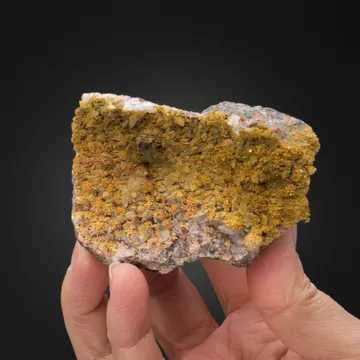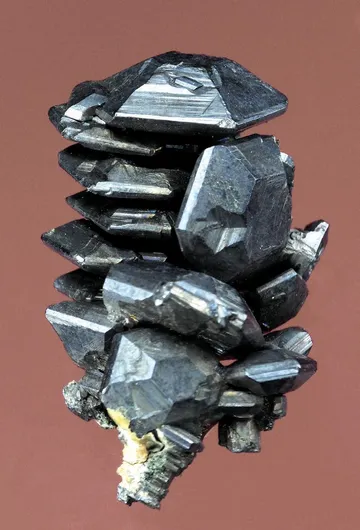
Wood Mine, UK - locality famed for vivid malachite and azurite staining in Triassic sandstone, rare secondary minerals, and its Scheduled Monument status.
Key facts
Wood Mine is the principal 19th-century working in Windmill Wood on Alderley Edge, Cheshire, one of Britain’s classic red-bed copper mining districts. For collectors it matters less as a source of large, free-standing display crystals than as a compact, historically rich locality where copper, lead, cobalt, nickel, manganese, barium, arsenic, vanadium and molybdenum chemistry is recorded in a Triassic sandstone host. The mine belongs to the Alderley Edge suite of mineralised faults and porous sandstone beds in the Sherwood Sandstone Group, especially the Wood Mine Conglomerate and related Helsby Sandstone units, where ore-bearing fluids moved through faults, clay partings and permeable beds after the sedimentary rocks had already formed.
The collecting signature of Wood Mine is green and blue copper mineralization in sandstone: malachite and azurite staining and impregnating pale to red-brown sandstones, chrysocolla-like blue-green coatings in damp passages, galena and cerussite in lead-rich zones, manganese-cobalt wad and asbolane-style black coatings, plus a suite of rarer secondary species including brochantite, linarite, pyromorphite, olivenite, tyrolite and wulfenite. The best small specimens are not cabinet-filling crystal groups in the Alpine sense; they are locality pieces whose appeal lies in vivid colour against gritty Triassic matrix, in the oddity of cobalt-nickel-manganese chemistry in a Cheshire sandstone copper mine, and in labels tying them to a protected, access-controlled historic landscape.
Regional View
Country View
Wood Mine also has unusual historical weight. It was worked commercially between 1857 and 1877, with the main period in the 1860s under the Alderley Edge Mining Company, and it fed an experimental 19th-century ore-treatment complex built to process copper, lead, cobalt and nickel. Historic England records the cobalt works as a Scheduled Monument and emphasizes the technological interest of the site: wooden leaching tanks, hydrochloric-acid copper extraction, precipitation using scrap iron, furnaces, steam power, a cooling tower and great dumps of chemically leached white sand. For a collector, that industrial background helps explain why loose, fresh underground collecting is not the story here. Wood Mine is a conserved mine, an archaeological site and a geological teaching locality first; specimens with old labels or documented DCC-era provenance carry the strongest interest.


Photo: Wikimedia Commons
Search for specimens: View all specimens from Wood Mine, UK
Wood Mine is at Alderley Edge, Cheshire, England, with the principal adit and entrance shaft in Windmill Wood. The mine is part of the larger Alderley Edge mining district, a ridge and horst of Triassic rocks on the northeastern margin of the Cheshire Basin. The host rocks are sandstones, conglomerates, siltstones and clay-rich partings of the Sherwood Sandstone Group, with the Wood Mine Conglomerate and adjacent Helsby Sandstone units especially relevant to the workings. The Alderley rocks dip eastwards and are cut by mineralised faults; copper-bearing zones commonly thicken close to faults and taper into the porous sandstone away from them.
The deposit is a copper-dominated polymetallic red-bed system rather than a high-temperature vein mine. Modern interpretations place the ore-forming fluids in the cool basinal-brine family: metal-bearing solutions migrated through the Cheshire Basin, used faults and permeable beds as pathways, and precipitated sulphides and sulphates where physical and chemical traps existed. Later near-surface fluids redistributed copper and lead into carbonate, sulphate, silicate and phosphate minerals in the sandstone around the faults. That multi-stage history is why Wood Mine can show both primary sulphides, such as chalcopyrite, chalcocite, pyrite-bravoite and galena, and colourful secondary products, especially malachite, azurite, chrysocolla-like coatings, cerussite, anglesite, brochantite, linarite and pyromorphite.
Published work on Alderley Edge records a primary ore sequence at Stormy Point, Engine Vein and Wood Mine that includes early bravoite and nickel-cobalt-iron sulpharsenides, followed by pyrite, chalcopyrite, sphalerite and galena. The more familiar collector minerals are later alteration and supergene products. At Wood Mine, the copper was chiefly carbonate ore, with malachite economically important and azurite present but less abundant. Lead could be important locally as galena and cerussite. Black manganese-cobalt wad and asbolane-type material tie Wood Mine to the short-lived cobalt and nickel industry at Alderley Edge, while rare secondary species add the mineralogical spice that keeps small Wood Mine labels desirable.
The 19th-century mine was worked by blasting with black powder, then by hand tools. Ore was dug and trammed out in wooden tubs and taken to the treatment works shared with West Mine. The operation was never a simple “dig ore, send to smelter” affair. The Alderley Edge Mining Company built an extensive treatment plant by about 1860. Crushed copper ore was reduced to pieces about 1 cm across and fed to wooden leaching tanks, where hydrochloric acid dissolved much of the copper. The green acidic solution was then run into precipitation tanks, where scrap iron and tinplate caused copper to fall as a dark metallic precipitate. Lead-bearing sandstone was treated differently, by grinding and washing to separate the heavier lead minerals; the lead concentrate went to the Patent White Lead Company at Macclesfield. The cobalt-nickel stream was chemically troublesome and historically important, but the cobalt plant closed in 1864 after only a short life.
Historic England’s scheduled-monument record gives the scale of the 19th-century enterprise: the works processed 168,269 tons of copper ore and produced 3,200 tons of fine copper metal, along with almost 100 tons of lead and 11 tons of cobalt-nickel. A separate heritage record notes that up to the cobalt plant’s closure, 357 tons of cobalt and nickel precipitate had been produced. The physical legacy included furnaces, a stone cooling tower about 80 feet high in some accounts, wooden leaching and precipitation tanks, inclined tramways, crushing machinery, offices, cottages, dressing floors and enormous acid-leached sand dumps. The largest waste-sand dump was described as covering about 5 acres, standing roughly 30 m high and holding an estimated quarter of a million tons of waste.
After commercial work ended, Wood Mine remained open for many years, and unsupervised visitors were a persistent safety problem. The entrance was blasted closed in 1964; the Derbyshire Caving Club reopened the mine with National Trust permission in 1970, first by digging a small shaft through the roof of the original adit. The adit entrance was later reconstructed, and additional access and conservation work followed. Today access is strictly controlled. The mine is on protected National Trust land, within a Scheduled Monument and a geological SSSI landscape, and entry is by authorised trips, open days or arrangements through the Derbyshire Caving Club and associated custodians rather than by casual collecting. Serious collectors should treat freshly collected underground material with caution unless it has a clear and lawful provenance.
Wood Mine’s most memorable specimen-producing areas are not generally recorded in the dealer literature as named “pockets” in the way of a hard-rock crystal mine. Instead, the known mineral occurrences are tied to mine features and zones: mineralised faults carrying galena and chalcocite, malachite and cerussite near the North End Chambers, damp blue-green chrysocolla-like flowstone-style coatings in the so-called Green Waterfalls, and lead-copper secondary minerals in sandstone adjacent to faulting. Specimens that show colour, original sandstone matrix, and an old label naming Wood Mine rather than merely “Alderley Edge” are the most convincing and collectable.
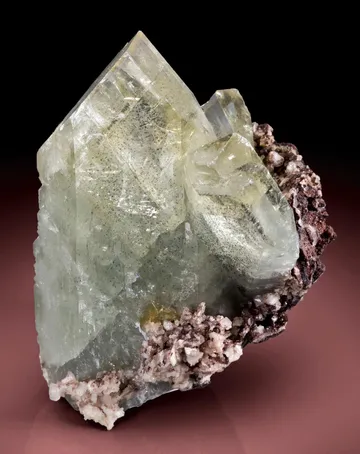
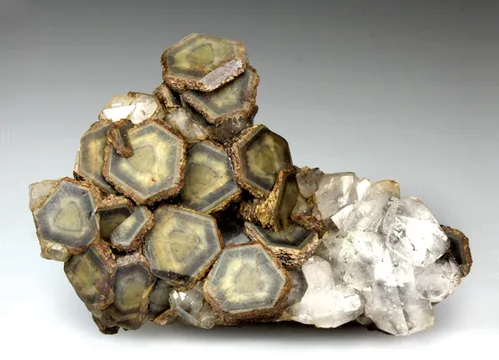
Brucite is not part of the verified public mineral assemblage for Wood Mine at Alderley Edge: the documented Wood Mine suite is red-bed copper-lead-cobalt-nickel mineralization in Triassic sandstone, not a magnesium-rich serpentine or marble environment of the kind that normally yields brucite. No reliable public mineral list consulted for Wood Mine, Cheshire records brucite habits, colours, crystal sizes, pockets or associations from this mine. Accordingly, any specimen marketed as brucite from “Wood Mine, UK” should be treated as requiring analytical and label verification; the most likely collecting issue is locality confusion with the classic Wood’s Chrome Mine in Pennsylvania, USA, whose platy brucite is famous and often labelled historically as Wood’s Mine.
Clinochlore likewise is not a verified Wood Mine, Alderley Edge collector species in the public locality records reviewed; it is absent from the Wood Mine mineral list on Mindat and from the Alderley Edge mineral lists centred on copper, lead, cobalt, nickel, manganese and barium species in sandstone. As with brucite, clinochlore on a “Wood Mine, UK” label should raise a provenance question rather than be accepted on habit alone, because chromium-bearing clinochlore is a known associate of brucite at the similarly named Wood’s Chrome Mine in Pennsylvania. A defensible Wood Mine, UK clinochlore specimen would need modern analysis and a secure collecting history; without those, good locality pieces from Wood Mine should instead be expected to show copper and lead secondary minerals in Triassic sandstone.
Other minerals documented from Wood Mine include anglesite, asbolane, aurichalcite, azurite, baryte, beaverite-(Cu), brochantite, cerussite, chalcocite, chalcopyrite, chrysocolla, erythrite, galena, hemimorphite, linarite, malachite, olivenite, pyrite, bravoite, pyromorphite, tyrolite and wulfenite. The most collectable Wood Mine pieces are usually those with vivid secondary colour: green malachite in sandstone, blue azurite, blue-green chrysocolla-style coatings, apple-green pyromorphite, blue linarite, and rarer small crusts or aggregates of arsenates and sulphates such as tyrolite, olivenite and beaverite-(Cu). No accepted type-locality mineral is tied to Wood Mine itself, but the mine is important in British mineralogy because several species from the Alderley Edge district have been confirmed or discussed in supplementary British Isles mineral lists and in detailed ore-mineral studies.
The main authenticity problem is not artificial colour or treatment; it is locality confusion. “Wood Mine” can mean the Cheshire red-bed copper mine at Alderley Edge, but “Wood’s Mine” or “Wood’s Chrome Mine” usually means the classic chromite-brucite locality at Texas, Little Britain Township, Lancaster County, Pennsylvania, USA. That distinction matters profoundly. Brucite and chromium-bearing clinochlore belong to the Pennsylvania serpentine/chromite story, not to the verified Wood Mine, UK assemblage. Labels reading only “Wood Mine” should be examined alongside the mineral species and matrix: Triassic sandstone with copper carbonates points to Cheshire; serpentine, chromite, brucite and chromian chlorite point away from Wood Mine, UK.
Condition issues are typical of sandstone-hosted secondary copper minerals. Malachite and azurite impregnations may be friable where the sandstone is poorly cemented; blue-green chrysocolla-like coatings can be thin, soft and easily abraded; linarite, brochantite and tyrolite may occur as delicate crusts or small crystals that do not tolerate brushing or washing. Damp-mined material can change appearance as it dries, especially porous sandstone carrying copper salts or gel-like coatings. Avoid aggressive cleaning, acids and prolonged soaking. Pieces should be allowed to dry slowly, stored away from acidic fumes, and kept in stable humidity.
Rarity depends strongly on what one means by “Wood Mine specimen.” Malachite-stained sandstone from Alderley Edge is not intrinsically rare, but legally and cleanly provenanced Wood Mine material with attractive colour is much less common on the collector market than material from open, active or historically prolific British localities. Fine small-cabinet specimens with old labels, rare species, or a documented association with the National Trust/DCC-era history are scarcer still. The best buys are honest, modest specimens with specific labels and believable matrix; the worst buys are expensive “Wood Mine” specimens whose mineralogy does not fit Cheshire.
Fluorescence is not a major collecting criterion for this locality. Handling concerns are more chemical and conservation-based: lead minerals such as galena, cerussite, anglesite, linarite and pyromorphite should be handled with normal lead-mineral hygiene, and arsenate-bearing minerals such as olivenite, erythrite and tyrolite should not be ground, trimmed dry, or stored where dust can spread. Wash hands after handling and keep specimens away from children, food preparation areas and open display in dusty rooms.
The most striking thing about Wood Mine is that it bridges the tidy world of labelled mineral specimens and the very untidy world of industrial experiment. In the early 1860s, ore from Wood Mine and West Mine entered a processing system that sounds more like a chemical works than a rural Cheshire copper mine. Rock was crushed to about 1 cm, tipped into wooden tanks 11 feet by 8 feet by 4 feet, and attacked with hydrochloric acid. Each tank could hold about 9 tons of ore. The “sap,” a green acidic copper liquor, was drawn off every two hours and recycled until it no longer strengthened. Then it went into precipitation tanks, where scrap iron and tinplate stripped the copper from solution as a blackish-brown precipitate. The best material was sold as No. 1 precipitate at about 80% copper and 20% iron; No. 2 material ran about 60% copper and 40% iron.
The cobalt story is stranger still. The cobalt and nickel were not mined as handsome cabinet minerals; they were chemical passengers in a process designed around copper. The remaining solutions, after copper precipitation, contained iron, manganese, cobalt and nickel chlorides. A cobalt plant was built with furnaces and a tall stone cooling tower, reported in one account as 80 feet high and 8 feet square. Hot solution was sprayed onto the furnace floor, acid vapour was condensed and recycled, and a cobalt-nickel product was sought for pigments and enamels. The works closed in 1864, not long after it began. Historic England’s judgement is severe and fascinating at once: the technology was important, but documentary evidence suggests that a ready market for the product was never found.
A surviving setting book from the Alderley Edge Mining Company brings the mine down from industrial abstraction to named men and weekly jobs. Between August 1864 and March 1866, 784 entries record contracts made with groups of miners and surface workers. A typical underground “pare” meant two men, two boys and the experienced miner or miners leading the work; distances were measured in fathoms, feet and inches, and payment was entered in pounds, shillings and pence. On 20 August 1864, Fred Bruce and David Walton drove west on No. 1 bed; Samuel Askington and J. Bracegirdle drove south-west of the slide; Thomas Bower and Ger Wood drove west; Peter Hamilton and William Woodall drove east on No. 3 bed. On the surface, Robert Burgess wheeled 36 tanks of copper for £6 6s 0d, Philip Bracegirdle and John Powel filled 36 copper tanks for £1 19s 0d, and Richard Bradley was paid £2 5s 0d for pumping water. These are the human fingerprints behind the small copper-stained sandstone specimens that survive today.
Wood Mine’s modern conservation story has its own hard edge. After closure, the mine entrances were left unbarred, and accidents involving ill-equipped visitors became a repeated problem. In 1964 the entrance was blasted in by John “Blaster” Bates, the well-known demolition expert, while shafts were sealed with household rubbish and builders’ rubble. The sealed mine did not stay forgotten. In 1970 the Derbyshire Caving Club, with National Trust permission, reopened Wood Mine by digging a small shaft through the roof of the original adit. Later the adit was reconstructed, Timber Shaft was secured, and the DCC connected Wood Mine to the Hough Level system. Today, under controlled conditions, it is possible to travel from Wood Mine through Brynlow Mine and Engine Vein and emerge at the foot of the Edge — a route that turns a 19th-century working mine into a three-dimensional lesson in sandstone geology, mining archaeology and practical conservation.