A collector's guide to Wölsendorf fluorite mining district, Germany: its geology, mining history and notable minerals, illustrated with the 62 specimens documented from this locality on EarthWonders.
Key facts
Wölsendorf is one of the classic names in European fluorite: not a single mine, but a compact Upper Palatinate mining district north of Schwandorf, between Schwarzenfeld, Stulln, Nabburg, Schwarzach, Wölsendorf, Lissenthan, Altfalter and Weiding. Its veins cut the western edge of the Bohemian Massif, where the Bavarian Pfahl structure and associated fractures provided long-lived conduits for hydrothermal fluids. For collectors, the appeal is threefold: an unusually varied fluorite suite, a strong barite–quartz gangue assemblage, and a uranium-bearing accessory mineralogy that made Wölsendorf far more than an industrial fluorspar camp.
The district’s specimens have a recognizable Upper Palatinate character. The best fluorites are not just “cubes on matrix”; they can be honey-yellow, green, white to colorless, blue, dark violet to black, or complexly zoned, with etched faces, phantoms, parquet-like aggregates, stepped growth, and rare high-index habits. Barite is abundant and often sculptural, forming cream, tan, pinkish or iron-stained bladed groups, while quartz ranges from ordinary drusy coatings to reddish Eisenkiesel and smoky-to-amethystine material. The more scientific side of Wölsendorf is just as compelling: the district is the namesake and type locality for wölsendorfite, and its fetid fluorite, or Stinkspat, played a role in confirming naturally occurring elemental fluorine in antozonite.
Regional View
Country View
The important collecting localities within the district include the Marienschacht and Johannesschacht near Wölsendorf, the Cäcilia and Reichhart workings near Freiung and Stulln, the Roland and Merkur area, the Erna/Anna and Erika mines, the Hermine mine near Lissenthan, the Helene mine near Brudersdorf, the Heißer Stein mine, the Kocherstollen, and the Krandorf/Max workings. These names matter because Wölsendorf specimens are often much more valuable and interpretable when the original mine is known: Hermine material is associated with fine small specimens, phantoms and fluorite with quartz, pyrite, cinnabar, hematite and other inclusions; Marienschacht is a key name for honey-colored and fetid fluorite; Cäcilia is tied to barite, fluorite and rare fluorite morphology; Roland is important for blue fluorite morphology; and Heißer Stein is noted for smoky quartz passing into amethyst.

Photo:

Search for specimens: View all specimens from Wölsendorf fluorite mining district, Germany
The Wölsendorf district is a hydrothermal fluorite–barite–quartz vein district on the western margin of the Moldanubian Bohemian Massif. The productive ground is roughly 15 km long and about 8 km wide, crossed by dozens of veins and splays; only a fraction of them were major ore producers. The veins are mainly NW–SE, parallel to the regional structural grain of the Bavarian Pfahl, but economically important north–south veins also occur, most notably in the Hermine area. The host rocks are dominantly Variscan granite, with gneiss becoming important in parts of the field. In many mines the veins thin, swell, split, disappear into clayey slips, then return again as ore shoots, which explains the old miners’ saying that “the spar is a rogue.”
The vein fill is chiefly fluorite, barite and quartz. A practical district average often quoted for the gangue is about three parts fluorite to one part barite, with quartz around a tenth of the vein mass, but this average hides the real collecting interest: the mineral proportions can change abruptly over very short distances. Thick, clean, continuous fluorite was less common than mixed, tectonized, brecciated ore; wall-rock fragments may be enclosed in the fluorite, and some veins developed cockade textures, banding, repeated brecciation, or bilateral but imperfect vein zoning. In the central part of the district, darker fluorites and uranium mineralization are more typical, while the margins include lighter fluorite veins and, locally, barite-rich or nearly barite-dominant bodies.
Geologically, Wölsendorf records repeated hydrothermal activity between crystalline basement and post-Variscan cover rocks. Modern studies separate the fluorite into color and structural types: blue, black to dark violet fetid fluorite, green, white to colorless, and yellow to brownish-yellow honey fluorite, occurring in cleft-and-fissure ore, brecciated vein ore, fitting and rotational breccias, cockade ore, layered or striated veins, and fluorite cement or impregnation in sedimentary rocks. Fluid-inclusion and radiometric work places the hydrothermal system broadly in the late Paleozoic to Triassic history of the region, with epi- to mesothermal formation temperatures on the order of 100–200 °C.
Mining history began well before fluorite was the target. Medieval and early modern miners worked the area for galena, especially silver-bearing lead ore, with records and traditions reaching back to the 15th century and later lead mining in the 17th to 19th centuries. Fluorspar became the focus in the 19th century and especially around 1900, when industrial demand for flux, hydrofluoric acid and later chemical feedstocks transformed the district. Georg Bauer acquired mining rights near Wölsendorf in 1884; early work was small-scale, with only a few miners and primitive hoisting, but the introduction of steam power for hoisting and pumping helped raise output. By the early 20th century the Stulln and Wölsendorf mines had become part of a serious industrial fluorspar district.
The mine names read like a locality label archive: Cäcilia, Reichhart, Marienschacht, Johannesschacht, Roland, Merkur, Erika, Erna/Anna, Hermine, Helene, Heißer Stein, Kocherstollen, Neue Hoffnung, Gisela, Max, and others. Cäcilia, formed in 1933 by uniting the Reichhart and Hochscheidt workings, was one of the district’s most important mines and in the 1950s was described as producing about 120 tonnes of spar per day. It closed as an ore producer in 1973, though its shaft remained useful for water control for neighboring Hermine. Hermine became the last great act of the district: it was developed in its modern form during the Second World War, deepened repeatedly, worked several steep veins, and ultimately reached 270 m depth. In 1987, with ore quality and thickness declining and cheaper imports reshaping the fluorspar market, Hermine and the last associated workings closed, ending active Wölsendorf mining.
For collectors, the most important specimen periods were the decades of active underground mining and the years when mine dumps were still accessible. The Hermine dump in particular was once famous for micromounts and small cabinet specimens, but it is now closed to collecting. Many old dumps are overgrown, fenced, reclaimed, or unstable, and the district is riddled with old workings. Safe modern access is essentially historical and educational rather than collecting-oriented: the Reichhart shaft has served as a visitor mine, local mining associations maintain traditions, and mineral displays in Stulln and Schwarzenfeld preserve excellent district material. Field collecting should be approached with permission, current local guidance, and a conservative safety attitude; leaving paths in old Wölsendorf mining ground is not a casual matter.
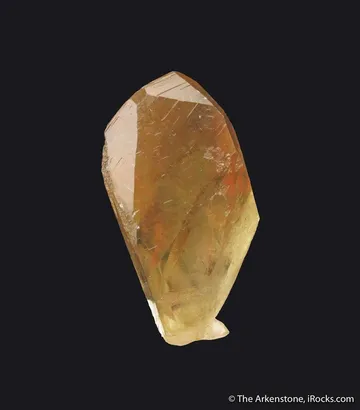
Notable documented specimen finds include fluorite with dark violet phantom zoning from Hermine, small fluorites enclosing red cinnabar with hematite and pyrite, fluorite with quartz and calcite, gypsum with quartz and fluorite, nacrite and pyrite on fluorite, pyrite on quartz, siderite with fluorite and quartz, and sphalerite with fluorite. Marienschacht II produced yellowish fluorite cubes, some to around 10 mm on small specimens, and larger honey-colored cubes in the centimeter range with reddish Eisenkiesel. The same mine’s Wolfsberg vein was irregular and strongly disturbed, locally barite-rich, with fluorite thickness reportedly reaching about 2 m in pockets or lenses but disappearing abruptly after blasting. This pockety behavior is exactly why good Wölsendorf specimens feel so individual: they are products of complicated ore shoots rather than uniform open-pocket crystal mining.
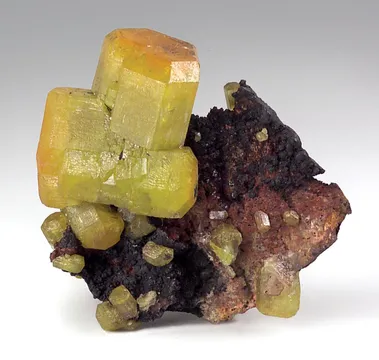
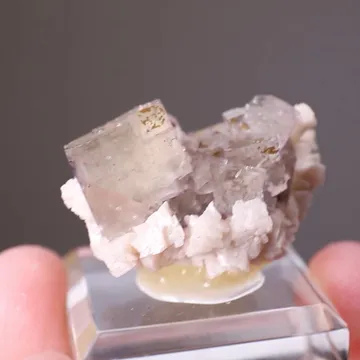
Fluorite is the signature mineral of Wölsendorf and the reason the district is internationally known: it occurs as massive ore, vein fill, breccia cement, phantoms, stepped aggregates, cubes, octahedra, dodecahedral and cube–dodecahedral combinations, tetrakishexahedral “pyramid cube” forms, skeletal or framed crystals, and rare pseudoscalenohedral habits. The color range is exceptional for a single district: blue and dark violet to black fetid fluorite are early and morphologically diverse; green, white to colorless, and honey-yellow fluorites represent later, more chemically differentiated stages; and some pieces show striking zonation or phantoms. Marienschacht is especially associated with honey spar and fetid material, Roland with important blue fluorite morphology, Helene with phantom development, Johannesschacht with parquet-like fetid aggregates, Cäcilia with unusual pseudoprismatic and high-index forms, and Hermine with attractive green to purple and white zoned fluorite on quartz, pyrite, barite, calcite or iron-stained matrix. The best Wölsendorf fluorites combine saturated color, sharp zoning, intact faces, known mine provenance and an association that tells the district story—quartz coatings, barite blades, pyrite, cinnabar or hematite inclusions—whereas ordinary pieces are massive, bruised, poorly localized ore fragments.
Quartz at Wölsendorf is not merely background matrix; it is one of the principal vein minerals and an important visual partner to fluorite and barite. It occurs as drusy quartz coatings, chalcedonic silica, cockade bands, clear to milky crystal linings, quartz perimorphs after calcite, reddish Eisenkiesel colored by hematite, smoky quartz, and smoky-to-amethystine crystals, especially noted from the Heißer Stein area. Hermine material can show quartz over color-zoned fluorite, quartz with calcite and fluorite, pyrite on quartz, or unusual cauliflower-like Eisenkiesel aggregates with fine crystallization and a matte, iron-oxide-rich orange-red surface. Good quartz specimens from the district are those in which the quartz does something more than fill space: sharp crystal coatings on fluorite, iron-red Eisenkiesel with strong color, quartz outlining former calcite forms, or smoky/amethystine crystals with a secure mine attribution.
Barite is the second major economic gangue mineral of the Wölsendorf district and is essential to its specimen style. It occurs in cream, white, tan, brownish, pinkish or iron-stained bladed aggregates, rosettes and tabular groups, commonly with fluorite, quartz, chalcopyrite, calcite, pyrite or hematite staining. Cäcilia produced important barite and was locally barite-rich; Marienschacht II’s Wolfsberg vein could contain barite as a major part of the filling and even nearly pure barite zones in the southeast of the vein; and large barite specimens from Hermine are preserved in local displays. The best barites have freestanding, lustrous, undamaged blades with sculptural spacing and district associations, while lesser pieces are massive, chalky, crushed or so iron-coated that the crystal form is obscured.
Baryte, the spelling more commonly used in European mineralogical literature, is the same BaSO4 species collectors often list as barite, and Wölsendorf labels may use either spelling depending on age, dealer language and cataloging tradition. In district specimens it is most desirable when it documents the fluorite–baryte–quartz vein sequence: bladed baryte perched on fluorite, baryte intergrown with reddish Eisenkiesel, baryte and chalcopyrite on fluorite, or pale blades in cavities of brecciated vein material. Cäcilia and Hermine are especially familiar names on baryte-bearing pieces, but baryte-rich sections occurred across the district. Collectors should value undamaged terminations, open bladed architecture, attractive contrast against violet, green or honey fluorite, and precise mine attribution; a vague “Wölsendorf baryte” label is much less informative than one naming Cäcilia, Hermine, Marienschacht or another mine.
Beyond fluorite, quartz and barite, Wölsendorf is famous for a rich accessory suite. Carbonates include calcite, dolomite, siderite, ankerite and aragonite; sulfides include galena, sphalerite, pyrite, marcasite, chalcopyrite, bornite, chalcocite, covellite and cinnabar; iron and manganese oxides include hematite, goethite, pyrolusite and hollandite-group material. Uranium minerals are central to the district’s scientific identity: uraninite or pitchblende, autunite, torbernite, uranocircite, uranophane, kasolite, dewindtite, fourmarierite, becquerelite and related secondary uranium minerals occur in parts of the field, especially where quartz and fluorite veins interacted with uranium-bearing zones. Wölsendorfite, Pb7(UO2)14O19(OH)4·12H2O, is the district’s namesake type-locality mineral, first described from Wölsendorf material as red to orange-red secondary uranium-bearing crusts associated with fluorite and pitchblende. Selenium and selenide mineralization is another notable specialty, with minerals such as native selenium, berzelianite and ferroselite documented from the broader Wölsendorf mineralizing system.
The main authenticity issue with Wölsendorf specimens is not widespread fakery but locality precision. Many old pieces are labeled simply “Wölsendorf,” “Oberpfalz,” or “Bavaria,” even when they came from a specific mine such as Hermine, Marienschacht, Cäcilia, Roland, Erna, Erika or Heißer Stein. That distinction can matter greatly. Honey spar, dark antozonite, Hermine fluorite with phantoms, Cäcilia barite, Heißer Stein smoky-to-amethystine quartz, and uranium-bearing micromounts all carry more meaning when the original mine is known. Be cautious with specimens offered under vague district names if the style looks unlike Wölsendorf, and be especially cautious with blue fluorite unless the mine attribution is strong, because blue fluorites from other German districts and from elsewhere in Europe can be visually tempting substitutes.
Condition is a constant consideration. Fluorite cleaves easily, and older mine-run Wölsendorf pieces often show edge bruising, cleaved corners, saw trimming, iron staining or contact damage. Barite blades are brittle and commonly chipped along thin edges. Quartz-coated fluorite may hide bruising or rehealed surfaces, while heavily iron-stained Eisenkiesel can make it difficult to distinguish attractive natural color from obscuring oxidation. In good pieces, damage should be minor relative to the specimen’s age, size and rarity; old labels and mine-specific provenance often compensate for small imperfections, but not for heavy crushing or vague attribution.
Wölsendorf antozonite deserves special handling. The dark violet to black fetid fluorite is naturally irradiated and can contain tiny inclusions of elemental fluorine; crushing or scratching it may release a sharp odor and reactive gases. Do not “test” Stinkspat by breaking or sniffing it. Some Wölsendorf material also contains uranium minerals, and colorful yellow-green autunite or uranocircite, orange to red uranyl oxides, pitchblende-bearing matrix, and secondary uranium crusts should be treated as radioactive mineral specimens: store them labeled and enclosed, minimize dust, avoid abrasion, wash hands after handling, and keep them away from children, pets and food-preparation areas. Fluorescence can be useful—autunite-type minerals may fluoresce strongly, and some fluorite may respond under UV—but fluorescence alone is not a secure locality test.
Market availability is moderate but uneven. Common massive fluorite, iron-stained barite, and small older Wölsendorf pieces still appear regularly in European dealer stock and collection dispersals. Fine honey fluorite, well-zoned Hermine fluorite, large clean fluorite-and-quartz cabinets, attractive barite groups, good Eisenkiesel, confirmed antozonite, and uranium-species micromounts are much scarcer. Since mining ended in 1987 and the best dumps are closed, the supply is essentially recycled from old collections, miners’ material, museum duplicates and dealer-held stock. For serious collectors, a modest but well-labeled Hermine, Marienschacht, Cäcilia or Roland specimen is often preferable to a flashier but poorly documented “Wölsendorf” piece.
The Wölsendorf story began as hard, practical mining rather than specimen collecting. In 1884 Georg Bauer acquired mining rights near Wölsendorf, and the early operation was so small that three miners raised rock with the simplest equipment. Then the district began to mechanize: a steam engine for hoisting and pumping changed the scale of work, and by 1900 production had risen to about 1,000 tonnes. When Bauer died in 1912, his son Hans took over a concern with 45 employees. The mines multiplied, and Stulln gained a hydrofluoric-acid plant, binding the local landscape to the chemistry of fluorite as tightly as to the rock itself.
The district’s darker history is also part of its record. During the Second World War, local workers were not the only labor force in the fluorspar operations; in 1942, around 200 penal prisoners from Flossenbürg were working in Stulln. At the same time, the strategic value of fluorite was rising for the steel, aluminum and chemical industries. Companies consolidated claims, modern shafts were sunk, and the Hermine mine was driven into the hill at Lissenthan. The collector may see a small cabinet specimen today, but behind it stands an industrial and wartime system that treated fluorite as a strategic raw material.
Hermine became the district’s last great mine and one of its most memorable. It began with the Hermine vein being worked as early as 1917 by Josef Häusler through a small inclined shaft. In its later form the mine reached 270 m depth and worked several steep veins dipping around 70–75 degrees. Around 70 people were employed there in 1952. The shaft was deepened, new levels were developed, Gustav I and Gustav II were reached from the 90 m level, and later Gertraud I, Gertraud II and the Venezianer vein were incorporated. Hermine’s mining method changed too: from Schrägstoß and Firstenstoß methods to Festenbau, possible because the ground was sufficiently competent. That technical choice helped make Hermine cheaper to operate than some other mines in the district.
Then came the lightning strike. In the summer of 1976, Hermine’s wooden headframe burned after being hit by lightning. The mine did not simply fade out after the fire: a steel headframe was brought from the already abandoned Roland mine, rebuilt, and by September 1976 production resumed. Two years later, exhaustion of developed reserves forced the last shaft deepening in the entire Wölsendorf district, down to 270 m. But the deeper levels were not generous. The veins became thinner and poorer, and by the 1980s Hermine was the last serious fluorspar producer in the field.
On 27 May 1987 the last ore car left Hermine. A later local photograph shows a mine car marked “Letzter Wagen Hermine 27.5.1987,” a blunt memorial in steel and paint. Hermine’s raw output is recorded at 1,666,000 tonnes of fluorspar, about 18 percent of the district’s total production, and in its final year it produced only about 24,000 tonnes. Twenty-eight people were still working there at the end. With Hermine’s closure—and the simultaneous end of the last remaining small operations—the Wölsendorf fluorspar district ceased to be an active mining camp.
The Kocherstollen tells a different, quieter story: a mine that briefly became a window into the district, and then closed again. The Heinrich-Kocher-Stollen near Wölsendorf worked from 1937 to 1953 as a small adit mine. It was about 300 m long and followed a fluorite vein roughly 0.80 to 1.50 m thick, with a 150 m crosscut and a 30 m level. In the 1990s, the Bergknappenverein Marienschacht reopened parts of it with considerable volunteer effort and money, turning it into a small visitor mine. In 2009, a collapse just behind the portal stopped public access. Later stabilization works cleaned and secured part of the old workings, but the portal area was ultimately sealed, and even young conifers were planted in front of it. For anyone who knows old mining districts, it is a familiar sadness: a place rescued from oblivion, briefly visible, then returned to darkness.
Perhaps the strangest Wölsendorf story belongs to Stinkspat. For generations, miners and mineralogists knew that certain dark fluorites gave off a sharp, unpleasant smell when broken. The odor was debated for more than a century. In modern work on antozonite, Florian Kraus of the Technical University of Munich revisited the old puzzle, drove from Munich to the Wölsendorf area, and collected fetid fluorite from a disused mine area near the highway. Solid-state 19F NMR spectroscopy then confirmed that elemental fluorine, F2, occurs in tiny inclusions in antozonite. A mineral that collectors might once have tested with a hammer and a sniff had become evidence in a much larger chemical story: one of the rare natural homes of free fluorine, a gas so reactive that chemists had long doubted it could persist in nature at all.