






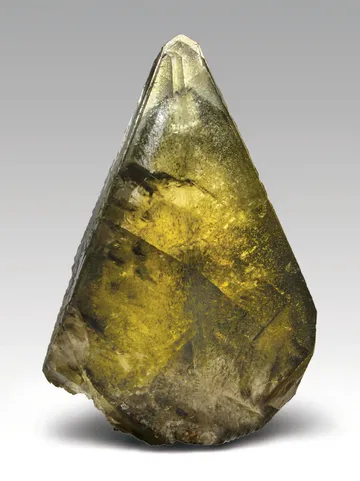
W.L. Davis-Deardorff Mine, Illinois, quartz-rich Cave-In-Rock fluorite on drusy quartz with sphalerite and calcite, purple cubes; locality prized by collectors.
Key facts
The W.L. Davis-Deardorff Mine is one of the classic specimen names of the Illinois-Kentucky Fluorspar District: not simply another Cave-In-Rock fluorite mine, but the quartz-rich outlier that gave collectors a recognizable look at arm’s length. Its best pieces are built on sparkling drusy quartz or silicified limestone, carrying purple to rosy-purple fluorite cubes, black to brown-black sphalerite, occasional simple galena cubes, calcite, barite, and traces of bitumen or petroleum. In a district famous for fluorite, Davis-Deardorff’s distinction is the marriage of fluorite with abundant quartz—unusual enough that district geologists singled it out as exceptional.
Geologically, the mine belongs to the Ozark-Mahoning group in the Cave-In-Rock Mining Sub-District of Hardin County, southeastern Illinois. The ore was part of the fluorspar-rich Mississippi Valley-type system developed in Mississippian sedimentary rocks along the margin of the Illinois Basin, where hot basinal brines moved through fractures, bedding planes, and solution-collapse structures. At Davis-Deardorff, bedding-replacement pods were controlled by northeast-trending structure and small cross faults; where these structures intersected, the ore was enriched into high-grade fluorspar bodies. The same open-space conditions that made ore also made specimens: quartz-lined cavities, fluorite cubes with zoning and purple color, and sulfides sharp enough to survive as cabinet pieces when the miners chose not to send them to the mill.
Regional View
Country View
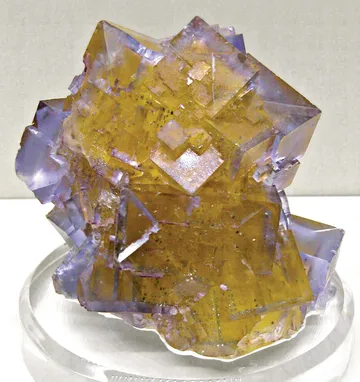
For collectors, the classic Davis-Deardorff look is lighter and more textural than many later Cave-In-Rock fluorites. Instead of great glassy isolated cubes from broad late pockets, many of the most telling pieces show small to moderate fluorite crystals perched on drusy quartz, with sphalerite scattered across the surface. A good specimen is judged by composition as much as size: undamaged purple cubes, sharp black sphalerite, clean quartz sparkle, and enough matrix to preserve the pocket architecture. Large fluorite crystals are documented from the locality, but the most desirable and most readily identifiable pieces are the balanced quartz-fluorite-sphalerite combinations of old-stock Illinois character.

Photo: James St. John / Wikimedia Commons
Search for specimens: View all specimens from W.L. Davis-Deardorff Mine, USA
The W.L. Davis-Deardorff Mine is in the Ozark-Mahoning group, Cave-In-Rock Mining Sub-District, Hardin County, Illinois, near the north-northwest side of the town of Cave-in-Rock. It sits within the Illinois-Kentucky Fluorspar District, the great American fluorspar province that supplied fluorite, lead, and zinc from a network of veins, bedding-replacement bodies, breccias, and collapse-related ore structures. The Davis-Deardorff workings were not a single simple shaft in the way many labels imply; the “Davis” and “Deardorff” names were part of a larger complex of Ozark-Mahoning-related properties and shafts, including the Deardorff Mine, W.L. Davis Mine, W.L. Davis No. 2, and No. 16, with A.L. Davis and Edgar Davis workings close by.
The deposit is best understood as a fluoritic Mississippi Valley-type bedding-replacement system with structural control. Ore pods lay parallel to a N55° E structure, and small cross faults with offsets of less than a foot helped localize enriched ore. Where structural intersections focused fluid flow, the enriched zones formed V-shaped cross sections. The ore horizons named in district literature include the Rosiclare, Bethel, and sub-Rosiclare levels; old specimen labels sometimes preserve these mining-level names, especially “Sub-Rosiclare Level” on quartz-rich pieces. Host rocks in this part of the district include Mississippian limestones, sandstones, and shales of the Ste. Genevieve–Aux Vases–Bethel interval, with bedding replacement and open-space crystallization along favorable horizons.
Economically, Davis-Deardorff was a remarkably rich mine. Contemporary geological work reported mine-run ore averaging roughly 50% to 60% fluorite, 12% to 14% zinc, and 3% to 5% lead, making it one of the richest mines in the Cave-In-Rock Sub-District. Later summaries of Ozark-Mahoning records indicate that by 1967 the W.L. Davis 167-acre tract had produced about 287,000 tons from the sub-Rosiclare Level grading around 40% CaF2, 12% zinc, and 3% lead, plus 135,177 tons from the Bethel Level grading about 50% CaF2. These are ore figures, not specimen-pocket figures, but they explain the abundance of sphalerite and galena associations on surviving mineral specimens.
The Davis ore body was first discovered north of the Crystal Mines in 1937. Mahoning Mining Company leased about 2,000 acres, and by 1939 the company had proved resources and sunk shafts for the A.L. Davis and W.L. Davis-Deardorff workings. The W.L. Davis Mine began production about 1939; A.L. Davis opened in 1941; A.L. Davis, W.L. Davis, and Deardorff were all active in 1942. The Deardorff Mine was still in production in 1953, and W.L. Davis and Deardorff were idled for four months in 1954 because of market conditions. Collectors’ lore remembers Deardorff especially as a specimen mine of the 1930s through 1950s, with closure of the Deardorff mine proper by the early 1960s, even though related Davis tract records continued to appear in later production accounting.
The mine is not a modern fee-collecting site. It should be treated as a historic, closed underground fluorspar locality on private or controlled land, and no collector should attempt to visit shafts, dumps, or mine ground without explicit permission and proper mine-safety knowledge. The practical collecting route today is through old collections, museum deaccessions, and reputable dealers who can preserve the distinction between Davis-Deardorff, Hill-Ledford, Minerva/Ozark-Mahoning No. 1, Denton, Annabel Lee, and the broader “Cave-In-Rock” label.
Notable specimen finds from Davis-Deardorff are tied less to named pockets than to recognizable habits and levels. Sub-Rosiclare quartz specimens show glassy drusy quartz on dark gray silicified limestone with calcite and traces of sphalerite. Fluorite-on-quartz combinations from around the 1950 period show zoned cubes on quartz matrix, sometimes with small adhering petroleum on the back. Sphalerite pieces show bright, lustrous, sometimes twinned crystals scattered over sparkling quartz. The mine also produced large display pieces; a Davis-Deardorff fluorite on drusy quartz specimen photographed at the Ben E. Clement Mineral Museum has been described as approximately 16 inches across.
Quartz is the signature matrix mineral at Davis-Deardorff and the feature that separates the locality from many other Cave-In-Rock fluorite mines. It occurs as glassy transparent to milky drusy crystals covering dark gray silicified limestone, commonly forming sparkling carpets beneath purple fluorite, black sphalerite, small calcite, and occasional galena. Old labels specifically cite the Sub-Rosiclare Level for quartz specimens, and dealer-described examples range from miniatures around 4 x 6 x 7 cm to cabinet combinations. The best quartz pieces are not merely “quartz from Illinois”; they are crisp, unworn druses that frame isolated fluorite cubes or bright sphalerite without being buried by later carbonate, preserving the open-space texture that makes Davis-Deardorff immediately recognizable.
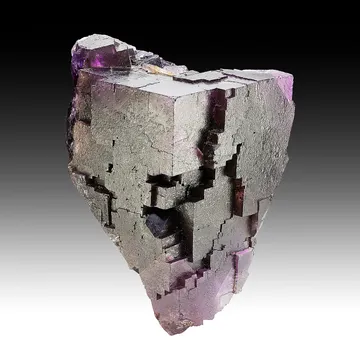
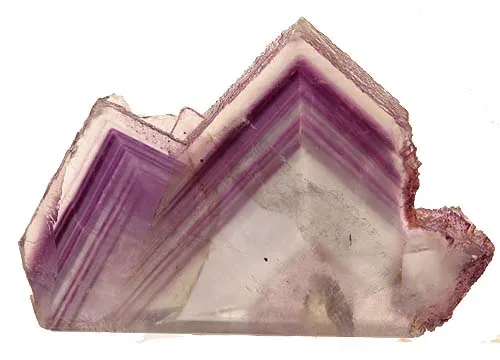
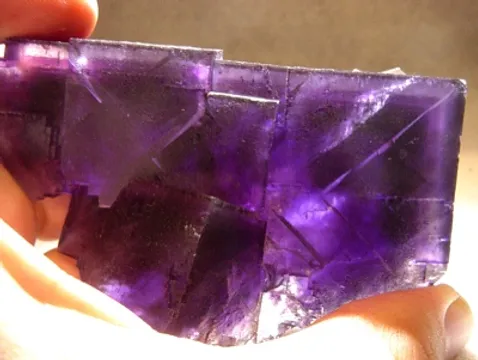
Fluorite from Davis-Deardorff is typically seen as purple to rosy-purple cubic crystals on quartz, with documented crystals reaching much larger sizes but most collector pieces prized for balanced miniature to cabinet-scale associations. Good examples show lustrous zoned cubes, sometimes isolated on drusy quartz, with sphalerite, calcite, barite, galena, or bituminous residue; smaller cubes to about 1.5 cm on edge are common in attractive combinations, while the locality record includes fluorite crystals reported to 30 cm. The top pieces combine undamaged cube faces, saturated violet color, and a bright quartz matrix, rather than relying only on size. Specimens with adhering petroleum or bitumen are especially evocative of the district’s basinal-brine origin and are not automatically “dirty” if the residue is natural and localized.
Sphalerite at Davis-Deardorff is an ore mineral and a major specimen partner, occurring as lustrous black to very dark brown crystals on quartz and with purple fluorite, calcite, and galena. Dealer-described specimens show bright, twinned sphalerite crystals to about 1.3 cm on sparkling quartz, and combination pieces show sphalerite to about 1.5 cm associated with fluorite cubes of similar size. The rich zinc content of the ore explains why sphalerite is so common in the locality’s classic pieces; the best specimens have sharp, reflective crystals that stand proud of the quartz matrix rather than massive or cleaved sulfide patches. On Davis-Deardorff specimens, sphalerite gives the visual contrast: black metallic-resinous points against pale quartz and purple fluorite.
Other documented minerals from W.L. Davis-Deardorff include galena, calcite, barite, dolomite, aragonite, gypsum, anglesite, chalcopyrite, pyrite including nickel-bearing bravoite, vaesite, petroleum, and bitumen. Galena is especially important for label work because Davis-Deardorff and Hill-Ledford were among the significant pre-Annabel Lee and pre-Denton sources of galena-bearing Cave-In-Rock specimens, typically as simple cubes on quartz-rich matrix with fluorite and sometimes sphalerite. Vaesite, NiS2, and bravoite are of specialist interest as microscopic or ore-petrographic nickel sulfides tied to the district’s unusual diagenetic and hydrothermal sulfide history, not as showy hand-specimen species.
Davis-Deardorff specimens are old-stock classics, and the first question is always whether the label is specific enough. “Cave-In-Rock” alone is not the same as Davis-Deardorff, and older collections often mixed district material from Minerva/Ozark-Mahoning No. 1, Hill-Ledford, Denton, Annabel Lee, Victory, Green, and Davis-Deardorff. A quartz-rich matrix with purple fluorite and sphalerite is consistent with Davis-Deardorff, but it is not proof by itself. Provenance from an old Illinois collection, a mine-level label such as Sub-Rosiclare, or a known dealer or museum trail adds real value.
The most common mislabelling issue is broad district attribution being upgraded into a mine name. Galena deserves special caution: Davis-Deardorff galena is expected as simple cubes on quartz-rich matrix, usually with fluorite and sometimes sphalerite. “Fortification style” galena is not a recognized Illinois-Kentucky habit and should raise suspicion of Tri-State District material that drifted into a Cave-In-Rock-labelled collection. Likewise, a specimen labelled “Minerva No. 1” but dominated by galena on quartz-rich matrix may deserve re-examination, since Davis-Deardorff and Hill-Ledford are more plausible sources for many older galena-bearing Cave-In-Rock pieces.
Condition is critical. Fluorite cleaves easily and edge chipping is common, especially on older specimens that were collected when cabinet minerals were often secondary to ore production. Look closely for bruised cube corners, contacted back edges, reattached crystals, and polished or unnaturally shiny cleavage faces. Quartz druses can hide bruising but also reveal it under magnification as broken, sugary patches among otherwise glassy points. Sphalerite should be checked for contact damage on high points and for dull surfaces caused by abrasion or poor cleaning.
Natural petroleum or bitumen is part of the district story, and small dark residues on backs or in protected areas can be legitimate. Avoid aggressive cleaning: solvents, heat, or ultrasonic treatment can damage associations, loosen old repairs, disturb bituminous residues, and affect calcite or delicate drusy quartz. Water and a soft brush are safer than chemistry unless the piece has been evaluated by someone experienced with Illinois fluorite.
In the market, Davis-Deardorff is available but not abundant in top quality. Small quartz-sphalerite miniatures and modest fluorite-on-quartz pieces still surface from old collections, while large, undamaged, well-composed cabinet specimens with strong purple fluorite, bright sphalerite, and complete quartz matrix are much scarcer. The locality name adds a premium because the look is distinctive and historically important; the strongest pieces are those that could not be casually relabelled as generic Cave-In-Rock material.
_1.jpg)
_1.jpg)