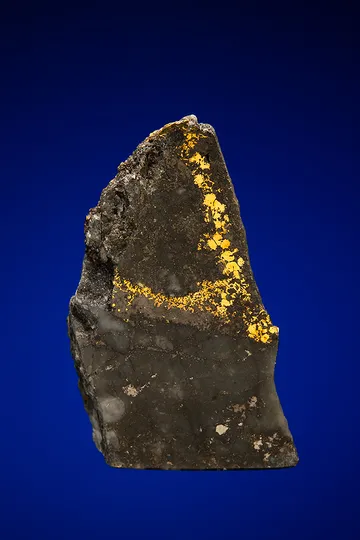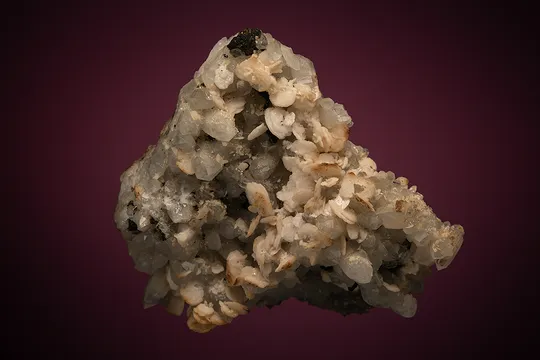
White Raven Mine, Ward, Boulder County, USA - renowned for galena-siderite-baryte pockets and native silver; historic Colorado locality prized by collectors.
Key facts
White Raven is the great silver-lead specimen locality of the Ward district: a mine whose best pieces do not look like the more familiar pyritic gold ores of the Front Range, but like compact little stages of lead-gray galena, honey-brown manganiferous siderite, white tabular baryte, and, on the richest old material, native wire silver. The mine sits in California Gulch south of Ward, in Precambrian granite and schist cut by an east-west monzonite to quartz-monzonite porphyry dike. Mineralization followed reopening and brecciation of an older gold-bearing quartz-pyrite-chalcopyrite vein, and the later silver-lead event deposited galena, siderite, baryte, quartz, and silver in vugs and pipe-like ore shoots. That two-stage history is precisely why White Raven specimens have such character: earlier shattered material and horn quartz underlie later carbonate and sulfide crusts, while open cavities allowed free crystal growth.
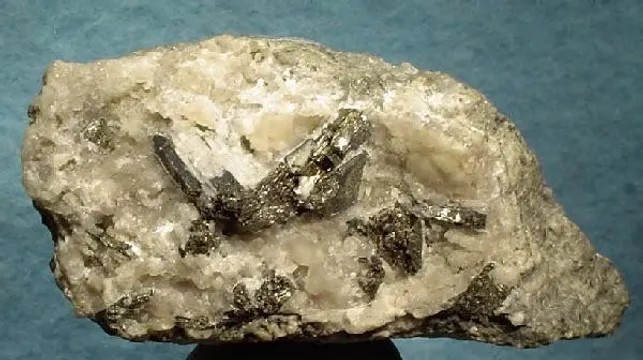
For collectors, White Raven matters because it produced one of Colorado’s most distinctive galena-siderite-baryte assemblages. The classic aesthetic is not a single isolated crystal, but intergrown pocket material: curved, tan to yellow-brown siderite rhombs; dull to lustrous cubic-octahedral galena, often modified, elongated, or etched; white baryte blades partly swallowed by siderite; and occasional silver as tangled hair-like wires. Historic accounts describe vugs large enough to enter, galena crystals up to about three-quarters of an inch, siderite crystals of similar size, baryte blades to roughly three-quarters of an inch long, and silver wires as long as half an inch. The mine’s best specimens are unmistakably old Colorado: dense, heavy, somewhat rugged, and mineralogically rich rather than merely decorative.
Regional View
Country View
White Raven’s historical importance is out of proportion to its modest footprint. Ward began as a gold camp, but White Raven became a leading silver-lead producer during the World War I years and one of the operations that kept the district commercially relevant after the early gold excitement had passed. In 1915-1916 it was described as Boulder County’s leading producer of silver-lead ore, shipping continuously to Denver smelters. Later historic summaries credit the mine with high-production peaks in 1914 and 1921, then a rapid decline around 1922 as metal prices weakened after World War I and L.A. Ewing, the principal driving force behind the operation, died.

Search for specimens: View all specimens from White Raven Mine, Ward, Boulder County, USA
The White Raven property is on the north side of California Gulch, historically described at about 8,800 feet elevation and about three-quarters of a mile to a mile south of Ward. Its geology is centered on a steeply north-dipping fissure vein in massive gray Precambrian granite with schist inclusions. A monzonite porphyry dike, in places reported as much as 50 feet wide and about a mile long, roughly parallels the vein and forms the hanging wall over much of the system. Regional summaries of the Ward district place this in the belt of Laramide intrusive rocks known as the White Raven quartz monzonite porphyry, locally the “birdseye” porphyry, whose contacts with older country rock are commonly mineralized.
The deposit is a silver-lead fissure-vein system superimposed on an older quartz-pyrite-chalcopyrite gold vein. Ernest E. Wahlstrom’s 1935 mineralogical study emphasized the importance of that reopening: older quartz-pyrite-chalcopyrite material was broken, then coated by the later galena-siderite assemblage. The sequence he worked out is one of the key pieces of the locality’s identity: horn quartz first; massive galena with minor pyrite and sphalerite; manganiferous siderite; crystallized galena; a second siderite generation; and finally native wire silver. Baryte entered during the carbonate stage and is commonly partly or completely embedded in siderite. In some specimens, later solutions etched galena and dissolved baryte, leaving casts.
The ore bodies were not uniform sheets. Historic mine descriptions call the productive bodies cylindrical ore shoots or chimneys within a vein that swelled from only 2 or 3 feet to as much as 14 feet between walls. The most celebrated shoot, on the fifth level, was about 30 feet wide and at least 200 feet long. The main vein strikes approximately east-west and dips north, about 60 degrees on average, flattening to roughly 45 degrees between depths of 400 and 600 feet. The richest ore occurred in the shoots, and the most collectable crystallized material came from vugs developed where the vein and its wall rock were strongly brecciated.
Those vugs are central to White Raven specimen quality. Miners called them “bug holes,” and early descriptions say that above the 500-foot level many were large enough for a person to crawl into. They were commonly lined with galena crystals, siderite, baryte, calcite, and wire silver. Galena supplied the lead and much of the silver value, with silver both included in the galena and deposited as later wire coatings. Sphalerite was mined locally in shoots above the 500-foot level and could run high zinc in selected ore; tennantite-group “gray copper” was reported sparingly from deeper levels, especially below about 700 feet and down toward the 1,170-foot level. Gold was present but subordinate in the silver-lead ore and was most important near the surface.
Development was concentrated on the White Raven Extension claim, though the White Raven property included the White Raven and White Raven Extension claims and controlled nearby Black Jack, Cross, and Gray Bird claims to the west on the same vein. A crosscut tunnel reportedly ran about 400 feet to intersect the vein, with an east drift of about 1,000 feet at the tunnel level. A shaft extended to the surface, and the main shaft was sunk below the tunnel level for about 800 feet measured on the dip. Multiple levels were driven west from the shaft, with additional eastward drifting on the third and sixth levels.
The mine’s commercial life is best documented during the 1910s and early 1920s. A State Bureau of Mines report for 1915-1916 described White Raven as the county’s leading silver-lead producer during that biennium, worked continuously and shipping ore to Denver smelters. Worcester’s 1920 account recorded selected galena ore carrying as much as 66 percent lead, average shipping ore around 100 ounces silver and 10 percent lead per ton, and silver-lead ore often running 10 to 15 percent lead with 120 to 180 ounces silver per ton. Later National Register documentation described the White Raven Mill as a comparatively successful small mill with crushing, sizing, table concentration, pumps, motors, and a small boiler, operated by a crew of four during its productive years.
Today the mine is a historic private property, not a public collecting site. Recent public accounts identify it as privately owned and connected with the broader Captain Jack mine/mill Superfund cleanup and remediation context. Collectors should treat any on-site collecting, dump work, or underground entry as off-limits unless explicit permission has been granted by the land and mineral-rights holders. The safest and most ethical way to obtain White Raven material is through old collections, reputable dealers, and documented specimens carrying original or reliable later labels.
White Raven galena is the defining sulfide of the locality, occurring both as massive argentiferous ore and as free-grown crystals in vugs, commonly on or with tan manganiferous siderite and white baryte. Wahlstrom described the crystals as cube-octahedron combinations, with many distorted into tabular or elongated forms by rapid growth parallel to an octahedron face; surfaces may be dull rather than mirror-bright, and some crystals show etched or dendritic corrosion patterns from later solutions. Historic descriptions place the largest crystals at about three-quarters of an inch across, while specimen-market examples range from thumbnails and miniatures with granular to incomplete cubic galena on siderite, to small-cabinet pieces where galena forms a gray metallic druse or sharper modified crystals along one side of a siderite-baryte matrix. The best White Raven galenas are not simply the shiniest ones: they show the locality association clearly, with warm siderite, bladed baryte, etched or modified galena habits, and, rarely, native silver or acanthite-related silver mineralization that ties the piece to the old silver-rich vugs.
White Raven siderite is manganiferous, compositionally approaching manganoan siderite in Wahlstrom’s analyzed material, and it is the mineral that gives most classic specimens their honey-brown to grayish-brown color and sculptural surface. It lines vugs as flat rhombohedrons with noticeably curved faces, from microscopic crystals to roughly three-quarters of an inch wide, and commonly forms crusts, compact aggregates, or stalactitic-looking growths carrying galena and baryte. Fresh surfaces were described as light grayish brown, but many specimens show darker films of manganese and iron oxides from weathering of the carbonate; market pieces more often present as tan, golden-brown, yellow-brown, or darker brown, with pearly to vitreous luster where unabraded. Superior White Raven siderite specimens show undamaged curved rhombs, stalactitic or branch-like form, good contrast with dark galena, and evidence of pocket growth rather than merely massive carbonate veinstone.
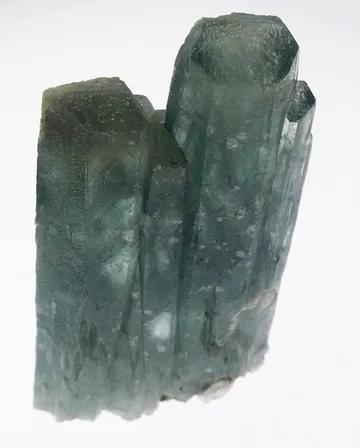
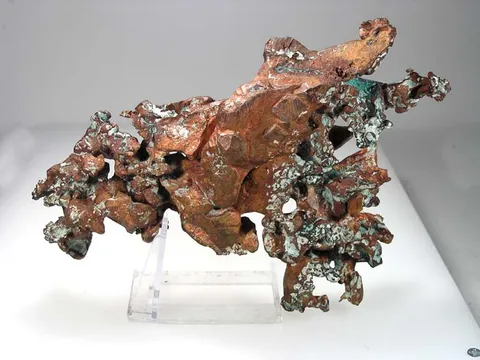
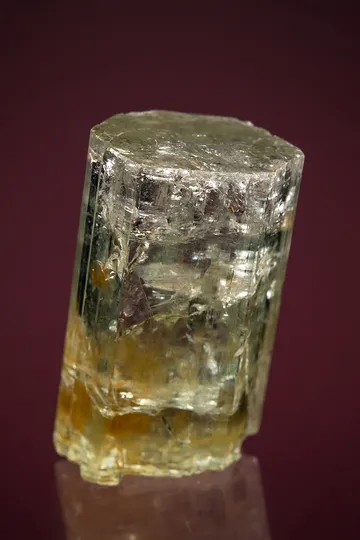
Beyond galena and siderite, the documented White Raven mineral list is compact but important: baryte, calcite, quartz, sphalerite, pyrite, chalcopyrite, native silver, native gold, acanthite, jalpaite, and tennantite-subgroup minerals. Baryte is especially significant to collectors, forming simple tabular crystals with transparent cores and white outer zones, partly embedded in siderite or encrusted by galena and siderite; some later solutions dissolved baryte and left casts. Native silver is the glamour rarity, confined to particular zones and pipes as fine interlacing wires coating earlier minerals. Acanthite has been recorded as acicular crystals on wire silver and as overgrowths on galena, while jalpaite is a documented silver-copper sulfide rarity from the mine. White Raven is not known as a type-locality mine; its importance lies instead in its unusually well-documented silver-lead paragenesis and classic Colorado carbonate-sulfide pocket specimens.
White Raven specimens are uncommon on the market and most desirable when they carry old collection labels or strong chain-of-custody information. The mine is long closed as a commercial specimen source, and present-day access is not public collecting access. Available pieces usually surface as thumbnails, miniatures, and small-cabinet specimens from older collections; larger cabinet pieces with intact siderite-baryte-galena coverage are notably harder to find. Dealer and auction records show the most saleable examples as galena on siderite, siderite with galena, and baryte with galena and siderite, sometimes with named collection provenance such as Brian Kosnar, Kay Robertson, Willard Wulff, Betty Kalaskie, or Trimingham.
The principal authenticity issue is locality confidence rather than outright fakery. No established White Raven-specific tradition of manufactured fakes or routine treatments is documented in the mineral literature, but the assemblage can be confused with other Colorado, western U.S., or even non-U.S. galena-baryte-carbonate specimens if labels have been lost or over-generalized. The most convincing pieces show the full Ward association: curved tan to yellow-brown manganiferous siderite, tabular white baryte, small modified galena crystals or galena druse, occasional calcite, and a compact heavy matrix rather than isolated textbook galena cubes. Specimens labeled only “Ward,” “Boulder County,” or “Colorado” should be evaluated cautiously unless the mineral association is very characteristic or the label history is strong.
Condition matters greatly. Siderite rhombs are more fragile than the galena they support and commonly show bruising, edge wear, or dull oxidized films. Baryte blades can be cleaved, chipped, or hidden under later siderite; exposed white blades along specimen margins are especially vulnerable. Galena is soft, dense, and easily scuffed, so dullness is not automatically a defect here—historic descriptions already note dull galena surfaces and etching—but fresh scratches, saw marks, and rubbed high points lower value. Wire silver, if present, should not be cleaned aggressively; silver dips and chemical brighteners can damage delicate wires, remove meaningful tarnish, and disturb associated acanthite or other silver sulfides.
Handling is straightforward but should be sensible. Galena is lead sulfide: keep specimens out of children’s reach, avoid grinding or creating dust, wash hands after handling, and do not store pieces where they can abrade against one another. Siderite and calcite are acid-sensitive; avoid vinegar, acids, and prolonged damp storage. Native silver tarnishes naturally, and that patina is part of the character of an old White Raven specimen. Fluorescence is not a major collecting feature for the classic White Raven suite, though calcite, if present, may vary; buyers should value the mine association, paragenetic texture, and old-label provenance over any UV response.
The best White Raven story begins inside the ore shoots, not at the surface. Worcester’s 1920 description gives a remarkably physical sense of the mine: a vein that pinched and swelled, ore bodies descending as chimney-like shoots, and vugs the miners called “bug holes.” These were not little thumbnail cavities. In the better-brecciated ore shoots above the 500-foot level, some openings were big enough for a man to crawl into. Their walls were lined with rich silver-lead ore—galena crystals coated with wire silver—so dense in places that the wires formed a “thick net” over the metal beneath. For a collector reading the old account, the image is irresistible: a miner entering a pocket in broken granite and porphyry, the headlamp catching gray galena faces under a mesh of native silver.
The money figures are just as vivid. Worcester recorded silver-lead ore running 10 to 15 percent lead and 120 to 180 ounces of silver per ton, with selected galena ore reaching 66 percent lead. Some single 20-ton narrow-gauge carloads netted more than $5,000, and with the 25-ton mill then in use, daily cleanups worth $5,000 were said not to be uncommon. These numbers help explain why a locality now prized for small mineral specimens mattered economically: every bright galena-rich vug was not only beautiful, but part of an unusually rich silver-lead system in a district better remembered for gold.
Wahlstrom’s 1935 mineralogical paper adds a quieter but equally memorable specimen story. In his paragenetic reconstruction, White Raven’s beautiful pieces were the product of changing solutions repeatedly entering the same broken fissure. First came horn quartz, then sulfides, then manganiferous siderite and baryte, then a second pulse of galena and siderite. Later fluids etched the galena, cut dendritic patterns into crystal surfaces, and even dissolved baryte crystals away, leaving casts. Finally, in restricted pipes, wire silver grew as hair-thin threads, in some samples forming a heavy mat of interlacing wires. The best White Raven specimens are therefore records of repeated mineral growth, corrosion, and regrowth, not merely pretty cavity fillings.
The end of the mine’s heyday came abruptly. Later historic documentation describes 1922 as a fateful year: postwar metal values collapsed, ore that had been bonanza grade lost much of its worth, and L.A. Ewing—the man credited as the driving force behind the operation—died. The company apparently dissolved and sold the mine to H.O. Andrew, who leased it to Graham & Company. A crew of only two miners finished stoping the remaining high-grade ore, the mine closed, and the mill was dismantled. In the span of a year, the Ward area’s most important operation passed from production peak to silence.
A century later, the mine still had enough presence to draw explorers. In 2024 the Rocky Mountain Chapter of The Explorers Club reported a September visit to the privately owned White Raven Mine. Outside, the temperature was in the 80s; inside, it was in the mid-50s. The group went more than 400 feet into the hillside, experienced complete darkness, and saw pack-rat nests built far from daylight. The modern scene is a long way from ore cars and mill cleanups, but it preserves the same essential feeling: White Raven is a real underground place, cool and dark in the Front Range granite, whose mineral specimens carry the atmosphere of the workings with them.