






Western Australia, a vast mineral province yielding native gold, millerite sulfides, dravite crystals, and copper deposits, prized for strong locality identity.
Key facts
Western Australia is not a single specimen locality so much as a mineral province on a continental scale: Archean cratons, Proterozoic orogens, desert-weathered gossans, pegmatite fields, gold lodes, nickel sulfides, copper deposits, salt-lake chemistry, iron ranges, and gem-bearing hard-rock occurrences spread across a state larger than many countries. For collectors, its importance rests on several quite different specimen traditions. The Eastern Goldfields gave the world robust native gold, gold-on-quartz, tellurides, and the historical romance of Coolgardie and Kalgoorlie. The Kambalda and Widgiemooltha nickel districts yielded millerite-bearing sulfides and a suite of rare secondary nickel carbonates and hydroxides that made Western Australia a type-locality powerhouse. The Yinnietharra area produced the heavy, lustrous, dark-brown dravite crystals that still define the species for many cabinets. Pilbara and Paterson copper deposits, notably Whim Creek, DeGrussa, Nifty, and the old Northampton field, add oxidized copper colors and occasional native copper. Even common quartz becomes locality-rich here, occurring as goldfield vein quartz, smoky and amethystine crystals from northern pegmatite or volcanic settings, and as the matrix that makes a gold specimen unmistakably Western Australian.
Regional View
Country View
The best Western Australian specimens tend to have a desert clarity about them: dense gold emerging from white or iron-stained quartz; coffee-brown dravite with bright rhombohedral faces and mica impressions; metallic millerite and polydymite from nickel ores; copper species in malachite-green and azurite-blue oxidized rock; and rare nickel minerals as millimetric, vividly colored crusts in gossan. Many are not delicate Alpine miniatures but geological objects with weight, history, and strong locality identity.

Photo: Wikimedia Commons

Photo: Wikimedia Commons
Western Australia’s collector appeal is also inseparable from access and provenance. Some of its famous specimen material came from brief windows: a small pocket in a pegmatite-schist contact, an oxidized nickel zone exposed during mining, a gold-bearing vein blasted underground, a historical dump later rehabilitated, or a mine that never saw specimen recovery as a priority. That means labels matter here. A specimen marked simply “Western Australia” may be attractive; one tied to Yinnietharra, Kambalda, Widgiemooltha, DeGrussa, Nifty, Whim Creek, Kalgoorlie, Murchison, Coolgardie, Tabba Tabba, or Northampton becomes part of a much sharper mineral story.
Search for specimens: View all specimens from Western Australia, Australia
Western Australia occupies the western third of the Australian continent and exposes some of Earth’s most important ancient crust. The Pilbara and Yilgarn cratons are both Archean foundations, while the Capricorn Orogen, Gascoyne Province, Paterson Province, Kimberley, and younger sedimentary basins each add their own mineral systems. This is why a state-level locality entry is unusually meaningful for collectors: the same label can encompass orogenic gold, komatiite-hosted nickel sulfides, rare-element pegmatites, stratiform and structurally controlled copper deposits, iron formations, rare-earth carbonatites, evaporite-influenced secondary minerals, gem diamonds, ornamental jaspers, and weathered gossans.
The dominant collecting narrative begins with gold. The Yilgarn Craton, especially the Eastern Goldfields around Coolgardie, Kalgoorlie, Kambalda, Leonora, Laverton, Menzies, Wiluna, Norseman, Southern Cross, and the Murchison, is one of the world’s great Archean gold provinces. Much of the gold is structurally controlled, formed in quartz-carbonate vein systems and shear zones cutting greenstone belts and granitoid terrains. Collector specimens range from waterworn nuggets and flattened detector finds to crystallized gold in quartz and, very rarely, large gold-in-quartz masses. Kalgoorlie’s Golden Mile is historically immense but specimens from major working mines have always been less available than their fame suggests; smaller fields, old mines, and modern underground discoveries have often supplied the more collectable pieces.
The Kambalda district adds an entirely different mineralogical voice. Here, nickel sulfide ore bodies occur in komatiitic volcanic settings, classically at or near contacts between ultramafic rocks and basaltic footwall units. The Otter Shoot and related Kambalda nickel mines are important to collectors because they produced primary and supergene sulfide assemblages including millerite, pentlandite, pyrrhotite, pyrite, violarite, polydymite, and associated secondary nickel minerals. The weathered parts of these deposits, influenced by arid-zone groundwater chemistry and saline lakes, generated distinctive nickel carbonates, sulfates, hydroxides, and arsenates. The gossans of Kambalda and Widgiemooltha are scientifically far more important than their modest specimen sizes imply.
Yinnietharra, in the Upper Gascoyne region, is the classic Western Australian pegmatite-schist collector locality. Its dravite occurs not as typical slender tourmaline prisms in miarolitic pegmatite cavities, but as large, equant to short-prismatic crystals in phlogopite-plagioclase schists and greisens associated with pegmatitic activity. The best material was recovered from pod-like zones several metres below surface, where crystals were less fractured than the near-surface material. The main Soklich-era production between 1969 and 1971 placed many large brown dravite crystals into international collections, and later work under the Tomkap name renewed the locality’s visibility.
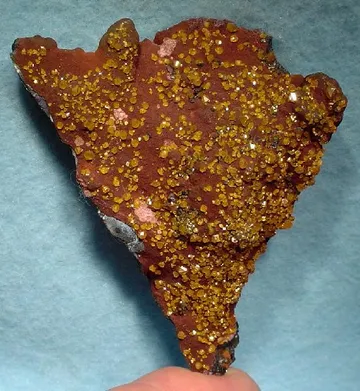
Western Australia’s copper deposits are more scattered in collector terms. The old Northampton lead-copper field preserves a 19th-century mining history with galena, secondary copper minerals, and minor native copper. Whim Creek in the Pilbara is prized for secondary copper-lead assemblages, particularly wulfenite and colorful copper alteration species in goethitic and silicified matrix. DeGrussa, north of Meekatharra, is notable for native copper formed in the weathered zone above the water table in a roughly 2-billion-year-old submarine volcanic sequence. Nifty, west of Telfer on the edge of the Great Sandy Desert, has a well-developed oxidized and transitional copper profile: malachite and azurite above, native copper with copper carbonates around the water table, and chalcocite-dominant ore below.
Quartz is everywhere in Western Australia, but collectable quartz is locality-specific. In the goldfields it is often valued as the matrix for native gold or telluride-bearing material. Around Yinnietharra it is part of the pegmatite and schist system that includes dravite. In the Ashburton region, the Great Australian Amethyst Mine at Wyloo Station is known for smoky quartz and amethyst specimens. Elsewhere, quartz appears as chalcedony, jasper, tiger iron, tiger eye, and silica-rich gossan matrix, tying ordinary SiO2 to some of the state’s most recognizable lapidary materials.
Mining history is long and uneven across the state. Halls Creek, Southern Cross, Coolgardie, and Kalgoorlie anchor the gold-rush story of the late 19th century, when gold transformed Western Australia’s economy and settlement patterns. Coolgardie’s 1892 discovery by Arthur Bayley and William Ford led to a rush of enormous scale, followed by Paddy Hannan’s 1893 Kalgoorlie discovery. Nickel became a second great collecting and mining chapter after the Kambalda discoveries of the 1960s, while lithium, tantalum, iron ore, diamonds, rare earths, and copper broadened the modern resource picture. For specimen collectors, however, the key production periods are often much shorter: the Yinnietharra dravite bonanza of 1969–1971, early-1980s oxidized nickel material from Kambalda, mine-dump and gossan recoveries at Widgiemooltha, and isolated modern gold specimen discoveries such as the Beta Hunt Father’s Day Vein.
Collecting access today is highly controlled. Western Australia has active mining tenements, pastoral leases, private land, conservation areas, heritage sites, and dangerous abandoned workings. A Miner’s Right is required for prospecting and fossicking under Western Australian law, but it does not grant blanket access to private land, active mine leases, reserves, national parks, or restricted areas. Many of the classic specimen localities are working mines, rehabilitated sites, or lease-held ground. Serious collectors should treat field-collected Western Australian material as provenance-sensitive: legal access, landholder consent, tenement-holder permission, and safety around old shafts and unstable workings are not formalities but essential parts of responsible collecting.
Western Australian gold specimens range from rounded nuggets of the dry goldfields to crystalline gold in quartz from districts such as Kalgoorlie, Coolgardie, Murchison, Meekatharra, Leonora, and Kambalda; the finest collector pieces show sharp native gold leaves, wires, hackly masses, or bright crystalline protrusions anchored in white, grey, or iron-stained quartz rather than isolated waterworn lumps. The state’s great historical nuggets, including the Golden Eagle from Larkinville near Coolgardie and the modern Beta Hunt Father’s Day Vein specimens from Kambalda, define the upper end of size and drama, but ordinary market pieces are more often thumbnail to cabinet-size nuggets or small gold-on-quartz specimens. Good Western Australian gold is judged by visible form, natural surface, rich color, secure matrix attachment, reliable mine or field provenance, and freedom from obvious artificial mounting, excessive acid-cleaning, or quartz trimming that destroys the geological context.
Western Australia’s dravite is above all the Yinnietharra material: dark brown to golden-brown, lustrous, heavy crystals from phlogopite-plagioclase schists and greisens associated with pegmatitic activity near Morrissey Hill and Yinnietharra Station. The classic crystals are short prismatic to nearly equant, commonly rhombohedrally terminated, with mica books impressed into the faces and occasional inclusions of plagioclase, phlogopite, rutile, apatite, zircon, and fluorite; they may occur singly, twinned, intergrown, or partly embedded in mica-rich matrix. Crystals from the productive Soklich period commonly range from small miniatures to large cabinet specimens, with exceptional individuals weighing kilograms, and the best pieces combine complete form, bright vitreous luster, minimal surface fracturing, undamaged terminations, and enough mica matrix or face texture to make the Yinnietharra origin unmistakable.
Western Australian millerite is most significant in the Kambalda nickel camp, especially the Otter Shoot, where millerite-bearing sulfide assemblages occur in high-grade nickel ores and in supergene-altered material associated with pentlandite, pyrite, pyrrhotite, violarite, polydymite, chalcopyrite, and related sulfides. Collector specimens are not the soft radiating tufts familiar from some sedimentary localities; they are typically metallic nickel-sulfide pieces, small crystals, or millerite associated with massive or altered sulfide matrix from komatiite-hosted ore bodies. The best Kambalda millerite specimens are those with visible, well-defined brassy to bronze millerite crystals or blades, strong contrast against darker nickel sulfides, and precise mine provenance, because much Western Australian millerite-bearing ore is visually subtle and easily reduced on labels to generic “nickel ore.”
Native copper from Western Australia is more locality-restricted than the state’s mining scale might suggest, with notable collector relevance at DeGrussa, Nifty, Northampton, and some oxidized copper systems where arid-zone weathering preserved copper metal with cuprite, calcite, malachite, azurite, chalcocite, chrysocolla, and goethitic matrix. DeGrussa native copper formed near the top of the water table within the weathered profile above sulfide mineralization, while Nifty contains a transitional zone where native copper accompanies malachite and azurite below the oxidized carbonate-rich zone. The finest pieces show natural copper color, sculptural sheets, pods, strings, or dendritic to hackly forms, and association with diagnostic matrix; ordinary pieces are often dull, massive, or so cleaned and oxidized that the mine identity depends almost entirely on documentation.
Quartz from Western Australia matters to collectors when it carries locality story: white and iron-stained vein quartz with native gold from the goldfields, smoky quartz and amethyst from Wyloo Station and related northern occurrences, chalcedony in Yinnietharra fractures, or quartz as a silicified gossan matrix for rare nickel and copper minerals. Gold-on-quartz specimens from Murchison, Kalgoorlie, Coolgardie, and other Yilgarn fields are the most commercially recognizable, while the Great Australian Amethyst Mine at Wyloo is the most distinctive named quartz locality for smoky-amethyst material. Better specimens have undamaged terminations, good translucency or color zoning, sharp contrast with gold or oxide matrix, and a label more specific than “WA quartz,” because common vein quartz without locality or association is abundant and rarely of serious collector value.
Beyond these five species, Western Australia is exceptionally important for rare and type-locality minerals. Simpsonite from the Tabba Tabba pegmatite is a classic Western Australian type mineral named for Edward Sydney Simpson, the state’s foundational mineralogist. Kambaldaite, hydrohonessite, widgiemoolthalite, gillardite, woodallite, mountkeithite, and other rare nickel minerals tie the Kambalda, Widgiemooltha, and Mount Keith districts to the chemistry of weathered ultramafic nickel deposits. Whim Creek is known among collectors for wulfenite and secondary copper-lead minerals; DeGrussa for native copper and copper oxides; Lake Yindarlgooda for gold and gypsum specimens in the Western Australian Museum collection; and the gem record includes Argyle diamonds, Ellendale yellow diamonds, Poona emerald, variscite, chrysoprase, tiger iron, tiger eye, zebra stone, jaspers, and pegmatite minerals including beryl, tantalite-group minerals, spodumene, mica, and cassiterite.
Western Australian labels deserve scrutiny. “Western Australia” by itself is acceptable only for broad market categories such as generic gold nuggets or ornamental jasper; for serious mineral specimens, the mine, field, station, shire, or district should be preserved. A Yinnietharra dravite, Kambalda millerite, Widgiemooltha rare nickel carbonate, DeGrussa copper, Whim Creek wulfenite, or Kalgoorlie gold-on-quartz loses much of its scientific and market value if reduced to a state label.
Gold is the most commonly misrepresented Western Australian material, not necessarily through elaborate locality-specific forgeries but through vague provenance, artificially attractive gold-on-quartz assemblies, acid-brightened surfaces, and nuggets sold with unverifiable detector stories. Natural gold on quartz should show convincing penetration into the matrix, not a superficial seam of metal sitting in a suspicious groove. Strong magnification is useful: glue lines, unnatural clay packing, bright metal lodged only on high spots, and quartz that looks freshly broken around every gold contact are warning signs. For nuggets, surface texture and patina matter; over-tumbled or chemically brightened pieces can look commercial but lose character.
Yinnietharra dravite has its own recurring identification issues. The short, blocky rhombohedral crystals can be mistaken for garnet by non-specialists, and black dravite from the northern workings has historically been called schorl on some labels. Well-formed brown Yinnietharra crystals often have mica impressions and embedded mica or feldspar; these are locality-positive features, not defects. The major condition concerns are bruised edges, cleaved-looking fractures from near-surface material, and poorly repaired broken crystals. Because many older specimens entered the market in the 1970s, old dealer labels, collection numbers, and provenance to Soklich or early Australian collections add real value.
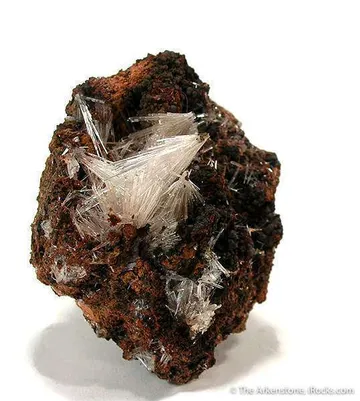
Kambalda and Widgiemooltha rare nickel minerals are commonly small, friable, and visually confusing. Bright green coatings may be gaspéite, kambaldaite, widgiemoolthalite, takovite, annabergite, or mixed nickel-bearing alteration; yellow material may be hydrohonessite or related phases; and blue-green crusts may require analytical confirmation. Do not rely on color alone. These specimens should be kept dry and stable, handled gently, and stored away from acid vapors or high humidity. Many are best treated as micro-mineral specimens rather than display pieces.
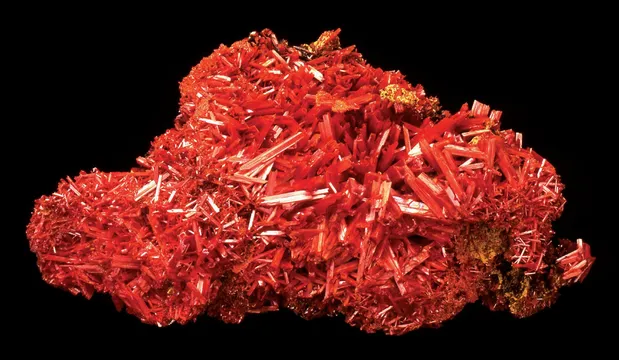
Native copper and secondary copper specimens from Western Australia may be naturally darkened, coated with oxide, or cleaned back to bright metal. A light mineral oil, wax, or lacquer coating is sometimes encountered on native copper generally; whether that helps or harms value depends on disclosure and the specimen. Malachite, azurite, chrysocolla, and cuprite associations from Nifty, Whim Creek, DeGrussa, and Northampton can be fragile, porous, or prone to scuffing. Avoid ultrasonic cleaning, prolonged soaking, or aggressive acids unless the mineralogy is fully understood.
Quartz from the state is abundant, so selectivity is essential. Good Wyloo smoky-amethyst specimens should show natural faces, color zoning, and minimal iron-stain masking. Goldfield quartz should be bought for its association with gold or locality, not merely for being quartz from a gold district. Chalcedony noted from Yinnietharra fracture lines may fluoresce strongly, but fluorescence alone should not be used as proof of locality.
Market availability varies sharply by species. Western Australian gold nuggets remain obtainable, though fine crystallized gold-on-quartz with precise provenance is much scarcer and commands a premium. Yinnietharra dravite is still seen regularly because of historical production, but top complete crystals and matrix pieces are increasingly collection-held. Kambalda millerite and rare nickel minerals are specialized and intermittent. Native copper from named Western Australian mines is much less common than native copper from the classic world districts. Quartz is abundant, but named, aesthetic, undamaged Western Australian quartz specimens are selective purchases rather than bulk commodities.
Coolgardie’s gold story begins with the kind of image that still feels theatrical: Arthur Bayley riding back to Southern Cross in 1892 with hundreds of ounces of gold to report the discovery at Fly Flat. The Bayley’s Reward claim that followed became one of the foundational mines of the Eastern Goldfields, and Coolgardie erupted from arid country into a rush town. By the late 1890s it was Western Australia’s third-largest town after Perth and Fremantle, with hotels, breweries, banks, newspapers, stock exchanges, and hundreds of registered mining companies. For collectors, the significance is not only historical; it explains why even small labeled goldfield specimens from Coolgardie carry the aura of the first great Western Australian gold rush.
The Golden Eagle nugget remains Western Australia’s most memorable nugget story. In January 1931, young James Larcombe, son of prospector Jim Larcombe, discovered the great mass at Larkinville near Widgiemooltha, south of Coolgardie. It weighed 1,135 troy ounces, about 35.287 kilograms, and measured roughly 630 mm across and 260 mm high in the replica described by the Geological Survey’s gemstone bulletin. Its name came from its shape: the nugget looked like a bird in flight. The find landed in the middle of Depression-era hardship and triggered renewed excitement in ground that many thought had already given up its best gold. More than a thousand prospectors reportedly returned to the area after the discovery, chasing the possibility that another eagle lay hidden in the dry Western Australian soil.
The Yinnietharra dravite bonanza was quieter but, for mineral collectors, just as consequential. The deposit had been known earlier, but A. Soklich’s mining in the late 1960s turned it into a specimen locality of international rank. Between January 1969 and January 1971, about 12 tonnes of dravite crystals were produced, and a large proportion consisted of euhedral, doubly terminated crystals. Mining was practical rather than romantic: front-end loaders, limited blasting, and the careful loosening of mica-rich rock to free crystals from pockets that appeared sporadically and unpredictably. Near the surface the crystals were commonly fractured and altered; several metres down, the dravites improved dramatically. The best crystals were dark, lustrous, blocky, and so equant that collectors initially confused some with garnets. Few localities have so thoroughly redefined what collectors expect a species to look like.
Kambalda’s rare nickel minerals began with mining geology but became a story of attentive collectors and analytical mineralogy. At the Otter Shoot, material from the oxidized zone drew interest when R. Harrison collected specimens from the No. 1 ventilation shaft area. Western Australian collector and specimen miner David Vaughan recognized that the material deserved expert attention and brought it to the CSIRO. There, Ernest H. Nickel and colleagues identified new or rare nickel minerals from the gossan chemistry. The episode is a reminder that the great discoveries in a modern mining district are not always large crystals; sometimes they are green crusts on goethite, a few millimetres across, rescued because someone understood that an ugly piece of oxidized ore might contain a new mineral species.
In 2018, the Beta Hunt mine at Kambalda produced a gold specimen story that felt almost impossible in a modern underground operation. The Father’s Day Vein was discovered about 500 metres below surface, and the recovered gold-bearing rocks became instant news because of their size and visible richness. The Perth Mint displayed six specimens weighing nearly 200 kilograms in total; the largest, King Henry, weighed more than 94 kilograms, while another named Warren weighed more than 63 kilograms. Unlike ordinary bullion ore, these were gold-quartz rocks with immediate specimen presence, large enough to stand in the lineage of Western Australia’s older nugget legends while coming from a working underground nickel-gold mine in the 21st century.

_(31305876743).jpg)